Sacro Monte di Ghiffa
A Trinity shrine on a wooded balcony above Lake Maggiore
Understand sacred places, explore living traditions, and learn how to engage respectfully with Pilgrim Map.
Access has not been verified. Check current local guidance before planning a visit.
Ghiffa, Verbano-Cusio-Ossola, Italy
Read the sources
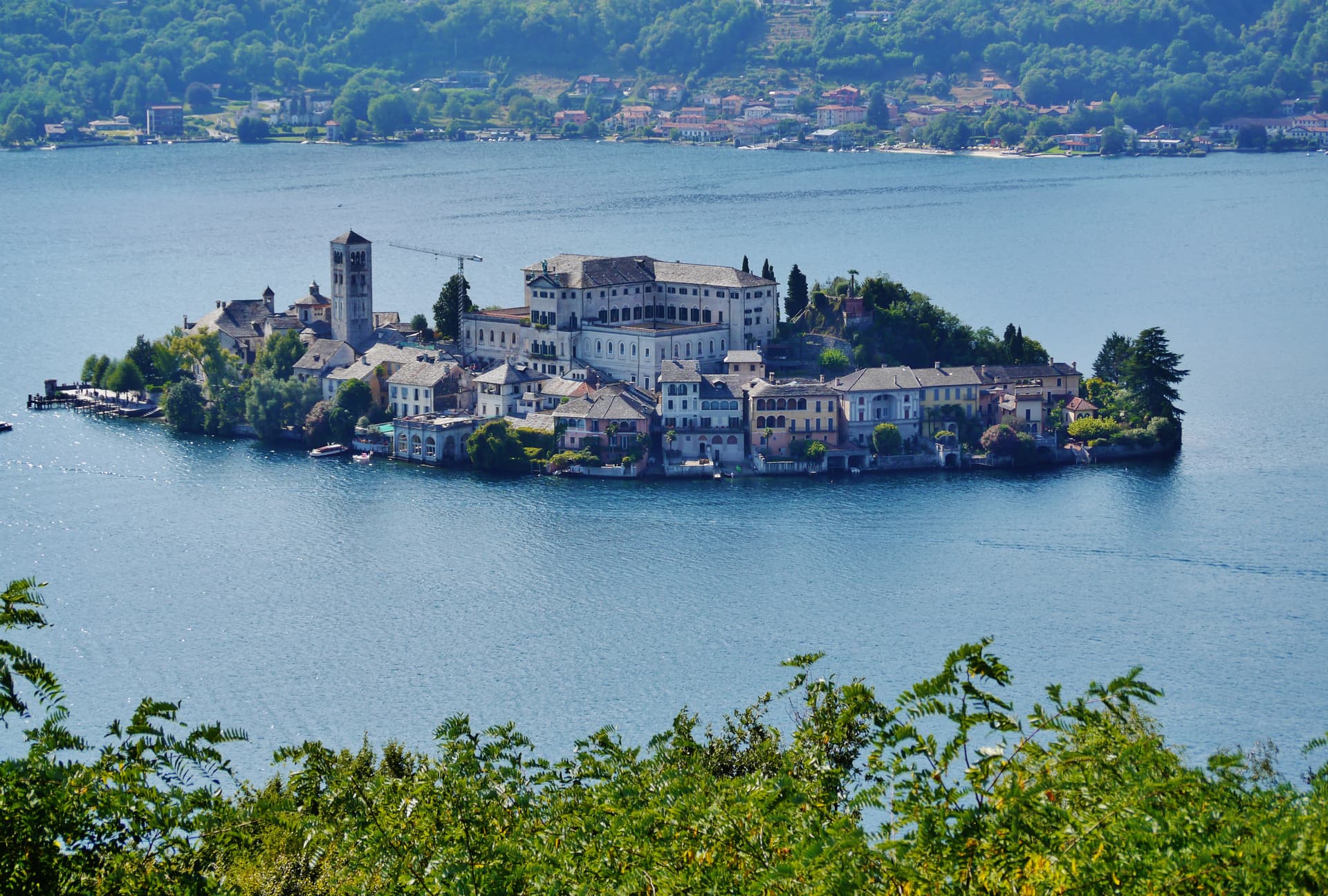
Image of Sacro Monte di Ghiffa. Image source
Visit essentials
A quick read before you go
- Duration
- Roughly 1.5 to 3 hours to cover the approach walk, sanctuary, three chapels, and Way of the…
- Access
- On foot via an ancient monastic path through chestnut woodland from the lakeside town of Ghiffa,…
Overview
Ghiffa is smaller, quieter, and more unfinished than its fellow Sacri Monti. While Varallo and Domodossola stage the Passion through rooms of painted terracotta, Ghiffa centers the harder-to-depict Trinity in one venerated image rather than a narrative sequence. It feels less like theatrical scenes than a sustained thought on Monte Cariago's wooded shoulder above Lake Maggiore.
A medieval oratory stood here before the Counter-Reformation project absorbed it in the late sixteenth century. Devotion preceded expansion: by 1603, a Milanese chronicler described pilgrims flocking to a 'miraculous mountain.' Three chapels, a Baroque portico, and the lake view now preserve that quiet, along with the incompleteness of a grander building program once imagined but never realized.
Why this place is sacred
Most Sacri Monti walk a visitor through episodes — the manger, the trial, the cross, the tomb. Ghiffa instead asks contemplation of a single mystery, the Trinity, concentrated in one venerated image inside the sanctuary rather than distributed across stations. That difference shapes the whole site: there is no long narrative arc to move through, only a modest sequence of three chapels and a portico built later, in the eighteenth century, once devotion had already outgrown the space.
The site's sacredness did not originate with formal ecclesiastical planning so much as with a groundswell that planning then tried to catch up to.
A pre-existing medieval oratory, plain and largely undocumented, sat on this slope for centuries before the Counter-Reformation building campaign began around 1590; when the Milanese historian Paolo Morigia wrote in 1603 that people were coming 'from everywhere' to what locals already called a miraculous mountain, the expansion into a proper sanctuary was already underway or about to be.
Local memory ties that reputation to protection sought during plague and famine — visits made not for scenic contemplation but out of need. The unfinished quality of the complex, often read now as picturesque restraint, more likely reflects funds or ambition that ran out partway through a larger unrealized plan; sources do not agree on how much larger that plan was meant to be.
To house and formalize veneration of a Trinitarian image already attracting popular devotion, folding a modest medieval oratory into the wider Counter-Reformation project of building accessible, Holy-Land-echoing sanctuaries across Piedmont and Lombardy.
From an undocumented medieval place of prayer, to a locally famous 'miraculous mountain' by 1603, to a partially built Baroque sanctuary complex (main church 1590s–1618, three chapels added across 1647, 1659, and the early eighteenth century, and a Way of the Cross portico in 1752 with later frescoes and terracotta additions), the site never reached whatever fuller architectural program its Counter-Reformation patrons may have envisioned, and today functions as an active but modest parish sanctuary within a protected nature reserve.
Experience and orientation
Reaching Ghiffa on foot means climbing a centuries-old monastic path out of the lakeside town, under chestnut canopy, past drinking fountains placed for pilgrims long before hydration became a hiking concern. The woods thin gradually rather than opening all at once, so the lake view arrives in pieces before the full sweep of it appears near the sanctuary itself.
Inside the monumental area, scale stays modest — three chapels, the sanctuary church, and the portico housing the Way of the Cross are close enough together to cover on foot in under an hour, though the official routes suggest allowing longer.
Because the complex was never finished, there's an unfinished-thought quality to moving through it: spaces that in a fuller Sacro Monte would connect a longer sequence here end more abruptly, and the visitor's attention settles less on architectural drama than on the interior of the sanctuary itself and the view outward. An accessible path of about four hundred meters links most of the monumental area for visitors with mobility limitations, arriving at the same lookout point as the standard route.
Expect a wooded approach on foot or a short drive, a compact cluster of buildings rather than a sprawling complex, and Lake Maggiore as a near-constant visual backdrop once the tree cover breaks near the sanctuary.
Context and lineage
No individual founder is named in the documentary record available for Ghiffa. What is recorded is Paolo Morigia's 1603 account of a place already known locally as miraculous, with people arriving from far beyond the immediate area to venerate its Trinitarian image — evidence of a devotion that predates, and likely drove, the formal building campaign rather than resulting from it.
Local tradition also connects the site's protective reputation to communal prayer during plague outbreaks and famine in the sixteenth and seventeenth centuries, though this is remembered rather than documented in detail. The expansion of the original oratory into the present sanctuary proceeded across roughly 1590 to 1617–1618, with the three flanking chapels — the Coronation of the Virgin, St.
John the Baptist, and Abraham — added later, in 1647, 1659, and the early eighteenth century respectively, and the porticoed Way of the Cross added later still, in 1752.
Ghiffa belongs to the wider Counter-Reformation project of building Sacri Monti across Piedmont and Lombardy from the late sixteenth century onward, a movement most associated with the earlier and larger complex at Varallo; unlike Varallo's Passion narrative, Ghiffa's Trinitarian dedication makes it a doctrinal outlier within that same building tradition.
Paolo Morigia
Milanese historian who documented the site's reputation as a 'miraculous mountain' in 1603, the earliest firm record of its popular devotion
The Counter-Reformation-era community of Ghiffa and the Verbano shore
Unnamed local patrons and laborers whose fundraising and construction expanded the medieval oratory into the present sanctuary
Parish of San Maurizio
Present-day pastoral steward administering ongoing worship at the sanctuary
Diocese of Novara
Ecclesiastical authority overseeing the sanctuary within the wider diocesan structure of sanctuaries and Sacri Monti
Traditions and practice
Historically, visits to Ghiffa were often votive rather than touristic — communities came specifically to pray for protection from plague and famine, venerating the Trinitarian image as a source of collective safety rather than individual contemplation.
The Parish of San Maurizio holds liturgical celebrations on the Feast of the Holy Trinity (the Sunday after Pentecost) and on Palm Sunday. The Way of the Cross portico, added in 1752 with frescoes from 1824 and terracotta panels donated in 1930, remains open for devotional walking independent of scheduled services.
Each September the site also hosts the SacreSelve Festival, a cultural and nature-themed program of talks, exhibitions, and outdoor sessions supported by the municipality, running alongside — not replacing — the older religious calendar; Ghiffa's civic patronal feast of Santa Croce falls on the second Sunday of the same month.
A visitor without a specific devotional practice might use the portico's fourteen stations as a pacing device for the walk itself, treating the interval between stations as a rest rather than rushing the sequence, and spend unhurried time facing the Trinitarian image inside the sanctuary before moving on to the chapels.
Roman Catholicism
ActiveGhiffa is dedicated to the mystery of the Holy Trinity, an unusual focus among the nine Sacri Monti, most of which center on the Passion or Marian devotion; it grew from a medieval oratory into a Counter-Reformation sanctuary after gaining a local reputation as a 'miraculous mountain' in the early seventeenth century.
Veneration of the Trinitarian image inside the sanctuary, walking the eighteenth-century Way of the Cross portico, and attending liturgical celebrations on the Feast of the Holy Trinity and Palm Sunday.
Perspectives and open questions
Ghiffa is read differently depending on which layer of its history a source foregrounds — the Counter-Reformation architectural program, the local devotional memory of a 'miraculous mountain,' or the unresolved question of what larger complex was originally intended and never finished.
Scholarly perspective
Heritage scholarship situates Ghiffa within the broader Counter-Reformation program of Sacri Monti construction across Piedmont and Lombardy, framing its unusual Trinitarian dedication and incomplete building program as a notable variant within a well-studied typology — different enough from the Passion-and-Marian norm to merit inclusion in the 2003 UNESCO serial listing precisely because it diverges from its sister sites rather than repeating them.
Living and traditional perspectives
Diocesan and local memory frames Ghiffa through Paolo Morigia's 1603 record of a 'miraculous mountain' and through recollections of communal prayer during plague and famine, sustained today by the Parish of San Maurizio's ongoing pastoral care rather than by any single dramatic legend.
Alternative interpretations
No distinct esoteric or alternative-spiritual reading of the site was found; the September SacreSelve Festival's nature and wellness programming, including dawn sessions framed around mindfulness, sits alongside the Catholic devotional history as a separate, secular cultural layer rather than a competing interpretation of the site's sacredness.
Open questions
How much larger the original building program was meant to be, and why it stopped where it did, remains unresolved — sources gesture at an unbuilt fuller plan without specifying its scope. The individual architects, patrons, and artists behind the sanctuary and its chapels are likewise not identified by name in the sources reviewed.
Plan your visit
Access and arrival
On foot via an ancient monastic path through chestnut woodland from the lakeside town of Ghiffa, with drinking fountains along the route, or by road with on-site parking. An accessible route of roughly 400 meters within the monumental area serves visitors with mobility limitations, reaching the sanctuary's lookout point and several chapels; accessible toilets are on site. A seasonal restaurant, La Trinità, operates near the complex.
Mobile signal in the immediate area was not documented in sources reviewed; visitors relying on connectivity should not assume coverage on the approach path through the woods.
Respectful visit
No dress code specific to Ghiffa was found in available sources; the reasonable assumption for an active sanctuary is the same modest coverage of shoulders and knees expected at most Italian churches, though this has not been confirmed for this site specifically.
No explicit restriction on photography was documented; ordinary discretion during active liturgical services is the expected norm.
No specific offering custom is recorded for Ghiffa beyond the general Catholic practice of prayer and votive devotion; historical visits were motivated by prayers for protection rather than any described physical offering.
Camping and open fires are explicitly prohibited within the protected monumental and natural area. The chapels and sanctuary interior close on Mondays except during Easter week and public holidays.
Because the sanctuary is an active parish church, visits during scheduled liturgies call for the same restraint expected at any working Catholic service — the site is not primarily curated as a museum experience, even where it functions as one for most daily visitors.
Location
Map loads as you approach this section.
Pilgrim reflections
A portrait of encounter, not a score
Pilgrims describe what they felt, how present they could become, and whether the place would shape a journey. There are no stars and no ranking of traditions.
No reviewed reflections yet
The first pilgrims can help describe the character of being here.
Share a reflection
Available after an account-backed “Been there.” Every reflection is reviewed before publication.
Nearby sacred places
Explore other sacred places in the region. Proximity does not establish access or travel time; check each place’s guidance.


References
Sources consulted for this page. Source categories describe the publication, not a guarantee that every claim is verified. Traditional accounts and outside interpretations may differ.
- 01Sacro Monte of Ghiffa — Sacri Monti UNESCO Management Body (Ente di gestione dei Sacri Monti)officialOfficial UNESCO-site management body page; used for structure overview, chapel names, opening hours, and visitor services
- 02History - Sacro Monte di Ghiffa — Sacri Monti UNESCO Management Body (Ente di gestione dei Sacri Monti)officialOfficial history page; source for 1603 Morigia quote, construction phases 1590-1617, and chapel construction dates (1647, 1659, early 18th c.)
- 03Sacro Monte di Ghiffa - Wikipedia — Wikipedia contributorsacademicGeneral encyclopedia entry confirming UNESCO status, dedication to the Trinity, incomplete building program, and Counter-Reformation to Passion-of-Christ thematic shift in the portico
- 04Sacro Monte della "Santissima Trinità" di Ghiffa — Diocesi di NovaraofficialCatholic diocesan page confirming sanctuary status and religious administration context
- 05SACRO MONTE DELLA SS.TRINITA' DI GHIFFA — Piemonte Italia (regional tourism board)officialRegional government tourism authority page on the site as part of the Sacri Monti UNESCO series
- 06Riserva Speciale del Sacro Monte della SS. Trinità di Ghiffa: The Protected Area — Parks.it (Italian Parks and Protected Areas portal)officialOfficial nature-reserve portal describing the protected area status covering the Sacro Monte site and its woodland setting
- 07Sacro Monte della SS. Trinità di Ghiffa — Comune di Ghiffa (municipal government)officialMunicipal government tourism page
- 08Sacred Mount of Ghiffa | Distretto dei Laghi — Distretto Turistico dei Laghi (Lakes Tourism District)Source contextRegional tourism-district page describing the ancient monastic access path through chestnut woods, drinking fountains, and views
- 09SacreSelve Festival dal 12 al 14 Settembre al Sacro Monte di Ghiffa — Eventi Valsesia e Alto PiemonteSource contextRegional events listing confirming the SacreSelve Festival (culture, nature, spirituality) held at the site each September, supported by the Municipality of Ghiffa
- 10Eventi 2025: Sagre, Feste a Ghiffa e dintorni - Piemonte — Italia-Italy.orgSource contextTravel/events aggregator; used only to corroborate the Ghiffa patron feast (Santa Croce, second Sunday of September) as a general local calendar reference
Share a photo
Help visitors recognize Sacro Monte di Ghiffa. Every submission is reviewed before publication.