Sacro Monte di Orta
Twenty chapels telling the life of St. Francis on a wooded hilltop above Lake Orta, where art and nature merge
Understand sacred places, explore living traditions, and learn how to engage respectfully with Pilgrim Map.
Access has not been verified. Check current local guidance before planning a visit.
Orta San Giulio, Novara, Italy
Read the sources
Visit essentials
A quick read before you go
- Duration
- 1.5-2.5 hours
- Access
- 20-minute walk uphill from Orta San Giulio village.
Overview
Sacro Monte di Orta is the only Sacred Mountain dedicated to a saint rather than Christ or Mary. While Varallo recreates the Passion's drama, Orta follows the gentler life of Francis of Assisi, who preached to birds, embraced lepers, and received the stigmata on a mountainside.
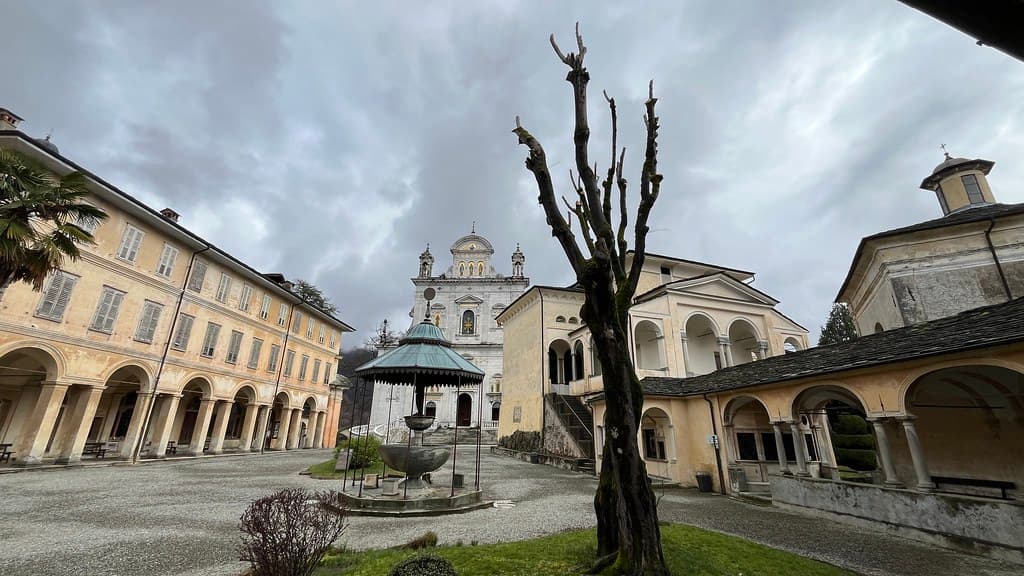
Twenty chapels line paths through a wooded hilltop above Lake Orta. Between them, views of the lake and San Giulio island punctuate the narrative. The chapels hold 376 life-size terracotta statues and large fresco cycles by artists including the Fiammenghini, Morazzone, and Dionigi Bussola. Two centuries of construction produced masterpieces and lesser works, but walking through Francis's life in sequence amid trees and water creates a contemplation beyond any individual chapel's quality.
Construction began in 1590, shaped by Capuchin architect Cleto da Castelletto and refined by Bishop Carlo Bescapé of Novara, who established the scenes and devotional path. The last chapel was completed in 1788. In 2003 UNESCO inscribed Orta with eight other Sacri Monti of Piedmont and Lombardy. Art, architecture, and landscape remain integrated in an experience that unfolds rather than announces itself.
Why this place is sacred
Francis of Assisi found the sacred in nature — in birds, in water, in sunlight. A Sacro Monte dedicated to his life, set on a wooded hilltop overlooking a lake and a silent island, creates a resonance between subject and setting that no amount of artistic intention could fully explain.
The path between chapels is as important as the chapels themselves. Walking through trees, catching glimpses of Lake Orta through branches, arriving at a clearing where another episode of Francis's life unfolds in painted terracotta — the rhythm is meditative. The landscape does not merely frame the art; it participates in it.
When the canticle of Brother Sun speaks of Sister Water and Brother Wind, the lake below and the breeze through the chestnuts provide a commentary that no fresco can match.
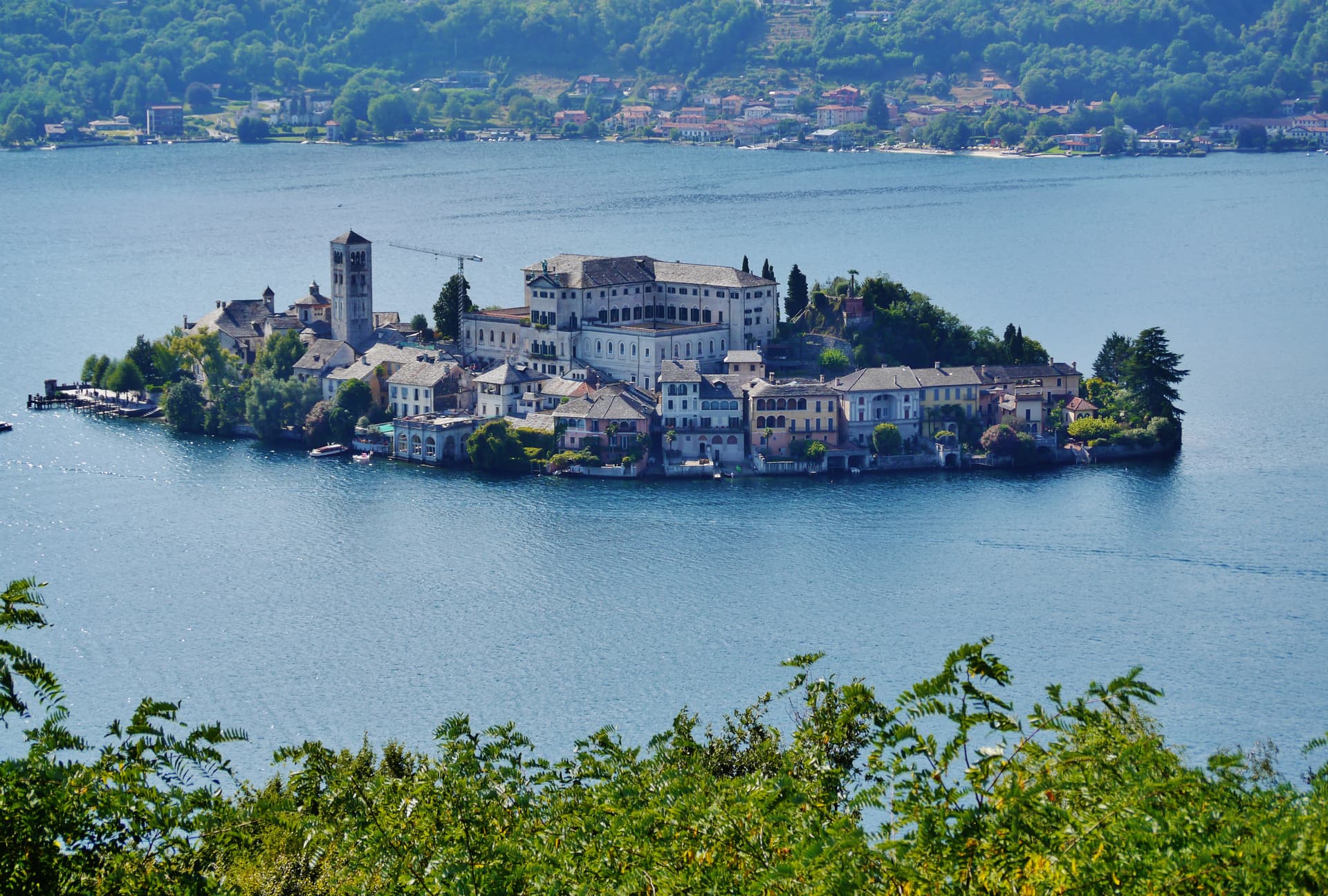
The views of San Giulio Island from the hilltop paths add another dimension. The island, with its Benedictine nuns and its Way of Silence, is visible but unreachable from here — a presence that cannot be entered from this vantage. It hovers on the water like something from a dream of monastic contemplation, and its presence colors the walk through Francis's life with an awareness that the contemplative tradition the saint inaugurated continues, visible but apart, on the water below.
Built between 1590 and 1788 as a Counter-Reformation devotional tool, designed to reinforce Catholic identity in a region bordering Protestant territories beyond the Alps.
From Counter-Reformation propaganda to contemplative landscape art. The original defensive purpose has faded, replaced by a quieter function: a place where art, nature, and the story of Francis create an experience of integration that visitors of any background can enter.
Experience and orientation
The ascent from Orta San Giulio takes about twenty minutes on foot — a walk through the village and then upward along a shaded path. The transition from lakeside tourism to hilltop contemplation happens gradually, which is appropriate for a site dedicated to Francis, a saint who found holiness not in sudden rupture but in sustained attention.
The chapels are encountered sequentially, each narrating an episode from Francis's life: his conversion, his renunciation of wealth, his preaching to the birds, his reception of the stigmata. The terracotta statues are life-size and the frescoes create immersive backgrounds. Some chapels achieve genuine emotional power — the intimacy of the early Lombard style gives way to the theatrical energy of late Baroque, and the tension between these approaches keeps the walk from becoming predictable.
Between chapels, the paths wind through chestnut and oak woodland. The air is cooler here than below. Lake Orta appears through gaps in the trees, and San Giulio Island — small, dense with buildings, crowned by the basilica — sits on the water like a vision of contemplative life made physical. These intervals of landscape are not interruptions but counterpoints. Francis found God in the created world, and the Sacro Monte offers the created world at its most composed.
The walk takes ninety minutes to two and a half hours depending on pace. There is no single climactic moment — the effect is cumulative, each chapel and each view adding to a gathering sense of something that only reveals itself in retrospect.
Begin at the entrance near Orta San Giulio and follow the chapels in sequence. Walk slowly. Give equal attention to the views between chapels and to the art within them. If you visit on a weekday morning, you may have the paths largely to yourself — an experience that amplifies the contemplative quality.
Context and lineage
In the aftermath of the Council of Trent, the Catholic Church mobilized visual art as a tool against the Protestant Reformation. The Sacro Monte di Orta was conceived as part of this effort — a monumental retelling of the life of the saint who most embodied Catholic ideals of poverty, humility, and devotion to creation. The choice of Francis was itself a statement: against Protestant austerity, the Church offered the warmth and humanity of its most beloved saint.
The Sacro Monte di Orta belongs to the network of nine Sacri Monti in Piedmont and Lombardy, all inscribed as UNESCO World Heritage Sites in 2003. It draws on the precedent of Sacro Monte di Varallo (founded 1491) but adapts the concept to a hagiographic rather than biblical narrative.
Abbot Amico Canobio
Initiated the project for a Sacro Monte in Orta
Carlo Bescapé
Bishop of Novara who established the chapel sequence and devotional path (1593-1615)
Morazzone
Major artist who contributed frescoes to the chapels
Traditions and practice
The devotional practice is to walk the twenty chapels in sequence, meditating on each episode of Francis's life. The path was designed to create a cumulative spiritual effect, moving from Francis's worldly youth through his conversion to his mystical reception of the stigmata.
Guided tours run Friday afternoons and Saturday-Sunday mornings. The chapels are open daily with seasonal hours. The site also functions as a park — locals walk here for exercise and reflection, adding a layer of quotidian use to the devotional infrastructure.
Walk the full sequence at a contemplative pace, allowing ninety minutes minimum. Pause at the viewpoints to take in Lake Orta and San Giulio Island. If you have visited or plan to visit the island, the two sites illuminate each other — Francis's active mission and the nuns' enclosed silence as complementary forms of devotion.
Roman Catholicism - Franciscan devotion
ActiveThe only Sacro Monte dedicated to a saint rather than Christ or Mary, telling the complete life of Francis of Assisi
Walking the twenty chapels in devotional sequence; guided tours
Perspectives and open questions
The Sacro Monte di Orta can be experienced as Counter-Reformation devotion, as landscape art, or as a meditation on the life of one of Christianity's most universally admired figures.
Scholarly perspective
Art historians value the site for its range of Lombard and Piedmontese Baroque art. The integration of sculpture, painting, and natural landscape is studied as an exemplary achievement of the Sacri Monti tradition. The dedication to a saint rather than a biblical narrative makes Orta unique in the series.
Living and traditional perspectives
Within Catholic tradition, the Sacro Monte offers a way to walk through Francis's life as a form of prayer — each chapel a station in a devotional journey that moves from worldly attachment to spiritual freedom.
Alternative interpretations
For visitors of any background, the interplay between the human narrative of Francis and the natural beauty of the lakeside setting creates an experience that speaks to the possibility of finding meaning in simplicity. The walk offers what Francis himself sought: attention to the present, gratitude for the created world, and the willingness to be changed by what one encounters.
Open questions
Whether the Counter-Reformation purpose of the site — a spiritual defense against Protestantism — ever meaningfully operated in this direction, or whether the Sacro Monte primarily served existing Catholic devotion, remains a matter of historical interpretation rather than settled fact.
Plan your visit
Access and arrival
20-minute walk uphill from Orta San Giulio village. By car: accessible from the A26 motorway. Parking available near the entrance.
Hotels, B&Bs, and vacation rentals in Orta San Giulio and around Lake Orta.
Respectful visit
Comfortable walking clothes and shoes. No specific dress code for the outdoor paths.
Generally permitted throughout the site.
Not applicable at the chapels.
Chapels are viewed through screens — do not enter | Stay on marked paths | Respect other visitors' quiet contemplation
The paths involve moderate walking on uneven surfaces. Some chapels may be closed seasonally. The hilltop is exposed to weather — bring a layer even in summer.
Current practical details
Address
Via al Sacro Monte, 3, 28016 Orta San Giulio NO, Italy
Phone
Hours
Hours, fees, and access can change — verify on the official source before you travel. Practical details last checked Jun 2026.
Location
Map loads as you approach this section.
Pilgrim reflections
A portrait of encounter, not a score
Pilgrims describe what they felt, how present they could become, and whether the place would shape a journey. There are no stars and no ranking of traditions.
No reviewed reflections yet
The first pilgrims can help describe the character of being here.
Share a reflection
Available after an account-backed “Been there.” Every reflection is reviewed before publication.
Nearby sacred places
Explore other sacred places in the region. Proximity does not establish access or travel time; check each place’s guidance.


References
Sources consulted for this page. Source categories describe the publication, not a guarantee that every claim is verified. Traditional accounts and outside interpretations may differ.
- 01Sacro Monte of Orta - Sacri Monti official site — Sacri MontiofficialOfficial management body with history, art, and visitor info
- 02Sacri Monti of Piedmont and Lombardy - UNESCO — UNESCO World Heritage CentreofficialUNESCO listing
- 03Sacro Monte di Orta - Piemonte Italia — Piemonte ItaliaofficialRegional cultural portal
- 04Sacro Monte di Orta - Wikipedia — Wikipedia contributorsencyclopediaOverview of history, chapels, and UNESCO listing
- 05Sacred Mountain - Visit Lake Orta — Visit Lake OrtaofficialLocal tourism guide with practical visitor information
- 06Sacro Monte di Orta - Italy Review — Italy ReviewguideEnglish-language visitor guide
Share a photo
Help visitors recognize Sacro Monte di Orta. Every submission is reviewed before publication.