Basilica di San Giulio
An island basilica where a dragon-slaying saint's bones rest beneath the floor and silent nuns inhabit the shores
Understand sacred places, explore living traditions, and learn how to engage respectfully with Pilgrim Map.
Access has not been verified. Check current local guidance before planning a visit.
Orta San Giulio, Novara, Italy
Read the sources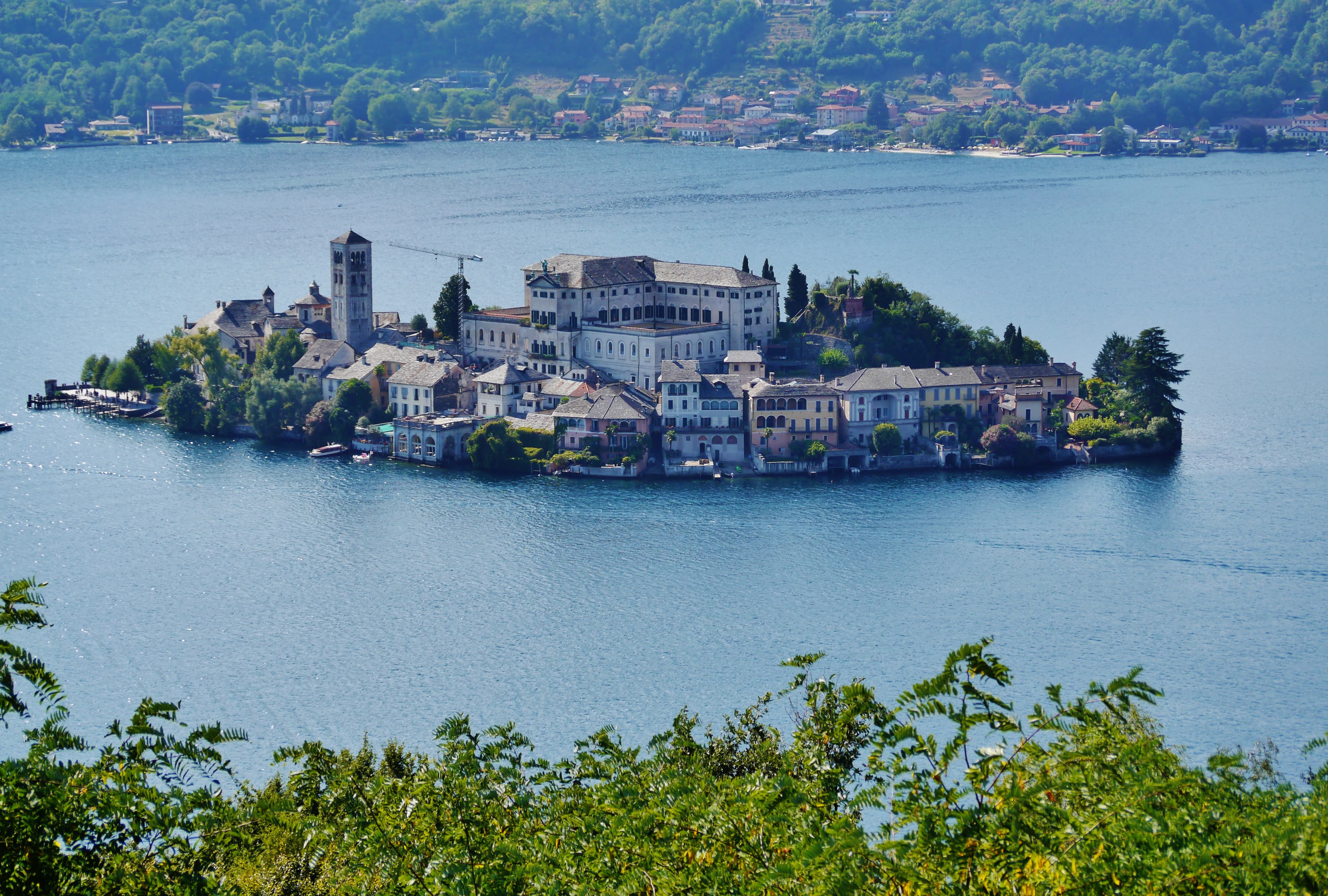
Image of Basilica di San Giulio. Image source · CC-BY-SA-4.0
Visit essentials
A quick read before you go
- Duration
- 1-2 hours including ferry crossing
- Access
- Regular ferry service from Orta San Giulio (departures every 15-30 minutes in season).
Overview
Barely three hundred metres across, San Giulio island centres on the Basilica di San Giulio. Its Romanesque foundations rest on a chapel built around 390 AD by Julius of Novara, a Greek evangelist from Aegina. Tradition says he sailed there on his cloak, freed it from serpents and dragons understood as symbols of pre-Christian paganism, and built his hundredth and final church.
The present basilica is primarily twelfth-century, modelled on Novara's ancient cathedral. Its Romanesque facade, apses, women's galleries, and carved capitals meet Baroque stucco and gilding. A celebrated marble pulpit carved from local Oira stone is a Romanesque masterpiece; beneath the high altar, a glass casket displays San Giulio's remains, present on the island for sixteen centuries.
Established in 1976, Abbazia Mater Ecclesiae is one of the world's largest communities of enclosed Benedictine nuns. Its monastery occupies most island buildings, and its rule of silence informs the Via del Silenzio e della Meditazione, a roughly fifteen-minute perimeter walk with meditative sayings in four languages.
A ferry from Orta San Giulio takes only minutes, yet crossing toward silence, relics, and monastic enclosure creates a threshold no bridge could replicate.
Why this place is sacred
Islands are inherently liminal. They require crossing to reach. They impose their own boundaries. The island of San Giulio adds to this natural liminality a series of deliberate separations: the monastery's enclosure, the nuns' vow of silence, the meditative path that asks visitors to walk quietly, the crypt that holds bones sixteen centuries old.
The legend of San Giulio's dragon-slaying adds a mythic dimension. In the language of hagiography, dragons represent the old order — the forces of chaos or paganism that must be overcome before the sacred can be established. Julius did not merely build a church; he transformed the island's fundamental nature. Whether one reads this as history, metaphor, or both, the story establishes the island as a place where one order of reality yielded to another.
The Benedictine nuns who now inhabit the island continue this work of transformation, though in a quieter register. Their silence is not absence — it is a practice, a discipline, a form of attention. The Way of Silence translates this practice into a form accessible to visitors: walk slowly, read the plaques, notice what happens when noise falls away.
The crypt completes the vertical dimension. Above, the Baroque interior glitters. Below, a saint's bones rest in a glass casket. Between the two — between ornament and remains, between surface and depth — the basilica holds a tension that it does not attempt to resolve.
Founded c. 390 AD by Julius of Novara as his hundredth church, dedicated to the Twelve Apostles, on an island he reportedly freed from serpents and dragons.
From a 4th-century evangelist's chapel through a 12th-century Romanesque rebuilding to a Baroque interior renovation, the basilica has been continuously adapted while preserving its ancient foundation. The establishment of the Benedictine monastery in 1976 added a new dimension — the island became not just a place with a sacred building but a place where sacred practice saturates the atmosphere.
Experience and orientation
The experience begins with water. The ferry from Orta San Giulio takes only minutes, but the crossing marks a transition. As the mainland recedes, the island's profile emerges — the basilica's tower and apse rising from a cluster of old buildings, the monastery walls creating a sense of enclosure even from a distance.
Landing on the island, you encounter the first plaque of the Way of Silence. The path rings the island's perimeter, and the sayings — in Italian, French, German, and English — invite a shift in pace and attention. 'In silence you accept and understand,' reads one. 'Walls are in the mind,' reads another. The monastery buildings line much of the path, their shuttered windows a reminder that behind them, a community lives in perpetual quiet.
The basilica interior opens unexpectedly from the island's narrow lanes. Romanesque bones — columns, capitals, the women's galleries — support a Baroque skin of stucco, gilding, and painted vaults. The marble pulpit from Oira commands attention: a dense field of Romanesque carving that rewards close looking. The overall effect is of a building that has absorbed multiple centuries without losing its structural integrity.
Descend to the crypt. The relics of San Giulio lie in a glass casket beneath the high altar. The space is small, dim, and cool. The transition from the ornate nave to the spare crypt mirrors the island's own movement from surface to depth — from Baroque display to ancient bone.
Return to the Way of Silence for the second half of the circuit. The plaques continue their quiet instruction. The water surrounds you on all sides. The nuns are invisible but present. The ferry back to the mainland completes the circuit — another crossing, another threshold — and the noise of the shore feels different than it did before.
Take the ferry from Orta San Giulio. Walk the Way of Silence clockwise or counterclockwise — it does not matter. Enter the basilica. Spend time with the pulpit and then descend to the crypt. Complete the Way of Silence. Take the ferry back. Allow at least an hour, and do not rush.
Context and lineage
Julius of Novara, a Greek from the island of Aegina, and his brother Julian dedicated their later lives to evangelizing the lands around Lake Orta. According to tradition, Julius reached the island by sailing on his own cloak — a detail that echoes the miraculous crossings of other saints and suggests that the ordinary laws of passage did not apply to him.
On the island, he drove out serpents and dragons, cleared the ground, and built a small church dedicated to the Twelve Apostles. It was, the tradition tells us, the hundredth church of his life — his last.
The island traces a lineage from early Christian evangelization through medieval episcopal significance to modern monastic contemplation. The Benedictine community's arrival in 1976 did not break this lineage but extended it — adding a living dimension of silence and prayer to the accumulated weight of architecture and relics.
Julius of Novara (San Giulio)
4th-century Greek evangelist who founded the first church on the island c. 390 AD. His relics rest in the crypt.
Benedictine community of Abbazia Mater Ecclesiae
Enclosed Benedictine nuns who have inhabited the island since 1976, maintaining a rule of silence
Traditions and practice
Veneration of San Giulio's relics has continued since the 4th century. The basilica has served as a parish church and a place of pilgrimage. The feast of San Giulio is celebrated annually.
The Way of Silence, established by the Benedictine community, has become the defining practice for visitors. The circular walk with its meditative plaques offers a structured form of contemplation accessible to people of any or no religious tradition. The basilica holds regular services.
Walk the Way of Silence with genuine attention to the plaques and to the quality of quiet. Visit the basilica without rushing — let the transition from Romanesque structure to Baroque surface register. Descend to the crypt. If the timing of your visit coincides with the sound of the nuns singing, allow that to be the accompaniment to your experience rather than something to seek out.
Roman Catholicism - Benedictine monasticism
ActiveHome to one of the largest communities of enclosed Benedictine nuns in the world since 1976
Rule of St. Benedict — work, prayer, silence. The Way of Silence extends the monastic ethos to visitors.
Cult of San Giulio
ActiveVeneration of the 4th-century evangelist whose relics rest in the basilica crypt
Veneration of relics; annual feast day; basilica as parish church
Perspectives and open questions
The island of San Giulio can be approached through hagiography, monastic tradition, art history, or the phenomenology of silence — each lens revealing a different dimension.
Scholarly perspective
Art historians note the basilica's significance as an example of northern Italian Romanesque architecture with important Baroque additions. The marble pulpit is recognized as a major work of Romanesque sculpture. Archaeological excavations have confirmed the antiquity of the site.
Living and traditional perspectives
Within Catholic tradition, the island embodies the intersection of active evangelization (San Giulio) and contemplative withdrawal (the Benedictine nuns). The relics in the crypt and the living community above represent two forms of sacred presence — one preserved in death, the other maintained through daily practice.
Alternative interpretations
The experience of crossing water to reach a place of silence, walking a circular path, and descending to a crypt resonates with patterns found across the world's contemplative traditions. The Way of Silence, with its non-denominational tone, makes the island's contemplative offering available to visitors of any background.
Open questions
Whether the island held sacred significance before Julius arrived remains an open question. The 'dragons' he defeated may hint at earlier cult activity, but no archaeological evidence of pre-Christian worship has been identified on the island. The absence of evidence is not, of course, evidence of absence.
Plan your visit
Access and arrival
Regular ferry service from Orta San Giulio (departures every 15-30 minutes in season). Water taxis also available. No cars on the island.
Hotels and B&Bs in Orta San Giulio; lakeside accommodations around Lake Orta. No accommodation on the island itself.
Respectful visit
Shoulders and knees covered for the basilica. Casual for the Way of Silence.
Exterior photography and the Way of Silence are generally fine. Check current policy for the basilica interior. Do not photograph the monastery or nuns.
Candles available in the basilica.
The monastery is strictly closed to visitors | Maintain silence or very quiet speech throughout the island | Do not photograph the nuns or monastery | Respect the contemplative atmosphere
The island is small and can become crowded in summer. Visit early or late for the fullest experience of silence. The monastery is strictly closed to visitors — do not attempt to enter.
Current practical details
Address
Isola S. Giulio, 28016 Orta San Giulio NO, Italy
Phone
Hours
Hours, fees, and access can change — verify on the official source before you travel. Practical details last checked Jun 2026.
Location
Map loads as you approach this section.
Pilgrim reflections
A portrait of encounter, not a score
Pilgrims describe what they felt, how present they could become, and whether the place would shape a journey. There are no stars and no ranking of traditions.
No reviewed reflections yet
The first pilgrims can help describe the character of being here.
Share a reflection
Available after an account-backed “Been there.” Every reflection is reviewed before publication.
Nearby sacred places
Explore other sacred places in the region. Proximity does not establish access or travel time; check each place’s guidance.



References
Sources consulted for this page. Source categories describe the publication, not a guarantee that every claim is verified. Traditional accounts and outside interpretations may differ.
- 01Basilica di San Giulio - Wikipedia — Wikipedia contributorsencyclopediaHistory, architecture, archaeological excavations, and artistic features
- 02San Giulio Island - Wikipedia — Wikipedia contributorsencyclopediaIsland history, legend, and the Way of Silence
- 03Island of San Giulio - Visit Lake Orta — Visit Lake OrtaofficialVisitor information including ferry access and opening hours
- 04Basilica of San Giulio - Il Lago Maggiore — Il Lago MaggioreofficialDetailed architectural and artistic description
- 05Basilica of San Giulio - Catholic Shrine Basilica — Catholic Shrine BasilicaspiritualReligious significance and minor basilica status
- 06Lake Orta's Walk of Silence & Meditation — Travels with My CameraguideFirst-person account of the Way of Silence with photographs
Share a photo
Help visitors recognize Basilica di San Giulio. Every submission is reviewed before publication.