Sacred pit of Garlo, Bulgaria
A Bronze Age water temple hidden underground, the only sacred well of its kind in the Balkans
Understand sacred places, explore living traditions, and learn how to engage respectfully with Pilgrim Map.
Access has not been verified. Check current local guidance before planning a visit.
Krasava, Pernik, Bulgaria
Visit essentials
A quick read before you go
- Duration
- Thirty minutes to one hour at the site.
- Etiquette
- This is a fragile archaeological site.
Overview
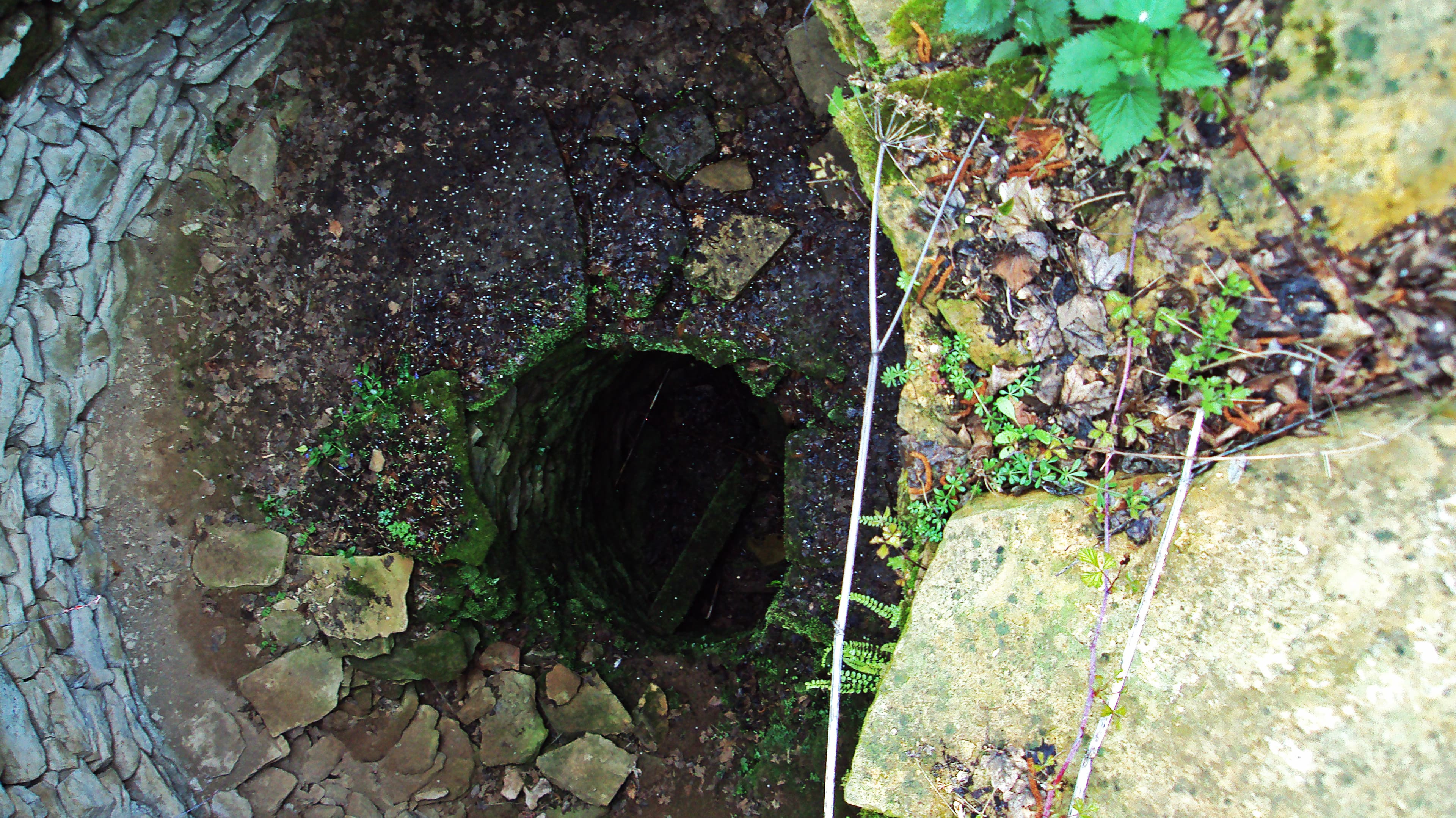
Thirteen precisely cut stone steps descend through a seven-meter corridor into a round, corbel-domed chamber built in the 11th century BC. At its center, a shaft drops five meters through bedrock to the water table, where water has presumably risen for more than three thousand years.
The Sacred Pit of Garlo is the Balkans' only known facility of its type. Its closest architectural relatives are Sardinia's Nuragic pozzi sacri, more than a thousand kilometers away; whether the resemblance reflects contact, shared tradition, or independent invention remains debated. The tholos uses the same corbelling technique as Mycenaean tombs, with fitted stonework whose present condition has raised conservation concerns.
Professor Dimitrina Dzhonova of the Bulgarian Academy of Sciences excavated Garlo in 1972, establishing its Late Bronze Age date and ritual water-cult function; sacrificial-animal traces confirm offerings here. The steps may have structured a ceremonial descent. A proposed but unconfirmed winter-solstice alignment would have carried sunlight down the corridor to the well water, consistent with wider Bronze Age solar-water cosmology without proving that interpretation.
Why this place is sacred
The descent is the experience. Count the steps as you go down. Thirteen, carved from stone, each one taking you deeper underground. The entrance corridor is seven meters long, and by the time you reach the chamber, the world above has been replaced by stone, darkness, and the sound of your own breathing.
The chamber opens into a round space roofed by a corbelled dome. The stonework is visible: fitted blocks rising in concentric courses, each slightly inset from the one below, until the dome closes at the top. This is not rough construction. It is architectural precision applied to a theological problem: how to create a space underground where the sacred could be encountered.
At the center, the well shaft drops into darkness. Five meters down, water surfaces. The water has no apparent current. It sits at the level the earth provides, unchanged by anything happening above. The builders of this chamber came to this water because they understood it as sacred, as a gift from forces beneath the surface, as something that required acknowledgment and offering.
The intimacy of the space is critical. This is not a cathedral. It is a room beneath the earth, perhaps six or seven meters across, where a small group of people could gather around a well shaft in near-total darkness. The experience is not of grandeur but of enclosure. You are inside the earth, in a space shaped by human hands, in the presence of water that rises from below without human assistance.
The thinness arises from the directness of this encounter. There is nothing between you and the water, nothing between the water and whatever forces push it upward from the rock.
The structure served as a Bronze Age water temple where rituals honoring water as sacred and life-giving were performed. The well provided access to the water table, understood as a connection to chthonic forces.
The ritual use ended at some unknown point after the Bronze Age. The site remained undiscovered until Professor Dimitrina Dzhonova's 1972 excavation. Conservation concerns have been raised about the structure's deterioration. A preservation campaign (save-garlo.org) advocates for its protection.
Experience and orientation
The approach to the Sacred Pit gives no warning. The western Bulgarian countryside around Garlo village is agricultural and quiet. There is no grand entrance, no tourist infrastructure. The site is what it has always been: a hole in the ground. But the hole was made with extraordinary care three thousand years ago, and what lies below changes the meaning of the landscape above.
The entrance corridor begins at ground level and descends. The thirteen steps are cut from stone, each one lowering you further from the surface. The light diminishes. The temperature drops. By the fifth or sixth step, you are entering a different world. A headlamp or flashlight is useful, but consider pausing before you switch it on. The builders intended this space to be dark.
The chamber opens at the bottom of the steps. The corbelled dome rises above. The well shaft sits at the center. If the water level is high enough to see, it reflects whatever light you bring. If you stand still and listen, the silence is nearly absolute. The stone absorbs sound. The earth above muffles the surface world.
This is a space designed for encounter with something below the surface. The builders came here to meet the water that the earth provided, to offer what they had in exchange for what the water gave. Traces of sacrificial animals suggest the seriousness of those exchanges. The well is not a utility. It is a threshold.
Emerge into daylight. The contrast is sharp. The world above suddenly seems loud and bright and provisional compared to the permanence of the stone chamber below. The experience is brief but singular. There is nothing else like it in the Balkans.
Approach from Garlo village. The site is in a rural location with limited signage. A local guide or detailed directions are recommended. The entrance corridor begins at ground level. Bring a headlamp or flashlight. The underground chamber is small and may not be accessible at all times due to conservation concerns.
Context and lineage
The community that built this well left no written records. Their identity is unknown. They predated the historical Thracian period and belong to the anonymous Bronze Age cultures of the Balkans. What they left was an underground chamber of remarkable precision, a tholos construction built over a well shaft reaching the water table.
The motivation can be inferred from the architecture and from parallel sites across the Mediterranean. Water emerging from the earth, without human intervention, was understood across Bronze Age cultures as a manifestation of chthonic power. The elaborate construction of the chamber, the thirteen ceremonial steps, and the evidence of animal sacrifice all indicate that this water was not merely useful but sacred.
The builders created an underground temple specifically to honor the water and to facilitate ritual encounter with whatever forces produced it.
The Sacred Pit of Garlo belongs to a Mediterranean tradition of sacred wells and water temples. The closest parallels are the pozzi sacri of the Nuragic civilization in Sardinia, though the nature of the cultural connection remains debated. The tholos construction technique connects the site to the broader Mycenaean and Mediterranean Bronze Age architectural tradition. The well represents the oldest known purpose-built sacred structure in western Bulgaria.
Professor Dimitrina Dzhonova
Excavator
Unknown Bronze Age builders
Creators
Traditions and practice
Ritual descent through the thirteen-step corridor served as a processional entrance. Water offerings and libations were poured into or drawn from the well. Animal sacrifice is attested by excavation finds. The possible winter solstice alignment suggests the well may have marked the moment when the sun appeared to be reborn, its light reflected in the water at the deepest point of the year.
No active religious ceremonies. The site is occasionally visited by archaeologists, heritage advocates, and spiritual travelers. The conservation campaign (save-garlo.org) works to protect the structure.
Descend the thirteen steps slowly, counting each one. Pause at the bottom and allow your eyes to adjust to the darkness before using a light. Stand at the edge of the well shaft and look down at the water. Consider what it meant for Bronze Age people to build an underground chamber specifically to honor water rising from the earth. If visiting near the winter solstice, observe whether sunlight enters the corridor.
The alignment, even if unconfirmed, was at minimum plausible to the builders.
Prehistoric water cult
HistoricalThe Sacred Pit represents the worship of water as sacred and life-giving, one of humanity's most ancient forms of reverence. The elaborate construction of the underground chamber demonstrates the profound importance of water veneration in Late Bronze Age Balkan religion.
Ritual descent through thirteen steps, water offerings and libations, animal sacrifice, possible winter solstice observation through the well shaft.
Conservation advocacy
ActiveThe save-garlo.org campaign advocates for the preservation and protection of the structure, which has experienced deterioration since excavation.
Advocacy, documentation, awareness-raising, and lobbying for conservation funding.
Perspectives and open questions
The Sacred Pit of Garlo invites reading as a Bronze Age water temple, as evidence of a pan-Mediterranean sacred well tradition, and as one of the oldest purpose-built ritual structures in the Balkans.
Scholarly perspective
Archaeologists recognize the site as a unique Bronze Age ritual structure in the Balkans. Professor Dzhonova's 1972 excavation established the 11th century BC date and the ritual identification. The parallels with Nuragic sacred wells have been noted by multiple scholars, though the nature of the cultural connection remains debated. The tholos construction technique is the same used in Mycenaean tholos tombs.
Living and traditional perspectives
The site holds significance for Bulgarian cultural heritage as evidence of sophisticated pre-Thracian civilization. The Bronze Age builders possessed advanced architectural capabilities, contributing to narratives about the depth of Balkan civilization.
Alternative interpretations
Some spiritual seekers interpret the well as an ancient earth-energy access point. The thirteen-step descent is compared to initiatory traditions in mystery religions. The possible solstice alignment is seen as evidence of a cosmological worldview integrating underworld water worship with celestial observation.
Open questions
The cultural identity of the builders remains unknown. Whether the Nuragic connection reflects actual cultural contact across the Mediterranean is unresolved. The full ritual use of the chamber beyond water offerings and animal sacrifice is speculative. Whether there are other undiscovered sacred wells in the region has not been investigated.
Plan your visit
Access and arrival
No accommodation at the site. Sofia (50 km) provides full lodging options. Pernik (closer) offers basic accommodation.
Respectful visit
No dress code. Sturdy footwear essential for the uneven stone steps. A headlamp or flashlight is necessary.
Photography permitted. Flash may be needed for the interior. Tripods useful for low-light conditions.
Do not leave objects in the archaeological structure.
Do not touch the stone walls. Do not enter the well shaft. Access may be restricted based on conservation conditions. Check before visiting.
Access may be restricted due to conservation concerns. Check current conditions before visiting. The underground chamber may be damp, dark, and partially deteriorated. The stone steps may be slippery. Bring a headlamp. The rural location requires own transport and advance planning.
Location
Map loads as you approach this section.
Pilgrim reflections
A portrait of encounter, not a score
Pilgrims describe what they felt, how present they could become, and whether the place would shape a journey. There are no stars and no ranking of traditions.
No reviewed reflections yet
The first pilgrims can help describe the character of being here.
Share a reflection
Available after an account-backed “Been there.” Every reflection is reviewed before publication.
Nearby sacred places
Explore other sacred places in the region. Proximity does not establish access or travel time; check each place’s guidance.


Share a photo
Help visitors recognize Sacred pit of Garlo, Bulgaria. Every submission is reviewed before publication.