Sacred Heart Cathedral
Where seven centuries of silence ended in twin spires rising above a city that refuses to choose one faith
Understand sacred places, explore living traditions, and learn how to engage respectfully with Pilgrim Map.
Access has not been verified. Check current local guidance before planning a visit.
Sarajevo, Sarajevo, Bosnia and Herzegovina
Read the sources
Visit essentials
A quick read before you go
- Duration
- A quiet visit takes thirty to sixty minutes.
- Etiquette
- The Sacred Heart Cathedral is an active place of worship that welcomes visitors between and…
Overview
Sarajevo answers faith not with a single spire but many. Sacred Heart Cathedral rose in the 1880s on a former Janissary camp in a city Ottoman for four centuries. Its twin towers, modeled on Gothic churches in Dijon and Prague, announced the return of institutional Catholic presence to Bosnia after nearly seven hundred years.
Archbishop Josip Stadler, the region's first Catholic archbishop since the medieval era, staked everything on the building, dedicating it to the Sacred Heart of Jesus and consecrating the entire archdiocese to the same, a devotion he held intensely.
The cathedral survived two world wars, Yugoslavia's dissolution, and the Siege of Sarajevo, when shells struck its walls and shrapnel scarred its facade. Damaged but not destroyed, it received a new copper roof and restored stained glass while the parish continued.
Today daily Mass takes place as the call to prayer from Gazi Husrev-beg Mosque reaches the doors. The Old Orthodox Church stands minutes east and the Ashkenazi Synagogue minutes west. The entrance motif appears on Sarajevo Canton's coat of arms, binding the church to a city belonging to no single tradition. Visitors may leave with a sense that difficult, scarred coexistence remains possible.
Why this place is sacred
What makes a place thin is not always age. Sometimes it is density.
The Sacred Heart Cathedral occupies ground that has known radically different kinds of attention across the centuries. Ottoman soldiers once garrisoned here. Austro-Hungarian administrators planned a market. Archbishop Stadler saw something else: a place where Catholic faith, suppressed for centuries, could become visible again. The Neo-Gothic form he and architect Josip Vancas chose was deliberate, reaching back to the European Gothic tradition as though to bridge the seven-hundred-year gap by architectural will.
That act of restoration gives the building a particular charge. Cathedrals in cities with unbroken Christian histories feel inevitable. This one does not. It was fought for, built against the grain of history, and then fought for again when shells fell during the siege. The shrapnel scars on the exterior walls remain visible, not as neglect but as testimony. The copper roof overhead is new, a post-war replacement.
The frescoes inside, painted by Alexander Maximilian Seitz in the 1880s, required careful restoration after four years of war.
But the thinness here is not only about the cathedral. Walk three hundred meters east and you reach the Gazi Husrev-beg Mosque, built in 1532, still calling the faithful to prayer five times daily. Two hundred and fifty meters further stands the Old Orthodox Church, one of Sarajevo's oldest buildings. Four hundred meters west, the Ashkenazi Synagogue completes what may be the most extraordinary interfaith cluster in any European city.
Four traditions, four houses of worship, all within ten minutes' walk, all active, all scarred by the same war, all still open.
This proximity creates something visitors feel before they can name it. The air here carries competing muezzin and church bells. The streets thread between minarets and spires without hierarchy. Whatever thinness means in the theological sense, this neighborhood offers a secular version: a place where the boundaries between traditions become porous, where the sheer accumulation of sacred attention from multiple directions seems to thin the membrane between ordinary life and something more attentive.
Pope Leo XIII re-established the Archdiocese of Vrhbosna in 1881, three years after the Austro-Hungarian Empire took administrative control of Bosnia from the Ottoman Empire. The cathedral was commissioned to serve as the institutional heart of Catholic life in a region where Catholics had maintained their faith for centuries without formal ecclesiastical structures.
Archbishop Stadler envisioned it as both a parish church and a statement: the visible return of Catholicism to a land that had been Ottoman since the fifteenth century. The dedication to the Sacred Heart of Jesus reflected Stadler's personal devotion and the broader nineteenth-century Catholic emphasis on this particular expression of faith.
The cathedral's meaning has expanded with each chapter of Sarajevo's turbulent history. Under Austro-Hungarian rule, it symbolized Western European cultural and religious influence in the Balkans. During the Yugoslav period, it served a Catholic minority in a state where religious identity was politically complex. The 1992-1996 siege transformed it into something else entirely: a symbol of endurance, damaged but standing, its parish life continuing under bombardment.
Pope John Paul II's 1997 visit, just one year after the siege ended, added another layer. The Pope prayed at Stadler's grave, connecting the cathedral's founding generation to its survival. A statue of John Paul II now stands outside, unveiled in 2014, marking the visit as a turning point.
The cathedral's designation as a National Monument of Bosnia and Herzegovina in 2005 completed its integration into civic identity, recognized not only as a Catholic site but as a symbol of the city itself.
Experience and orientation
The approach matters less for its distance than for its transitions. The Ferhadija pedestrian zone carries you through the commercial heart of Sarajevo, past shops and cafes, until the twin towers appear above the roofline. The square in front of the cathedral, Trg Fra Grge Martica, serves as a gathering point for locals. There is nothing solemn about the approach. People sit on benches, children play, the city hums. The sacred and the ordinary share the same pavement.
Inside, the shift is immediate. The Neo-Gothic nave draws the eye upward, past the carved marble altar to the five apse windows, their stained glass designed by Vancas and executed by Tiroler Glasmalerei of Innsbruck. Evening light activates them most vividly. The frescoes by Alexander Maximilian Seitz cover the walls with a warmth that softens the Gothic verticality.
The tomb of Archbishop Stadler sits within the cathedral, grounding the space in the personal story of the man who willed it into existence.
Visitors frequently describe a quality of peace inside the cathedral that feels earned rather than inherited. This is not a place that has always been quiet. Shells fell here. The walls carry marks of it. The peace inside exists in relationship to that violence, not despite it but through it. Those who sit for a while, rather than walking through, often report feeling the particular stillness of a place that has chosen to remain open.
The deeper experience, however, extends beyond the cathedral walls. Many visitors describe the cumulative effect of visiting the cathedral, the Gazi Husrev-beg Mosque, the Old Orthodox Church, and the Synagogue in sequence. Moving between these spaces within a single morning produces something that individual visits cannot: a felt understanding of what it means for a city to hold multiple faiths simultaneously, through centuries of coexistence and conflict, without resolution into a single narrative.
Enter the cathedral with the awareness that this is an active parish church. If you arrive during Mass, sit quietly in the back and participate or simply witness. If you arrive between services, the space opens to a different quality of attention. Sit in a pew and let your eyes travel upward along the columns to the vaulted ceiling. Notice the stained-glass light shifting across the stone.
Find Stadler's tomb and consider what it meant to build a cathedral for a faith that had been institutionally absent for seven centuries.
Then walk east toward the Old Town. Within ten minutes, you will pass the Gazi Husrev-beg Mosque and the Old Orthodox Church. Walk west and find the Synagogue. Let the transitions between these spaces be unhurried. The distances are short, but the shifts in atmosphere, architecture, and acoustic quality are substantial. Sarajevo's interfaith character is not an abstraction. It is a walk.
Context and lineage
When the Austro-Hungarian Empire assumed administration of Bosnia in 1878, the region's Catholic population had been without a formal hierarchy for nearly seven centuries. Bosnian Catholics had maintained their faith through Franciscan friars, who served as the de facto pastoral structure throughout the Ottoman period. Pope Leo XIII's decision to re-establish the Archdiocese of Vrhbosna in 1881 and appoint Josip Stadler as its first archbishop marked a turning point.
Stadler arrived in Sarajevo with a mandate and a vision. The site he secured for the cathedral had been a Janissary camp under Ottoman rule, and the new Austro-Hungarian administration had initially planned a market there. Stadler saw it differently. He commissioned the Czech-born, Vienna-trained architect Josip Vancas, who drew on Notre-Dame de Dijon and St. Teyn Cathedral in Prague for inspiration. Construction began on August 25, 1884.
The building rose quickly. By November 1887, the structure was complete. Two years of interior finishing followed before the formal consecration on September 14, 1889, presided over by the Bishop of Dubrovnik. Stadler dedicated the cathedral and the entire archdiocese to the Sacred Heart of Jesus, a devotion central to his spirituality and to the broader Catholic culture of the period. The statue of the Sacred Heart that crowns the facade remains the building's most visible symbol.
The Catholic presence in Bosnia predates the Ottoman conquest, stretching back to the medieval period. When the Ottoman Empire took control in the fifteenth century, the formal Catholic hierarchy dissolved, and Franciscan friars became the sole pastoral structure for Bosnian Catholics across nearly four hundred years. The Austro-Hungarian administration's arrival in 1878 reopened the institutional question, and Leo XIII's establishment of the archdiocese in 1881 created the conditions for Stadler's cathedral.
The archdiocese has been led by a succession of archbishops since Stadler, each navigating different political realities: Austro-Hungarian rule, the Kingdom of Yugoslavia, communist Yugoslavia, the Bosnian War, and the post-Dayton state. Through each transition, the cathedral has remained the institutional center, its continuity providing a thread through a century of upheaval.
Josip Stadler
historical
The first Archbishop of Vrhbosna, appointed in 1881. Stadler commissioned the cathedral, dedicated it to the Sacred Heart, and served as the architect of modern Catholic institutional life in Bosnia. He is entombed within the cathedral. His cause for beatification has been discussed but has not formally advanced.
Josip Vancas
historical
Czech-born, Vienna-educated architect who designed the cathedral in the Neo-Gothic style, drawing on Notre-Dame de Dijon and St. Teyn Cathedral in Prague. Vancas shaped much of Austro-Hungarian Sarajevo's built environment and also designed the cathedral's stained-glass windows and marble altar.
Alexander Maximilian Seitz
historical
Italian-German painter who created the frescoes adorning the cathedral's interior. The full extent of war damage to his work and whether all frescoes were successfully restored remains an open question.
Pope John Paul II
historical
Visited the cathedral on April 12, 1997, just one year after the end of the Siege of Sarajevo. He prayed at Stadler's tomb, an act widely understood as one of recognition and post-war healing. A statue of John Paul II outside the cathedral, unveiled in 2014, commemorates the visit.
Pope Leo XIII
historical
Re-established the Archdiocese of Vrhbosna in 1881, making possible the construction of the cathedral and the formal return of Catholic institutional life to Bosnia after centuries of Ottoman administration.
Traditions and practice
The cathedral follows the Roman Rite liturgical calendar, marking the seasons from Advent through Ordinary Time with the full cycle of feasts, fasts, and solemnities. Holy Week brings the most elaborate observances: Stations of the Cross, the Triduum, and the Easter Vigil. Christmas Eve midnight Mass fills the cathedral to capacity. The enthronement of new archbishops of Vrhbosna has taken place here since Stadler, connecting each new leader to the founding act of the cathedral's consecration.
The Feast of the Sacred Heart, a moveable feast typically falling in June, holds particular importance. Stadler dedicated not only the building but the entire archdiocese to this devotion, and the annual celebration renews that dedication. The statue of the Sacred Heart on the facade serves as a permanent, outward-facing expression of this commitment.
Weekday Masses are held at 8:00 AM and 6:00 PM. Sunday and feast day Masses are at 8:00 AM, 9:00 AM, 10:30 AM, 12:00 PM, and 6:00 PM. The noon Sunday Mass is conducted in English, drawing both English-speaking residents and visitors. Sacramental life continues with baptisms, confirmations, weddings, and funerals. The John Paul II Pastoral Youth Center, associated with the cathedral, coordinates formation programs for younger members of the community.
Candle lighting and private prayer are welcome throughout the day. The cathedral functions as both the formal seat of the archdiocese and a neighborhood church, and the atmosphere reflects this dual identity: solemn during liturgy, gently accessible between services.
If you are a Catholic visitor, the noon Sunday English-language Mass offers an opportunity to participate in worship and connect with the local community. Arrive a few minutes early to settle in and take in the space before the liturgy begins.
If you are visiting outside of your own tradition, or outside of any tradition, consider sitting quietly in the nave for fifteen or twenty minutes. Let the architecture do its work. The Neo-Gothic verticality draws attention upward in a way that quiets internal noise. Watch how light moves through the stained-glass windows, shifting the quality of the interior across the course of a day. Evening light is particularly worth witnessing.
Before or after your visit, walk to the nearby Gazi Husrev-beg Mosque and the Old Orthodox Church. The shift in atmosphere between these spaces, each carrying its own centuries of prayer, produces a cumulative effect that no single visit can achieve.
Roman Catholicism
ActiveThe Sacred Heart Cathedral is the largest cathedral in Bosnia and Herzegovina and the seat of the Archdiocese of Vrhbosna. It represents the re-establishment of formal Catholic institutional life in the region after nearly seven centuries. Daily Mass, a full sacramental life, and the enthronement of archbishops have taken place here continuously since 1889, interrupted but not ended by the Siege of Sarajevo.
Daily Mass at 8:00 AM and 6:00 PM on weekdays. Sunday Masses at 8:00 AM, 9:00 AM, 10:30 AM, 12:00 PM (English), and 6:00 PM. Holy Week observances, Christmas Eve midnight Mass, and the full Roman Rite liturgical calendar. Sacramental celebrations including baptisms, confirmations, weddings, and funerals. The enthronement of new archbishops continues a tradition begun with Stadler in 1881.
Devotion to the Sacred Heart of Jesus
ActiveThe cathedral's dedication to the Sacred Heart reflects Archbishop Stadler's personal devotion and the broader nineteenth-century Catholic emphasis on this expression of faith. Stadler consecrated the entire archdiocese to the Sacred Heart, and the statue crowning the facade makes this devotion architecturally manifest. The Feast of the Sacred Heart serves as the cathedral's patronal celebration.
Devotional prayers to the Sacred Heart. Annual celebration of the Feast of the Sacred Heart, a moveable feast typically falling in June. The facade statue serves as a permanent, outward-facing focus of this devotion, visible from across the cathedral square.
Interfaith coexistence in Sarajevo
ActiveWhile not a religious tradition in the formal sense, Sarajevo's practice of maintaining active houses of worship from four major faith traditions within a few hundred meters of each other constitutes a living tradition of coexistence. The Sacred Heart Cathedral is one of four pillars of this arrangement, alongside the Gazi Husrev-beg Mosque, the Old Orthodox Church, and the Ashkenazi Synagogue. The city's designation as the 'Jerusalem of Europe' reflects this distinctive character.
No formal interfaith liturgy takes place at the cathedral, but the daily reality of Muslim call to prayer reaching cathedral walls, of congregants from different traditions sharing the same pedestrian zone, and of visitors walking between houses of worship in a single morning constitutes a practice of coexistence that is enacted rather than proclaimed.
Perspectives and open questions
The Sacred Heart Cathedral invites readings from several directions. Architectural historians see a statement of Austro-Hungarian cultural ambition. Catholic communities see the restoration of their institutional heart. Sarajevans across all faiths see a symbol of their city's identity. War historians see survival. Each perspective holds genuine truth, and honest engagement with the cathedral requires holding them together.
Scholarly perspective
Architectural historians recognize the Sacred Heart Cathedral as a significant example of late nineteenth-century Neo-Gothic architecture in the Balkans. Josip Vancas, who designed much of Austro-Hungarian Sarajevo, drew on French and Czech Gothic precedents to create a building that consciously linked Bosnia to the broader Central European cultural sphere. Scholars understand the cathedral as a deliberate act of cultural assertion: the Austro-Hungarian administration signaling its presence through architectural language as much as through governance.
Historians of religion note the cathedral's role in the complex relationship between Catholicism, Orthodoxy, and Islam in Bosnia. The re-establishment of the Catholic hierarchy was not merely pastoral but political, creating institutional structures that would shape Bosnian Catholic identity through successive political regimes. The cathedral's incorporation into Sarajevo Canton's heraldry speaks to its integration into civic identity beyond its strictly religious function.
Living and traditional perspectives
For Bosnian Catholics, the cathedral holds a significance that is both institutional and deeply personal. Archbishop Stadler is understood as the founder who gave modern Bosnian Catholicism its form, and his tomb inside the cathedral connects present worship to that founding act. The dedication to the Sacred Heart resonates within a devotional tradition that many families have maintained across generations.
The cathedral's survival of the siege carries particular weight within the community. Many parishioners lived through the bombardment and remember the damage to the building as inseparable from the damage to their city and their lives. The post-war restoration is understood not merely as architectural repair but as an act of faith.
Pope John Paul II's 1997 visit, when he prayed at Stadler's grave in a cathedral still bearing the marks of war, is remembered as a moment when the suffering of the community was witnessed by the universal Church.
Open questions
Several questions remain open. The full extent of wartime damage to Alexander Maximilian Seitz's frescoes, and whether all were successfully restored to their original quality, has not been comprehensively documented in publicly available sources. Whether Archbishop Stadler's cause for beatification will formally advance remains uncertain. Perhaps most intriguingly, the archaeological question of what lies beneath the cathedral's foundations, on ground that served as an Ottoman Janissary camp, has never been investigated.
The layers beneath the building may mirror the layers above it.
Plan your visit
Access and arrival
Central Sarajevo offers lodging at all price points, from backpacker hostels in Bascarsija to international hotels along the Ferhadija zone. The cathedral is within walking distance of most city-center accommodation. For visitors seeking an extended contemplative stay, several guesthouses in the quieter Kovaci and Vratnik neighborhoods above the Old Town provide a more reflective base while remaining a short walk from the cathedral.
Respectful visit
Shoulders and knees should be covered. This is an active house of worship, and modest dress is expected regardless of the season. No specific head covering is required for women, though some choose to wear one during Mass.
Photography without flash is generally permitted when services are not in progress. During Mass, put cameras and phones away entirely. Tripods and professional equipment require advance permission from the parish. The stained-glass windows photograph best in evening light from inside and morning light from outside.
Small donations toward the cathedral's preservation are appreciated. A donation box is available inside. Candles may be lit with a small offering. There is no entrance fee.
No eating or drinking inside the cathedral. Do not walk around the nave during Mass unless you are attending worship. Large bags and backpacks should be kept at your feet, not on the pews. The cathedral may occasionally be closed for private events or special liturgies.
Be mindful that this is a functioning parish, not a museum. If you arrive during Mass and do not wish to participate, either wait outside or sit quietly at the back without moving around. Photography during services is not appropriate. The cathedral community extends genuine hospitality to visitors, and that hospitality is best honored by matching it with attentiveness.
Current practical details
Address
Trg Fra Grge Martića 2, Sarajevo 71000, Bosnia and Herzegovina
Phone
Hours
Hours, fees, and access can change — verify on the official source before you travel. Practical details last checked Jun 2026.
Location
Map loads as you approach this section.
Pilgrim reflections
A portrait of encounter, not a score
Pilgrims describe what they felt, how present they could become, and whether the place would shape a journey. There are no stars and no ranking of traditions.
No reviewed reflections yet
The first pilgrims can help describe the character of being here.
Share a reflection
Available after an account-backed “Been there.” Every reflection is reviewed before publication.
Nearby sacred places
Explore other sacred places in the region. Proximity does not establish access or travel time; check each place’s guidance.
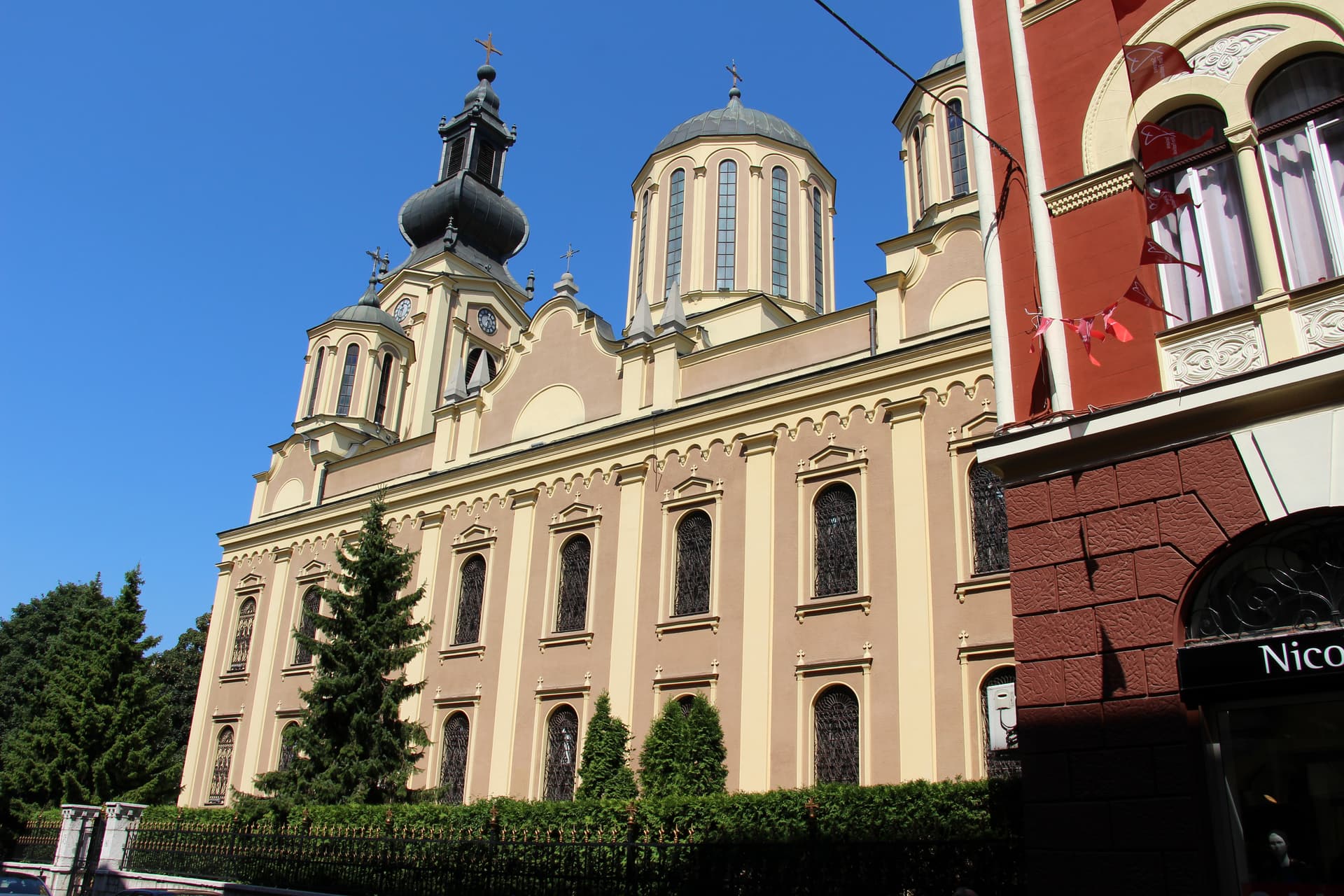
Orthodox Church of the Nativity of the Theotokos
Sarajevo, Sarajevo, Bosnia and Herzegovina
0.1 km away

Sarajevo Old Orthodox Church
Sarajevo, Sarajevo, Sarajevo Canton, Bosnia and Herzegovina
0.4 km away
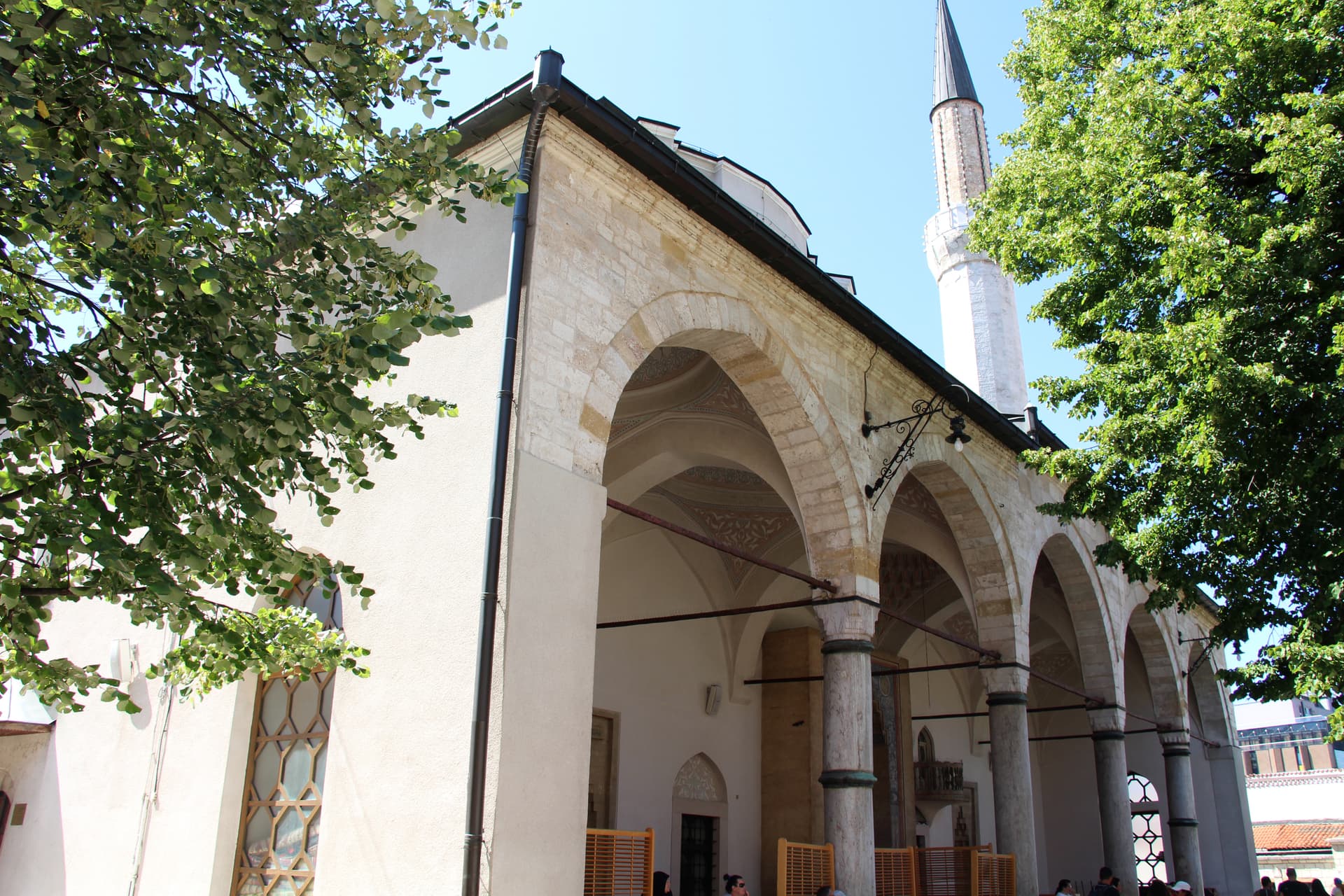
Gazi Husrev-beg Mosque
Sarajevo, Sarajevo, Bosnia and Herzegovina
0.5 km away
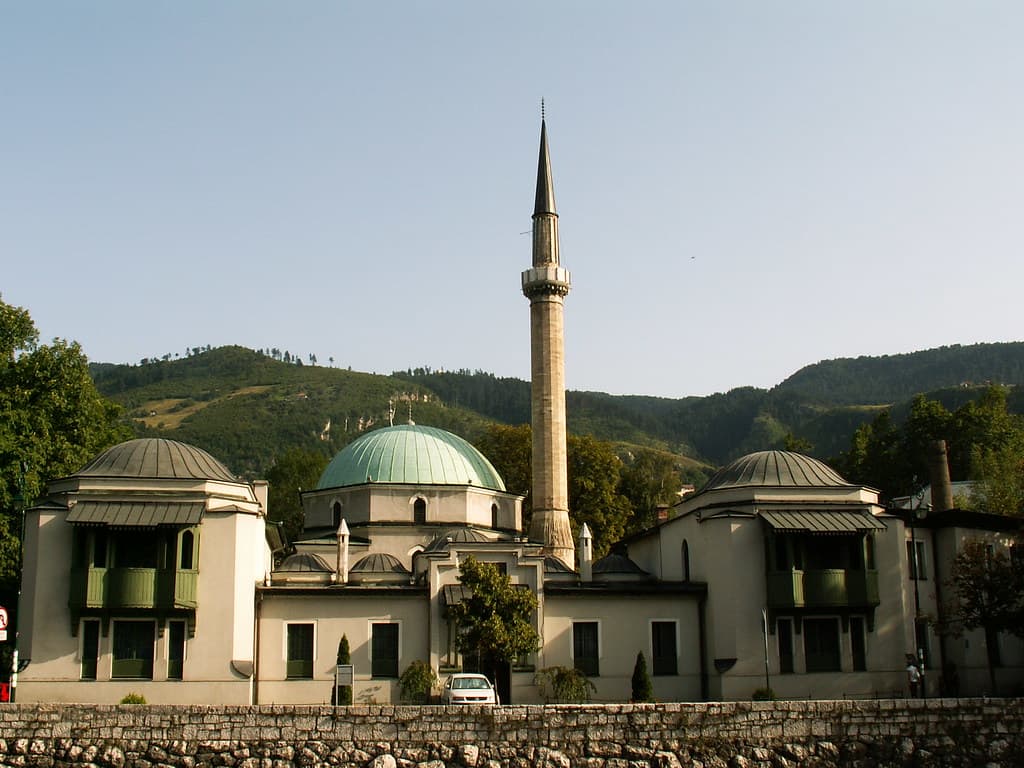
Emperor's Mosque, Sarajevo
Sarajevo, Sarajevo, Bosnia and Herzegovina
0.5 km away
References
Sources consulted for this page. Source categories describe the publication, not a guarantee that every claim is verified. Traditional accounts and outside interpretations may differ.
- 01The Cathedral of Jesus' Sacred Heart — Destination Sarajevo (Official Tourism Portal)officialOfficial Sarajevo tourism portal with verified visitor information
- 02Katedrala — Archdiocese of VrhbosnaofficialOfficial archdiocese website—primary source for ecclesiastical information
- 03Sacred Heart Cathedral, Sarajevo — Wikipedia contributorsofficialWell-cited Wikipedia article with architectural details, history, and war damage information
- 04The Sacred Heart Cathedral - National Monument of B&H and Symbol of Sarajevo — Furaj.baguideDetailed article on the cathedral's National Monument status and historical significance
- 05Cathedral of the Sacred Heart of Jesus, Sarajevo — ReligianaofficialReligious heritage database with architectural and liturgical details
- 06Sacred Heart Cathedral - Lonely Planet — Lonely PlanetguideReputable travel guide with practical visitor information
- 07Sacred Heart Cathedral Sarajevo: guide & story — Bosnian VoyagerguideLocal travel guide with war damage details and mass schedule
- 08Josip Stadler — Wikipedia contributorsofficialBiographical article on the first archbishop of Vrhbosna who initiated construction
Share a photo
Help visitors recognize Sacred Heart Cathedral. Every submission is reviewed before publication.