Emperor's Mosque, Sarajevo
Where Sarajevo began, where faith endures through fire and restoration
Understand sacred places, explore living traditions, and learn how to engage respectfully with Pilgrim Map.
Access has not been verified. Check current local guidance before planning a visit.
Sarajevo, Sarajevo, Bosnia and Herzegovina
Read the sources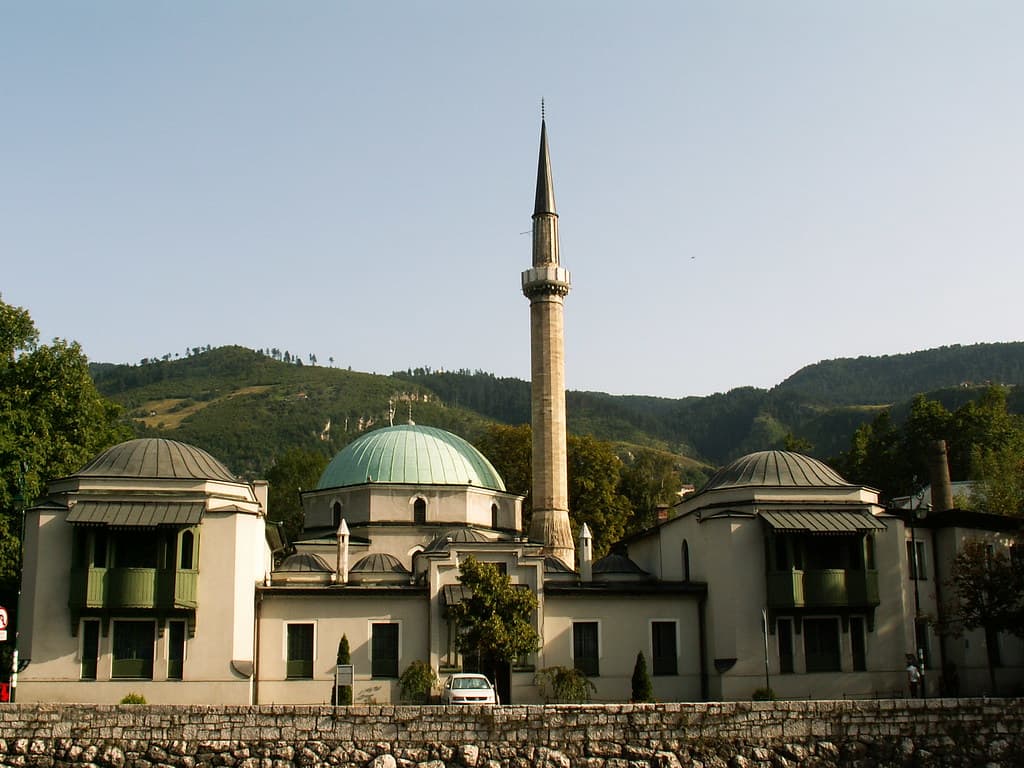
Image of Emperor's Mosque, Sarajevo. Image source
Visit essentials
A quick read before you go
- Duration
- A brief visit to the mosque interior and courtyard takes twenty to thirty minutes.
- Access
- The Emperor's Mosque stands along Obala Isa bega Ishakovica, the street named for the city's…
Overview
Sarajevo's first pulse was a wooden mosque beside the Miljacka River. In 1457, before a city surrounded it, Ottoman commander Isa-beg Ishaković built the prayer space and, according to tradition, presented it to Sultan Mehmed II the Conqueror. It became the Emperor's or Sultan's Mosque and a spiritual foundation for Sarajevo.
Invaders destroyed the original in 1480. The stone mosque dates to 1565 under Sultan Suleiman the Magnificent, in the classical Ottoman style that shaped Sarajevo's architecture. Across these reconstructions, the faithful have continued gathering for five daily prayers for more than five and a half centuries.
War damaged the mosque again in the 1990s; its latest restoration finished in 2020. It remains a living house of worship, with the call to prayer crossing the river, a cemetery holding the city's founder and generations of scholars, and Ramadan nights marked by illuminated courtyards and muqabala recitation. The continuity is spiritual, not merely architectural.
Why this place is sacred
Some places become sacred through age. Others through event. The Emperor's Mosque became sacred through becoming the seed from which an entire city grew.
When Isa-beg built his wooden mosque here in 1457, there was no Sarajevo. The settlement that would become one of Ottoman Europe's most important cities began to form around this spot, with the Sultan's representatives establishing their residences beside the new mosque. The market followed. The hammam. The caravanserai. The infrastructure of urban life arranged itself around this spiritual anchor. What we now call Sarajevo's Old Town, Bascarsija, traces its origins to this choice of ground.
The cemetery adjacent to the mosque adds another dimension of sanctity. Here lies Isa-beg Ishakovic himself, the city's founder. Around him rest generations of viziers, mullahs, muftis, and sheikhs who shaped Bosnian Islamic life. The living pray beside the dead in an unbroken chain of devotion reaching back to the fifteenth century.
Survival through destruction has its own sacred weight. The mosque was rebuilt after Hungarian attacks in 1480, reconstructed entirely in stone in 1565, restored after damage during the Bosnian War of the 1990s. Each renewal represents a community's refusal to let their sacred space vanish. Each reconstruction is an act of faith made physical.
The proximity of the Reis-ul-Ulema's seat, the office of Bosnia's Grand Mufti, adds institutional significance to spatial sanctity. This is not merely an old mosque. This is the place beside which the highest Islamic authority in Bosnia and Herzegovina conducts the affairs of the faith. Five centuries of accumulated prayer, the presence of the founding dead, survival through war, and ongoing religious leadership converge here in a single location along the Miljacka River.
Isa-beg Ishakovic built the original mosque as the religious center of a planned Ottoman settlement. In Ottoman urban planning, the mosque was never merely a place of prayer but the organizing principle around which markets, baths, schools, and residences arranged themselves. The Emperor's Mosque fulfilled this function precisely, becoming the nucleus of what would grow into one of the most important cities in Ottoman Europe.
Its dedication to Sultan Mehmed II linked the new settlement directly to imperial patronage and authority.
The mosque has passed through several material incarnations while maintaining spiritual continuity. The original wooden structure of 1457 gave way to stone in 1565, establishing the classical Ottoman form that persists today. Side rooms were added in 1800 and connected to the central prayer area in 1848. The Austro-Hungarian period brought the adjacent Ulema-majlis building in 1910. Interior decorations were conserved between 1980 and 1983, documenting artistic traditions spanning centuries.
The Bosnian War of 1992-1995 brought significant damage, continuing a pattern of destruction and renewal that stretches back to the fifteenth century. Facade restoration in 2015 and comprehensive renewal in 2020 represent the latest chapter in this ongoing cycle. What visitors encounter today is a space shaped by centuries of care, crisis, and commitment, its aesthetic layered with the marks of multiple eras while its function remains what it has always been.
Experience and orientation
The setting prepares you before you enter. The mosque rises beside the Miljacka River, its octagonal minaret reflected in waters that have flowed past this spot since before the city existed. The classical Ottoman proportions, the courtyard with its ablution fountain, the cemetery visible beyond the walls, these elements compose an environment distinct from the bustle of nearby Bascarsija.
Inside, the eye adjusts to decoration accumulated across centuries. The painted interiors, conserved between 1980 and 1983, layer sixteenth-century foundations with nineteenth-century elaborations. Stalactite decorations, a signature of Ottoman mosque architecture, draw the gaze upward. The mihrab, the niche indicating the direction of Mecca, displays the fine craftsmanship that led scholars to describe this as one of the most beautiful Ottoman-era mosques in the Balkans.
But beauty is not the primary experience visitors report. What recurs in accounts is depth, the sense of standing in a space where prayer has been offered for over five and a half centuries, where the founder of the city lies buried steps away, where the current Grand Mufti maintains his office adjacent to where the Ottoman sultan's representatives once resided. The weight of that continuity becomes tangible.
For Muslim visitors, participation in prayer deepens this connection. To join the lines of worshippers in a mosque that has held these same prayers since the fifteenth century creates a sense of belonging to something larger than individual experience. For non-Muslim visitors, the atmosphere of active worship, the rhythm of the call to prayer echoing over the river, and the quiet dignity of the space offer a contemplative encounter with a tradition that has shaped this region for centuries.
The cemetery invites extended reflection. Walking among the graves of viziers and sheikhs, of scholars and teachers who devoted their lives to this community, connects the personal to the historical in ways that statistics and dates cannot achieve.
The Emperor's Mosque rewards those who approach it as more than a historical site. Come with awareness that this is an active place of worship where daily prayers continue as they have for centuries. Your presence is welcomed but occurs within a context of living faith.
Consider sitting quietly in the courtyard before entering, allowing the setting to settle around you. Notice the river flowing past, the minaret rising against the sky, the sounds of the city softened by the mosque's walls. If you are not Muslim and visit outside prayer times, approach the interior with the same reverence you would bring to any sacred space where others worship.
The cemetery deserves more than a glance. Isa-beg Ishakovic, who chose this ground and built the first mosque here, lies among his community. To stand beside his grave is to stand at the beginning of Sarajevo itself.
Context and lineage
The founding of the Emperor's Mosque is inseparable from the founding of Sarajevo itself. In 1457, Isa-beg Ishakovic, an Ottoman commander of distinguished lineage, chose a location along the Miljacka River to establish a new settlement. His first major construction was a wooden mosque, then known simply as the Atik Mosque, the Old Mosque.
According to traditional accounts, when Sultan Mehmed II visited during his conquest of Bosnia, he walked through the nascent bazaar with Isa-beg. At the entrance to the mosque, Isa-beg presented the building to the Sultan as a gift. From that moment, it became the Emperor's Mosque, the Careva dzamija, linking the new settlement directly to the conqueror of Constantinople and the most powerful ruler of the age.
Scholars debate whether Isa-beg originally built the mosque at the Sultan's commission or whether it was indeed his personal initiative later gifted to Mehmed II. The traditional narrative emphasizes the generous presentation, while some historical analysis suggests earlier imperial involvement. What remains clear is that this mosque became the nucleus around which Sarajevo organized itself, fulfilling the Ottoman urban principle that the mosque should be the heart from which a city grows.
The Emperor's Mosque has served the Islamic community of Sarajevo without significant interruption since 1457, making it one of the longest continuously active mosques in the Balkans. The original wooden structure was destroyed by Hungarian forces in 1480 and rebuilt. The current stone building, constructed in 1565, has undergone modifications and restorations but maintains the classical Ottoman form established nearly five centuries ago.
Through Ottoman rule, Austro-Hungarian administration, the Kingdom of Yugoslavia, socialist Yugoslavia, and the independent Bosnian state, the mosque has continued to function as a place of worship. The Bosnian War of 1992-1995 brought damage but not destruction, and the mosque was fully restored by 2020.
The Islamic Community in Bosnia and Herzegovina, headed by the Reis-ul-Ulema, maintains its seat adjacent to the Emperor's Mosque. This institutional presence underscores the mosque's continuing centrality to Bosnian Islamic life, not as museum piece but as living heart of a living faith.
Isa-beg Ishakovic
historical
Ottoman commander and founder of Sarajevo who built the original mosque in 1457 and is buried in the adjacent cemetery. His choice of this location determined where a major European city would rise.
Sultan Mehmed II
historical
Known as 'the Conqueror' for capturing Constantinople in 1453, Mehmed II received the mosque as a gift and gave it the name it carries today. His patronage linked Sarajevo to the center of Ottoman power.
Sultan Suleiman the Magnificent
historical
During his reign, the mosque was rebuilt in stone in 1565 after earlier destruction, establishing the classical Ottoman structure that persists today.
Traditions and practice
Five daily prayers, the salat, have been performed at this mosque since its founding. The rhythm of fajr at dawn, dhuhr at midday, asr in the afternoon, maghrib at sunset, and isha in the evening has structured religious life here for over five centuries. Friday congregational prayer, the Jumu'ah, brings the community together for worship and the khutbah, the weekly sermon.
These practices follow the Hanafi school of jurisprudence, the dominant legal tradition in Ottoman Islam and still the prevailing approach in Bosnia. The forms are those that would have been recognized by worshippers in the fifteenth century, linking contemporary practitioners to the generations who prayed here before them.
Ramadan transforms the Emperor's Mosque. After the iftar meal that breaks each day's fast, worshippers gather for tarawih prayers, special nightly devotions performed only during the holy month. The courtyard is illuminated, the gates welcoming those who have broken their fast and now seek communal worship.
Muqabala, communal recitation of the Quran, creates a particular atmosphere during Ramadan. The congregation recites together, voices joining in the Arabic phrases that have echoed through these walls for centuries. The last ten nights of Ramadan intensify this practice as worshippers seek Laylat al-Qadr, the Night of Power.
On the 27th of Ramadan, commemorating the night the Quran was first revealed, the Emperor's Mosque hosts special dhikr ceremonies, practices of remembrance that connect worshippers to the divine through repeated invocation. These ceremonies continue traditions that stretch back through Bosnian Islamic history.
A distinctive element of Sarajevo's Ramadan is the cannon that fires at sunset, signaling the moment to break the fast. The sound echoes across the city, and worshippers make their way to mosques including this one, the oldest in the city, for evening prayers.
If you are Muslim and wish to pray at the Emperor's Mosque, you are welcome to join any of the five daily prayers or the Friday congregation. Arrive a few minutes before the prayer time, remove your shoes at the entrance, and join the lines of worshippers. If unfamiliar with the specific timings, the call to prayer will orient you.
If you are visiting as a non-Muslim seeker, time your visit between prayers when the mosque is open to visitors. Use the designated visiting hours and enter with the quiet respect appropriate to an active house of worship. The courtyard offers a contemplative space for reflection before or after viewing the interior.
For those visiting Sarajevo during Ramadan, experiencing the evening atmosphere around the Emperor's Mosque offers insight into living Islamic practice. The illuminated courtyard, the sound of the cannon at sunset, and the flow of worshippers to tarawih prayers create an environment distinct from ordinary tourism.
Sunni Islam
ActiveThe Emperor's Mosque holds foundational significance as the first mosque built in Sarajevo and one of the oldest in Bosnia and Herzegovina. It represents the introduction of Islam to this region following the Ottoman conquest and has served as the spiritual nucleus of Sarajevo for over five centuries. The mosque's survival through multiple destructions and its restoration after the 1990s Bosnian War symbolize the resilience of Bosnian Muslim faith and identity.
Five daily prayers continue at the mosque as they have since the fifteenth century. Friday congregational prayers bring the community together for worship and the weekly sermon. Ramadan observances include tarawih prayers after iftar, muqabala communal recitations of the Quran, and special dhikr ceremonies on the 27th of Ramadan commemorating Laylat al-Qadr. The mosque follows the Hanafi school of jurisprudence, the dominant legal tradition in Ottoman Islam and contemporary Bosnian Islamic practice.
Bosnian Islamic tradition
ActiveThe mosque represents the unique expression of Islam in Bosnia, blending Ottoman heritage with local culture to create a distinctive regional identity. Sarajevo's development as one of the most important Islamic centers in Europe during Ottoman rule began at this site. The adjacent seat of the Reis-ul-Ulema underscores its continued centrality to the Islamic Community in Bosnia and Herzegovina.
Bosnian Islamic tradition expresses itself particularly during Ramadan, when the traditional sunset cannon signals the iftar breaking of the fast and worshippers gather at mosques including the Emperor's Mosque for tarawih prayers. Community iftar gatherings, traditional foods, and the illumination of mosque courtyards create an atmosphere that blends universal Islamic observance with specifically Bosnian expressions of the faith.
Perspectives and open questions
The Emperor's Mosque invites interpretation through multiple lenses: architectural history, Islamic religious tradition, and Bosnian cultural identity. These perspectives complement rather than contradict each other, together illuminating a site whose significance operates on several levels simultaneously.
Scholarly perspective
Art historians and scholars of Islamic architecture recognize the Emperor's Mosque as a significant example of classical Ottoman mosque design in the Balkans. The 1565 reconstruction, possibly executed by an architect trained in the school of Mimar Sinan, demonstrates the style that defined Ottoman religious architecture at its height. The mosque represents the largest single-subdome mosque in Bosnia and Herzegovina.
Historians emphasize the mosque's role in Sarajevo's urban development. The Ottoman model of city building placed the mosque at the center, with markets, baths, and other infrastructure arranged around it. The Emperor's Mosque fulfilled this function precisely, becoming the nucleus from which one of Ottoman Europe's major cities grew.
Scholars note some uncertainty regarding the exact circumstances of founding. Traditional accounts present Isa-beg's gifting of the mosque to Sultan Mehmed II as a spontaneous act of generosity during the Sultan's visit. Some historical analysis suggests the mosque may have been built at imperial commission from the beginning. The distinction matters for understanding the relationship between local Ottoman officials and central imperial authority, though it does not diminish the mosque's significance.
Living and traditional perspectives
Within Bosnian Islamic tradition, the Emperor's Mosque holds venerated status as the genesis point of Sarajevo's Muslim community. The traditional narrative of Isa-beg presenting the mosque to Sultan Mehmed II emphasizes loyalty, generosity, and the establishment of legitimate Islamic authority in newly conquered lands.
The mosque's survival through centuries of challenge, including destruction by Hungarian forces, damage during twentieth-century conflicts, and reconstruction after each crisis, embodies the resilience of Bosnian Muslim identity. Each restoration represents not merely architectural preservation but spiritual renewal, a community's refusal to let its sacred heart be extinguished.
The adjacent cemetery, holding the remains of Isa-beg and generations of religious scholars, creates what might be called a sacred genealogy. Contemporary worshippers pray in the presence of those who established and sustained their tradition across centuries. This connection to the founding dead gives the living community its depth and legitimacy.
Open questions
Genuine mysteries remain regarding the Emperor's Mosque and its founder. The exact circumstances of Isa-beg Ishakovic's death are unclear, and whether his tomb in the adjacent cemetery has been definitively identified remains a matter of some uncertainty. The identity of the architect who designed the 1565 stone reconstruction is unknown, with attribution to a disciple of Mimar Sinan being speculation rather than documented fact.
The appearance and precise layout of the original 1457 wooden mosque are not recorded. What was lost when Hungarian forces destroyed it in 1480 can only be inferred from the stone structure that followed. The exact evolution of religious practice at this site across five centuries, including the specific ways Ottoman-era worship may have differed from contemporary Bosnian Islamic practice, is not fully documented.
Plan your visit
Access and arrival
The Emperor's Mosque stands along Obala Isa bega Ishakovica, the street named for the city's founder, overlooking the Miljacka River. The nearest tram stop is Latin Bridge, approximately 250 meters away. The mosque is within easy walking distance of Bascarsija, Sarajevo's historic bazaar quarter.
Sarajevo International Airport is approximately 10 kilometers from the mosque, reachable in 20-25 minutes by taxi under normal traffic conditions.
The mosque entrance is at street level, with steps into the interior. Contact the mosque in advance regarding accessibility concerns.
Sarajevo offers accommodation at all price points within walking distance of the Emperor's Mosque. Hotels in and around Bascarsija provide the most convenient access to the Old Town's sacred sites. Budget travelers will find hostels in the bazaar area, while those seeking comfort can choose from boutique hotels converted from Ottoman-era buildings.
Respectful visit
Modest dress is required for all visitors. Women must cover their heads with a headscarf upon entering. Both men and women must cover their shoulders completely. Long pants or skirts that fall below the knee are required. Signs at the entrance specifically prohibit revealing clothing.
Shoes are removed before entering the prayer area. The floor is clean and often carpeted, suitable for walking in socks or bare feet. If you are uncomfortable without shoes, bring clean socks.
If you arrive without appropriate covering, you may be asked to wait outside or may be offered a covering to borrow. It is better to come prepared than to rely on the mosque's resources.
Photography is generally permitted outside prayer times with discretion. Do not photograph worshippers without their explicit permission. Avoid flash photography inside the mosque. If staff or worshippers indicate that photography should stop, comply immediately.
Exterior photography is unrestricted. Early morning and late afternoon light create optimal conditions. Evening photography, when the mosque is illuminated, offers a different aesthetic.
The cemetery should be photographed, if at all, with restraint appropriate to a burial ground.
There is no formal tradition of physical offerings at the Emperor's Mosque. Charitable giving, particularly during Ramadan, is encouraged in Islam but occurs through appropriate channels rather than at the mosque itself.
The mosque does not charge admission. Donations are appreciated but not required or expected.
Entry for non-Muslim visitors is limited to visiting hours, which may vary. The current schedule indicates Monday through Saturday, 17:00 to 21:00, but visitors should confirm locally or contact the mosque before planning their visit.
During prayer times, non-Muslim tourists should remain outside the prayer area or wait in the courtyard. Friday midday prayer and Ramadan observances bring larger crowds; non-Muslim visitors should be especially unobtrusive during these times.
The adjacent Reis-ul-Ulema building is not open to casual visitors.
The Emperor's Mosque is an active place of worship, not a museum. Visiting during prayer times is inappropriate for non-Muslim tourists and may result in being asked to wait. Check prayer times before your visit and plan accordingly.
Do not approach the mosque expecting access at all hours. The visiting schedule exists to balance heritage access with religious function. Respect the boundaries established by the community.
Current practical details
Address
VC4J+X7G, Obala Isa-bega Ishakovića, Sarajevo 71000, Bosnia and Herzegovina
Hours
Hours, fees, and access can change — verify on the official source before you travel. Practical details last checked Jun 2026.
Location
Map loads as you approach this section.
Pilgrim reflections
A portrait of encounter, not a score
Pilgrims describe what they felt, how present they could become, and whether the place would shape a journey. There are no stars and no ranking of traditions.
No reviewed reflections yet
The first pilgrims can help describe the character of being here.
Share a reflection
Available after an account-backed “Been there.” Every reflection is reviewed before publication.
Nearby sacred places
Explore other sacred places in the region. Proximity does not establish access or travel time; check each place’s guidance.

Sarajevo Old Orthodox Church
Sarajevo, Sarajevo, Sarajevo Canton, Bosnia and Herzegovina
0.3 km away
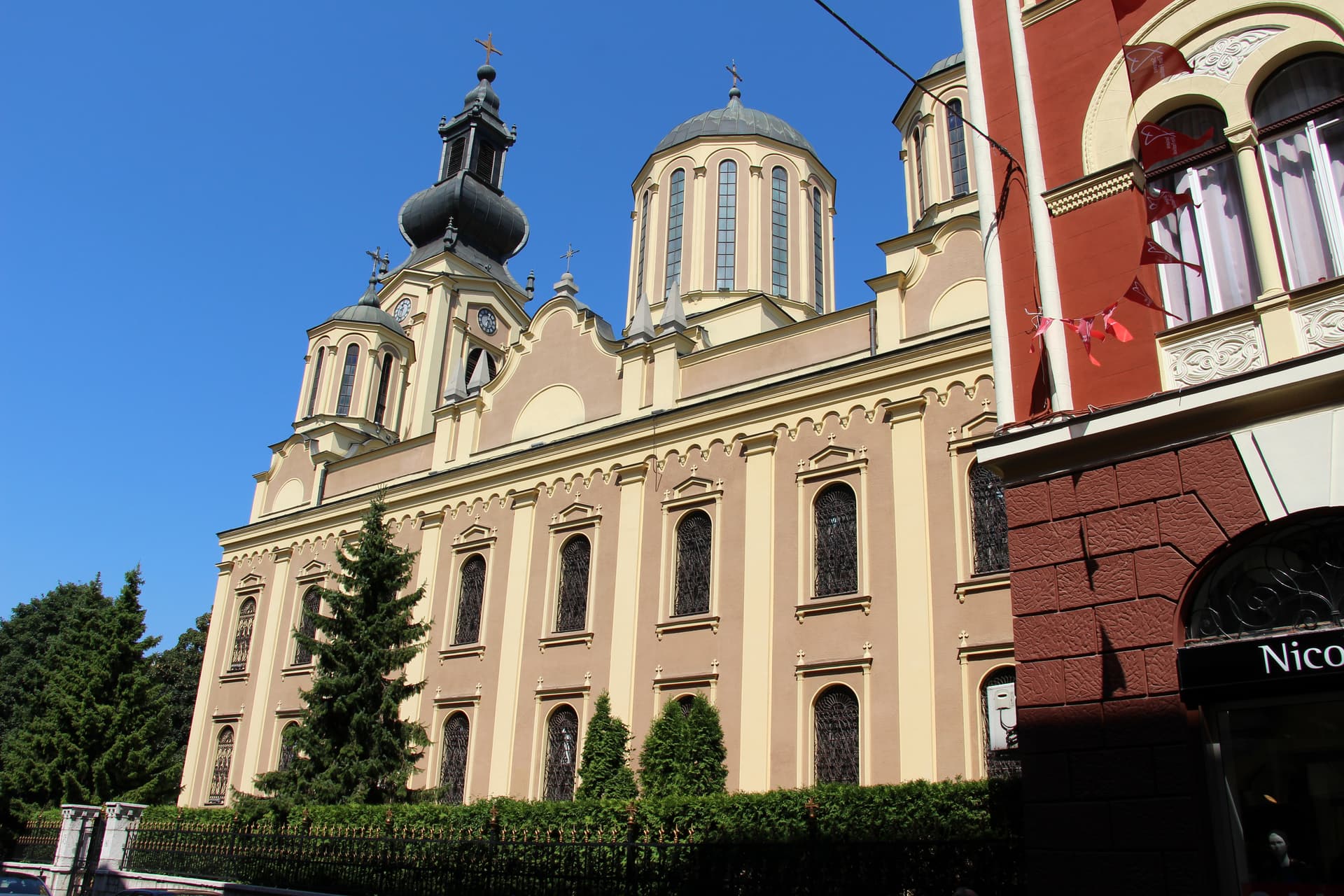
Orthodox Church of the Nativity of the Theotokos
Sarajevo, Sarajevo, Bosnia and Herzegovina
0.3 km away

Sacred Heart Cathedral
Sarajevo, Sarajevo, Bosnia and Herzegovina
0.5 km away
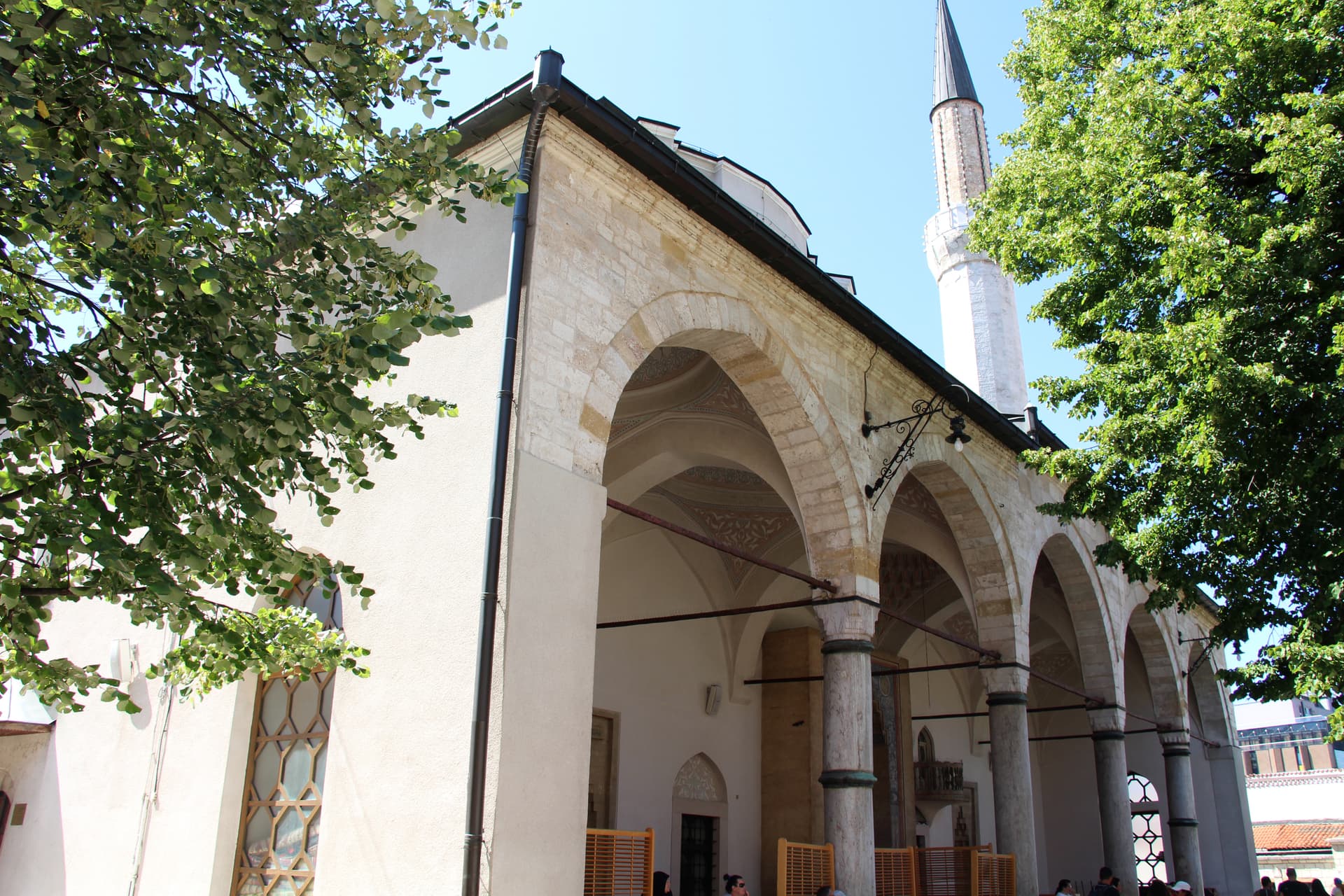
Gazi Husrev-beg Mosque
Sarajevo, Sarajevo, Bosnia and Herzegovina
0.6 km away
References
Sources consulted for this page. Source categories describe the publication, not a guarantee that every claim is verified. Traditional accounts and outside interpretations may differ.
- 01The Sultan's Mosque (Careva Džamija) as the First Ottoman Mosque in Sarajevo — Muslim HeritageacademicScholarly article with academic citations from Kreševljaković, Donia, and Mujezinović
- 02Emperor's Mosque - Destination Sarajevo — Sarajevo Tourism BoardofficialOfficial visitor information with hours and contact details
- 03Sultan Mehmed Fatih Mosque in Sarajevo — Islamic Arts MagazineacademicDetailed architectural analysis and artistic assessment
- 04Eight ways to experience the spirit of Ramadan in Sarajevo — Destination SarajevoguideInformation on Ramadan practices and ceremonies
- 05The Islamic Community in Bosnia and Herzegovina — Islamic Community in BiHspiritualOfficial Islamic religious authority information
- 06Emperor's Mosque — Wikipedia contributorsacademicComprehensive overview with architectural details and history
- 07The Emperor's Mosque – Sarajevo's Historic Ottoman Gem — Balkan KaleidoscopeguideHistorical overview and visitor experience
- 08Emperor's Mosque, Sarajevo — ReligianaspiritualReligious significance and visitor information
- 09Emperor's Mosque | Sarajevo, Bosnia & Hercegovina — Lonely PlanetguidePractical visitor information
- 10Mosques of Sarajevo — The Complete PilgrimspiritualReligious tourism perspective
Share a photo
Help visitors recognize Emperor's Mosque, Sarajevo. Every submission is reviewed before publication.