Gazi Husrev-beg Mosque
Where five centuries of prayer rise beneath a single dome
Understand sacred places, explore living traditions, and learn how to engage respectfully with Pilgrim Map.
Access has not been verified. Check current local guidance before planning a visit.
Sarajevo, Sarajevo, Bosnia and Herzegovina
Read the sources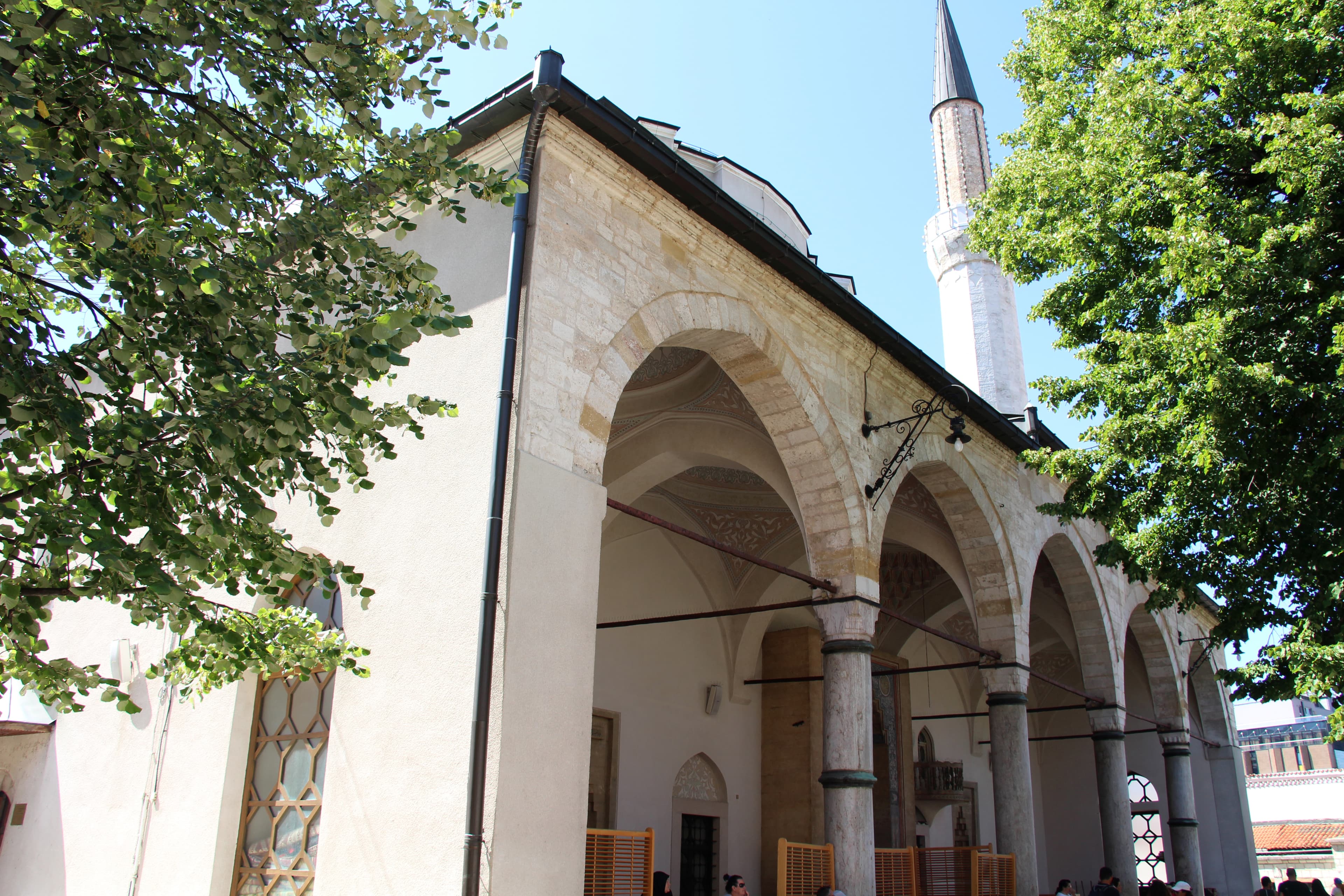
Image of Gazi Husrev-beg Mosque. Image source · CC-BY-2.0
Visit essentials
A quick read before you go
- Duration
- Thirty minutes to one hour for the mosque itself.
- Access
- The mosque stands in Bascarsija, Sarajevo's historic old town, within the Stari Grad…
Overview
Gazi Husrev-beg Mosque remains a living center of Bosnian Islam. Ancient chestnuts shade the marble ablution fountain used for nearly half a millennium; a forty-five-metre minaret links today's call to the first congregation of 1530.
Gazi Husrev-beg—Ottoman governor of Bosnia and grandson of Sultan Bayezid II—commissioned it as the center of a waqf serving the community in perpetuity. Architect Acem Esir Ali of Tabriz joined Persian design to Ottoman imperial form, creating what scholars regard as the Balkans' finest Early Classical Ottoman architecture: a luminous great dome, smaller half-domes, and calligraphy turning the Word into visual form.
During the 1992–1995 Siege of Sarajevo, Serbian artillery deliberately targeted cultural landmarks and severely damaged the mosque. Its careful reconstruction became an act of faith and refusal to extinguish spiritual continuity. Restored whole, with dome and muezzin's call resumed, it embodies a tradition the faithful attribute to the protective power of its founder's supplication.
Why this place is sacred
Certain places accumulate spiritual weight not through dramatic revelation but through the steady accretion of devotion over centuries. The Gazi Husrev-beg Mosque is such a place. Five times each day since 1530, the muezzin has climbed the minaret and released the adhan into the air above Sarajevo. That call has not ceased through Ottoman rule, Austro-Hungarian occupation, two world wars, communist governance, or a three-and-a-half-year siege.
The sheer continuity of that practice—millions of prayers offered beneath the same dome—has saturated this ground with intention.
The founder himself rests within the mosque's embrace. Gazi Husrev-beg's turbe stands in the courtyard, a stone's throw from the prayer hall he endowed. His waqf—the charitable trust that funded the mosque, its madrasa, library, clock tower, and markets—continues to operate after nearly five centuries, an act of generosity that has outlived empires. To stand beside his mausoleum is to feel the weight of that sustained purpose.
The mosque's survival of the 1992-1995 siege adds another dimension. When artillery shells struck the building, they targeted not merely stone but memory itself. The reconstruction that followed was more than restoration; it was an assertion that sacred continuity cannot be destroyed by force. Visitors who know this history find the restored dome and freshly inscribed calligraphy charged with defiance and hope in equal measure.
Finally, there is the context of place. Within a hundred meters of the mosque stand a Catholic cathedral, a Serbian Orthodox cathedral, and an Ashkenazi synagogue. This concentration of faiths in Sarajevo's old quarter creates a kind of interfaith resonance—a reminder that the human impulse toward the sacred takes many forms, all of them rooted in the same ground.
Gazi Husrev-beg commissioned the mosque in 1530 as the spiritual anchor of an extensive waqf endowment designed to serve the Muslim community of Sarajevo in perpetuity. The waqf encompassed a madrasa for Islamic education, a library for scholarly preservation, a khaniqah for Sufi spiritual practice, a hammam, markets, and a clock tower—a complete ecosystem of worship, learning, and daily life centered on the mosque.
The mosque has passed through several phases of damage and renewal without losing its essential character. The burning of Sarajevo by Prince Eugene of Savoy in 1697 brought the first major damage, followed by repair. In 1898, during Austro-Hungarian rule, it became the first mosque in the world to receive electric lighting—a remarkable moment of modernity entering sacred tradition. Interior decorations applied during this period were later lost.
The most traumatic rupture came during the 1992-1995 siege, when deliberate shelling severely damaged the structure. Reconstruction, supported primarily by Saudi funding, restored the building, and artist Hazim Numanagic created new interior calligraphy that honors the Ottoman tradition while bearing the mark of contemporary Bosnian artistry. In 2006, the mosque was declared a National Monument of Bosnia and Herzegovina.
Experience and orientation
The approach through Bascarsija, Sarajevo's old bazaar quarter, prepares the visitor gradually. Narrow lanes of coppersmiths and coffee sellers open suddenly onto the mosque's forecourt, where the forty-five-meter minaret marks the transition from commerce to contemplation. A marble shadrvan fountain catches the light in the courtyard, its running water the prelude to the ablutions that precede prayer.
The courtyard itself invites lingering. Mature chestnut trees provide canopy and shade, their presence a quiet reminder of the generations who have gathered here. To one side stands the turbe of Gazi Husrev-beg, an octagonal mausoleum where the founder has rested since his death in 1541. The stone is worn smooth by centuries of proximity to the faithful. Nearby rises the Sahat-kula, the clock tower that uniquely keeps lunar time—a visible sign of the Islamic calendar's rhythm governing this place.
Entering the prayer hall, the eye is drawn upward. The central dome, approximately twelve meters in diameter, channels light through windows at its base, creating a luminous canopy over the carpeted floor below. Calligraphic inscriptions by Hazim Numanagic adorn the walls and pendentives, rendering Quranic verses in flowing scripts that seem to hover between decoration and devotion. Two smaller half-domes extend the space, and the mihrab—the niche indicating the direction of Mecca—focuses the entire composition toward prayer.
The atmosphere shifts depending on the hour. In the quiet of a weekday morning, the hall holds a stillness that amplifies small sounds: the rustle of pages, the soft tread of stockinged feet, a murmured supplication. At the call to prayer, the space transforms. The muezzin's voice descends from the minaret and fills the courtyard, and worshippers begin to gather, arranging themselves in rows that face Mecca with a discipline that has not varied in five hundred years.
For those who know the mosque's recent history, every restored surface carries a double meaning. The fresh calligraphy speaks both of eternal truths and of a community's determination to rebuild what war attempted to erase.
The mosque stands at the heart of Bascarsija, Sarajevo's historic old town in the Stari Grad municipality. It is easily reached on foot from anywhere in the city center, with tram stops nearby. The surrounding bazaar, clock tower, madrasa, and library all form part of the original waqf complex and merit exploration as an integrated whole.
Context and lineage
Gazi Husrev-beg arrived in Bosnia as Ottoman governor in 1521, a man of royal lineage—his mother was a daughter of Sultan Bayezid II. Over two decades of rule, he transformed Sarajevo from a modest settlement into a flourishing Ottoman city, and the waqf he established became the engine of that transformation.
The mosque was its spiritual core, but the endowment encompassed an entire urban ecosystem: a madrasa founded in 1537 that remains one of the oldest continuously operating schools in the Balkans, a library housing one of the most important Islamic manuscript collections in southeastern Europe, a khaniqah for Sufi practitioners, markets whose revenue funded the charitable works, and a hammam for public use.
Many among the faithful believe that Husrev-beg's founding supplication—his dua asking God to protect and sustain the complex—continues to shield the mosque to this day.
The mosque has served as the principal congregational mosque of Bosnian Muslims since its completion, a role it maintains to this day. The Gazi Husrev-beg Waqf, established nearly five hundred years ago, continues to administer the complex and its educational and charitable functions. The madrasa, founded in 1537, has provided Islamic education through every political regime that has governed Bosnia—Ottoman, Austro-Hungarian, Yugoslav, and independent—making it one of the most enduring educational institutions in the Balkans.
Gazi Husrev-beg
Acem Esir Ali (Alauddin)
Hazim Numanagic
Traditions and practice
The mosque was designed to serve as the principal jami (congregational mosque) of Sarajevo, accommodating the Friday jumu'ah prayer that gathers the community weekly. Five daily prayers have been called from the minaret since 1530, following the Hanafi school of Sunni jurisprudence that predominates in the Balkans. The Arabic sermon (khutba) delivered from the carved minbar at Friday prayer connects the local congregation to the worldwide Muslim community.
Eid al-Fitr and Eid al-Adha prayers draw the largest gatherings, filling the mosque and its courtyard. During Ramadan, Tarawih night prayers extend the day's devotion. The original waqf also included a khaniqah where Sufi practitioners gathered for dhikr and spiritual retreat, though this function is no longer active.
All traditional practices continue uninterrupted. The mosque hosts Ramadan iftar gatherings that bring the community together for the evening meal that breaks the daily fast. The Gazi Husrev-beg Madrasa provides Islamic education to students who walk the same grounds as their predecessors across five centuries. The Gazi Husrev-beg Library, housing thousands of manuscripts and rare texts, supports Islamic scholarship and hosts lectures and exhibitions in buildings throughout the complex.
Scholarly activities and cultural events extend the mosque's role beyond worship into the broader intellectual life of Bosnian Islam.
Non-Muslim visitors are welcome during designated visiting hours, outside the times of prayer. The entrance fee is 3 KM. Weekday mornings offer the most contemplative atmosphere. Allow time to explore beyond the prayer hall—the courtyard with its fountain and founder's mausoleum, the clock tower keeping lunar time, and the surrounding bazaar that the waqf originally funded all deepen the experience. Late afternoon light falls beautifully in the courtyard.
Those who wish to hear the adhan without entering during prayer can stand in the courtyard as the muezzin's call descends from the minaret.
Sunni Islam (Hanafi school)
ActiveThe Gazi Husrev-beg Mosque is the largest and most important historical mosque in Bosnia and Herzegovina, serving as the principal congregational mosque of Bosnian Muslims since 1530. The muezzin's call has sounded from its minaret five times daily for nearly five centuries. The associated madrasa, founded in 1537, is one of the oldest continuously operating educational institutions in the Balkans.
Five daily prayers, Friday congregational prayer with Arabic sermon, Eid al-Fitr and Eid al-Adha celebrations, Tarawih prayers during Ramadan, Quranic education at the madrasa, Islamic scholarly activities at the library, and funeral prayers.
Sufism (historical)
HistoricalThe original waqf complex included a khaniqah, a Sufi lodge for spiritual practice and hospitality, reflecting the central role of Sufi orders in Ottoman-era Bosnian Islam. The khaniqah served as a center for mystical devotion and the accommodation of traveling practitioners.
Sufi dhikr gatherings, spiritual retreats, and hospitality for travelers were practiced in the khaniqah during the Ottoman period. These functions are no longer active at the complex.
Perspectives and open questions
The Gazi Husrev-beg Mosque invites understanding through multiple lenses—architectural, historical, spiritual, and political. Its story encompasses Ottoman imperial patronage, Islamic devotional continuity, wartime destruction, and the quiet power of reconstruction.
Scholarly perspective
Architectural historians recognize the mosque as the finest surviving example of Early Classical Ottoman architecture in the Balkans, attributed to Acem Esir Ali, a Persian-born architect from Tabriz who served as chief imperial architect before the more famous Mimar Sinan. The single-dome plan flanked by half-domes represents a critical moment in Ottoman architectural development. The waqf complex as a whole—mosque, madrasa, library, khaniqah, clock tower, hammam, and commercial structures—is considered one of the most complete Ottoman religious-educational-commercial endowments outside Turkey.
Historians emphasize the mosque's role in shaping Sarajevo's urban identity. Before Husrev-beg's governorship, Sarajevo was a modest settlement; the waqf effectively created the city's monumental core. The complex's survival and continued function through Ottoman, Austro-Hungarian, Yugoslav, and post-independence periods make it a document of Bosnian Muslim cultural continuity across five centuries of political upheaval.
The attribution of the architect remains debated. While most scholars accept Acem Esir Ali based on stylistic analysis and historical circumstance, the connection is not definitively documented, and Mimar Sinan was once speculatively proposed.
Living and traditional perspectives
For Bosnian Muslims, the mosque represents the unbroken spiritual lineage of Islam in the Balkans. The founder's turbe, standing in the courtyard where generations have prayed, is venerated as a site of continuing blessing. Husrev-beg's waqf endowment is understood as an act of profound piety whose merit continues to accrue nearly five centuries later—a living example of the Islamic principle that charitable works outlast the donor.
The mosque's survival of the 1992-1995 siege carries deep spiritual significance. When artillery deliberately targeted this and other Bosnian cultural sites, the community understood the assault as an attempt to erase their identity. The mosque's endurance and reconstruction are widely attributed to divine protection and to the power of Husrev-beg's original dua—his supplication at the moment of founding, whose spiritual force is believed to continue shielding the building he loved.
Alternative interpretations
Some visitors are struck by the mosque's position within Sarajevo's remarkable multi-faith landscape. Within a radius of roughly a hundred meters, one finds a great mosque, a Catholic cathedral, a Serbian Orthodox cathedral, and a synagogue—four major world religions sharing the same city quarter in a proximity almost without parallel.
This concentration has led some to describe Sarajevo as possessing a unique interfaith spiritual energy, a place where the human impulse toward the sacred finds expression in multiple traditions simultaneously, each enriching the others by proximity.
Open questions
The original sixteenth-century interior decorative scheme of the mosque has been lost. When post-war restorers removed the Austro-Hungarian-era decorations applied in 1914, they found no earlier layers beneath, leaving the mosque's original visual character a matter of conjecture. The exact identity of the architect, while widely attributed to Acem Esir Ali, lacks definitive documentary confirmation.
And the underground spiritual dimension—what five centuries of unbroken prayer have deposited in these walls, what the founder's supplication may or may not sustain—belongs to a category of knowledge that architecture and history can only gesture toward.
Plan your visit
Access and arrival
The mosque stands in Bascarsija, Sarajevo's historic old town, within the Stari Grad municipality. It is easily walkable from the city center. Tram stops serve the area nearby. Sarajevo International Airport is approximately ten kilometers away. Entrance fee: 3 KM per person.
Sarajevo's old town offers numerous hotels and guesthouses within walking distance of the mosque. Staying in Bascarsija places visitors at the center of the city's historic and cultural life, with restaurants, cafes, and other sacred sites all accessible on foot.
Respectful visit
Modest dress is required for all visitors: shoulders and knees must be covered. Women must cover their hair; headscarves are provided at the entrance for those who need them. Loose, comfortable clothing that does not attract attention is appropriate.
Photography is generally permitted in the mosque and courtyard but should be conducted with discretion. Do not photograph worshippers during prayer. No flash should be used during prayer times. When in doubt, ask permission.
Traditional offerings are not customary in the mosque context. Charitable donations (sadaqah) are welcome and may be placed in designated collection points.
Remove shoes before entering the prayer hall | Maintain silence during prayers | Do not walk in front of someone praying | Visit during designated tourist hours, not during prayer times | Interior closed to tourists during Ramadan | Women must cover their hair inside the mosque
The mosque interior is closed to tourists during Ramadan. Avoid visiting during Friday midday prayer (jumu'ah) unless you are attending as a Muslim worshipper. Do not walk in front of anyone engaged in prayer. Flash photography during prayer times is inappropriate.
Current practical details
Address
Sarači 8, Sarajevo 71000, Bosnia and Herzegovina
Phone
Hours
Hours, fees, and access can change — verify on the official source before you travel. Practical details last checked Jun 2026.
Location
Map loads as you approach this section.
Pilgrim reflections
A portrait of encounter, not a score
Pilgrims describe what they felt, how present they could become, and whether the place would shape a journey. There are no stars and no ranking of traditions.
No reviewed reflections yet
The first pilgrims can help describe the character of being here.
Share a reflection
Available after an account-backed “Been there.” Every reflection is reviewed before publication.
Nearby sacred places
Explore other sacred places in the region. Proximity does not establish access or travel time; check each place’s guidance.
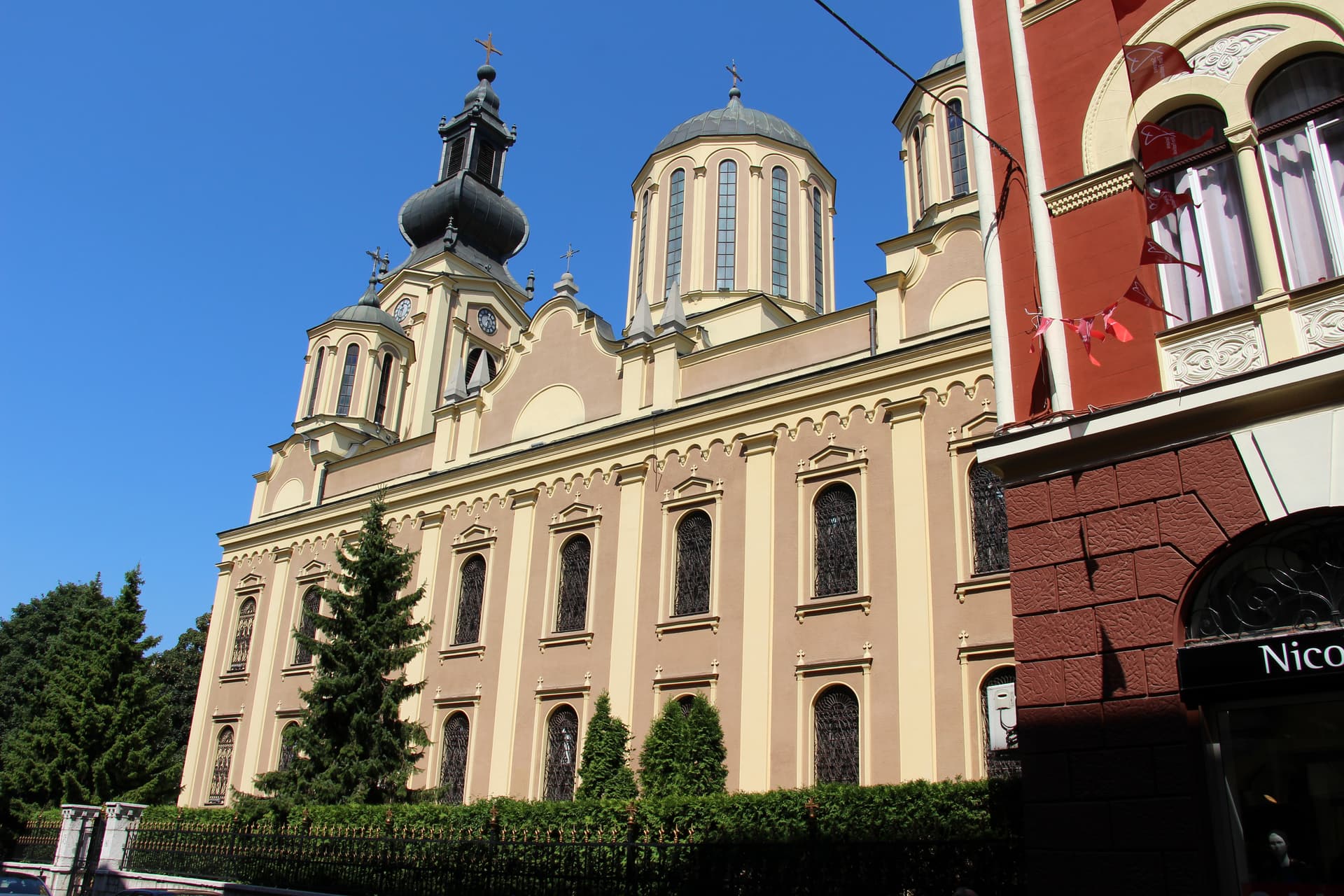
Orthodox Church of the Nativity of the Theotokos
Sarajevo, Sarajevo, Bosnia and Herzegovina
0.4 km away

Sacred Heart Cathedral
Sarajevo, Sarajevo, Bosnia and Herzegovina
0.5 km away
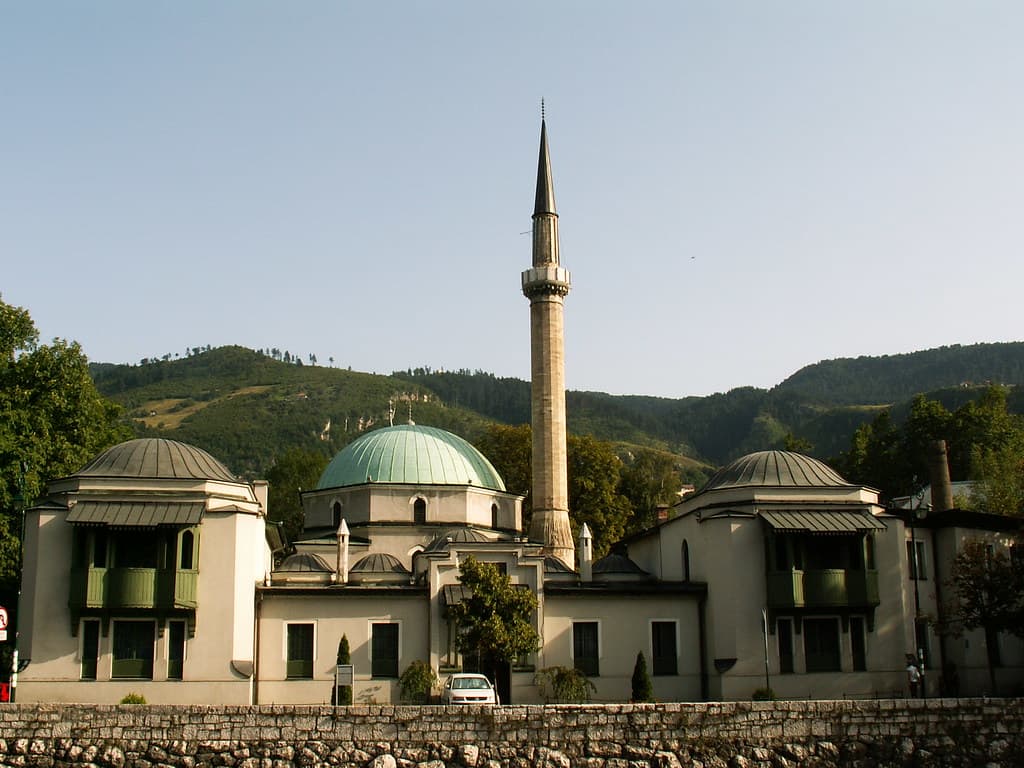
Emperor's Mosque, Sarajevo
Sarajevo, Sarajevo, Bosnia and Herzegovina
0.6 km away

Sarajevo Old Orthodox Church
Sarajevo, Sarajevo, Sarajevo Canton, Bosnia and Herzegovina
0.7 km away
References
Sources consulted for this page. Source categories describe the publication, not a guarantee that every claim is verified. Traditional accounts and outside interpretations may differ.
- 01Gazi Husrev-beg's Mosque in Sarajevo: A Gem of Islamic Architecture — Muslim HeritageacademicDetailed scholarly treatment of architectural and historical significance
- 02Ghazi Husrev-Beg's Mosque — Begova Džamija Official SiteofficialOfficial mosque website
- 03Gazi Husrev-begova Dzamija — Archnet / MITacademicArchitectural documentation from Archnet
- 04Gazi Husrev Bey Mosque — Encyclopaedia BritannicaacademicBritannica entry
- 05Ottoman Masterpiece in Sarajevo — Islamic Arts MagazineacademicDetailed architectural analysis
- 06Information for tourists - Gazi Husrev-begov vakuf — Gazi Husrev-beg WaqfofficialOfficial waqf institution visitor information
- 07GPS coordinates of Gazi Husrev-beg Mosque — Latitude.tospiritualGPS coordinate reference
- 08Gazi Husrev-beg Mosque - Wikipedia — Wikipedia contributorsacademicComprehensive overview with historical and architectural details
- 09Gazi Husrev Bey's Mosque — Destination SarajevoguideOfficial Sarajevo tourism portal
- 10Gazi Husrev-beg Mosque in Sarajevo — Atlas ObscuraguideVisitor-focused with historical context
Share a photo
Help visitors recognize Gazi Husrev-beg Mosque. Every submission is reviewed before publication.