Rehaghiu (Rinaghju) Menhirs
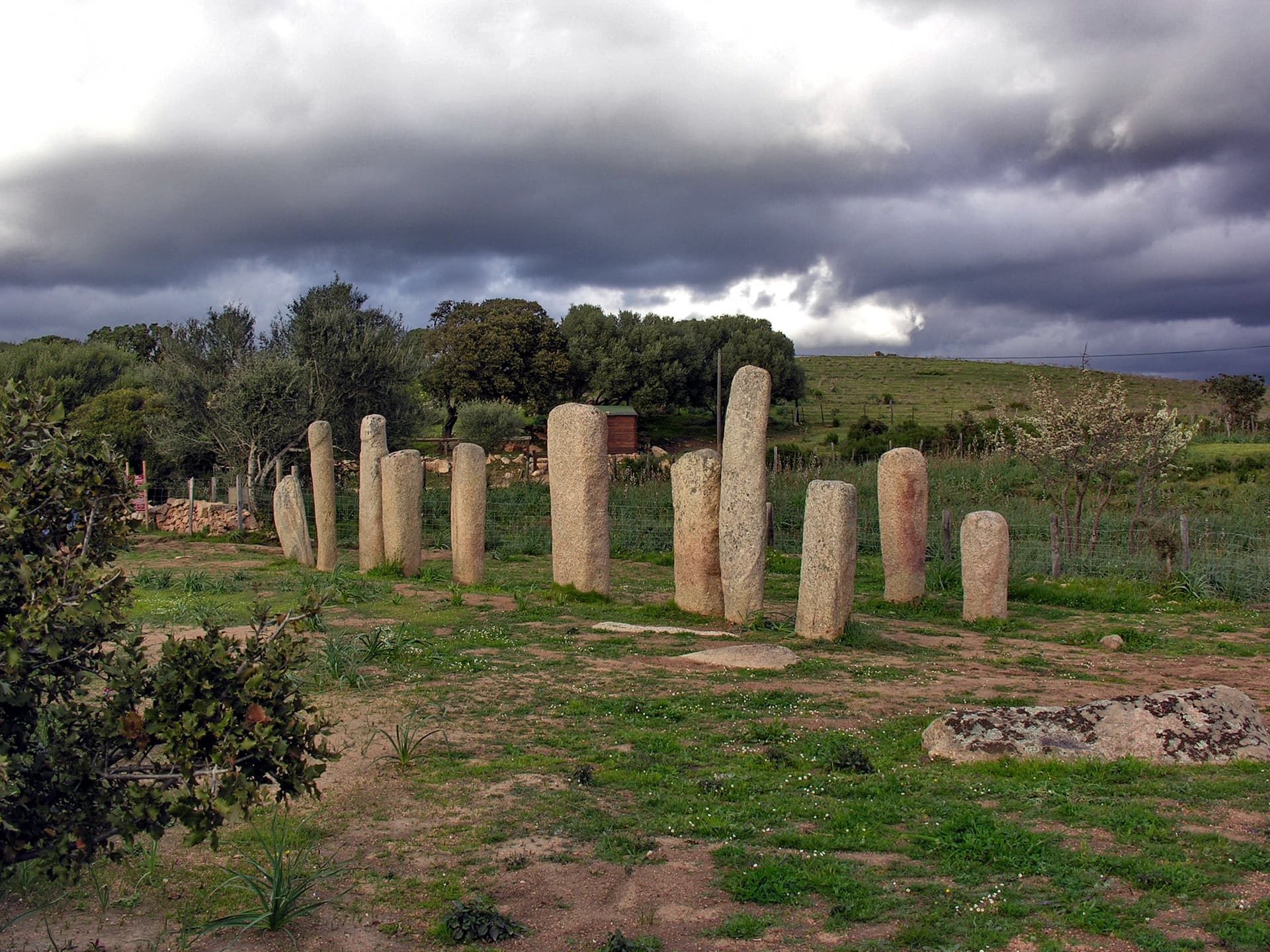
Forty-six granite sentinels standing in parallel rows beneath a shaded grove, marking a path through prehistoric time
Understand sacred places, explore living traditions, and learn how to engage respectfully with Pilgrim Map.
Access has not been verified. Check current local guidance before planning a visit.
Sartène, Corse-du-Sud, France

Image of Rehaghiu (Rinaghju) Menhirs. Image source · CC-BY-SA-3.0
Visit essentials
A quick read before you go
- Duration
- Thirty to sixty minutes for meaningful experience of Rinaghju alone.
- Access
- Located on the Cauria plateau, approximately 15 kilometers southwest of Sartene.
Overview
Rinaghju's roughly north-south rows create a corridor through space and time. Forty-six granite menhirs, the tallest about a meter and a half, form two lines whose destination is lost but whose direction still invites visitors to walk between them. Following that path south to north or north to south traces a processional form marked for over three thousand years, although the ceremony once enacted there is unknown.
Unlike the carved warriors at nearby Stantari, forty-four Rinaghju stones are plain. Two bear faces with marked eyes and noses and diagonal swords, suggesting a different significance—perhaps threshold guardians or commemorations of particular individuals, though no answer survives.
A grove canopy filters the Mediterranean light, giving Rinaghju a sheltered, contemplative intimacy absent from exposed Stantari. Where Stantari confronts, Rinaghju invites; the weathered plain stones and two carved presences reward slow movement rather than spectacle.
Why this place is sacred
The parallel rows create a different quality of encounter than standing stones scattered across a landscape. At Rinaghju, the arrangement is deliberate, processional. The two lines of menhirs mark a path, a way through. Whatever ritual or ceremonial function this served, the form itself carries meaning. To walk between aligned stones is to follow a direction set by hands three thousand years gone.
The presence of two carved statue-menhirs among the plain stones adds another dimension. At Stantari, the carved figures are the main attraction, the plain stones their companions. At Rinaghju, the relationship reverses. Forty-four plain stones surround two with faces and swords. Were these guardians at significant points in the processional? Commemorations of individuals important enough for carving? Markers of threshold or transition? The questions matter more than answers we cannot provide.
The grove setting distinguishes Rinaghju from the exposed plateau where Stantari stands. Trees filter the light, creating dappled shadow rather than harsh Mediterranean sun. The atmosphere is quieter, more sheltered. Where Stantari seems to stand against the sky, Rinaghju nestles within the landscape. Each offers something the other cannot.
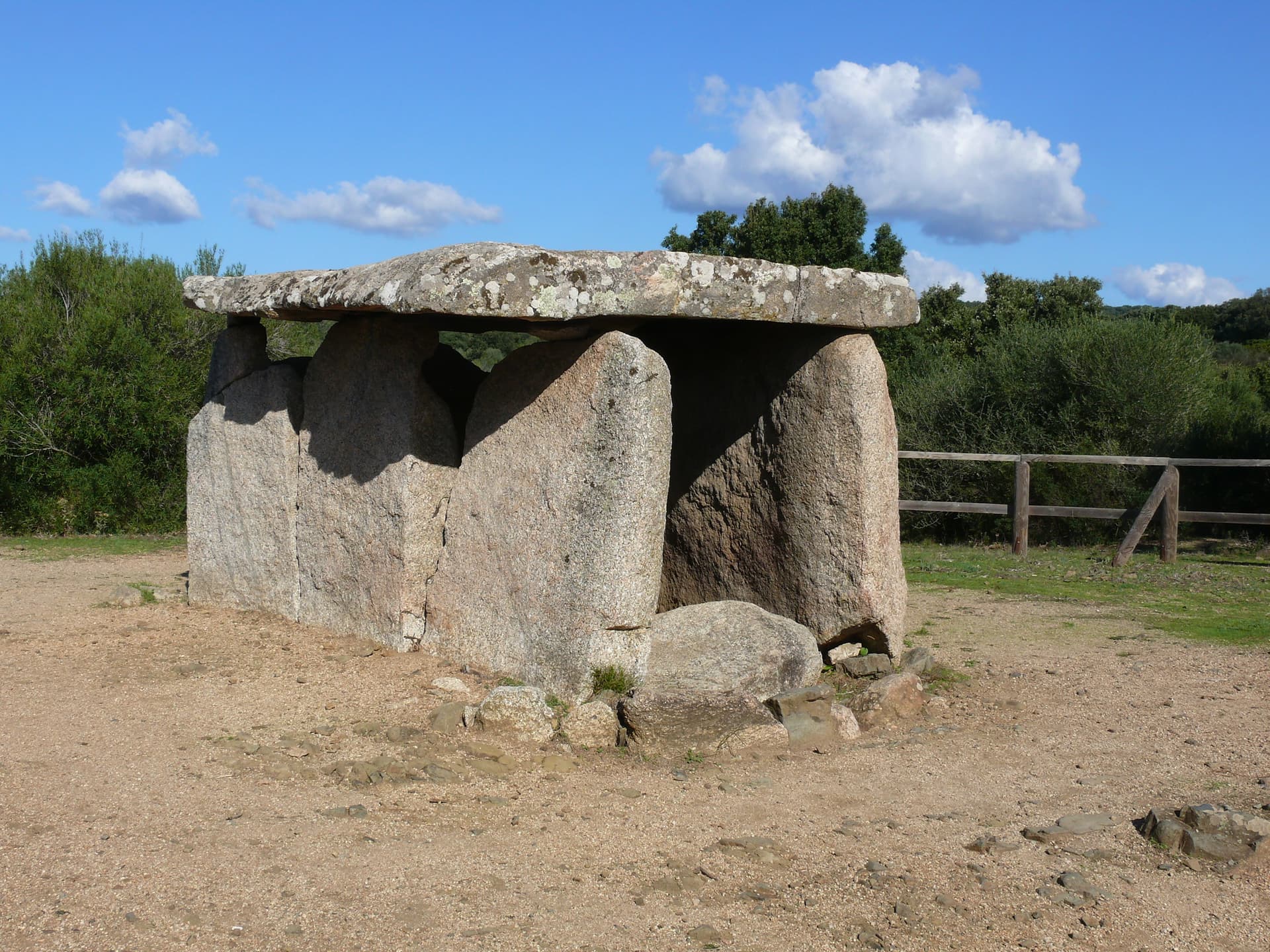
The site's position within the larger Cauria complex adds layers of significance. The Stantari alignment lies about a kilometer to the north. The Fontanaccia Dolmen stands nearby. This plateau clearly held exceptional importance for its Bronze Age inhabitants, who returned here generation after generation to build, to carve, to mark this ground as sacred. Rinaghju participates in that larger pattern while maintaining its own distinct character.
The original purpose of the Rinaghju alignment remains uncertain, though the processional arrangement suggests ceremonial movement through the stone rows. The north-south orientation matches other Corsican alignments, implying astronomical significance or common cosmological principles. The presence of two carved figures among plain stones may indicate a hierarchy of sacred significance or mark particular points in ritual procession. Connection to the nearby Stantari alignment and Fontanaccia Dolmen suggests integration into a larger sacred landscape.
The stones have stood through three millennia of Corsican history. Like the other monuments on the Cauria plateau, they were encountered by successive cultures who recognized their significance without understanding their origin. The name 'Rinaghju' is Corsican, not ancient, reflecting how later inhabitants made sense of what they found.
Archaeological attention came in the twentieth century as scholars recognized the unique importance of Corsican megalithic sites. Rinaghju has been documented and preserved as part of the larger Cauria complex, though it receives less attention than the more dramatic Stantari alignment.
Today, the site is protected as archaeological heritage and accessible to visitors willing to hike through the maquis. It draws those interested in prehistoric spirituality, megalithic archaeology, and the distinctive quality this particular alignment offers.
Experience and orientation
The walk to Rinaghju through the Corsican maquis prepares visitors for encounter. Fragrant Mediterranean scrub, the path through wild landscape, the growing anticipation of what lies ahead. When the grove appears, shaded and quieter than the surrounding plateau, the transition feels like entering a different space.
The parallel rows invite walking between them. This is not a site for standing at a distance and photographing. The arrangement asks you to enter, to move through, to become part of whatever procession the stones mark. Many visitors describe an almost physical pull to walk the length of the alignment, south to north or north to south, following the direction the builders set.
The plain stones create a rhythm of presence as you walk. They do not demand attention like the carved warriors at Stantari. They simply stand, witnesses to your passage as they have witnessed countless others across thirty centuries. The effect is meditative, repetitive in a way that quiets the mind.
The two carved faces break this rhythm. Coming upon a stone with eyes, nose, and diagonal sword among its featureless companions creates a moment of startled recognition. These are different. These were someone, or something, important enough to mark. The discovery rewards those who look carefully rather than rushing through.
The shaded atmosphere contributes to the experience. The filtered light, the sense of shelter, the intimacy of the grove all create conditions for a different quality of attention than the exposed Stantari offers. Where that site confronts, Rinaghju accompanies. Where that site demands response, this one invites presence.
Combining Rinaghju with visits to Stantari and the Fontanaccia Dolmen allows experience of the entire Cauria sacred landscape, sensing how these sites relate to each other and to the communities that built them.
Approach Rinaghju as a walk through rather than a look at. The parallel rows create a path. Follow it.
Take time at each stone, even the plain ones. Let the repetition create its own effect. Notice how the rhythm is interrupted by the two carved figures. Consider what their presence among the plain stones might mean.
The shaded setting creates conditions for contemplation. Sit if you can find a comfortable spot. Let the filtered light and the quiet work on you. What the site offers comes through presence rather than analysis.
Compare your experience here with Stantari if you visit both. Notice how the different arrangements, different settings, different proportions of plain and carved stones create different qualities of encounter. What does each offer that the other cannot?
Walk the alignment more than once if time permits. The second or third passage often reveals what the first missed. The plain stones may begin to distinguish themselves. The carved faces may seem more present.
Context and lineage
Rinaghju emerged from the same tradition that created the other monuments on the Cauria plateau. During the late Neolithic or Bronze Age, communities began erecting standing stones here, organizing them into alignments running north to south. The parallel row arrangement at Rinaghju suggests processional use, creating a marked path for ceremonial movement.
Two stones were carved with human features and weapons, following the statue-menhir tradition unique to Corsica. Why these two among forty-four plain stones? Perhaps they marked significant points in the procession. Perhaps they commemorated particular individuals. Perhaps they served as guardians or thresholds. The answer has been lost, but the question shapes encounter with the site.
The alignment's relationship to the nearby Stantari stones and Fontanaccia Dolmen indicates integration into a larger sacred landscape. This plateau was not a place of isolated monuments but a connected complex where different structures served different functions within a unified cosmology.
The spiritual tradition that animated Rinaghju has not survived. Whatever ceremonies moved through these parallel rows, whatever meanings the builders assigned to the carved figures among the plain stones, that knowledge ended long before written records came to Corsica.
Successive inhabitants encountered the stones as mysterious remnants of earlier peoples. The name 'Rinaghju' is Corsican, applied later by those who recognized the site's significance without understanding its origin.
Today, visitors come seeking encounter with prehistoric spirituality. The site functions not as active sacred space but as a place where the prehistoric past remains accessible to those who approach with appropriate attention.
Traditions and practice
The original ceremonies performed at Rinaghju are unknown. The parallel row arrangement suggests processional use, with ritual movement through the stone corridor. The carved figures among plain stones may have marked significant points in this procession or served specific ceremonial functions. Connection to the nearby Stantari alignment and Fontanaccia Dolmen implies integration into a larger system of practice involving multiple sites.
The north-south orientation matches other Corsican alignments, suggesting astronomical significance or shared cosmological principles across the tradition.
The site is managed as archaeological heritage rather than active sacred space. Visitors come for personal contemplation, photography, and connection with prehistoric spirituality. No organized ceremonies or religious observances take place here.
The processional arrangement naturally invites walking between the stone rows. Many visitors describe this movement as the most meaningful part of their experience, embodying connection with ancient practice even without knowledge of what that practice involved.
Walk the alignment from end to end. The arrangement asks this of you. Move slowly, noticing each stone as you pass. Let the repetition create its effect.
Look for the two carved faces. Their discovery among the plain stones creates a moment of recognition that photography cannot capture. Consider what their presence means: why these two? What did they mark or protect or commemorate?
Sit in the shaded grove if space permits. Let the filtered light and quiet atmosphere work on you. The site offers something subtle, available only to those who wait for it.
Consider what it means to walk a path marked three thousand years ago. The builders could not have imagined you, but they created this direction, this passage, and you are following it. Your presence continues what they began.
If you visit both Rinaghju and Stantari, notice how each creates a different quality of encounter. What do you feel differently in each place? What does each offer that the other cannot?
Corsican Megalithic Tradition
HistoricalRinaghju represents a distinctive expression of the Corsican megalithic tradition, with its parallel row processional arrangement and combination of plain and carved stones. The site belongs to the broader pattern of Bronze Age monument building on the Cauria plateau, where multiple structures were created over generations as part of an interconnected sacred landscape.
Original practices unknown. The parallel row arrangement strongly suggests processional use, with ceremonial movement through the stone corridor. The carved figures may have marked significant thresholds or served specific ritual functions. Connection to the Stantari alignment and Fontanaccia Dolmen indicates integration into a larger system of practice.
Perspectives and open questions
Rinaghju invites reflection on processional space, the relationship between plain and carved stones, and what it means to walk a path marked three thousand years ago. The scholarly documentation of the site sits alongside the visceral experience of moving through the parallel rows. Both approaches illuminate aspects of why this place continues to draw those seeking encounter with the prehistoric past.
Scholarly perspective
Archaeological documentation classifies Rinaghju as a late Neolithic or Bronze Age alignment of forty-six granite menhirs arranged in two parallel rows. The orientation runs roughly north to south, consistent with other Corsican alignments. Most stones are plain, but two bear carved facial features and diagonal swords in the statue-menhir tradition unique to Corsica.
The site forms part of the Cauria complex, which also includes the Stantari alignment and Fontanaccia Dolmen. Scholarly interpretation suggests these monuments functioned as interconnected elements of a sacred landscape rather than isolated structures.
The processional arrangement of the parallel rows is noted as distinctive, suggesting ceremonial movement through the alignment. The presence of carved figures among plain stones indicates differentiation in function or significance, though specific interpretation remains uncertain.
Alternative interpretations
Some visitors interpret the parallel rows as marking an energy pathway between sacred sites. The presence of carved guardians at specific points may indicate thresholds in spiritual transit. The site is sometimes framed as a prehistoric initiation path, with movement through the stones representing stages of transformation.
These interpretations lack archaeological support but may reflect genuine response to the processional quality of the space. The experience of walking between the rows does carry a quality difficult to explain in purely historical terms.
Open questions
Much about Rinaghju remains genuinely uncertain. Why this processional arrangement? What relationship did the parallel rows have to the nearby Stantari alignment's double row? Why two carved figures among forty-four plain stones, and what did their positioning mark? What ceremonies moved through this space, and at what times of year?
The original meaning of the carved faces and their relationship to the plain stones remains an open question. Without written records, these mysteries may never be resolved with certainty.
Plan your visit
Access and arrival
Located on the Cauria plateau, approximately 15 kilometers southwest of Sartene. About one kilometer south of the Stantari alignment. The parking area serves all Cauria sites. Hiking through maquis terrain is required.
Hotels and guesthouses available in Sartene and Propriano. Sartene provides the most atmospheric base for exploring the southern Corsican megaliths.
Respectful visit
Practical hiking attire for walking through maquis terrain. Sturdy footwear recommended. The shaded grove is cooler than the surrounding plateau, so a light layer may be welcome.
Permitted. The filtered light creates attractive conditions. The carved figures make compelling subjects. Allow time to experience the site before photographing it.
Not traditional. Leave nothing at the site.
Free access. Do not touch or climb on stones. Stay on paths.
Do not touch or climb on the stones. Even plain stones deserve protection from erosion caused by visitor contact.
Stay on established paths. The grove environment is more delicate than the exposed plateau.
Respect others' silence. The intimate atmosphere is easily disturbed by loud conversation or careless behavior.
Current practical details
Address
20100 Sartène, France
Hours, fees, and access can change — verify on the official source before you travel. Practical details last checked Jun 2026.
Location
Map loads as you approach this section.
Pilgrim reflections
A portrait of encounter, not a score
Pilgrims describe what they felt, how present they could become, and whether the place would shape a journey. There are no stars and no ranking of traditions.
No reviewed reflections yet
The first pilgrims can help describe the character of being here.
Share a reflection
Available after an account-backed “Been there.” Every reflection is reviewed before publication.
Nearby sacred places
Explore other sacred places in the region. Proximity does not establish access or travel time; check each place’s guidance.

Share a photo
Help visitors recognize Rehaghiu (Rinaghju) Menhirs. Every submission is reviewed before publication.