Stantari Menhirs
Thirty Bronze Age ancestors with carved faces still standing watch over the Corsican maquis
Understand sacred places, explore living traditions, and learn how to engage respectfully with Pilgrim Map.
Access has not been verified. Check current local guidance before planning a visit.
Sartène, Corse-du-Sud, France
Read the sources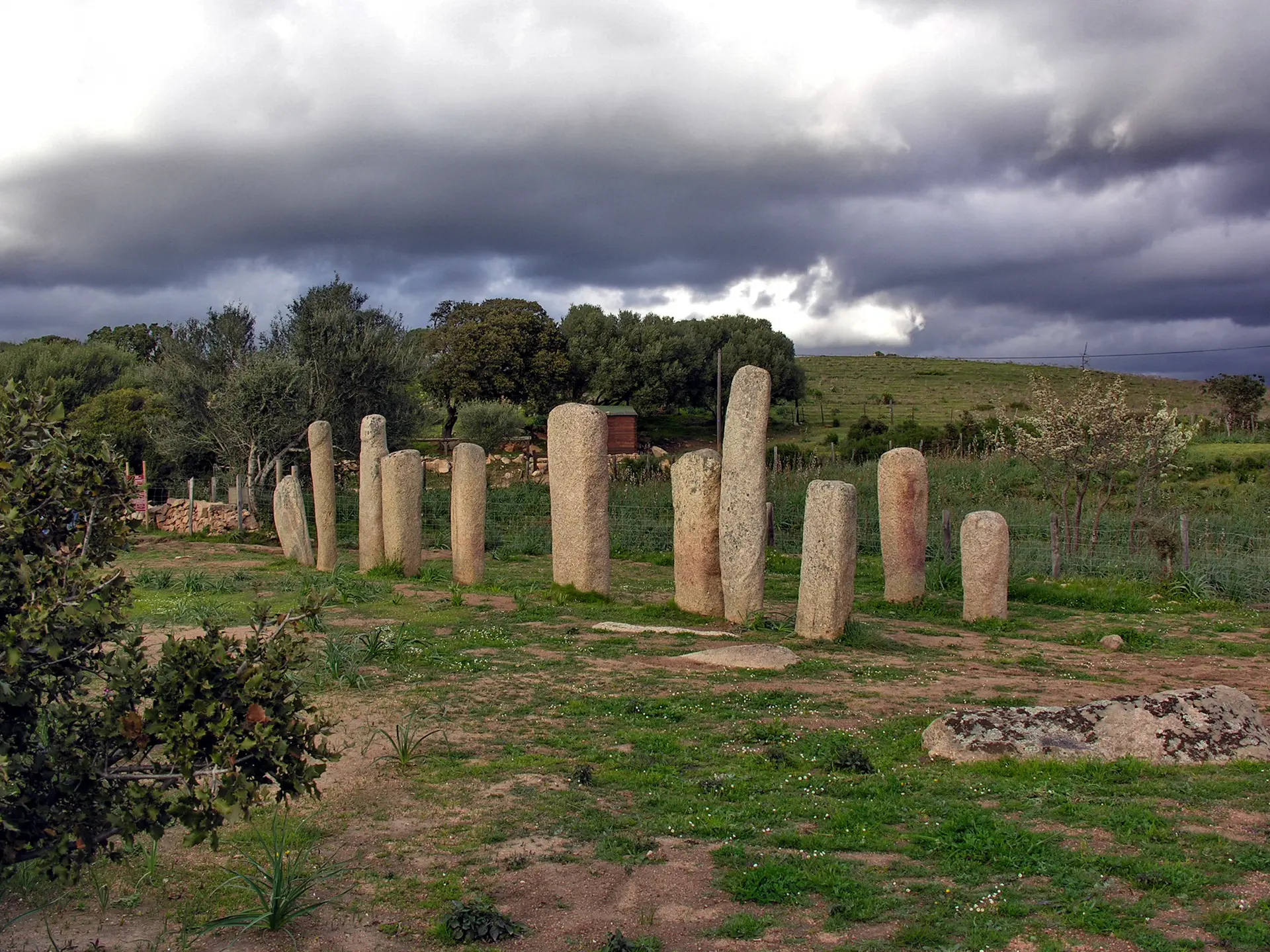
Image of Stantari Menhirs. Image source
Visit essentials
A quick read before you go
- Duration
- Allow one to two hours for the Stantari alignment alone, including the hike from parking.
- Access
- The site is located on the Cauria plateau, approximately 15 kilometers southwest of Sartene.
Overview
Unlike most silent, featureless standing stones, the Stantari have faces. Thirty megaliths rise from the Corsican maquis on the Cauria plateau in a double north–south alignment. Seven carry carved eyes, noses, shoulders, and—most remarkably—relief swords and daggers, with the rare detail of human hands. Their makers shaped not anonymous monuments but careful representations of someone or something that mattered.
Their name comes from the Corsican for 'man standing on his feet,' and the tallest reaches nearly three meters. The rituals that animated the place have been silent for three thousand years, yet among the stones visitors may feel watched by presences predating the region's written history.
Archaeologists debate whether the figures represent ancestors, gods, or the mysterious 'Sea Peoples' who troubled the late Bronze Age Mediterranean. What remains certain is that their carvers wanted to be remembered. Three thousand years later, visitors still stand before them and meet their gaze.
Why this place is sacred
Standing stones appear throughout prehistoric Europe, but only in Corsica do they look back. The statue-menhirs of the Cauria plateau represent a unique tradition in megalithic art, one that carved human features and weapons into the stone itself. This act of representation changes everything about how visitors encounter the site.
The double alignment runs north to south, suggesting astronomical significance. Whether the builders marked solstices, tracked stars, or aligned with forces we no longer perceive, the orientation was clearly intentional. The stones are not randomly placed but organized with precision that speaks to sophisticated understanding of landscape and cosmos.
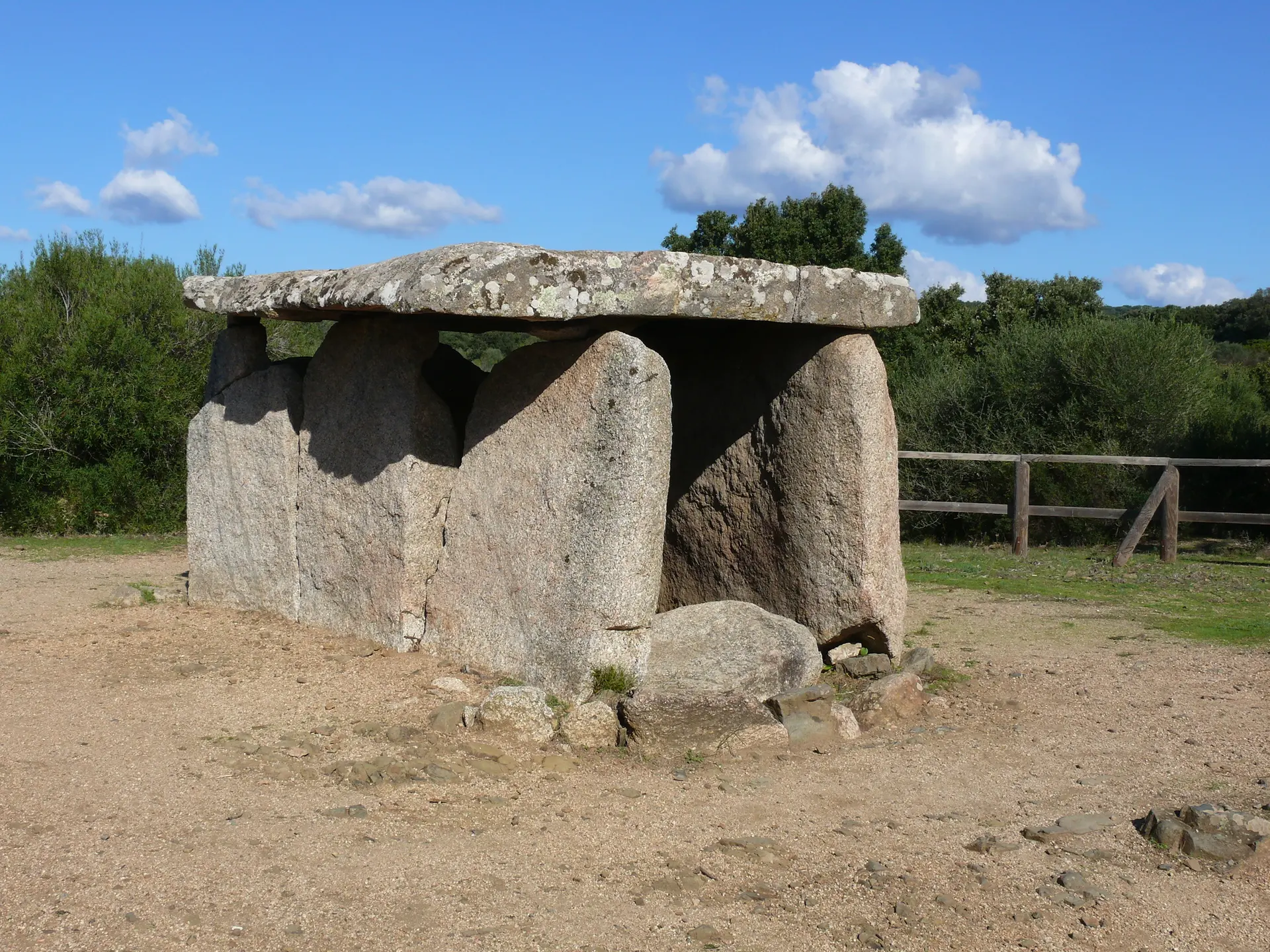
The Stantari do not stand alone. Within walking distance are the Rinaghju alignment and the Fontanaccia Dolmen, creating a sacred landscape of interconnected monuments. The Cauria plateau clearly held exceptional significance for its Bronze Age inhabitants, who returned here generation after generation to build, to carve, to mark this ground as special.
The mystery of the carved weapons adds another dimension. Swords and daggers in relief across the bodies of these stone figures suggest warriors, or perhaps gods of war, or guardians protecting something we cannot see. Archaeologist Roger Grosjean proposed they might represent the Shardanes, 'Sea Peoples' who attacked and later allied with Pharaonic Egypt. Whether or not this theory holds, the weapons distinguish the Stantari from more peaceful megalithic traditions.
To walk among them in the wild Corsican maquis, with the Mediterranean light falling on stone faces carved before the founding of Rome, is to step outside ordinary time. The effect is not explicable by history alone.
The original purpose of the Stantari alignment remains uncertain, though several possibilities emerge from the evidence. The carved human features suggest veneration of ancestors or gods. The weapons might indicate warrior commemoration or protection rituals. The north-south alignment implies astronomical observation or ceremonial orientation toward celestial phenomena. Most likely, the site served multiple overlapping functions within a Bronze Age cosmology we can only partially reconstruct.
The stones have stood through three thousand years of Corsican history. Successive cultures encountered them without fully understanding their origin. The name 'Stantari' itself is Corsican, not ancient, reflecting how later inhabitants made sense of these standing figures.
Archaeological attention came primarily in the twentieth century, with Roger Grosjean conducting excavations that revealed the site's significance. His theory connecting the statue-menhirs to the Sea Peoples brought international attention, though the interpretation remains debated.
Today, the site is protected as archaeological heritage within the larger Cauria complex. Visitors come seeking encounter with prehistoric spirituality, though the original ceremonies that animated these stones have been silent for millennia.
Experience and orientation
The first thing many visitors notice is the quality of the gaze. Most ancient monuments, however impressive, remain objects to be observed. The Stantari observe you. The carved faces, eroded but recognizable, the shoulders defined in stone, the weapons held across bodies, create stone figures that look back. The experience is closer to encounter than archaeology.
The setting intensifies the effect. The Cauria plateau remains wild, covered in the fragrant maquis scrub that defines Corsica's landscape. The walk from the parking area through this Mediterranean brush prepares visitors for something different from a manicured heritage site. When the stones appear, standing in their double alignment against the blue Corsican sky, the effect is of stumbling upon something that was never meant for tourists.
Light matters here. The Mediterranean sun falling on granite carved three thousand years ago creates shadows that shift through the day, animating the stone faces. Early morning and late afternoon bring the most atmospheric conditions, when the low light catches the relief carvings and the stones seem almost to move.
Those who spend time here often report a sense of stepping outside ordinary time. The Bronze Age people who carved these stones lived in a world almost unimaginably different from ours, yet standing before their work, meeting the gaze they carved, the gap collapses. Whatever they wanted to communicate persists, even if the specific meaning has been lost.
The proximity of the Rinaghju alignment and Fontanaccia Dolmen allows visitors to move through an entire sacred landscape, experiencing the different qualities of each site and sensing their interconnection.
The Stantari reward unhurried attention. This is not a site to photograph quickly and leave but one that reveals itself over time. Consider spending at least an hour here, sitting among the stones, observing how light changes on the carved faces.
Approach the stones with awareness that you are meeting rather than viewing. They were carved to be someone, not something. Whatever name or function has been lost, the intention to create presence remains. Let yourself be observed.
Walk the alignment's length, noticing how the stones relate to each other and to the landscape. The north-south orientation places you within whatever pattern the builders intended. Stand at one end and look toward the other, imagining what ceremony or procession might once have moved through this space.
If time permits, visit the other sites of the Cauria complex. The Rinaghju alignment offers a different quality, its parallel rows suggesting processional movement. The Fontanaccia Dolmen provides encounter with funerary architecture. Together, these sites compose a sacred landscape that was clearly the spiritual center for communities across many generations.
Context and lineage
The origin of the Stantari is lost to prehistory, but the stones themselves tell part of the story. Sometime between 1300 and 700 BCE, communities living on the Cauria plateau began carving megaliths with human features. They gave these stone figures faces, shoulders, and weapons. They aligned them north to south, suggesting celestial observation. They created not merely standing stones but standing people.
Archaeologist Roger Grosjean proposed that the carved warrior figures represent the Shardanes, one of the 'Sea Peoples' who attacked Egypt in the late Bronze Age and are mentioned in Pharaonic records. According to this theory, the statue-menhirs commemorate warriors who eventually settled in Corsica after their Mediterranean campaigns. The theory is intriguing but remains debated, with other scholars suggesting the figures represent local ancestors, gods, or protective spirits.
What is certain is that the Cauria plateau held exceptional significance for its inhabitants. The concentration of monuments in this area, including the Stantari, Rinaghju, and Fontanaccia Dolmen, speaks to a sacred landscape returned to repeatedly across generations.
The spiritual tradition that animated the Stantari has not survived. We do not know the names the builders called their carved ancestors, the ceremonies they performed, or the cosmology that gave meaning to the alignment. What survives is the work itself, standing through millennia of subsequent Corsican history.
Later inhabitants of Corsica encountered the stones without understanding their origin. The name 'Stantari' is Corsican, not ancient, showing how successive generations made sense of these standing figures in their own terms.
Today, the site draws visitors interested in prehistoric spirituality, megalithic archaeology, and the unique heritage of Corsica. While no living tradition claims the Stantari, they continue to function as a place of encounter, where contemporary seekers meet presences carved before written history.
Roger Grosjean
archaeologist
French archaeologist who conducted excavations at the Cauria sites and Filitosa in the mid-twentieth century. His work revealed the significance of Corsican statue-menhirs and proposed the controversial connection to the Sea Peoples, bringing international attention to these unique monuments.
The Shardanes
legendary
According to Grosjean's theory, the Sea Peoples, particularly the Shardanes mentioned in Egyptian records, may be represented in the carved warrior figures. The theory connects the statue-menhirs to Bronze Age migrations and conflicts across the Mediterranean, though it remains debated.
Traditions and practice
The original ceremonies performed at the Stantari alignment are unknown. The carved weapons suggest possible connection to warrior commemoration or initiation. The north-south alignment implies astronomical observation that may have timed rituals to celestial events. The proximity to the Fontanaccia Dolmen, a funerary structure, suggests the sacred landscape may have integrated death and ancestor veneration.
Without written records from the Bronze Age builders, these possibilities remain inference based on archaeological evidence and comparison with other megalithic traditions.
The site is managed as archaeological heritage rather than active sacred space. Visitors come for personal contemplation, photography, and connection with prehistoric spirituality. There are no organized ceremonies or religious observances.
Some visitors bring their own practices, sitting in meditation among the stones or approaching the site as personal pilgrimage. The wild setting and absence of typical tourist infrastructure create space for whatever approach visitors bring.
If you come seeking more than archaeology, consider these approaches:
Take time to meet individual stones. Each carved figure has its own character, its own presence. Sit with one that draws you and simply observe. Let yourself be observed in return.
Walk the alignment slowly, from one end to the other. Notice how the stones relate to each other, how they frame the landscape, how they mark this ground as different from what surrounds it. Consider what procession or ceremony might once have moved through this space.
Visit at dawn or dusk if possible. The changing light animates the carved features, creating an experience impossible in midday glare. The Corsican maquis is fragrant in morning and evening, adding sensory dimension to the encounter.
Consider spending time in silence. The site rewards stillness. Whatever the stones have to communicate, it comes through presence rather than analysis.
Corsican Megalithic Tradition
HistoricalThe Stantari alignment represents a unique development within European megalithic culture. While standing stones appear throughout the continent, only in Corsica were they carved with human features, shoulders, and weapons, creating statue-menhirs that transform monuments into representations of beings. The Stantari, with their seven carved figures among thirty stones, exemplify this distinctive tradition that flourished in the late Bronze Age.
Original practices are unknown. The evidence suggests possible ancestor veneration, warrior commemoration, astronomical observation, and ceremonies timed to celestial events. The north-south alignment and proximity to funerary structures indicate integration into a broader sacred landscape.
Perspectives and open questions
The Stantari alignment invites multiple interpretations. Archaeological scholarship documents the construction period and unique features of the statue-menhirs. The Shardanes theory proposes a connection to Mediterranean Bronze Age migrations. Contemporary visitors often describe experiences that exceed what archaeology alone can explain. Each perspective illuminates aspects of why these carved stones continue to command attention.
Scholarly perspective
Archaeological consensus places the Stantari construction between approximately 1300 and 700 BCE, during the late Bronze Age. The statue-menhirs with their carved faces, shoulders, and weapons are recognized as unique in European megalithic art. The north-south alignment suggests astronomical significance, though specific celestial targets have not been definitively identified.
Roger Grosjean's excavations in the mid-twentieth century established the site's importance and proposed the controversial Shardanes connection. His theory, linking the carved warriors to the Sea Peoples mentioned in Egyptian records, has been influential but remains debated. Other scholars interpret the figures as local ancestors, gods, or protective spirits without connection to Mediterranean migrations.
The relationship between the Stantari and other Corsican megalithic sites, particularly Filitosa and the other Cauria monuments, continues to be studied. The statue-menhir tradition appears to be indigenous to Corsica, developed over centuries within local communities.
Alternative interpretations
Some visitors and writers interpret the Stantari as evidence of advanced prehistoric knowledge or connection to broader Mediterranean civilizations. The precision of the alignment and sophistication of the carvings suggest, to some, understanding beyond what is typically attributed to Bronze Age communities. The site is sometimes framed as marking earth energy lines or as a place of heightened spiritual access.
These interpretations lack archaeological support but often emerge from genuine experiences visitors have at the site. The sense of presence, the feeling of being observed by the carved faces, and the quality of timelessness reported by many visitors seek explanation beyond conventional frameworks.
Open questions
Much about the Stantari remains genuinely unknown. Who did the carved figures represent? What ceremonies were performed here? What relationship did this alignment have to the nearby Rinaghju stones and Fontanaccia Dolmen? Why did the tradition of carving human features into standing stones develop specifically in Corsica?
The meaning of the carved weapons and the identities of those represented remain open questions. Without written records from the builders, these mysteries may never be resolved with certainty.
Plan your visit
Access and arrival
The site is located on the Cauria plateau, approximately 15 kilometers southwest of Sartene. Drive toward Tizzano and follow signs to the prehistoric sites. A parking area serves as the trailhead for hiking to the various monuments. The walk to Stantari takes approximately 15-20 minutes through maquis terrain.
Hotels and guesthouses are available in Sartene and Propriano. Sartene, known as the most Corsican of Corsican towns, offers a atmospheric base for exploring the southern megaliths.
Respectful visit
No formal requirements. Wear practical hiking attire suitable for walking through maquis terrain. Sturdy footwear is recommended. The site is exposed, so bring sun protection and layers for changing weather.
Photography is permitted and the carved features make compelling subjects. Use natural light rather than flash. Be patient for the right conditions rather than rushing. Do not climb on stones or disturb the site for better angles.
Physical offerings are not traditional at this site and would constitute litter. If you wish to mark your visit, offer silent attention or intention. Leave nothing behind but footprints.
Free access. Do not touch or climb on stones. Stay on paths. The site is exposed and may be uncomfortable in extreme heat or weather.
Do not touch or climb on the stones. Though they have survived three thousand years, contact with visitors accelerates erosion of the carved features. Keep a respectful distance.
Stay on established paths. The maquis vegetation can be sensitive, and wandering off trails damages the environment.
The site is exposed to weather. Bring water, sun protection, and appropriate footwear for the terrain. Summer heat can be intense.
Current practical details
Address
Stantari Menhirs, 20100 Sartène, France
Hours, fees, and access can change — verify on the official source before you travel. Practical details last checked Jun 2026.
Location
Map loads as you approach this section.
Pilgrim reflections
A portrait of encounter, not a score
Pilgrims describe what they felt, how present they could become, and whether the place would shape a journey. There are no stars and no ranking of traditions.
No reviewed reflections yet
The first pilgrims can help describe the character of being here.
Share a reflection
Available after an account-backed “Been there.” Every reflection is reviewed before publication.
Nearby sacred places
Explore other sacred places in the region. Proximity does not establish access or travel time; check each place’s guidance.


References
Sources consulted for this page. Source categories describe the publication, not a guarantee that every claim is verified. Traditional accounts and outside interpretations may differ.
- 01Site Archéologique de Cauria - Visit Corsica — Visit CorsicaSource context
- 02Stantari Alignment - The Megalithic Portal — The Megalithic PortalSource context
- 03Sacred Sites of Corsica - World Pilgrimage Guide — Sacred SitesSource context
- 043 Main Prehistoric Sites in Corsica — Corsica LoversSource context
Share a photo
Help visitors recognize Stantari Menhirs. Every submission is reviewed before publication.