Fontanaccia Dolmen
Corsica's best-preserved burial chamber, where a massive stone roof has sheltered the dead for four thousand years
Understand sacred places, explore living traditions, and learn how to engage respectfully with Pilgrim Map.
Access has not been verified. Check current local guidance before planning a visit.
Sartène, Corse-du-Sud, France
Read the sources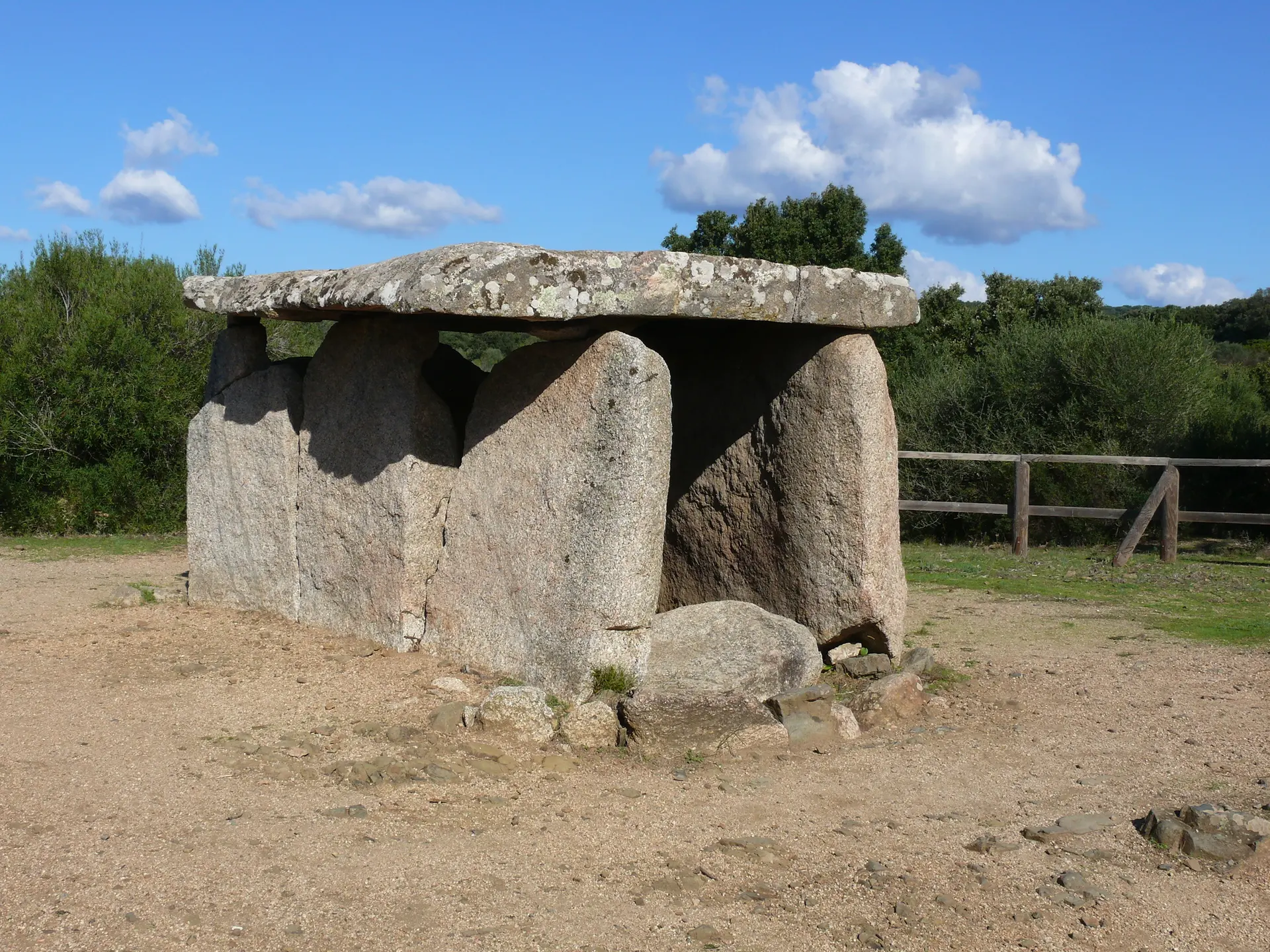
Image of Fontanaccia Dolmen. Image source
Visit essentials
A quick read before you go
- Duration
- A visit to the dolmen alone takes thirty to sixty minutes including the access hike.
- Access
- The Cauria plateau is located approximately 15 km southwest of Sartene.
Overview
For four thousand years on the Cauria plateau, a roof stone weighing several tons and measuring over three meters in each dimension has rested on six granite slabs. Its sunrise-aligned opening leads into a nearly two-meter-high chamber excavated below ground, where the living placed their dead in anticipation of a transformation we can only infer. Later inhabitants called it Stazzona del Diavolu, the Devil's Forge, attributing stones beyond imaginable human effort to supernatural forces and a world no longer accessible.
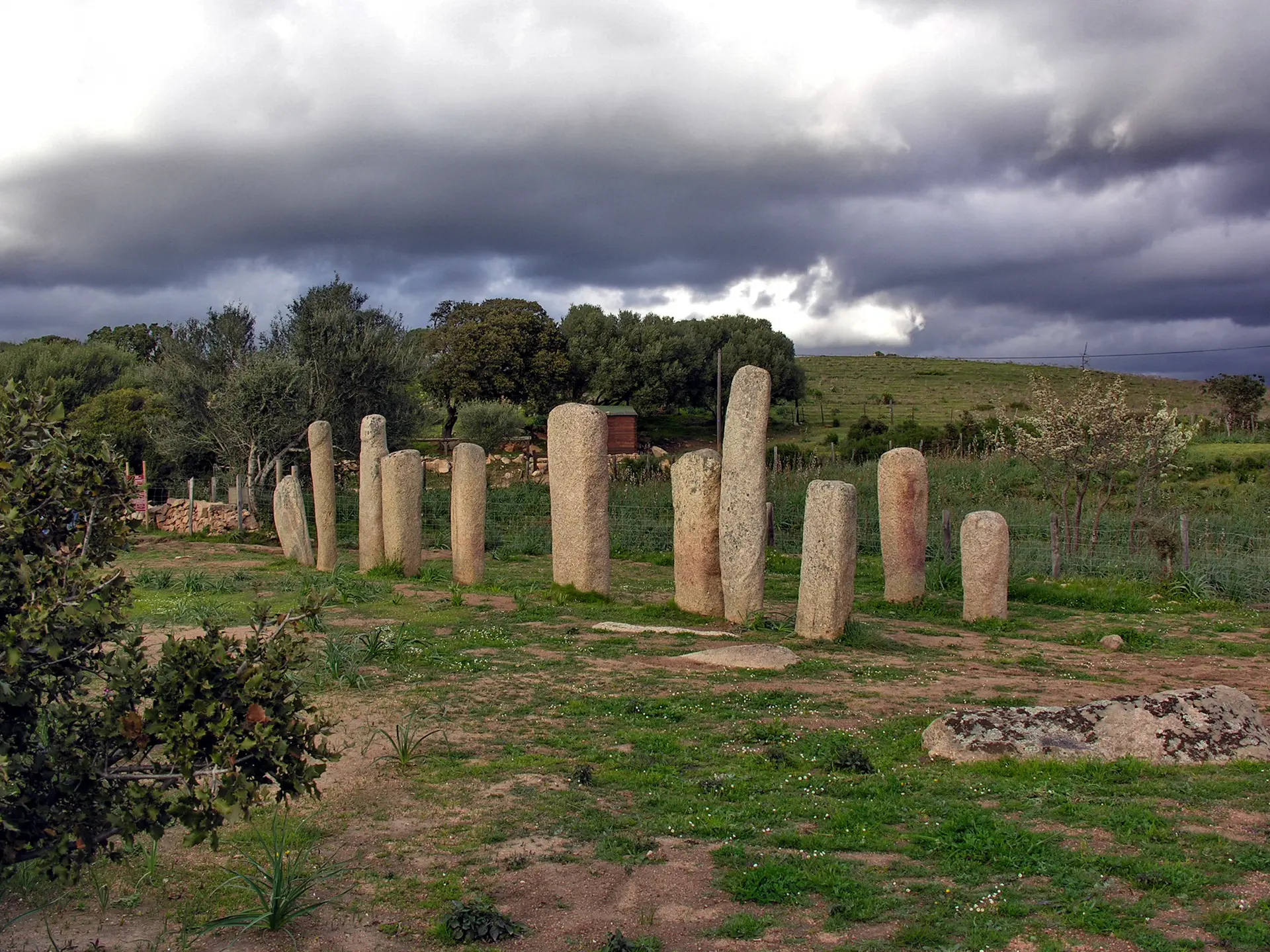
Nearby, the north-south menhir rows of Stantari and Rinaghju suggest procession, gathering, or astronomical observation. Fontanaccia's perpendicular east-west axis implies deliberate planning across a sacred landscape whose principles remain unrecoverable: a stone-sealed threshold toward an unknown destination.
Why this place is sacred
The dolmen form itself embodies a theology of death and renewal. Unlike menhirs that reach upward, dolmens create enclosure, a space separated from the world of the living. The chamber sits partly below ground level, requiring descent to enter. The dead were not placed on the earth's surface but within it, housed in a constructed cave that separated them from ordinary space while remaining accessible for ongoing contact.
The eastward orientation is consistent across many Neolithic burial monuments and speaks to beliefs about the relationship between death and sunrise. The dead face the direction of renewal, the place where light returns each day from darkness. Whatever specific beliefs animated this orientation, they connected burial with cosmic rhythm, with the daily demonstration that darkness is not permanent.
The perpendicular relationship to nearby menhir alignments suggests the Cauria plateau was conceived as a unified sacred space. The standing stones run roughly north-south; the dolmen opens east-west. This ninety-degree relationship appears deliberate rather than coincidental, implying builders who thought in terms of landscape-scale sacred geometry. The individual monuments were not isolated but elements in a composition we can perceive without fully understanding.
The construction itself speaks to values we might call sacred. Moving and placing stones of this size required coordinated community effort, planning across seasons, and commitment to purposes beyond practical survival. The labor invested in the Fontanaccia Dolmen honored the dead in a way that shaped the living community's identity and organization.
The Fontanaccia Dolmen functioned as a collective burial chamber. Archaeological evidence and comparative studies suggest the dead were placed in such chambers over time rather than in single burial events. The east-facing opening allowed ongoing access and may have facilitated rituals connecting the living with ancestors. The sunrise orientation implies beliefs about death as transition rather than ending, the soul following the sun's path into renewal.
The dolmen was constructed in the second millennium BCE, during the transition from Neolithic to Bronze Age. It likely remained in use for collective burial over an extended period, with new dead added to join ancestors already present. At some point, active burial ceased, though when and why remains unknown.
Later inhabitants of Corsica lost connection to the builders' traditions but retained awareness of the monument's significance. The Devil's Forge name, documented by Prosper Merimee in 1840, reflects folk recognition that the structure belonged to something beyond ordinary human capability. In 1883, prehistorian Adrien de Mortillet described it as the most beautiful and best preserved of Corsican dolmens, the assessment that still holds today.
The site now exists as an archaeological monument within an open landscape. No formal excavation has recovered original burial contents, leaving the chamber's specific history unknown. What remains is architecture that has proved more durable than any memory of its use.
Experience and orientation
The first response to the Fontanaccia Dolmen is typically physical: the scale of the roof stone is difficult to process. More than three meters long, nearly three meters wide, tons of granite balanced on six vertical slabs. The engineering achievement alone commands attention. Someone moved this stone here four thousand years ago. Someone positioned it precisely. The effort expended speaks to purposes we can feel if not fully understand.
Approaching the chamber, the sense of threshold intensifies. This is a doorway into earth, an invitation to descend. Though visitors no longer enter, the opening remains visible, the interior accessible to sight if not to body. The chamber was designed to be entered, and something of that invitation persists. Standing at the threshold, looking into the dim interior, visitors often describe a sense of standing at a boundary between realms.
The Cauria plateau itself contributes to the experience. This is wild Corsican maquis, aromatic scrubland under Mediterranean sky. The landscape feels ancient, relatively unchanged since the dolmen was built. The absence of modern intrusion allows imaginative connection to the people who walked here carrying their dead.
The sunrise orientation rarely goes unnoticed, even by visitors who arrive at other hours. The entrance faces east, toward the place where light returns. The implication is clear: those placed here were oriented toward renewal. Whether or not one believes in what the builders believed, their intention is legible in stone.
The Fontanaccia Dolmen rewards unhurried attention. After the initial impact of scale, allow time to observe details: the two types of granite used in construction, the precise fitting of vertical stones, the relationship between chamber and surrounding landscape.
If seeking contemplative engagement, approach the dolmen as the threshold its builders intended. Stand at the entrance facing the direction of sunrise. Consider what it meant to place the dead here, oriented toward light, housed in stone, sealed in earth. The questions need not be answered to be valuable.
The nearby menhir alignments at Stantari and Rinaghju extend the experience. Walking among the standing stones before or after visiting the dolmen creates a sense of moving through a planned sacred landscape. The perpendicular relationship between dolmen and alignments becomes palpable when experienced on foot.
Context and lineage
No origin narrative survives from the culture that built the Fontanaccia Dolmen. The monument predates writing in this region, and no oral tradition has preserved accounts of its construction or meaning. What remains is stone and inference.
The builders belonged to communities who raised megaliths across western Europe and the Mediterranean during the Neolithic and Bronze Ages. Whether they shared cultural connections with dolmen-builders in Brittany, Ireland, or the Iberian Peninsula, or developed their traditions independently, remains debated. The Cauria plateau monuments show distinctive Corsican characteristics while participating in broader patterns of megalithic construction.
The later name provides a different kind of origin story. Devil's Forge attributes the construction to supernatural forces, implicitly acknowledging that ordinary humans seemed incapable of such work. This folk explanation recognizes the monument's power even while misattributing its source. The devil, in this framing, is not malevolent but mysterious, a figure from beyond human capacity.
The builders of the Fontanaccia Dolmen left no continuous tradition. Their beliefs, their language, their understanding of what they built have not survived. The Torrean and later populations who inhabited Corsica lost connection to megalithic culture, retaining only the monuments themselves and folk awareness of their mysterious origins.
Modern understanding comes through archaeology and comparative study of megalithic cultures elsewhere. The Fontanaccia Dolmen belongs to a European and Mediterranean tradition of stone burial chambers that extends from Malta to Scandinavia, each regional expression distinctive while sharing underlying patterns of form and orientation.
The Builders
ancestral
The communities who constructed the Fontanaccia Dolmen remain anonymous. They possessed knowledge of moving and placing massive stones, organized collective labor for purposes beyond survival, and held beliefs about death and renewal that shaped their burial practices.
Prosper Merimee
historical
The French writer, best known for Carmen, documented the dolmen and its Devil's Forge nickname in 1840 during his work as Inspector of Historic Monuments. His mention brought the site to broader attention.
Adrien de Mortillet
historical
The prehistorian who in 1883 described the Fontanaccia Dolmen as the most beautiful and best preserved dolmen in Corsica, an assessment that continues to shape understanding of the site's significance.
Traditions and practice
Original practices at the Fontanaccia Dolmen centered on burial and the rituals surrounding it. The chamber housed collective burials over time, with new dead joining ancestors already present. The east-facing opening likely facilitated ongoing ceremonies connecting living and dead, perhaps at sunrise or during particular seasons.
The sunrise orientation suggests beliefs about death as transition. Those placed in the chamber faced the direction of daily renewal, implying understanding of death not as ending but as journey toward transformation. Whether specific rituals marked solstices, equinoxes, or other astronomical moments remains unknown.
Ancestor veneration probably continued after active burial ceased. The monumental nature of the structure ensured visibility across generations. Even when specific beliefs had changed, the dolmen remained a marker of those who came before, a permanent reminder of ancestral presence in the landscape.
The Fontanaccia Dolmen today receives visitors as archaeological heritage. There are no admission fees, no formal hours, no guides. The site sits open on the Cauria plateau, accessible via a short hike from the parking area.
No organized spiritual or ceremonial practices occur. The monument attracts those interested in prehistory, those seeking Corsica's natural landscapes, and those who find meaning in ancient sacred sites. Visitors determine their own mode of engagement.
For visitors seeking more than archaeological tourism, the dolmen invites contemplation of mortality and care for the dead. Stand at the entrance and consider what it meant to communities to invest such labor in housing their dead. Notice the sunrise orientation and what it implies about beliefs in renewal.
If visiting at dawn, the intended relationship between monument and light becomes direct rather than inferred. The entrance frames the rising sun as the builders intended. This is not recreation of ancient ritual but direct experience of what they encoded in stone.
Combine the dolmen visit with the nearby menhir alignments for a fuller sense of the Cauria sacred landscape. Walking among the standing stones before or after the dolmen creates continuity, a sense of moving through space the builders conceived as unified.
Neolithic Burial Practice
HistoricalThe Fontanaccia Dolmen functioned as a collective burial chamber dating to the late Neolithic or early Bronze Age, the second millennium BCE. The four-square-meter funeral chamber opens toward the rising sun, suggesting beliefs about death as transition toward renewal. The perpendicular relationship to nearby menhir alignments indicates the Cauria plateau was conceived as a planned sacred landscape where burial and standing stone traditions complemented each other.
Original practices centered on collective burial, with new dead added to join ancestors over time. The east-facing entrance likely facilitated ongoing rituals connecting living and dead. Possible sunrise ceremonies and ancestor veneration are inferred from architectural form and comparative evidence from other megalithic cultures.
Perspectives and open questions
The Fontanaccia Dolmen invites interpretation from archaeological, spiritual, and contemplative perspectives. The monument's meaning to its builders is largely unknown, leaving space for multiple understandings that may coexist without requiring resolution.
Scholarly perspective
Archaeological consensus places the Fontanaccia Dolmen in the late Neolithic or early Bronze Age, the second millennium BCE. The construction technique, using two types of granite for vertical stones and roof, demonstrates sophisticated understanding of stone working and structural engineering.
The east-west orientation, perpendicular to nearby north-south menhir alignments, suggests the Cauria plateau was conceived as a planned sacred landscape. Individual monuments were positioned in relationship to each other and to astronomical directions. Whether this planning reflected cosmological beliefs, social organization, or both remains debated.
Comparative study places the dolmen within broader traditions of megalithic burial chambers found across western Europe and the Mediterranean. While sharing general characteristics with dolmens elsewhere, the Corsican examples show distinctive regional features. The Fontanaccia Dolmen is recognized as the best preserved example of this Corsican tradition.
Living and traditional perspectives
No indigenous traditional interpretation of the Fontanaccia Dolmen survives from Corsican culture. The builders' descendants lost connection to megalithic traditions over millennia of cultural change.
The Devil's Forge name preserves folk recognition of the monument's otherworldly character. Later inhabitants, unable to imagine human builders capable of such work, attributed it to supernatural forces. This interpretation, while historically inaccurate, captures something true about the monument's power to exceed ordinary explanation.
Alternative interpretations
Some interpret dolmens as more than burial chambers, seeing them as energy amplifiers, portals between dimensions, or markers of earth energy convergence. The sunrise orientation is sometimes read as evidence of sophisticated astronomical knowledge beyond standard archaeological assessment.
These interpretations lack scholarly support but often emerge from genuine responses visitors have to the monument. The sense of threshold, of standing at a boundary between worlds, invites explanation even when evidence for specific claims is absent.
Open questions
Genuine mysteries surround the Fontanaccia Dolmen. The original burial contents and practices remain unrecovered. The relationship between dolmen and menhir traditions in Corsica is unclear. Why the east-west orientation was perpendicular rather than parallel to nearby alignments is unexplained.
Why the site was named Devil's Forge, specifically invoking smithing rather than other supernatural activities, is a smaller mystery worth preserving. The name connects the monument to transformation through fire, an association that may or may not reflect something the original builders intended.
These uncertainties are appropriate to the monument. Four thousand years of silence have erased answers while preserving questions. The stones remain; their meaning continues to recede.
Plan your visit
Access and arrival
The Cauria plateau is located approximately 15 km southwest of Sartene. A parking area serves multiple prehistoric sites in the area. The dolmen is reached via a short hike through maquis vegetation. The terrain is generally manageable but may be uneven.
Hotels and guesthouses are available in Sartene and Propriano, both within reasonable driving distance of the Cauria plateau.
Respectful visit
Hiking attire suitable for maquis terrain is appropriate. The access trail is short but the ground may be uneven. Sturdy footwear is recommended.
Photography is permitted. The massive roof stone and the chamber entrance are particularly compelling subjects. Morning or late afternoon light best reveals the monument's form.
Offerings are not traditional and should not be left. Objects placed at the monument would be considered litter and detract from the site's integrity.
Do not enter the chamber. Do not touch or climb on stones. The site is open and unattended. Visitor responsibility ensures preservation.
Do not enter the chamber. Though the interior is visible, physical entry is inappropriate for preservation and safety reasons. Do not touch or climb on the stones. The monument has survived four millennia; visitor impact should not threaten its continuation.
Avoid assuming specific knowledge of original practices. What the builders believed and did is largely unknown. Spiritual interpretations should acknowledge this uncertainty rather than claiming recovered tradition.
Current practical details
Address
D48A, 20100 Sartène, France
Hours
Hours, fees, and access can change — verify on the official source before you travel. Practical details last checked Jun 2026.
Location
Map loads as you approach this section.
Pilgrim reflections
A portrait of encounter, not a score
Pilgrims describe what they felt, how present they could become, and whether the place would shape a journey. There are no stars and no ranking of traditions.
No reviewed reflections yet
The first pilgrims can help describe the character of being here.
Share a reflection
Available after an account-backed “Been there.” Every reflection is reviewed before publication.
Nearby sacred places
Explore other sacred places in the region. Proximity does not establish access or travel time; check each place’s guidance.


References
Sources consulted for this page. Source categories describe the publication, not a guarantee that every claim is verified. Traditional accounts and outside interpretations may differ.
- 01Dolmen of Fontanaccia - Journal of Antiquities — The Journal of AntiquitiesSource context
- 02Fontanaccia Dolmen - The Megalithic Portal — The Megalithic PortalSource context
- 03Sacred Sites of Corsica - World Pilgrimage Guide — Sacred SitesSource context
- 04Cauria Plateau - Lonely Planet — Lonely PlanetSource context
Share a photo
Help visitors recognize Fontanaccia Dolmen. Every submission is reviewed before publication.