Ceccia
A compact Bronze Age corbelled tower at the edge of Porto-Vecchio — free, unhurried, and almost entirely unvisited
Understand sacred places, explore living traditions, and learn how to engage respectfully with Pilgrim Map.
Access has not been verified. Check current local guidance before planning a visit.
Corse-du-Sud, France
Read the sources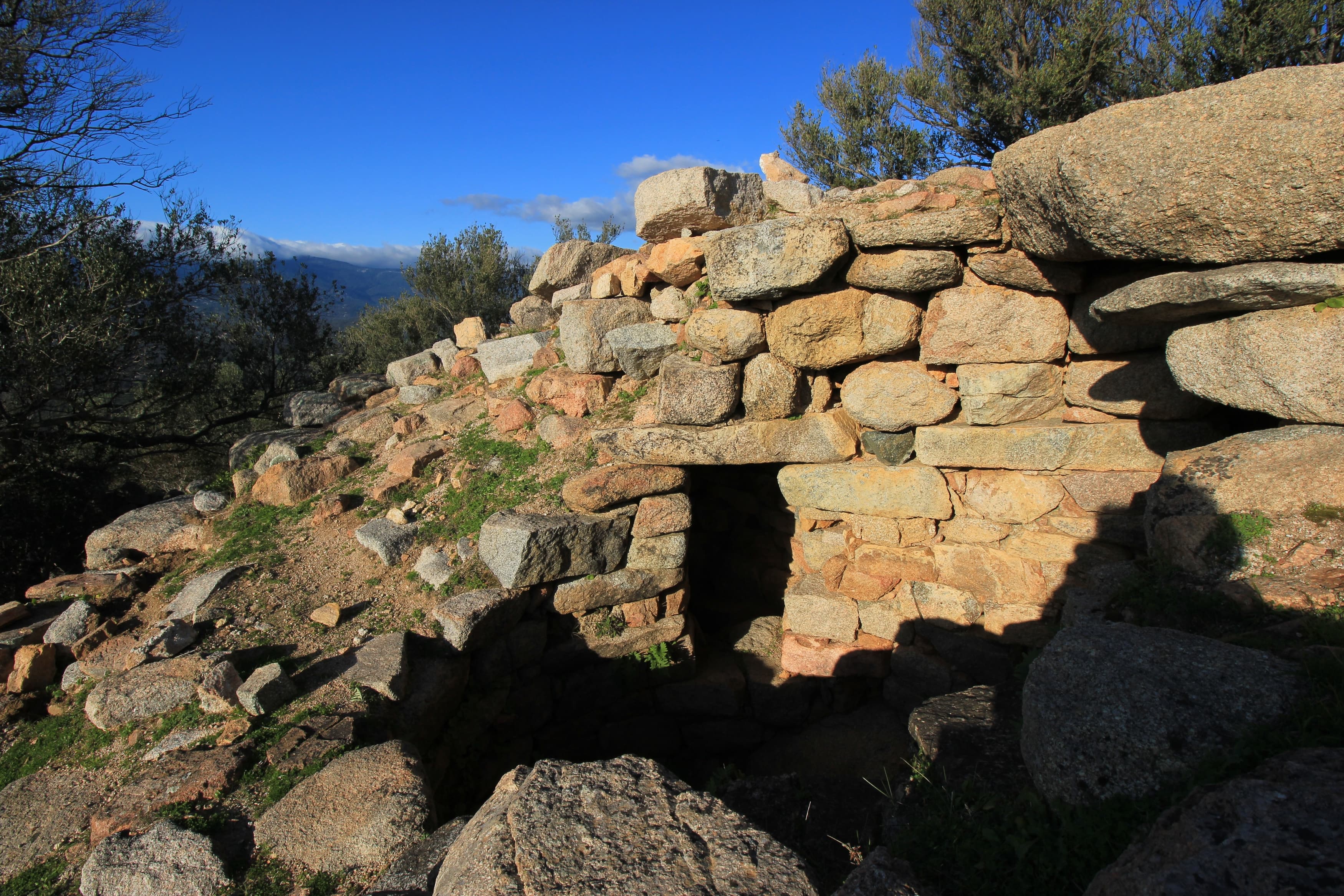
Image of Ceccia. Image source
Visit essentials
A quick read before you go
- Duration
- 30 to 45 minutes for a relaxed visit including the chamber interior and the outcrop views.
- Access
- Village of Ceccia, approximately 5 km south of Porto-Vecchio town centre.
Overview
Five kilometres south of Porto-Vecchio, the village of Ceccia sits on a low rocky ridge above the coastal plain of southern Corsica. In the centre of the village, a short signposted path leads to a circular stone monument that has stood on its granite outcrop for approximately 3,500 years. This is the Casteddu di Ceccia — a Torrean torra, the circular corbelled tower type that the Bronze Age Torrean civilisation built across southern Corsica beginning around 2000 BCE.
Where the larger casteddi at Araghju and Cucuruzzu present themselves as substantial hillforts with multiple functional zones and massive defensive walls, Ceccia is something more concentrated: a single torra monument approximately twelve metres in diameter, its circular chamber two metres across with a false corbelled vault still partly preserved overhead. The entrance corridor controls access from the outer face of the structure through a diverticulum that opens eastward, maintaining the Torrean architectural principle of regulated transition between outside and inside.
The site was occupied from the Neolithic period through the Bronze Age, reused in the late Iron Age, and reoccupied again in the Middle Ages — a persistent human recognition of this particular rocky outcrop as a place worth returning to across four millennia. The reasons for this persistence are not mysterious: the site's commanding position above the coastal plain, its stone that provided ready-made shelter, and its position in a landscape that has always been agriculturally productive.
What remains harder to articulate is the quality of the corbelled chamber interior — a small, enclosed space built with extraordinary care and skill for purposes that are only partly understood.
Why this place is sacred
The scale of Ceccia is its character. The larger Torrean casteddi produce an encounter with deep time through monumental scale — walls that overwhelm, enclosures that dwarf the visitor, spaces whose size speaks before anything else. Ceccia works differently. The monument is compact enough to be held in a single field of vision.
The corbelled chamber is not symbolic interiority but literal intimacy: a circular space two metres across, its vault rising a few metres above head height, the outside world immediately absent when you are inside it.
This intimacy is not diminishment. The corbelled vault of Ceccia was built with the same care, the same technical mastery, and presumably the same sense of purpose as the larger towers of Cucuruzzu and Araghju. Someone decided that this specific quality of interior space — circular, vaulted, accessed through a controlled corridor — was worth creating here, on this outcrop, in this village.
They were right; the space still produces the same quality of enclosure and threshold that they built into it.
The persistent reoccupation of the site across the Neolithic, Bronze Age, Iron Age, and medieval periods is its own kind of thinness: the layered evidence that human beings repeatedly recognised this specific location as having a quality worth returning to. The reasons vary by period — defensive utility, agricultural convenience, ready-made shelter — but the pattern of return itself suggests that something about this place continued to attract.
A Torrean Bronze Age torra monument functioning as part of the agro-pastoral settlement network on the coastal plain south of Porto-Vecchio, combining practical shelter and storage functions with the spatial organisation of protected interior space characteristic of the Torrean architectural tradition.
Neolithic predecessor occupation followed by Torrean Bronze Age main phase (c. 1350 BCE), late Iron Age reuse, medieval reoccupation, and subsequent abandonment. Now a freely accessible village heritage monument.
Experience and orientation
The path to Ceccia begins in the village — a hamlet whose agricultural character gives some sense of the long continuity of settlement in this corner of southern Corsica. The signposted path is short, leading through the village periphery to the rocky outcrop where the monument sits.
The transition from the village path to the monument is abrupt: suddenly the stone structure is there, larger than it looked from the approach, the circular form and the height of the preserved walls establishing their presence before the detail of the construction becomes legible.
Walk the outer perimeter first. The monument is small enough to circumnavigate in two minutes, but this circuit establishes the form: a roughly circular cylinder of drystone masonry, the granite blocks dressed to a smooth outer face, the irregular organic quality of construction that marks Torrean work — massive blocks fitted without mortar, the joints tight, the whole structure held by nothing but the weight and precision of the stones against each other.
The entrance corridor is on the east face. It is low — crouch to enter — and the diverticulum opens at an angle that briefly disorients before the chamber reveals itself. Inside, the corbelled vault rises overhead: the stones laid in courses that gradually overhang each other until the roof closes above you. The chamber is genuinely small. Stand in it and be still. The sound quality changes — the ambient noise of the village and the plain fades.
This is the Torrean architectural achievement at its most direct: a space created for interiority, for enclosure, for whatever purposes required a bounded protected interior separate from the outside world.
The views from the rocky outcrop over the surrounding plain are the other register. The coastal plain south of Porto-Vecchio is flat and agricultural; from the monument platform you can see the Gulf of Porto-Vecchio to the north and the hills behind. This landscape has not changed substantially in its essential character in three and a half thousand years.
Follow the short signposted path from Ceccia village; the walk from car to monument takes approximately five minutes. The monument appears abruptly on its rocky outcrop at the edge of the lived village.
Context and lineage
Casteddu di Ceccia belongs to the Torrean civilisation — the Bronze Age culture that built circular stone towers and hillforts across southern Corsica from approximately 2000 BCE. The Porto-Vecchio area preserves a particularly dense cluster of Torrean sites: Ceccia, Tappa, and Araghju all lie within a fifteen-kilometre radius, documenting a Bronze Age territorial network in which the coastal plain and its agricultural resources were organised and defended through a series of hilltop or outcrop monuments.
Ceccia's position on a low ridge above the plain — less elevated than Araghju but commanding a clear view over the surrounding fields — fits the Torrean pattern of selecting sites that are simultaneously strategic and agriculturally proximate.
Torrean Bronze Age culture (c. 1350 BCE main phase), with earlier Neolithic occupation and later Iron Age and medieval reuse phases. No documented excavator or researcher specifically associated with Ceccia in available sources. Part of the broader Porto-Vecchio Bronze Age heritage landscape.
Traditions and practice
No specific ritual practices are documented at Ceccia through excavation. The evidence from the site suggests domestic and agro-pastoral use consistent with other Torrean torra monuments: shelter, storage, agricultural processing. The persistent reoccupation across the Neolithic, Bronze Age, Iron Age, and medieval periods testifies to the practical value of the location, though whether any of these periods associated the site with sacred significance beyond the Torrean architectural tradition cannot be determined from available evidence.
No active religious or ceremonial use. Freely accessible village heritage monument with no on-site facilities.
Arrive without expectations of a large or impressive monument. Ceccia is not Cucuruzzu — it does not overwhelm with scale, and the walk to reach it involves no physical challenge. What it offers is different: the corbelled chamber interior in its smallest and most accessible form, and the quality of quiet that comes from a site so rarely visited that it retains the character of a local place rather than a managed heritage experience.
At the entrance corridor, move slowly. The low entrance is not merely a structural necessity — it is a threshold, a requirement of physical attention before the chamber opens. Inside, stand still for at least five minutes. Notice the acoustic quality, the change in light quality, the sense of enclosure produced by the corbelled vault overhead.
This is the experience the Torrean builders encoded into the architecture: the distinction between outside and inside, between the open plain and the bounded interior, made physical and irreducible.
Before leaving, stand on the outer platform of the outcrop and look at the surrounding plain. The village of Ceccia continues its life a few dozen metres away. Three and a half thousand years of continuous human settlement in this particular patch of southern Corsica is not an abstraction here — it is the ground you are standing on.
Torrean Bronze Age Culture
HistoricalCasteddu di Ceccia is a Bronze Age torra monument dated to c. 1350 BCE, part of the Torrean civilisation's territorial network across the Porto-Vecchio coastal plain.
Agro-pastoral activity, domestic use, possible ceremonial dimensions consistent with the Torrean torra tradition.
Medieval Reoccupation
HistoricalThe Bronze Age casteddu at Ceccia was reused in the Middle Ages — a pattern shared across multiple Torrean sites in Corsica where the massive drystone construction offered ready-made structures.
Shelter or fortification in the medieval period.
Archaeological Heritage
ActivePart of the Bronze Age archaeological landscape around Porto-Vecchio, documented within the Torrean heritage cluster of southern Corsica.
Heritage tourism, archaeological study.
Perspectives and open questions
Ceccia is understood primarily as a representative example of the Torrean torra type within the Porto-Vecchio Bronze Age heritage cluster, and as a site whose multi-period occupation raises questions about the persistent attraction of specific locations across deep time.
Scholarly perspective
Casteddu di Ceccia is a standard example of the Torrean torra type, confirming the Bronze Age Torrean presence on the coastal plain adjacent to Porto-Vecchio alongside Casteddu di Tappa and Araghju. Excavations have confirmed multi-period occupation from Neolithic through medieval.
Its architecture — circular form, corbelled vault, controlled-access corridor — is consistent with the Torrean construction tradition documented across southern Corsica, though the smaller scale of Ceccia suggests it may represent a subsidiary site within the Porto-Vecchio territorial network rather than a principal casteddu.
Living and traditional perspectives
No living cultural heirs to any of the traditions associated with Ceccia. The site is part of Corsica's broader prehistoric heritage identity, most visible in the island's institutional support for archaeological research and heritage tourism.
Alternative interpretations
The corbelled vault technology at Ceccia has been placed within a wider western Atlantic-Mediterranean tradition of Bronze Age circular stone architecture sharing structural principles with Sardinian nuraghi, Irish passage tombs, and Balearic talayots.
In this comparative perspective, the Torrean torra is not an isolated Corsican development but an expression of a shared Bronze Age cosmological impulse — the creation of a vaulted interior space accessible only through a controlled threshold — that manifested across a wide geographic range in the second millennium BCE.
Open questions
The function of the upper platform structures at Ceccia, now lost, is undetermined. Whether the monument held a primarily defensive, domestic, or ritual function — or combined all three — cannot be established from current evidence. The specific nature of the Iron Age and medieval reuse phases is also poorly documented.
Plan your visit
Access and arrival
Village of Ceccia, approximately 5 km south of Porto-Vecchio town centre. Short signposted path from the village. Free access, no ticket required, no formal opening hours.
Porto-Vecchio (~5 km) has comprehensive accommodation at all price points, including campgrounds, hotels, and rental properties. The town is Corsica's principal tourist centre for the south.
Respectful visit
No specific requirements. Comfortable footwear recommended.
Permitted. The corbelled vault interior photographs well in natural daylight; a torch or phone light helps reveal the wall construction detail.
Not applicable.
Do not climb or disturb the ancient stonework. Respect the village setting — this is not a remote wilderness monument but a community heritage site. Do not block the village path with vehicles.
The entrance corridor is low; tall visitors should crouch carefully to avoid the stone overhead. The rocky outcrop surrounding the monument can be slippery after rain. No facilities on site.
Location
Map loads as you approach this section.
Pilgrim reflections
A portrait of encounter, not a score
Pilgrims describe what they felt, how present they could become, and whether the place would shape a journey. There are no stars and no ranking of traditions.
No reviewed reflections yet
The first pilgrims can help describe the character of being here.
Share a reflection
Available after an account-backed “Been there.” Every reflection is reviewed before publication.
Nearby sacred places
Explore other sacred places in the region. Proximity does not establish access or travel time; check each place’s guidance.

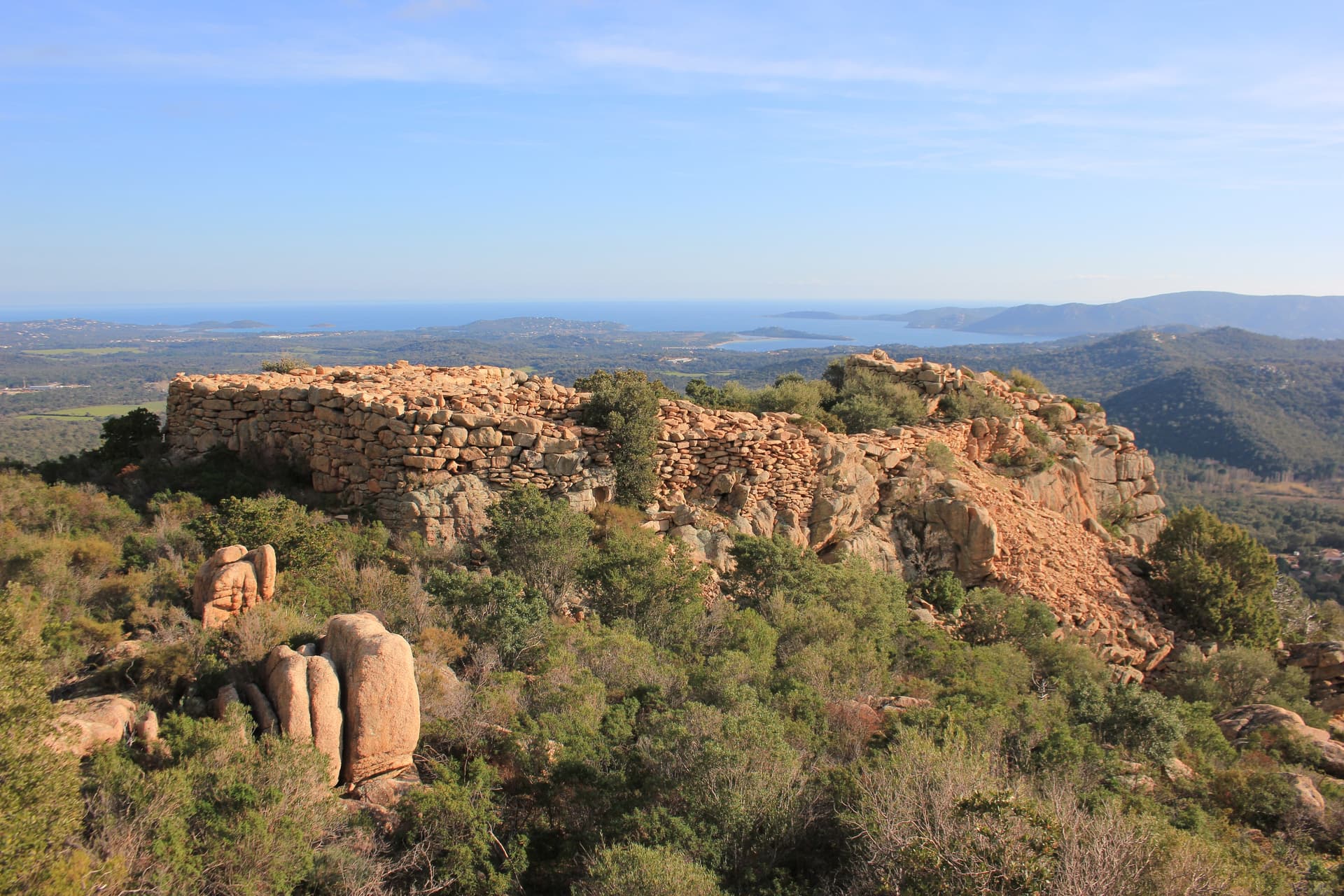

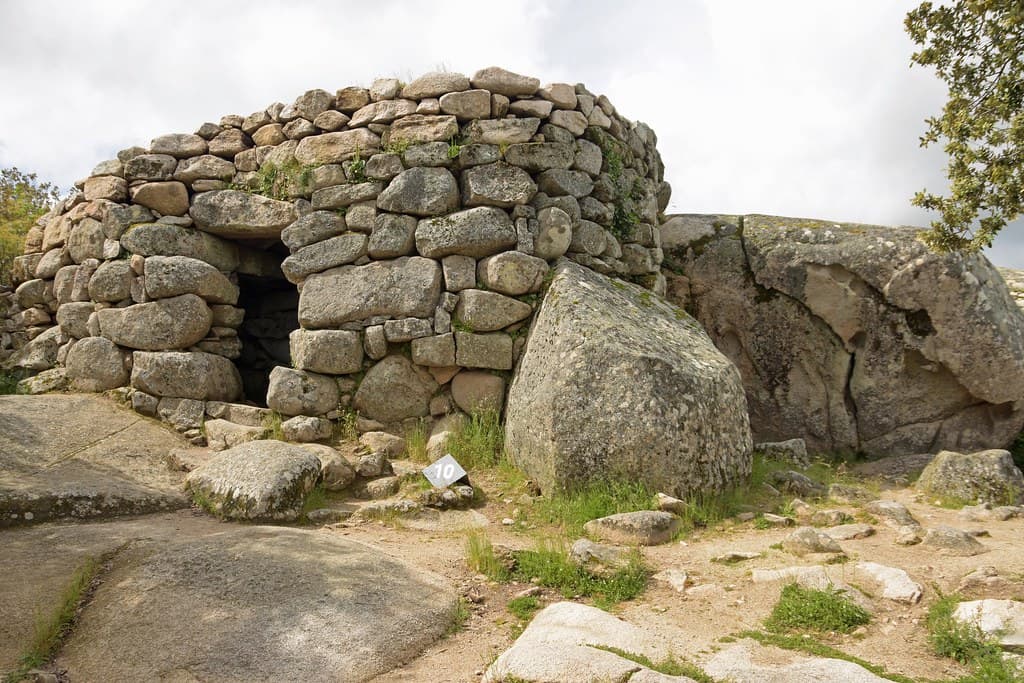
References
Sources consulted for this page. Source categories describe the publication, not a guarantee that every claim is verified. Traditional accounts and outside interpretations may differ.
- 01Casteddu di Ceccia - WikidataencyclopediaSource of GPS coordinates: 41°33'45.4"N, 9°14'40.9"E
- 02Ceccia, Bronze Age archaeological site - Tourist Office of Porto VecchioofficialOfficial tourism description with site details
- 03Play at being an archaeologist around Porto-Vecchio - Visit CorsicaofficialOfficial Corsica tourism contextualising Ceccia within the Porto-Vecchio archaeological landscape
- 04Ceccia - WikipediaencyclopediaEnglish Wikipedia entry for the village and archaeological site
- 05Torre von Ceccia - Wikipedia (German)encyclopediaGerman Wikipedia article on the Torre at Ceccia
- 06Porto-Vecchio in Corsica: Historical HeritageofficialContextual overview of Porto-Vecchio's Bronze Age heritage landscape
- 07Casteddu di Ceccia Map - Archaeological site - Porto-Vecchio, CorsicaSource contextGeographic data aggregator with location information
Share a photo
Help visitors recognize Ceccia. Every submission is reviewed before publication.