St. Davids and St. Non's, Wales
The heart of Welsh Christianity, where birth and burial of the patron saint create a complete pilgrimage
Understand sacred places, explore living traditions, and learn how to engage respectfully with Pilgrim Map.
Access has not been verified. Check current local guidance before planning a visit.
St Davids, Wales, United Kingdom
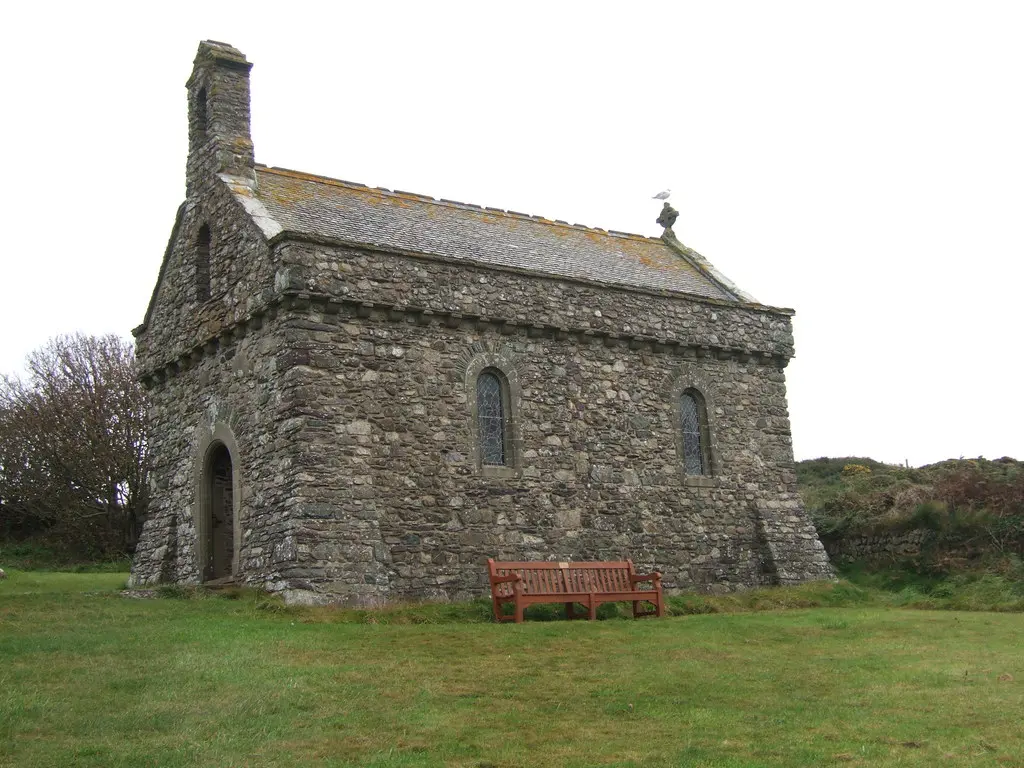
Image of St. Davids and St. Non's, Wales. Image source
Visit essentials
A quick read before you go
- Duration
- A meaningful pilgrimage, walking from St Non's to the cathedral and spending time at both sites,…
- Access
- St Davids is reached by road via the A487 from Haverfordwest.
Overview
Some places become sacred through an event, others through centuries of prayer, and others seem to have been waiting all along. St Davids is all three.
According to tradition, Non gave birth during a storm so fierce that only the place where she labored remained calm. Her son became Dewi Sant—David, patron saint of Wales. He founded a monastery on this headland, established the austere rule that defined Welsh Christianity, and was buried where his cathedral would rise.
Pope Calixtus II declared that two pilgrimages to St Davids equaled one to Rome, placing this remote Welsh site among Christendom's most important destinations and formalizing what pilgrims already knew: something here answered the journey.
St Davids remains Britain's smallest city. Its cathedral is hidden in a valley rather than raised on a hill, so visitors still make the descent of medieval pilgrims. On cliffs south of town, St Non's chapel and well mark the beginning. Walking between them completes a circuit pilgrims have followed for fifteen hundred years; whatever you seek, this path has held others' seeking.
Why this place is sacred
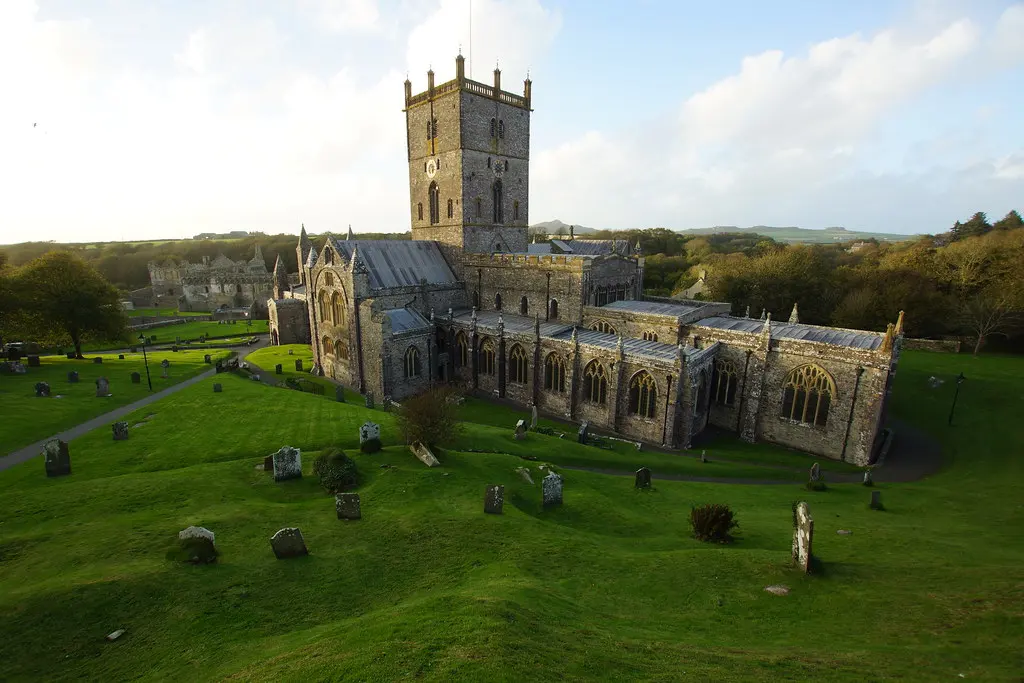
The cathedral sits in a hollow rather than on a height. Approaching from the city, you descend rather than ascend, and this topographical humility seems fitting for a saint who insisted on simplicity. David's rule was austere: cold water, vegetable diet, manual labor, hours of prayer. The monastery he founded here became a center of learning and discipline that shaped Welsh Christianity for centuries.
The thin place quality at St Davids has both structural and accumulated dimensions. Structurally, the site holds the complete narrative of a saint's life: birth at St Non's, ministry at the monastery, burial in the cathedral. Medieval pilgrims could walk this story, moving through the places where David moved, and contemporary pilgrims can do the same. Few pilgrimage sites offer such completeness.
Accumulated, the site holds fifteen centuries of seeking. William the Conqueror came here. Edward I came here. Countless unnamed pilgrims walked the paths that you can walk today, bringing their prayers, their gratitude, their desperate hope. The cathedral has been destroyed and rebuilt multiple times, yet worship has never ceased. The well at St Non's still flows.
The landscape adds its own dimension. Pembrokeshire's coast is among Britain's most dramatic, and St Davids sits where land meets sea with particular intensity. The wind, the light, the sound of waves, all contribute to an atmosphere that many describe as charged, expectant, thin.
David founded his monastery here in the sixth century, choosing this remote headland for reasons that tradition does not fully explain. Perhaps he sought distance from worldly distraction; perhaps he recognized something already present in the landscape. His monastery became famous for its discipline and its learning, attracting disciples who would establish foundations across Wales and beyond. The site became both spiritual center and pilgrimage destination during David's lifetime, a status that only grew after his death.
Viking raids devastated the monastery in the ninth and tenth centuries, destroying much of what David's community had built. The current cathedral dates primarily from the twelfth century, rebuilt after the Norman conquest brought new resources and new ambitions to Welsh Christianity. The shrine of St David became increasingly important through the medieval period, reaching its height of influence when Rome itself recognized the site's significance.
The Reformation disrupted the cult of saints, and David's shrine was dismantled. Yet pilgrimage continued in quieter form, and the cathedral never ceased to function. The twentieth century saw a revival of interest in Celtic Christianity, and St Davids has become once again a major pilgrimage destination, drawing visitors who may not share the faith of medieval pilgrims but who seek something the site continues to offer.
Experience and orientation
Begin at St Non's if you can. The clifftop where David was born holds a ruined medieval chapel, a holy well, and a modern Catholic chapel built in 1934. The ruins sit in a field, unprotected and open, the way medieval sacred sites were meant to be encountered. The well still flows, its waters traditionally associated with healing, particularly of eye ailments.
The walk from St Non's to the cathedral takes perhaps half an hour, enough time for the journey to work on you. The path passes through fields and along the edge of the city, moving from wild coast to settled town without losing its pilgrim character. Those who drive between the sites miss something essential; the walking is part of what the pilgrimage offers.
The descent to the cathedral is the climax. Unlike most cathedrals, which rise above their cities, St Davids sits in a natural hollow, hidden until you are almost upon it. The path drops through the gatehouse, and the cathedral emerges, massive and ancient, in the dell below. This approach was intentional, or at least understood: pilgrims arrived by descending, humbling themselves, entering a space set apart from the ordinary world.
Inside, the cathedral holds the mixed legacy of centuries: Norman architecture, medieval woodwork, Victorian restoration, and ongoing worship. The shrine of St David, rebuilt in modern times, marks the traditional location of his burial. Pilgrims still come to pray here, as they have since the sixth century.
Start at St Non's and walk to the cathedral, not the reverse. The birth-to-burial sequence carries meaning that reversal would obscure. At St Non's, take time at the ruined chapel, the well, and the modern chapel; each offers something different.
The walk itself is the practice. Do not rush it. Let the landscape work on you. Notice the sea, the wind, the light. Medieval pilgrims walked much farther to reach this point; the final approach deserves attention.
At the cathedral, descend slowly. The gatehouse marks the transition from ordinary city to sacred precinct; pause there. Inside, find the shrine and spend time. If a service is underway, consider joining it rather than treating it as interruption. Pilgrimage here has always included worship.
Before leaving, consider what you came for and what you found. The pilgrimage tradition holds that the journey changes the pilgrim. What has changed in you?
Context and lineage
Non was a woman of noble birth who became pregnant with David under circumstances tradition describes variously. One account speaks of assault; others simply say his father was Sant, a prince of Ceredigion. What tradition agrees upon is the birth itself: during a fierce storm that swept the coast, one calm spot remained, the place where Non labored. When David was born, a spring burst from the rock, the well that still flows at St Non's.
David grew to become the leader of the Welsh church, founding monasteries across Wales and beyond. His rule was known for its severity: cold water baths, vegetable diet, long hours of labor and prayer. He was called Dewi Ddyfrwr, David the Water Drinker, for his abstinence from alcohol. The monastery at St Davids became a center of learning that influenced Christian practice across the Celtic world.
David died on March 1, 589 (or possibly 601, sources vary), and was buried in the monastery he had founded. His tomb became a pilgrimage site immediately, and his feast day, March 1, is now the national day of Wales.
David's monastery continued after his death, becoming the center of the Welsh church. The bishopric of St Davids claimed precedence over other Welsh sees, and for a time there was hope it might become an archbishopric independent of Canterbury. That hope died with the Norman conquest, but St Davids retained its significance.
The medieval cathedral became a major pilgrimage destination, drawing visitors from across Europe. The Reformation disrupted but did not destroy the tradition; though the shrine was dismantled, the cathedral continued as a place of worship. The twentieth and twenty-first centuries have seen pilgrimage revive, with St Davids recognized once again as a place where seekers come seeking.
St David
founder
Patron saint of Wales, bishop of Mynyw (St Davids), founder of the monastery and austere rule that defined Welsh Christianity. His feast day, March 1, is the national day of Wales.
St Non
associated_saint
Mother of St David, venerated in her own right as a saint. Her feast day is March 2, the day after her son's. The well at her chapel has been a site of healing pilgrimage since the medieval period.
Pope Calixtus II
historical
The pope who declared that two pilgrimages to St Davids equaled one to Rome, formally recognizing the site's significance within Christendom. This declaration, made in 1123, placed St Davids among Europe's premier pilgrimage destinations.
Traditions and practice
Medieval pilgrims approached St Davids as one of Christianity's great destinations. The complete pilgrimage might begin at St Non's, where David was born, proceed to the cathedral for worship at his shrine, and potentially include St Justinian's Chapel on the coast, associated with David's confessor. Pilgrims came seeking healing, forgiveness, the saint's intercession, or simply the merit of having completed so significant a journey.
The well at St Non's was particularly associated with healing, especially of eye ailments. Pilgrims would bathe affected parts in the water, pray for the saint's intercession, and leave offerings of gratitude or petition.
Modern pilgrims walk the same paths, though the meanings they bring have diversified. The British Pilgrimage Trust and other organizations promote the route, providing guidance for those new to pilgrimage practice. The cathedral welcomes visitors for worship or quiet contemplation, and the shrine of St David has been restored as a focus for prayer.
At St Non's, the well remains accessible. The ruined medieval chapel is open to the elements; the modern Catholic chapel offers a space for prayer. Many visitors take water from the well, continuing a practice that reaches back centuries.
March 1, St David's Day, draws particular crowds, both pilgrims and those celebrating Welsh identity. March 2, St Non's feast day, is quieter but significant for those who honor David's mother.
Walk from St Non's to the cathedral, taking at least 30-40 minutes for the journey. At St Non's, visit the ruined chapel, the well, and the modern chapel. Take water from the well if you wish, using a small container and leaving the well undisturbed for others.
At the cathedral, descend through the gatehouse slowly. Inside, attend a service if possible, or find the shrine of St David for quiet prayer or contemplation. Light a candle if the tradition resonates with you.
Consider what brought you here and what you are seeking. The pilgrimage tradition holds that David's intercession is still available, that the saint prays for those who pray at his shrine. You need not believe this to take the practice seriously; you only need to be present to what arises.
Celtic Christianity
ActiveSt David is the founder and exemplar of Welsh Celtic Christianity, and St Davids is its central site. The monastic rule David established, known for its austerity and discipline, shaped Christian practice across Wales and beyond. The tradition of Celtic Christianity continues to inform Welsh spiritual identity, with St Davids serving as both historical monument and living pilgrimage destination.
Historical practices included the austere monastic rule (vegetable diet, cold water, manual labor, extensive prayer), pilgrimage to the saint's shrine, and taking water from St Non's well for healing. Contemporary practices include pilgrimage walks, cathedral worship, well visits, and the observance of St David's Day as both religious and national celebration.
Catholic Pilgrimage
ActiveRoman Catholicism recognized St Davids as a major pilgrimage site, with papal declaration placing it alongside Rome itself. The modern Catholic chapel at St Non's, built in 1934, continues this tradition, offering Mass and maintaining the well. Catholic pilgrims come to St Davids as part of a tradition that stretches back to the medieval period.
Catholic pilgrims may attend Mass at St Non's chapel, pray at the well, and visit the cathedral. The tradition includes seeking the saints' intercession, particularly for healing, and undertaking the pilgrimage with specific intentions.
Anglican/Church in Wales
ActiveThe cathedral of St Davids is the seat of the Bishop of St Davids and a central institution of the Church in Wales. Post-Reformation, the church maintained worship on this site even as pilgrimage to saints' shrines fell out of favor. The twentieth-century restoration of the shrine of St David reflects a renewed Anglican appreciation for pilgrimage and the communion of saints.
Regular Anglican worship according to the Church in Wales calendar, pilgrimage visits, observance of St David's Day with special services. The cathedral welcomes visitors of all faiths and none, maintaining the site as both sacred space and national heritage.
Perspectives and open questions
St Davids invites interpretation from multiple frameworks: as the historical center of Welsh Christianity, as a major medieval pilgrimage site, and as a living thin place where contemporary seekers encounter something difficult to name. Each perspective captures genuine significance.
Scholarly perspective
Historical and archaeological research confirms St Davids as the most important religious site in Wales from the early medieval period through the Reformation. David's historical existence is not seriously disputed, though the details of his life are shaped by hagiography as much as history. The cathedral preserves significant Norman and medieval architecture, along with later additions. The site's role in Welsh national and religious identity is well documented and continues to be studied.
Living and traditional perspectives
For Welsh Christians and the broader Christian tradition, St Davids holds the memory and presence of the nation's patron saint. David's intercession remains available for those who seek it; his shrine, though destroyed and rebuilt, continues to focus prayer. The papal declaration equating this pilgrimage to Rome expressed a truth that pilgrims already knew and that many continue to experience.
The tradition holds that David is present at his shrine, that the waters at St Non's carry healing, that the path between birth and burial opens something in those who walk it.
Alternative interpretations
Contemporary spiritual seekers often describe St Davids as a thin place, a location where the boundary between ordinary reality and something more is unusually permeable. This vocabulary may not align with Christian tradition, but it points toward experiences that Christian pilgrims have also reported. The landscape itself seems to invite such perception: the dramatic coast, the hidden cathedral, the ancient well. Those who come without faith often leave with questions they did not expect to ask.
Open questions
Genuine uncertainties remain. The exact dates of David's life are disputed. The nature of pre-Christian sacred use of this headland is unknown. Why David chose this remote location for his principal foundation is not recorded. What medieval pilgrims experienced at the shrine, and how that compares to what contemporary pilgrims experience, cannot be directly compared. The site is large enough to hold these mysteries without resolution.
Plan your visit
Access and arrival
St Davids is reached by road via the A487 from Haverfordwest. There is no train station; the nearest is Haverfordwest, with bus connections. Parking is available in the city. The walk to St Non's begins from the city center; the well and chapel are signposted.
St Davids offers a range of accommodations from hotels to guesthouses to camping. As a popular tourist destination, booking ahead is advisable in summer. Several accommodations market themselves to pilgrims. The surrounding Pembrokeshire Coast offers numerous options.
Respectful visit
Dress modestly, particularly at the cathedral. Beach attire is inappropriate. Comfortable walking shoes are essential for the path between St Non's and the cathedral.
Photography is permitted in the cathedral and at St Non's, but be mindful of others. Flash is typically prohibited inside the cathedral. Professional equipment may require permission. The landscape around St Non's is particularly photogenic, but do not trample off-path for the perfect shot.
Coins at the well, candles at the cathedral. The cathedral has formal donation boxes and sells candles. At St Non's, offerings should be subtle and biodegradable if physical at all; intention matters more than object.
The cathedral has entry hours and charges a donation. St Non's is accessible at all times. Do not climb on ruins at St Non's. Keep dogs under control. Respect other pilgrims and worshippers.
The walk between St Non's and the cathedral crosses varied terrain; wear appropriate footwear. The cathedral charges an entry donation; be prepared to contribute. Services take priority over tourism; if worship is underway, participate reverently or wait. The well at St Non's is natural spring water; those with health concerns should not drink it.
Current practical details
Address
St Davids, Haverfordwest SA62 6BN, UK
Phone
Hours
Hours, fees, and access can change — verify on the official source before you travel. Practical details last checked Jun 2026.
Location
Map loads as you approach this section.
Pilgrim reflections
A portrait of encounter, not a score
Pilgrims describe what they felt, how present they could become, and whether the place would shape a journey. There are no stars and no ranking of traditions.
No reviewed reflections yet
The first pilgrims can help describe the character of being here.
Share a reflection
Available after an account-backed “Been there.” Every reflection is reviewed before publication.
Nearby sacred places
Explore other sacred places in the region. Proximity does not establish access or travel time; check each place’s guidance.

Share a photo
Help visitors recognize St. Davids and St. Non's, Wales. Every submission is reviewed before publication.