St Non’s Chapel and Well
Where the patron saint of Wales was born in a storm of light
Understand sacred places, explore living traditions, and learn how to engage respectfully with Pilgrim Map.
Access has not been verified. Check current local guidance before planning a visit.
St Davids, Wales, United Kingdom
Read the sources
The stone enclosure of St Non’s Well near St Davids.. Image source · CC BY 4.0
Visit essentials
A quick read before you go
- Duration
- Allow 30 minutes to 1 hour at the site.
- Access
- Located approximately 1 mile south of St Davids.
Overview
Legend tells that Non, pregnant by a prince who later became a saint, labored during a terrible storm. As wind raged and sky darkened, a great light protected mother and child. At David's birth a spring burst from the earth and a stone split; one half became the chapel altar. Non's finger marks, made while gripping the rock in pain, were said to remain for centuries.
People have told such stories here for over fifteen hundred years. The birth spring still flows clear and cold into a stone basin restored in 1951. For as long as records exist, pilgrims have taken its water believing it heals; by 1811 one account described its incredible fame for curing complaints, especially of the eyes.
The ruined chapel is medieval, but a Bronze Age stone circle surrounds it, with ancient uprights visible in the grass. People marked this ground as significant long before David, Non, or Christianity. Whatever drew them early continues to draw people now.
Why this place is sacred
Begin with the stones. The Bronze Age circle that surrounds the ruined chapel dates to roughly 2000 BC, four thousand years ago. Whatever those who placed these stones believed, they believed it strongly enough to haul rock into position and arrange it in patterns that persist to this day. We do not know their rituals, their cosmology, the names of their gods. We know only that they marked this place, and that later peoples continued to find it significant.
The birth story adds its layer. David's arrival, according to tradition, was accompanied by storm, light, and miracle. A spring appeared. A stone split. A mother's finger marks were pressed into rock. Such stories are not history in any modern sense, but they are not nothing either. They encode something about how this place struck those who knew it, the sense that ordinary rules were suspended here, that something could break through.
The well became a focus of healing. Reports of cures accumulated over centuries. Eye complaints were especially associated with the water, but the sick came for many reasons. Coins were thrown into the well for luck or in hope. The practice continued into the modern era and continues still.
Whether the water has any physical properties beyond ordinary spring water is uncertain; what is certain is that people have believed it does, and have acted on that belief, for a very long time.
The Catholic chapel built in 1934 adds another layer of ongoing veneration. When much of Wales had absorbed the Protestant Reformation, some maintained the older devotion to Non and David. The construction of a new chapel at the birthplace, small and humble but active, testified to faith that had not ceased.
Finally, the coastal location contributes to the thinness. The sea is visible and audible. The cliff edge is near. This is liminal land, where one element meets another, where solidity gives way to vastness. Such margins have often been recognized as charged, places where the ordinary world admits something else.
The Bronze Age stone circle suggests the site was recognized as sacred at least four thousand years ago. The Christian significance dates to the traditional birth of St David, around 500 AD, when a healing well appeared at the moment of his birth.
A medieval chapel was built on the site to mark David's birthplace and honor his mother, Non. This chapel fell to ruin, likely after the Reformation, but the well continued to be visited for healing. In 1951, the well was restored. In 1934, a modern Catholic chapel was built nearby, maintaining active veneration. Today, the site is maintained by Cadw (the ruins) and by the Catholic Church (the modern chapel), and receives pilgrims from multiple traditions.
Experience and orientation
The walk from St Davids is about a mile, through fields and along lanes that narrow as the coast approaches. The ruins appear first, low walls of the medieval chapel surrounded by the older stones of the Bronze Age circle. The sea is visible beyond, the coast path running along the cliff edge.
The chapel is roofless, open to the sky. Fragments of a Celtic cross stone, dating to the 7th or 9th century, stand within. The enclosure is small, intimate, the kind of space that invites stillness rather than movement. The Bronze Age stones, worn and weathered, rise among the grass outside the chapel walls, a reminder that this ground was marked long before David's birth.
The well is nearby, a stone basin fed by the spring that legend says appeared at David's birth. The water is clear and cold. Pilgrims have taken it for healing for fifteen centuries. Coins glint at the bottom, left by visitors following the old custom of offering for luck or hope. You can cup the water in your hands, touch it to your face, participate in a gesture repeated across generations.
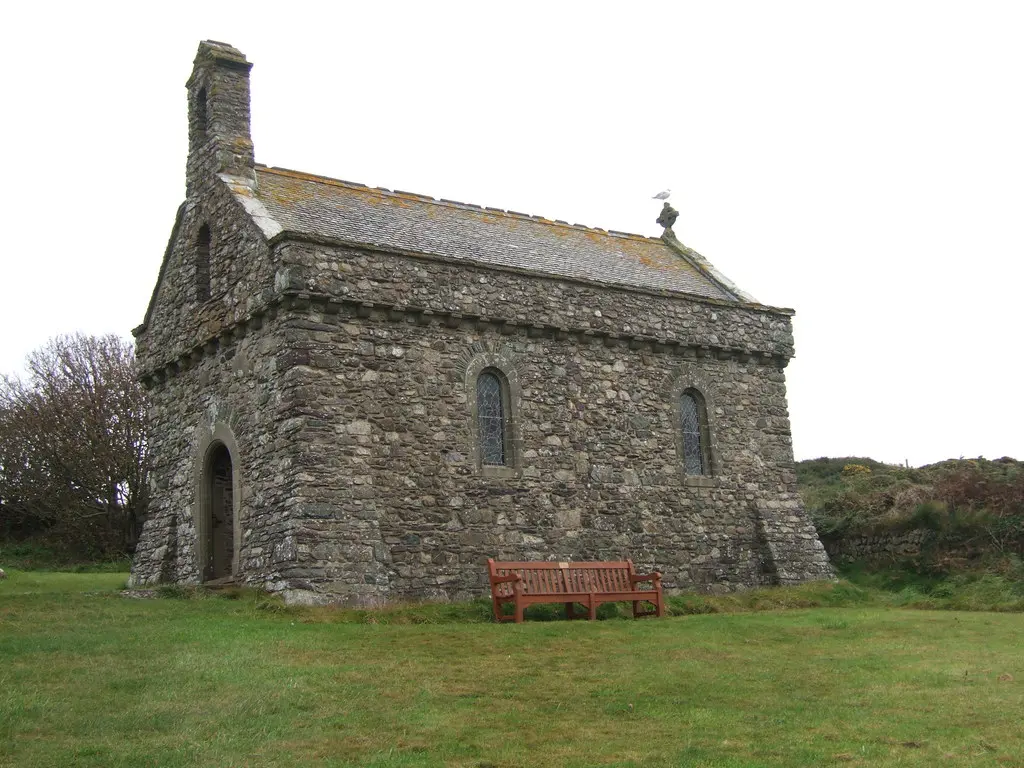
The modern Catholic chapel, Our Lady and St Non, stands a short distance away. Built in 1934, it is one of the smallest churches in Britain, approximately 25 feet by 12 feet. Inside, an altar and simple furnishings serve the occasional Mass. The building is often open for prayer.
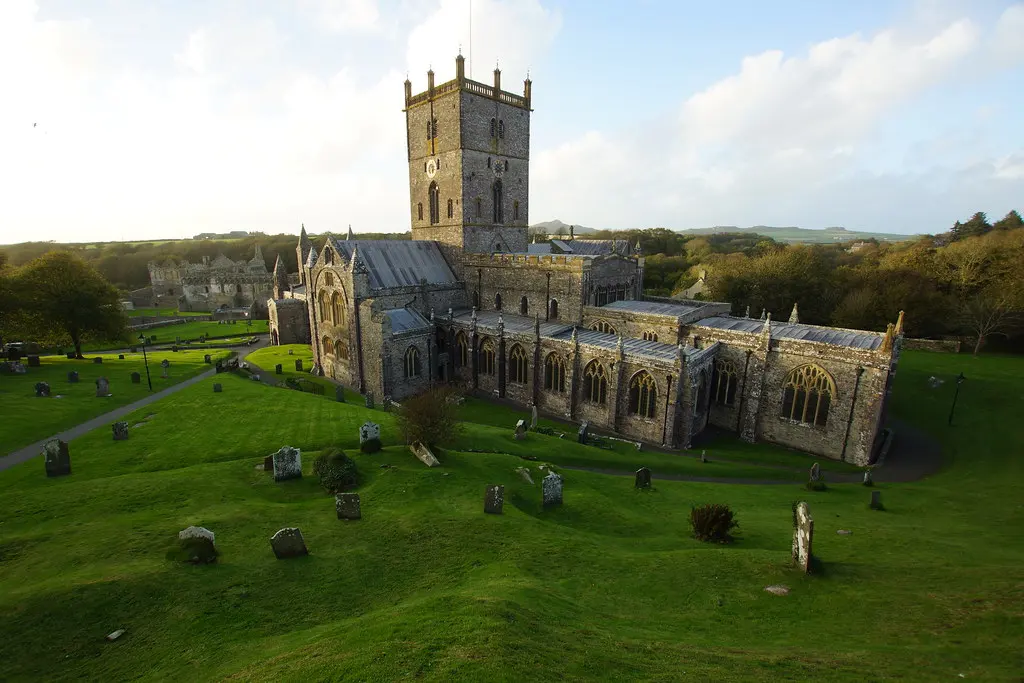
The coastal path continues in either direction. St Justinian's Chapel, where David's confessor was martyred, lies two miles to the west. St Davids Cathedral, where David lived and died, is a mile to the north. To walk between these sites is to trace a sacred geography that pilgrims have traced for over a thousand years.
St Non's Chapel and Well are located approximately one mile south of St Davids, accessible via minor roads or footpaths. Parking is available near the modern retreat center. The ruined medieval chapel and Bronze Age stones are open at all times, maintained by Cadw. The holy well is adjacent to the ruins. The modern Catholic chapel (Our Lady and St Non) is nearby and often open for prayer. The site is part of the Pembrokeshire Coast Path.
Allow 30 minutes to 1 hour at the site; add walking time from St Davids.
Context and lineage
According to tradition, St Non was the mother of St David. She was of noble birth, and David's father was Sant, son of a king. As her labor began, a great storm arose. Non found herself on this clifftop, in pain and in danger. But as David was born, a great light surrounded mother and child, and the storm could not harm them. At the moment of birth, a spring burst from the ground where none had been.
A rock split in two; one half would later form the altar of the chapel. The marks of Non's fingers, pressed into the stone as she gripped it during labor, were said to remain visible.
Non herself is venerated as a saint. Churches dedicated to her exist in Brittany and Cornwall as well as Wales, testifying to her significance in the Celtic Christian world. She is said to have lived a life of holiness after David's birth, eventually dying in Brittany.
The well's healing reputation established itself early. Pilgrims came for centuries, seeking cures especially for eye complaints. The practice continued into the modern era, and visitors still take the water.
The site has been venerated continuously since at least the early medieval period. The ruined chapel is maintained by Cadw, the Welsh heritage agency. The modern Catholic chapel, built in 1934, is served by the Diocese of Menevia. The well continues to receive visitors from multiple Christian traditions and none.
St Non (Nonnita)
Mother of St David, saint in her own right
St David (Dewi Sant)
Patron saint of Wales, born at this site
Traditions and practice
The healing tradition of the well is ancient and documented. By the early 19th century, accounts describe the well's incredible fame for healing, particularly eye complaints. Pilgrims would drink or bathe in the water, throw coins for luck, and pray for cure. The practice was part of the broader pilgrimage to St Davids, which the 1123 papal decree had elevated to equal Rome. Visiting Non's well was a natural stop for those journeying to her son's shrine.
Non's own feast day, March 2, was observed at the site. The medieval chapel would have hosted regular services before the Reformation.
The well continues to receive pilgrims and visitors. Some take water for healing; bottles are often visible at the basin. Coins are thrown in, continuing the ancient custom. The modern Catholic chapel hosts occasional Mass; check locally for schedule. The site is included in contemporary pilgrimage routes to St Davids. Many visitors come simply to experience the place, to sit in the ruins, to walk the coastal path, to reflect on birth and faith and the persistence of seeking.
Visit the well and take time with it. Cup the cold water in your hands. Look into the basin where coins gather. Walk among the Bronze Age stones and notice how they frame the ruins. Sit inside the roofless chapel and let the sky be your ceiling. If the modern chapel is open, enter and rest. Consider walking back to St Davids, tracing the path pilgrims have walked between birthplace and shrine.
Roman Catholicism
ActiveThe modern chapel of Our Lady and St Non, built in 1934, maintains Catholic presence at the saint's birthplace. Mass is celebrated here, and the site is a place of ongoing pilgrimage for Catholics honoring Non and David.
Mass is celebrated at the modern chapel (schedule varies). Pilgrims visit the well and take water for healing. March 2, St Non's feast day, may see special observances.
Christianity (Church in Wales)
ActiveAs the birthplace of David, patron saint of Wales, the site is significant for all Welsh Christians. The ruins are maintained by Cadw, reflecting the broader cultural and spiritual importance of the site.
Visits as part of pilgrimage to St Davids. Contemplation at the ruins and well. Integration of the site into walks and tours connected to David's life.
Holy Well Tradition
ActiveThe well has been sought for healing for at least fifteen centuries. The tradition of taking water for health, throwing coins for luck, and praying for cure continues. This practice transcends any single denomination.
Taking water from the well, touching it to affected parts of the body, drinking it. Leaving coins. Prayer at the well for healing or blessing.
Perspectives and open questions
St Non's invites interpretation as the birthplace of Wales's patron saint, as a Bronze Age sacred site christianized in the early medieval period, as a healing well with centuries of documented use, and as a place where multiple traditions converge around the mystery of birth and water.
Scholarly perspective
The Bronze Age stone circle confirms that the site was recognized as significant at least four thousand years ago, long before the Christian era. Such continuity of sacred use is documented at other British sites.
The earliest written account of David's life, Rhygyfarch's Life of St David from the late 11th century, describes his miraculous birth but does not specify St Non's as the location. The tradition placing his birth at this specific site appears well established by the medieval period when the chapel was built.
The well's healing reputation is documented from at least the early 19th century, when accounts describe its incredible fame. Whether this reputation extended earlier is probable but not conclusively documented. The association of holy wells with healing is widespread in Celtic Christianity.
The modern Catholic chapel, built in 1934 by Cecil Morgan-Griffiths, represents a revival of Catholic presence at the site following centuries of marginal existence under Protestant ascendancy.
Living and traditional perspectives
For Welsh Christians of all traditions, St Non's is hallowed ground. David, the patron saint, was born here. Non, his mother, is venerated as a saint in her own right. The well's healing power, whether interpreted literally or symbolically, connects contemporary pilgrims to centuries of seeking. The site represents the origins of Welsh Christian identity.
For Catholics, the continuous veneration of Non and the presence of the modern chapel represent the persistence of the old faith through the Reformation and beyond.
Alternative interpretations
The Bronze Age stone circle suggests the site was recognized as powerful long before Christianity. Some interpret this as evidence that certain locations carry inherent energy that multiple traditions have recognized. The well's healing reputation, whether due to mineral content, placebo effect, or something less explicable, attracts those interested in alternative approaches to wellness. The combination of ancient stones, healing water, and dramatic coastal location creates a site that resonates beyond any single tradition.
Open questions
Whether the Bronze Age use of the site influenced its later Christian significance is unknown. What rituals occurred within the stone circle remains a matter of speculation. The precise origin of the well's healing reputation is undocumented. Whether the relics of Non, said to be in Brittany, are authentic cannot be determined.
Plan your visit
Access and arrival
Located approximately 1 mile south of St Davids. Can be reached by minor road (signposted) or by walking the Pembrokeshire Coast Path from St Davids. Parking is available near the site. Terrain is uneven; footwear suitable for fields is advisable.
Accommodation is available in St Davids and the surrounding area. A retreat center operates near St Non's.
Respectful visit
No specific requirements at the ruins. Modest dress is appropriate for the modern chapel.
Permitted at the ruins and well. Be discreet in the modern chapel; do not photograph during services.
Coins in the well are traditional. Donations for the chapel's upkeep may be left there.
Do not damage ruins or stones. Do not disturb those at prayer. Close gates if you open them.
The cliff edge is near; exercise caution, especially in wind or wet conditions. The ruins are open to weather; dress appropriately. The modern chapel may be locked; check locally for access.
Current practical details
Address
St Davids, Haverfordwest SA62 6BN, UK
Phone
Hours
Hours, fees, and access can change — verify on the official source before you travel. Practical details last checked Jun 2026.
Location
Map loads as you approach this section.
Pilgrim reflections
A portrait of encounter, not a score
Pilgrims describe what they felt, how present they could become, and whether the place would shape a journey. There are no stars and no ranking of traditions.
No reviewed reflections yet
The first pilgrims can help describe the character of being here.
Share a reflection
Available after an account-backed “Been there.” Every reflection is reviewed before publication.
Nearby sacred places
Explore other sacred places in the region. Proximity does not establish access or travel time; check each place’s guidance.
References
Sources consulted for this page. Source categories describe the publication, not a guarantee that every claim is verified. Traditional accounts and outside interpretations may differ.
- 01St Non's Chapel — CadwofficialOfficial Welsh heritage agency
- 02St Davids Cathedral, St Non's Well, St Justinian's Chapel — British Pilgrimage TrustguidePilgrimage organization
- 03Chapel of St Non — WikipediaencyclopediaEncyclopedia entry
- 04St Non's Chapel and Well — Atlas ObscuraSource contextTravel site
Share a photo
Help visitors recognize St Non’s Chapel and Well. Every submission is reviewed before publication.