St David’s Cathedral
Where two pilgrimages equal Rome and the prayers of fourteen centuries remain
Understand sacred places, explore living traditions, and learn how to engage respectfully with Pilgrim Map.
Access has not been verified. Check current local guidance before planning a visit.
St Davids, Wales, United Kingdom
Read the sources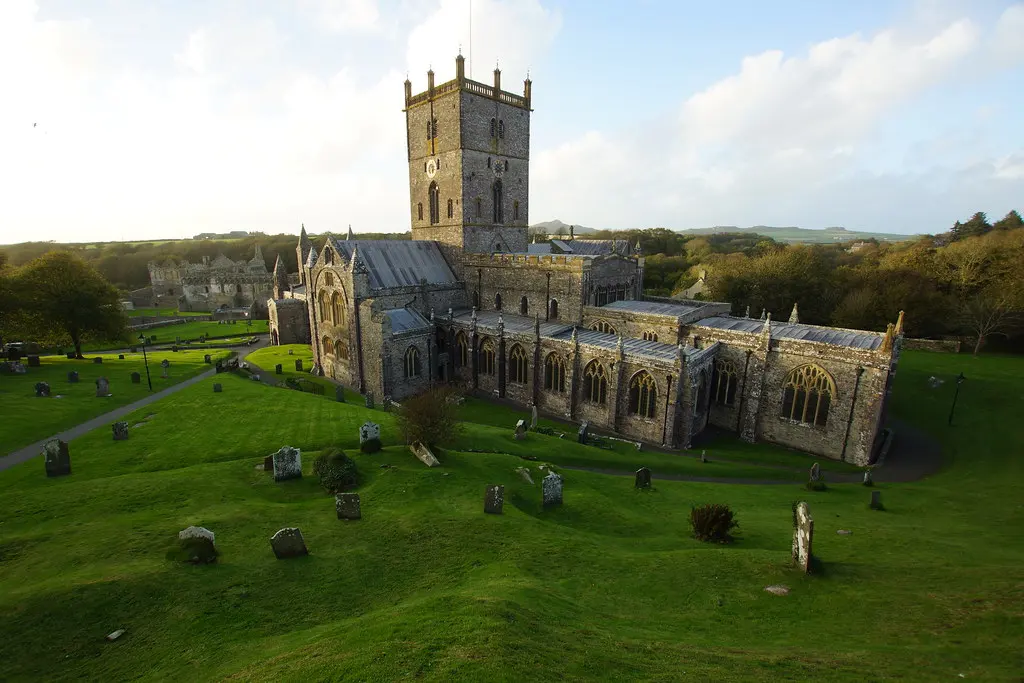
Image of St David’s Cathedral. Image source
Visit essentials
A quick read before you go
- Duration
- Allow 1-2 hours for the cathedral.
- Access
- St Davids is located in Pembrokeshire, accessible via the A487 from Haverfordwest or Fishguard.
Overview
St Davids is a destination. For fourteen centuries, people have walked to reach this hollow at the edge of the land. They came because David, the patron saint of Wales, established his monastic community here in the 6th century. They came because Pope Calixtus II, in 1123, declared that two pilgrimages to St Davids equal one to Rome, and three equal one to Jerusalem. They came because the walking itself was part of what they sought.
The cathedral sits not on a hill but in a depression, hidden from view until you descend toward it. Some say this was for protection from Viking raiders who burned the site repeatedly between 645 and 1097. Others suggest the builders wanted to emphasize the act of descent, the humbling that pilgrimage requires. Either way, the approach is distinctive: you see the city first, ordinary and small, then suddenly the cathedral appears below you, larger than seems possible.
David died here in 589 AD. His last words, according to tradition, were simple: Be joyful, keep the faith, and do the little things that you have heard and seen me do. The little things. His monastery was known for its severity, its simplicity, its refusal of ease. Monks drank only water and ate only bread and herbs. They pulled their own ploughs. The discipline was extreme by any measure, but it produced something that endured.
Why this place is sacred
The thinness of St Davids begins with the man for whom it is named. David was not merely a saint but the patron of a nation, the figure around whom Welsh Christian identity formed. His choice of this remote location, at the western edge of the land, where sea and stone meet, was itself significant. Here was a place sufficiently removed from the world's distractions that the little things could be attended to.
His monastery's reputation for severity contributed to its authority. This was not an easy place. The monks worked their own land, refused luxuries, maintained disciplines that would break many modern practitioners. That difficulty became part of the site's spiritual currency. What is easily obtained is easily dismissed. What is labored for holds weight.
The papal privilege of 1123 intensified the thinness. When Calixtus II declared that two pilgrimages to St Davids equal one to Rome, he placed this cathedral among the great shrines of Christendom. Pilgrims who could not afford the journey to Rome could attain equivalent spiritual benefit by walking here twice. The declaration drew seekers from across medieval Europe, each adding their prayers to those already accumulated.
Nine times Vikings burned the monastery between 645 and 1097. Nine times it was rebuilt. That persistence itself testifies to something. Whatever was happening here was worth restoring, worth defending, worth rebuilding again and again despite the certainty that raiders would return. Sacred places that survive destruction often gain thinness from the survival.
The prayers of fourteen centuries have soaked into the stone. This is not metaphor. Any place where daily worship has continued for over a millennium accumulates something, some quality that visitors recognize even without knowing its source. The cathedral's own literature acknowledges this, describing St Davids as a thin place. The term is borrowed from Celtic spirituality, but the phenomenon it names is ecumenical. Where people have prayed continuously for centuries, something gathers.
The shrine of St David, though destroyed at the Reformation and only restored in modern times, remains a focus of devotion. Pilgrims light candles there, kneel in the presence of what David represented. Whether the saint's relics actually rest in the reliquary is uncertain; they were hidden during the Reformation to prevent destruction, and what was later recovered may or may not be authentic. The uncertainty does not diminish the devotion. People come not for forensic certainty but for encounter.
St David founded a monastic community here around 589 AD, the year of his death. The monastery became a center of Celtic Christian learning and discipline, known for its severity and devotion.
Vikings attacked repeatedly between 645 and 1097. The Norman Bishop Bernard began the present cathedral in 1115-1181, replacing earlier structures. Pope Calixtus II's 1123 declaration made it a major international pilgrimage site. The medieval period saw kings and commoners alike making the journey. The Reformation disrupted pilgrimage and destroyed the shrine, but worship continued. Pilgrimage has revived in modern times, and the shrine was restored. Daily services continue as they have for fourteen centuries.
Experience and orientation
The approach to St Davids Cathedral is unusual. The city, Britain's smallest, sits on relatively high ground. The cathedral is below it, hidden in a depression called the Close. You descend toward the shrine rather than ascending. Some interpret this as protective, concealing the cathedral from Viking raiders who approached from the sea. Others see theological meaning in the humbling descent.
Either way, the experience is distinctive: you round a corner or pass through a gate, and suddenly the purple sandstone bulk of the cathedral appears below you, far larger than the modest city suggested.
The descent via Thirty-Nine Steps or through the gate house brings you into the Close. The Bishop's Palace ruins stand nearby, testimony to medieval grandeur now open to the sky. The cathedral itself rises before you, its tower sturdy, its stonework weathered by salt and centuries.
Inside, the atmosphere shifts. Light enters through windows that have filtered it for generations. The floor slopes noticeably due to subsidence over time; walking toward the altar, you are subtly tilted, slightly off-balance in a way that echoes the spiritual destabilization pilgrimage can bring. The medieval misericords beneath the choir stalls offer carvings of faces and figures. The 14th-century rood screen, intricately carved, separates nave from choir.
The shrine of St David stands in the Trinity Chapel. A modern reliquary, restored after centuries of absence, marks the focus of pilgrimage. Pilgrims kneel here, light candles, sit in the presence of what David represented. Whether his relics actually rest within is uncertain, hidden at the Reformation and later recovered but never conclusively authenticated. The uncertainty seems not to matter. What draws people is not archaeology but encounter.
The daily offices continue as they have for fourteen centuries. Evensong fills the cathedral with chant. Eucharist is celebrated. The rhythm of prayer that David established persists, adapted but unbroken. To attend a service here is to participate in something ancient and ongoing, to add your voice to those of countless pilgrims before you.
St Davids Cathedral is located in St Davids, Pembrokeshire, Britain's smallest city. The cathedral lies in the Close, a hollow below the city's main streets. Access is through the 14th-century Tower Gate or via Thirty-Nine Steps from the High Street. Entry is free for worship; a donation is requested for tourist visits. The shrine of St David is in the Trinity Chapel, behind the high altar. The ruined Bishop's Palace, managed by Cadw, is adjacent and requires separate admission.
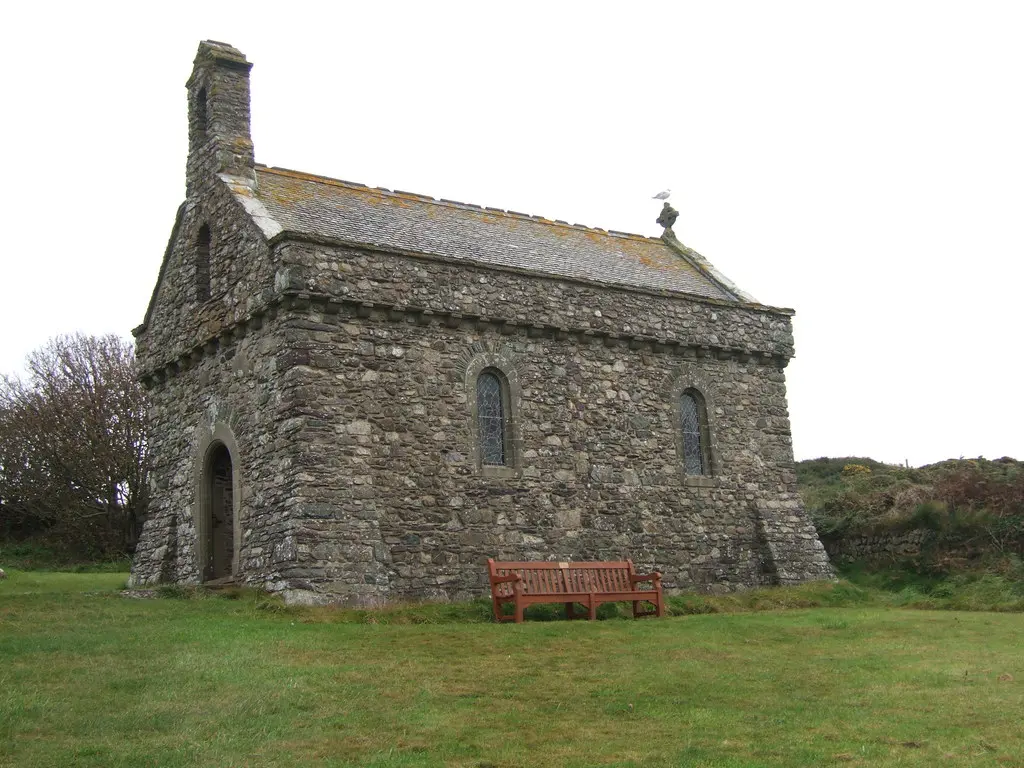
Allow 1-2 hours for the cathedral; more with the palace. St Non's Chapel and Well, the traditional birthplace of St David, is approximately 1 mile south.
Context and lineage
David, known in Welsh as Dewi Sant, was born around 500 AD and founded numerous monasteries across Wales. His final foundation was here, at the western edge of the land, where he established a community known for its discipline and austerity. Monks were permitted only bread, herbs, and water. They worked the land themselves, refusing animal labor. They lived in simplicity that approached severity.
David died around 589 AD. His last recorded words, preserved in the 11th-century Life of St David, were: Arglwyddi, frodyr a chwiorydd, byddwch lawen a chedwch ych ffydd a'ch cred, a gwnewch y pethau bychain a welsoch ac a glywsoch gennyf i. Lords, brothers and sisters, be joyful and keep your faith and your creed, and do the little things that you have heard and seen from me.
The monastery he founded became a center of learning and devotion. Even after his death, the site retained its sacred character. Vikings attacked repeatedly from 645 onward, burning and destroying, but each time the community rebuilt. The present cathedral, begun in 1181, represents the culmination of this persistence.
Continuous Christian worship has taken place at this site for approximately fourteen centuries. The monastic community gave way to a secular cathedral chapter. Today, St Davids Cathedral is part of the Church in Wales, the Anglican communion in Wales. It remains the seat of the Bishop of St Davids and an active place of daily worship.
St David (Dewi Sant)
Patron saint of Wales, founder of the monastery
Pope Calixtus II
Pope who elevated St Davids to international pilgrimage status
Bishop Bernard
First Norman bishop, initiator of the present cathedral
Traditions and practice
Medieval pilgrimage to St Davids was one of the great journeys of Christendom. Pilgrims walked from Holywell in the north, from Bristol in the east, from across Europe, to reach this remote western site. The papal privilege promised spiritual benefit equal to Rome for those who came twice, equal to Jerusalem for those who came three times. The journey itself was the practice, the walking, the hardship, the arrival.
At the shrine, pilgrims would venerate David's relics, pray for intercession, seek healing or blessing. The medieval shrine was destroyed at the Reformation, the relics hidden. What was later recovered was placed in a new reliquary, though authenticity remains uncertain.
Daily Eucharist and morning and evening prayer continue. Evensong, sung on most days, fills the cathedral with chant that echoes the medieval offices. Pilgrims still walk to St Davids along historical routes, their journey culminating at the cathedral. The shrine of St David, with its modern reliquary, receives candles and prayers.
St David's Day, March 1, is especially significant. Special services, celebrations of Welsh culture and identity, and large congregations mark the patron saint's feast. The day is a national celebration in Wales, and the cathedral is its spiritual center.
The cathedral also hosts concerts, educational programs, and welcomes visitors throughout the year. Pilgrimage programs are organized, connecting contemporary seekers with the ancient tradition of walking to St Davids.
Attend a service if possible. Evensong, with its sung responses and ancient words, connects you to centuries of worship. If you cannot attend a service, simply sit in the nave and allow the atmosphere to work. Visit the shrine of St David in the Trinity Chapel; light a candle if the practice resonates with you. Walk down the aisle slowly, noticing how the sloping floor affects your balance.
Let the descent into the Close, before you even enter, be part of your experience. If you have time, walk to St Non's Chapel and Well, the traditional site of David's birth, approximately one mile south.
Christianity (Church in Wales)
ActiveSt Davids Cathedral is the mother church of the Diocese of St Davids, one of the oldest episcopal sees in Britain. It has maintained continuous Christian worship since its foundation in the 6th century. As the final resting place of the patron saint of Wales, it holds unique significance for Welsh Christianity and national identity.
Daily Eucharist and offices continue the rhythm of prayer established by David's monastic community. Evensong is sung on most days. St David's Day (March 1) sees major celebrations. The shrine receives candles and prayers from pilgrims. The cathedral maintains a full liturgical calendar.
Pilgrimage
ActiveThe 1123 papal declaration made St Davids one of medieval Christendom's great pilgrimage sites. Though disrupted at the Reformation, pilgrimage has revived. Walking to St Davids connects contemporary seekers to fourteen centuries of journeying.
Pilgrims walk ancient routes from Holywell in the north or other starting points. The journey itself is the practice, culminating at the cathedral and shrine. Many sign a pilgrims' register upon arrival.
Perspectives and open questions
St Davids Cathedral invites interpretation as one of medieval Christendom's great shrines, as the spiritual heart of Welsh Christianity, as a thin place where centuries of prayer persist, and as an active place of worship continuing practices begun fourteen centuries ago.
Scholarly perspective
Historians date David's death to around 589 AD, though the earliest written account of his life (Rhygyfarch's Life of St David) was composed in the late 11th century, nearly 500 years after the events described. The papal privilege of 1123 is documented and transformed St Davids into an international pilgrimage site. Archaeological and architectural evidence confirms construction of the present cathedral from 1181, with subsequent modifications.
The shrine's contents are uncertain. Relics were hidden at the Reformation to prevent destruction; what was later recovered may or may not be authentic. The current reliquary dates from modern restoration.
The cathedral's architecture reflects multiple periods: Norman foundations, medieval modifications, Victorian restoration. The sloping floor results from subsidence over centuries. The building is a palimpsest, each layer revealing something of its era.
Living and traditional perspectives
For Welsh Christians, St Davids is the spiritual heart of the nation. David is the patron saint; his feast day is Wales's national day. The cathedral represents unbroken continuity with Celtic Christianity, the distinctive Welsh tradition that emerged in the Age of Saints. The episcopal see of St Davids is among the oldest in Britain, and the cathedral is its mother church.
The tradition of pilgrimage, disrupted at the Reformation, has revived. Modern pilgrims walk the ancient routes to St Davids, continuing what medieval seekers began.
Alternative interpretations
Many visitors experience St Davids as a thin place, a location where ordinary reality feels permeable. The Celtic Christian concept of thin places, locations where the veil between heaven and earth grows thin, is frequently applied to St Davids, including by the cathedral itself. Whether this thinness results from geological factors, accumulated prayer, or something less explicable is open to interpretation.
Open questions
Several questions remain open. The exact location of David's original monastery has not been definitively identified. What happened to the relics hidden at the Reformation is uncertain; what was later recovered may not be authentic. The full extent of medieval pilgrimage activity is difficult to quantify, though its significance is documented.
Plan your visit
Access and arrival
St Davids is located in Pembrokeshire, accessible via the A487 from Haverfordwest or Fishguard. Parking is available in the city. The cathedral lies in the Close, below the city center, accessed via Thirty-Nine Steps or through the Tower Gate. Public transport is limited; most visitors arrive by car.
St Davids offers bed and breakfast options, small hotels, and self-catering accommodations. Haverfordwest, approximately 16 miles distant, offers additional choices.
Respectful visit
Modest dress appropriate for a cathedral. No specific requirements, but visitors are asked to dress respectfully.
Permitted when services are not in progress. No flash. Be respectful of those at prayer.
Donation requested for tourist entry. Candles can be lit at the shrine.
No entry to certain areas during services. Flash photography prohibited. Quiet and respect expected.
Respect services in progress. Photography may be restricted during worship. Entry is free for those coming to pray; a donation is requested for tourist visits. The cathedral can be cold; layers are advisable.
Current practical details
Address
The Pebbles, St Davids, Haverfordwest SA62 6RD, UK
Phone
Hours
Hours, fees, and access can change — verify on the official source before you travel. Practical details last checked Jun 2026.
Location
Map loads as you approach this section.
Pilgrim reflections
A portrait of encounter, not a score
Pilgrims describe what they felt, how present they could become, and whether the place would shape a journey. There are no stars and no ranking of traditions.
No reviewed reflections yet
The first pilgrims can help describe the character of being here.
Share a reflection
Available after an account-backed “Been there.” Every reflection is reviewed before publication.
Nearby sacred places
Explore other sacred places in the region. Proximity does not establish access or travel time; check each place’s guidance.

References
Sources consulted for this page. Source categories describe the publication, not a guarantee that every claim is verified. Traditional accounts and outside interpretations may differ.
- 01St Davids Cathedral — St Davids CathedralspiritualOfficial cathedral website
- 02St Davids Cathedral — WikipediaencyclopediaEncyclopedia entry
- 03St David's Cathedral — Britain ExpressSource contextHeritage tourism guide
- 04St Davids Cathedral — History PointsofficialWelsh heritage information
Photo gallery
3 curated photos
Share a photo
Help visitors recognize St David’s Cathedral. Every submission is reviewed before publication.