Ishibutai Kofun, Asuka
Japan's mightiest megalithic tomb, stripped bare by history
Understand sacred places, explore living traditions, and learn how to engage respectfully with Pilgrim Map.
Access has not been verified. Check current local guidance before planning a visit.
Asuka, Nara Prefecture, Japan
Read the sources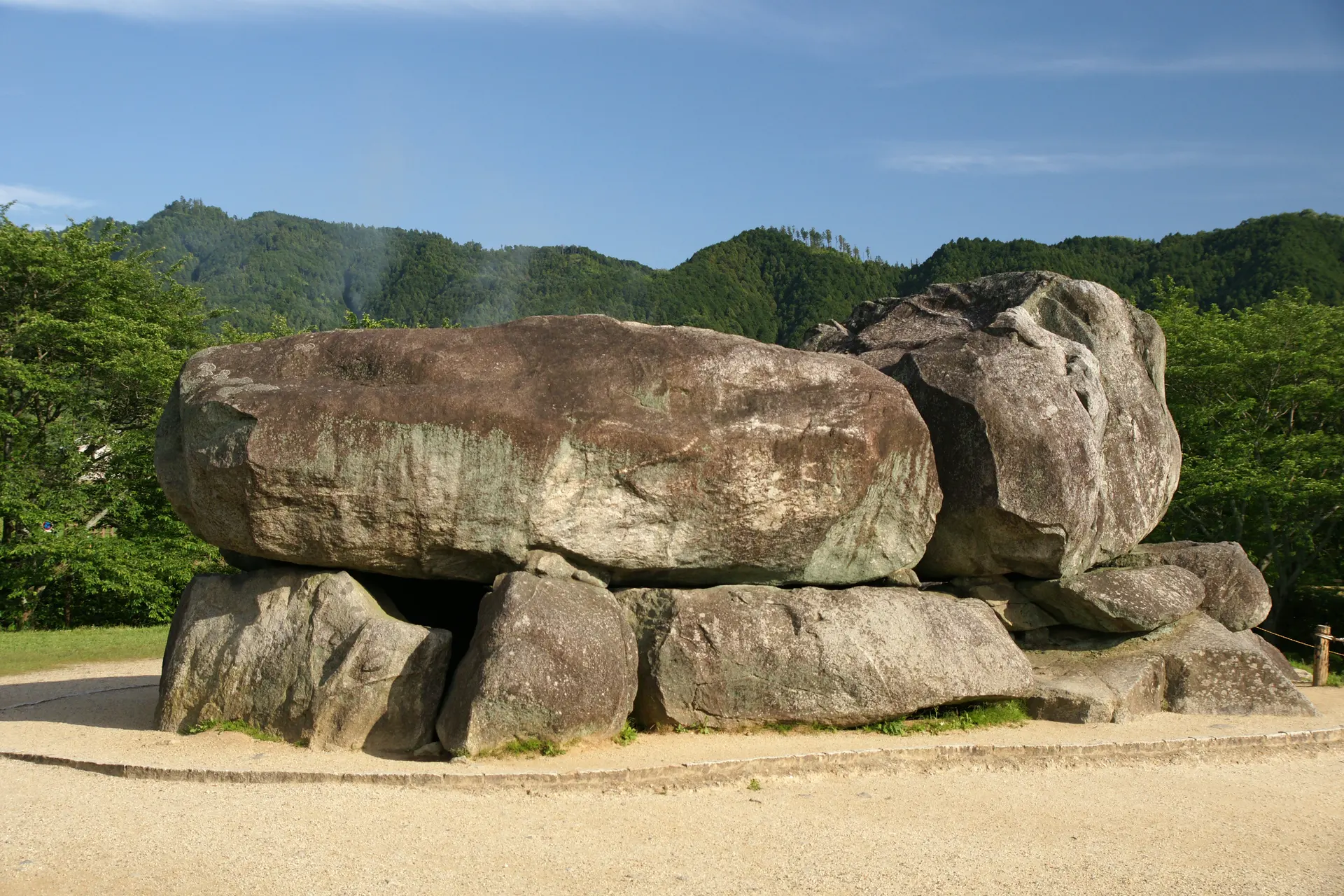
Visit essentials
A quick read before you go
- Duration
- 30-45 minutes allows for circumnavigation and chamber entry with contemplation time.
- Etiquette
- Standard respectful behavior appropriate to an ancient burial site and protected monument.
Overview
Soga no Umako was 6th-century Japan's most powerful man: emperors held symbolic authority while he wielded practical power, shaped the nation, and championed Buddhism's introduction. When he died in 626 CE, his clan built a tomb of massive granite blocks beneath ceiling stones weighing 60 and 77 tons.
Nineteen years later the Taika Reform coup destroyed the Soga clan. The victors branded them traitors and, as posthumous punishment, stripped earth from Umako's tomb, exposing its chamber to sky and shame. That desecration preserved what burial would have hidden: the most impressive megalithic construction in Japanese history.
Visitors can walk around and enter the chamber intended to hold this king-maker for eternity. Nearly five-metre walls enclose 27 square metres of meticulously constructed stonework. Its engineering with seventh-century technology remains difficult to explain, leaving modern visitors with the ancient question: how was it done?
Why this place is sacred
The thinness at Ishibutai operates through temporal paradox rather than theological presence. This was meant to be hidden—a sealed chamber beneath an earthen mound where Soga no Umako would rest undisturbed. The stripping of the earth was desecration, exposure as shame. Yet this violation became preservation. Because the tomb was opened in anger, we can enter it in wonder.
Standing inside the chamber, visitors occupy a space designed for a single occupant who never found rest. The walls of fitted granite rise to nearly five meters overhead, capped by ceiling stones so massive that their transportation and placement strain credibility. The engineering speaks of power—the power of a clan that effectively ruled Japan, the power to command labor forces capable of moving 77-ton stones, the power that made such a tomb both necessary and possible.
The Soga clan's fall adds depth to the encounter. Umako championed Buddhism; his tomb was desecrated by those who blamed the family for contaminating Japan with foreign religion. The ironies multiply: Buddhism became central to Japanese civilization; the Soga are remembered; the tomb that was meant to humble them now draws visitors who stand in awe.
This is not a thin place in the sense of active spiritual presence, but it offers something equally potent: direct encounter with the deep past, with ambition and mortality, with the strange ways time reverses the intentions of both builders and destroyers.
The tomb was constructed to house the remains of Soga no Umako (551-626 CE), the most powerful political figure of his era. The massive scale was intended to demonstrate Soga clan prestige and ensure Umako's eternal rest in appropriate grandeur.
The tomb's transformation from honored burial to exposed shame to archaeological monument traces the strange reversals of history. The 645 CE desecration stripped the earthen mound as punishment for the Soga clan's perceived transgressions. Centuries of exposure weathered the chamber and gave it its modern name—Ishibutai, meaning 'Stone Stage,' reflecting the theater-like appearance of the exposed megaliths. Archaeological excavation in 1933-1975 documented the structure and established it as Japan's largest megalithic tomb.
Designated a Special Historic Site in 1954, the tomb is now protected as a national treasure of archaeological heritage.
Experience and orientation
Approaching Ishibutai Kofun, the first impression is of massive stones exposed against the sky. Without the original earthen mound, the granite megaliths appear almost geological—as if the earth had pushed up its bones. Only context reveals this as human work.
The scale becomes clear upon approach. Thirty stones totaling over 2,200 tons form the chamber structure. The ceiling alone weighs over 130 tons, requiring the placement of two massive capstones that have rested in position for fourteen centuries. How these were lifted and fitted remains a subject of speculation. No written record describes the construction methods.
Entering the chamber transforms understanding. The space is larger than many modern rooms—7.8 meters long, 3.4 meters wide, 4.8 meters high. The fitted granite walls rise smoothly, the ceiling stones meeting overhead. This was designed as an eternal dwelling for one of ancient Japan's most powerful men. Standing inside, visitors occupy that designed eternity.
The experience tends toward contemplation. Power built this; power destroyed it; time reversed both intentions. Umako's body is long gone, removed during the 645 CE desecration. What remains is the architecture of ambition, open to anyone who walks in. The silence inside the chamber—even on busy days—suggests visitors feel the weight of what surrounds them.
The tomb sits in an open park area within the Asuka Historical National Government Park. Visitors can walk completely around the structure, viewing it from all angles, and then enter the burial chamber through the original passage. The experience typically takes 30-45 minutes including contemplation time. The site combines well with other Asuka period monuments in the area.
Context and lineage
The tomb was constructed around 626 CE for Soga no Umako, who had died that year. Umako was the most powerful political figure of his era—while emperors held nominal authority, Umako wielded actual power. He was instrumental in introducing Buddhism to Japan and navigating the political complexities of the time. The massive tomb was designed to reflect his status. In 645, the Taika Reform coup destroyed Soga power.
The new regime branded the clan as traitors and stripped the earth from Umako's tomb as punishment, exposing the stone chamber as a mark of shame.
The tomb represents the culmination of the Kofun period burial tradition (250-538 CE), which built large tumuli for elite rulers and nobles. The Soga clan's fall in 645 CE marked the end of this era of great tomb construction, replaced by Buddhist cremation practices.
Soga no Umako
Tomb occupant (551-626 CE); the most powerful political figure of his era; champion of Buddhism in Japan
Prince Shotoku
Contemporary of Umako; regent who worked with Soga clan on Buddhist promotion
Traditions and practice
The original burial would have included elaborate Kofun period funerary rituals, though specific details are not recorded for this tomb. The chamber would have held funerary goods appropriate to Umako's status, all of which were removed during the 645 CE desecration.
The site functions as a protected archaeological monument with no active religious practice. Visitors engage with the tomb as historical heritage rather than sacred site.
Approach the tomb with awareness of its complex history—not merely ancient burial but also political punishment and archaeological preservation. Allow time inside the chamber; the scale requires adjustment. Consider what it would have meant to construct this with 7th century technology, and what it meant to those who stripped it bare in anger.
Kofun Period Burial Tradition
HistoricalIshibutai represents the culmination of the Kofun period practice of constructing large tumuli for elite burials. The tradition, spanning roughly 250-538 CE, produced thousands of burial mounds across Japan, with the largest reserved for rulers and their most powerful supporters. The Soga clan's fall and the subsequent adoption of Buddhist cremation ended this tradition of great tomb construction.
Original practices included elaborate funerary rituals, placement of grave goods, and maintenance of the burial mound. The specific rituals performed at Ishibutai are not recorded.
Perspectives and open questions
Ishibutai Kofun invites interpretation through archaeological, historical, and contemplative lenses—as engineering feat, political statement, and meditation on impermanence.
Scholarly perspective
Archaeologists recognize Ishibutai as the largest megalithic tomb structure in Japan, providing crucial evidence of late Kofun period construction capabilities. The identification with Soga no Umako, while not definitively proven, is supported by historical accounts of the tomb's location and the 645 CE desecration. The structure demonstrates engineering sophistication that continues to prompt research into ancient construction methods.
Living and traditional perspectives
In traditional Japanese understanding, kofun were sacred sites connecting living communities with powerful ancestors. The massive scale of Ishibutai indicated the deceased's exceptional status and the clan's ability to command resources for ancestor veneration.
Open questions
Definitive identification of the tomb's occupant cannot be confirmed due to the early removal of all contents. The original funerary goods that would have filled the chamber are entirely lost. Construction methods used to transport and position stones weighing up to 77 tons remain subjects of scholarly debate.
Plan your visit
Access and arrival
Limited accommodation in Asuka; many visitors stay in Nara city and visit Asuka as a day trip. Bicycle rental allows efficient exploration of the scattered Asuka sites.
Respectful visit
Casual dress is acceptable.
Permitted throughout the site.
{"Do not touch or climb on the stones","Maintain respectful behavior as at any burial site","Do not leave litter"}
This is an ancient burial site. While entry is permitted and no religious practice occurs, respectful conduct acknowledges the human remains once housed here and the cultural significance of the monument.
Current practical details
Address
254 Shimashō, Asuka, Takaichi District, Nara 634-0112, Japan
Phone
Hours
Hours, fees, and access can change — verify on the official source before you travel. Practical details last checked Jun 2026.
Location
Map loads as you approach this section.
Pilgrim reflections
A portrait of encounter, not a score
Pilgrims describe what they felt, how present they could become, and whether the place would shape a journey. There are no stars and no ranking of traditions.
No reviewed reflections yet
The first pilgrims can help describe the character of being here.
Share a reflection
Available after an account-backed “Been there.” Every reflection is reviewed before publication.
Nearby sacred places
Explore other sacred places in the region. Proximity does not establish access or travel time; check each place’s guidance.

References
Sources consulted for this page. Source categories describe the publication, not a guarantee that every claim is verified. Traditional accounts and outside interpretations may differ.
- 01Ishibutai Burial Mound - JNTO — Japan National Tourism OrganizationofficialOfficial tourism information
- 02Ishibutai Tomb - Asuka Travel — Japan GuideguideReliable travel guide
- 03Ishibutai Kofun - Wikipedia — Wikipedia contributorsencyclopediaComprehensive overview
Share a photo
Help visitors recognize Ishibutai Kofun, Asuka. Every submission is reviewed before publication.