Tekke of Frashër
A Bektashi tekke where Sufi mysticism and Albanian national consciousness were forged in the same rooms
Understand sacred places, explore living traditions, and learn how to engage respectfully with Pilgrim Map.
Access has not been verified. Check current local guidance before planning a visit.
Frashër, Gjirokastër, Albania
Read the sources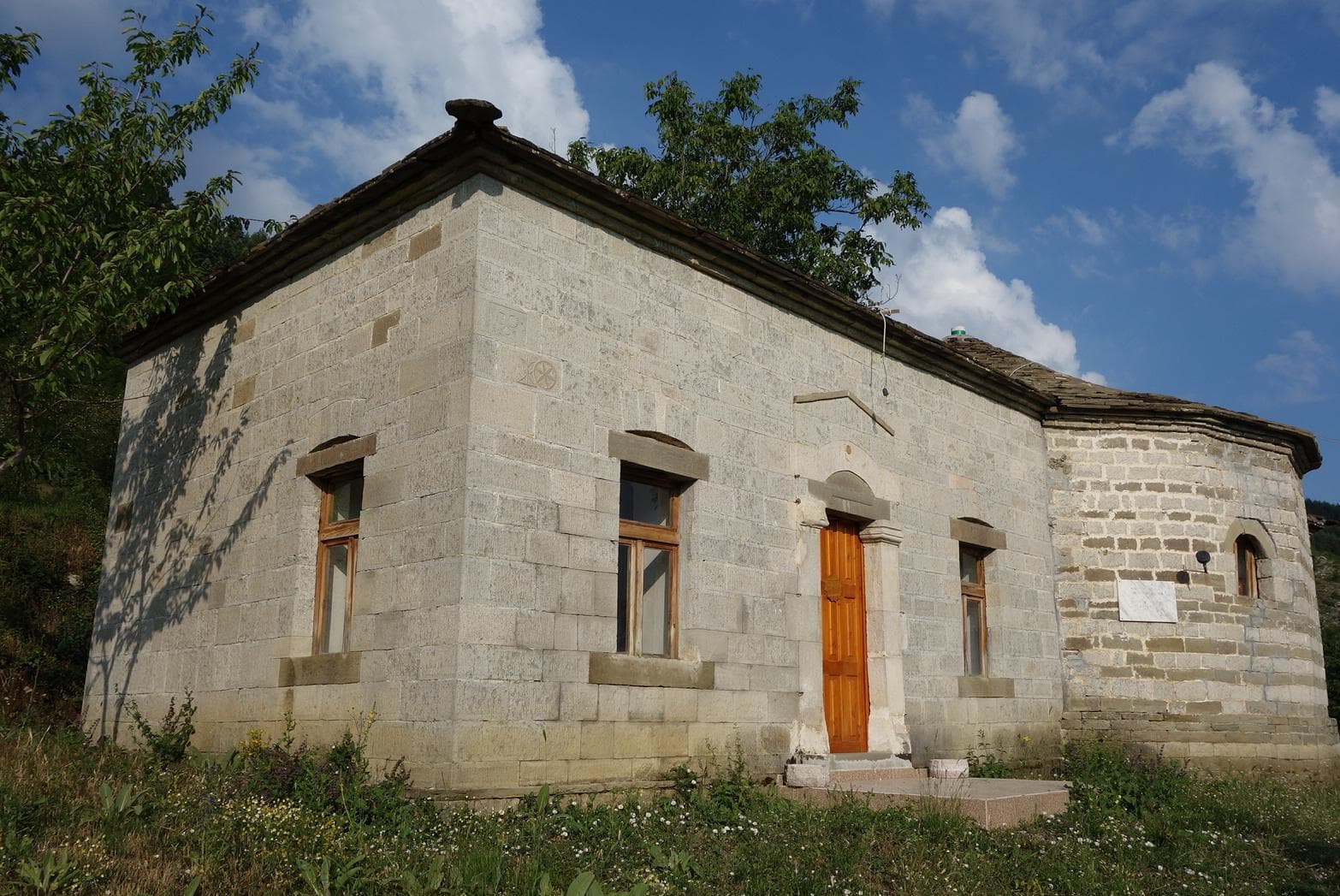
Image of Tekke of Frashër. Image source · CC-BY-SA-4.0
Visit essentials
A quick read before you go
- Duration
- 30 to 60 minutes
- Access
- From Përmet, follow roads to Frashër village.
Overview
Founded in 1781 in a remote village in Gjirokastër County, the Tekke of Frashër grew into one of Albania's wealthiest and most revered Bektashi Sufi centers. Under Baba Alushi, who led it from 1846 to 1902, the tekke became both a center of mystical practice and a stronghold of Albanian nationalism.
The three Frashëri brothers received their earliest education here. During the League of Prizren (1878-1881), the tekke served as headquarters for the Albanian national movement. Greek forces destroyed it in 1914, and Albanian-American contributions supported its 1923 reconstruction. The complex has two connected buildings: communal spaces above and the Mejdani below, the holy place where Bektashi ceremonies took place.
Why this place is sacred
The Tekke of Frashër derives its power from a confluence: the Sufi pursuit of inner knowledge meeting the Albanian pursuit of national identity. The Mejdani and the rooms for book distribution occupied the same compound. The spiritual and political were aspects of a single vision.
Naim Frashëri's poetry draws on both Sufi mysticism and Albanian nationalism. The tekke's welcome of Sunnis and Christians alongside Bektashis created a model carried into political work.
Founded in 1781 as a Bektashi tekke.
From Sufi tekke to center of nationalism to destruction and reconstruction. Now a cultural monument.
Experience and orientation
Frashër village sits in the mountains of southern Albania. The tekke's two connected buildings are modest in scale. Walk through slowly. The Mejdani held ceremonies connecting participants to the Bektashi lineage. In surrounding rooms, the Albanian language was being codified. The village setting amplifies the experience — Albania's awakening emerged from this remote place.
Allow the village approach to set context. Visit both buildings. Spend time in the Mejdani.
Context and lineage
Founded as a Bektashi tekke. Under Baba Alushi (1846-1902), grew into center of Sufi practice and Albanian nationalism.
From Bektashi Sufi tradition through Albanian National Awakening to modern Albanian state.
Baba Alushi
Tekke leader who fused mysticism and nationalism
Naim Frashëri
Albania's national poet
Şemseddin Sami Frashëri
Encyclopedist and linguist
Abdyl Frashëri
Political leader
Traditions and practice
Bektashi ceremonies in the Mejdani, education, literary production, Albanian book distribution.
Cultural monument and pilgrimage destination. Anniversary celebrations.
Visit with awareness of dual significance — spiritual and national.
Bektashi Islam
ActiveWhere Sufi practice and national awakening converged.
Pilgrimage and remembrance of the Frashëri brothers.
Perspectives and open questions
Challenges the assumption that spiritual and political movements are separate.
Scholarly perspective
Recognized as one of the most significant sites in the Albanian National Awakening.
Living and traditional perspectives
For Bektashi, represents the order's commitment to education, tolerance, and Albanian identity.
Alternative interpretations
Offers counter-narrative to secularism: mysticism was the soil from which national consciousness grew.
Open questions
Full extent of library and literary output before 1914 destruction undocumented.
Plan your visit
Access and arrival
From Përmet, follow roads to Frashër village.
Përmet offers accommodation.
Respectful visit
Modest dress.
Generally permitted.
None required.
Respect Mejdani as sacred space
Remote village. Check road conditions.
Current practical details
Address
9C6H+3FF, Frashër, Albania
Hours, fees, and access can change — verify on the official source before you travel. Practical details last checked Jun 2026.
Location
Map loads as you approach this section.
Pilgrim reflections
A portrait of encounter, not a score
Pilgrims describe what they felt, how present they could become, and whether the place would shape a journey. There are no stars and no ranking of traditions.
No reviewed reflections yet
The first pilgrims can help describe the character of being here.
Share a reflection
Available after an account-backed “Been there.” Every reflection is reviewed before publication.
Nearby sacred places
Explore other sacred places in the region. Proximity does not establish access or travel time; check each place’s guidance.

Monastery of Saints Peter and Paul, Vithkuq
Vithkuq, Vithkuq, Korçë Municipality, Korçë County, Albania
23.9 km away

Church of Saint Michael, Voskopojë
Voskopojë, Voskopojë, Korçë Municipality, Korçë County, Albania
32.8 km away

Church of Saint Nicholas, Voskopojë
Voskopojë, Voskopojë, Korçë Municipality, Korçë County, Albania
33.1 km away

Cathedral of Saint Mary, Voskopojë
Voskopojë, Voskopojë, Korçë Municipality, Korçë County, Albania
33.5 km away
References
Sources consulted for this page. Source categories describe the publication, not a guarantee that every claim is verified. Traditional accounts and outside interpretations may differ.
- 01Tekke of Frashër - Visit Gjirokastra — Visit GjirokastraofficialOfficial tourism source
- 02240th anniversary - Bektashi HQ — Kryegjyshata Boterore BektashianeofficialOfficial Bektashi source
- 03Tekke of Frashër - Wikipedia — WikipediaencyclopediaComprehensive overview
- 04Sacred Sites of Albania — World Pilgrimage GuideSource contextContext
- 05Archiqoo - Tekke of Frashër — ArchiqooofficialArchitecture
- 06Frashër - Wikipedia — WikipediaencyclopediaVillage context
Share a photo
Help visitors recognize Tekke of Frashër. Every submission is reviewed before publication.