Mount Gongga
The king of Sichuan's mountains, where Tibetan pilgrims circle a deity made of ice and stone
Understand sacred places, explore living traditions, and learn how to engage respectfully with Pilgrim Map.
Access has not been verified. Check current local guidance before planning a visit.
Kangding, Sichuan, China

Visit essentials
A quick read before you go
- Duration
- The full kora takes seven to ten days of trekking.
- Access
- Kangding is the main gateway city, approximately 280 km west of Chengdu via the Sichuan-Tibet…
Overview
Mount Gongga demands reverence through scale. At 7,556 meters, it rises from valleys as low as 1,000 meters to a summit that has killed more climbers than it has allowed to stand on its crown. Its vertical relief is among earth's most extreme: subtropical forest gives way to alpine meadows, glacial ice, and a white peak local Kham Tibetans call the body of a sovereign.
In Tibetan understanding, Dordjelutru does not live on the mountain; Dordjelutru is the mountain. Storms and avalanches are expressions of the deity's mood, while climbers killed on descent or buried under snow are understood as punished for trying to stand on his head. Kora, circumambulation, is the appropriate gesture: go around, not up; honor the body by circling it.
Gongga Monastery has maintained this relationship for over seven centuries. Founded circa 1270 by a Kagyu master, it stands at roughly 3,700 meters on the western slope, its assembly hall, living quarters, and field of stupas set against a backdrop that makes human structures look temporary. Monks continue daily prayers and seasonal ceremonies. The mountain generates weather, avalanches, and glaciers flowing lower than almost any at this latitude on earth. The relationship holds.
Why this place is sacred
The thinness at Mount Gongga is not subtle. It does not whisper. The mountain creates its own category of experience through sheer vertical force. From the valleys below, the peak appears not as a distant summit but as something that occupies the sky. Cloud formations build and dissolve around it with a speed that suggests intention. The glaciers, visible even from great distances, catch light in ways that make the mountain appear to glow from within.
Seven centuries of monastic practice at the mountain's foot have created a second layer of sacred presence. Gongga Monastery is a modest complex by the standards of Tibet's great monasteries, but its position matters more than its architecture. Monks pray here in the literal shadow of the deity they address. The relationship between prayer and peak is not symbolic but physical: the mountain's weather enters the monastery, its sounds reach the meditation hall, its presence fills every window.
The kora route passes through a compression of the planet's ecological zones that has its own transformative logic. In seven to ten days of walking, pilgrims move through subtropical forest, temperate woodland, alpine meadow, and glacial moraine. The world simplifies as altitude increases. By the time the highest passes are reached, above 4,800 meters, the landscape has stripped itself to rock, ice, and sky. Tibetan pilgrims understand this stripping as a teaching.
The mountain shows you what remains when everything unnecessary has been removed.
Mount Gongga has served as a sacred mountain in the Kham Tibetan tradition since before written records. The mountain deity Dordjelutru predates the formal Buddhist establishment and likely represents a pre-Buddhist mountain spirit incorporated into the Buddhist cosmology when Guru Rinpoche is said to have bound the deity as a protector of the Dharma. Gongga Monastery, founded circa 1270 to 1285 CE, formalized the institutional relationship between Buddhist practice and mountain veneration.
The mountain's sacred status has been remarkably stable across centuries, surviving political upheaval and the Cultural Revolution. Joseph Rock's explorations in the 1930s brought the mountain to Western attention and produced invaluable documentation of the cultural landscape before modernization. The first summit in 1932 by Americans Terris Moore and Richard Burdsall was followed by occasional and often fatal expeditions.
The establishment of Hailuogou National Glacier Park brought tourism infrastructure to the eastern slopes, but the western approaches, where the monastery and kora route lie, remain largely as they have been for centuries. The tension between mountaineering ambition and the local understanding that summiting desecrates the deity continues.
Experience and orientation
The first encounter with Gongga is almost always one of astonishment. The mountain announces itself from an improbable distance, its white summit visible above ranks of lesser peaks that would themselves be notable anywhere else. From Kangding, the regional capital, the peak fills the western horizon when clouds permit, which is often enough to establish the mountain's dominance but not so often as to make it ordinary.
For those who approach the kora route, the experience deepens through physical immersion. The trek begins in valleys where rhododendrons grow in profusion and rivers run through forests that would feel subtropical if not for the wall of ice visible above the canopy. As altitude increases, the vegetation thins and the mountain's presence intensifies. Prayer flags mark the passes, their colors fading in the wind.
Tibetan pilgrims encountered along the route add a human dimension that transforms hiking into something closer to pilgrimage: their devotion is visible in their bodies, in the way they prostrate at cairns and throw printed prayer papers into the wind at high points.
The highest passes bring the pilgrim closest to the mountain itself. Above 4,800 meters, the air is thin and the pace slows to something barely faster than standing still. The glaciers are close. The summit, still impossibly high above, may be clear or may be wrapped in clouds that form and reform with theatrical speed.
At these altitudes, the mountain's reputation for killing climbers ceases to be an abstract statistic and becomes a visceral understanding: this is a place where human ambition is not welcome above a certain line.
Hailuogou Glacier Park on the eastern side offers a different but complementary encounter. The glacier descends to an altitude low enough to reach by cable car and boardwalk, allowing visitors who cannot undertake the kora to stand in the presence of ice that has flowed from the summit for millennia.
The kora requires seven to ten days, camping equipment, a local guide, and serious physical fitness including altitude acclimatization. Start from Kangding, where guides and pack animals can be arranged. The Hailuogou Glacier Park is accessible from Moxi town with standard tourist infrastructure. Gongga Monastery can be visited as a separate trip from Kangding with local transport. Acclimatize for at least two days in Kangding before attempting the kora. Carry all food and fuel for the trek.
There is no teahouse infrastructure on the route.
Context and lineage
In Tibetan Buddhist teaching, the mountain deity Dordjelutru was bound as a protector of the Dharma by Guru Rinpoche during his journey through the eastern Tibetan regions. The deity agreed to protect the Dharma and its practitioners in exchange for veneration and offerings. The founding of Gongga Monastery formalized this covenant, creating a permanent human community dedicated to maintaining the relationship between the Buddhist sangha and the mountain.
The Kham Tibetan folk tradition holds an older story. Gongga is the king of the mountains in the Kham region, who defeated and subdued the lesser peaks in a primordial contest. His white snow crown is a sign of his sovereignty. The surrounding peaks are his court, and the glaciers are his robes. Those who circle the mountain with respect receive his protection. Those who attempt to stand on his head are punished.
The mountain's extreme difficulty for climbers, and its unusually high ratio of fatalities to summit attempts, reinforces this understanding.
The religious lineage of Mount Gongga begins with pre-Buddhist mountain deity worship in the Kham region, a tradition likely as old as Tibetan habitation of the area. The Buddhist incorporation of local deities as dharma protectors, attributed to Guru Rinpoche's journeys through eastern Tibet, layered Buddhist meaning onto an existing sacred landscape. The Kagyu school's emphasis on meditation practice in remote mountain settings aligned naturally with Gongga's character.
The monastery has maintained the Kagyu connection for over seven centuries, though the broader Kham Tibetan community venerates the mountain across sectarian lines.
Dordjelutru (the mountain deity)
The protector deity who IS the mountain. In Tibetan understanding, Dordjelutru does not inhabit Gongga but manifests as Gongga. The deity's moods are the mountain's weather, and the mountain's resistance to climbers is the deity's defense of his body from desecration.
Joseph F. Rock
National Geographic explorer whose 1929 to 1930 expeditions produced the first extensive Western documentation of Mount Gongga and its surrounding cultural landscape. Rock's photographs and writings provide a baseline record of the monastery, the kora route, and the Kham Tibetan communities before modernization transformed the region.
Terris Moore and Richard Burdsall
American mountaineers who made the first confirmed ascent of the summit in 1932, the highest point reached by Americans at that time. The climb was accomplished with rudimentary equipment. Their account documented both the mountain's extreme difficulty and the local community's ambivalence about their enterprise.
The founding Kagyu lama
A master of the Kagyu school who established Gongga Monastery circa 1270 to 1285 CE, reportedly on the instruction of the second Karmapa or his associates. By founding a permanent monastic community at the mountain's foot, this lama formalized seven centuries of continuous religious practice in the deity's presence.
Traditions and practice
The kora circumambulation is the mountain's central practice, a trek of seven to ten days through passes exceeding 4,800 meters. Tibetan Buddhist pilgrims walk clockwise, offering prayer flags and juniper incense at each pass, throwing printed lung-ta papers into the wind, and prostrating at designated holy sites. The kora is especially meritorious during the Saga Dawa festival in the fourth Tibetan month.
At Gongga Monastery, monks conduct daily prayers and seasonal ceremonies that maintain the covenant between the Buddhist community and the mountain deity. Local Kham Tibetan communities perform separate offerings to propitiate the mountain spirit before major weather events and at the start of agricultural seasons.
Tibetan pilgrims continue the kora, though some sections are now supplemented by vehicular access on improved roads. Monks at Gongga Monastery maintain daily services. Chinese trekkers increasingly participate in the kora route, typically approaching it as a wilderness adventure rather than a religious undertaking, though the two dimensions often blend naturally over the course of the trek. The Hailuogou Glacier Park provides accessible glacier viewing on the eastern side for visitors who cannot undertake the full kora.
If you undertake the kora, carry prayer flags to offer at the passes. This is welcomed by the local community and by fellow Tibetan pilgrims. At each pass, take a moment before descending the far side. The passes are the thresholds of the kora, the places where the mountain deity is closest. Notice the wind, the prayer flags, the cairns built by generations of pilgrims.
When you encounter Tibetan pilgrims, a greeting of Tashi delek and a willingness to walk together for a stretch, if invited, opens a dimension of the kora that solitary hiking cannot.
At Gongga Monastery, remove your hat, walk clockwise around any religious structures, and sit quietly if monks are at prayer. The monastery's position against the backdrop of the mountain gives its daily prayers a weight that larger, grander monasteries cannot achieve. The monks pray to the mountain and the mountain listens. Or so the tradition holds, and in this setting, the tradition is convincing.
Tibetan Buddhism (Kagyu school)
ActiveMount Gongga is one of the four most sacred mountains in the Tibetan Buddhist world. Gongga Monastery, a Kagyu establishment from circa 1270 to 1285 CE, has maintained the institutional relationship between Buddhist practice and mountain worship for over seven centuries. The mountain is venerated as the abode and embodiment of the deity Dordjelutru, a powerful protector of the Dharma.
Kora circumambulation of the mountain, a multi-day trek through high passes. Juniper incense offerings and prayer flag hanging at passes. Meditation retreats at hermitages associated with the monastery. Monks at Gongga Monastery conduct daily prayers and seasonal ceremonies. The kora is especially meritorious during the Saga Dawa festival.
Kham Tibetan mountain deity worship
ActiveThe mountain deity Dordjelutru predates the formal Buddhist establishment and represents a pre-Buddhist mountain spirit incorporated into Buddhist cosmology. In Kham Tibetan folk belief, the mountain's moods, expressed through storms, avalanches, and cloud formations, are the deity's direct communications.
Offerings at mountain shrines. Reading weather signs as messages from the deity. Community rituals to propitiate the mountain spirit before major weather events and at the start of agricultural seasons. Active local opposition to mountaineering expeditions as acts of disrespect to the deity.
Perspectives and open questions
Mount Gongga can be understood as a geological phenomenon, a mountaineering challenge, a Tibetan deity, or a conservation landscape. The tensions between these perspectives define the contemporary experience of the mountain.
Scholarly perspective
Scholars study Mount Gongga as a key example of Tibetan sacred mountain traditions in the eastern plateau region, where Tibetan Buddhist, Bon, and local folk traditions have layered sacred meaning onto the landscape. Joseph Rock's 1930s documentation provides crucial baseline data on the mountain's cultural landscape before modernization. The mountain's role in Kham Tibetan identity, as a marker of regional distinction from central Tibetan culture, is studied in the context of Tibetan cultural geography.
Geologists note the extraordinary topographic relief around the mountain, where the terrain drops from 7,556 meters to below 1,000 meters within a few horizontal kilometers, creating one of the most dramatic vertical landscapes on earth.
Living and traditional perspectives
For Kham Tibetans, Gongga is not a sacred site in the way outsiders understand the term. The mountain is a sovereign. The deity's power is demonstrated by the mountain's violence toward those who attempt the summit: the high fatality rate among climbers is interpreted not as evidence of difficult terrain but as the deity's active defense of his body from desecration. Circumambulation honors the deity. Summiting insults him. This perspective creates ongoing tension with the mountaineering and adventure tourism industries.
Alternative interpretations
Some practitioners consider the extreme vertical relief around Gongga, from subtropical valleys to arctic summit within a few horizontal kilometers, to create an energetic compression that intensifies spiritual practice. The mountain's position at the transition between the Tibetan Plateau and the Sichuan Basin is seen as a zone where different energy systems meet.
Open questions
The full history and lineage records of Gongga Monastery, many of which were lost during the Cultural Revolution, remain only partially reconstructed. The pre-Buddhist significance of the mountain in Bon and earlier traditions is documented more through inference than direct evidence. Whether sealed meditation caves or hidden hermitages exist on the mountain's flanks remains an open question.
The geological forces that created such extreme topographic relief, and whether local traditions preserve memory of dramatic geological events, have not been fully investigated.
Plan your visit
Access and arrival
Kangding is the main gateway city, approximately 280 km west of Chengdu via the Sichuan-Tibet Highway (G318). From Chengdu, allow six to seven hours by bus or car. Seasonal flights connect Chengdu to Kangding airport. From Kangding, Gongga Monastery is approximately 30 km by local transport. Hailuogou Glacier Park is accessible from Moxi town on the eastern side. The kora route has no permanent facilities. Bring all food, fuel, and camping equipment.
Pack animals and local guides can be hired in surrounding villages. Mobile phone signal is unreliable to absent on the kora route. Emergency evacuation from the route would require several days of walking.
Kangding offers a range of hotels and guesthouses suitable for acclimatization before the kora. Moxi town near Hailuogou has tourist accommodation. On the kora route itself, there are no facilities. Nomad families may offer tea or shelter but this cannot be relied upon. Guesthouse accommodation may be available at Gongga Monastery with advance inquiry.
Respectful visit
Full mountain trekking gear is required for the kora: warm layers, rain gear, sturdy boots, sun and wind protection. The route passes through every climate zone. Modest dress when visiting Gongga Monastery.
Photography is generally welcome on the kora and at the monastery exterior. Ask before photographing pilgrims or monks, particularly at close range. Interior photography at the monastery may require permission.
Prayer flags, juniper incense, and khatags (white silk scarves) are appropriate at passes and shrines along the kora. Small donations at Gongga Monastery are customary and appreciated.
Walk clockwise around the mountain and all religious structures. Do not climb on stupas or mani stone piles. Do not discuss or express interest in mountaineering or summiting the peak in the presence of local Tibetans or monks. Do not disturb wildlife or remove natural objects. Respect local opposition to summit attempts as a matter of deep cultural and religious conviction, not mere superstition.
The kora route reaches altitudes above 4,800 meters and involves serious risks from altitude sickness, hypothermia, and river crossings. Acute mountain sickness, high-altitude cerebral edema, and high-altitude pulmonary edema are real dangers. Acclimatize thoroughly before starting. Carry altitude medication. Do not discuss mountaineering ambitions at the monastery or with local Tibetans; the community actively opposes summit attempts as acts of desecration.
Current practical details
Address
Gonggar Mountain, Kangding, Garzê Tibetan Autonomous Prefecture, China, 626102
Hours, fees, and access can change — verify on the official source before you travel. Practical details last checked Jun 2026.
Location
Map loads as you approach this section.
Pilgrim reflections
A portrait of encounter, not a score
Pilgrims describe what they felt, how present they could become, and whether the place would shape a journey. There are no stars and no ranking of traditions.
No reviewed reflections yet
The first pilgrims can help describe the character of being here.
Share a reflection
Available after an account-backed “Been there.” Every reflection is reviewed before publication.
Nearby sacred places
Explore other sacred places in the region. Proximity does not establish access or travel time; check each place’s guidance.
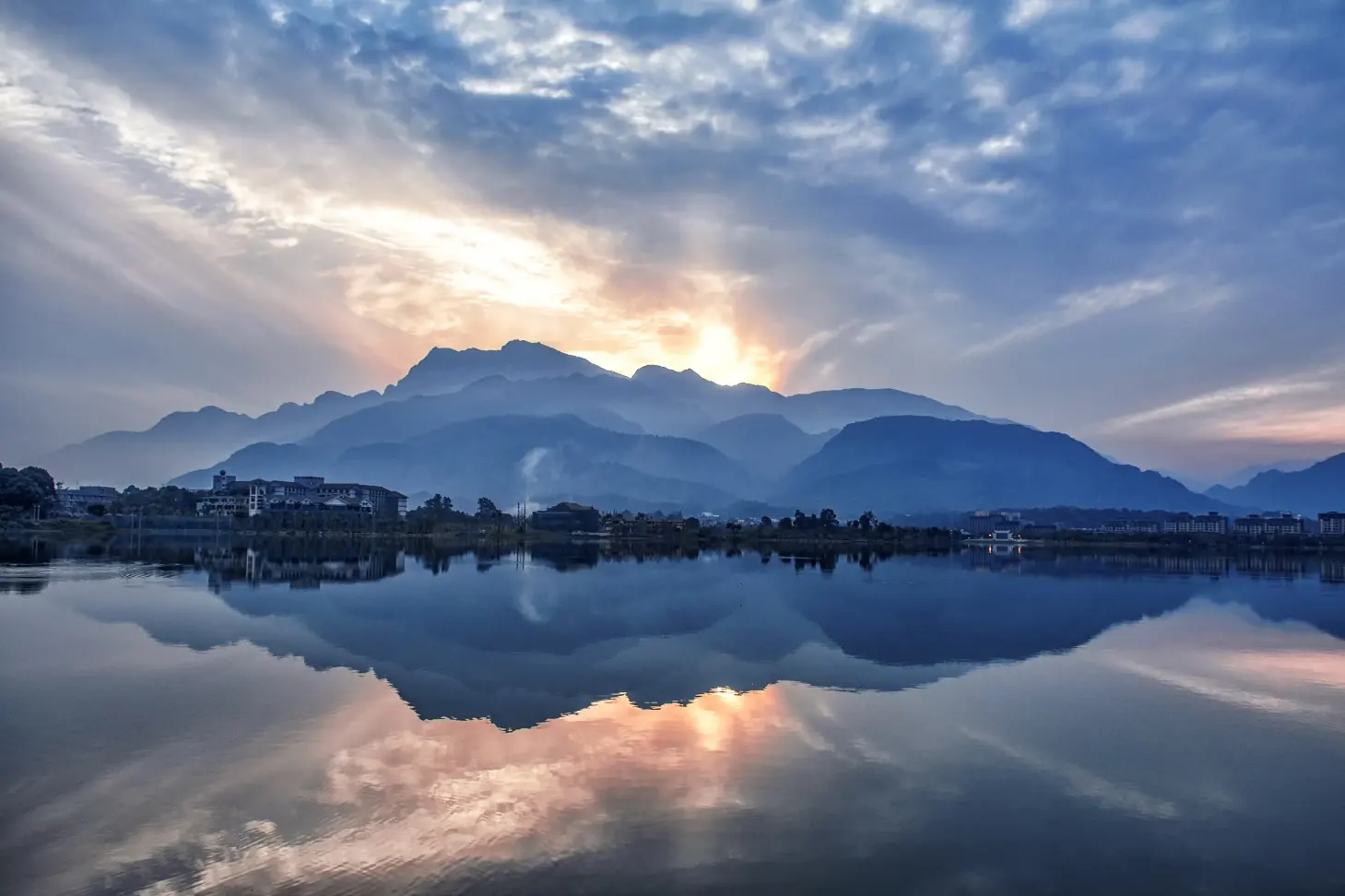


Photo gallery
3 curated photos
Pilgrim glossary
- Sangha
- The community of Buddhist practitioners, traditionally monks and nuns.
- Dharma
- The teachings of the Buddha; also the universal law underlying them.
Share a photo
Help visitors recognize Mount Gongga. Every submission is reviewed before publication.