Labraunda
Mountain sanctuary of Zeus Labraundos, where the double axe was sacred and the whole city climbed to meet its god
Understand sacred places, explore living traditions, and learn how to engage respectfully with Pilgrim Map.
Access has not been verified. Check current local guidance before planning a visit.
Muğla, Turkey
Read the sources
Visit essentials
A quick read before you go
- Duration
- 2–3 hours to explore the full terrace complex and sanctuary at an unhurried pace.
- Access
- Located 14 km northeast of Milas (ancient Mylasa) in Muğla Province.
Overview
Labraunda was built to be climbed. Then as now, reaching it required effort: the mountain road from Milas (ancient Mylasa) winds steeply to a precinct at 700 meters, where architects set sacred structures on terraced platforms built into the hillside. The effort was the point. In the classical period, Mylasa's entire population climbed annually in communal worship and camped near the sanctuary for nearly a week.
They arrived at one of the ancient Mediterranean's most distinguished sacred complexes. The Temple of Zeus Labraundos uniquely depicts the sky god with a double-headed axe. Two formal dining halls, or andrones, built by the Hecatomnid satraps Mausolus and Idrieus are the largest such structures known from the ancient world; stoas, baths, a nymphaeum, and priests' residences occupy successive terraces.
The Carian Zeus Labraundos was not quite the Panhellenic Zeus. He bore the labrys, a double axe whose sacred origins may trace to the pre-Greek Anatolian storm god Tarhuntas and which may have entered the broader Mediterranean religious lexicon through this god. Reports indicate that bull sacrifice here continued as a folk practice into the mid-twentieth century CE, a thread of unbroken sacred use spanning more than two millennia.
Why this place is sacred
High places invite encounter with sky deities. This is a pattern repeated across ancient cultures, and Labraunda is one of its clearest expressions in the ancient Mediterranean world. At 700 meters, with panoramic views over the plain of Milas below, the site operates on the logic of elevation: the god who brings rain and lightning is approached by ascending to meet him. The Carian Zeus Labraundos was not simply a provincial variation on Panhellenic religion.
He bore the labrys — the double-headed axe — a symbol whose origins in this landscape may predate the Greek Zeus entirely. The Hittite-Luwian storm god Tarhuntas was depicted with a double axe. The cult at Labraunda likely preserves the memory of that pre-Greek sacred presence, hellenized over centuries but never fully surrendering its distinctive axe iconography.
A split rock at the site, reportedly struck by lightning, was identified as the point of the god's presence — a natural feature that preceded any human construction and may have been the original reason the mountain was regarded as sacred. This is a common structure in ancient religion: a natural phenomenon (a lightning strike, a spring, an unusual stone formation) that concentrates divine power, around which human sacred architecture slowly accumulates.
The andrones — the two enormous formal dining halls built by Mausolus and Idrieus — translate this power into social architecture: great feasting in the god's presence, the entire community hosted on the sacred mountain, the annual reminder that the political order derived its legitimacy from this place.
A mountain sanctuary dedicated to Zeus Labraundos — the specifically Carian form of Zeus bearing the double-headed axe — that served as the ancestral religious center of the Carian people and the site of the most important annual communal religious event in the region.
Cult origins possibly pre-Greek (Hittite-Luwian period, before 1200 BCE); main sanctuary structures built in the 5th century BCE; significantly enriched by the Hecatomnid dynasty (377–344 BCE) under Mausolus and Idrieus; continued through Roman and Byzantine periods; excavated by Swedish teams from 1948 onward, with ongoing work by Swedish and Brown University teams. Folk bull-sacrifice reportedly continued until the mid-twentieth century CE.
Experience and orientation
The road from Milas to Labraunda is part of the experience. The ancient processional way is gone, replaced by a paved but narrow mountain road that climbs through scrubland and terraced olive groves to reach the sanctuary plateau. As you ascend, the plain of Milas recedes below and the horizon expands. When the sanctuary comes into view — columns of the andrones visible against the hillside — there is a genuine quality of arrival at a place set apart.
The terraced architecture does not reveal itself all at once. Move through the lower levels first, where the Roman baths and stoas give way to the higher terraces, and then ascend to the temple platform and the two great andrones. The andrones of Mausolus and Idrieus are the largest formal dining structures of the ancient Greek world — their sheer size, even as ruins, communicates the scale of the sacred hospitality that took place here.
The temple platform, with its view over the entire valley, holds a quality of spatial domination that explains why the Hecatomnids chose to make this their ancestral sanctuary: whoever commanded this height was visible to anyone looking up from Mylasa. The spring above the temple — the ancient water source around which the sacred precinct was organized — still flows.
The naturally split rock, said to have been struck by lightning and identified as the first sign of the god's presence, is present somewhere within the precinct. Allow time to be still in this place. The mountain silence, interrupted occasionally by wind, is itself a form of information about why the site was chosen.
Approach via the mountain road from Milas/Ortaköy village. The site reveals itself through ascent on foot through the terraced levels. Begin at the lower entrance and work upward toward the temple and andrones. Allow for a slow, unhurried traversal; the terraces are uneven and the descent requires care.
Context and lineage
A split rock near the sanctuary spring, reportedly the result of a lightning strike, may mark the original identification of this mountain as a place where the sky god was present. The cult of Zeus Labraundos — a distinctly Carian form of Zeus bearing the double-headed axe — likely descends from the pre-Greek Anatolian storm god Tarhuntas, who was characteristically depicted with such an axe in Hittite-Luwian religious art.
The hellenization of this deity preserved the axe iconography, creating a Zeus recognizable to the Greek world but unmistakably local in his emblem. The name Labraunda itself derives from the labrys, and the sanctuary may be the node through which this symbol entered the wider Mediterranean religious lexicon — where it appears in Minoan Crete and elsewhere. In the 4th century BCE, the Hecatomnid dynasty invested heavily in the sanctuary, building structures that remain among the best-preserved at the site.
For Mausolus — the satrap who also commissioned the Mausoleum at Halicarnassus — Labraunda was an ancestral dynastic sanctuary, a place where political legitimacy was ritually grounded in the Carian god's approval.
Labraunda sat at the center of Hecatomnid Carian religious and political identity, linked by a processional way to the city of Mylasa (modern Milas), which served as the administrative capital of the region. After the Hecatomnid dynasty, the sanctuary continued under Macedonian, then Roman control, and its archaeological investigation began in the mid-twentieth century under Swedish leadership, continuing through Brown University and Swedish collaborative programs.
Mausolus
Hecatomnid satrap of Caria (r. 377–352 BCE) who built major structures at Labraunda including Andron A and key temple additions; also commissioned the Mausoleum at Halicarnassus
Idrieus
Mausolus's brother and successor (r. 351–344 BCE) who continued the Hecatomnid construction program at Labraunda, building Andron B
Ada
Hecatomnid ruler and sister of Mausolus who allied with Alexander the Great, helping him take the sanctuary; she later reclaimed the satrapy with Alexander's support
Axel Persson
Swedish archaeologist who led the first systematic excavations at Labraunda (1948–1953), establishing the foundational knowledge of the site's architecture and stratigraphy
Traditions and practice
The annual communal pilgrimage from Mylasa was among the most significant religious events in ancient Caria: the entire population of the city would make the mountain journey, camping near the sanctuary for nearly a week. This collective act of religious travel — an ancient pilgrimage in the most literal sense — combined worship, feasting, and community renewal.
The andrones of Mausolus and Idrieus, the largest formal dining halls known from the ancient world, were built specifically to host this communal sacred hospitality, with participants dining in the god's presence. Bull sacrifice was a central rite, and reports suggest this practice continued as a folk custom in the surrounding villages into the mid-twentieth century CE — an extraordinary continuity spanning more than two thousand years.
Oracle consultation may also have been practiced at the sanctuary, possibly including incubation (sleeping at the site to receive divine dreams).
The site is under ongoing archaeological investigation by Swedish and Brown University teams. No active religious observances take place. The site is open to visitors, with an entrance fee.
Climb the terraces slowly and in sequence, as the original pilgrims would have approached. Notice the progression: each level offers a new prospect, a new set of structures, and a deepening sense of separation from ordinary elevation. At the temple platform, turn and look out over the valley. This was the view that accompanied bull sacrifice, communal feasting, and the annual renewal of Carian identity for five centuries.
The ancient spring above the temple — still running — is worth finding; water is rarely incidental to the sacred geography of ancient Anatolian sites. The naturally split rock that ancient tradition identified as the site of the god's lightning strike is present within the precinct. Allow the mountain silence to accumulate. Labraunda is not a site for rapid movement through.
Zeus Labraundos Cult
HistoricalThe most sacred sanctuary in ancient Caria, dedicated to Zeus Labraundos — a uniquely Carian form of Zeus depicted bearing the double-headed axe (labrys). The cult likely descended from the pre-Greek Anatolian storm god Tarhuntas, hellenized over centuries but retaining its distinctive axe iconography. The sanctuary's name may be the etymological origin of the labrys symbol itself.
Annual multi-day pilgrimage from Mylasa involving the entire city population; bull sacrifice (reportedly continuing as folk practice into the mid-20th century CE); ceremonial feasting in the great andrones; oracle consultation; possibly incubation (divine dream reception)
Hecatomnid Dynastic Religion
HistoricalThe Hecatomnid dynasty of Caria, particularly Mausolus and Idrieus, transformed Labraunda into their ancestral sanctuary in the 4th century BCE, investing in construction at a scale comparable to the Mausoleum at Halicarnassus. The sanctuary served as both a religious center and a statement of dynastic legitimacy.
Dynastic construction programs; state-sponsored annual festivals; royal commemoration; the andrones as expressions of sacred hospitality on a political scale
Anatolian Pre-Greek Sacred Tradition
HistoricalThe sanctuary likely preserves memory of a pre-Greek Anatolian sacred place associated with the Hittite-Luwian storm god Tarhuntas. A naturally split rock identified as lightning-struck may mark the original non-constructed sacred focus around which the temple complex gradually accumulated.
Storm-god veneration; the labrys double-axe as sacred emblem; natural feature (lightning-struck rock) as primary cult object before the construction of formal sanctuary architecture
Archaeological Research
ActiveExcavated by Swedish teams from 1948–1953 and continuing under Brown University and Swedish collaborative programs, Labraunda is one of the most thoroughly studied sanctuaries in ancient Caria. Ongoing work continues to refine understanding of the site's architecture, epigraphy, and processional landscape.
Excavation, architectural conservation, epigraphic study, academic publication
Perspectives and open questions
Labraunda invites multiple readings: as the supreme sacred site of an ancient people who left few written records of their own experience of it; as an early instance of the mountain sky-god sanctuary pattern found across Eurasia; as the possible origin point of the labrys symbol and its dispersal through the ancient Mediterranean; and as a place where the continuity of sacred practice from the Bronze Age to the mid-twentieth century CE is more than a scholarly hypothesis.
Scholarly perspective
Scholarly consensus identifies Labraunda as the most important sanctuary in ancient Caria, dedicated to a uniquely Carian form of Zeus bearing the double-headed axe. The Hecatomnid dynasty used it as their ancestral sanctuary and invested in its construction at a scale comparable to their other major project, the Mausoleum at Halicarnassus. Swedish and American archaeological teams have produced extensive publications on the site's architecture, epigraphy, and religious practices.
The andrones are recognized as the largest examples of their type known from the ancient world. The connection between the labrys symbol and the sanctuary's name remains an area of ongoing scholarly attention.
Living and traditional perspectives
No surviving indigenous Carian tradition. The Carian language was absorbed into Greek-Roman civilization by the 1st century BCE. Folk memory, however, apparently preserved the bull-sacrifice rite associated with the sanctuary into the mid-twentieth century CE — an oral and practical tradition long after the theological framework that originally organized it had disappeared. This kind of material persistence, stripped of doctrinal meaning but retained as practice, is a recognized phenomenon at ancient sacred sites worldwide.
Alternative interpretations
The double-headed axe is among the most discussed symbols in alternative archaeology: connected to Minoan Crete, discussed in the context of goddess religion, associated with labyrinthine mystery, and linked by some researchers to shamanic traditions of the Eurasian steppe.
Labraunda's name is the most likely etymology for both the axe symbol and — some argue — the labyrinth itself, making this mountain sanctuary potentially a key node in tracing how that cluster of images and meanings moved through the ancient Mediterranean. The isolation of the site, the mountain elevation, and the long documented continuity of bull sacrifice all speak to a kind of sacred use that persisted beneath and beyond changing political and theological frameworks.
Open questions
The precise nature of oracle practices at the site is not documented. The pre-Greek Hittite-Luwian origins of the sanctuary have not been fully excavated; the Bronze Age layers beneath the classical structures remain largely unexamined. The full processional way from Mylasa to Labraunda has not been mapped or archaeologically confirmed. The extent and character of the annual pilgrimage — its route, duration, the rituals performed en route — is known only in outline.
Plan your visit
Access and arrival
Located 14 km northeast of Milas (ancient Mylasa) in Muğla Province. Drive via Ortaköy village; the road is paved but steep and narrow with limited passing places. No public transport; a private car or guided tour from Milas or Bodrum is required. Entrance fee applies at the site. Mobile phone signal: unreliable on the mountain approach road; signal may be limited at the sanctuary itself.
For current access hours and conditions, check the Brown University Labraunda project (sites.brown.edu/archaeology/fieldwork/labraunda/) or Turkish cultural heritage authority contacts.
No accommodation at the site. Milas (14 km) has modest hotels and pansiyons. Bodrum (~50 km) has full tourist accommodation infrastructure and is the most common base for visitors to the Carian archaeological circuit.
Respectful visit
No ritual attire requirements. Sturdy hiking footwear is essential for the terraced, uneven terrain. Sun protection is advisable; the elevated site offers limited shade in the warmer months.
Generally permitted throughout the open areas of the site. The temple platform, andrones, and valley views are the most visually distinctive features.
Not applicable at this archaeological site.
Respect active excavation zones marked with barriers. The mountain road requires careful driving — do not attempt in poor weather conditions without prior inquiry about road state.
The mountain road is narrow and steep — careful driving is required. Some areas within the precinct are under active excavation. The terraced terrain is uneven; good footwear is essential. The site may be difficult to access in winter when the mountain road conditions deteriorate.
Location
Map loads as you approach this section.
Pilgrim reflections
A portrait of encounter, not a score
Pilgrims describe what they felt, how present they could become, and whether the place would shape a journey. There are no stars and no ranking of traditions.
No reviewed reflections yet
The first pilgrims can help describe the character of being here.
Share a reflection
Available after an account-backed “Been there.” Every reflection is reviewed before publication.
Nearby sacred places
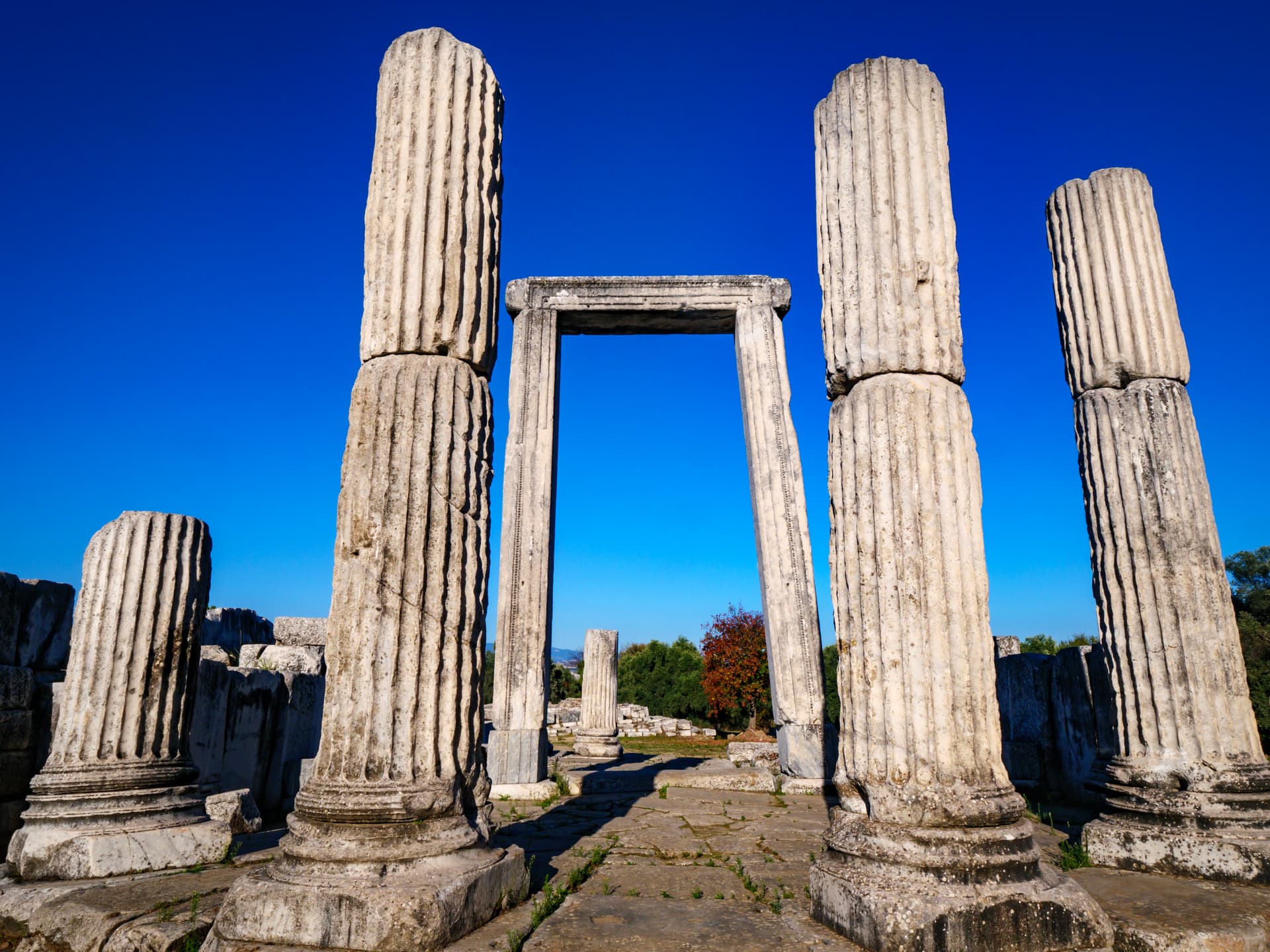
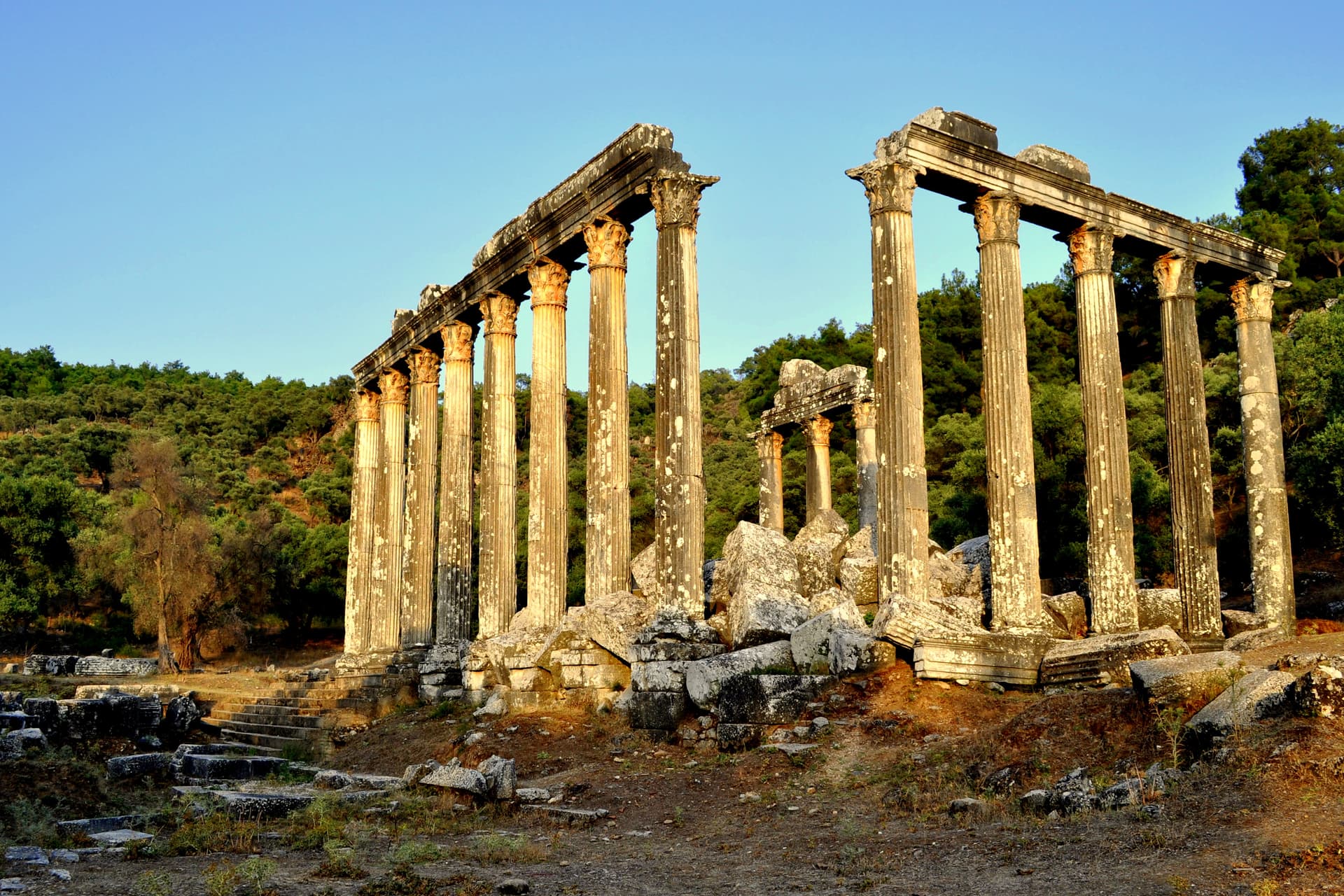
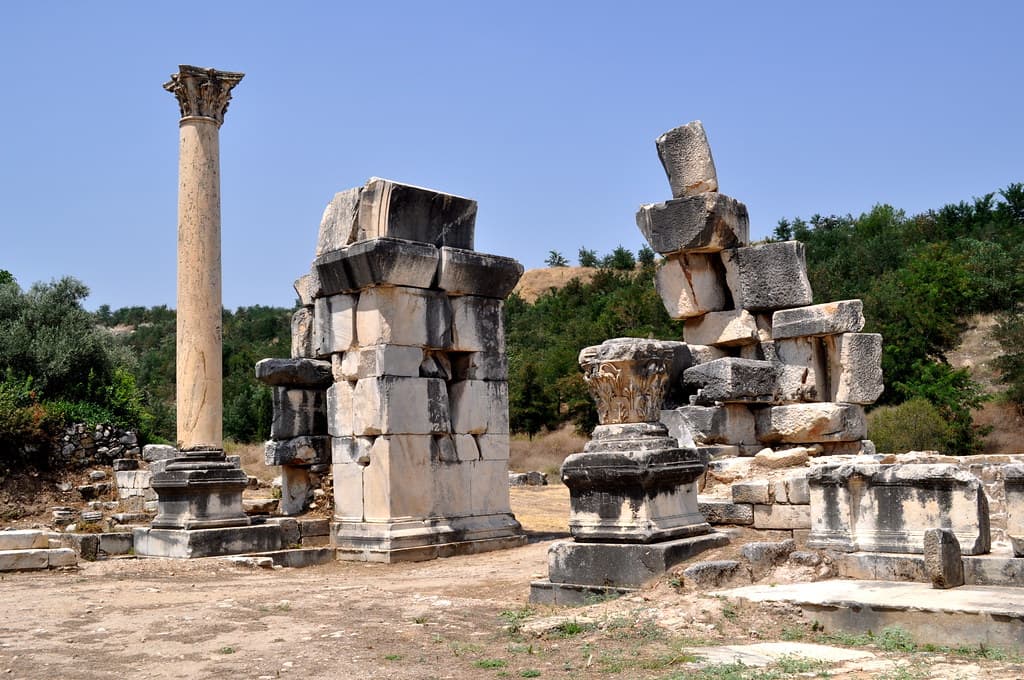
Explore other sacred places in the region. Proximity does not establish access or travel time; check each place’s guidance.

References
Sources consulted for this page. Source categories describe the publication, not a guarantee that every claim is verified. Traditional accounts and outside interpretations may differ.
- 01Top 10 Archaeological Sites in Caria, Turkey — World History EncyclopediaacademicScholarly overview placing Labraunda in regional context
- 02Brown University Labraunda Project — Brown University Department of ArchaeologyacademicAmerican excavation team project page
- 03Labraunda (Ortaköy) - Livius — Jona LenderingacademicScholarly article with architectural and religious detail
- 04Memory and Control: Mylasa and the Sanctuary of Zeus Labraundos — BrillacademicChapter in academic volume on Hellenistic urban rituals
- 05Labraunda - Wikipedia — Wikipedia contributorsencyclopediaComprehensive entry on site history, architecture, and excavations
- 06Unearthing Labraunda: The Sacred Mountain Sanctuary of Ancient Caria Revealed — Anatolian ArchaeologyacademicDetailed overview of sacred significance and archaeological context
- 07Labraunda - Turkish Archaeological News — Turkish Archaeological NewsSource contextSite overview and recent excavation news
- 08The Sanctuary of Labraunda, an Archaeological Site in Turkey — Peter Sommer TravelsguidePractical and historical visitor description
- 09Satellite map of Labraunda, Turkey — Latitude.toSource contextCoordinates source: 37.3960, 27.8610
Share a photo
Help visitors recognize Labraunda. Every submission is reviewed before publication.