Kincaid Mounds, Brookport, Illinois
Where Mississippian chiefdom flourished for three centuries and nineteen mounds still rise above the Ohio Valley
Understand sacred places, explore living traditions, and learn how to engage respectfully with Pilgrim Map.
Access has not been verified. Check current local guidance before planning a visit.
Brookport, Kentucky, United States
Read the sources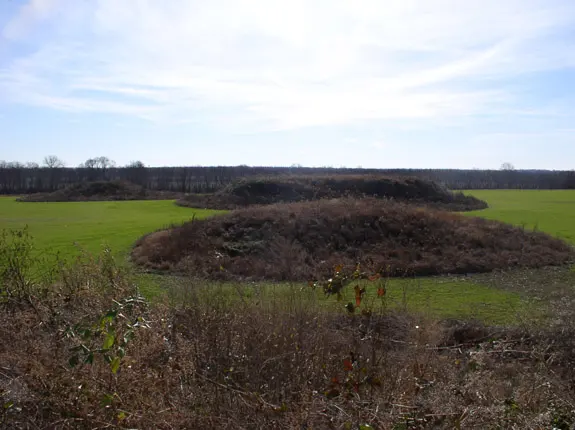
Visit essentials
A quick read before you go
- Duration
- One to two hours during annual events, when guided tours are available.
- Etiquette
- Kincaid Mounds requires visitors to approach as guests on ancestral land.
Overview
Before European contact, before the name Illinois existed, a sophisticated civilization flourished along the Ohio River. The Mississippian people at Kincaid built at least nineteen earthen mounds, some for temples, some for the residences of leaders, some for purposes that remain uncertain. They filled and leveled a great central plaza where thousands could gather. They surrounded portions of their settlement with wooden palisades.
This was not a simple village. Kincaid was the seat of a chiefdom, a regional power center connected by trade to Cahokia, the great Mississippian city 140 miles away. For 350 years, from roughly 1050 to 1400 AD, this place served as the political, economic, and ceremonial heart of its region.
Then it was abandoned. We do not know precisely why. The Mississippian way of life was fading across the region by 1400. What came next left few traces at Kincaid. The mounds remained, gradually covered by vegetation, waiting.
Today, Kincaid Mounds sits in rural southern Illinois, accessible by gravel roads, preserved as a state historic site. The observation platform offers views across mounds that once held temples. The quiet is notable. Visitors standing where thousands once gathered often report a quality of presence that exceeds what an empty field should hold.
As one visitor guide notes: "Stop and listen, stay quiet, and just take it all in. You definitely feel something when you visit a sacred place like that."
Why this place is sacred
The building of mounds was itself a sacred act. The Mississippians did not merely pile earth. They engaged in periodic renewal ceremonies, adding new layers to existing structures in events that likely combined physical labor with ritual purpose. Each mound represents generations of accumulated intention.
The platform mounds at Kincaid elevated temples and elite residences above the community. This vertical distinction was not merely practical. In Mississippian cosmology, height connected the earthly realm to powers above. Those who lived and conducted ceremonies atop the mounds occupied a liminal space, closer to the spiritual forces that governed the world.
Carved figurines in coal and fluorite discovered at Kincaid show connections to the Southeastern Ceremonial Complex, a widespread system of iconography and ritual that linked Mississippian centers across the region. The symbols and practices were not unique to Kincaid but connected it to a larger sacred geography.
The site's remoteness today contributes to its atmosphere. Unlike Cahokia, which sits near St. Louis suburbs, Kincaid requires effort to reach. Gravel roads through rural Illinois, no visitor center, no gift shop. What remains is the land and the mounds, holding what 350 years of ceremony deposited.
Descendant communities, including members of federally recognized tribes like the Chickasaw, Choctaw, and Muscogee, maintain cultural connection to Mississippian heritage. For these communities, sites like Kincaid are not merely archaeological but ancestral. The sacredness is not historical artifact but present reality.
Kincaid Mounds served as the political, economic, and ceremonial center of a Mississippian chiefdom from approximately 1050 to 1400 AD. The platform mounds supported temples and elite residences, the plaza provided space for public gatherings and ceremonies, and the settlement as a whole functioned as the heart of regional organization. The specific ceremonies conducted remain a matter of archaeological inference.
The site was abandoned around 1400 AD for reasons that remain unclear. The mounds persisted through centuries of agricultural use, though some were damaged. Archaeological excavations by the University of Chicago from 1934 to 1944 developed methods that became foundational for American archaeology. The site received National Historic Landmark designation in 1964 and continues to be protected as a state historic site.
Contemporary understanding has shifted from viewing Kincaid primarily as archaeological data to recognizing its significance for descendant communities. The site represents ancestral heritage for living peoples, not merely scientific interest.
Experience and orientation
The approach itself creates conditions for the experience. The drive through rural southern Illinois, the transition from highways to back roads to gravel, the gradual stripping away of commercial landscape all prepare visitors for something different. By the time you reach Kincaid, the world you left behind has become distant.
The observation platform provides views across the mound complex. From here, the scale becomes visible. These are not small hills but substantial earthworks, one stretching nearly 500 feet. The labor required to build them without metal tools, carrying basket after basket of earth, becomes imaginable and simultaneously unimaginable.
The quiet is remarkable. No traffic noise reaches this place. Birds call. Wind moves grass. The silence beneath these sounds is not empty but textured. Visitors often find their usual mental noise subsiding without effort. The landscape seems to require attention of a particular kind.
Many report a sense of presence that they struggle to articulate. Not ghostly in a horror-film sense, but a quality of habitation that exceeds what an abandoned site should hold. The mounds were not merely built but inhabited by intention. That intention persists in some way that visitors feel even when they cannot explain.
The experience deepens for those who stay. A brief stop at the platform offers something. An hour of quiet attention offers more. Those who return, who let the site become familiar, report that it reveals itself gradually, like a face becoming distinct as eyes adjust to darkness.
Kincaid Mounds rewards those who come prepared for quiet. Leave expectations of visitor center interpretation behind. Bring water and patience. Allow time that extends beyond the brief stop the observation platform might suggest.
Consider the people who built these mounds. They were not simple. They organized complex society, conducted trade over hundreds of miles, developed agricultural systems, created art that connected them to a spiritual cosmos. What you are seeing is the work of sophisticated people pursuing purposes that mattered to them as much as yours matter to you.
The annual Archaeology Field Day on the fourth Saturday of October offers guided tours and presentations. This event provides interpretation that the site otherwise lacks. If deeper understanding matters to your experience, plan around this date.
Context and lineage
The Mississippian culture emerged around 800-1000 AD along the Mississippi River and its tributaries. These peoples developed intensive agriculture centered on maize, created complex social hierarchies, and built monumental earthwork architecture. Kincaid was established around 1050 AD, influenced by and connected to Cahokia, the great Mississippian city that dominated the region.
The people who built Kincaid were the first to practice large-scale agriculture in southern Illinois. They transformed the landscape, building mounds, creating plazas, erecting palisades. For 350 years, their society flourished here.
Around 1400 AD, the site was abandoned. The broader Mississippian cultural complex was declining across the region for reasons that remain debated: climate change, resource depletion, social upheaval, or some combination. What came next left little trace at Kincaid. The mounds remained, silent witnesses to what had been.
The descendants of Mississippian peoples include numerous federally recognized tribes today, among them the Chickasaw, Choctaw, Muscogee (Creek), Seminole, and others. These communities maintain cultural connections to Mississippian heritage, though the specific lineages linking modern tribes to specific sites like Kincaid are not always clear.
Archaeological lineage connects Kincaid to the development of American archaeology itself. The University of Chicago excavations from 1934 to 1944 developed stratigraphic methods and ceramic analysis techniques that became standard practice. Kincaid contributed to how we study the past.
Traditions and practice
Mississippian ceremonial practices at Kincaid would have included rituals conducted atop platform mounds, gatherings in the central plaza, and activities connected to the Southeastern Ceremonial Complex. The specific practices are not known with certainty and can only be inferred from archaeological evidence and comparison with documented practices at other sites.
The Southeastern Ceremonial Complex involved iconography and ritual centered on themes of warfare, fertility, and cosmic order. Carved shell gorgets, copper plates, and ceramic vessels found at various Mississippian sites suggest shared symbols and likely shared practices. What specifically occurred at Kincaid remains a matter of scholarly interpretation.
The annual Archaeology Field Day on the fourth Saturday of October brings the site to life with presentations, artifact displays, and guided walking tours. This event provides the interpretation and context that the site otherwise lacks. Southern Illinois University continues archaeological research.
For visitors at other times, engagement is primarily contemplative. The site offers no formal programming. What it offers is presence: the opportunity to stand where others stood, to contemplate what they built, to feel what persists.
If you come seeking something more than a photograph, consider these approaches:
Arrive with intention. The drive to Kincaid requires effort. Let that effort be preparation rather than obstacle. By the time you reach the site, you have already committed something.
From the observation platform, do not rush to leave. Sit if you can. Let the silence work on you. Notice what arises when you stop trying to make something happen.
Consider the builders. Real people, with children and concerns and hopes, carried earth in baskets to create what you see. Their labor was not merely physical but devotional. The mounds are solidified intention.
Leave something of yourself, not physically but attentionally. Your presence joins the presence of others who have stood here, adding to whatever the site accumulates.
Mississippian culture
HistoricalKincaid Mounds served as the seat of a Mississippian chiefdom from approximately 1050 to 1400 AD. The Mississippian people were the first to practice large-scale agriculture in southern Illinois, built platform mounds for ceremonial and political purposes, and participated in the Southeastern Ceremonial Complex that linked centers across the region.
Platform mound construction for temples and elite residences. Central plaza gatherings. Agricultural ceremonies tied to maize cultivation. Trade networks spanning hundreds of miles. Ceremonial activities connected to the Southeastern Ceremonial Complex. Specific practices at Kincaid are inferred from evidence rather than directly documented.
Perspectives and open questions
Kincaid Mounds invites understanding through archaeological, traditional, and experiential lenses. Scholarly research documents its significance within Mississippian culture. Descendant communities maintain connection to ancestral heritage. Visitors report experiences that neither frame fully explains.
Scholarly perspective
Kincaid Mounds is recognized as one of the most important Mississippian sites in the United States, ranked seventh or eighth largest of its period. The University of Chicago excavations from 1934 to 1944 not only documented the site but developed methods that became foundational for American archaeology. Southern Illinois University continues research.
Scholarly consensus places Kincaid as a major chiefdom center, connected by trade and possibly political relationship to Cahokia. The site demonstrates sophisticated urban planning, social hierarchy, and connection to the broader Southeastern Ceremonial Complex. National Historic Landmark designation confirms its archaeological significance.
Living and traditional perspectives
For descendant communities of Mississippian peoples, including federally recognized tribes such as the Chickasaw, Choctaw, Muscogee, and others, Kincaid represents ancestral homeland. The site is not merely data but heritage. The mounds were built by ancestors whose descendants still live.
This perspective does not conflict with archaeological understanding but adds dimensions that excavation cannot recover. The spiritual significance of the site for living peoples is part of what it is, regardless of what science can measure.
Alternative interpretations
Some visitors describe Kincaid as having special energy or spiritual presence. These descriptions often emerge from genuine experiences but use vocabulary that lacks archaeological support. The consistency of such reports suggests the site produces effects worth noting, even if the explanatory framework varies.
Open questions
Genuine mysteries remain. The specific ceremonial practices and beliefs of Kincaid's inhabitants are not fully known. The reasons for the site's abandonment around 1400 AD remain debated. The full extent of trade and cultural connections awaits further research. Unexcavated portions of the site may hold answers to questions not yet asked.
Plan your visit
Access and arrival
Lodging available in Metropolis, Illinois, or Paducah, Kentucky. The site itself has no accommodations.
Respectful visit
Appropriate outdoor clothing and sturdy shoes. The site is rural and may involve walking on uneven ground, particularly during annual events with walking tours.
Permitted from the observation platform. The mounds can be photographed but not climbed for better angles.
Not applicable at this site.
Stay on the observation platform. Do not climb or walk on mounds. Do not remove any artifacts or materials. The site is remote with no facilities; plan accordingly.
Kincaid Mounds is a protected archaeological site and ancestral land. Do not climb on or disturb the mounds. Do not remove any artifacts or materials. Stay on designated areas. The site's preservation depends on visitors who understand that protection is not merely legal requirement but ethical responsibility.
Location
Map loads as you approach this section.
Pilgrim reflections
A portrait of encounter, not a score
Pilgrims describe what they felt, how present they could become, and whether the place would shape a journey. There are no stars and no ranking of traditions.
No reviewed reflections yet
The first pilgrims can help describe the character of being here.
Share a reflection
Available after an account-backed “Been there.” Every reflection is reviewed before publication.
Nearby sacred places
Explore other sacred places in the region. Proximity does not establish access or travel time; check each place’s guidance.
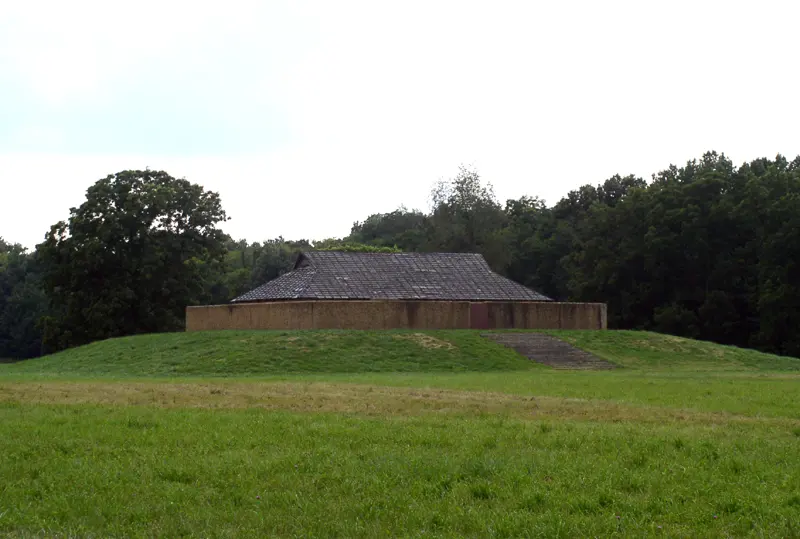
Angel Mounds, Evansville, Indiana
Evansville, Indiana, United States
144.3 km away
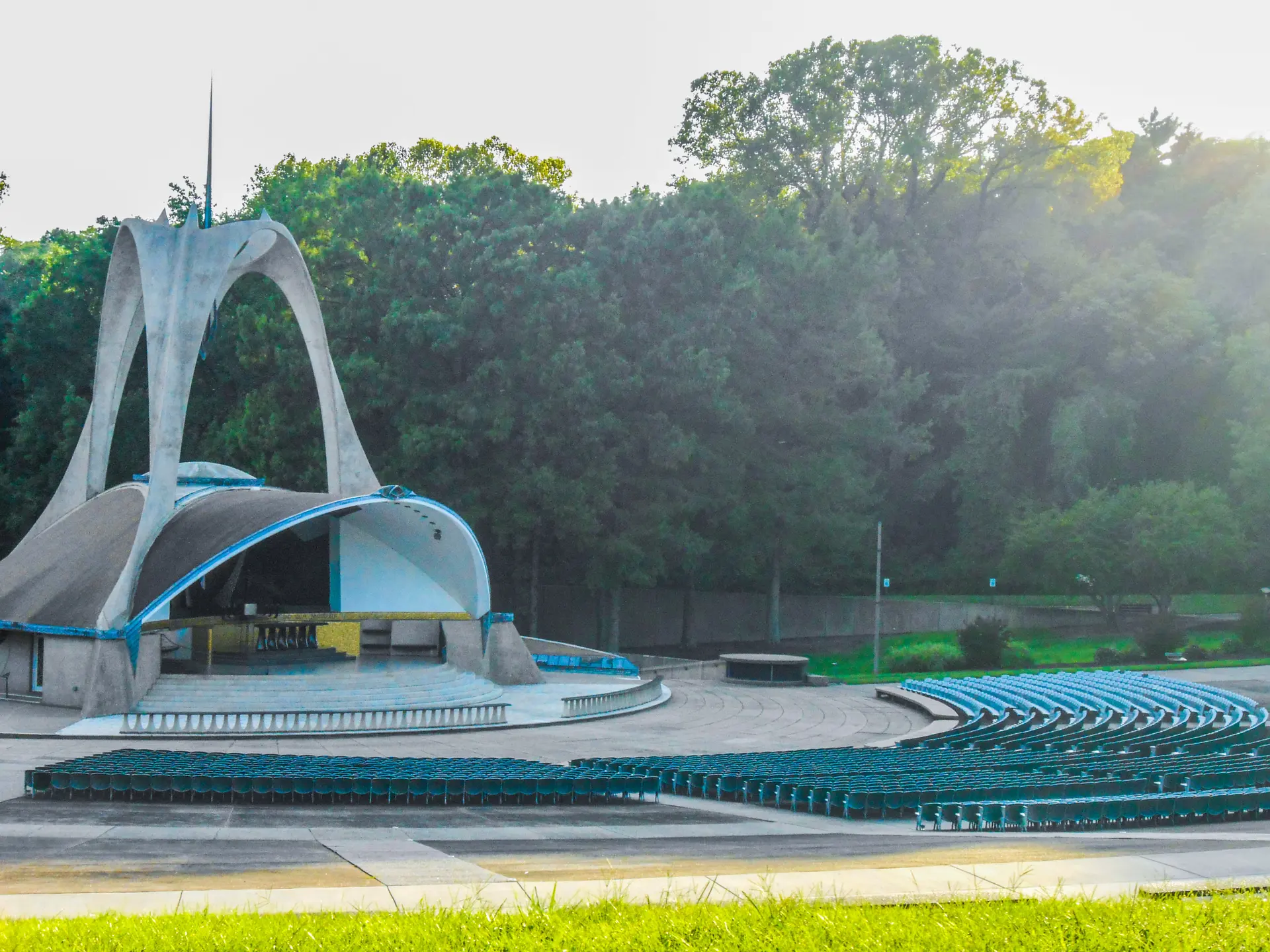
National Shrine of Our Lady of the Snows, Belleville, Illinois
Belleville, Illinois, United States
198.4 km away

Saint Meinrad Archabbey
St. Meinrad, Indiana, United States
203.2 km away
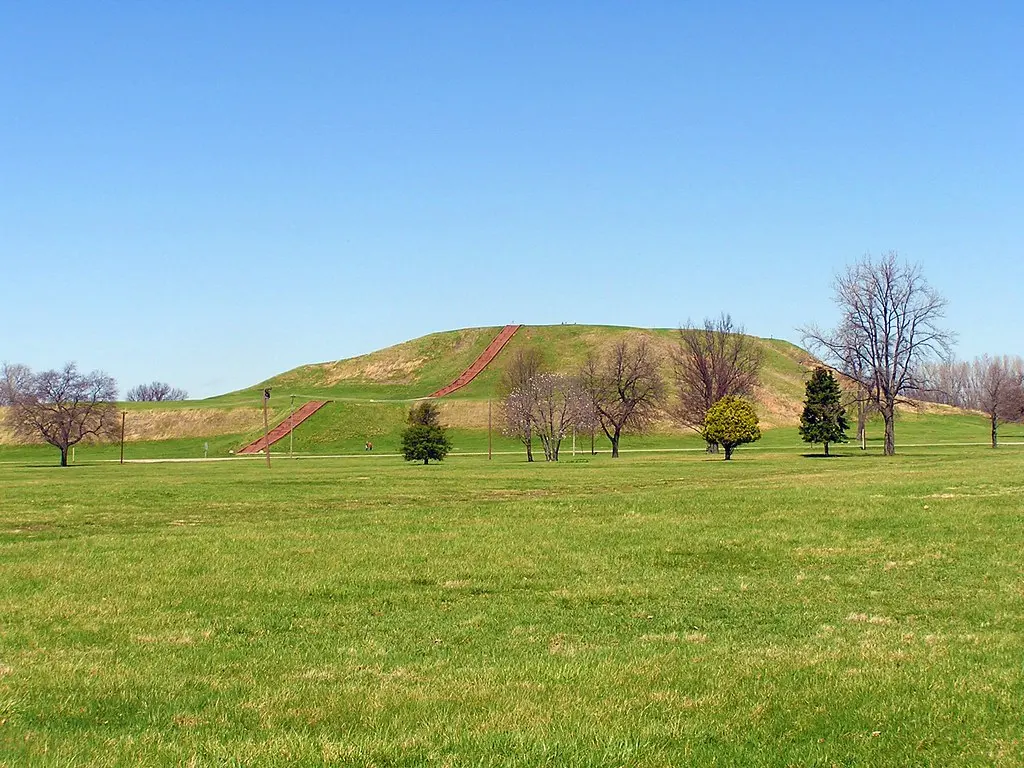
Cahokia Mounds, Collinsville, Illinois
Collinsville, Illinois, United States
214.7 km away
References
Sources consulted for this page. Source categories describe the publication, not a guarantee that every claim is verified. Traditional accounts and outside interpretations may differ.
- 01Kincaid Mounds — Kincaid Mounds Support OrganizationSource contextOfficial site website
- 02Kincaid Mounds — Illinois Historic Preservation DivisionofficialState historic preservation documentation
- 03Kincaid Mounds State Historic Site — WikipediaencyclopediaGeneral reference
- 04Kincaid Mounds Visitor Guide — Hiking with ShawnguideVisitor information
Share a photo
Help visitors recognize Kincaid Mounds, Brookport, Illinois. Every submission is reviewed before publication.