Black Madonna of Częstochowa (Eureka, MO)
One man's 23-year prayer in concrete, stone, and seashells on an Ozark hillside
Understand sacred places, explore living traditions, and learn how to engage respectfully with Pilgrim Map.
Access has not been verified. Check current local guidance before planning a visit.
Eureka, Missouri, United States
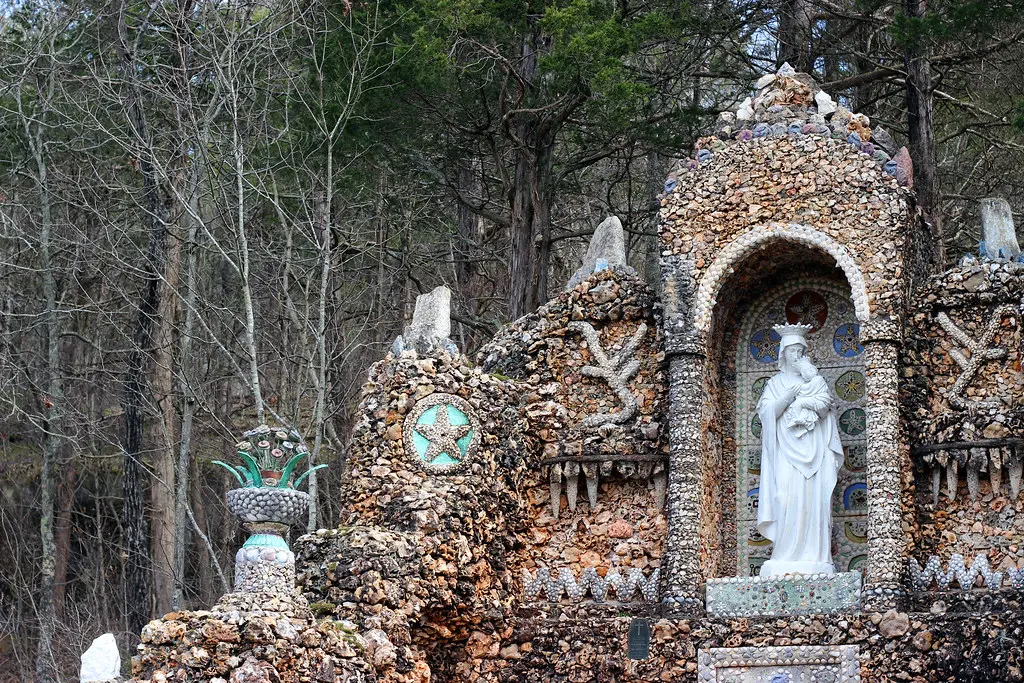
Image of Black Madonna of Częstochowa (Eureka, MO). Image source
Visit essentials
A quick read before you go
- Duration
- One to two hours for a complete self-guided tour of the seven grottos and chapel, including time…
- Access
- Located at 100 St.
Overview
Brother Bronislaus Luszcz, a Polish Franciscan who arrived in Missouri in 1927, grew up near Jasna Gora, where Poland's Black Madonna has drawn pilgrims for over six hundred years. In 1937 he began a chapel and then seven hillside grottos at the Franciscan property south of Pacific.
For twenty-three years, he worked with concrete, native Missouri tiff rock, colored stones, visitors' seashells and costume jewelry, fragments of glass, and improvised kitchen molds. Every surface became an offering made from whatever was at hand. In August 1960, at age sixty-six, he died of heat stroke while still building.
What remains is not a polished monument but the visible residue of a life given to worship. The grottos are rough, tender, eccentric, and completely sincere: an authenticity of sustained, unglamorous devotion that no committee could design or budget purchase.
Why this place is sacred
The original Black Madonna of Czestochowa is one of the most venerated icons in Christianity. For over six hundred years, pilgrims have traveled to Jasna Gora monastery in Poland to pray before the dark-complexioned Virgin and Child, whose cheek bears two slash marks from a fifteenth-century Hussite raid. In 1655, when Swedish forces besieged Jasna Gora, the monastery's unlikely defense was attributed to the Madonna's intercession. She was proclaimed Queen and Protector of Poland the following year.
The replica icons at the Missouri shrine carry this weight not as copies but as links in a chain of contact sanctity. One icon was placed on the altar at Jasna Gora for nine Masses, physically touched to the original, and blessed by a cardinal before crossing the Atlantic. In Catholic devotional tradition, this contact is not symbolic — it transmits something.
The icon in Missouri is connected to the icon in Poland the way a candle lit from another candle carries the same flame.
But the shrine's more immediate thinness comes from Brother Bronislaus himself. Twenty-three years of daily labor on a wooded hillside, alone with concrete and stone and whatever materials visitors brought him. The grottos are not elegant. They are rough, inventive, personal. A concrete rabbit shaped in a cake pan. A flower made from a cupcake holder filled with cement. Seashells pressed into wet mortar by unknown hands.
Each object is a small act of devotion, and the accumulation of thousands of such acts over more than two decades creates a density of intention that the visitor feels before understanding it.
The fact that he died while building deepens this quality. Brother Bronislaus did not finish his work, step back, and receive recognition. He gave himself to it until it took him. The shrine is not a completed monument — it is an interrupted prayer, and the interruption makes it more honest than any finished work could be.
Brother Bronislaus conceived the shrine as a transplantation of the Czestochowa pilgrimage into American soil. He had watched pilgrims arriving at Jasna Gora from across Poland and wanted to extend that devotion to his adopted country. The chapel he built in 1937 was designed to house the Black Madonna icon and provide a place of prayer.
The grottos that followed over the next twenty-three years grew organically — each one a meditation on a different aspect of Marian or Franciscan devotion, built as the spirit and the available materials directed.
The shrine's history includes a significant rupture. In 1958, the original chapel that Brother Bronislaus had built was destroyed by arson. The identity and motive of the arsonist remain unknown. Cardinal Stefan Wyszynski, the Primate of Poland — himself a figure of resistance against communist persecution — donated a replacement painting of the Black Madonna. Cardinal John Carberry of St. Louis contributed an additional glass-encased icon. The open-air Chapel of the Hills was constructed to replace the lost structure.
Brother Bronislaus continued building after the fire, working on an Our Lady of Fatima grotto until his death in 1960. The Franciscan Missionary Brothers of the Sacred Heart of Jesus have maintained the shrine since, celebrating weekly Mass and feast day services. The site has gained recognition as both a pilgrimage destination and a significant American folk art environment, documented by SPACES (Saving and Preserving Arts and Cultural Environments).
The dual identity — sacred site and folk art installation — coexists without contradiction. The art is the prayer.
Experience and orientation
The grounds are small enough to walk in an hour and deep enough to occupy an afternoon. Seven grottos are distributed along the wooded hillside, connected by paths and stairs that climb through the trees. The scale is intimate — nothing is monumental, everything is within arm's reach. This proximity is part of the effect. You are not looking up at grandeur. You are standing close to something made by one pair of hands.
The first grotto sets the tone. The surfaces are covered with embedded materials — tiff rock from Potosi, Missouri, colored glass, seashells, beads from costume jewelry. The effect is not polished or coordinated. It is accumulative, the way a prayer book fills with marginal notes over decades of use. Each piece was placed individually, deliberately, by a man working alone on a hillside with no audience but the one he was praying to.
The folk art quality of the grottos rewards close attention. Lean in and you see the improvisation: concrete animals formed in kitchen molds, flowers shaped from cupcake holders, pillars built from stacked coffee cans. These are not compromises born of poverty. They are choices born of a creative mind working within real constraints, finding devotion in ordinary materials. There is something profoundly Franciscan in this — Francis of Assisi, after all, preached to birds and called the sun his brother.
Brother Bronislaus made saints from cake pans.
The quiet is consistent. The shrine sits far enough from main roads that traffic noise disappears. Bird calls replace it. Wind in the trees. The occasional creak of the paths. Visitors who arrive expecting a roadside curiosity find themselves slowing down, speaking less, looking more carefully. The place has a gravity that its modest appearance does not advertise.
The Sacred Heart Chapel, where Sunday Mass is celebrated, continues the intimate scale. The replacement icons of the Black Madonna — one donated by Cardinal Wyszynski, one by Cardinal Carberry — carry their own weight. The dark face of the Madonna, the slash marks on her cheek, the child held at her side.
Whether you are a Catholic who understands the devotional significance or a visitor encountering the image for the first time, the icon communicates something that resists easy description: a tenderness that has survived six centuries of veneration and violence.
Arrive with time. An hour is sufficient to walk the grounds, but the shrine rewards lingering. Begin at the chapel, where the Black Madonna icons are displayed. Spend a few minutes with the image before walking the grottos. The face will stay with you as you move through the hillside.
Walk the grottos in sequence. Each one is dedicated to a different theme — Our Lady of Czestochowa, the Sacred Heart, St. Francis, Our Lady of Lourdes, St. Anthony, Our Lady of Perpetual Help, and the unfinished Our Lady of Fatima. Notice how the materials change from grotto to grotto, reflecting what was available and what visitors brought over the years.
At the Our Lady of Perpetual Help Grotto, pause. This is where Brother Bronislaus was found after his collapse. The grotto is unfinished — not because he abandoned it, but because his body gave out before his intention did. Standing here, the shrine's central truth becomes difficult to avoid: this is what devotion looks like when it is real, sustained, and unglamorous.
Context and lineage
The story begins in Poland, near Jasna Gora. Brother Bronislaus Luszcz was born in 1894, grew up in the shadow of the great monastery at Czestochowa, and watched pilgrims arriving from across the country to venerate the Black Madonna. The icon had been there for centuries — a dark-complexioned Virgin and Child, its origins wrapped in legend. Catholic tradition holds that St. Luke the Evangelist painted it on a cedar table from the house of the Holy Family.
Art historians date the existing image more conservatively to the sixth or ninth century. What is not disputed is its centrality to Polish faith. When Swedish forces besieged Jasna Gora in 1655, the monastery's defense was attributed to the Madonna's intercession. The following year, King Jan Kazimierz proclaimed the Virgin Mary Queen and Protector of Poland.
Brother Bronislaus carried this devotion to America. In 1927, he arrived in the St. Louis area with other Franciscan Missionary Brothers of the Sacred Heart of Jesus, invited by Archbishop John J. Glennon. He was given charge of the gardens at an abandoned convent on a wooded hillside south of Pacific, Missouri.
In 1937, he cleared the land and built a small chapel to house a replica of the Black Madonna icon — one that had been placed on the altar at Jasna Gora, touched to the original, and blessed for its journey across the ocean.
Then the building began. Using only an axe and sledgehammer, working largely alone, Brother Bronislaus constructed grotto after grotto along the hillside over the next twenty-three years. He mixed concrete and hauled Missouri tiff rock. Visitors brought seashells, beads, pieces of jewelry, fragments of colored glass, and he pressed them into the wet surfaces. When he needed animals for the St. Francis Grotto, he shaped concrete in cake pans. When he needed flower pots, he used Jell-O molds.
In 1958, the original chapel was destroyed by arson. The fire was devastating but did not stop him. A replacement painting was sent from Poland by Cardinal Wyszynski, and an additional icon was donated by Cardinal Carberry. Brother Bronislaus continued building. On an August day in 1960, he collapsed from heat stroke while working on a grotto dedicated to Our Lady of Fatima. He was found at the Our Lady of Perpetual Help Grotto. He was sixty-six years old.
The shrine's lineage runs along two lines. The devotional lineage connects it to Jasna Gora and the six-century tradition of Polish Marian veneration — a lineage transmitted physically through the icons that crossed the Atlantic. The artistic lineage places it within the American tradition of visionary folk art environments, typically created by individual makers working outside formal art institutions, driven by personal or religious vision.
The shrine is both a place of prayer and a work of outsider art, and neither identity is complete without the other.
Since Brother Bronislaus's death, the Franciscan Missionary Brothers have maintained the shrine, celebrating weekly Mass and hosting pilgrims. The grounds remain modest. There is no gift shop comparable to major pilgrimage sites, no restaurant, no admission fee. The shrine's character — intimate, handmade, unpretentious — has been preserved. This is itself a form of faithfulness to the founder's vision.
Brother Bronislaus Luszcz
founder
Polish Franciscan Missionary Brother who built the entire shrine complex by hand over 23 years, from 1937 until his death from heat stroke in 1960. He used an axe and sledgehammer, improvising with kitchen molds, costume jewelry, and whatever materials visitors brought. His life's work is the shrine itself — every surface a visible act of prayer.
Cardinal Stefan Wyszynski
historical
Primate of Poland who donated a replacement painting of the Black Madonna after the 1958 arson. Wyszynski himself was a figure of immense significance in Polish Catholic history, having been imprisoned by the communist government from 1953 to 1956 for refusing to subordinate the Church to the state.
Archbishop John J. Glennon
historical
Archbishop of St. Louis who invited the Franciscan Missionary Brothers from Poland in 1927, providing the institutional foundation that made Brother Bronislaus's work possible.
Cardinal John Carberry
historical
Archbishop of St. Louis who donated an additional glass-encased icon of Our Lady of Czestochowa to the shrine, supplementing Cardinal Wyszynski's gift after the 1958 fire.
Traditions and practice
The shrine continues the six-century-old Polish Catholic tradition of pilgrimage to images of Our Lady of Czestochowa. At Jasna Gora, pilgrims approach the icon with prayers, often on their knees. The Missouri shrine adapts this tradition to its rural setting. The grottos serve as stations for prayer and reflection, each dedicated to a different aspect of Marian or Franciscan devotion. The Stations of the Cross are present on the grounds, providing a structured prayer walk familiar to Catholic visitors.
Marian devotion — particularly the rosary — has been practiced at the shrine since its founding.
Sunday Mass is celebrated at 10:00 AM in the Sacred Heart Chapel. Feast day Masses are held at 10:30 AM on June 13 (St. Anthony), August 26 (Our Lady of Czestochowa), and October 4 (St. Francis). The August 26 celebration is the most significant annual observance, marking the feast day of the icon to which the entire shrine is dedicated.
The grounds are open daily during posted hours for self-guided walking tours and private prayer. Group pilgrimages can be arranged by contacting the shrine. Votive candles may be lit. Donations support the ongoing maintenance of the grottos and grounds.
Even if you are not Catholic, the shrine offers a form of practice available to anyone willing to slow down.
Walk the grottos in sequence, pausing at each one. Rather than reading plaques or photographing surfaces, look closely at the materials. Find a seashell someone brought decades ago, still embedded in the concrete. Find a bead from a piece of costume jewelry, its original context completely erased, now a permanent part of a grotto wall.
Consider what it means that someone brought this small object to a hillside in Missouri and offered it to a man who was building a prayer.
At the grotto where Brother Bronislaus died, stand still. You are in the presence of a life that was given — not dramatically, in a single heroic act, but daily, for twenty-three years, in the repetitive work of mixing concrete and pressing stones. This is what devotion looks like when no one is watching. Let that sink in before moving on.
Roman Catholic (Franciscan)
ActiveThe shrine was created by the Franciscan Missionary Brothers of the Sacred Heart of Jesus as an expression of Franciscan devotion to the Blessed Virgin Mary. Brother Bronislaus Luszcz's 23-year labor of construction embodies the Franciscan ideal of total self-giving through humble work. The shrine houses replica icons of the Black Madonna of Czestochowa physically connected to the original through contact blessing at Jasna Gora. Weekly Mass and feast day celebrations continue the devotional life Brother Bronislaus established.
Weekly Sunday Mass at 10:00 AM in the Sacred Heart Chapel. Feast day Masses on June 13 (St. Anthony), August 26 (Our Lady of Czestochowa), and October 4 (St. Francis) at 10:30 AM. Walking meditation through the seven grottos. Stations of the Cross. Private prayer and contemplation. Votive candle lighting. Group pilgrimages by arrangement.
Polish Catholic Marian Devotion
ActiveThe shrine is a direct transplantation of six centuries of Polish Catholic devotion to Our Lady of Czestochowa into the American Midwest. The original icon at Jasna Gora is the spiritual center of Polish Catholicism, credited with the miraculous defense of the monastery against Swedish invasion in 1655 and subsequently proclaimed Queen and Protector of Poland. Brother Bronislaus grew up near Jasna Gora and built the Missouri shrine to extend this devotion to his new country. For Polish Americans and descendants of Polish immigrants, the shrine carries both spiritual and cultural significance.
Veneration of the replica Black Madonna icons. Continuation of the Polish pilgrimage tradition to images of Our Lady of Czestochowa. August 26 feast day celebration marking the feast of the icon. The devotional customs associated with Polish Marian veneration — prayer, rosary, candle lighting — are practiced at the shrine in continuity with the Jasna Gora tradition.
Perspectives and open questions
The Black Madonna Shrine invites interpretation from Catholic devotional, folk art, cultural immigrant, and broader spiritual perspectives. Each lens reveals something genuine about the site, and the most honest engagement holds them together — recognizing that the shrine is simultaneously a place of prayer, a work of art, a cultural transplant, and a monument to the possibilities of sustained individual devotion.
Scholarly perspective
SPACES (Saving and Preserving Arts and Cultural Environments) documents the Black Madonna Shrine as a significant American folk art environment. It belongs to a tradition of visionary environments created by self-taught artists working outside institutional art structures, driven by personal or religious vision. Comparable sites include the Watts Towers in Los Angeles, Ave Maria Grotto in Alabama, and the Garden of Eden in Kansas.
What distinguishes the Black Madonna Shrine is the completeness of its devotional context — unlike many folk art environments, it remains an active place of worship in the tradition for which it was built.
The original Black Madonna of Czestochowa is one of the most studied Marian icons in art history. Scholars date the existing image to the sixth or ninth century, a Byzantine icon that arrived in Poland through a complex chain of transmission. The tradition attributing it to St. Luke the Evangelist is not supported by art historical analysis but reflects the devotional importance of apostolic connection in Catholic icon veneration.
The two slash marks on the Virgin's cheek are reliably dated to a Hussite raid in 1430.
Living and traditional perspectives
In Catholic understanding, the shrine is a place of grace. The replica icons carry the sanctity of their contact with the original at Jasna Gora — the same icon that defended Poland, that survived centuries of war and persecution, that draws millions of pilgrims. The devotion of Brother Bronislaus is understood as a form of Franciscan witness: the total giving of oneself to God's work, without concern for recognition, comfort, or completion.
His death while building is not tragedy in this framework but consummation — the final, complete offering of a life already given.
The Marian dimension connects the shrine to the broader Catholic understanding of Mary as intercessor, mother, and queen. For Polish Catholics specifically, devotion to Our Lady of Czestochowa carries patriotic as well as spiritual weight — the Madonna defended the nation, and venerating her anywhere in the world is an act of cultural continuity as well as religious faith.
Alternative interpretations
The Black Madonna archetype has attracted attention beyond Catholic circles. In Jungian psychology, the dark Madonna represents the hidden or shadow aspect of the feminine divine — the nurturing presence that embraces suffering and darkness rather than only light. Feminist spirituality has drawn on Black Madonna traditions across Europe as evidence of pre-Christian goddess worship surviving within Catholic iconography.
These interpretations, while not endorsed by the Franciscan tradition that created and maintains the shrine, can enrich a visitor's encounter. The dark face of the Madonna — whether understood as centuries of candle soot, Byzantine artistic convention, or a symbol of something older — holds a quality of depth that invites multiple readings. The shrine welcomes all visitors without requiring adherence to any particular framework.
Open questions
Several mysteries persist around the shrine. The identity of the arsonist who destroyed the original chapel in 1958 has never been established, and the motivation remains unknown. Whether Brother Bronislaus left any written records of his spiritual intentions or design plans for the grottos has not been confirmed in available sources — the grottos may have been entirely improvisational, guided by prayer rather than blueprint.
The full inventory of materials embedded in the grotto surfaces is unknowable: visitors brought objects for decades, and each shell, bead, and glass fragment carries its own untraceable story.
Plan your visit
Access and arrival
Located at 100 St. Joseph Hill Road, Pacific, MO 63069, approximately 20 miles southwest of downtown St. Louis and about 8 miles from Eureka, Missouri. Take Interstate 44 to the Pacific/Route 66 exits and follow signs. The shrine is in an unincorporated area south of Pacific on a wooded hillside. Free parking is available at the site. No public transportation serves the location — a personal vehicle is required.
The grounds are outdoor and involve stairs, uneven paths, and changes in elevation. Not fully wheelchair accessible. Mobile phone signal is generally available on the grounds. The shrine has no phone or email contact published in current sources — check theblackmadonnashrine.org for current contact information and group pilgrimage arrangements.
No accommodations at the shrine itself. Pacific, Missouri (adjacent) and Eureka, Missouri (about 8 miles) offer limited lodging. The greater St. Louis area (about 30 miles northeast) provides full hospitality options. For visitors combining the shrine with other regional sacred sites, St. Louis serves as a practical base.
Respectful visit
No formal dress code. Modest attire appropriate for a religious site is appreciated. Comfortable walking shoes are recommended for the outdoor grounds, which involve stairs and unpaved paths. Dress for the weather — the hillside is exposed and conditions vary significantly between seasons.
Photography is permitted on the grounds and at the grottos. Be respectful during Mass or prayer services. The grottos photograph well in natural light, particularly in morning or late afternoon when the embedded materials catch the sun.
Votive candles may be lit at designated locations. Monetary donations are welcomed. In the tradition established by Brother Bronislaus, the shrine was built partly from materials visitors brought — but do not leave objects at the grottos today without first consulting the Franciscan brothers.
No admission fee. The grottos are outdoor structures on a wooded hillside — not fully wheelchair accessible due to stairs and uneven terrain. Pets should be kept on leash. Maintain the quiet, contemplative atmosphere. Do not touch or remove materials from the grotto surfaces.
The grottos are outdoors on a wooded hillside with stairs, uneven paths, and changes in elevation. Visitors with mobility limitations should be aware that full access to all grottos requires climbing. Weather conditions affect the experience — Missouri summers are hot and humid, and winter days can be cold. Bring water in warm months. The site is not staffed with guides; the experience is self-directed.
Location
Map loads as you approach this section.
Pilgrim reflections
A portrait of encounter, not a score
Pilgrims describe what they felt, how present they could become, and whether the place would shape a journey. There are no stars and no ranking of traditions.
No reviewed reflections yet
The first pilgrims can help describe the character of being here.
Share a reflection
Available after an account-backed “Been there.” Every reflection is reviewed before publication.
Nearby sacred places
Explore other sacred places in the region. Proximity does not establish access or travel time; check each place’s guidance.
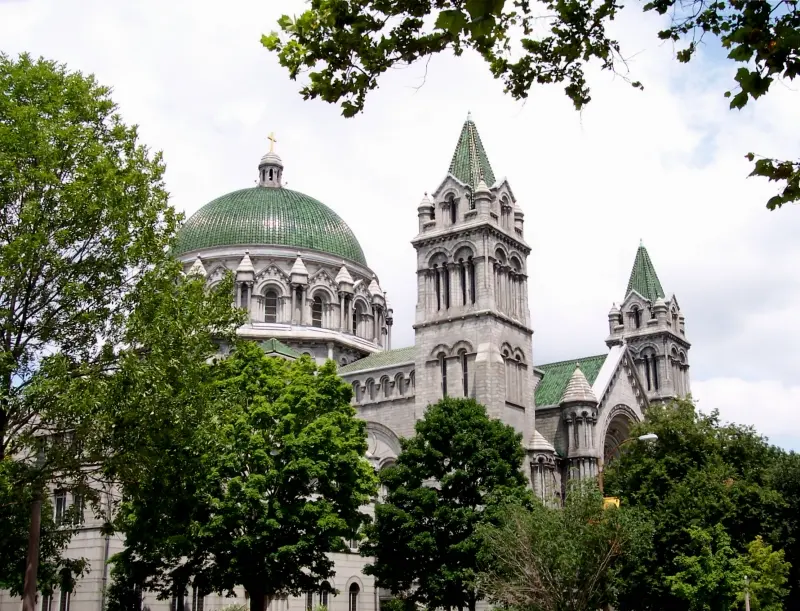
Cathedral Basilica of Saint Louis
St. Louis, Missouri, United States
36.0 km away
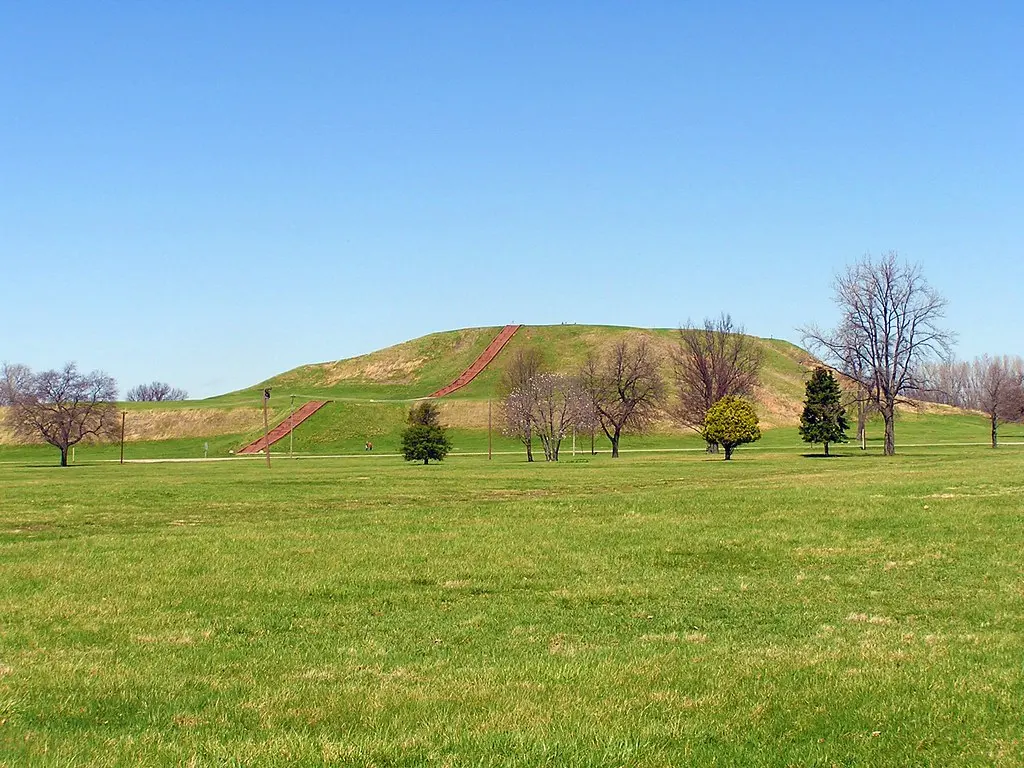
Cahokia Mounds, Collinsville, Illinois
Collinsville, Illinois, United States
52.0 km away
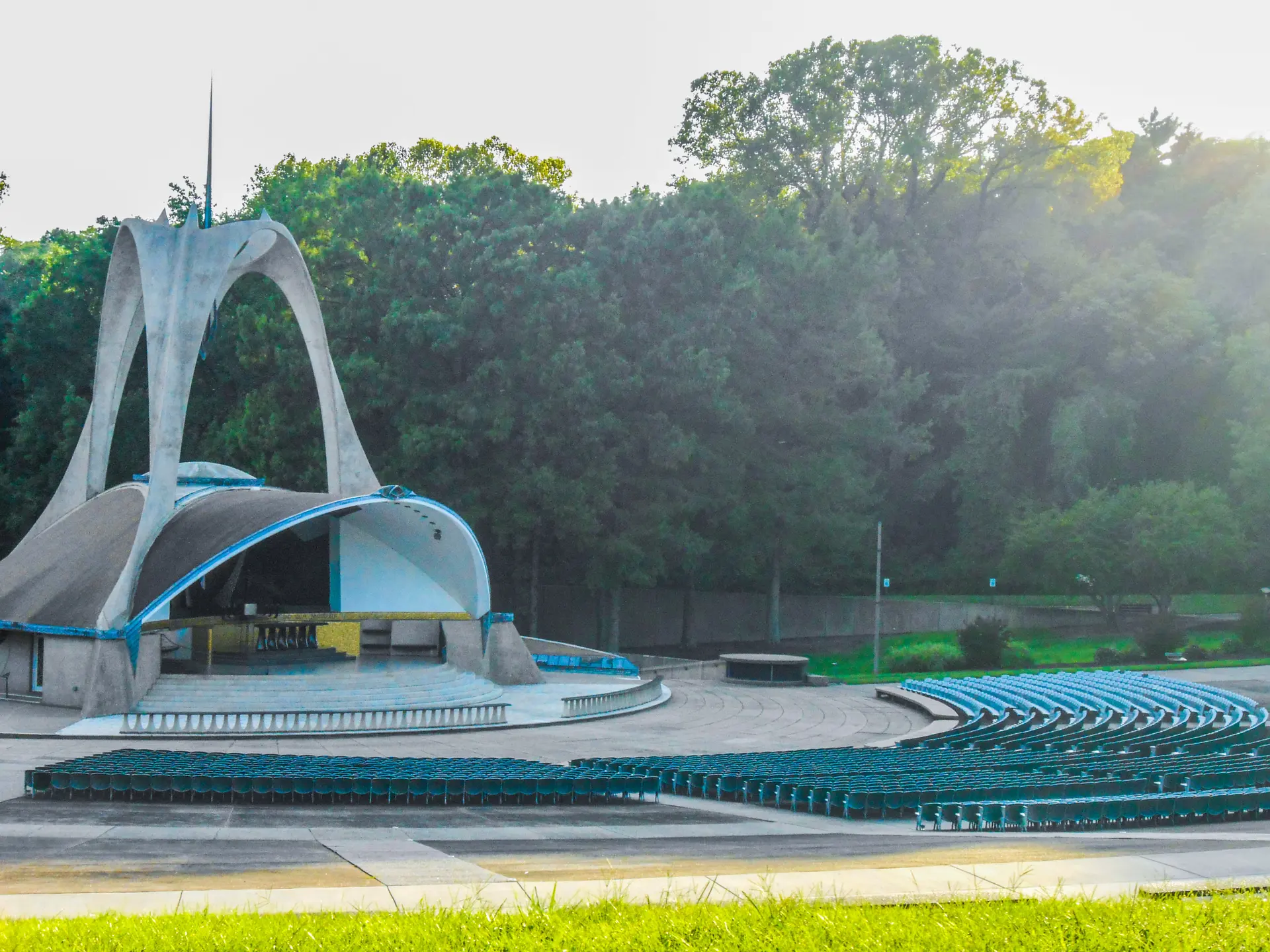
National Shrine of Our Lady of the Snows, Belleville, Illinois
Belleville, Illinois, United States
55.0 km away
Kincaid Mounds, Brookport, Illinois
Brookport, Kentucky, United States
234.9 km away
Photo gallery
3 curated photos
Share a photo
Help visitors recognize Black Madonna of Częstochowa (Eureka, MO). Every submission is reviewed before publication.