Henshō-ji (Hōkai-in)
A small Shingon temple at the foot of Kongōsan holding a mid-Heian single-trunk Kannon
Understand sacred places, explore living traditions, and learn how to engage respectfully with Pilgrim Map.
Access has not been verified. Check current local guidance before planning a visit.
Okayama, Okayama Prefecture, Japan
Read the sources
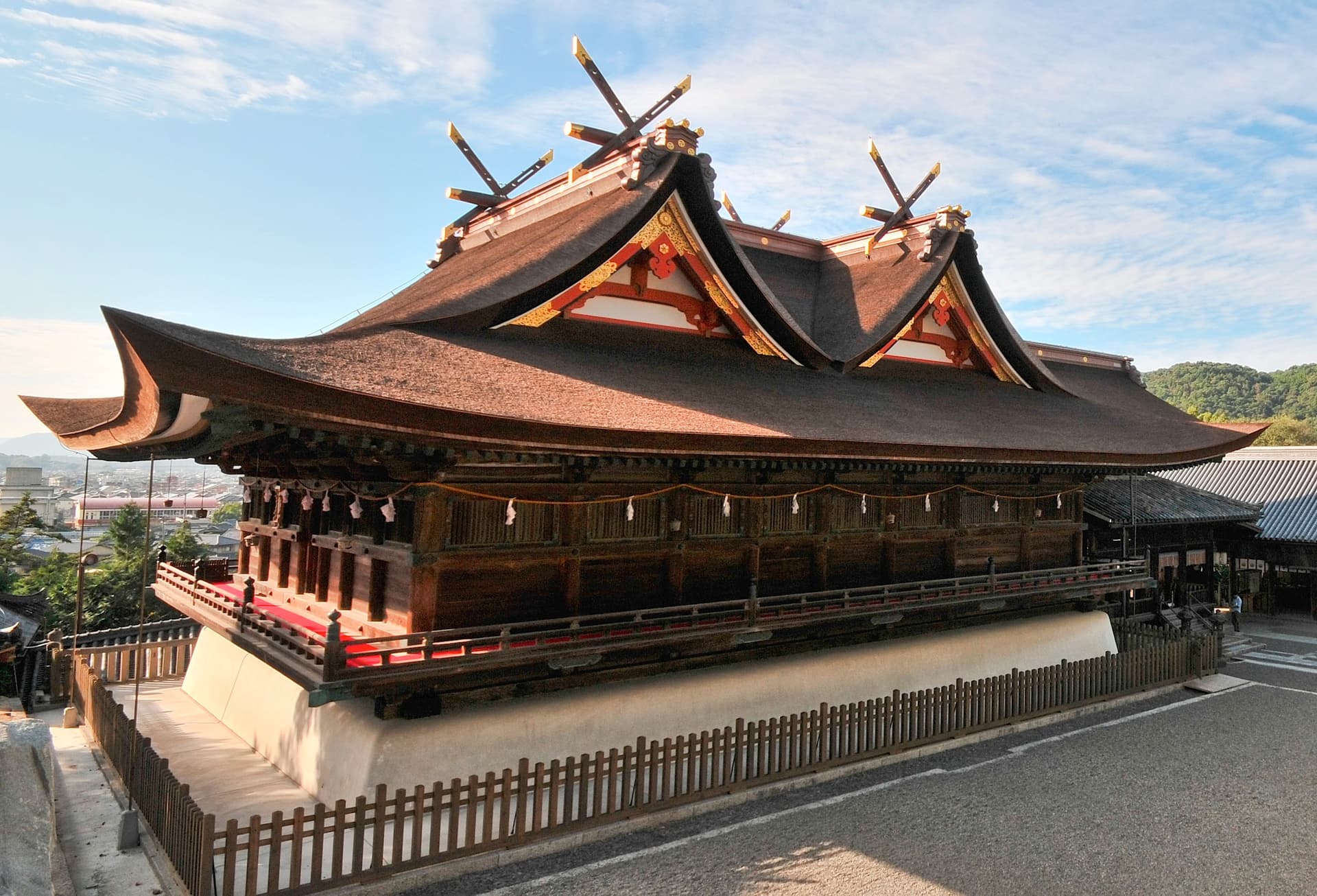
Image of Henshō-ji (Hōkai-in). Image source · CC-BY-SA-3.0
Visit essentials
A quick read before you go
- Duration
- 30–45 minutes for an unhurried pilgrim visit.
- Access
- Bus connection from JR Okayama Station to the Kongōsan area; on-site parking is available for…
Overview
Henshō-ji (Hōkai-in) is a small, quiet station on the Chūgoku 33 Kannon route. Pilgrims coming from Saidai-ji, Yokei-ji, Shōraku-ji, and Kiyama-ji meet a subtler scale: wooded approach, archaic single-trunk Kannon, and an often-empty precinct. English-language travel sources widely place its foundation in 780 CE at Kongōsan's foot, though primary documentation is partial.
Its mid-Heian, 10th–11th-century centrepiece is a Shō Kannon (Sacred Avalokiteśvara) carved from one cypress trunk by ichiboku-zukuri, recognised as a National Important Cultural Property and among the older surviving Bizen Kannon icons. Kōyasan Shingon-shū affiliation connects it to Mt. Kōya's system, with Daikakuji-ha lineage common regionally. Access is by bus from JR Okayama Station to Okayama City Kita-ku; reported 8:00–17:00 hours and free admission require temple verification. Quiet cypress authority, Kongōsan's wooded slope, and contemplative emptiness reward attention.
Why this place is sacred
Hōkai-in's thinness operates on a smaller scale than the more dramatic stations. The cypress Kannon's age — roughly a millennium — anchors the precinct in continuous devotional attention. Kongōsan's wooded slopes provide acoustic and visual separation from the surrounding urban-fringe of Okayama City Kita-ku.
Pilgrims often note how the small scale of Hōkai-in versus the grandeur of Saidai-ji at the route's opening re-tunes attention to subtler signs of presence — the patina of the carving, the slow turn of light through the trees behind the hall.
Local tradition associates the temple's founding with the late Nara era and a regional Kannon enshrinement effort, though the chain of transmission is partial in widely accessible sources. The single-cypress-trunk Kannon statue dates to the mid-Heian period, suggesting active devotional practice well before any documented affiliation.
Through medieval and Edo periods, Hōkai-in continued as a regional Shingon Kannon temple, though its history between 780 and the modern era is poorly documented in sources accessible in English. The Kōyasan Shingon-shū affiliation is current; the 1981/1982 establishment of the Chūgoku 33 Kannon Pilgrimage placed Hōkai-in as #5.
Experience and orientation
From JR Okayama Station, take a bus toward the Kongōsan area; on-site parking is available for car visits. The wooded approach narrows to the precinct entrance. Inside, the main hall houses the cypress Shō Kannon — when viewable, the carving's archaic quality is striking: visible knife-marks, the unified grain of a single tree, the proportions of provincial Heian sculpture rather than the polished centralised forms of the period's Kyoto and Nara workshops.
The temple's reported opening hours of 8:00–17:00 give pilgrims a generous window, and the precinct is rarely crowded.
Many pilgrims walking the Chūgoku 33 in order describe Hōkai-in as the moment the route slows to a different register — small enough to inhabit, modest enough that the act of attention itself becomes the practice.
Context and lineage
Local tradition associates the temple's founding with the late Nara era and a regional Kannon enshrinement effort. The traditional founding date of 780 CE is widely repeated but not uniformly cited to a single primary source. The chain of transmission between this founding and the modern era is partial in publicly accessible scholarship.
Kōyasan Shingon-shū. Within the broader Shingon tradition, Hōkai-in sits in the Daikakuji-ha lineage common to the region; specific lineage transmission details prior to the modern affiliation are not well documented in English-language sources.
Traditions and practice
Daily Kannon services include sutra recitation and offerings at the main hall facing the cypress Shō Kannon. Goma fire rites in the Shingon esoteric mode are performed for protective and purificatory ends. Memorial services and seasonal Buddhist observances continue through the year.
Modern pilgrim reception, goshuin issuance, and basic temple hospitality run year-round. Reported opening hours of 8:00–17:00 give pilgrims a generous daylight window; verify current hours with the temple before travelling.
Walk the wooded approach slowly. Light incense at the main hall and observe the cypress Kannon as conditions allow. Receive the goshuin as a record of arrival. The precinct rewards patience more than speed.
Kōyasan Shingon-shū Buddhism
ActiveEsoteric Buddhist temple at the foot of Kongōsan, with a single-cypress-trunk Kannon statue dated to the mid-Heian period — a notable surviving example of provincial Heian sculpture. The Shō Kannon (Sacred Avalokiteśvara) form is venerated for its directness within Shingon mikkyō.
Chūgoku 33 Kannon Pilgrimage
ActiveHōkai-in is Temple #5 of the modern Chūgoku 33 Kannon circuit established in 1981/1982. The fifth station offers a smaller-scale, contemplative counterpoint after the more dramatic earlier stations.
Perspectives and open questions
Hōkai-in invites a careful approach: a small Heian-foundation Shingon Kannon site whose documentation is partial but whose surviving cypress statue is a primary witness to provincial mid-Heian sculpture. The temple rewards attention to what is present rather than to what can be claimed.
Scholarly perspective
Japanese Buddhist scholarship treats Hōkai-in as a modest but historically genuine Heian-era Shingon Kannon site, with a notable single-trunk cypress Kannon statue. Comprehensive academic monograph treatment in English is limited, and details of the early founding rest on partial sources rather than uniformly cited primary documentation.
Living and traditional perspectives
Within Shingon mikkyō, Shō Kannon represents the bodhisattva's most direct compassionate form — the 'sacred Kannon' before iconographic elaboration into thousand-armed or eleven-faced forms. Hōkai-in's status as a Shō Kannon enshrinement gives it a particular doctrinal placement among the Chūgoku 33 stations.
Alternative interpretations
Devotees emphasise the carving-from-a-single-tree as embodying the 'one mind, one Kannon' principle — the bodhisattva's unbroken compassion expressed in the unified grain of a single cypress trunk. The ichiboku-zukuri technique is read as material teaching alongside the doctrinal one.
Open questions
Detailed founding history and patrons of the original 8th-century complex are not well established in accessible sources. The sculptor of the cypress Kannon is unknown. The transmission of devotional continuity between 780 and the modern era is partially documented at best.
Plan your visit
Access and arrival
Bus connection from JR Okayama Station to the Kongōsan area; on-site parking is available for car visits. The temple is in Okayama City Kita-ku — well within the urban-fringe but with a wooded backdrop. Mobile signal is reliable in this area; no remote-access concerns. No specific keyholder arrangements required.
Standard accommodation throughout Okayama City within a short bus or taxi ride. No specialised pilgrim lodging at the temple itself.
Respectful visit
Modest, covered clothing with comfortable shoes for the wooded approach.
Generally permitted in the outer precinct; statue photography typically not allowed.
Saisen at the main hall, incense at the appropriate stand, pilgrim stamp fee at the temple office.
No photography of the cypress Shō Kannon | Quiet expected during liturgy | Verify hours and statue viewing conditions in advance
The cypress Kannon's viewing conditions vary; ask at the temple office about the day's arrangements. Photography of the statue is typically not permitted. Verify opening hours before travel — published hours from travel sources may not always match current practice.
Current practical details
Address
6-1 Hōkaiin, Kita Ward, Okayama, 700-0004, Japan
Phone
Hours
Hours, fees, and access can change — verify on the official source before you travel. Practical details last checked Jun 2026.
Location
Map loads as you approach this section.
Pilgrim reflections
A portrait of encounter, not a score
Pilgrims describe what they felt, how present they could become, and whether the place would shape a journey. There are no stars and no ranking of traditions.
No reviewed reflections yet
The first pilgrims can help describe the character of being here.
Share a reflection
Available after an account-backed “Been there.” Every reflection is reviewed before publication.
Nearby sacred places
Explore other sacred places in the region. Proximity does not establish access or travel time; check each place’s guidance.


References
Sources consulted for this page. Source categories describe the publication, not a guarantee that every claim is verified. Traditional accounts and outside interpretations may differ.
- 01中国観音霊場 official site — Chūgoku Kannon Reijō-kaiofficialPilgrimage council; lists Henshō-ji Hōkai-in as #5
- 02Chūgoku 33 Kannon Pilgrimage - Wikipedia — WikipediaacademicPilgrimage circuit position #5
- 03高野山真言宗 — Wikipedia (Japanese)academicSect background
- 04Hōkai-in - Buddhist temple in Kita-ku, Japan — aroundus.comguideUseful for orientation; founding 780, cypress Kannon, opening hours
- 05Day 3 — Hokai-in Temple in Okayama — Tali Landsman blog (Chūgoku 33 walking pilgrim)spiritualFirst-person pilgrim account
Pilgrim glossary
- Kannon
- The bodhisattva of compassion, central to many East Asian pilgrimage routes.
- Bodhisattva
- An enlightened being who postpones full nirvana to help others toward awakening.
- Sutra
- A canonical Buddhist scripture, often chanted as part of practice.
- Shingon
- An esoteric Japanese Buddhist school emphasizing ritual, mantra, and mandala practice.
Share a photo
Help visitors recognize Henshō-ji (Hōkai-in). Every submission is reviewed before publication.