Yokei-ji
A Tendai mountain-temple cluster above the Setouchi plain, where Kannon hides for thirty-three years at a time
Understand sacred places, explore living traditions, and learn how to engage respectfully with Pilgrim Map.
Access has not been verified. Check current local guidance before planning a visit.
Setouchi, Okayama Prefecture, Japan
Read the sources
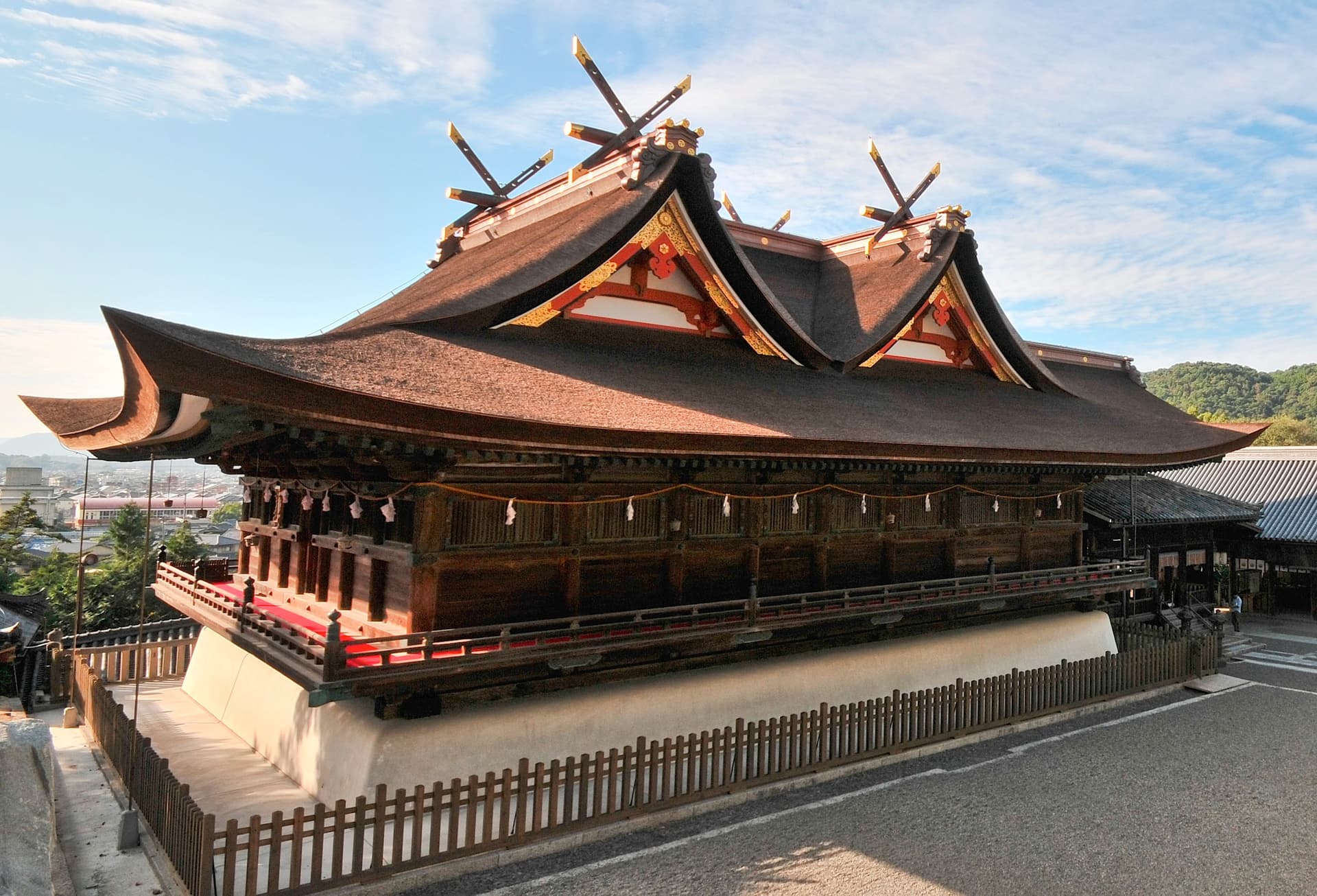
Image of Yokei-ji. Image source · CC-BY-SA-3.0
Visit essentials
A quick read before you go
- Duration
- 60–90 minutes including walking the sub-temple ring; up to two hours during seasonal events.
- Access
- From JR Otomi Station on the Akō Line, about 20 minutes' walk plus an uphill approach to the…
Overview
Yokei-ji is one of the few surviving multi-temple complexes in the Setouchi region, a hilltop precinct where six sub-temples (tatchū) cluster around a central main hall and Yakushi-dō. Founded in 749 CE as Hi-machi-yama Nichirin-ji and renamed during the Muromachi period, it has carried Tendai practice through nearly thirteen centuries of changing patronage, fires, and slow rebuilding. Ueterasan means 'mountain of the temple-on-top'; the climb separates the precinct from surrounding farmland.
Its primary devotion is to Senju Kannon, a Thousand-Armed Avalokiteśvara whose statue is kept hibutsu and shown only at multi-decadal intervals. The most recent opening was in November 2012, described by pilgrims who timed their visits as a once-in-a-generation encounter with concealed presence. At other times, visitors walk among the sub-temples, look across Setouchi farmland to the Inland Sea, and meet cherry canopy in early April or lotus blooms and night illuminations in summer.
Arriving from Saidai-ji four kilometres east, pilgrims often say this second station is where the Chūgoku 33 walk finds its rhythm: small enough to inhabit, complex enough to reward slowness. Six tatchū survive from a once-larger 7+13 sub-temple system. Each is its own enclosed practice, so moving among them resembles walking through a small monastic city rather than visiting one building.
Why this place is sacred
Yokei-ji's thinness is partly geographical and partly temporal. The hilltop site stands seventy metres above the surrounding farmland, providing visual and acoustic separation from worldly traffic — even on busy festival days, the precinct keeps its quiet. Thirteen centuries of continuous monastic life have shaped both the buildings and the soil. The Senju Kannon hibutsu, shown only every thirty-three years, deepens the sense of a sacred presence that is at once continuously near and rarely visible.
Within Tendai understanding, the hilltop placement enacts the principle that 'this mountain is the Pure Land' — practising Kannon devotion atop Ueterasan is itself a microcosmic ascent into Avalokiteśvara's compassionate realm.
Established as one of the Bizen 48 temples reputedly founded by Hōon Daishi in the mid-eighth century, Yokei-ji served as a regional Mahayana outpost bringing structured Buddhist practice to the rural Setouchi area. Its mountain placement followed the period's preference for 'this-world Pure Land' siting, where the temple precinct is itself read as a sacred landscape.
After centuries of growth into a multi-temple complex of seven main and thirteen subordinate halls, Yokei-ji passed through the Muromachi reorganisation that gave it its present name and Tendai affiliation. Patronage from the Urakami, Ukita, and Edo-period Ikeda clans sustained the precinct through repeated fires and rebuilds. The 1981 establishment of the Chūgoku 33 Kannon Pilgrimage placed Yokei-ji as #2, integrating the surviving six-tatchū cluster into a modern five-prefecture pilgrimage circuit.
Experience and orientation
Approach the precinct on foot from JR Otomi Station — about twenty minutes of level walking, then a short uphill stretch onto the hill itself. The first sub-temple appears among trees before the main hall comes into view. From this point on, the walking is as much practice as transit: each tatchū has its own enclosed garden, its own small Buddhist hall, its own sense of self-containment within the larger precinct.
The central main hall houses the concealed Senju Kannon. The Yakushi-dō nearby holds a seated Yakushi Nyorai recognised as a major cultural property. Cherry blossoms canopy the precinct in early April; in summer, lotus blooms and evening illuminations transform the same paths into a different register of practice.
Visitors looking outward from the hill see the patchwork of Setouchi farmland and, on clear days, the Inland Sea horizon — a view that has shaped the temple's self-understanding as a vantage onto both worldly and bodhisattva realms.
Begin at the main hall to face the concealed honzon, then walk the loop that connects the surviving sub-temples. Allow time at the Yakushi-dō and at any tatchū whose gates are open. Sixty to ninety minutes is enough; longer if you have arrived during a seasonal event.
Context and lineage
Temple tradition credits Hōon Daishi (Hōon Hōshi) with the founding of forty-eight Buddhist temples across Bizen province in the Tenpyō era; Yokei-ji, then called Hi-machi-yama Nichirin-ji, was among them. The traditional founding date is 749 CE. The Muromachi-period rename to Yokei-ji corresponds to the temple's formal Tendai affiliation, after which the multi-tatchū structure expanded under successive medieval patrons.
Tendai-shū. The temple's original affiliation likely lay closer to the early Bizen-region Buddhist mix; the formal Tendai identity dates from the Muromachi period and connects Yokei-ji to the broader Mt. Hiei monastic tradition through subsequent reorganisations.
Traditions and practice
Tendai daily services include sutra recitation and offerings at the main hall. The Senju Kannon kaihi, when it occurs, draws pilgrims from across Japan; the most recent opening was November 2012, with the next traditionally expected at multi-decadal intervals. Yakushi Nyorai biannual public viewings provide more accessible encounter with the temple's other principal image.
Pilgrim hospitality and goshuin issuance run through the year. Seasonal events include cherry blossom celebration in early April, summer lotus blooms with night illuminations, autumn maples in November, and various Tendai liturgical observances tied to the lunar-Buddhist calendar.
Walk the precinct slowly. Light incense at the main hall facing the concealed Senju Kannon, pause at the Yakushi-dō, and visit any open tatchū. Receive the goshuin as a record of arrival. If timing aligns, plan a return visit during a seasonal event or a scheduled hibutsu opening.
Tendai-shū Buddhism
ActiveYokei-ji has carried Tendai practice since the Muromachi-period rename from Hi-machi-yama Nichirin-ji. As a hilltop monastic complex, it preserves the kyō-zan-buji form — a multi-temple sacred mountain — which is increasingly rare in modern Japan.
Chūgoku 33 Kannon Pilgrimage
ActiveYokei-ji is Temple #2 of the modern Chūgoku 33 Kannon circuit established in 1981/1982. Pilgrims ascend Ueterasan after departing Saidai-ji, and the second station's hilltop atmosphere often sets the contemplative tone for the rest of the route.
Perspectives and open questions
Yokei-ji can be read as a regional Tendai monastic complex, as a Bizen-48 inheritor whose founding tradition links it to eighth-century mission work, and as a Chūgoku 33 station whose hilltop placement gives the pilgrimage its first taste of mountain temple form.
Scholarly perspective
Japanese Buddhist scholarship treats Yokei-ji as a genuine mid-Heian-into-medieval Tendai temple complex of the Bizen region. The present six-tatchū structure is understood as a remnant of a once-larger 7+13 sub-temple system. The Hōon Daishi founding tradition is regarded as a regional devotional narrative rather than archaeologically verified history.
Living and traditional perspectives
Within the Hōon Daishi tradition, Yokei-ji is one of forty-eight eighth-century outposts in a missionary project to bring Mahayana Buddhism into the Setouchi region. The hilltop siting is read as a deliberate choice — placing Kannon literally above the world the pilgrim has just left.
Alternative interpretations
In Tendai understanding, the hilltop placement enacts the principle that this very mountain is the Pure Land. Practising Kannon devotion at Ueterasan becomes a microcosmic ascent into Avalokiteśvara's compassionate realm; the climb itself is part of the practice, not a preparation for it.
Open questions
Pre-Buddhist sacred history of Ueterasan likely existed but is unrecorded. Original Hōon-Daishi-period structures have been lost to fire and rebuilding; the surviving fabric is mostly medieval and Edo-period.
Plan your visit
Access and arrival
From JR Otomi Station on the Akō Line, about 20 minutes' walk plus an uphill approach to the precinct. By car, paid parking near the main hall.
Standard accommodation in Setouchi or Okayama City (~20 minutes by train). Pilgrim-oriented stays are limited; most walking pilgrims base in Okayama and day-trip to the second station.
Respectful visit
Modest, covered clothing with sturdy walking shoes. Layers help in winter at this exposed hilltop site.
Permitted in the outer precinct; respect signs near the hibutsu sanctum and during services.
Saisen at the main hall, incense and candles at appropriate stands, pilgrim stamp fee at the goshuin office.
Honzon Senju Kannon ordinarily not visible — public openings only at multi-decadal intervals | Some sub-temples may be closed to general visitors | Quiet expected during scheduled services
The honzon hibutsu is ordinarily not visible — verify with the temple before planning a visit around an opening. Some sub-temples may have private practice schedules that limit access; respect any closed gates. The hilltop approach involves a walking climb.
Current practical details
Address
1187 Okuchō Kitashima, Setouchi, Okayama 701-4232, Japan
Phone
Hours
Hours, fees, and access can change — verify on the official source before you travel. Practical details last checked Jun 2026.
Location
Map loads as you approach this section.
Pilgrim reflections
A portrait of encounter, not a score
Pilgrims describe what they felt, how present they could become, and whether the place would shape a journey. There are no stars and no ranking of traditions.
No reviewed reflections yet
The first pilgrims can help describe the character of being here.
Share a reflection
Available after an account-backed “Been there.” Every reflection is reviewed before publication.
Nearby sacred places
Explore other sacred places in the region. Proximity does not establish access or travel time; check each place’s guidance.



References
Sources consulted for this page. Source categories describe the publication, not a guarantee that every claim is verified. Traditional accounts and outside interpretations may differ.
- 01天台宗上寺山餘慶寺 official site — Yokei-ji templeofficialTemple's own pages on history, sub-temples, treasures
- 02上寺山 餘慶寺について — Yokei-ji templeofficialFounding legend, sub-temple structure
- 03餘慶寺 - Wikipedia — Wikipedia (Japanese)academicFounding 749, Hōon Daishi, Bizen 48, Edo-period Ikeda patronage
- 04Ueterasan: Yokeiji Temple — Visit Setouchi (Setouchi DMO)guideEnglish overview, Yakushi treasure, seasonal features
- 05Chūgoku 33 Kannon Pilgrimage - Wikipedia — WikipediaacademicPilgrimage chronology
- 06Day 2 — Yokeiji Temple in Okayama — Tali Landsman blog (Chūgoku 33 Kannon walking pilgrim)spiritualFirst-person pilgrim account; useful for atmosphere only
Pilgrim glossary
- Honzon
- The principal Buddhist deity enshrined as a temple's central object of worship.
- Kannon
- The bodhisattva of compassion, central to many East Asian pilgrimage routes.
- Bodhisattva
- An enlightened being who postpones full nirvana to help others toward awakening.
- Sutra
- A canonical Buddhist scripture, often chanted as part of practice.
- Tendai
- A Japanese Buddhist school based on the Lotus Sutra, foundational to many later traditions.
- Pure Land
- A Buddhist tradition focused on rebirth in Amida Buddha's western paradise through devotional practice.
Share a photo
Help visitors recognize Yokei-ji. Every submission is reviewed before publication.