Kiyama-ji (Kanji-in)
A Shingon mountain temple where Yakushi, Eleven-Faced Kannon, and Inari kami share one sacred summit
Understand sacred places, explore living traditions, and learn how to engage respectfully with Pilgrim Map.
Access has not been verified. Check current local guidance before planning a visit.
Maniwa, Okayama Prefecture, Japan
Read the sources
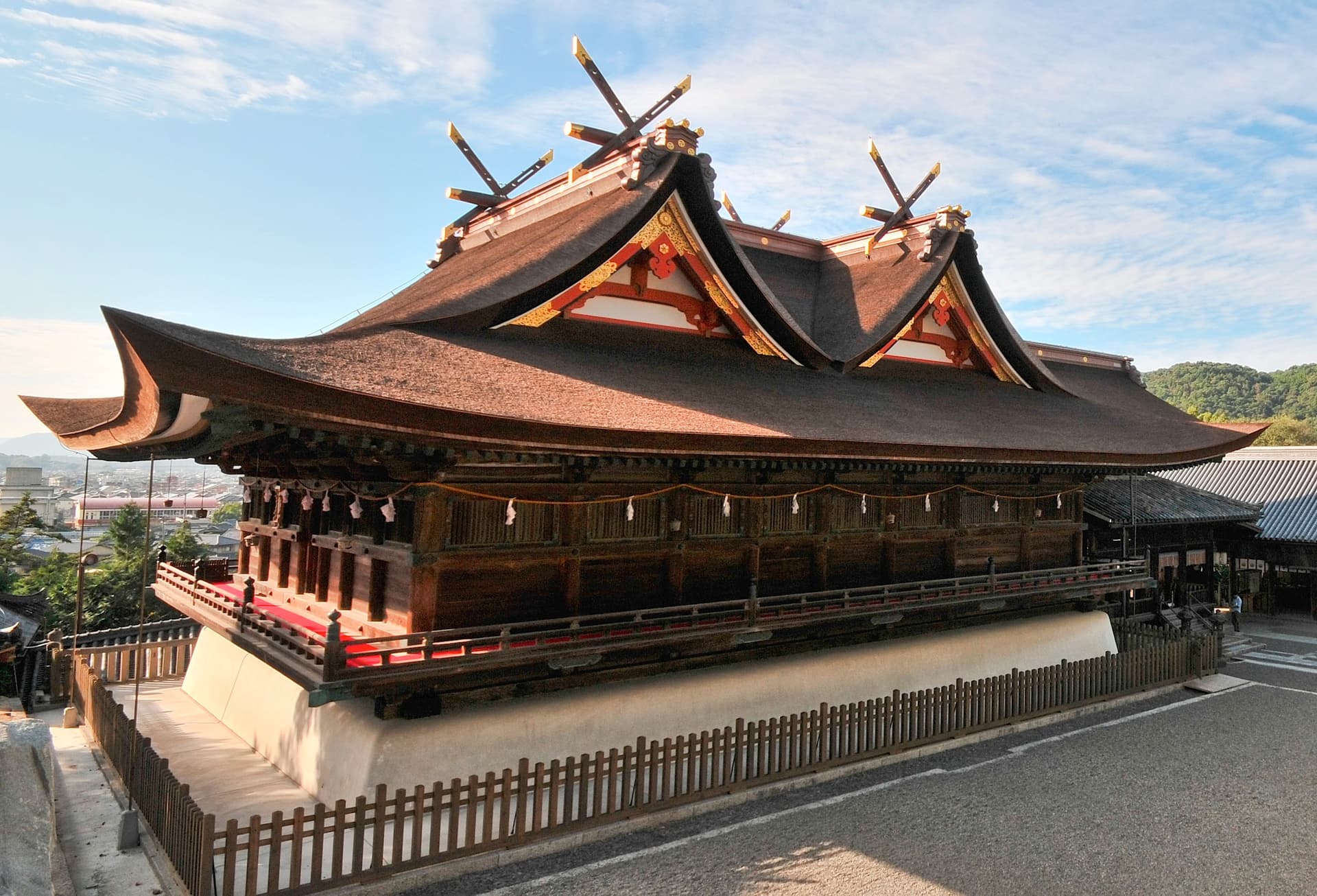
Image of Kiyama-ji (Kanji-in). Image source · CC-BY-SA-3.0
Visit essentials
A quick read before you go
- Duration
- 60–90 minutes for the temple precinct; longer if walking down to the paired Kiyama-jinja.
- Access
- By car from Kuse or Kitabō exits on the Yonago Expressway and connecting national routes.
Overview
Kiyama-ji holds one of the clearer surviving examples of pre-modern Japanese religious life: a sacred mountain where buddhas and kami were understood as two faces of one presence, and where the 1868 Meiji separation order forcibly split the unified 'Kiyama-gū' complex into a Buddhist temple and a Shintō shrine without erasing the underlying religious logic. The mountain name Iōzan ('medicine-king mountain') announces the temple's Buddhist principal, Yakushi Ruriko Nyorai.
The Eleven-Faced Kannon enshrined here is venerated both as a Buddhist bodhisattva and as the honji — the Buddhist essence — of the local kami Zenkaku Inari Daimyōjin.
For the Chūgoku 33 Kannon route, the venerated form is the Eleven-Faced Kannon, and pilgrims chant the Kannon-kyō at the Kannon hall. For the broader temple tradition, Yakushi presides over the medicine-king mountain. For visitors who walk down the mountain road to the paired Kiyama-jinja, the same religious presence appears under different names — kami, fox messenger, bodhisattva — without the visitor being required to choose one frame.
The mountain road can be closed by snow in mid-winter and the precinct keeps its quiet through most seasons. Founding tradition credits Kūkai with following an old woodcutter — later understood to have been Yakushi himself in disguise — to a place suited for a temple. Patronage in the medieval and early-modern periods came from the Akamatsu, Amago, Mōri, Ukita, Mori, and Miura clans in succession; the temple's continuity through political change is itself part of what pilgrims encounter here.
Why this place is sacred
Kiyama-ji's thinness is doctrinal as much as topographical. The mountain itself, in local tradition, is the body of Yakushi Nyorai; walking up the road is therefore not approach but participation. The kami Zenkaku Inari and Ushidō Tennō share the precinct with the Buddhist images — the Meiji separation drew an administrative line through what tradition holds as a single presence.
Pilgrims often note that Kiyama-ji's syncretic character forces a re-thinking of the buddha/kami binary; they leave less certain about the boundary between the two.
Founded according to tradition by Kūkai in 815 CE on a mountain already understood as sacred, Kiyama-ji served as a Shingon esoteric outpost integrating Buddhist liturgy with the existing kami-presence on the summit. The Yakushi devotion gave the mountain its name; the Eleven-Faced Kannon enshrinement provided a compassionate counterpart.
Through the medieval and Sengoku periods, Kiyama-ji passed through the patronage of multiple regional clans. Edo-period support from the Mori and Miura lords funded restorations. The Meiji shinbutsu bunri-rei of 1868 forcibly split the unified Kiyama-gū into Kiyama-ji and Kiyama-jinja, but the religious continuity persisted through informal practice on both sides. The 1981 establishment of the Chūgoku 33 Kannon Pilgrimage placed Kiyama-ji as #4.
Experience and orientation
Drive up from Kuse or Kitabō on local roads — the approach winds through forest before opening onto the precinct just below the summit. Public transport is limited; most pilgrims combine rail to Kuse Station with a taxi for the final leg. Snow can close the road in mid-winter; verify with the temple if travelling between December and February.
Inside the precinct, the main hall holds Yakushi Ruriko Nyorai. A separate hall houses the Eleven-Faced Kannon — the venerated form for Chūgoku 33 pilgrims. The Zenkaku Inari Daimyōjin enshrinement, with its small fox imagery and red torii, sits within the broader temple precinct in a way that resists the post-Meiji separation of categories. Walk slowly.
Light incense at the main hall, chant the Kannon-kyō at the Eleven-Faced Kannon hall, and offer at the Inari shrine if the practice fits your inclination. The temple's English-language page indicates 24-hour pilgrim reception, though most practical visits happen in daylight.
Begin at the main hall facing Yakushi, then walk to the Eleven-Faced Kannon hall and on to the Zenkaku Inari shrine. Receive the goshuin at the temple office. Sixty to ninety minutes is comfortable; longer if combining with the paired Kiyama-jinja down the mountain.
Context and lineage
Kūkai is said to have been guided up the mountain by an old woodcutter who pointed out a place suited for a temple. The woodcutter, in the founding narrative, was later understood to have been Yakushi Ruriko Nyorai in disguise, sanctifying the spot with his own presence. The 815 CE founding date is traditional; the site's pre-Buddhist sacred history is unrecorded but likely earlier.
Kōyasan Shingon-shū bekkaku honzan (special head temple). Within Shingon, Kiyama-ji belongs to the broader Mt. Kōya monastic system; the shinbutsu-shūgō logic that pairs Buddhist and Shintō presences is a regional inheritance the temple has actively preserved.
Traditions and practice
Daily Shingon liturgy includes Yakushi services and Eleven-Faced Kannon recitations. Goma fire rites are performed for protective and purificatory ends. Inari devotion at the Zenkaku Inari Daimyōjin shrine continues a tradition older than the Meiji separation, with rice and abura-age (fried tofu) offered in folk practice alongside the standard Buddhist saisen.
Pilgrim reception, goshuin issuance, and eternal-memorial (eitai kuyō) services run year-round. The temple participates in both the Chūgoku 33 Kannon pilgrimage and continued Inari devotional cycles. Major Inari festivals in early February (hatsu-uma) draw worshippers.
Walk slowly. Light incense at the main hall facing Yakushi, chant or read a passage of the Kannon-kyō at the Eleven-Faced Kannon hall, and pause at the Zenkaku Inari shrine. Receive the goshuin. If walking the syncretic complex, continue down to Kiyama-jinja for the paired shrine experience.
Kōyasan Shingon-shū Buddhism
ActiveFounded by Kōbō Daishi (Kūkai) according to temple tradition, Kiyama-ji is one of the bekkaku honzan (special head temples) of the Kōyasan branch. Buddhist principal: Yakushi Ruriko Nyorai (the medicine-king buddha, giving the mountain its name Iōzan). Eleven-Faced Kannon is enshrined as the honji of the local kami and is the venerated form for the Chūgoku 33 Kannon route.
Shinbutsu-shūgō (Kami-Buddha Syncretism)
ActiveKiyama-ji preserves a living shinbutsu-shūgō logic in which Zenkaku Inari Daimyōjin and Kiyama Ushidō Tennō (the kami) and Yakushi Nyorai with Eleven-Faced Kannon (the buddhas) are understood as two faces of the same sacred presence. Historically the entire complex was 'Kiyama-gū' until forcibly split in 1868.
Chūgoku 33 Kannon Pilgrimage
ActiveKiyama-ji is Temple #4 of the modern Chūgoku 33 Kannon circuit. The Eleven-Faced Kannon is the venerated form for pilgrims, even though the broader temple honzon is Yakushi.
Perspectives and open questions
Kiyama-ji can be read as an authentic Heian-foundation Shingon temple, as a surviving shinbutsu-shūgō complex preserving a pre-Meiji religious logic, or as a Chūgoku 33 station whose syncretic character resists the standard binaries of Japanese religious classification.
Scholarly perspective
Japanese religious-studies scholarship treats Kiyama-ji as an authentic Heian-foundation Shingon temple with strong Edo-period documentation. The shinbutsu-shūgō structure is academically significant as a partly preserved pre-Meiji configuration; the 1868 separation order forcibly split the complex into temple and shrine, but the underlying ritual logic persisted in informal practice on both sides.
Living and traditional perspectives
Mountain religion (sanga shinkō) reads Iōzan as Yakushi's body. Inari devotion frames the white fox as messenger of the kami; Buddhist devotion frames the same form as the local manifestation of the Eleven-Faced Kannon's compassion. The two readings are not in competition but in mutual recognition.
Alternative interpretations
In Shingon mikkyō, the medicine-king buddha and the eleven-faced bodhisattva together cover physical healing and karmic-emotional purification. Kiyama-ji is therefore a 'whole-body' sacred site — the mountain itself the body of Yakushi, the Kannon hall the seat of compassion, the Inari shrine the messenger network connecting the visible and invisible.
Open questions
Whether early Heian pre-Buddhist mountain worship existed at Iōzan is likely but unrecorded; original 815-period structures remain unverified archaeologically. The continuity of the syncretic tradition through the 1868 separation is documented but partial.
Plan your visit
Access and arrival
By car from Kuse or Kitabō exits on the Yonago Expressway and connecting national routes. Public transport: rail to Kuse Station, then taxi recommended. The temple is described in tourism literature as a remote mountaintop site well north of Okayama.
Limited accommodation in Maniwa and surrounding villages. Most pilgrims base in Tsuyama City (~60 minutes by car) or in onsen villages near Hiruzen plateau. Pilgrim-oriented stays are limited; verify ahead in winter when snow can complicate logistics.
Respectful visit
Mountain-appropriate clothing with warm layers in winter and sturdy shoes year-round.
Outer precincts permitted; check signage near the Inari kami enshrinement and inner Buddhist sanctum.
Saisen, incense at the Buddhist halls; rice or abura-age at the Inari shrine in folk practice.
Snow may close approach roads in mid-winter — verify before driving | Quiet expected at Buddhist services and Inari festival rites | Inner Buddhist sanctum may be closed outside scheduled openings
Photo and visitor etiquette around the kami enshrinement areas requires attention; the syncretic logic should not be misrepresented as 'just a temple' or 'just a shrine.' Mountain road can be snowy in winter; check conditions in December–February before driving.
Current practical details
Address
1212 Kiyama, Maniwa, Okayama 719-3142, Japan
Phone
Hours
Hours, fees, and access can change — verify on the official source before you travel. Practical details last checked Jun 2026.
Location
Map loads as you approach this section.
Pilgrim reflections
A portrait of encounter, not a score
Pilgrims describe what they felt, how present they could become, and whether the place would shape a journey. There are no stars and no ranking of traditions.
No reviewed reflections yet
The first pilgrims can help describe the character of being here.
Share a reflection
Available after an account-backed “Been there.” Every reflection is reviewed before publication.
Nearby sacred places
Explore other sacred places in the region. Proximity does not establish access or travel time; check each place’s guidance.



References
Sources consulted for this page. Source categories describe the publication, not a guarantee that every claim is verified. Traditional accounts and outside interpretations may differ.
- 01Kōyasan Shingon-shū bekkaku honzan Kiyama-ji — Kiyama-ji temple official siteofficialTemple's own English page
- 02木山寺 | 中国観音霊場 — Chūgoku Kannon Reijō-kaiofficialPilgrimage council page
- 03醫王山 木山寺 — Maniwa City TourismofficialLocal tourism overview
- 04Kiyama Shrine in Maniwa City — Okayama Prefecture Official Tourism GuideguideDiscusses sister Kiyama Shrine and the maneki-neko tradition
- 05木山寺 - Wikipedia — Wikipedia (Japanese)academicFounding 815 by Kūkai, Meiji-era separation from Kiyama Shrine, syncretic Inari cult
- 06木山寺 — okayama-kanko.jpguideSite description
Pilgrim glossary
- Kannon
- The bodhisattva of compassion, central to many East Asian pilgrimage routes.
- Bodhisattva
- An enlightened being who postpones full nirvana to help others toward awakening.
- Torii
- The traditional Japanese gate marking the entrance to a Shinto sacred area.
- Shingon
- An esoteric Japanese Buddhist school emphasizing ritual, mantra, and mandala practice.
Share a photo
Help visitors recognize Kiyama-ji (Kanji-in). Every submission is reviewed before publication.