Hattusha
Capital of the forgotten empire—where 1,000 gods lived inside the city walls
Understand sacred places, explore living traditions, and learn how to engage respectfully with Pilgrim Map.
Access has not been verified. Check current local guidance before planning a visit.
Çorum, Turkey
Read the sources
Visit essentials
A quick read before you go
- Duration
- 2–3 hours for Hattusha alone; half a day including Yazılıkaya; full day with the Boğazkale…
- Access
- Located near Boğazkale village, Çorum Province, approximately 210 km east of Ankara (c.
Overview
Hattusha occupies rocky ridges and deep valleys 210 km east of Ankara, preserving a civilization that ruled from the Aegean coast to the upper Euphrates. Its power brought Ramesses II to terms after Kadesh and produced the oldest surviving written peace treaty.
Yet the Hittites were recovered only within the last century and a half: French explorer Charles Texier encountered the unidentified ruins in 1834, and Hugo Winckler's 1905–1906 excavation uncovered 30,000 tablets spanning diplomacy, ritual, and myths of storm gods and serpents.
This was not merely a capital but an earthly reflection of cosmic order. Thirty temples were understood as real divine dwellings whose gods required food, clothing, and ceremony. The king's primary function was not warfare but priestly mediation, overseeing more than 200 annual festivals for a pantheon of over one thousand gods.
Hattusha's sudden end around 1200 BCE, amid the collapse that also destroyed Mycenae, Ugarit, and Troy, leaves one of ancient history's great questions: how did such complexity simply stop?
Places within this site
Why this place is sacred
The Hittite understanding of what a city was for differs fundamentally from most modern assumptions. Temples in Hattusha were not primarily places of worship by congregation; they were houses of the gods, maintained by specialist priests whose daily work was the feeding, bathing, clothing, and ritual care of divine statues.
The texts recovered from the archive are minutely specific: what time the god's morning meal was served, in what vessels, how the sanctuary was swept, who was permitted to enter and under what conditions of ritual purity. The gods were understood to be genuinely present, capable of anger if neglected, and essential to the order of both cosmos and empire. When this system was functioning, Hattusha existed in a state of sustained sacred attention that has no direct modern parallel.
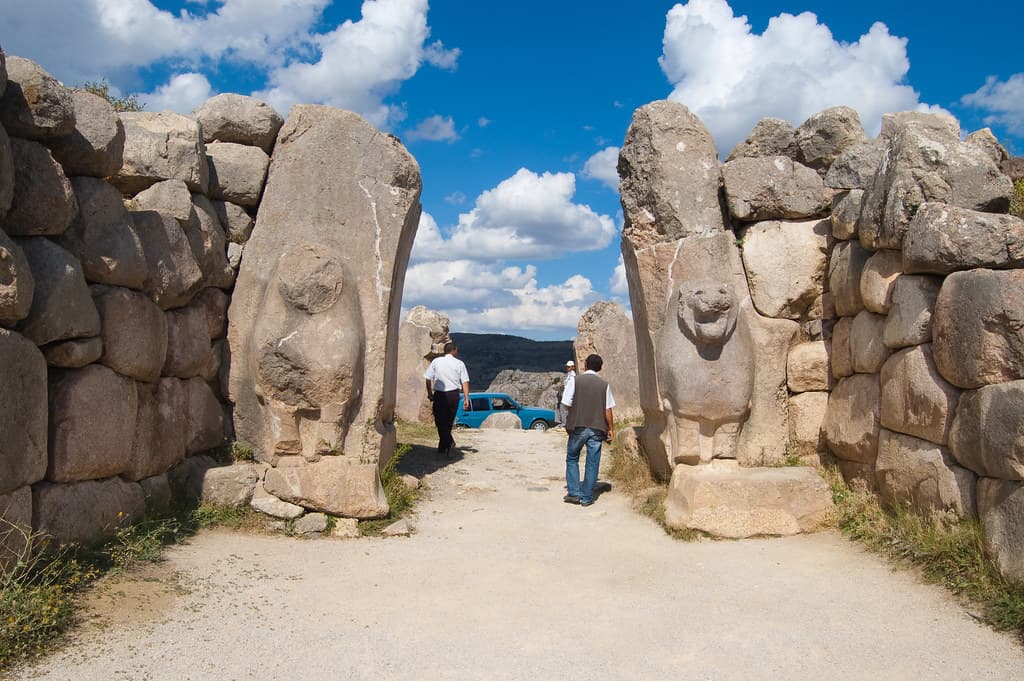
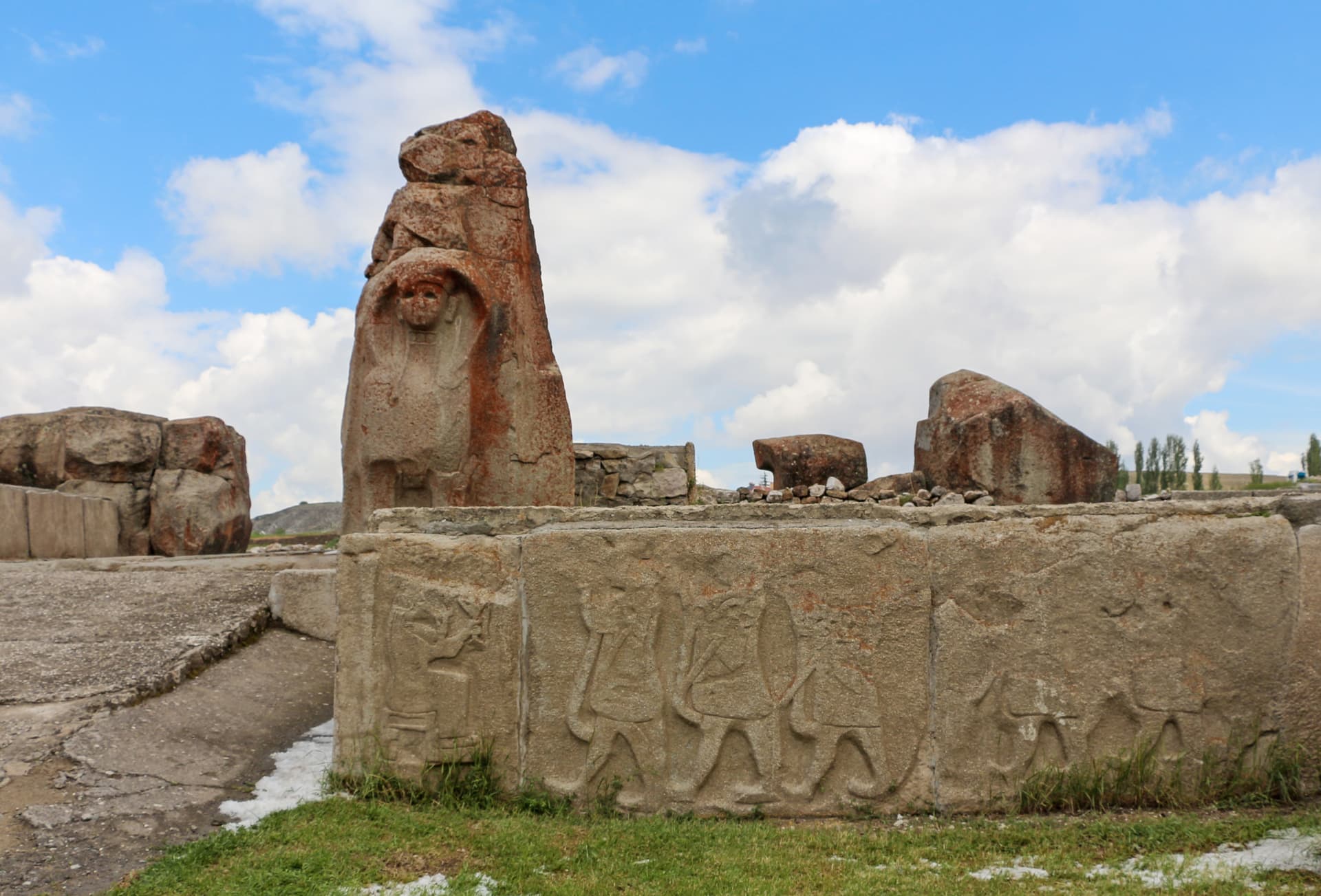
The Lion Gate and the Sphinx Gate—massive thresholds with guardian figures carved from the local stone—were not decorative; they were functional boundaries between the city's sacred interior and the profane world outside. To pass through them was to enter a space governed by different rules.
The king's own status was permanently charged with sacral obligation: his every public act was a religious act, and his failures of ritual propriety could, in the Hittite understanding, bring plague, famine, or defeat upon the entire people. This theology of perpetual divine responsibility, documented in extraordinary detail in the cuneiform archive, gives Hattusha a quality that persists even now: you are walking through the ruins of a civilization for whom the world was constantly and urgently sacred.
Capital city of the Hittite Empire, functioning simultaneously as political administration center, royal palace complex, and sacred precinct housing over thirty temples. The city was understood as the earthly reflection of divine cosmic order.
From pre-Hittite Hattian settlement to Hittite capital from c. 1650 BCE through multiple expansions by successive kings to peak extent under Tudhaliya IV (13th century BCE). Destroyed and abandoned c. 1200 BCE during the Late Bronze Age Collapse. Rediscovered by Texier in 1834; cuneiform archive excavated by Winckler from 1905; systematic excavation by German Archaeological Institute from 1906 to present.
Experience and orientation
The standard visitor circuit covers approximately 5 km, passing through the Great Temple (Temple I) precinct, ascending to the Lion Gate, continuing along the ridge to the Sphinx Gate and the subterranean postern tunnel, then returning past the Royal Palace mound (Büyükkale). Each section of this circuit demands something different from attention. At the Lion Gate, pause.
The limestone lions on either side of the gateway—their heads turned outward to face the approach—were carved by people who understood guardianship as a physical, spatial act. The gate is not ornamental; it is a threshold. Enter it deliberately. The postern tunnel at the southern wall is one of the site's most visceral experiences: a corbel-vaulted passage running 70 meters beneath the earth, through which troops could emerge outside the walls in a surprise sortie.
Crouch into it and walk its length. The corbelled ceiling has held for 3,200 years. The Great Temple precinct is the emotional center of the site. The main sanctuary building measured 42 × 65 m and was surrounded by an elaborate complex of storage magazines. The two granite basins in the courtyard—brought from great distances because granite was ritually significant and locally absent—still rest in their original positions.
At the Royal Palace mound, the scale of Hittite administrative ambition becomes legible: this was a bureaucracy that controlled an empire from the Anatolian highlands with a system of cuneiform records so complete that we can read, thirty centuries later, about a missing loaf of bread from a divine dinner.
The site circuit begins at the ticket office near the Great Temple, proceeds counterclockwise to cover the main monuments, and ends approximately where it began. Allow a full morning or afternoon; the terrain is steep in places. Yazılıkaya rock sanctuary (2 km northeast) should be visited in the same half-day or day trip.
Context and lineage
The site was occupied by the indigenous Hattian people before the Indo-European Hittites arrived in Anatolia, and the earlier Hattian culture left deep traces in Hittite religion, including the name of the capital itself. King Labarna established Hattusha as the Hittite capital around 1650 BCE, beginning a tradition of royal building and expansion that would continue for four centuries.
Major construction phases under Suppiluliuma I (14th century BCE) and Tudhaliya IV (13th century BCE) brought the city to its greatest extent, with the Upper City—containing at least thirty temples—added in the empire's final flourishing. The relationship between Hattusha and the nearby rock sanctuary at Yazılıkaya was intimate: Yazılıkaya was understood as the city's outer sacred precinct, the place where the divine assembly gathered at the New Year and where deceased kings were commemorated.
The city was burned and abandoned around 1200 BCE, the same period that saw the destruction of Mycenae, Ugarit, and Troy. The causes—invasion by the Sea Peoples, internal revolt, climate-driven famine, or some combination—remain debated.
Hattian indigenous culture → Hittite Empire (c. 1650–1200 BCE) → Bronze Age Collapse → rediscovery and excavation (19th–20th centuries CE) → UNESCO World Heritage designation (1986)
Labarna
First Hittite king to establish Hattusha as capital, c. 1650 BCE; his name became a royal title used by his successors
Suppiluliuma I
Greatest military and diplomatic ruler of the Hittite Empire (14th century BCE); expanded territory to its maximum extent; established Hattusha's dominance over the ancient Near East
Tudhaliya IV
Commissioned the final form of both the Upper City temples and the Yazılıkaya sanctuary (13th century BCE); the king most associated with Hattusha's architectural peak
Charles Texier
French explorer who encountered the ruins in 1834 and produced the first published drawings of the site, initiating Western scholarly awareness of an unknown empire
Hugo Winckler
German archaeologist who excavated the cuneiform archive in 1905–1906, reading tablets in Hittite that revealed the identity and history of the empire
Traditions and practice
The Hittite festival calendar documented in the cuneiform archive lists over 200 annual ceremonies, of which the most important was the spring purulli festival reenacting the Storm God Tarhun's defeat of the serpent Illuyanka—a mythological event understood to have established cosmic order and which needed annual renewal. Temple priests conducted daily services that included morning and evening meals for the deity, clothing changes, and ritual cleaning of the sanctuary, all governed by written protocols.
Oracle consultation used augury (bird flight patterns) and extispicy (examination of animal entrails) to divine divine will. The New Year celebration involved a royal procession from Hattusha to the Yazılıkaya sanctuary, where the divine assembly was understood to gather. Huwasi stones—portable sacred objects representing specific deities—allowed divine presence to be invoked outside the temples.
Annual archaeological excavations by the German Archaeological Institute and Turkish universities. The Boğazkale Museum in the village provides local context. Major finds are displayed at the Museum of Anatolian Civilizations in Ankara, which should be considered an essential companion to any Hattusha visit.
Enter the Lion Gate and pause at the threshold. Face the stone lions on either side—they are positioned to see you as you approach, their gaze outward rather than inward. The Hittites understood gates as charged spaces, guarded by divine or semi-divine presences. To enter deliberately, aware of that charge, is different from simply walking through. At the Great Temple precinct, find the two granite basins in the open courtyard.
They were brought to Hattusha from a considerable distance because granite was ritually necessary and locally unavailable. Someone organized the transport of these stones across significant terrain to ensure the temple had the correct material. Place your hand on one if permitted. The stone was selected, moved, and positioned by people who understood the physical world to be made of theologically significant substances. Walk the postern tunnel beneath the southern wall—crouch through the 70-meter corbelled passage.
The compression and darkness of that underground passage, and the emergence into open air on the far side of the wall, enacts the cosmological movement between worlds that the Hittites built into their greatest sanctuary at Yazılıkaya just 2 km away.
Hittite State Religion
HistoricalHattusha was the religious as well as political capital of the Hittite Empire. Over thirty temples housed the actual presences of the Hittite pantheon's more than 1,000 deities. The Great Temple (Temple I) served the supreme cult of the Storm God Tarhun and Sun Goddess of Arinna. The king's primary role was priestly mediation between the human and divine realms.
Over 200 annual state festivals; purulli spring festival reenacting Storm God's victory over Illuyanka; royal processional to Yazılıkaya for the New Year; daily temple service including feeding, clothing, and ritual care of divine statues; oracle divination through augury and extispicy.
Archaeological Heritage
ActiveSince 1906, the German Archaeological Institute has conducted one of the world's most sustained and significant excavation programs, revealing approximately 30,000 cuneiform tablets and major architectural remains. Hattusha has been a UNESCO World Heritage Site since 1986.
Annual excavation seasons; conservation of structures and reliefs; on-site visitor infrastructure; finds displayed at the Museum of Anatolian Civilizations, Ankara, and the Boğazkale Museum.
Perspectives and open questions
Hattusha has been interpreted through several overlapping frameworks, none fully adequate to the complexity of what the cuneiform archive and the physical ruins together reveal.
Scholarly perspective
Scholars have understood Hattusha as one of the ancient world's great civilizations, equal in diplomatic standing to Egypt and Babylon, operating a sophisticated legal, administrative, and diplomatic system. The Treaty of Kadesh (c. 1259 BCE), negotiated between Hattusili III and Ramesses II after the Battle of Kadesh, is the oldest surviving written peace treaty and is displayed in the United Nations headquarters in New York as an emblem of international diplomacy.
The cuneiform archive has provided scholars with the most detailed picture available of any Bronze Age religious system, including detailed festival protocols, mythological texts (including the Kumarbi Cycle, which may have influenced later Greek Hesiodic mythology), and records of divine service. The Late Bronze Age Collapse and Hattusha's destruction remain among the most significant unsolved problems in ancient history.
Living and traditional perspectives
No surviving tradition maintains continuity with Hittite religious practice. Modern Turkish scholarship increasingly frames the Hittites as part of Anatolian heritage rather than as foreign conquerors, emphasizing the indigenous Hattian substrate that shaped Hittite religion. The Museum of Anatolian Civilizations in Ankara was partly designed to make this continuity legible to Turkish visitors.
Alternative interpretations
The Hittite pantheon of more than one thousand gods—assembled through a theological program of inclusion that absorbed the divine figures of every conquered people—has attracted interest from researchers of comparative mythology and from neo-pagan reconstructionist communities. Some Hittite deities (particularly the Storm God and the Sun Goddess) appear in New Age and reconstructionist religious literature. The cosmic architecture of Hattusha—a city conceived as a sacred diagram of divine order—has drawn interest from researchers of sacred geography.
Open questions
The precise cause of Hattusha's destruction remains debated. The identity of the Sea Peoples who contributed to the Late Bronze Age Collapse is itself a major unsolved question. The full Hittite cuneiform archive has not yet been fully read and translated; new tablets continue to emerge from ongoing excavations. The fate of the Hittite population after the capital's fall—whether dispersal, assimilation into local cultures, or migration—is not clearly established.
Several of the thirty-plus temples identified in the Upper City have not been fully excavated.
Plan your visit
Access and arrival
Located near Boğazkale village, Çorum Province, approximately 210 km east of Ankara (c. 3 hours by car on the E88/D785 highway). Buses run from Ankara to Sungurlu (1.5 hours from Ankara), from which local minibuses and taxis serve Boğazkale (c. 30 km). Organized tours from Ankara are available. Entrance fee approximately €3 for Hattusha; €2 for Yazılıkaya (separate tickets; prices may have changed—confirm before visiting). Visitor center and parking available in Boğazkale. The Boğazkale Museum is in the village.
Mobile phone signal is generally available in Boğazkale village; may be intermittent at some parts of the site circuit.
Boğazkale village (adjacent to the site) has several small hotels and pensions, including the well-regarded Hattusas Pension. Sungurlu (30 km) has more options. Most visitors doing a day trip base in Ankara or Çorum.
Respectful visit
No religious requirements. Sturdy footwear is essential; the terrain includes steep paths, loose stone, and uneven ancient masonry.
Permitted throughout the site.
None appropriate.
Do not climb on ancient walls, gates, or structures. Stay on designated paths. Do not touch carved reliefs. Bring water; there are no facilities at the site itself.
The site terrain is steep and uneven; sturdy footwear is essential. There are no café facilities at the site; bring water. The circuit is approximately 5 km; allow adequate time and physical preparation. The site has no shade in some sections.
Location
Map loads as you approach this section.
Pilgrim reflections
A portrait of encounter, not a score
Pilgrims describe what they felt, how present they could become, and whether the place would shape a journey. There are no stars and no ranking of traditions.
No reviewed reflections yet
The first pilgrims can help describe the character of being here.
Share a reflection
Available after an account-backed “Been there.” Every reflection is reviewed before publication.
Nearby sacred places
Explore other sacred places in the region. Proximity does not establish access or travel time; check each place’s guidance.


References
Sources consulted for this page. Source categories describe the publication, not a guarantee that every claim is verified. Traditional accounts and outside interpretations may differ.
- 01Hattusha: the Hittite Capital - UNESCO World Heritage Centre — UNESCO World Heritage CentreofficialOfficial UNESCO listing with Outstanding Universal Value statement
- 02Hattusha Boğazköy: Explore the Capital of the Hittite Empire — Google Arts & Culture / Turkish Ministry of CultureSource contextOfficial Turkish Ministry of Culture presentation
- 03Hattusa - Wikipedia — Wikipedia contributorsencyclopediaComprehensive historical and archaeological overview
- 04Hattusa: The Ancient Capital of The Hittites — Go Türkiye (Turkish Tourism Authority)officialOfficial Turkish tourism overview
- 05Hattusha - History and Facts — History HitSource contextHistorical context and visitor information
- 06Hattusha: Unesco World Heritage Site Travel Guide — World Heritage SiteofficialUNESCO heritage travel guide
- 07Hattusa: The Lost Capital of the Hittite Empire in North-Central Türkiye — Archaeologyhistory.comSource contextDetailed site overview with history and architecture
- 08Hattusa, Boğazkale, Turkey (2026): The Lost Capital of the Hittite Empire — Nomads Travel GuideguideUp-to-date visitor practical information
- 09Hittite mythology and religion - Grokipedia — GrokipediaencyclopediaOverview of Hittite religious traditions
Share a photo
Help visitors recognize Hattusha. Every submission is reviewed before publication.