Foça Castle
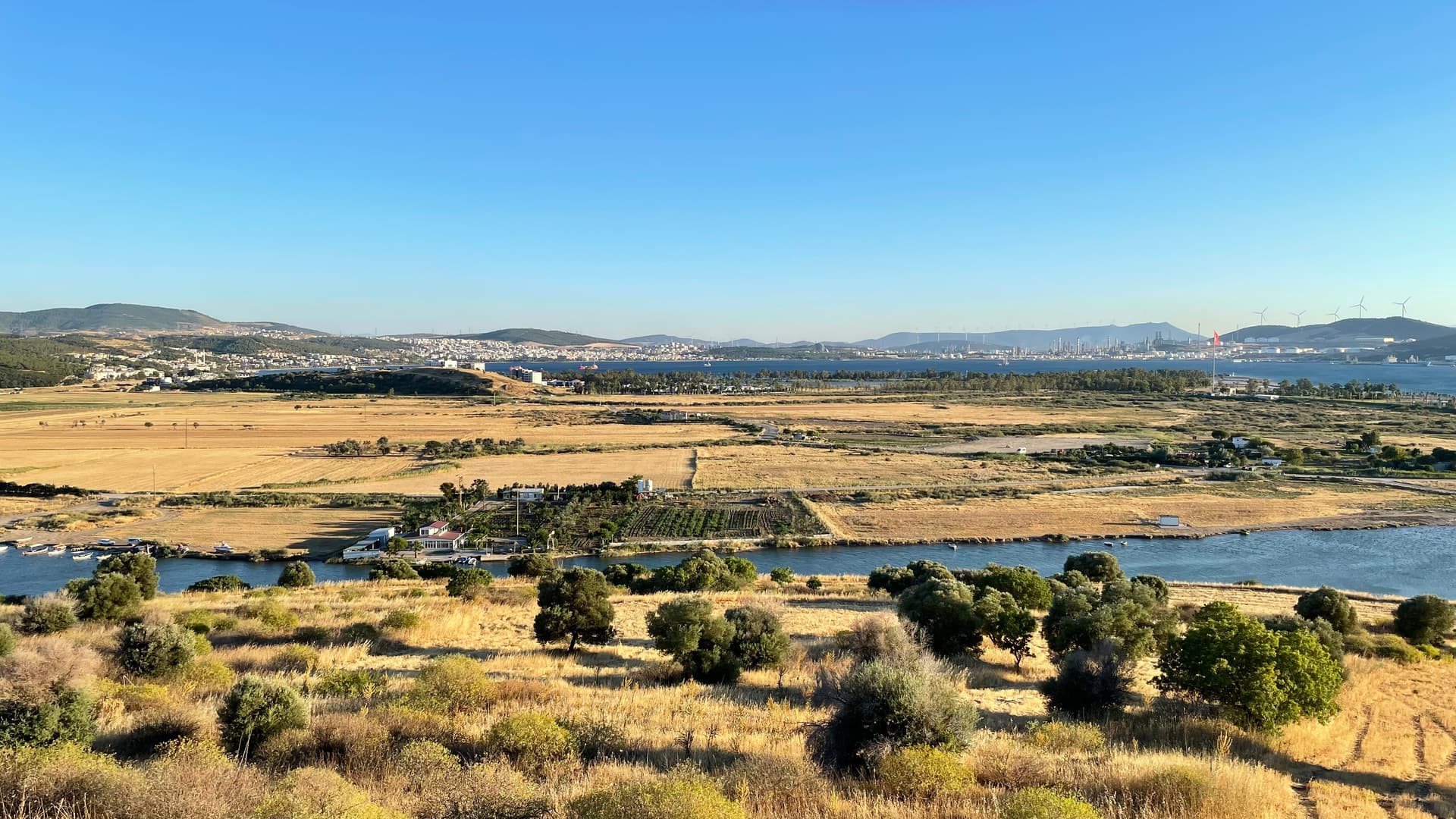
The harbour promontory where Phocaean sailors last saw home before founding Marseille, Nice, and the western Mediterranean
Understand sacred places, explore living traditions, and learn how to engage respectfully with Pilgrim Map.
Access has not been verified. Check current local guidance before planning a visit.
İzmir, Turkey
Read the sources
Visit essentials
A quick read before you go
- Duration
- 1–2 hours for the castle; half a day for castle plus town, harbour walk, and lunch.
- Access
- Foça is 55 km north of İzmir.
Overview
Phocaea was the northernmost and most adventurous of the twelve Ionian cities. Its sailors—the first Greeks to make long Mediterranean voyages—founded colonies that became Marseille, Nice, Aleria in Corsica, and Velia in southern Italy. At the harbour edge, the 6th-century-BC Temple of Athena, built on an older Cybele sanctuary, served departing and returning colonists as spiritual protector and navigational marker. Byzantine Christians later built a castle; Genoese merchants rebuilt it, and Ottoman admiral Silahtar İskender Ağa restored it in 1538–39.
The surviving promontory above an active Aegean fishing harbour holds three thousand years of successive meaning on one rock above the sea.
Why this place is sacred
The sacred quality of Foça's promontory is not architectural but geographical. This particular point of rock at the mouth of the bay has served as a threshold for as long as Phocaea existed: the place where the sea begins, where the known ends and the unknown opens.
For Phocaean sailors in the 7th and 6th centuries BC, standing here before a long voyage to the western Mediterranean — weeks away, in a world without charts of those waters — this was the last familiar ground. Athena's temple, built on the highest point of the promontory, functioned as the city's watching eye: the goddess overseeing departure, promising return, visible from the sea.
The Cybele sanctuary that preceded it drew on a deeper Anatolian instinct about this particular location — threshold places between land and open water have carried sacred significance in this coast's culture for millennia before the Greeks arrived. The layering of subsequent occupations — Byzantine military, Genoese commercial, Ottoman imperial — does not erase this quality but adds to it: every culture that held this coast recognised the promontory's strategic and symbolic primacy and built accordingly.
Standing on the castle walls today, looking out over the Aegean toward the open water, the geography alone is eloquent about why this place mattered.
The promontory served simultaneously as a natural harbour defence, a site for the Temple of Athena (patron goddess and protectress of Phocaean sailors), and the most visible landmark of the city — the first and last sight of home for maritime travellers.
Cybele sanctuary (deep prehistory to at least the Archaic period) → Temple of Athena built 6th century BC on the same site → Byzantine castle 11th–12th century AD → Genoese rebuilding 13th century → Ottoman restoration by Silahtar İskender Ağa 1538–39 → modern restoration 1983 → active heritage site and town landmark
Experience and orientation
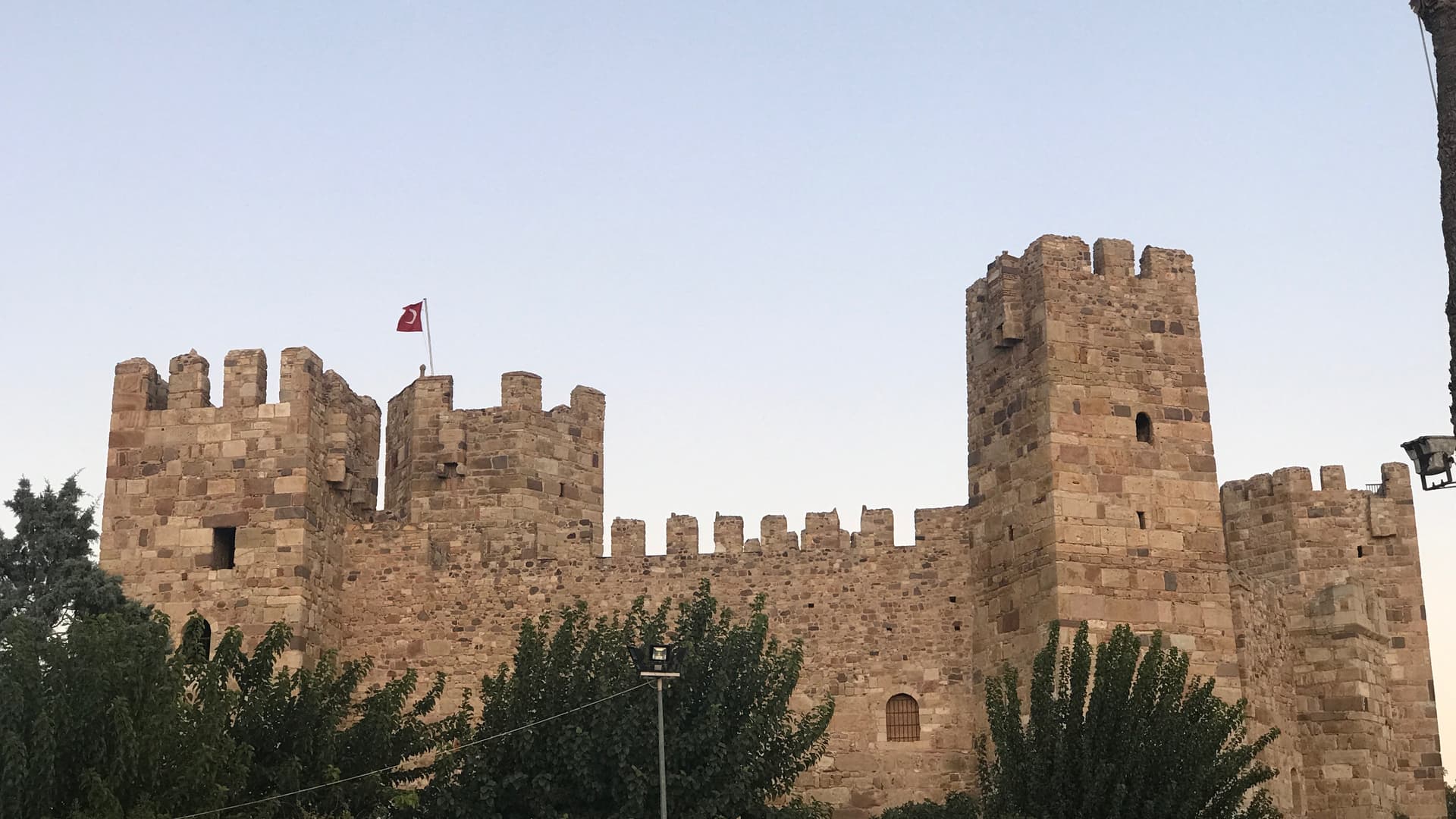
Foça Castle is not a remote ruin but a landmark within a living town — the bay is visible from the walls, fishing boats move below, and the Aegean light on the water is inseparable from the experience. The castle sits on the promontory at the northern end of the harbour, its walls forming the waterfront edge. The five gates structure (Beşkapılar, on the southwestern end) gave the castle its alternative name and are the most architecturally distinctive surviving element.
Walk the perimeter of the walls before entering any interior structures — the relationship between the castle and the bay, the promontory shape, and the views in both directions along the coast establish the geographical logic of the site. Look north toward the open Aegean and understand what Phocaean sailors were facing when they put out from this harbour for western waters. Look south over the bay toward the modern town and understand why this position commanded the entire anchorage.
The interior small museum holds historical artefacts from the site's long occupation — well worth visiting for context on the layered periods. The northernmost point of the promontory, where the Temple of Athena stood, can be identified even where direct architectural evidence is absent: it is the highest and most exposed point, commanding the widest view, the obvious place for a temple visible from the sea.
At the right hour — early morning, or late afternoon when the tourist foot traffic drops — the castle achieves a particular quality of stillness that the busy summer season otherwise dissolves.
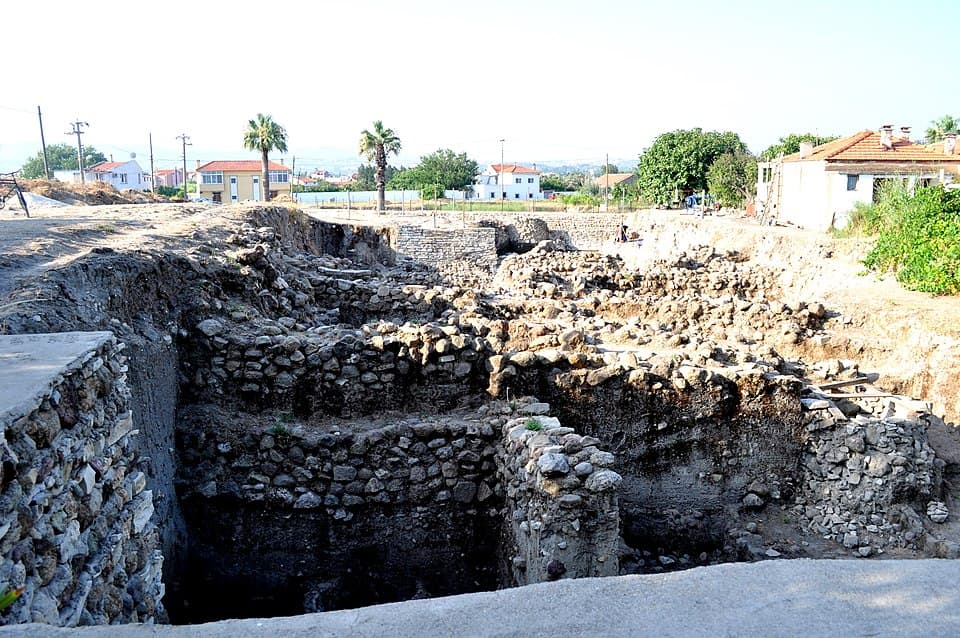
Allow 1–2 hours for the castle; a half-day for the surrounding town, harbour, and any excavation areas visible in the streets. The town of Foça, with its Ottoman-era houses and working fishing harbour, is genuinely worth experiencing as the living continuation of the same site.
Context and lineage
Phocaea was founded by Ionian Greeks in the 10th–9th century BC, according to tradition by colonists from Phocis on the Greek mainland. The city grew into the most far-ranging maritime power of the Ionian Greeks: Phocaean sailors were the first Greeks to open regular trading routes to the western Mediterranean, establishing what became Marseille (Massalia, c. 600 BC), Nice (Nicaea), Aleria in Corsica, and Velia in southern Italy.
Their ships were pentekonters — oared galleys — and their voyages required exceptional skill and courage. The Temple of Athena, built in the 6th century BC, was the oldest known Ionian temple and stood on a site where Cybele had been worshipped before the Greeks arrived, merging the Greek patroness of wisdom and craft with the deep Anatolian tradition of the mountain mother on the same sacred ground.
When the Persian Empire expanded westward, the Phocaeans became famous for their defiance — many chose to abandon their city entirely and sail to found new colonies rather than submit. The castle that stands today was built by Byzantine military engineers, rebuilt by Genoese merchants whose medieval empire of trading posts stretched from the Black Sea to the Atlantic, and restored by the Ottomans in 1538–39 after they consolidated control of the Aegean coast.
Ancient Phocaean city-state with Athena temple on Cybele sanctuary (10th century BC–Persian period) → Byzantine castle (11th–12th century AD) → Genoese trading post castle (13th century) → Ottoman fortress (1538–39) → modern heritage site (1983 restoration)
Traditions and practice
Ancient Phocaean religious practice at the promontory temple combined civic devotion to Athena with the specific needs of a maritime community. Sailors made votive offerings before long voyages — animal figurines, pottery, small bronzes — asking for Athena's protection and promising commemoration on safe return. Civic festivals honoured the goddess as the city's patron, combining sacrifice, procession, and communal feasting.
The temple's architectural terracotta protomes — horse heads and griffons — recovered in excavations suggest a rich visual and decorative programme that matched the Phocaeans' celebrated artistic sophistication. The Cybele sanctuary that preceded the Athena temple drew on the deep Anatolian tradition of the great mother as protectress of fertile land and safe passage — a tradition with roots well before Greek colonisation.
Heritage tourism; occasional cultural events in the castle area. The town of Foça maintains an active fishing community and seasonal tourism economy centred on its natural beauty and ancient history.
Begin at the northern point of the promontory — the likely site of the Athena temple — and look seaward before looking inland. Stand with the open Aegean before you and the harbour behind; understand the site as it functioned for sailors, not as it appears to archaeologists. Walk the full circuit of the accessible walls before entering the museum interior.
The five-gated southern structure is the most architecturally distinctive element; examine the different stone courses to trace the successive building periods from Byzantine through Ottoman. Spend time in the town below the castle — the harbour is alive, the Ottoman-era houses still in use, the sea still the central fact of life here. The continuity between ancient Phocaea's maritime identity and the modern fishing town is one of the site's most affecting qualities.
Ancient Phocaean Athena Worship
HistoricalThe Temple of Athena on this promontory was the oldest known Ionian temple, built in the 6th century BC on an older Cybele sanctuary. It served as patron deity temple and maritime landmark for Phocaea — the city whose colonists founded Marseille, Nice, and the Phocaean western Mediterranean diaspora.
Votive offerings, civic festivals, sailors' dedications before long voyages. The temple's architectural terracotta protomes of horses and griffons have been recovered in excavations.
Multi-period Military and Cultural Occupation
HistoricalThe castle complex documents Byzantine, Genoese, and Ottoman successive occupation — each culture recognising the promontory's strategic primacy and building accordingly.
Byzantine Christian garrison; Genoese mercantile administration; Ottoman military use and restoration (1538–39 by Silahtar İskender Ağa).
Heritage Tourism and Local Cultural Identity
ActiveOn Turkey's UNESCO World Heritage Tentative List since 2013. The castle functions as a local landmark and anchor for Foça's identity as an historically significant Aegean town.
Open-air heritage visits; occasional cultural events; the town's identity as a living community maintains the continuity of the ancient harbour site.
Perspectives and open questions
Foça Castle is interpreted primarily through the lens of Phocaean colonial history and the multi-period architectural layering of the site, but the pre-Greek Cybele sanctuary beneath the Athena temple suggests a deeper sacred geography.
Scholarly perspective
Phocaea is regarded as one of the twelve canonical Ionian cities and as the Greek world's most remarkable maritime colonising power — the city whose diaspora shaped the western Mediterranean. The castle complex preserves layers of Phocaean, Byzantine, Genoese, and Ottoman construction spanning 2,600 years, making it an unusually complete document of strategic occupation of a natural harbour position. The Temple of Athena, as the oldest known Ionian temple, is of significant art-historical and architectural importance.
The site is on Turkey's UNESCO World Heritage Tentative List (2013), and the full extent of the ancient Phocaean temple complex beneath the medieval and Ottoman castle remains archaeologically incompletely documented.
Living and traditional perspectives
For ancient Phocaeans, Athena's temple on the harbour promontory was both spiritual protector and navigational landmark — the goddess who guided their extraordinary colonial enterprise across the Mediterranean, watching over each departure and homecoming. Her presence on the most exposed point of the city made her simultaneously the most visible and the most powerful claim on divine protection.
Alternative interpretations
The presence of a Cybele sanctuary beneath the Athena temple points toward the deep Anatolian roots of this site — the Aegean coast's sacred geography predating Greek colonisation by millennia. The choice to build Athena's temple precisely on Cybele's ground may have been deliberate theological appropriation, or it may reflect a recognition that the most sacred ground was already known.
Open questions
The full extent of the ancient Phocaean temple complex and its relationship to the modern castle footprint has not been fully archaeologically established. How much of the original Athena temple fabric survives beneath the Ottoman and Byzantine structures is unknown.
Plan your visit
Access and arrival
Foça is 55 km north of İzmir. By car: take the İzmir–Çanakkale highway north, exit at the Foça turnoff, follow signs into town; the castle is at the northern end of the harbour. By public transport: buses from İzmir (Bornova and Konak terminals) run regularly to Foça town centre; the castle is a short walk from the harbour bus stop. UNESCO Tentative List since 2013. GPS: 38.6689°N, 26.7508°E.
Foça town has boutique hotels and pansiyons, particularly atmospheric in the Ottoman-era houses near the harbour. İzmir (55 km south) offers the full range of international and budget options. Most visitors either come as a day trip from İzmir or spend one night in Foça.
Respectful visit
No religious dress code. Comfortable walking shoes for the castle's uneven surfaces.
Permitted throughout. The harbour-facing wall offers the best compositions: castle stonework against the Aegean water.
Not applicable.
Stay on accessible paths within the castle. Do not climb structurally compromised sections of wall. The interior museum may have its own entry protocols.
Opening hours for the interior museum may vary seasonally — check locally before planning a visit around it. Summer can be crowded; spring and autumn offer the castle at its most atmospheric.
Location
Map loads as you approach this section.
Pilgrim reflections
A portrait of encounter, not a score
Pilgrims describe what they felt, how present they could become, and whether the place would shape a journey. There are no stars and no ranking of traditions.
No reviewed reflections yet
The first pilgrims can help describe the character of being here.
Share a reflection
Available after an account-backed “Been there.” Every reflection is reviewed before publication.
Nearby sacred places
Explore other sacred places in the region. Proximity does not establish access or travel time; check each place’s guidance.

References
Sources consulted for this page. Source categories describe the publication, not a guarantee that every claim is verified. Traditional accounts and outside interpretations may differ.
- 01Phocaea - LiviusacademicScholarly article on Phocaea's history and significance
- 02Foça Kalesi - Cultural Inventory of TurkeyofficialOfficial Turkish cultural registry entry with UNESCO tentative list information
- 03Foça Castle - WikipediaencyclopediaOverview of castle's multi-period history from Phocaean walls through Ottoman
- 04Phocaea - WikipediaencyclopediaFull history of ancient Phocaea as founding city-state
- 05Foça Castle - Visit İzmirofficialOfficial tourism board entry for the castle
- 06Foça Castle - Castles.nlSource contextCastle structure description and historical layering
- 07The Temple of Athena at PhocaeaSource contextDetails on Temple of Athena, oldest Ionian temple discovered
- 08Foca Castle - Navalia Otel FoçaguideVisitor description from local hotel guide
Share a photo
Help visitors recognize Foça Castle. Every submission is reviewed before publication.