Çandarlı Castle
A Genoese castle on an Aegean promontory, built on the bones of one of the oldest Greek cities in Asia Minor
Understand sacred places, explore living traditions, and learn how to engage respectfully with Pilgrim Map.
Access has not been verified. Check current local guidance before planning a visit.
İzmir, Turkey
Read the sources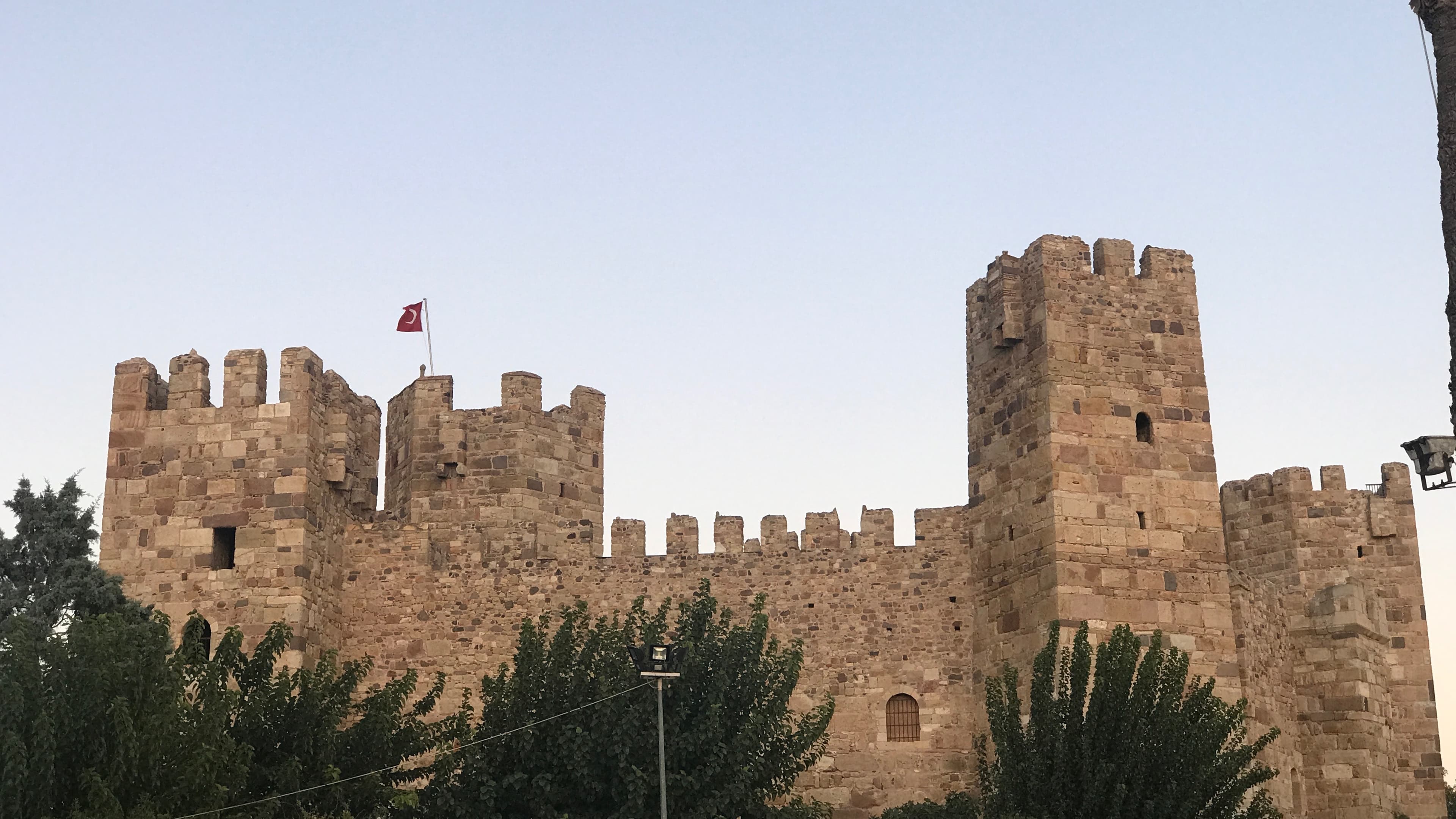
Image of Çandarlı Castle. Image source
Visit essentials
A quick read before you go
- Duration
- 1–2 hours for the castle and a walk through the old town.
- Access
- Çandarlı neighbourhood, Dikili district, İzmir Province.
Overview
Three thousand years of Aegean civilisation meet on the İzmir Province coast. Bronze Age Mycenaean ceramics come from ancient Pitane's necropolis; Pitane was one of eleven cities of the Aeolian Greek colonisation of Asia Minor, followed by Hellenistic and Roman city life. The Republic of Genoa built a harbour castle in the 14th century for its eastern Mediterranean trade network; in the 15th, Grand Vizier Çandarlı Halil Pasha rebuilt it and gave castle and town their enduring name.
Halil Pasha's rectangular castle has four towers, a two-storey inner structure, and walls incorporating 2nd-century BC blocks. Restored from 2009 to 2014, it is a UNESCO tentative-list monument on the Aegean shoreline, embedded among a small resort town's fish restaurants and living Turkish coastal community. Ancient Pitane remains largely unexcavated beneath and around it, with temples, sanctuaries, and civic buildings still mostly underground.
Why this place is sacred
The sacred or contemplative quality at Çandarlı is not concentrated in any single religious event or figure but distributed across the layered history of the place. The castle's walls incorporate stone blocks from Hellenistic construction — the 2nd century BC mortared into a 15th-century Ottoman fortification.
This is visible on close inspection, and it changes the experience of looking at the walls: they are not a 15th-century object but a 28-century object, each stone having passed through multiple phases of civilisation.
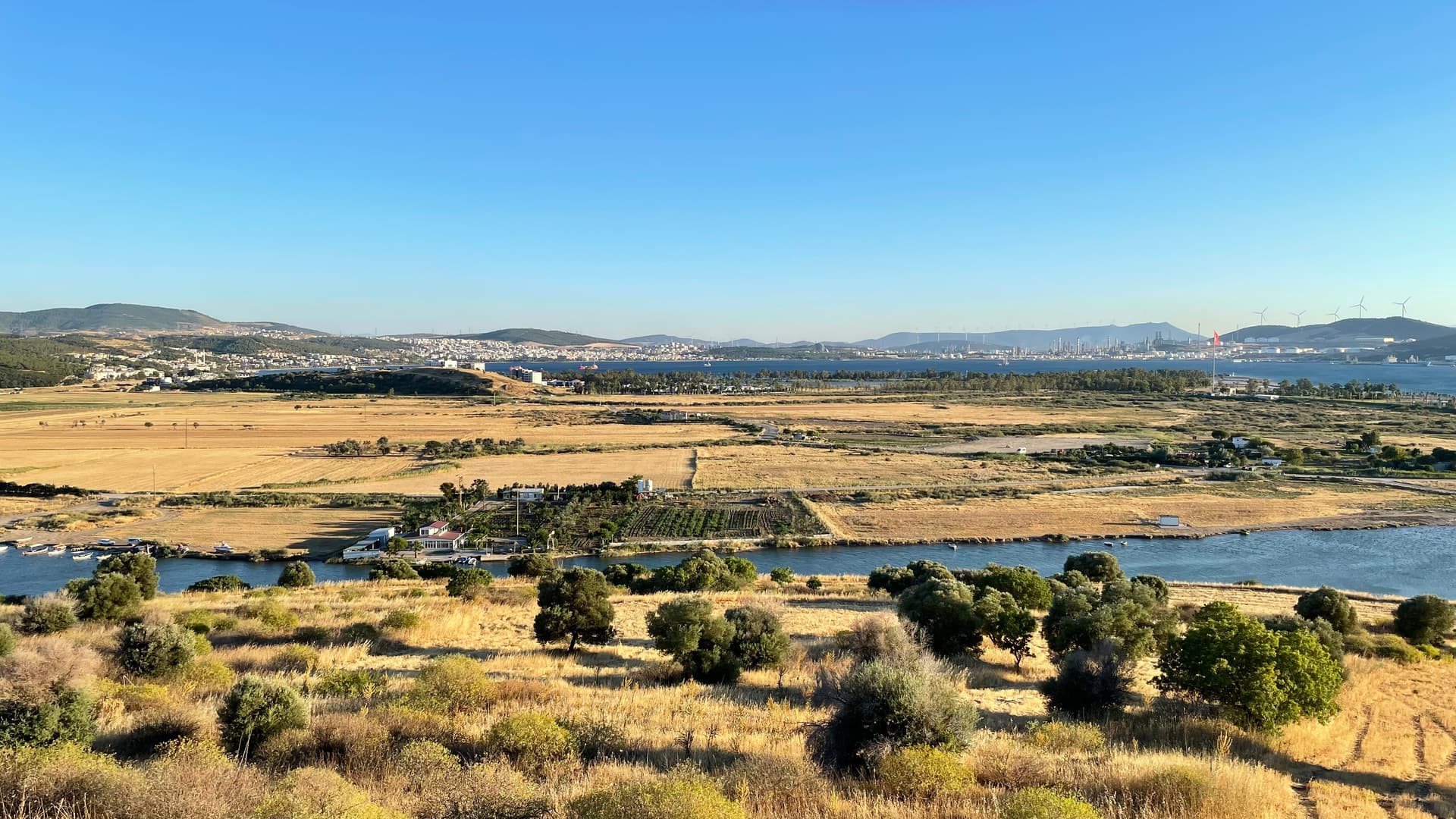
The Aegean waterfront setting adds its own quality. The castle sits where the promontory meets the sea, with views across the bay in multiple directions. Water moves differently around a promontory than along a straight coast; the sense of being surrounded by sea on three sides, visible from the castle's towers, gives the site a liminal character that its builders across all periods clearly understood. Genoese traders, Ottoman officers, Greek colonists before them — all chose this specific point.
Pitane, the Greek city beneath, was one of the original Aeolian settlements — cities established by Greek colonists in the heroic age of maritime expansion. Those cities carried their cults and shrines with them from the Greek mainland. What sacred life Pitane maintained — which deities, which festivals, which sacred precincts — is not yet known from excavation, but the Mycenaean evidence from the necropolis suggests that the religious dimension of the site predates even the Aeolian colonisation.
Pitane was an Aeolian Greek city with two harbours, functioning as a commercial and civic centre. The Genoese castle was built to protect maritime trade interests. The Ottoman rebuild served to secure the Aegean coast and the young Sultan Murad II in nearby Manisa.
Mycenaean Bronze Age occupation → Greek Aeolian city of Pitane (6th century BC onward) → Hellenistic and Roman city → Genoese castle construction (14th century) → Ottoman capture and rebuild by Çandarlı Halil Pasha (15th century) → military use and decline → modern restoration (2009–2014) → cultural heritage monument in a living coastal town
Experience and orientation
Çandarlı is a small beach town that has not entirely given itself over to tourism. Fish restaurants line the waterfront near the castle; the town has the relaxed pace of an Aegean community that earns its living partly from summer visitors but has not been overwhelmed by them. The castle stands at the edge of all this — a solid 15th-century presence at the tip of the promontory.
The exterior walk around the castle takes perhaps twenty minutes, passing towers at each corner and stretches of wall where the incorporated older stone blocks are visible to a careful eye. The views from the promontory tip look across the bay toward the Dikili coastline and, in clear conditions, toward the mountains inland. In morning light the Aegean has the grey-blue quality of early hours; by afternoon it is a deeper blue and more crowded with small boats.
Interior access has been inconsistent in recent years — some visitors find the iron door open, others find it chain-locked. The interior is described as a two-storey structure with rooms that can be explored when accessible. The grounds around the castle, including a small park area along the waterfront, are reliably open.
The most contemplative element of a visit to Çandarlı is perhaps the awareness of what is not visible: the unexcavated city of Pitane beneath the town's streets and buildings, with its temples and sanctuaries and Mycenaean cemeteries still in the ground, the accumulated religious life of three thousand years waiting in the soil under a modern seaside community.
Begin at the castle exterior and make the full circuit of its perimeter walls before exploring the waterfront and old town. If the interior is accessible, prioritise the upper storeys for bay views. Allow time to walk through the old town streets where ancient Pitane lies beneath.
Context and lineage
Pitane was one of the eleven cities of the Aeolian League — Greek communities that colonised the Asia Minor coast beginning in the early first millennium BC, making it one of the oldest continuously occupied sites on the Aegean coast of Turkey. The city had two natural harbours, which determined its commercial importance. Excavations of its necropolis have produced ceramics from the Mycenaean period through the Archaic Greek era, indicating that the site's occupation predates even the Aeolian colonisation.
After passing through Persian, Hellenistic, Pergamene, and Roman control in turn, the site entered medieval history when the Genoese Republic extended its Aegean trade network eastward in the 14th century. Having captured Phocaea (modern Foça) as a base for alum trade, the Genoese built a castle at Pitane's harbour to secure the route. In the 15th century, as Ottoman power consolidated the Aegean coast, Grand Vizier Çandarlı Halil Pasha captured and rebuilt the castle, renaming the town after his family.
The stated purpose of the rebuild included protecting the young Sultan Murad II, who resided in nearby Manisa.
Mycenaean Bronze Age occupation → Aeolian Greek city of Pitane (one of eleven Aeolian cities) → Hellenistic city → Pergamene territory → Roman province → Genoese castle (14th century) → Ottoman castle (15th century, Çandarlı Halil Pasha) → restoration (2009–2014) → UNESCO Tentative List (2013)
Çandarlı Halil Pasha the Younger
Ottoman Grand Vizier who captured the Genoese castle and oversaw its rebuild in the 15th century, giving both the castle and the town the Çandarlı name
Sultan Murad II
Ottoman sultan whose protection at nearby Manisa was cited as a reason for the castle's rebuild; his reign saw the consolidation of Ottoman control over the Aegean coast
Aeolian colonists
Greek settlers who established the city of Pitane as one of eleven Aeolian cities on the Asia Minor coast, carrying Greek religious and civic culture to this site
Traditions and practice
Pitane maintained the full apparatus of Greek and later Roman civic religion — deities, festivals, and sacred precincts typical of an Aeolian Greek city. These practices are entirely extinct. The Genoese Catholic and Ottoman Islamic periods added their own religious dimensions to the site, neither of which left architectural traces specifically at the castle.
Cultural heritage tourism; local civic events occasionally held near the castle; summer beach tourism in the surrounding town. The castle is part of a broader Genoese trade route cultural itinerary recognised by UNESCO's tentative list.
Walk the full perimeter of the castle exterior before approaching the entrance. Pay attention to the wall masonry: the incorporated stone blocks that pre-date the 15th-century construction are visible in several sections, their surface texture and colour distinguishable from the later build. This is three thousand years of construction history readable in a single wall face.
From the castle's promontory tip, look north across the bay toward the open Aegean, then south toward the Dikili coast. The harbour that made Pitane worth colonising, and later worth fortifying, is still essentially the same body of water. The geography has not changed; only the ships and the people are different.
Walk through the old town streets after visiting the castle. You are walking above unexcavated Pitane. The temples and sanctuaries are under the pavement. This is not an abstraction — it is a physical fact about the ground you stand on.
Ancient Greek (Pitane)
HistoricalThe site originated as the Aeolian Greek city of Pitane, one of eleven original Aeolian settlements on the Asia Minor coast. Pitane maintained two harbours and a significant commercial presence. Necropolis ceramics document continuous occupation from the Mycenaean period through the Archaic Greek era.
Greek civic religion, burial rites, maritime and commercial religious customs.
Genoese Catholic
HistoricalIn the 14th century the Republic of Genoa built the castle as part of its eastern Mediterranean trade network, protecting the alum trade route after capturing Phocaea. The Genoese period brought Catholic maritime religious culture to the site.
Catholic garrison and merchant community; castle as protection for the commercial route.
Ottoman Islam
HistoricalGrand Vizier Çandarlı Halil Pasha rebuilt the castle in the 15th century for the Ottoman Empire, renamed the town after his family, and used the fortress to protect the young Sultan Murad II in nearby Manisa.
Ottoman military and administrative function; the naming of the town after the Çandarlı dynasty is the lasting Ottoman religious-cultural imprint.
Perspectives and open questions
Çandarlı Castle is read differently by historians of Genoese maritime trade, scholars of the ancient Aeolian cities, and visitors approaching it through the visible layering of its architecture. Each angle reaches a different dimension of its significance.
Scholarly perspective
For historians of medieval Mediterranean trade, Çandarlı is one of the surviving examples of Genoese fortification architecture on the eastern Aegean route. Its inclusion in the UNESCO Tentative List as part of the 'Castles and Walled Settlements on the Genoese Trade Route from the Mediterranean Sea to the Black Sea' recognises the integrity of this cultural itinerary as a historical network rather than a collection of isolated monuments.
The site of ancient Pitane beneath the castle town is under-excavated and represents a significant gap in knowledge of the Aeolian cities.
Living and traditional perspectives
Local residents identify strongly with the Çandarlı name and Ottoman heritage. The castle is a source of civic pride and has been the focus of a significant restoration investment by Turkish heritage authorities.
Open questions
The full extent of ancient Pitane — including temple complexes, sacred precincts, and civic structures — has not been systematically excavated. The Mycenaean-period material from the necropolis suggests occupation earlier than the Aeolian colonisation narrative, raising questions about the site's pre-Greek religious history that current excavation cannot answer.
Plan your visit
Access and arrival
Çandarlı neighbourhood, Dikili district, İzmir Province. Approximately 80 km north of İzmir city by the coastal road. Well served by road; buses from İzmir to Dikili with onward connections or taxi to Çandarlı. No admission fee for exterior. Mobile phone signal is good in the town. Parking available near the castle. Restaurants, cafes, and accommodation in Çandarlı town.
Multiple accommodation options in Çandarlı town, from pensions to small hotels. The town is a functioning beach resort with amenities including fish restaurants and cafes. İzmir city (~80 km) provides a full range of accommodation for those making a day trip.
Respectful visit
No specific requirements. Comfortable walking shoes suitable for castle grounds.
Permitted throughout the exterior and grounds. Interior photography permitted if the interior is open.
Not applicable.
Do not climb on castle walls. Respect any restoration barriers. The town around the castle is a residential and commercial area — treat it accordingly.
Interior castle access is not guaranteed — confirm availability before making a special trip. The waterfront is a public area; the castle is within a working town with traffic and normal commercial activity. Summer crowds in July–August can make the waterfront congested.
Location
Map loads as you approach this section.
Pilgrim reflections
A portrait of encounter, not a score
Pilgrims describe what they felt, how present they could become, and whether the place would shape a journey. There are no stars and no ranking of traditions.
No reviewed reflections yet
The first pilgrims can help describe the character of being here.
Share a reflection
Available after an account-backed “Been there.” Every reflection is reviewed before publication.
Nearby sacred places
Explore other sacred places in the region. Proximity does not establish access or travel time; check each place’s guidance.


References
Sources consulted for this page. Source categories describe the publication, not a guarantee that every claim is verified. Traditional accounts and outside interpretations may differ.
- 01Çandarlı Castle - Wikipedia — Wikipedia contributorsencyclopediaMain reference covering all historical periods; UNESCO tentative list status confirmed
- 02Pitane (Aeolis) - Wikipedia — Wikipedia contributorsencyclopediaAncient city history including Greek, Pergamene, and Roman periods
- 03Castles.nl - Çandarlı Castle — Castles.nlguideArchitectural history with period-by-period account
- 04Çandarlı Fortress - Visit İzmir — Visit İzmir (official tourism authority)officialOfficial provincial tourism description
- 05Pitane (Aeolis) Çandarlı — Turcom.netguideAncient city context for the castle site
- 068 Can't-Miss tourist castles in Izmir (Turkey): Your Ultimate Guide — Ibn Battuta TravelguideVisitor guide with current access notes
- 07Candarli Castle (2026) - TripAdvisor — TripAdvisor reviewersguideVisitor reviews including note that interior may be locked
- 08Çandarlı Castle in Turkey - Aegean Region — Castelli nel MondoguideHistorical overview and architectural description
Share a photo
Help visitors recognize Çandarlı Castle. Every submission is reviewed before publication.