Dunadd sacred hill, Lochgilphead, Scotland
Where Scotland's first kings placed their foot in the rock and married themselves to the land
Bridgend, Scotland, United Kingdom
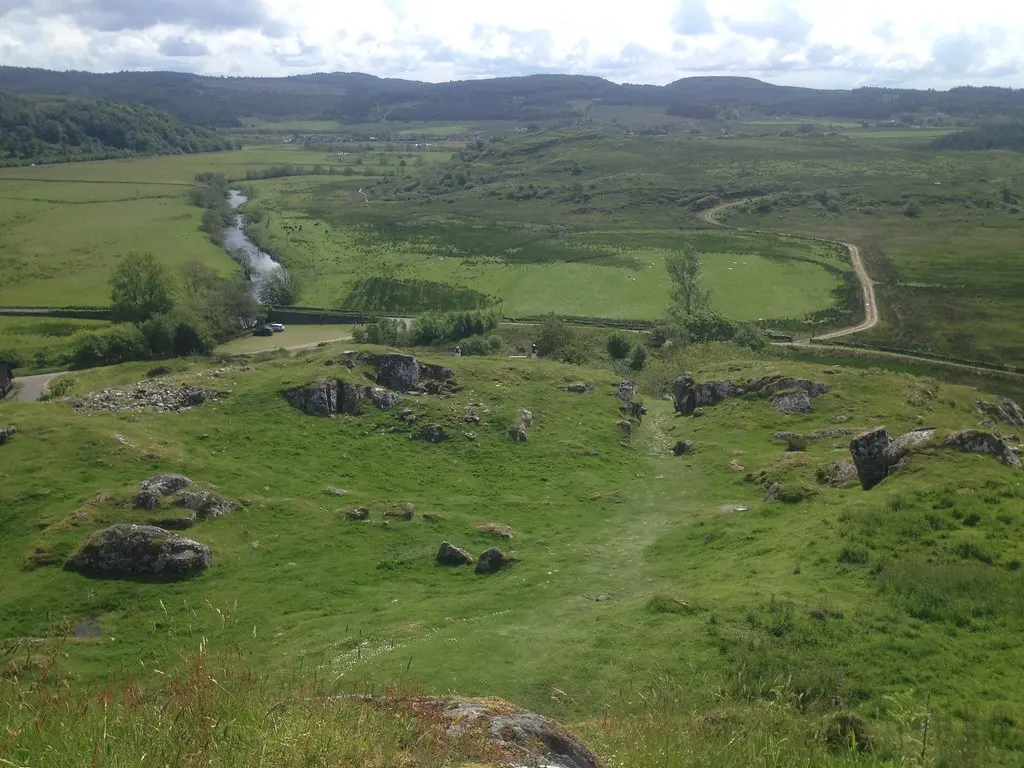
Image of Dunadd sacred hill, Lochgilphead, Scotland. Image source
Visit essentials
Before you go
- Access
- Signposted 2 miles south of Kilmartin off the A816.
- Address
- A816, Lochgilphead PA31 8SU, UK
- Duration
- Allow 45-90 minutes for the walk from the car park to the summit and back, including time at the…
- Etiquette
- Dunadd is an open heritage site with no formal etiquette requirements.
Overview
Dunadd is not a conventional ruin: the rock itself survives, carved with a footprint, basin, boar, and inscription—evidence of repeated acts across centuries. Kings stood on the summit and placed a foot in the carved stone, marrying themselves to the land below.
They ruled Dal Riata, a Gaelic-speaking realm spanning the sea between northeast Ireland and western Scotland from roughly the sixth to ninth century. Its most spectacular power centre, Dunadd rises thirty metres from the boggy Moine Mhor. From the summit, kings could see the river, sea, distant hills, and land claimed through the footprint.
Terraced defences enclosed a thriving community. Excavations reveal a workshop producing some of early medieval Europe's finest metalwork, including moulds for intricate brooches and pins that helped define Insular art; a trading post receiving pottery from Gaul and the Mediterranean; and a meeting place marked by the Gaelic footprint, Pictish boar, and ogham script carrying an Irish alphabet into Scottish stone.
Tradition holds that St Columba anointed King Aidan here in AD 574, joining Gaelic royal ceremony to Christian practice in a form echoed by later British coronations. Whether historically precise or not, the tradition captures Dunadd as a place where power was consecrated and the earthly-sacred boundary deliberately crossed.
Why this place is sacred
The thinness of Dunadd is elemental. There is no architecture to mediate the encounter, no stained glass to filter the light, no liturgy to structure the experience. There is rock, sky, wind, and the marks that human hands carved into stone more than a thousand years ago.
The footprint is the centre of it. Unlike a throne, which elevates the ruler above the earth, the inauguration stone at Dunadd placed the king into the earth. His foot entered the rock. According to later accounts, the chiefs who swore allegiance sprinkled soil from their own lands into the carved depression before the king stepped in.
The king did not merely rule the land; he stood on it, literally, receiving sovereignty through contact with the ground that would sustain his people.
This understanding of kingship as marriage to the land has deep roots in Celtic tradition. The goddess of sovereignty was the land itself, and the king's right to rule depended on his bond with her. The carved footprint at Dunadd may be the most tangible surviving expression of this belief: a permanent mark in stone where that bond was enacted, again and again, across generations.
The Pictish boar carved beside the footprint adds another layer of thinness. This is not a Gaelic symbol but a Pictish one, carved in a style associated with the people who lived to the east and north. It may record the siege of AD 736, when the Pictish king Oengus captured Dunadd and burned it. If so, it marks a moment when one culture inscribed its presence on another's most sacred space.
The boundary between peoples, between languages, between ways of seeing the world, was crossed here in stone.
The ogham inscription adds a third presence: an Irish alphabet carved into Scottish rock, reading what scholars believe is the name Finn Manach. Three scripts, three cultures, all marking their presence on the same exposed summit. Dunadd is thin not because one tradition sanctified it but because several converged here, each leaving their mark on the same living rock.
Dunadd served as the principal royal centre and inauguration site of the kingdom of Dal Riata, the Gaelic-speaking realm that occupied western Scotland from approximately AD 500 to 800. The hilltop was a fortified seat of power, a centre of fine metalworking and international trade, and the place where kings were inaugurated through ritual contact with the carved rock.
The site has Iron Age origins, with radiocarbon dates suggesting fortification as early as 400-200 BC. It reached its greatest significance as the capital of Dal Riata in the sixth to eighth centuries. After the Pictish conquest in AD 736 and the eventual unification of Picts and Scots under Kenneth MacAlpin around AD 843, the political centre shifted eastward to Scone. Dunadd ceased to function as a royal centre but the carvings remained, exposed to weather and memory.
The site was excavated three times (1904-05, 1929, 1980-81) and is now a scheduled ancient monument managed by Historic Environment Scotland.
Experience and orientation
You see Dunadd before you reach it. From the small car park off the A816, the rocky crag is unmistakable, rising thirty metres from the flat expanse of the Great Moss. The path crosses farmland, and the approach is level, even prosaic. Cattle may be grazing. The landscape is pastoral, green, unremarkable.
Then the ground begins to rise. The path enters the lower enclosures of the fort, passing between rocky outcrops that once formed the outer defences. The sense of ascent becomes deliberate. Each terrace you pass through would have been a boundary, a threshold, a stage in the approach to the king.
The terraces narrow as you climb. The rock becomes more exposed, the path steeper. You are scrambling now, hands on stone in places. The wind picks up. Below and behind you, the Great Moss spreads in every direction, flat and wide, the River Add winding through it toward the sea.
On a terrace just below the summit, you find them. The carved footprint in the rock, roughly the size of a human foot, worn but unmistakable. Beside it, the shallow basin cut into the stone. And on the same flat outcrop, the incised boar, its outline still legible after more than a millennium, drawn in the style that scholars call Pictish.
The ogham inscription runs along a crack in the rock, its letters legible to those who can read the script.
The temptation to place your foot in the carved print is strong. The rock invites it. But the carvings are a scheduled monument and should not be touched. Instead, you stand beside them and look out. The view from the summit is the same view the kings saw: the river, the moss, the hills, the distant glint of the sea. The wind that crosses your face crossed theirs.
Whatever ceremony was performed here, whatever words were spoken, this view was part of it.
The descent is quicker, the sense of return to the ordinary world palpable as the ground levels and the farmland resumes.
From the car park, follow the signed path across the farmland to the base of the crag. The ascent takes fifteen to twenty minutes at a moderate pace. The rock carvings are located on a terrace just below the true summit. Look for the carved footprint first, then the basin, the boar, and the ogham inscription on the same rock outcrop. Continue to the highest point for the full panoramic view. Return by the same path.
Context and lineage
The kingdom of Dal Riata emerged in the fifth and sixth centuries as Gaelic-speaking peoples from northeast Ireland established themselves on the western coast of Scotland. According to tradition, Fergus Mor Mac Erc crossed the sea around AD 500 and chose the rocky crag of Dunadd as his seat of power. Whether Fergus is a historical figure or a legendary one, the choice of Dunadd was strategic and symbolic.
The hilltop commanded the mouth of Kilmartin Glen and the estuary of the River Add, controlling both land routes and sea access.
The kingdom that grew from this crag became one of the most important in early medieval Britain. Dal Riata was a maritime realm, its territory spanning the sea between Argyll and County Antrim. Its capital at Dunadd was a centre of power, craft, and culture. The metalworking moulds found here demonstrate production of extraordinary quality, and the imported pottery speaks of trade routes stretching to Gaul and the Mediterranean.
The inauguration tradition at Dunadd may predate the arrival of Christianity, rooted in Celtic beliefs about the sacred bond between king and land. Later tradition credits St Columba with anointing King Aidan at Dunadd in AD 574, an act that Christianised the ceremony while preserving its essential meaning: the king's authority derived from his relationship with the land and the divine.
Dunadd appears in the historical record under the year AD 683, when it was besieged. In AD 736, the Pictish king Oengus I captured and burned the fort, a pivotal moment that marked Pictish dominance over the Scots. Within a century, however, the political landscape had shifted again. Around AD 843, Kenneth MacAlpin united the Picts and Scots, moving the centre of power eastward to Scone.
Dunadd's days as a capital were over, but its legacy was carried forward in the inauguration traditions that persisted at Scone and beyond.
The royal lineage of Dal Riata, traced through Fergus Mor Mac Erc to the legendary Erc of Irish Dalriada, continued through Kenneth MacAlpin's unification of Picts and Scots around AD 843. The inauguration traditions practiced at Dunadd were carried to Scone, where the Stone of Destiny became the focus of Scottish coronation rites. Through this lineage, the ceremony that began at Dunadd echoes in the coronation of British monarchs to the present day.
Fergus Mor Mac Erc
legendary/semi-historical
Traditionally regarded as the founder of Scottish Dal Riata around AD 500. According to legend, he crossed from Ireland and established Dunadd as his royal seat, possibly bringing the Stone of Destiny with him. Whether he is a historical individual or a legendary ancestor figure remains debated, but his name anchors the origin tradition of Scottish kingship.
Aidan mac Gabrain
historical
King of Dal Riata from approximately AD 574. According to Adomnan's Life of St Columba, Aidan was ordained as king by Columba on Iona, though later tradition places the inauguration at Dunadd. His reign saw Dal Riata at the height of its power, extending influence into Pictish territory and beyond.
St Columba
historical/hagiographic
The Irish monk who founded the monastery of Iona in AD 563 and became the most important Christian figure in early medieval Scotland. Tradition credits him with anointing King Aidan, fusing Gaelic royal ceremony with Christian practice. His spiritual authority over the kings of Dal Riata established a pattern of church-state relationship that endured for centuries.
Oengus I (Onuist son of Uurguist)
historical
The Pictish king who besieged and captured Dunadd in AD 736, subjecting the Scots to Pictish rule. The Pictish boar carving at the summit may commemorate his conquest. His victory marked the end of Dal Riata's independence, though the eventual union of Picts and Scots under Kenneth MacAlpin would emerge from this period of conflict.
Traditions and practice
The inauguration of a king at Dunadd was a ritual of embodiment. The carved footprint, worn into the living rock, received the king's foot. According to the seventeenth-century Hebridean writer Martin Martin, a related ceremony was still practised for the inauguration of the Lords of the Isles centuries later: each chief sprinkled earth from his own lands into the footprint, and the new lord placed his foot upon the soil, swearing his oath while standing on his own domain.
The footprint served as a vessel that collected the entire realm in miniature.
The carved basin beside the footprint may have been used for anointing or lustration, water or oil poured into stone. St Columba's reported anointing of King Aidan added a Christian dimension to what may have been an older ceremony rooted in the Celtic understanding of sovereignty as a bond between king and the land itself, mediated by a goddess of the territory.
The metalworking evidence shows that Dunadd was also a centre of sacred craft. The moulds for brooches and ornamental pins represent some of the finest Insular art production known, objects that carried political and spiritual significance as markers of status and identity.
No formal ceremonies or rituals take place at Dunadd today. Visitors come for heritage interest, personal contemplation, and connection with the landscape. Many visitors walk the crag as part of a broader exploration of the Kilmartin Glen archaeological landscape, which includes cairns, stone circles, standing stones, and rock art spanning five thousand years.
The summit offers a natural space for quiet reflection. The exposed position, the wind, the panoramic view, and the presence of the ancient carvings create conditions that many find conducive to contemplation. Some visitors describe the experience of standing at the summit as pilgrimlike, a deliberate ascent to a place of meaning.
Walk from the car park in silence if you can. Let the approach across the flat farmland build anticipation. As you begin to climb, notice the terraced defences and imagine the boundaries they once marked. At the rock carvings, take time with each one. The footprint. The basin. The boar. The ogham letters. Consider what it meant to stand here and place your foot in the rock, to claim a kingdom by touching it.
Do not rush the summit. The view is the ceremony's context. Look for the river, the moss, the sea. This is what the kings saw. This is what they claimed.
Gaelic Kingship / Dal Riata
HistoricalDunadd was the principal royal centre of Dal Riata, the Gaelic-speaking kingdom that governed western Scotland from approximately AD 500 to 800. The rock carvings at the summit are believed to have formed part of the inauguration ritual for new kings. The kingdom's royal lineage continued through Kenneth MacAlpin into the kingdom of Alba and eventually the kingdom of Scotland, making Dunadd the legendary birthplace of Scottish sovereignty.
The inauguration ceremony involved the king placing his foot in the carved footprint, symbolically marrying himself to the land. Chiefs sprinkled earth from their territories into the footprint before the king stepped in, so that he stood upon the entire realm. The carved basin may have been used for anointing or ritual washing. The ceremony was both a political act and a sacred one, binding the king to the land and to his people through physical contact with the rock.
Early Christianity in Scotland
HistoricalAccording to hagiographic tradition, St Columba anointed King Aidan at Dunadd around AD 574, Christianising a Gaelic royal ceremony and establishing the precedent for sacred coronation that would persist through the centuries. This fusion of Celtic kingship with Christian practice at Dunadd represents a pivotal moment in Scottish religious and political history.
The Christian contribution to the inauguration ceremony was the act of anointing, the blessing of the new king by an ecclesiastical authority. This added a sacramental dimension to the older ceremony of placing the foot in the rock. Columba's involvement, whether historical or legendary, established the principle that royal authority required divine sanction mediated through the church.
Perspectives and open questions
Dunadd sits at the intersection of archaeology, national mythology, and spiritual experience. What the rock carvings mean depends on who is looking and what they bring to the encounter. The footprint in the stone has been read as political instrument, sacred threshold, and national symbol.
Scholarly perspective
Archaeological consensus, established through three excavation campaigns and the definitive publication by Alan Lane and Ewan Campbell, identifies Dunadd as the principal royal centre of Dal Riata. The site has Iron Age origins but reached its greatest significance in the sixth to eighth centuries. The metalworking assemblage is regarded as one of the most important in early medieval Europe, critical to understanding the development of the Insular art style. The imported pottery demonstrates extensive trade networks.
The rock carvings are interpreted as elements of an inauguration ritual, though the exact nature of the ceremony must be reconstructed from later accounts and comparative evidence. The Pictish boar is generally associated with the siege of AD 736, though alternative interpretations exist. The ogham inscription, reading Finn Manach, is dated to the late eighth century or later.
Scholars emphasise that the connection to St Columba specifically at Dunadd (as opposed to Iona) relies on later hagiographic tradition rather than contemporary evidence.
Living and traditional perspectives
Scottish national tradition regards Dunadd as the cradle of the kingdom of Scotland. The lineage running from Fergus Mor through Kenneth MacAlpin to the present monarchy gives the site profound significance for Scottish identity. The inauguration ceremony at Dunadd is understood as the origin of Scottish coronation practice, a tradition that continued at Scone and ultimately at Westminster.
The Christian tradition, rooted in the hagiography of St Columba, understands the anointing of Aidan as the moment when Celtic kingship was baptised into Christian practice. The ceremony at Dunadd is seen as the prototype for the sacramental dimension of coronation that persists in British royal tradition.
Alternative interpretations
Some visitors and writers interested in Celtic spirituality and sacred landscape understand Dunadd as a site where the boundary between the human and the otherworldly was deliberately thinned through ritual. The carved footprint is interpreted not merely as a political symbol but as a threshold between worlds, a point of contact between the king and the sovereignty goddess of the land.
The concentration of ancient monuments in Kilmartin Glen is sometimes understood through the lens of earth energies and sacred geography, with Dunadd as a focal point of spiritual power within a wider network of sacred sites.
Open questions
The full inauguration ceremony at Dunadd is lost. Later accounts describe elements of what may have been practised, but no contemporary description survives. Whether the basin was used for anointing with water, oil, or something else is unknown. Whether the boar was carved by Picts or for Picts remains debated. The ogham inscription's relationship to the other carvings is uncertain. Whether the Stone of Destiny was ever actually kept at Dunadd, as legend claims, cannot be confirmed.
The pre-Iron Age significance of the hilltop, if any, is entirely unknown.
Plan your visit
Access and arrival
Signposted 2 miles south of Kilmartin off the A816. Free car park at the base of the hill. Approximately 4 miles north of Lochgilphead. No public transport to the site; nearest bus stops are on the A816. The path crosses farmland and involves scrambling over rock; sturdy footwear essential. Not wheelchair accessible.
Lochgilphead (4 miles south) offers a range of accommodations. Kilmartin village (2 miles north) has the Kilmartin Hotel. The Kilmartin Museum cafe provides refreshments. Oban (35 miles north) offers wider options.
Respectful visit
Outdoor clothing suitable for Scottish weather. Waterproofs and sturdy walking boots essential. The path is uneven and involves scrambling over rock.
Photography is permitted and welcomed. The carvings photograph best in raking light, early morning or late afternoon.
Do not leave offerings on or near the carvings. Leave no trace.
The rock carvings are a scheduled ancient monument. Any disturbance, including touching the carvings, is prohibited. No metal detecting. Follow the Scottish Outdoor Access Code.
The path to the summit involves scrambling over exposed rock and can be slippery in wet conditions. Sturdy footwear is essential. The rock carvings are a scheduled monument and must not be touched, stood on, or disturbed in any way. The site is accessed through working farmland; livestock may be present.
Current practical details
Address
A816, Lochgilphead PA31 8SU, UK
Hours
Hours, fees, and access can change — verify on the official source before you travel. Practical details last checked Jun 2026.
Location
Map loads as you approach this section.
Pilgrim reflections
A portrait of encounter, not a score
Pilgrims describe what they felt, how present they could become, and whether the place would shape a journey. There are no stars and no ranking of traditions.
No reviewed reflections yet
The first pilgrims can help describe the character of being here.
Share a reflection
Available after an account-backed “Been there.” Every reflection is reviewed before publication.
Nearby sacred places
Explore other sacred places in the region. Proximity does not establish access or travel time; check each place’s guidance.
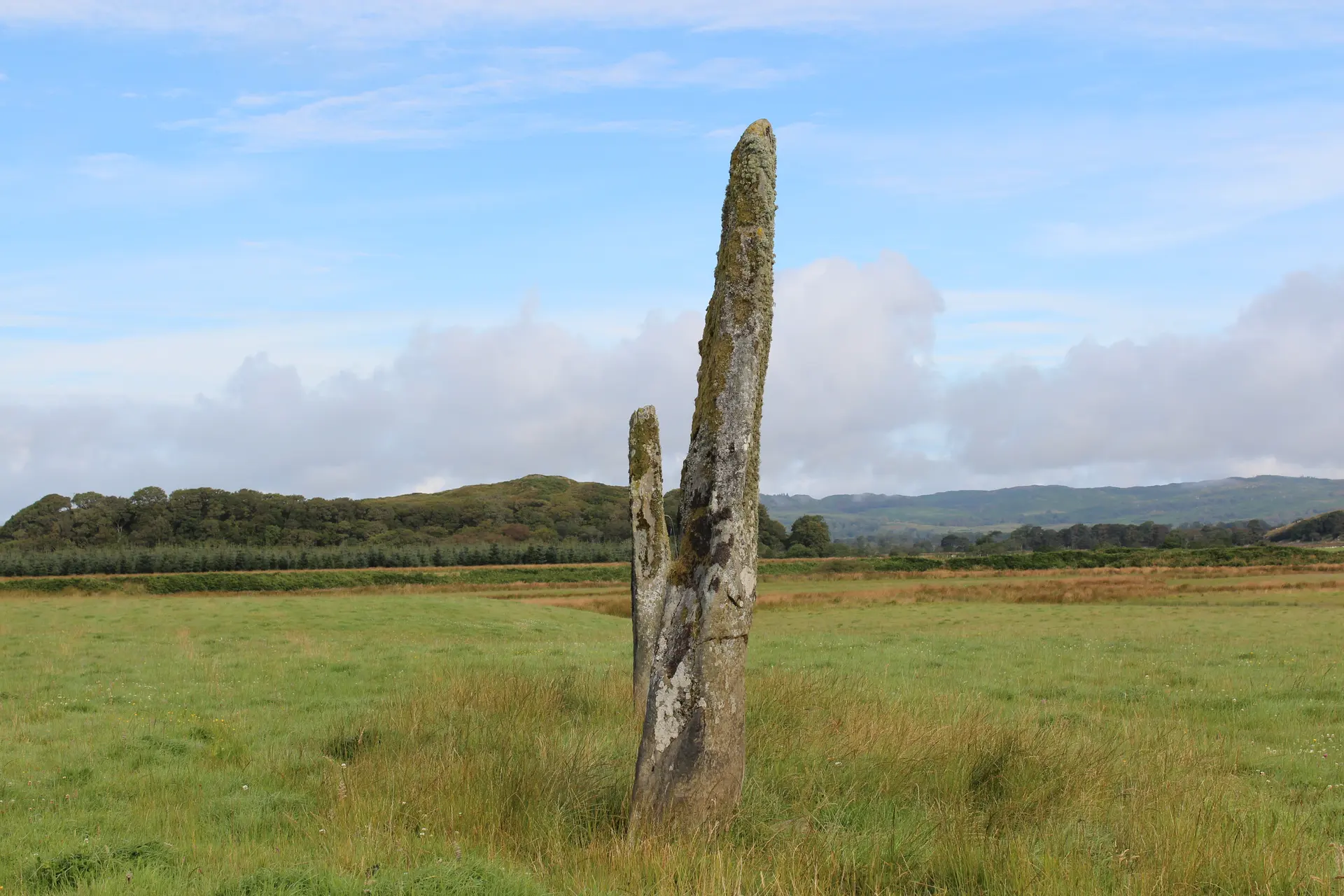
Dunamuck South Stone Row
Kilmichael Glassary, Scotland, United Kingdom
1.8 km away
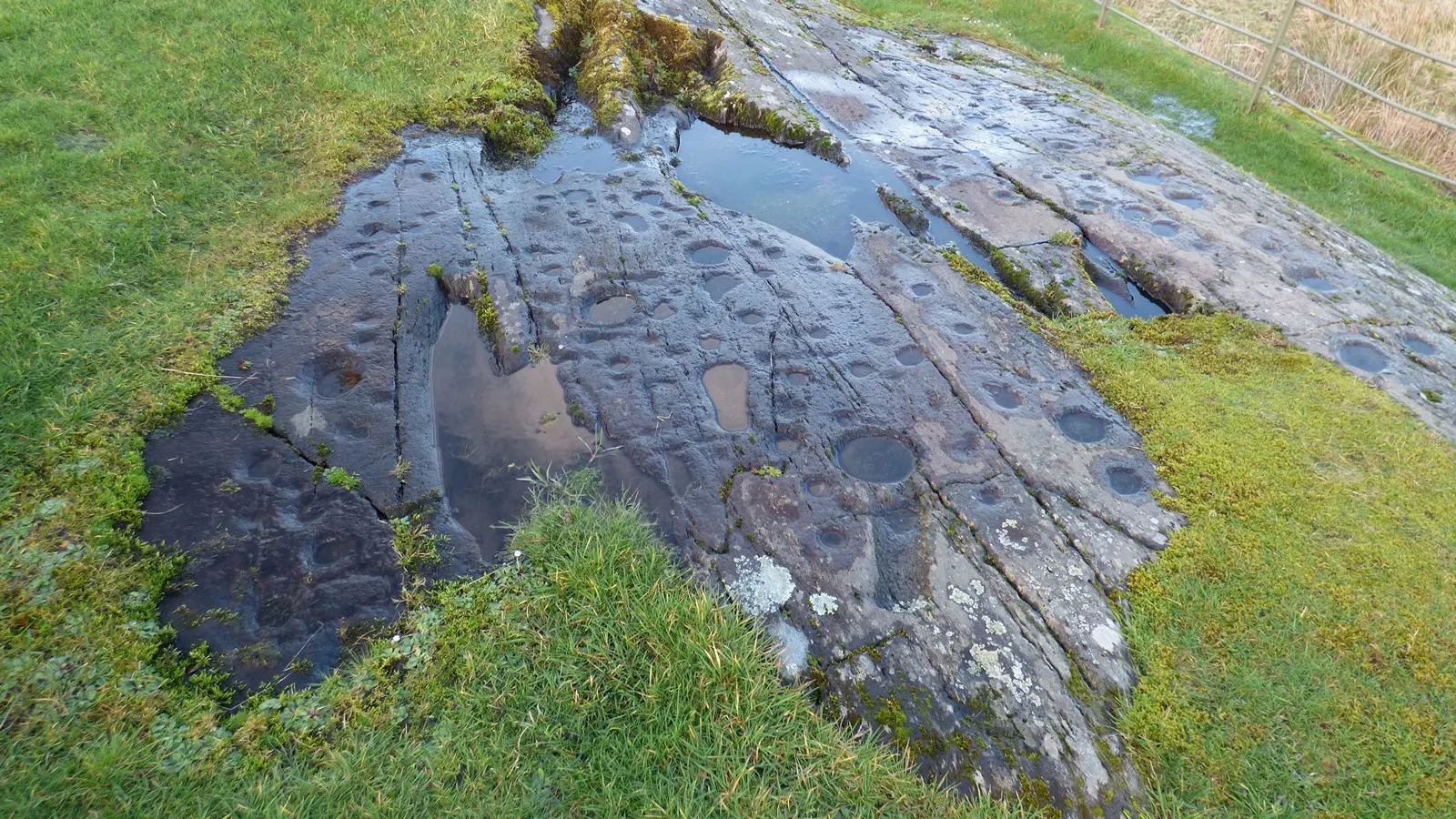
Kilmichael Glassary Cup and Ring Marks
Lochgilphead, Scotland, United Kingdom
2.1 km away
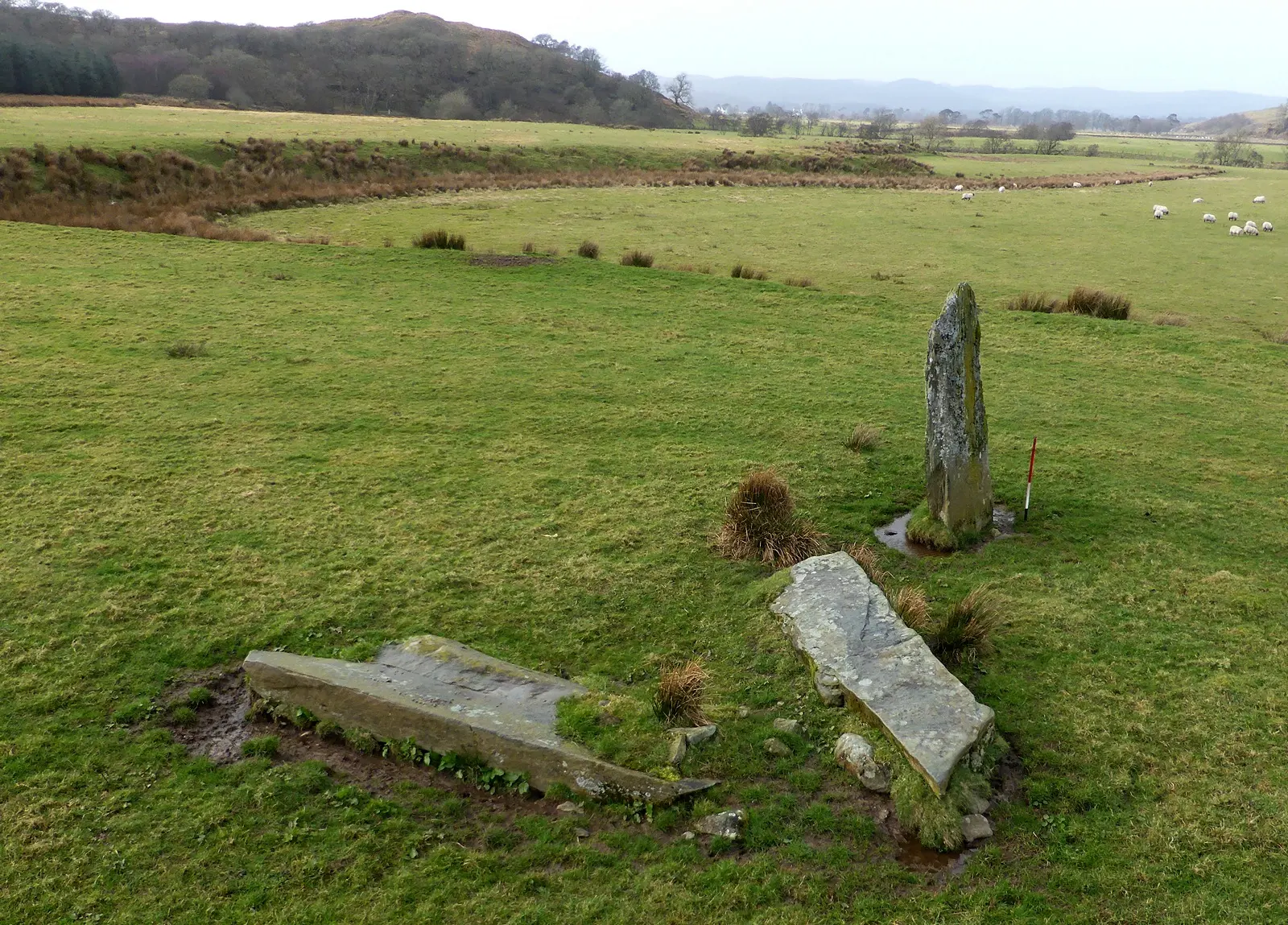
Dunamuck North Stone Row
Kilmartin, Scotland, United Kingdom
3.2 km away
Dunchraigaig Cairn
Kilmartin, Scotland, United Kingdom
3.2 km away
References
Sources consulted for this page. Source categories describe the publication, not a guarantee that every claim is verified. Traditional accounts and outside interpretations may differ.
- 01Kilmartin Glen: Dunadd Fort - Historic Environment Scotland — Historic Environment ScotlandofficialOfficial heritage body managing the scheduled monument; primary source for visitor and historical information
- 02Dunadd Fort: History - Historic Environment Scotland — Historic Environment ScotlandofficialDetailed history page from the official heritage body
- 03Dunadd Hillfort: The seat of early medieval Scottish power — National Museums ScotlandacademicAuthoritative museum context for finds and history; details on metalworking, imports, and Christian connections
- 04Dunadd - Canmore (National Record of the Historic Environment) — Historic Environment ScotlandofficialOfficial archaeological database entry with grid references and monument records
- 05Dunadd Digital Archive - University of Glasgow — University of Glasgow School of HumanitiesacademicAcademic digital archive of excavation data from Alan Lane's work
- 06Dunadd: an Early Dalriadic Capital - Archaeology Data Service — Archaeology Data ServiceacademicDigitized excavation archive and academic overview
- 07Dunadd - WikipediaSource contextGood overview with references to primary archaeological publications
- 08Dunadd Fort - Atlas Obscura — Atlas ObscuraSource contextVisitor-focused description with good contextual details
- 09Dunadd Fort: A Journey Through Time in Argyll — Celtic NativeSource contextCultural context and visitor experience
- 10Dunadd Fort in the Kilmartin Glen, Argyle Scotland — Travel to Thin PlacesspiritualSpiritual and pilgrimage perspective on Dunadd
Share a photo
Help visitors recognize Dunadd sacred hill, Lochgilphead, Scotland. Every submission is reviewed before publication.