Cucuruzzu
A Bronze Age fortress in Corsica's granite wilderness, where the Torrean civilisation carved sacred space from stone
Understand sacred places, explore living traditions, and learn how to engage respectfully with Pilgrim Map.
Access has not been verified. Check current local guidance before planning a visit.
Corse-du-Sud, France
Read the sources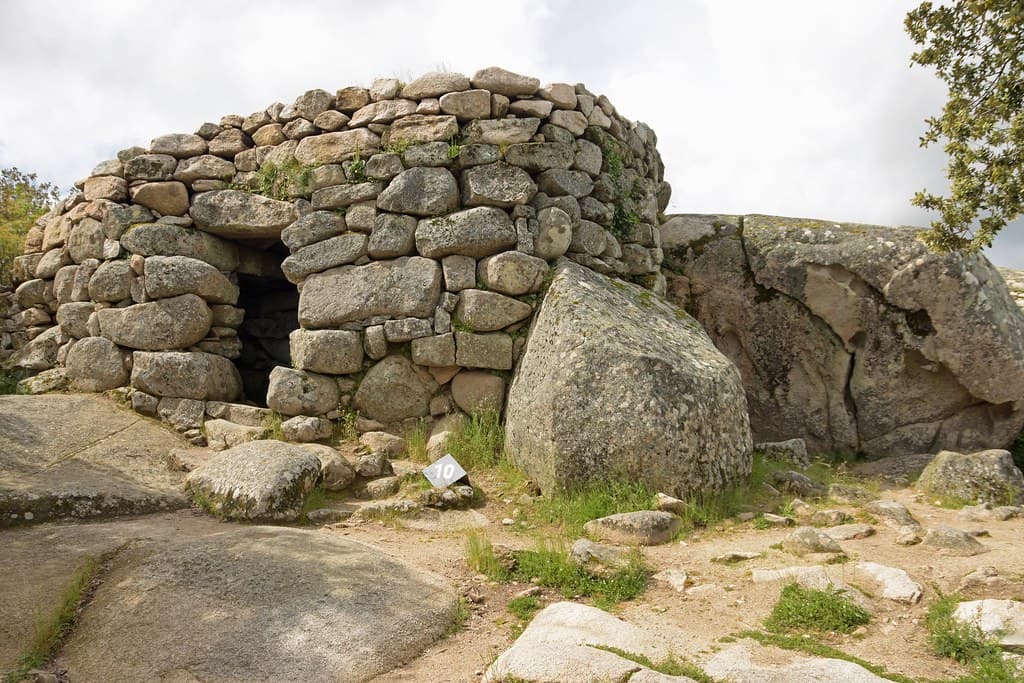
Image of Cucuruzzu. Image source
Visit essentials
A quick read before you go
- Duration
- Allow 2 hours for the full 3 km Cucuruzzu–Capula circuit at a contemplative pace, including time…
- Access
- Signposted off the D268 between Levie and Sainte-Lucie-de-Tallano in southern Corse-du-Sud.
Overview
Amid granite boulders on southern Corsica's Alta Rocca plateau, Cucuruzzu is the best-preserved casteddu of the Torrean civilisation, which built circular stone towers and hillforts during a megalithic flourishing beginning around 1800 BCE. Its central torra is a circular corbelled tower entered through a protected corridor with side niches. Granite-block walls, some blocks weighing over a tonne, separate its semi-domed interior from a wider castellu enclosure whose builders made natural boulders structural, deliberately blurring wild landscape and architecture.
The Torrean people remain partly mysterious, appearing without obvious local precedents and with circular towers unlike earlier island architecture. At Filitosa they toppled or reused earlier peoples' statue-menhirs, suggesting deliberate appropriation of sacred power rather than vandalism. The torra's use is unresolved: agricultural-processing evidence coexists with spatial organization suggesting regulated, possibly ceremonial movement.
Discovered in 1959 and excavated through the 1990s, Cucuruzzu remains incompletely explained. Abandoned around 300 BCE, it has lain largely undisturbed in Corsican forest for more than two millennia. The forest walk linking it with nearby Capula is widely considered one of Corsica's finest heritage experiences.
Why this place is sacred
The quality of presence at Cucuruzzu derives from two sources that amplify each other. The first is scale and age: granite walls built without mortar over three thousand years ago, still standing to their original height in places, demonstrate a mastery of material and a will to permanence that registers in the body before it reaches the mind.
The second is the setting — not a cleared field or an excavated plain but a living granite rock chaos, where massive boulders and ancient macchia create an environment that feels simultaneously primordial and intimate. The Torrean builders did not impose order on this landscape; they worked with it, using boulders as walls, letting the enclosure grow organically from the terrain.
The corbelled chamber of the torra deepens this encounter. Entering the low corridor and emerging into the circular interior — its vault closing overhead, the outside world suddenly absent — produces a concentrated sense of threshold. Whoever moved through this space three millennia ago was also crossing a boundary, from the wider settlement into a more protected, more charged interior.
The ritual function of this chamber remains debated, but the spatial experience of entering it is unmistakable: something was understood to be different here.
The Torrean people destroyed or reused the statue-menhirs of their predecessors — at Filitosa, warrior menhir faces were incorporated into new tower walls. This is not indifference but engagement: a recognition that the stone figures held power, and a choice about how to handle that power. At Cucuruzzu, without the visible menhirs, the sense of that earlier sacred landscape persists as an undertone beneath the Bronze Age structures.
A fortified Bronze Age settlement functioning as a territorial centre for the Torrean civilisation, integrating agricultural processing, craft production, defensive architecture, and possibly ceremonial or cult activity within the corbelled tower interior.
Occupied from the Neolithic period through the Bronze Age to approximately 300 BCE, when the site was abandoned without clear evidence of destruction. Rediscovered by archaeologist Roger Grosjean in 1959 and excavated from 1963 onwards, it is now managed as a classified French Historic Monument open to seasonal visitors.
Experience and orientation
The approach to Cucuruzzu matters. The site is reached by a path that winds through Corsican macchia and forest on the Alta Rocca plateau, the granite boulders growing larger and more imposing as you climb, the canopy filtering the light into something dappled and ancient. The circuit trail — approximately 3 km combining Cucuruzzu and the nearby Capula — begins with a gradual immersion in the terrain before the first walls appear.
When they do, they seem less built than grown: massive undressed granite blocks laid in courses without mortar, the wall face rising to three metres or more, the scale quietly overwhelming.
Move through the outer enclosure slowly. The spatial organisation of the site — the multiple functional zones, the evidence of grain storage and tool use — establishes Cucuruzzu as a place where people actually lived, worked, and sustained themselves across generations. The presence of domestic life deepens rather than diminishes the atmosphere: these walls held not just defence but daily ritual, the rhythms of the agricultural year, the accumulated weight of community.
The torra interior is the experiential centre. The corridor entrance requires physical attentiveness — a slight crouch, a narrowing of perspective — before opening into the corbelled chamber. Inside, the sound changes. The sense of enclosure is complete. This is where the site earns its contemplative depth: a space defined by compression and exclusion, built to differentiate inside from outside in the most fundamental architectural terms. Stand still. The silence in the chamber is not empty.
Afterward, the forest walk to Capula continues the experience, the landscape gradually revealing the adjacent medieval and Bronze Age site as the path winds through the rock chaos.
The site is accessed from a signposted car park off the D268 road. A marked circuit trail (approximately 3 km return) connects Cucuruzzu and Capula. Wear sturdy footwear — the path crosses rocky terrain and granite outcrops. The torra entrance corridor is low; proceed carefully.
Context and lineage
The Torrean civilisation emerges in the archaeological record of southern Corsica around 1800 BCE with little clear local precedent. Their defining architectural achievement was the torra — a circular tower of massive drystone construction with corbelled interior vaulting — and the casteddu, a fortified hilltop enclosure integrating tower, residential, agricultural and defensive functions. Where the Torreans came from is unresolved.
Some scholars connect their sudden appearance with broader Bronze Age migrations across the Mediterranean, possibly during the period of disruption associated with the Sea Peoples. Others emphasise continuity with indigenous Corsican cultures. At Filitosa and other sites, the Torrean people engaged dramatically with the statue-menhir tradition of their predecessors — toppling, reusing, and incorporating warrior stone figures into their own structures — suggesting a deliberate transformation of the sacred landscape rather than simple conquest.
Cucuruzzu was identified and first studied by archaeologist Roger Grosjean in 1959, who initiated formal excavations in 1963–1964. François de Lanfranchi took over the research from 1964, extending work through the 1990s, revealing the full complexity of the site's three distinct zones and establishing its occupational sequence from Neolithic traces through the Bronze Age casteddu to abandonment around 300 BCE. The site was classified as a French Historic Monument in 1982.
Torrean Bronze Age culture (c. 1800–300 BCE), with Neolithic predecessor occupation of the immediate terrain. No direct cultural successors; the site was abandoned around 300 BCE and lay undisturbed until modern archaeological study. Now managed within the Alta Rocca heritage network alongside the adjacent Capula site.
Traditions and practice
The Torrean people left no written records, and specific religious practices at Cucuruzzu have not been established through excavation. The torra interior's spatial organisation — controlled access corridor, side niches, corbelled chamber — suggests regulated movement that may have had ceremonial dimensions. Evidence from the broader site indicates grain storage, tool production, and agricultural processing.
The Torrean people's engagement with the statue-menhir tradition of their predecessors (destroying or incorporating warrior stone figures at other sites) suggests an active relationship with sacred imagery and ancestral power.
Cucuruzzu is a managed archaeological site with no active religious or ceremonial use. It is studied by archaeologists and visited by heritage tourists. Multilingual interpretive materials are available on site.
Approach the site as a sensory as well as an intellectual experience. Walk the outer enclosure perimeter before entering the inner zones — let the scale of the walls register before moving to interpretation. At the torra corridor, pause before entering: notice the transition from the open enclosure to the narrow approach, then to the enclosed chamber. Inside the corbelled vault, stop completely. Let your eyes adjust to the reduced light.
Notice the acoustic quality of the space — the way sound is absorbed by the stone walls. Consider what it meant, in a world without written theology, to designate certain spaces as interior, protected, distinct from the outside world.
On leaving, walk the path to Capula rather than returning directly: the forest between the two sites is itself part of the experience of the Alta Rocca plateau, with its ancient granite boulders worn by millennia of weather into shapes that blur the boundary between the worked and the natural.
Torrean Bronze Age Culture
HistoricalCucuruzzu was one of the principal casteddi of the Torrean civilisation — a hierarchical megalithic Bronze Age culture that developed in southern Corsica from approximately 1800–300 BCE. The site demonstrates advanced architectural mastery with massive corbelled stone towers and defensive enclosures.
The torra is thought to have functioned as a storage and processing facility for foodstuffs and possibly held cult significance. The Torrean people destroyed or reused statue-menhirs of preceding cultures at other sites, suggesting active religious transformation.
Neolithic Predecessor Occupation
HistoricalLithic tools indicate Neolithic human activity at the site predating the Bronze Age fortified phase, suggesting long-term human recognition of this location's strategic or sacred value.
Unknown; traces limited to lithic tools from excavation.
Archaeological Heritage
ActiveCucuruzzu is one of Corsica's most important Bronze Age heritage sites, studied since 1959 and designated a French Historic Monument in 1982. It provides critical evidence for understanding Torrean culture and Corsican protohistory.
Archaeological research, public heritage visits, educational guided tours, multilingual interpretation.
Perspectives and open questions
Cucuruzzu is understood through three overlapping lenses: the archaeological record of Torrean Bronze Age culture, the broader comparative context of western Mediterranean megalithic traditions, and the unresolved questions about Torrean origins and beliefs that give the site its contemplative depth.
Scholarly perspective
Cucuruzzu is the best-preserved example of a Torrean casteddu on Corsica, and among the most significant Bronze Age sites in France. Excavations by Roger Grosjean (1963–64) and François de Lanfranchi (1964–1990s) established its occupational sequence from Neolithic traces through to the Bronze Age fortified phase, confirming agricultural, craft, and defensive functions. The corbelled torra is architecturally comparable to Sardinian nuraghi and Balearic talayots, indicating a shared tradition of circular stone tower construction across the Bronze Age western Mediterranean.
The site's classification as a French Historic Monument in 1982 reflects its exceptional preservation and archaeological significance.
Living and traditional perspectives
No living cultural descendants of the Torrean civilisation exist. The Torrean people's relationship to their own site — their cosmological understanding of the torra interior, their reasons for abandoning the settlement around 300 BCE — are accessible only through material evidence and inference. Corsican cultural identity broadly embraces the island's prehistoric monuments as markers of a distinct and ancient heritage, though without specific traditions linking to Torrean practice.
Alternative interpretations
The corbelled vault architecture of Cucuruzzu has been placed within a wider Atlantic-Mediterranean tradition of circular stone enclosures in which the construction of a protected interior space expressed cosmological ideas about the relationship between the human community and the cosmos. Some researchers have drawn loose comparisons with the tholos tomb tradition of Mycenaean Greece and the corbelled passage chambers of Atlantic Neolithic monuments, suggesting a shared Bronze Age architectural vocabulary of the enclosed sacred interior.
Open questions
The specific religious beliefs of the Torrean people, the exact ritual function of the torra chamber, the origins and language of the Torrean civilisation, and the circumstances of the site's abandonment around 300 BCE remain unresolved. The relationship between the Torreans and the earlier statue-menhir builders — whether it was one of conquest, gradual cultural displacement, or internal transformation — continues to be debated.
Plan your visit
Access and arrival
Signposted off the D268 between Levie and Sainte-Lucie-de-Tallano in southern Corse-du-Sud. From Ajaccio: take the T40 then the D268 (approximately 1.5 hours). From Porto-Vecchio: D859/T40/D59 (approximately 45 minutes). Small car park at the trailhead. Open Wednesday–Sunday, 11am–5pm, May through end of September. Admission: €4, concessions €3. Audioguide available in English, German, and Italian for €3.
The village of Levie (~5 km) offers gîtes and small hotels. Propriano (~35 km) and Bonifacio (~50 km) provide wider options for all budgets.
Respectful visit
No dress requirements. Sturdy closed-toe footwear is essential — the path involves rocky, uneven terrain and granite outcrops. Sun protection and water are recommended for summer visits.
Photography is permitted throughout the site for personal and non-commercial use.
Not applicable at this heritage site.
Do not climb or touch the ancient stonework. Stay on marked paths. The site operates seasonally (Wednesday–Sunday, May to end of September) and may close during high fire-risk periods; check current status before visiting. No food consumption inside the archaeological enclosure.
The site is closed outside its seasonal opening hours and during periods of high fire risk in summer. Do not visit during official closure periods. The rocky terrain requires appropriate footwear — the paths are not paved and include uneven granite surfaces.
Location
Map loads as you approach this section.
Pilgrim reflections
A portrait of encounter, not a score
Pilgrims describe what they felt, how present they could become, and whether the place would shape a journey. There are no stars and no ranking of traditions.
No reviewed reflections yet
The first pilgrims can help describe the character of being here.
Share a reflection
Available after an account-backed “Been there.” Every reflection is reviewed before publication.
Nearby sacred places
Explore other sacred places in the region. Proximity does not establish access or travel time; check each place’s guidance.


References
Sources consulted for this page. Source categories describe the publication, not a guarantee that every claim is verified. Traditional accounts and outside interpretations may differ.
- 01Castellu di Cucuruzzu: a Pleiades place resourceacademicPeer-reviewed ancient places gazetteer
- 02Prehistoric sites - The Corsican official tourist websiteofficialOfficial Corsica tourism authority
- 03ARCHEOLOGICAL SITES OF CUCCURUZZU AND CAPULA - Alta Rocca Tourist OfficeofficialLocal official tourism office with practical details
- 04Archaeological site of Cucuruzzu in Levie - Musée du Patrimoine de FranceofficialFrench national heritage museum database
- 05Cucuruzzu - WikipediaencyclopediaGood overview of site history and archaeology
- 063 main prehistoric sites in CorsicaguideGood visitor overview
- 07Cucuruzzu - GrokipediaencyclopediaAggregated encyclopedia entry with good detail on Torrean culture
- 08The Mysterious Horned Warrior — Torreans of the Isle of Corsica — James ThomasSource contextContextual article on Torrean culture and spiritual practices
Share a photo
Help visitors recognize Cucuruzzu. Every submission is reviewed before publication.