Capula
A warrior menhir gazing across four thousand years — Corsica's most layered prehistoric and medieval palimpsest
Understand sacred places, explore living traditions, and learn how to engage respectfully with Pilgrim Map.
Access has not been verified. Check current local guidance before planning a visit.
Corse-du-Sud, France
Read the sources
Visit essentials
A quick read before you go
- Duration
- Allow 20 minutes from Cucuruzzu to Capula on the marked path.
- Access
- Accessed via the 3 km Cucuruzzu–Capula circuit from the signed car park off the D268 between…
Overview
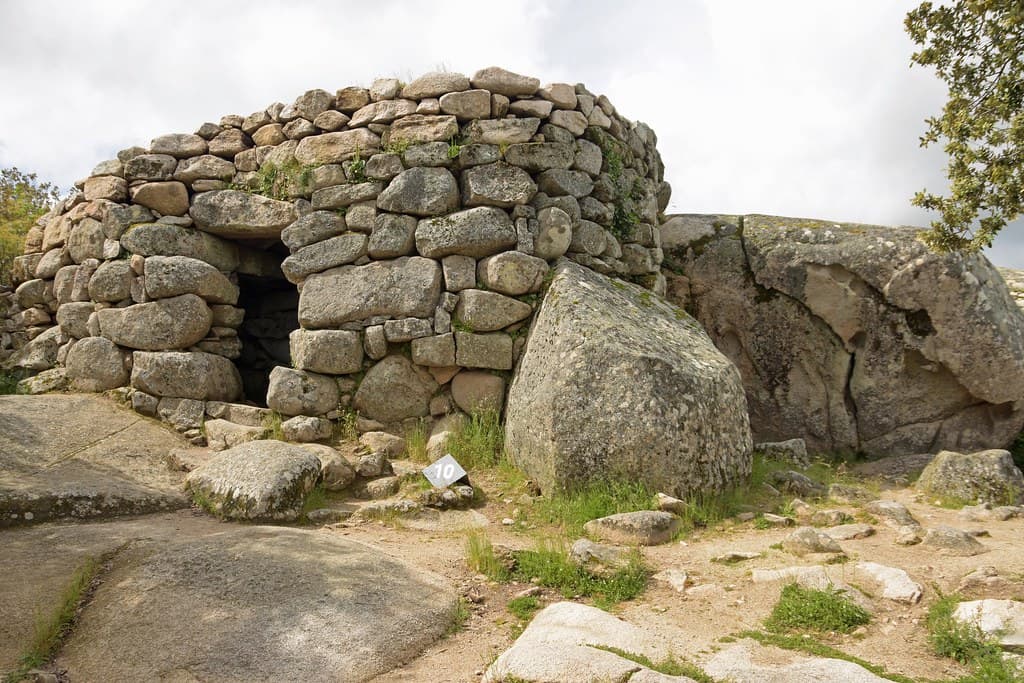
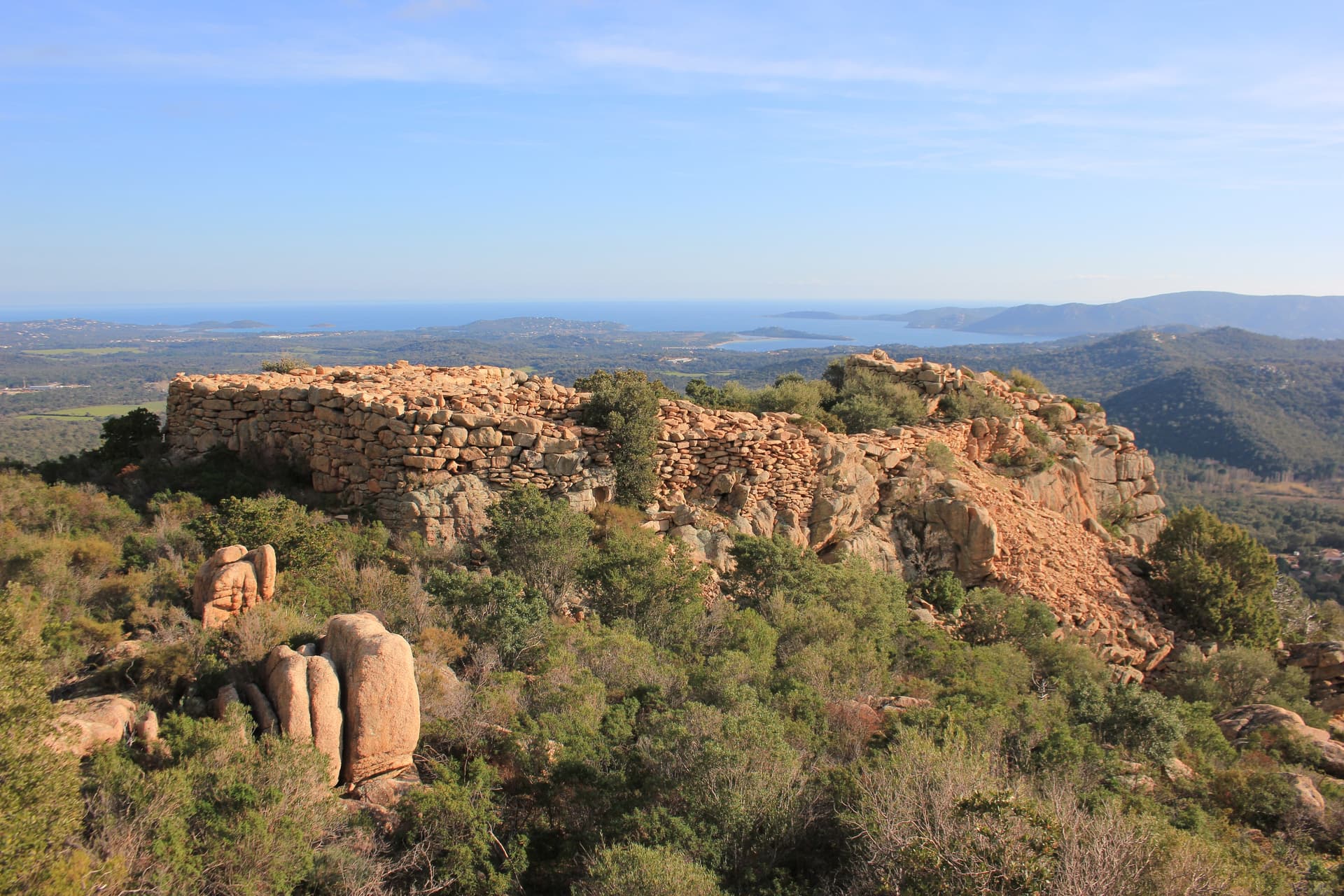
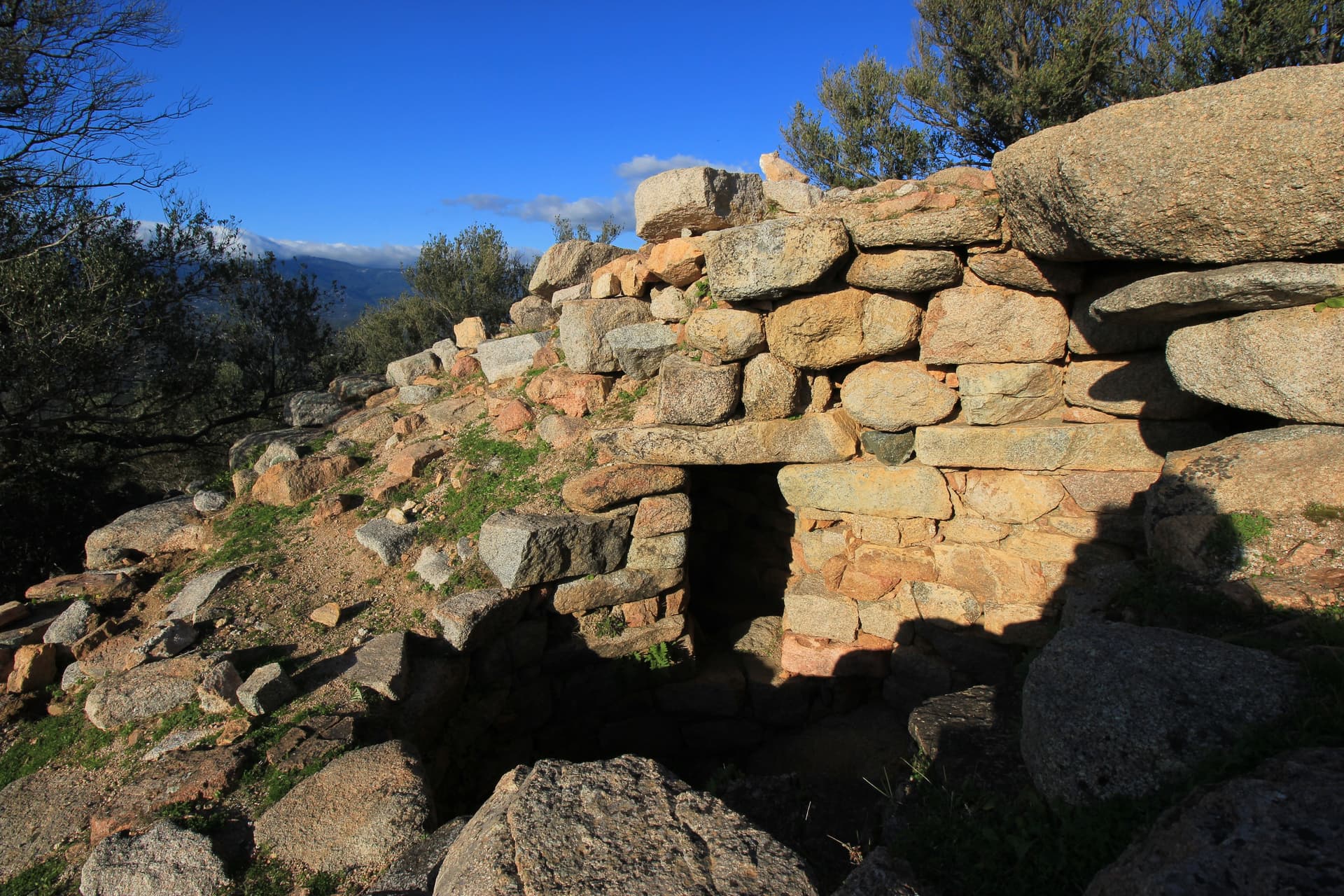
Five hundred metres through forest from Cucuruzzu, Capula occupies a granite plateau around 759 metres high, its medieval ruins open to the Corsican sky. Bronze Age Torrean drystone foundations support the later site; in the 9th or 10th century, Count Bianco of Corsica built a castrum on them in Alta Rocca's feudal landscape.
Excavations from 1970 to 1986 found a Bronze Age statue-menhir reused in a medieval stairway: 1.82 metres of granite, with a vertical sword in relief on its front and a stylised spine and ribs engraved on its back. This second-millennium BCE warrior-ancestor figure had perhaps been hidden in the stonework for a thousand years.
Restored at the entrance, the menhir faces a landscape it once presided over: its original context disrupted, its power apparently recognised in reuse, and its form returned to visibility without a living tradition beyond acknowledgment. Capula and Cucuruzzu form a single experience of the Alta Rocca plateau, each deepening the other.
Why this place is sacred
The thinness at Capula operates differently from Cucuruzzu's concentrated corbelled chamber. Here the quality is more open, more ruined, more exposed to sky. The medieval walls are partly collapsed, the space between them colonised by wind and light. What creates the atmosphere is the juxtaposition: the warrior menhir standing at the entrance, its granite body weathered to a surface that absorbs light differently from the cut stone around it, its carved sword and spine still legible after four thousand years.
The menhir's history encapsulates something essential about the site. It was carved in the second millennium BCE as part of a tradition of warrior ancestor figures — stones that embodied protective presences for Bronze Age Corsican communities. At some point it was toppled or displaced. By the medieval period it had become building material, cut into a stairway without apparent reverence, its sacred significance (if anyone then remembered it) subordinated to structural necessity.
Excavated in the late 20th century, it was recognised, restored, and placed upright again — but into a world in which its original tradition has no living heir. It stands now as a kind of orphan in time: undeniably powerful, entirely without context.
This orphaned quality gives Capula its particular contemplative texture. The site invites not a transaction with a living sacred tradition but a meditation on discontinuity — on how sacred power persists in objects even when the human systems that generated that power have dissolved. The menhir did not stop being what it is when the Torrean culture ended. It simply waited.
The Bronze Age Torrean phase established Capula as part of the network of casteddi controlling the Alta Rocca territory. The medieval castrum built by Count Bianco served feudal administrative and defensive purposes. The warrior statue-menhir in its original context likely functioned as an ancestral protective marker.
Occupied from the Torrean Bronze Age through Iron Age transition, then re-fortified in the 9th–10th century as a medieval castrum. Excavated 1970–1986 by François de Lanfranchi. The warrior statue-menhir, recovered from the stairway during excavation, is now displayed at the site entrance. Managed jointly with Cucuruzzu as part of the Alta Rocca heritage complex.
Experience and orientation
After the enclosed, forested atmosphere of Cucuruzzu, the path to Capula opens gradually. The forest thins, the plateau reveals itself, and the ruins of the medieval castrum appear on the granite promontory above. The approach offers a different quality from the dense vegetation of the earlier site: here there is sky, wind, distance.
The warrior statue-menhir is the first significant encounter. It stands at the entrance to the ruins, facing outward — a figure whose gaze, if stone can be said to gaze, is directed toward the landscape rather than the site behind it. The carved sword on the front face and the engraved spine on the back are subtle but legible in good light, particularly in the morning when the sun is low enough to cast the relief in shadow.
Spend time with this figure before entering the ruins. The menhir predates the medieval walls by more than two thousand years; it has witnessed every subsequent phase of the site's occupation.
Inside the castrum, the ruined walls create a more open, skeletal space than Cucuruzzu's enclosure — more ruin, less monument. This openness is part of the experience. Walk the perimeter walls where they remain standing. The view south and east over the Alta Rocca extends to the horizon, the Corsican coastline occasionally visible on clear days.
At this altitude, with the wind moving through the granite ruins, the sense of exposure — to weather, to time, to the sheer persistence of the stone underfoot — is the dominant quality.
Capula is reached via the marked circuit trail from the Cucuruzzu car park on the D268. It lies approximately 540 metres southeast of Cucuruzzu, a 20-minute forest walk along the signed path. The same combined ticket covers both sites.
Context and lineage
The granite plateau of Capula was first chosen by the Torrean people as part of their territorial network across the Alta Rocca. Their drystone construction — the same massive masonry visible at Cucuruzzu — formed the ground layer of the site. Later, during the early medieval period, Count Bianco of Corsica built a castrum on these ancient foundations, establishing feudal control over the Alta Rocca through a fortification that incorporated and reused what the Torreans had left.
The warrior statue-menhir changes what the site means. It belongs to a tradition of carved stone ancestor figures found across Corsica — most famously at Filitosa and Cauria — in which standing stones were given anthropomorphic form and warrior attributes, their physical presence understood as a continuing protective or ancestral power.
When the medieval builders incorporated this menhir into a stairway, they may have done so without awareness of its original significance, or they may have recognised its power and made a deliberate choice about how to handle it. The excavation by François de Lanfranchi between 1970 and 1986 recovered the figure from the rubble of that choice, and returned it to visibility.
Torrean Bronze Age occupation (c. 1800–800 BCE), followed by Iron Age continuity, then medieval fortification by Count Bianco (9th–10th century CE). Abandoned thereafter and excavated in the late 20th century. Now managed as part of the Alta Rocca heritage circuit with Cucuruzzu.
Traditions and practice
No documented Torrean or medieval religious rituals are associated specifically with Capula. The warrior statue-menhir belongs to a broader Corsican Bronze Age tradition of carved ancestral figures — paralleled at Filitosa, Cauria, and many other sites across the island — in which the stone figure was understood to embody protective ancestral presence. The specific ritual practices associated with these figures are unknown.
No active religious or ceremonial use. Managed heritage site, jointly ticketed with Cucuruzzu. Interpretive booklets and audioguide available for both sites.
Begin with the warrior menhir before entering the ruins. Give it the time it deserves: approach from the front and read the carved sword; then, if you can do so without disturbing the presentation, look at the back face with its engraved spine and ribs.
Consider that this figure was carved, likely with great care and intention, in the second millennium BCE; that it was subsequently toppled and built into a stairway; that it was then buried and forgotten for centuries before being recovered and re-erected. This sequence — creation, disruption, recovery, orphaning — is not unique to this menhir but is written here with particular clarity.
From the menhir, move to the perimeter walls and find the highest intact point with a clear view to the south. Stay there for as long as the wind and light allow. The Alta Rocca extends in all directions, its granite landscape shifting with the season and the hour. This is a site for open-air contemplation rather than the enclosed interiority of Cucuruzzu's torra — the meditative register here is wide rather than compressed.
Torrean Bronze Age Occupation
HistoricalThe foundations of Capula rest on a Bronze Age and Iron Age structure. The Torrean people occupied this granite plateau as part of their territorial network of casteddi across the Alta Rocca region.
Unknown; interpreted through pottery and tool evidence from excavation layers predating medieval occupation.
Statue-Menhir Veneration (prehistoric)
HistoricalA warrior statue-menhir (1.82 m, granite, c. 2nd millennium BCE) was discovered reused in the medieval stairway reinforcement — a vertical sword on the front, a stylised spine and ribs on the back. It likely served as a ritual and ancestral marker in its original context.
The menhir tradition across Corsica involved standing stones given warrior attributes believed to embody protective ancestral presence. Specific practices at Capula are undocumented.
Medieval Corsican Feudal Culture
HistoricalIn the 9th–10th century, Count Bianco of Corsica built a fortified castrum at Capula on the older Bronze Age foundations, establishing it as a seat of feudal power in Alta Rocca.
Defensive fortification, feudal administration, habitation.
Archaeological Heritage
ActiveCapula is jointly managed with Cucuruzzu as one of Corsica's most significant multi-period archaeological complexes.
Archaeological research, heritage tourism, educational visits.
Perspectives and open questions
Capula is understood through its layered archaeology — Bronze Age, medieval, and prehistoric cult artefact — and through the unresolved questions the warrior menhir poses about the continuity and disruption of sacred power in the landscape.
Scholarly perspective
Capula is classified as a significant multi-period archaeological site within the Alta Rocca heritage complex. François de Lanfranchi's excavations (1970–1986) established the Bronze/Iron Age to medieval occupational sequence and recovered the warrior statue-menhir from medieval stairway reinforcement. The menhir belongs to the corpus of Corsican Bronze Age warrior figures — a tradition represented most extensively at Filitosa — and is dated to the second millennium BCE.
Scholarly understanding of the site emphasises its value as evidence for the territorial organisation of Torrean settlement in Alta Rocca and for the continuity of high-status occupation across multiple cultural periods.
Living and traditional perspectives
No living cultural descendants of either the Torrean civilisation or the medieval Corsican feudal tradition associated with Capula. Corsican cultural identity more broadly embraces prehistoric monuments as markers of island distinctiveness, but no specific traditions connect to this site. The warrior menhir tradition represents a pan-Corsican prehistoric heritage without living practitioners.
Alternative interpretations
The warrior ancestor tradition of Corsican statue-menhirs has been interpreted by some researchers as evidence of a pan-Mediterranean Bronze Age warrior cult linking Corsica to comparable traditions in Sardinia (where similar anthropomorphic figures appear in nuragic culture) and continental Iberia. The reuse of the menhir in the medieval stairway has been read as a possible act of protective incorporation — a medieval community instinctively retaining the power of an old sacred object even when its original meaning had been lost.
Open questions
The original placement and orientation of the Capula statue-menhir before its reuse is unknown — whether it stood upright in a ritual context, was incorporated into a Bronze Age structure, or lay fallen. The identity and full political context of Count Bianco remains poorly documented. The degree to which the medieval builders of the castrum were aware of the menhir's prehistoric significance cannot be determined.
Plan your visit
Access and arrival
Accessed via the 3 km Cucuruzzu–Capula circuit from the signed car park off the D268 between Levie and Sainte-Lucie-de-Tallano. Open Wednesday–Sunday, 11am–5pm, May through end of September. Combined admission with Cucuruzzu: €4 (concessions €3). Audioguide in English, German, and Italian: €3.
Levie village (~5 km) offers small hotels and gîtes. Propriano (~35 km) and Bonifacio (~50 km) for wider options.
Respectful visit
No dress requirements. Sturdy footwear essential; the plateau is exposed and conditions can change quickly.
Permitted throughout. The warrior menhir photographs well in morning light, when low sun angles reveal the relief carving on the front face.
Not applicable at this heritage site.
Do not touch or attempt to climb the warrior menhir or the medieval stonework. Stay on marked paths. The site operates seasonally (Wednesday–Sunday, May to end of September) under the same restrictions as Cucuruzzu.
Capula shares Cucuruzzu's seasonal opening and fire-risk restrictions. The terrain at the summit is rocky and exposed; wind can be strong at 759 metres even in summer. Combined ticket required — do not attempt to access Capula independently without purchasing admission at the Cucuruzzu entrance.
Location
Map loads as you approach this section.
Pilgrim reflections
A portrait of encounter, not a score
Pilgrims describe what they felt, how present they could become, and whether the place would shape a journey. There are no stars and no ranking of traditions.
No reviewed reflections yet
The first pilgrims can help describe the character of being here.
Share a reflection
Available after an account-backed “Been there.” Every reflection is reviewed before publication.
Nearby sacred places
Explore other sacred places in the region. Proximity does not establish access or travel time; check each place’s guidance.

References
Sources consulted for this page. Source categories describe the publication, not a guarantee that every claim is verified. Traditional accounts and outside interpretations may differ.
- 01Capula - WikidataencyclopediaSource of GPS coordinates: 41°43'19.20"N, 9°7'56.60"E
- 02Levie – Capula, la fortification médiévaleacademicPeer-reviewed archaeological journal article (ADLFI) on Capula excavations
- 03Site archéologique de Capula à Levie - Musée du Patrimoine de FranceofficialFrench national heritage database entry
- 04ARCHEOLOGICAL SITES OF CUCCURUZZU AND CAPULA - Alta Rocca Tourist OfficeofficialOfficial local tourism authority
- 05Casteddu di Capula - Tourist Office of Porto VecchioofficialOfficial tourism description with site details
- 06Castellu di Capula - Wikipedia (German)encyclopediaDetailed German Wikipedia article with archaeological and medieval history
- 07Cucuruzzu and Capula archaeological sitesguideVisitor guide with good on-site descriptions
- 08Cucuruzzu & Capula – Frames of ReferenceSource contextFirst-hand visitor account with historical background
Share a photo
Help visitors recognize Capula. Every submission is reviewed before publication.