Cornia Nou
A Bronze Age talayot settlement on the edge of Maó
Maó, Balearic Islands, Spain

Plan this visit
Practical context before you go
North of km 2.5 on the road from Maó (Mahón) to Sant Climent, between the industrial park and the airport road. Mobile signal is not documented in research and has not been verified. No opening-hours or keyholder information was available at time of writing; check the Museu de Menorca website for current access arrangements.
Standard heritage-site conservation etiquette applies; no site-specific rules were found in research.
At a glance
- Coordinates
- 39.8760, 4.2580
- Type
- Talayotic Settlement
- Access
- North of km 2.5 on the road from Maó (Mahón) to Sant Climent, between the industrial park and the airport road. Mobile signal is not documented in research and has not been verified. No opening-hours or keyholder information was available at time of writing; check the Museu de Menorca website for current access arrangements.
Overview
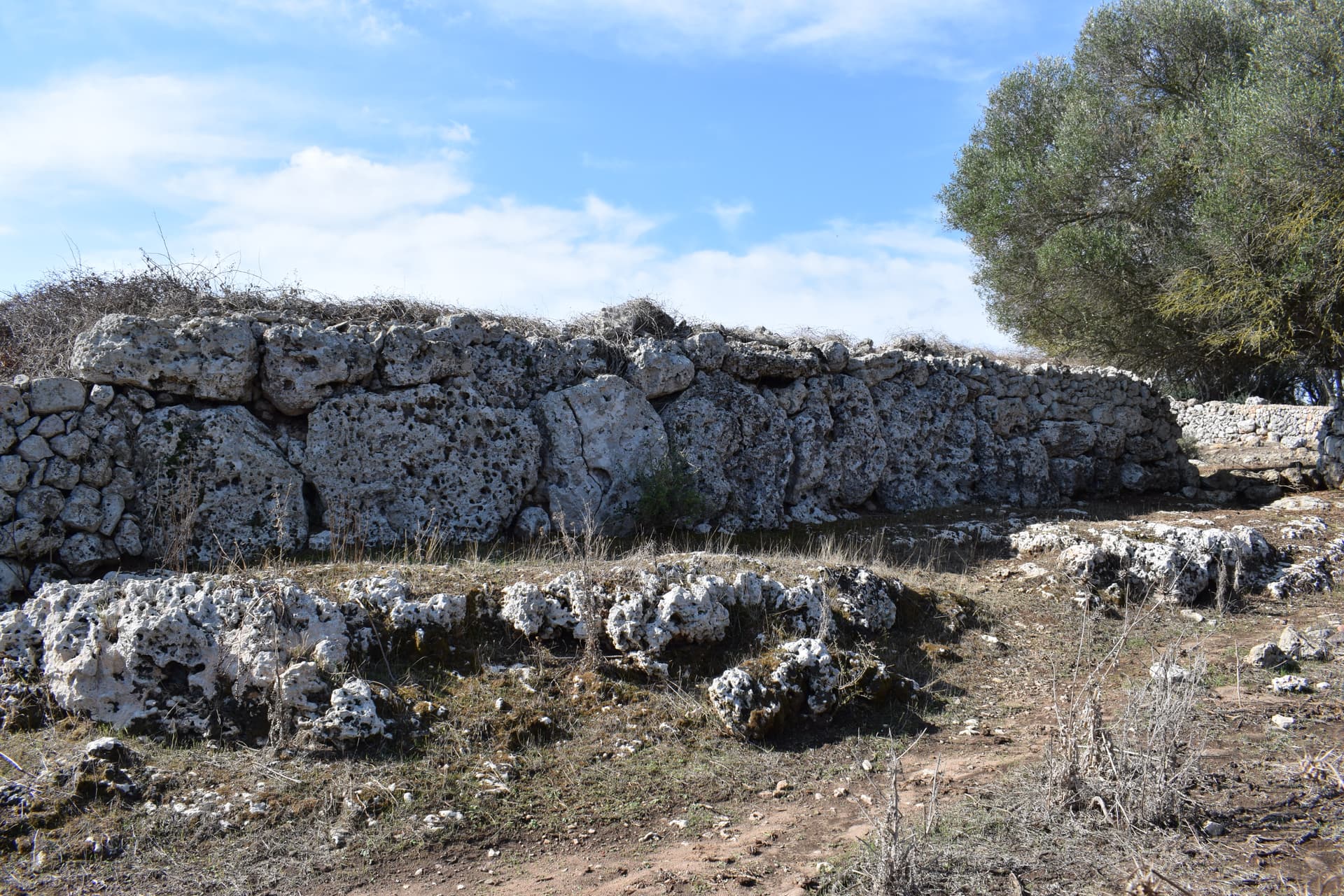
Cornia Nou is a Talayotic settlement on the outskirts of Maó, Menorca, centered on two cyclopean stone towers. Radiocarbon dating of its South Building places early construction before 1000 BCE, among the oldest documented talayot activity on the island, part of the UNESCO-listed Talayotic Menorca landscape.
Context and lineage
Excavations coordinated by the Museu de Menorca since 2007 have focused on the site's two talayots and their adjacent structures, producing one of the most precisely dated sequences for early Talayotic architecture.
Why this place is sacred
No sacred or ceremonial function has been documented at Cornia Nou. Its significance is archaeological: excavated tools and food remains point to a settlement centered on processing and storing grain, not on ritual.
Residential and domestic-industrial settlement, apparently centered on food processing and storage rather than ceremony.
Occupation began in the final Bronze Age, with the west talayot's construction possibly predating 1000 BCE. The South Building shows continuous use through roughly 600 BCE; exterior zones of the site remained in use into the Roman period.
Traditions and practice
Ongoing archaeological research and site conservation, coordinated by the Museu de Menorca since 2007, remains active — walls have been stabilized and areas adapted for study and viewing.
Walk the perimeter of the west talayot before approaching — over ten meters high, one of the largest cyclopean towers on the island. Note the corridor cut through the smaller east talayot.
Talayotic Culture
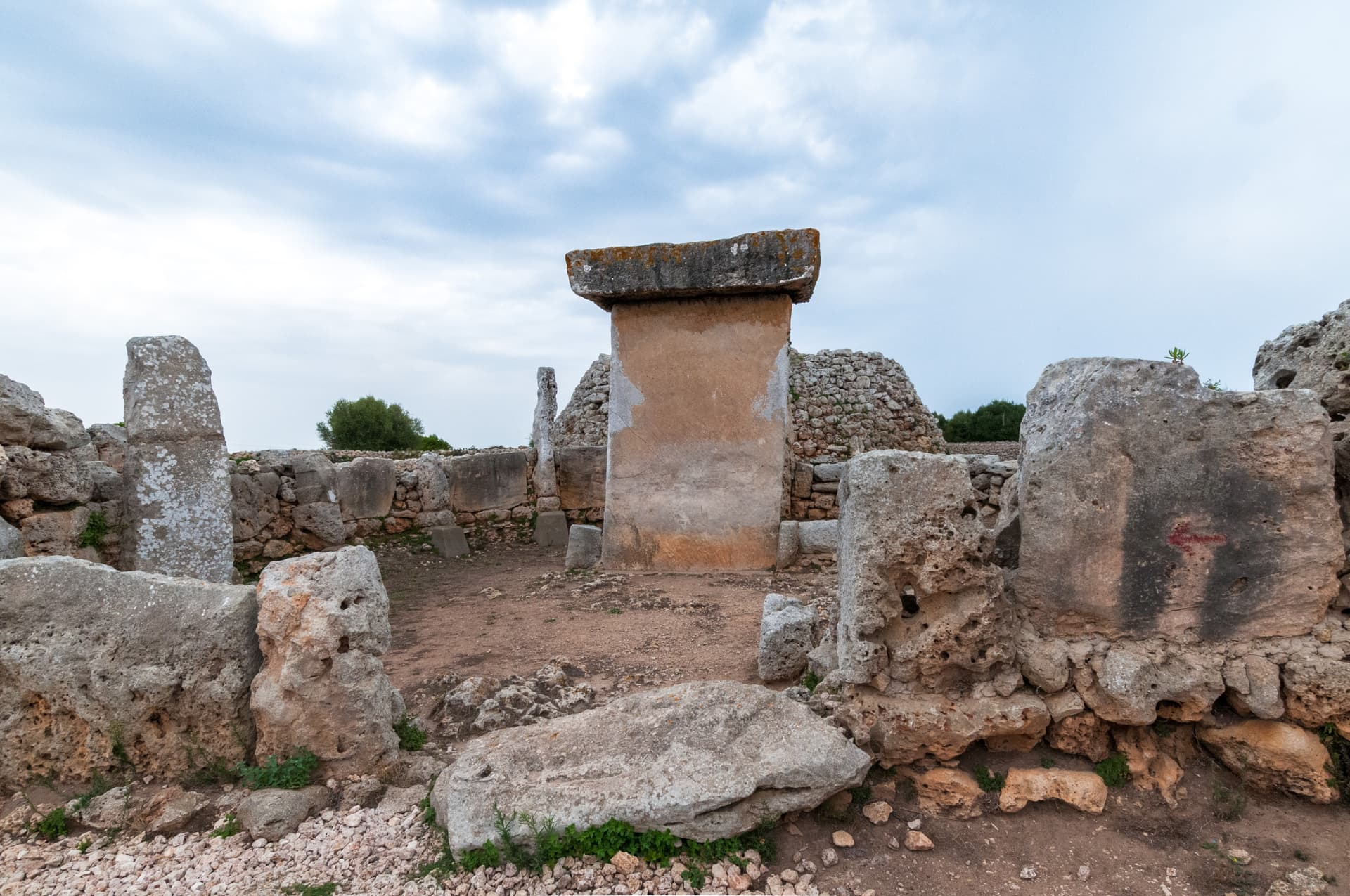
HistoricalCornia Nou is a settlement of the Talayotic Culture, the Bronze Age and Iron Age civilization of Menorca named for its cyclopean talaiot towers. It preserves two talayots and adjacent buildings central to understanding the culture's earliest phase.
No living ritual practice is documented. Recovered grinding tools, hammers, punches, spatulas, animal bone, and carbonized cereal point to domestic food processing and storage as the settlement's core activity.
Experience and perspectives
Cornia Nou is read almost entirely through archaeology, and even that reading is unsettled.
Twenty-seven radiocarbon analyses of the South Building (Anglada et al., 2016) establish three occupation phases spanning roughly 1100 to 600 BCE, with evidence the west talayot may predate 1000 BCE.
The social or ceremonial function of talayot towers remains debated; excavation here has produced new interpretive proposals but no settled consensus.
Pilgrim reflections
A portrait of encounter, not a score
Pilgrims describe what they felt, how present they could become, and whether the place would shape a journey. There are no stars and no ranking of traditions.
No reviewed reflections yet
The first pilgrims can help describe the character of being here.
Share a reflection
Available after an account-backed “Been there.” Every reflection is reviewed before publication.
Visit planning
North of km 2.5 on the road from Maó (Mahón) to Sant Climent, between the industrial park and the airport road. Mobile signal is not documented in research and has not been verified. No opening-hours or keyholder information was available at time of writing; check the Museu de Menorca website for current access arrangements.
Standard heritage-site conservation etiquette applies; no site-specific rules were found in research.
No specific restrictions are documented in available sources beyond standard practice: do not climb on or move stones within the excavated structures.
Nearby sacred places
Sacred places within a half-day’s reach. Pilgrims often visit them together: walk one, stay for the other.


References
Sources consulted when researching this page. Independent verification by readers is welcome.
- 01Archaeological excavation in the Talaiotic settlement of Cornia Nou in Menorca — Museu de Menorcahigh-reliability
- 02Chronological Framework for the Early Talayotic Period in Menorca: The Settlement of Cornia Nou (Mahon, Menorca) — Montserrat Anglada, Antoni Ferrer, Lluís Plantalamor, Damià Ramis, Mark van Strydonck, Guy De Mulderhigh-reliability
- 03Talayotic Menorca - UNESCO World Heritage Centre — UNESCOhigh-reliability
- 04Spain achieves with 'Menorca Talayotic' the 50th inscription on the UNESCO World Heritage List — La Moncloa (Government of Spain)high-reliability
- 05Cornia Nou - Wikipedia, la enciclopedia libre — Wikipedia contributors
Key questions
What pilgrims usually ask
- Why is Cornia Nou considered sacred?
- Stand before a cyclopean talayot near Maó, Menorca, radiocarbon-dated to reveal the earliest phase of Talayotic settlement on the island.
- How do you visit Cornia Nou?
- North of km 2.5 on the road from Maó (Mahón) to Sant Climent, between the industrial park and the airport road. Mobile signal is not documented in research and has not been verified. No opening-hours or keyholder information was available at time of writing; check the Museu de Menorca website for current access arrangements.
- What etiquette should visitors follow at Cornia Nou?
- Standard heritage-site conservation etiquette applies; no site-specific rules were found in research.
- Who is associated with Cornia Nou?
- ,