Collégiale Saint-Martin de Candes
Where Martin of Tours died, at the meeting of two rivers
Understand sacred places, explore living traditions, and learn how to engage respectfully with Pilgrim Map.
Access has not been verified. Check current local guidance before planning a visit.
Candes-Saint-Martin, Indre-et-Loire, France
Read the sources
Visit essentials
A quick read before you go
- Duration
- Thirty to sixty minutes for the church interior and porch; a half-day if extended to include the…
- Access
- Candes-Saint-Martin is reachable by car via the D7 or D751 along the Loire, about 15 km from…
Overview
At the Loire and Vienne confluence, amid pale tuffeau stone, the Collégiale Saint-Martin de Candes occupies the recorded place—not a legendary shrine—where Martin of Tours died on 8 November 397. Remembered across France and much of Western Christendom, the former Roman soldier, hermit, monastery founder, and bishop died in a parish he had founded near his diocese's edge.
The present Plantagenet Gothic church, built from roughly 1175 to the mid-thirteenth century, stands directly over that foundation; its sculpted north porch opened for centuries to pilgrims arriving on foot.
Candes holds no bones or reliquary. Rival claimants carried Martin's remains by boat to Tours within hours, revealing his posthumous value. What remains is place: threshold, river view, and eight centuries of uninterrupted liturgical life.
Why this place is sacred
What gives Candes-Saint-Martin its particular quality is not myth but documentation layered onto geography. Sulpicius Severus, writing close to Martin's own lifetime, recorded the death here in terms historians treat as reliable rather than legendary — a rarity among early saints' lives, where miracle and memory tend to blur.
That historical solidity is then set against a landscape that does the rest of the work: the village sits precisely at the point where the Vienne empties into the Loire, a confluence visible from the churchyard and from the porch steps, and the church itself rises from the exact ground of Martin's own earlier foundation, a modest parish church dedicated to Saint Maurice that he is believed to have established before his death.
Nothing here asks to be taken on faith in the way a levitating saint or a weeping icon does. The sense of a 'thin place' at Candes comes instead from stacking: a real river junction, a real building phase, a body of near-contemporary testimony, and eight intervening centuries of continuous parish use, one on top of the other, until the accumulated weight of specificity starts to feel like presence.
The original structure on this site was a rural parish church dedicated to Saint Maurice, founded by Martin himself in the late fourth century as one of several churches he established at the margins of his diocese of Tours. Its purpose was straightforwardly pastoral — serving a small riverside community — rather than devotional in the way the later collegiate church would become.
Martin's death within it transformed a modest parish foundation into a site with its own claim on his memory, distinct from the tomb and shrine that would develop around his relics in Tours.
After Martin's death, the site did not immediately become a great pilgrimage destination in its own right; that role fell to Tours, where his body and its attendant cult grew into one of the major pilgrimage economies of medieval Christendom. Candes remained a parish, but one with a story attached.
Starting around 1175, the modest earlier church was replaced by a substantial new building in the emerging Plantagenet or Angevin Gothic style, a campaign that continued through the addition of the sculpted north porch around 1250 and concluded within roughly a century.
A collegiate chapter of canons was attached to the church, giving it an institutional life beyond a single parish priest, and the building was fortified in the fifteenth century — a defensive response to the region's exposure during periods of war.
The Revolution dissolved the chapter and stripped the church of its collegiate status, but the building survived intact enough that Prosper Mérimée's 1836 inspection led to its listing as a Monument Historique in 1840, among the first several hundred structures in France to receive that protection.
In the twenty-first century, the revival of the Via Sancti Martini as a certified Cultural Route of the Council of Europe has restored something like the church's earlier function as a waypoint, this time for modern walkers rather than medieval canons.
Experience and orientation
Nothing about the approach to Candes-Saint-Martin announces monumentality. The village unfolds along narrow streets of pale stone, tucked below low limestone cliffs, with the meeting of the Vienne and the Loire opening out just beyond the last houses — a wide, working river landscape rather than a curated view.
The church appears almost without warning at the village center, its scale surprising against the modest houses around it: this was built to serve a collegiate chapter, not a single village priest, and the ambition shows in the height of the nave and the seriousness of the stonework. The north porch is where most visitors slow down.
Its sculpture, four separate hands working across roughly a single generation, survived religious wars and at least one earthquake with enough detail intact that faces, drapery, and architectural ornament still read clearly after nearly eight centuries — the effect is less of ruin than of accumulated weather, stone that has been rained on and prayed under for a very long time.
Inside, the light is the particular grey-gold common to tuffeau limestone interiors, and the space carries the ordinary business of an active parish: a votive candle stand, notices for Mass times, perhaps flowers left from a recent service. It does not feel staged for visitors, because it isn't one.
Pilgrims following the Via Sancti Martini tend to arrive on foot from the direction of Montsoreau or the Chinon road, and something in that approach — tired legs, a long view of the confluence opening ahead — seems to match the church's own quiet register better than arriving by car.
Enter, when possible, through the north porch rather than a side door, since this preserves something of the route medieval pilgrims are believed to have used; take a few minutes on the porch steps before going in to look at the sculpture and, if the light allows, out toward the confluence itself, since the two views belong together.
Inside, the site traditionally associated with the place of Martin's death lies within the choir area near the site of the earlier church; there is no marked shrine, so this is a matter of standing quietly rather than locating a specific stone.
Allow time afterward to walk down to the riverbank itself, a five-minute walk from the church, where the actual meeting of the Loire and Vienne is visible and gives physical shape to a geographical fact otherwise easy to read past.
Context and lineage
Martin was born around 316 in Pannonia, in what is now Hungary, and conscripted into the Roman military as a young man, as was expected of an officer's son.
The episode that made him a lasting figure in Western devotion is said to have occurred at Amiens, where, encountering a freezing beggar at the city gate, he cut his military cloak in half and gave a portion away; that night he reportedly saw Christ in a dream wearing the same half-cloak, an experience that set him toward baptism and, eventually, away from military life altogether.
He went on to found what is generally considered the first monastic community in Gaul, at Ligugé near Poitiers, around 361, before being made bishop of Tours — reluctantly, according to tradition, and against his own preference for a hermit's life. As bishop he continued to found rural churches at the margins of his diocese, among them a small parish dedicated to Saint Maurice at Candes, at the strategic point where the Vienne meets the Loire.
Accounts differ on exactly why Martin traveled to Candes for what proved to be his final visit: some sources describe him going specifically to settle a dispute among the local clergy, while others simply record that he was visiting one of the religious communities he had established when he fell ill — the sources available do not allow this to be settled with confidence, and both possibilities are treated here as open.
What is well attested, notably by the near-contemporary writer Sulpicius Severus, is that Martin died at Candes on 8 November 397, at about eighty-one years old, having asked in his final hours to be laid on ashes on the floor rather than a bed, in keeping with the ascetic practice he had maintained throughout his life.
His death set off an immediate and pointed dispute: monks from both Tours and Poitiers claimed the body, and the Tours faction is said to have resolved the matter by removing it under cover of night and carrying it down the Loire by boat, securing it for the city where his tomb would become one of medieval Europe's most significant pilgrimage destinations, ranked by some medieval accounts alongside Rome itself.
The church's institutional lineage runs from Martin's original fourth-century parish foundation, through several centuries as a modest rural church, to its elevation as a collegiate church with an attached chapter of canons — a status that endowed it with resources sufficient for the ambitious Gothic rebuilding beginning around 1175. That collegiate life continued for roughly six centuries until the French Revolution dissolved the chapter along with most such institutions across France.
The building itself continued in unbroken use as a parish church into the present, its historic value formally recognized in 1840 and its pilgrimage function revived through the Via Sancti Martini network since the early 2000s.
Martin of Tours
Roman soldier turned monk, monastery founder, and bishop; died at Candes in 397 and is venerated as patron saint of France
Sulpicius Severus
Near-contemporary biographer whose account of Martin's life, including his death at Candes, is treated by historians as unusually reliable for a saint's life of this period
Prosper Mérimée
Writer and inspector of historic monuments whose 1836 survey led to the church's listing as a Monument Historique in 1840
André Mussat
Art historian who identified and named the four medieval sculptors responsible for the north porch decoration — the Master of Figurines, the Master of Saint-Martin, the Master of Eighteen Statues, and the Master of Apostles
Charles Joly-Leterme
Architect who led the church's nineteenth-century restoration campaign
Traditions and practice
For roughly six centuries, the church's central ritual life belonged to its collegiate chapter of canons, who maintained the daily round of the liturgical offices attached to Martin's cultus until the Revolution dissolved the institution.
Medieval pilgrims are believed to have entered the church through the monumental north porch, a route thought to follow an older road used specifically by those visiting the site associated with Martin's death — a devotional practice distinct from, and largely eclipsed by, pilgrimage to his tomb and relics in Tours.
The church now functions as an ordinary active Catholic parish, with regular Mass and the standard sacramental life of a French village church. Saint Martin's feast day, 11 November, receives particular local observance, tied both to the saint's own commemoration and to the broader French and European folk tradition of Martinmas, including the associated belief in a spell of mild autumn weather known as Saint Martin's summer.
Since the early 2000s, the church has taken on a second, complementary role as a certified stop on the Via Sancti Martini, the Council of Europe Cultural Route tracing Martin's life across more than 5,000 kilometers and thirteen countries; walkers on regional loops connecting Candes to Chinon, Montsoreau, and onward toward Ligugé and Tours pass through as a matter of course.
A visitor with no particular devotional intent might simply sit in the nave for a few minutes before touring the porch sculpture, treating the quiet as the point rather than a preamble to it.
A pilgrim retracing some portion of Martin's life could use Candes as a deliberate endpoint, arriving on foot if the itinerary allows, and pairing the visit with the short walk down to the river confluence, which grounds the abstract fact of Martin's death 'at the edge of his diocese' in an actual, visible geography.
Roman Catholicism (veneration of Saint Martin of Tours)
ActiveCandes-Saint-Martin marks the precise site of Martin of Tours's death on 8 November 397, distinguishing it from his tomb and relics in Tours and giving it a distinct, complementary place within the wider cult of one of Western Christianity's most venerated saints and the patron saint of France.
Regular Catholic Mass and parish sacramental life continue at the church; it also serves as an active stop for pilgrims walking sections of the Via Sancti Martini, and Saint Martin's feast day on 11 November draws particular local observance.
Perspectives and open questions
Candes-Saint-Martin is read almost entirely within a single interpretive frame — Catholic historical hagiography — but even within that frame, scholarly and devotional readings emphasize different things, and real gaps remain in what is known.
Scholarly perspective
Historians and art historians treat two claims here as unusually solid by the standards of early medieval hagiography: that the present church was raised in a concentrated building campaign, roughly 1175 to the mid-thirteenth century, in the Plantagenet Gothic idiom, directly over the remains of Martin's fourth-century foundation; and that Martin's death at Candes on 8 November 397 is corroborated by near-contemporary testimony, chiefly Sulpicius Severus, rather than resting on later legendary accretion.
This combination — a well-attested death date and location paired with a datable, art-historically documented building campaign — is relatively rare among sites tied to major early saints, most of which accumulate centuries of embellishment before the written record catches up.
Living and traditional perspectives
Within continuous Catholic and regional Touraine-Anjou memory, Candes is understood less as a scholarly puzzle than as the place where Martin, already revered as founder of the diocese's rural parishes, completed his earthly life at the edge of the territory he had shepherded.
This communal memory persisted through the collegiate chapter's centuries of liturgical stewardship and has been reinforced, rather than displaced, by the revival of the Via Sancti Martini since the 2000s, which has given the old devotional route a renewed, walkable form for contemporary pilgrims and casual visitors alike.
Alternative interpretations
Research turned up no substantial body of esoteric or New Age reinterpretation attached specifically to Candes-Saint-Martin. Unlike many sites with claims to being 'thin places,' its significance has been treated almost exclusively within the Catholic historical-devotional register, without a parallel alternative-spirituality literature layered on top.
Open questions
Two questions remain genuinely open. The precise nature of the clergy dispute said to have drawn Martin to Candes shortly before his death is not documented in enough detail to confirm whether that account, or the simpler explanation that he was merely visiting a community he had founded, is correct — both appear in the sources without either being definitively established.
Separately, the exact layout and extent of the earlier Saint-Maurice church Martin founded is unknown, since it lies entirely subsumed beneath the later Gothic structure, leaving its precise footprint a matter for future archaeological investigation rather than present record.
Plan your visit
Access and arrival
Candes-Saint-Martin is reachable by car via the D7 or D751 along the Loire, about 15 km from Saumur and 45 km from Tours. The church stands at the village center and is generally open to visitors free of charge, subject to Mass and other service times, which may restrict access outside the main tourist season. It is also a stop on regional Via Sancti Martini walking routes linking Chinon and Montsoreau to the Touraine-Poitou loop toward Ligugé and Tours.
No independently verified information on formal opening hours or admission policy was available at time of writing; check the Touraine Val de Loire tourism office or the parish for current details.
Candes-Saint-Martin itself is a small village with limited lodging; most visitors base themselves in Saumur (about 15 km away) or Chinon, both of which offer a fuller range of hotels and chambres d'hôtes typical of the Loire Valley tourism circuit. No specific on-site or parish-run accommodation for pilgrims was identified in research; those walking the Via Sancti Martini should arrange lodging in advance through regional tourism offices.
Respectful visit
Modest dress is recommended, with shoulders and knees covered, especially if a Mass or other service is taking place; outside of service times the standard applies more loosely, as is typical for French parish churches that also receive heritage visitors.
Photography is generally permitted for personal use in the nave and around the porch, but visitors should refrain during active Mass or other liturgical services and remain considerate of anyone present for prayer rather than sightseeing.
No distinct offering tradition is documented at Candes beyond the standard French parish practice of votive candle-lighting and a donation box supporting the church's upkeep; there is no formal system of pilgrim offerings tied specifically to the site of Martin's death.
No restrictions beyond ordinary church etiquette apply: quiet voices, no eating or drinking inside, and respectful conduct during any service in progress.
The church remains a functioning parish, not a museum, and Mass times take precedence over sightseeing; visitors should be prepared to pause or redirect a visit if a service is underway. Because there is no marked shrine or reliquary at the site of Martin's death, visitors seeking a specific devotional focal point may find the church's understatement disorienting if they arrive expecting something more overtly commemorative.
Location
Map loads as you approach this section.
Pilgrim reflections
A portrait of encounter, not a score
Pilgrims describe what they felt, how present they could become, and whether the place would shape a journey. There are no stars and no ranking of traditions.
No reviewed reflections yet
The first pilgrims can help describe the character of being here.
Share a reflection
Available after an account-backed “Been there.” Every reflection is reviewed before publication.
Nearby sacred places
Explore other sacred places in the region. Proximity does not establish access or travel time; check each place’s guidance.

Royal Abbey of Fontevraud
Fontevraud-l'Abbaye, Fontevraud-l'Abbaye, Maine-et-Loire / Pays de la Loire, France
3.7 km away

Dolmen de la Madeleine
Gennes, Maine-et-Loire, France
27.2 km away
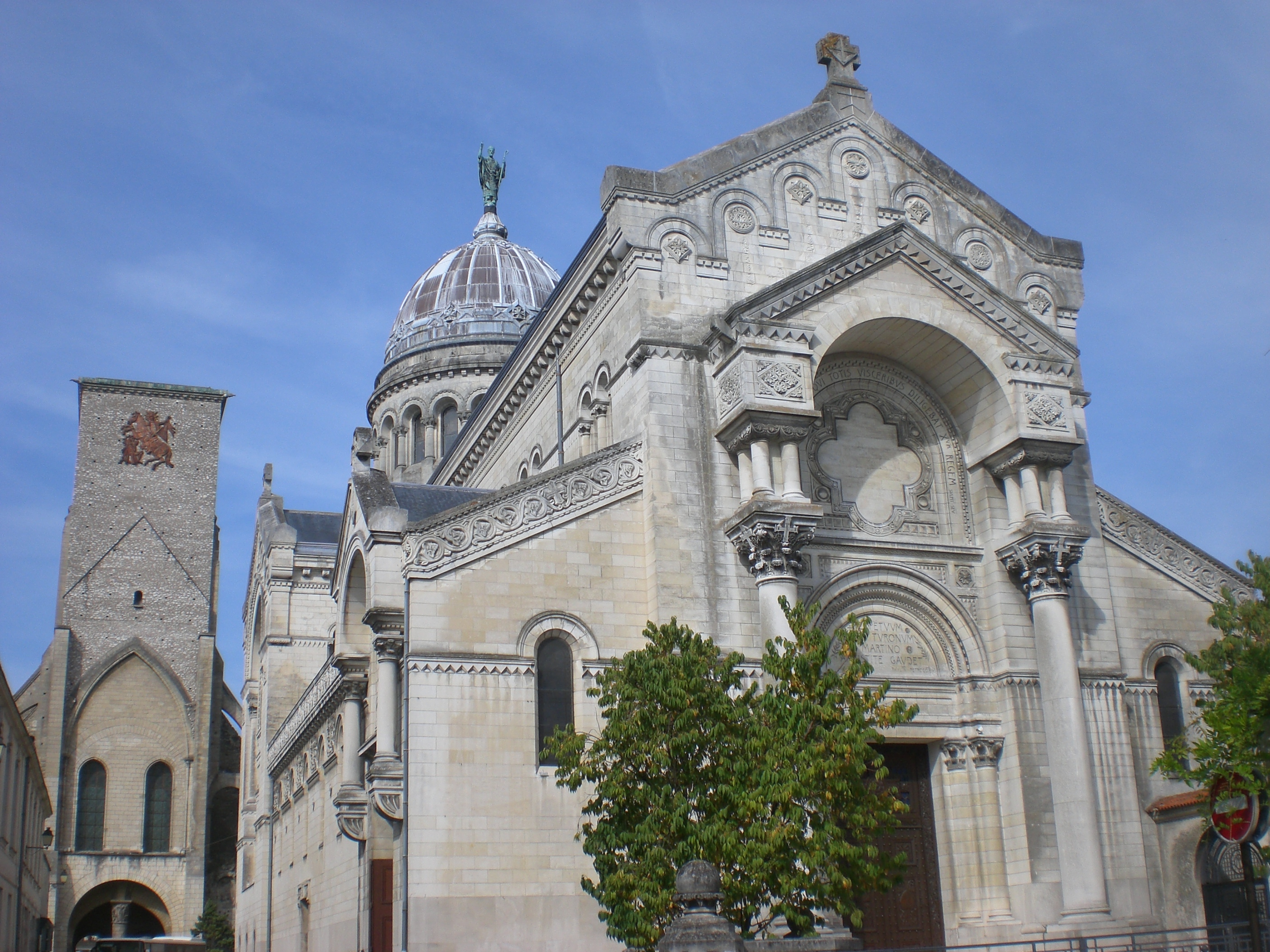
Basilica of Saint Martin, Tours
Tours, Indre-et-Loire, France
50.3 km away

Baptistère Saint-Jean de Poitiers
Poitiers, Vienne, France
73.3 km away
References
Sources consulted for this page. Source categories describe the publication, not a guarantee that every claim is verified. Traditional accounts and outside interpretations may differ.
- 01Collegiate Church of Saint-Martin of Candes — Wikipedia — Wikipedia contributorsacademicPrimary structured source on construction dates (1175–mid 13th century), fortification, monument historique classification (1840), and pilgrimage function of the north porch.
- 02Collégiale Saint-Martin de Candes — Wikipédia — Wikipédia contributeursacademicFrench-language source with architectural detail (dimensions, sculptors identified by André Mussat, Prosper Mérimée's 1836 inspection) and confirms death date and age of Martin at death (81).
- 03Candes-Saint-Martin — Wikipedia — Wikipedia contributorsacademicConfirms coordinates, population, geography at the Loire/Vienne confluence, and Plus Beaux Villages de France membership.
- 04Martin of Tours — Wikipedia — Wikipedia contributorsacademicConfirms death at Candes on 8 November 397, the burial dispute between Poitou and Tours factions, the boat removal of his body down the Loire, and his status as patron saint of France.
- 05Candes-Saint-Martin (Indre-et-Loire), un des Beaux Villages de France — Les Plus Beaux Villages de FranceofficialOfficial association listing confirming Candes-Saint-Martin's membership and heritage rationale.
- 06The Saint Martin of Tours Route — Cultural Routes of the Council of Europe — Council of EuropeofficialOfficial Council of Europe Cultural Route (certified 2005) description of the Via Sancti Martini network spanning 5,000+ km and 13 countries, with Tours/Candes as key French waypoints.
- 07Saint-Martin Collegiate Church, Candes-Saint-Martin — Touraine Val de Loire TourismeSource contextRegional tourism office page with visitor-facing description of the church's heritage and architecture.
- 08Candes Saint-Martin — Saumur Loire Valley Tourism — Office de Tourisme Saumur Val de LoireSource contextLocal tourism office source on the village and church; page returned an access error on direct fetch but is corroborated by search-result summaries and other tourism sources.
- 09Catholic Encyclopedia: St. Martin of Tours — New Advent / Catholic EncyclopediaacademicTraditional Catholic reference source on Martin's life, death, and veneration; used to corroborate hagiographic details.
Share a photo
Help visitors recognize Collégiale Saint-Martin de Candes. Every submission is reviewed before publication.