Baptistère Saint-Jean de Poitiers
France's oldest surviving Christian building, held in stone and silence
Understand sacred places, explore living traditions, and learn how to engage respectfully with Pilgrim Map.
Access has not been verified. Check current local guidance before planning a visit.
Poitiers, Vienne, France
Read the sources
Visit essentials
A quick read before you go
- Duration
- Approximately 20–45 minutes for a thorough visit, given the museum's small scale.
- Access
- Located in central Poitiers and easily reached on foot from the city center; standard European…
Overview
Low and unassuming in central Poitiers, the Baptistère Saint-Jean's earliest fabric dates to around 360 CE, built on cleared Roman foundations while Hilary of Poitiers shaped the city into a centre of orthodox Christianity in Gaul. Neither cathedral nor shrine, it is a purpose-built room for immersion: octagonal at its core, with a sunken pool now dry.
Restored and enlarged after 507, given a new baptismal tank in the 6th century, used as a parish through Romanesque and Gothic centuries, sold and deconsecrated during the Revolution in 1791, and reclaimed by the state in the 19th century, it kept its shape through these phases of French Christianity. No longer a place of worship, it is a museum run by a local antiquarian society, holding significant Merovingian sarcophagi and stelae from cemeteries around Poitiers.
Its draw is temporal density: immersion baptism occurred here for roughly four centuries before parish life, revolutionary emptying, and ticketed encounter with old stone.
Why this place is sacred
What makes the Baptistère Saint-Jean unusual is not a single dramatic event but the sheer accumulation of use across time in one small footprint. The building's earliest core was raised around 360 CE on ground cleared of an earlier Roman structure demolished decades before — so the site was already old before it was Christian.
It stood within or beside the episcopal quarter Hilary of Poitiers was establishing as he contested Arian teaching and set Poitiers on a path toward orthodox Christian authority in Gaul. After the Frankish victory at Vouillé in 507, the building was substantially restored and expanded, and in the 6th century a new baptismal tank was installed in its octagonal core — the same pool, empty now, that visitors look down into today.
Immersion baptism continued here for roughly two more centuries before the wider Latin church moved to aspersion and font baptism; the pool was filled in during the 10th century once that older practice had ended.
From the 11th through 14th centuries the space was absorbed into ordinary parish life, and its upper walls were painted with frescoes — Christ in Majesty, apostles, a crowned figure identified with Constantine, scenes from the life of John the Baptist — layering medieval devotional art over the late-antique structure beneath it.
The Revolution ended that continuity abruptly: the building was deconsecrated and sold in 1791, and for a period served secular purposes before the French state repurchased it in the 19th century (sources differ on whether formal Monument Historique protection followed in 1834 or 1846).
Excavations in the 20th century clarified much of this sequence without fully resolving it — archaeologists still debate the precise date at which the original civil structure was adapted for Christian use, and whether the earliest core belongs to the mid-4th century or is better dated slightly later. What is not in dispute is the survival: this is the oldest identifiably Christian structure standing in France, and one of the oldest anywhere in western Europe.
The building's founding purpose was functional and specific: a dedicated space for baptism by full immersion, built for a Christian community establishing itself as the dominant, orthodox faith in a Roman provincial city recently contested by Arian teaching.
It was not designed as a general place of worship or gathering — that function belonged to the cathedral and other churches of the episcopal quarter — but as the ritual threshold building where new converts entered the faith bodily, submerged in the pool at its center.
The building's function shifted at least four times across its life: from Roman civil structure, to dedicated Christian baptistery with a working immersion pool, to ordinary parish church once immersion baptism fell out of use and the pool was filled in, to secularized private property after the Revolution, and finally to its current form as a small archaeological museum under the Société des Antiquaires de l'Ouest.
Each transition left physical evidence rather than erasing what came before, which is part of why the building reads today as a stratified record rather than a single-period monument.
Experience and orientation
Nothing about the exterior prepares a visitor for scale — this is a low, modest building among the streets of central Poitiers, easy to mistake for something municipal rather than ancient. Stepping inside changes the register immediately. The space is compact, dimly lit, and the octagonal core with its sunken, empty pool draws the eye downward before it draws it up.
Visitors consistently describe the intimacy of the room relative to what they expect from a historically significant French Christian site — it has none of the vaulted grandeur of a basilica, and that absence is itself part of the experience. The Merovingian sarcophagi arranged along the walls are close enough to see the tool marks in the stone.
Above them, faded Romanesque and Gothic frescoes are still legible in places: a seated Christ in Majesty, ranks of apostles, a crowned figure historically read as Constantine, episodes from the life of John the Baptist, all painted centuries after the building's founding onto walls that were already five or six hundred years old when the painters arrived.
The overall effect reported by visitors is not devotional excitement but a kind of settled, historical gravity — a sense of having entered a room where an enormous amount of time has simply accumulated in place, without much needing to be said about it.
The building sits centrally in Poitiers and is reached on foot within the old town; there is no approach ritual or processional route to speak of, and no anteroom to adjust in before entering — the shift in scale and light happens at the threshold itself.
Inside, the octagonal pool at the center is the natural anchor point; from there the sarcophagi ring the lower walls and the frescoes occupy the upper registers, so a visitor's attention naturally moves from floor to wall to ceiling as they take in the different centuries stacked on top of one another.
Context and lineage
The building's Christian identity is traditionally tied to the episcopate of Hilary of Poitiers, bishop of the city from roughly 350 to 367 CE, though the precise sequence by which an existing Roman-era civil structure was converted for Christian baptismal use is still debated by archaeologists rather than settled fact.
What is documented is the broader context: Hilary was among the most forceful opponents of Arianism in the western church, earning the later epithet "Athanasius of the West," and his episcopate marked Poitiers's emergence as a center of orthodox authority in Gaul. The baptistery's earliest fabric, raised around 360 CE atop ground cleared of a Roman building demolished decades earlier, sits within or adjacent to the episcopal quarter Hilary was establishing.
The building's Christian use expanded significantly after 507 CE, when Clovis I's Frankish victory at the Battle of Vouillé over the Visigoths brought Poitiers more firmly under Frankish, Nicene Christian control; the restoration and enlargement that followed, along with the addition of a new baptismal tank in the 6th century, reflects that consolidation.
Immersion baptism continued in the octagonal pool for roughly two centuries more before the wider church shifted to font baptism, at which point the pool was filled in and the building settled into ordinary parish life — a status it held through the Romanesque and Gothic centuries, when its walls were painted with the frescoes still visible today.
That continuity ended in 1791, when Revolutionary authorities deconsecrated and sold the building; it passed through secular hands until the French state repurchased it in the 19th century, with sources differing on whether formal heritage classification followed in 1834 or 1846.
The building sits within the broader lineage of late-antique and early-medieval baptistery architecture in Gaul, a tradition of purpose-built immersion structures attached to episcopal complexes that mostly did not survive in usable form elsewhere in France.
Its continuous physical record — Roman civil substructure, 4th-century Christian adaptation, Merovingian restoration, medieval parish absorption, Revolutionary secularization, modern museum curation — makes it a reference point for archaeologists studying the transition from late Roman to early Christian ecclesiastical architecture across the region, and its sarcophagus collection is treated in academic literature as one of the more significant regional holdings of Merovingian-era Christian funerary material in Poitou.
Hilary of Poitiers
First bishop of Poitiers (c. 350–367 CE); the building's Christian identity and the surrounding episcopal quarter are traditionally associated with his episcopate. A leading anti-Arian theologian later called the "Athanasius of the West," and the mentor of Martin of Tours, which is the link that places this site on the Via Sancti Martini today.
Martin of Tours
Left military service before 361 CE to become Hilary's disciple in Poitiers, then founded the monastery at Ligugé a few kilometers south — the connection that gives this stop its place on the pilgrimage route, even though the baptistery itself is dedicated to John the Baptist, not to Hilary or Martin.
Clovis I
Frankish king whose victory over the Visigoths at the Battle of Vouillé in 507 CE brought Poitiers under Frankish control and preceded the substantial restoration and expansion of the baptistery that followed.
Société des Antiquaires de l'Ouest
The local antiquarian society that has curated the building as an archaeological museum since its secular re-use began, assembling and cataloguing its collection of Merovingian sarcophagi and stelae, and maintaining the site as a public heritage attraction today.
Traditions and practice
For roughly four centuries, from the building's Christian founding through approximately the 8th century, the central rite practiced here was baptism by total immersion in the octagonal pool — a physically demanding, once-in-a-lifetime initiation rather than a recurring devotional act.
Once font-based baptism replaced immersion across the wider Latin church, the pool was filled in and the building's practice shifted to the ordinary rhythms of parish worship that continued through the Romanesque and Gothic periods, until the Revolution ended religious use of the site altogether in 1791.
No baptismal, liturgical, or devotional practice occurs at the site today. Its living practice now is curatorial and educational: the Société des Antiquaires de l'Ouest maintains the building as a museum, periodically offers guided tours through the Poitiers tourism office, and continues to research and catalogue the Merovingian sarcophagus collection housed inside — an active, if academic, tradition of study rather than worship.
Approach the building without expecting a devotional experience, and give the small space more time than its size suggests it needs. Stand at the edge of the sunken pool before moving to the sarcophagi — it is the clearest surviving trace of what this room was originally built to do, and it rewards a slow look rather than a passing glance.
Let your eyes adjust to the low light before trying to make out the frescoes on the upper walls; the figures there emerge gradually rather than all at once. Because the museum is small, it pairs naturally with a longer walk through Poitiers's other Romanesque churches on the same visit, rather than standing alone as a destination.
Early Latin/Gallo-Roman Christianity (Nicene, anti-Arian)
HistoricalBuilt under or shortly after Hilary of Poitiers, the first bishop of Poitiers and a leading 4th-century opponent of Arianism, the baptistery is a direct physical legacy of the establishment of orthodox Christianity in Gaul and one of the earliest surviving purpose-built Christian structures in France.
Baptism by total immersion in the central octagonal pool, historically practiced until roughly the 8th century, when immersion baptism was abandoned in favor of font-based baptism across the wider Latin church.
Merovingian Christian material culture / funerary tradition
HistoricalThe site preserves one of the more significant regional collections of Merovingian-era (5th–8th century) Christian sarcophagi and stelae, offering direct material evidence of early medieval Christian burial customs in Poitou.
Christian burial practices reflected in carved sarcophagi, stelae, and bas-reliefs recovered from necropolises around Poitiers; there is no living burial practice associated with the collection today, only its museological preservation.
Archaeological and museological stewardship
ActiveSince the building's secularization, the Société des Antiquaires de l'Ouest has maintained and studied it as a heritage site, assembling and cataloguing its Merovingian collection and keeping the building's stratified history legible to the public.
Ongoing curation, cataloguing, academic publication (including peer-reviewed catalogs of the sarcophagus collection), guided tours arranged through the Poitiers tourism office, and conservation of the building's fabric and frescoes.
Perspectives and open questions
The Baptistère Saint-Jean is read almost entirely through a historical-archaeological lens rather than a devotional one, and one methodological tension runs through nearly every serious account of the site: whether it, rather than Saint-Hilaire-le-Grand, deserves its place as the Poitiers stop on a Hilary/Martin pilgrimage narrative.
Scholarly perspective
Archaeologists and art historians broadly agree that the building preserves genuine 4th-century fabric, substantially reworked through the Merovingian, Romanesque, and Gothic periods, making it a rare witness to the transition from late Roman civil architecture to early Christian and Merovingian ecclesiastical building practice in Gaul.
Where scholarly consensus breaks down is on precise dating: specialists differ on whether the earliest core belongs to the mid-4th century or somewhat later, and on the exact sequence by which a civil Roman-era structure was converted to dedicated Christian baptismal use. The classification date of the building as a protected Monument Historique is likewise reported inconsistently — some sources cite 1834, others 1846 — and this has not been resolved to a single primary record.
Living and traditional perspectives
Within French Catholic heritage memory, the site is understood as physical proof of Poitiers's early and central role in establishing orthodox Christianity in Gaul under Hilary, and as a tangible, if indirect, link to Martin of Tours's formation as Hilary's disciple before he left to found Ligugé. This traditional framing treats the building's age and survival as itself a form of testimony, even though the structure has not functioned as an active church since the Revolution.
Alternative interpretations
No significant esoteric or alternative spiritual interpretive tradition is attached specifically to this site in the available record; its meaning is framed almost entirely in historical-archaeological and mainstream Christian-heritage terms, without the layered folk or occult readings sometimes found at older or more liminal sacred sites.
The one genuine interpretive tension worth naming directly: this content presents the Baptistère Saint-Jean as the Poitiers stop on the Via Sancti Martini, per the research brief for this entry, but Saint-Hilaire-le-Grand — the basilica that actually holds Hilary's tomb, remains an active place of veneration, and carries UNESCO World Heritage status as a Camino de Santiago stop — is arguably the stronger candidate for a pilgrimage narrative built specifically around Hilary and his mentorship of Martin.
The baptistery is dedicated to John the Baptist, not to Hilary, and today functions as a museum rather than a living devotional site; Saint-Hilaire-le-Grand offers both the saint's actual remains and ongoing veneration. A pilgrim tracing the Hilary–Martin relationship closely may reasonably choose to visit both, or to weight Saint-Hilaire-le-Grand more heavily as the primary Hilary site in Poitiers.
Open questions
Two specific points remain genuinely unresolved rather than merely under-emphasized: the exact sequence and date by which the original Roman-era civil structure was converted to dedicated Christian baptismal use, and the precise year of the building's formal Monument Historique classification, reported as either 1834 or 1846 depending on the source. Neither has been settled to a single primary record in the course of this research.
Plan your visit
Access and arrival
Located in central Poitiers and easily reached on foot from the city center; standard European urban accessibility applies. The building's ancient masonry floors may present mobility challenges, and visitors with access needs should check ahead. Mobile phone signal is reliable throughout central Poitiers, so this is not a site requiring any special connectivity planning, unlike remote heritage sites. No keyholder or advance booking is required for standard visits; guided tours can be arranged through the Poitiers tourism office.
No specific seasonal closure dates were available at time of writing beyond the general spring–autumn extended-hours pattern noted above; check the Visit Poitiers tourism board or the Société des Antiquaires de l'Ouest for current opening hours before visiting.
Respectful visit
No dress code applies. There are no religious modesty requirements, as would be expected at an active shrine or church — ordinary visitor clothing is appropriate.
Personal, non-flash photography is generally permitted in French municipal museums of this type, but policies can change without notice, so visitors should check current signage or ask museum staff on arrival rather than assume.
Not applicable. There is no active devotional practice or offering tradition associated with the site today.
Standard museum conservation rules apply: do not touch the sarcophagi, frescoes, or stonework. Opening hours are seasonal and the building may close periodically for restoration work, so current hours should be checked before visiting rather than assumed from general listings.
Visitors expecting an active spiritual or ritual atmosphere, given the site's framing on pilgrimage routes associated with Hilary and Martin, should be aware in advance that the building today is a secular museum with no ongoing worship; the emotional register here is historical and contemplative rather than devotional. The ancient masonry floors can present a mobility challenge, and the site's small scale means it does not accommodate large groups comfortably.
Location
Map loads as you approach this section.
Pilgrim reflections
A portrait of encounter, not a score
Pilgrims describe what they felt, how present they could become, and whether the place would shape a journey. There are no stars and no ranking of traditions.
No reviewed reflections yet
The first pilgrims can help describe the character of being here.
Share a reflection
Available after an account-backed “Been there.” Every reflection is reviewed before publication.
Nearby sacred places
Explore other sacred places in the region. Proximity does not establish access or travel time; check each place’s guidance.
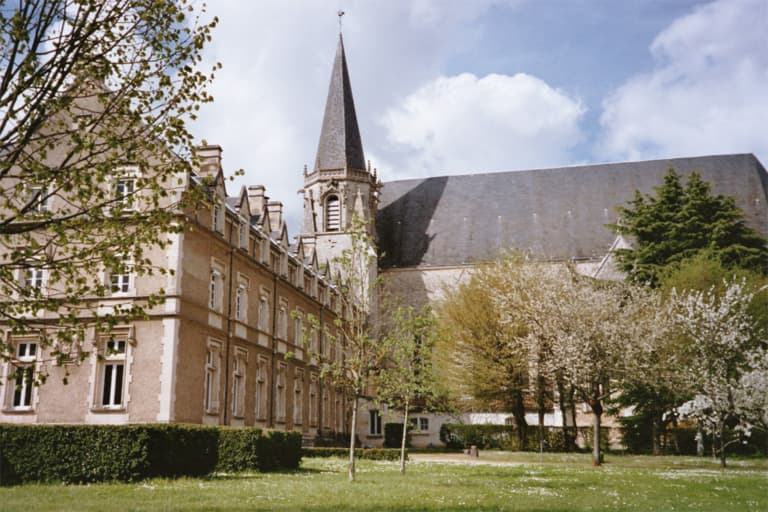
Abbaye Saint-Martin de Ligugé (Ligugé Abbey)
Ligugé, Vienne, France
7.0 km away
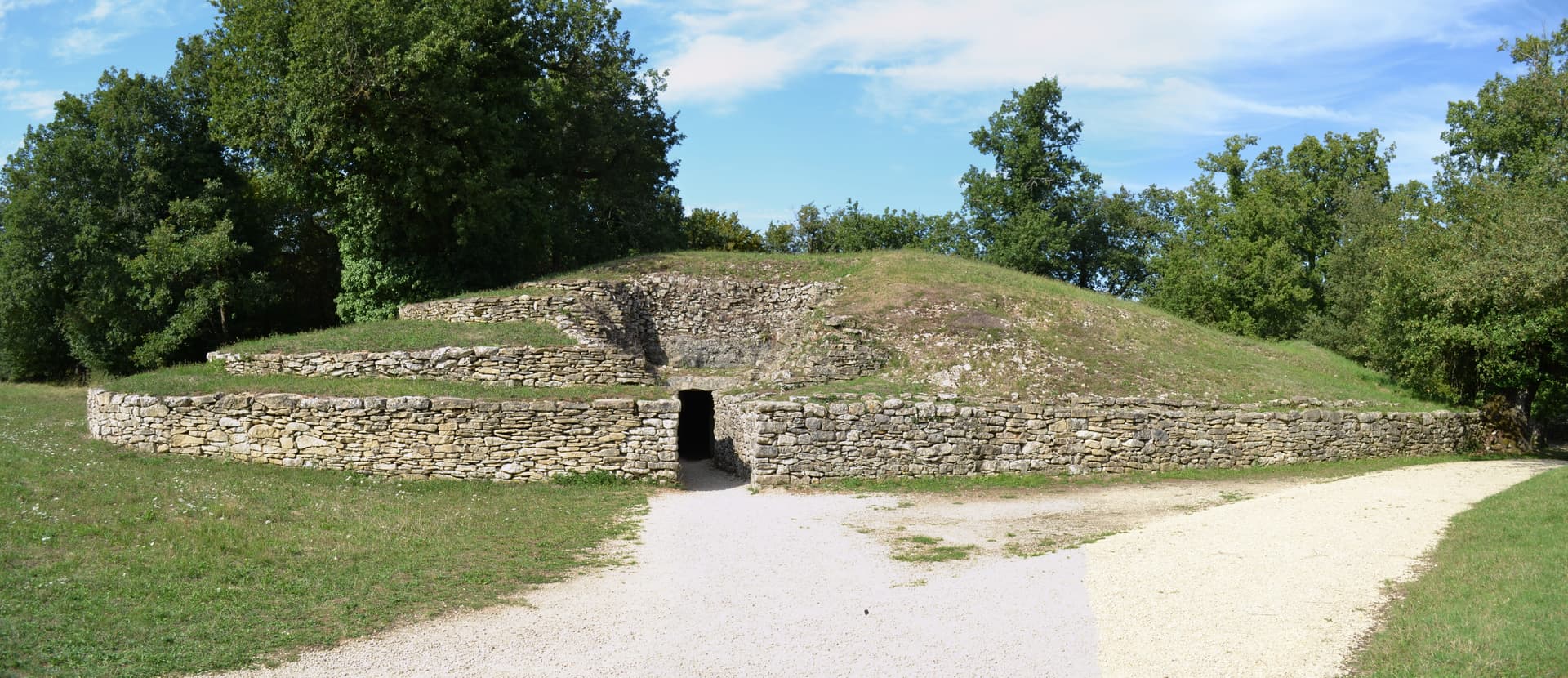
Tumulus of Bougon, Bougon, France
Bougon, Deux-Sèvres, France
39.1 km away

Abbey Church of Saint-Savin-sur-Gartempe
Saint-Savin, Saint-Savin, Vienne / Nouvelle-Aquitaine, France
39.6 km away

Royal Abbey of Fontevraud
Fontevraud-l'Abbaye, Fontevraud-l'Abbaye, Maine-et-Loire / Pays de la Loire, France
70.7 km away
References
Sources consulted for this page. Source categories describe the publication, not a guarantee that every claim is verified. Traditional accounts and outside interpretations may differ.
- 01Baptistère Saint-Jean — Wikipedia — Wikipedia contributorsacademicCore historical timeline: c.360 civil building on demolished Roman substructures, 507 post-Battle-of-Vouillé restoration, 6th-c. baptismal tank, 1791 Revolution-era sale, 1834 repurchase, 20th-c. excavations; coordinates 46°34'46"N 0°20'55"E.
- 02Baptistère Saint-Jean | building, Poitiers, France — Encyclopaedia BritannicaacademicConfirms 4th-century dating and describes it as "probably the oldest Christian edifice in France"; notes current function as archaeological museum with Merovingian tomb collection.
- 03Baptistère Saint-Jean — Portail documentaire, Patrimoine Nouvelle-Aquitaine — Région Nouvelle-Aquitaine / DRAC heritage inventoryofficialRegional official heritage inventory record; corroborates 4th–5th century origins and Merovingian architectural significance.
- 04Martin of Tours — Wikipedia — Wikipedia contributorsacademicConfirms Martin left military service before 361 to become a disciple of Hilary of Poitiers, and founded the monastery at Ligugé near Poitiers in 361.
- 05Visit the Saint-Jean Baptistery — Visit Poitiers (official tourism board)Source contextOfficial municipal tourism-board page; visitor information and site framing as a prominent heritage attraction.
- 06Baptistère Saint-Jean de Poitiers — Musée du Patrimoine de FranceSource contextDescribes the octagonal baptismal pool, museum sarcophagi collection, and Romanesque/Gothic frescoes (11th-14th c.).
- 07La collection de sarcophages du Haut Moyen Âge réunie par la Société des antiquaires de l'Ouest (baptistère Saint-Jean, Poitiers). Tome I – Catalogue — HAL (Archive ouverte, French national open-access repository)academicPeer-reviewed academic catalog of the Early Medieval sarcophagus collection housed at the baptistery; confirms scholarly/museological significance of the site's Merovingian holdings.
- 08Via Sancti Martini — France | Chemin de Saint Martin — Via Sancti Martini (Council of Europe-recognized cultural route association)officialCouncil of Europe-designated (2005) cultural route linking sites of Martin of Tours's life; route passes through Poitiers and Ligugé, connecting to Hilary's mentorship of Martin.
- 09Poitiers Baptistery — Sacred DestinationsSource contextIndependent sacred-travel reference; used as secondary corroboration of visitor-facing historical framing.
Share a photo
Help visitors recognize Baptistère Saint-Jean de Poitiers. Every submission is reviewed before publication.