Choeje Dra Monastery
A sacred cliff of Guru Rinpoche in the Chumey Valley, where hermits have sought solitude for centuries
Understand sacred places, explore living traditions, and learn how to engage respectfully with Pilgrim Map.
Access has not been verified. Check current local guidance before planning a visit.
Gyaltsa, Bumthang, Bhutan
Read the sources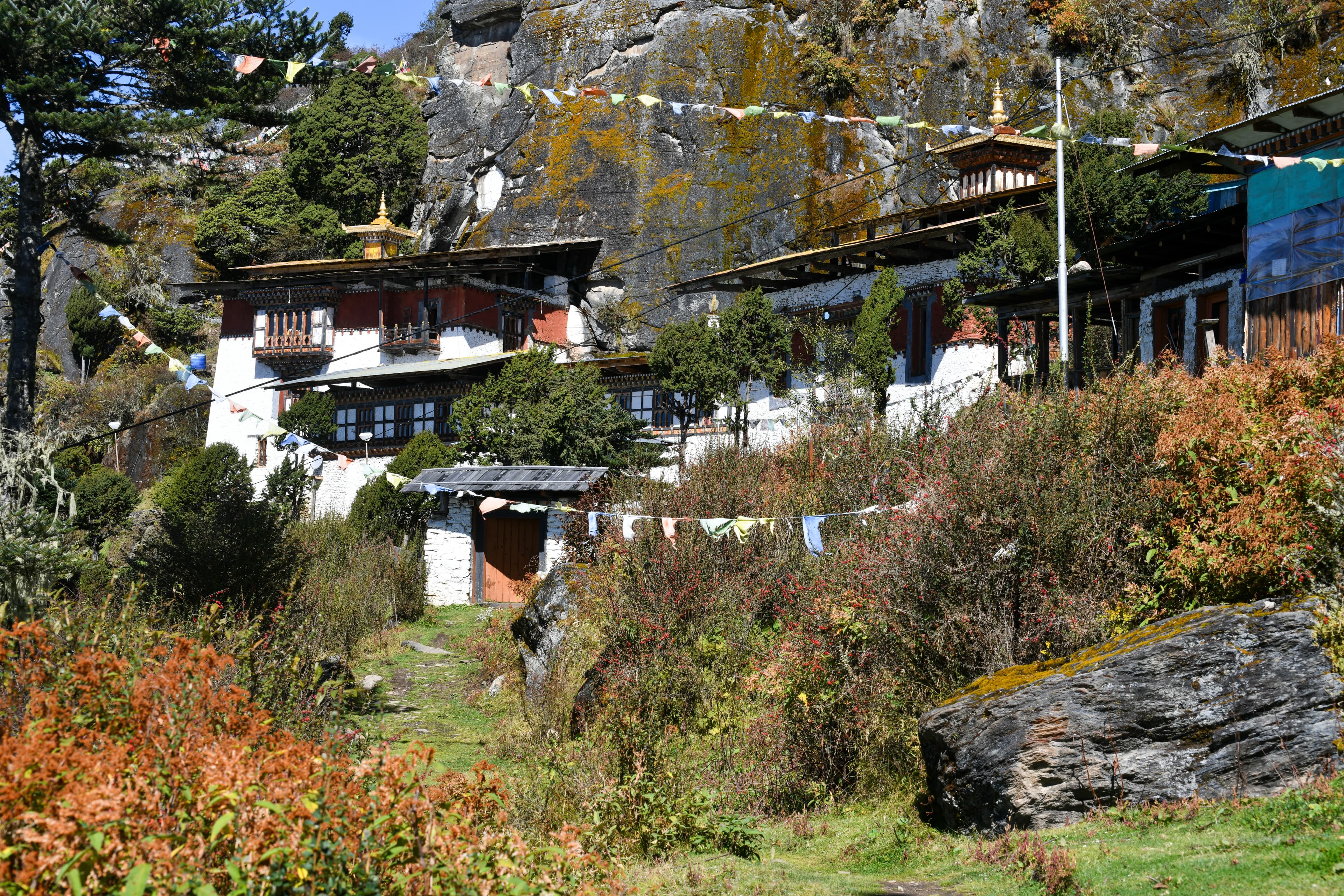
Image of Choeje Dra Monastery. Image source · CC-BY-SA-4.0
Visit essentials
A quick read before you go
- Duration
- Full day from Bumthang
- Access
- From Tharpaling Monastery (37km from Chamkhar): 1-hour steep climb.
Overview
The Dzongkha name renders differently in Roman script depending on the translator — Choeje Dra, Choje Drak, Choedrak — but the place is singular. It is a cliff face in the Chumey Valley of Bumthang where Guru Rinpoche is said to have arrived on the back of a tigress, consecrating the rock as one of four sacred meditation sites (Dra Zhi) in the valley.
The site's identity is inseparable from solitary practice. Gyalwa Lorepa spent twenty-two years here in the twelfth century. Longchenpa composed part of his masterwork, the Seven Treasures, in a cave above the main structures. These were not brief visits but extended inhabitations of silence and stone. The monastery that exists today — white structures pressed against grey cliff, housing ancient chapels, a chorten, and a spring — preserves this character.
Visitors who make the steep climb from Tharpaling or the longer forest route from Lamey Goenpa will find a place that has been shaped by the absence of distraction rather than the presence of spectacle. Choeje Dra does not perform its sacredness. It simply holds it, in rock and altitude and the accumulated attention of those who have practiced here across eight centuries.
Why this place is sacred
At 3,800 metres, against bare rock, the conditions strip life to its essentials. This is what hermits have always sought at Choeje Dra: a place where the world does not compete for attention, where the only relationship is between the practitioner and what the practice reveals. The cliff's thinness is not mystical in the conventional sense.
It is structural — created by altitude, exposure, and the simple fact that reaching this place requires enough effort to ensure that only those who truly need to come will arrive.
Sacred meditation cliff consecrated by Guru Rinpoche. Used for hermitage practice from the twelfth century.
From sacred cliff to active hermitage to period of abandonment to rebuilt monastery. The cycle of inhabitation and vacancy may itself be part of the site's character.
Experience and orientation
Whether approaching from Tharpaling (one hour, steep) or Lamey Goenpa (three hours, through forest and over a pass), the hike to Choeje Dra strips away the pace and noise of the valley below. The monastery appears as white against grey — structures small against the cliff, intimate in scale. Inside the chapels, Guru Rinpoche's stone footprint and the thousand-armed Chenresig provide focal points for attention. Above, Longchenpa's cave can be reached with additional climbing.
The quality of the place is silence, not as absence but as presence. The cliff face creates a wall of stone at your back. The valley falls away below. The sky is immediate and vast. In this setting, even breathing becomes noticeable.
Begin early. Carry water and warm clothing. When you arrive, sit before entering the chapels. Let the altitude and the silence establish themselves in your body. The chapels will mean more after the cliff has done its work.
Context and lineage
Guru Rinpoche consecrated four cliffs in the Bumthang landscape as meditation sites. At this cliff, Gyalwa Lorepa later spent twenty-two years in retreat. Longchenpa composed sacred texts in a cave above. After a period when the site became inaccessible, Ngawang Trinley performed an exorcism and rebuilt the monastery in the eighteenth century.
Bridges Drukpa Kagyu and Nyingmapa traditions through the successive presence of practitioners from both lineages.
Guru Rinpoche
Consecrated the cliff as a sacred meditation site
Gyalwa Lorepa
Established the hermitage; meditated for twenty-two years
Longchenpa
Composed part of the Seven Treasures in a cave above
Traditions and practice
Extended meditation retreats by monks, following the example of Gyalwa Lorepa's twenty-two-year practice.
The hermitage continues to be used for retreat. A small number of monks maintain the chapels.
The hike itself is a practice. At the monastery, sitting quietly with the cliff at your back is the most direct way to participate in the site's quality.
Drukpa Kagyu / Nyingmapa
ActiveOne of four sacred meditation cliffs of Guru Rinpoche in Bumthang. Hermitage site bridging two major Buddhist lineages.
Solitary meditation retreat, hermitage practice
Perspectives and open questions
Choeje Dra can be understood as a hermitage, as a node in Bumthang's sacred geography, or as a place where landscape and practice become indistinguishable.
Scholarly perspective
The site is documented in scholarly literature as one of the four Dra Zhi of Guru Rinpoche in Bumthang. Romanization varies between sources (Choeje Dra, Choje Drak, Choedrak), reflecting the challenges of transliterating Dzongkha.
Living and traditional perspectives
Within the Buddhist understanding, each of the four cliffs holds a particular quality of enlightened activity. The hermitage tradition understands the cliff itself as a teacher — its stone, altitude, and exposure providing conditions that support the practitioner's inner work.
Alternative interpretations
The hermitage offers an ecology of practice that modern contemplative traditions are beginning to rediscover — the idea that certain landscapes actively support certain forms of inner transformation.
Open questions
Whether Choeje Dra and Choedrak represent the same site or distinct locations within the same cliff complex is not entirely settled in available sources.
Plan your visit
Access and arrival
From Tharpaling Monastery (37km from Chamkhar): 1-hour steep climb. From Lamey Goenpa: 3-hour forest hike over a pass.
Bumthang (Jakar) town lodges and guesthouses
Respectful visit
Hiking clothing. Cover shoulders and knees in chapels.
Ask before photographing inside chapels. No flash.
Butter lamp offerings welcome.
Maintain silence | Do not disturb retreatants | Stay on paths | Do not enter closed areas
Demanding hike at high altitude. Weather changes rapidly. Not suitable for casual tourism. Retreat areas closed to visitors.
Current practical details
Address
GMMP+HW3, Jakar, Bhutan
Hours, fees, and access can change — verify on the official source before you travel. Practical details last checked Jun 2026.
Location
Map loads as you approach this section.
Pilgrim reflections
A portrait of encounter, not a score
Pilgrims describe what they felt, how present they could become, and whether the place would shape a journey. There are no stars and no ranking of traditions.
No reviewed reflections yet
The first pilgrims can help describe the character of being here.
Share a reflection
Available after an account-backed “Been there.” Every reflection is reviewed before publication.
Nearby sacred places
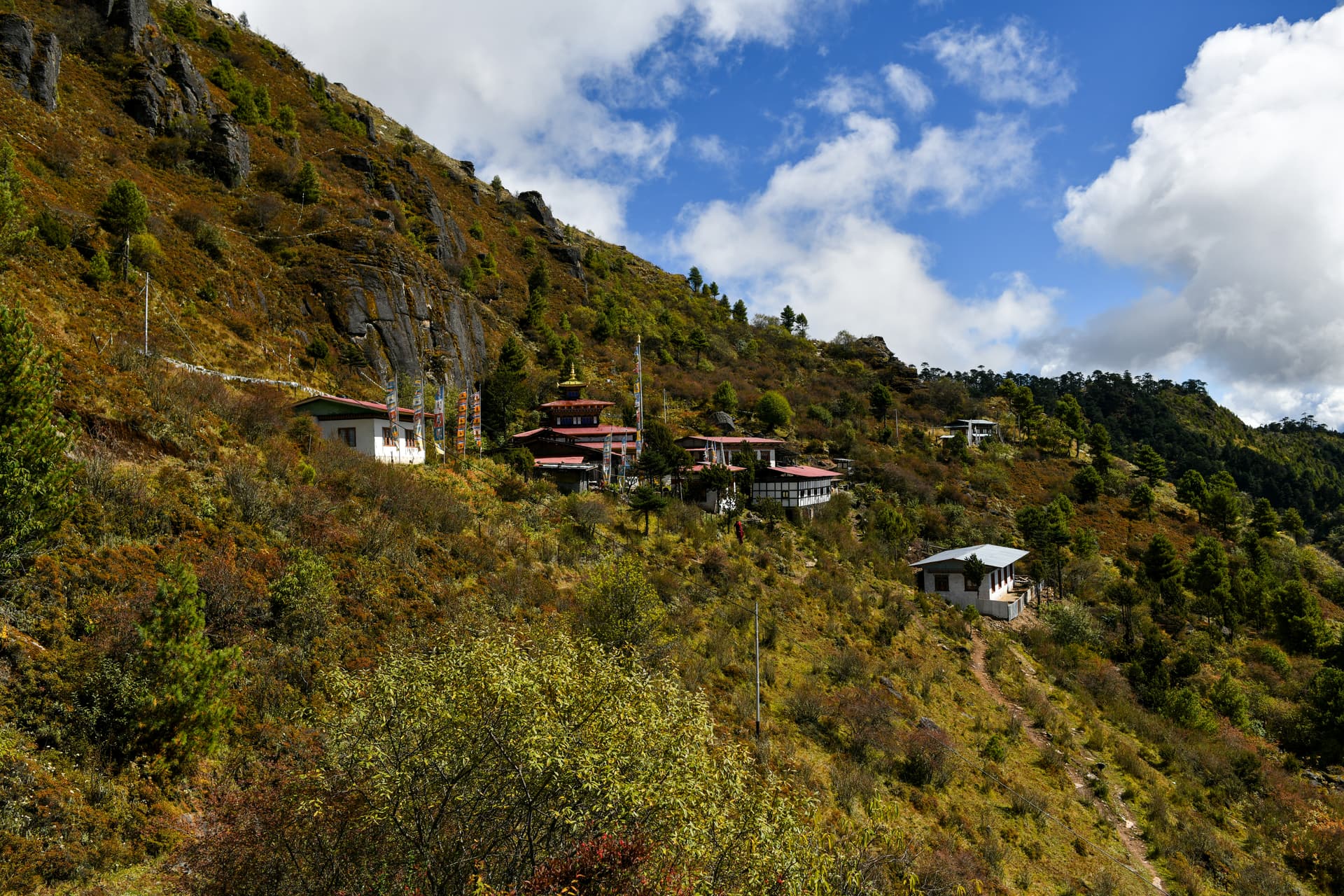
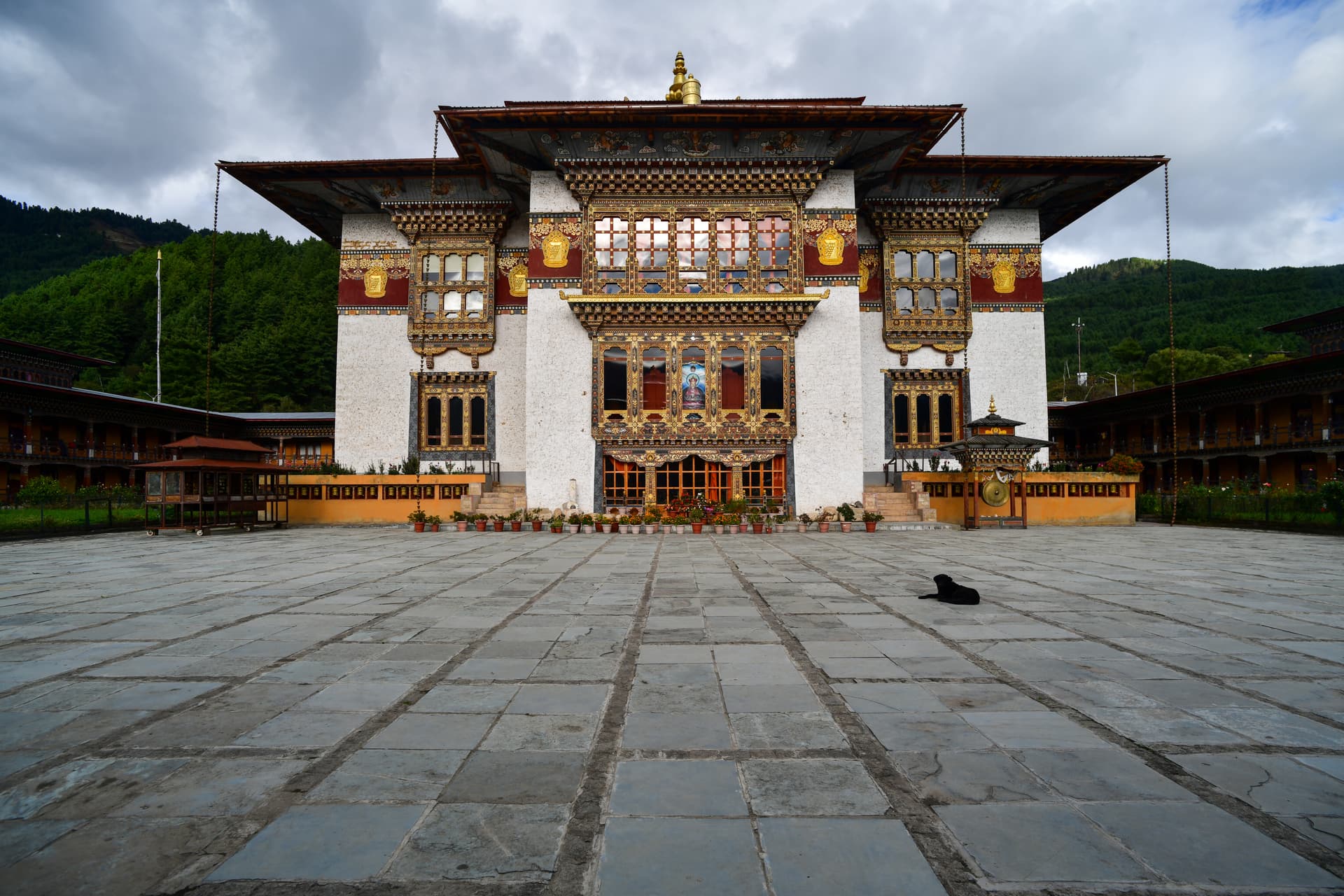
Explore other sacred places in the region. Proximity does not establish access or travel time; check each place’s guidance.


References
Sources consulted for this page. Source categories describe the publication, not a guarantee that every claim is verified. Traditional accounts and outside interpretations may differ.
- 01Choedrak Monastery - WikipediaencyclopediaLists Choje Drak Goenpa as alternate name
- 02Choedrak Monastery - Bhutan Pilgrimage — Bhutan PilgrimageguideReferences Choje Drak as alternate name for Choedrak
- 03Bumthang traditional architecture — Oriental ArchitectureguideBumthang sites overview
- 04Choedrak - Bhutan Luxury Tour — Bhutan Luxury TourguideAlternate naming confirmed
Share a photo
Help visitors recognize Choeje Dra Monastery. Every submission is reviewed before publication.