Casteddu di Tappa
Bronze Age fortress on a rocky promontory where the Torrean world rose and faded
Understand sacred places, explore living traditions, and learn how to engage respectfully with Pilgrim Map.
Access has not been verified. Check current local guidance before planning a visit.
Corse-du-Sud, France
Read the sources
Visit essentials
A quick read before you go
- Duration
- 1–2 hours is sufficient for a thorough visit.
- Access
- From Porto-Vecchio, take the T10 toward Bonifacio, then the D859 toward Figari airport.
Overview
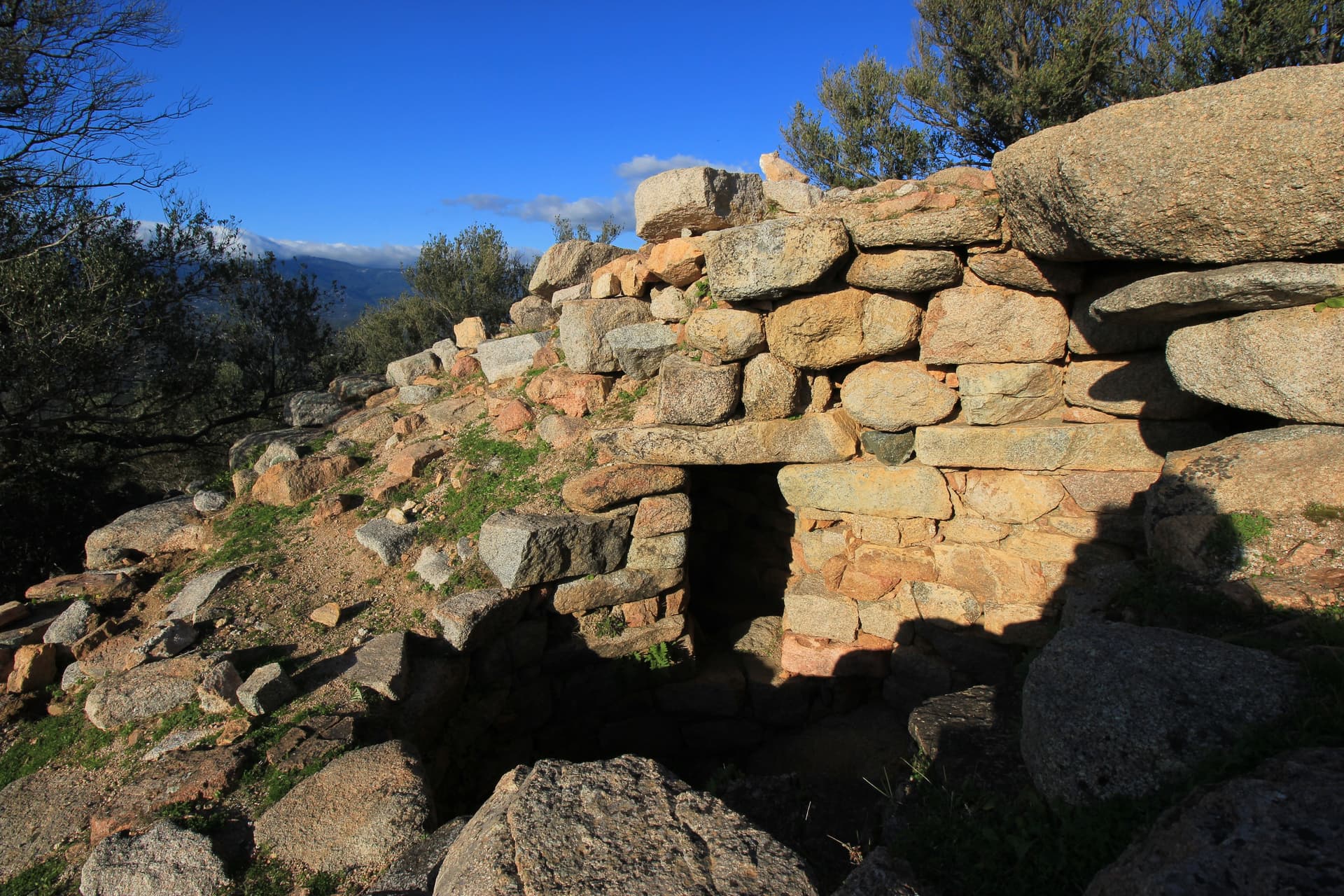
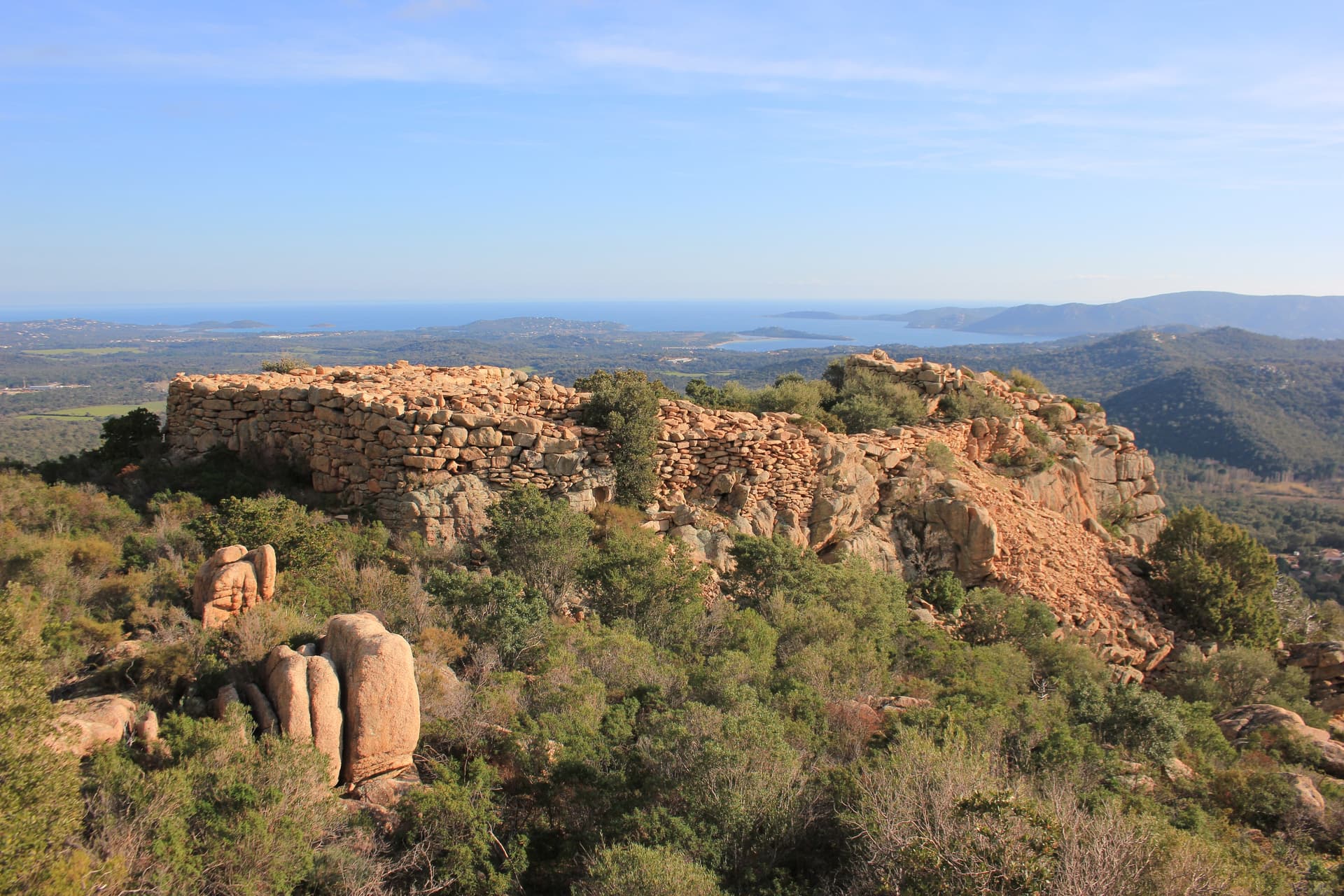
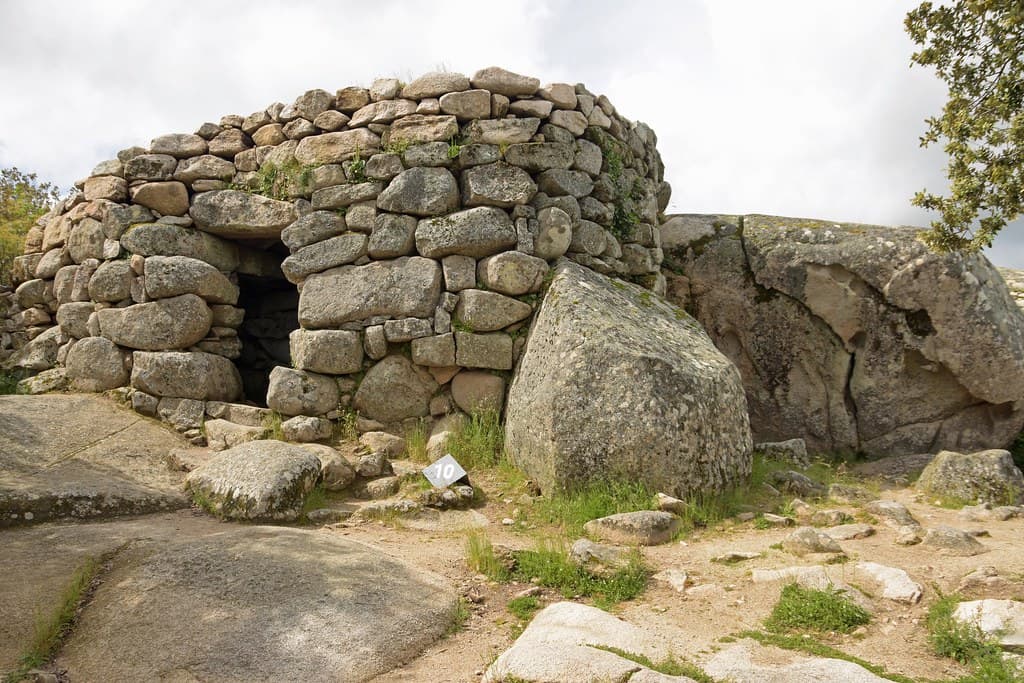
On a rocky spur near Porto-Vecchio, Casteddu di Tappa preserves a Torrean Bronze Age complex: a cyclopean enclosure around a dry-stone settlement, with a circular torre at its southern summit. The torre's chamber, side passages, and access ramp remain legible; massive stones fitted without mortar suggest communal purpose beyond shelter.
Torrean monuments in southern Corsica resemble Sardinian nuraghi, suggesting cross-Tyrrhenian exchange and possibly shared origin. The torre's ceremonial, defensive, or combined function remains unresolved: Roger Grosjean's 1960–61 excavations established chronology but not purpose. Here it forms the settlement's ritual core, with an upper chamber reached by ramp and lower passages receding into near-darkness.
Exposed rock, maquis, and panoramic distance define the landscape. From the enclosure, clear-day views reach the valley and neighbouring ridges, revealing a spatial grammar the Torreans understood and scholars still decipher.
Why this place is sacred
What distinguishes Casteddu di Tappa among the Bronze Age sites of southern Corsica is the legibility of its spatial hierarchy. The cyclopean enclosure defines the community; the torre at the summit defines the sacred. This is not accidental geometry. Across the Torrean world, the torre occupied a structurally and visually dominant position within or adjacent to settlements — an architectural statement that some zone of experience exceeded the domestic.
Archaeologists infer a cultic function for early Torrean torre monuments from comparative analysis across the island's sites. The circular chamber at Tappa, with its orthogonally arranged diverticula — small alcoves set into the wall thickness — suggests interior space organized for purpose rather than convenience. What ceremonies unfolded there, what objects were placed in those recessed chambers, what seasonal or cosmological logic structured the use of the upper floor: these questions remain open.
The broader Torrean culture is still not fully explained. Its people built with a mastery comparable to the Sardinian nuraghe-builders; some scholars propose shared origins across the sea, others point to parallel Bronze Age developments. The most speculative threads connect the Torreans to the Sea Peoples of Egyptian records, to the Shardana warriors. None of these equations has achieved consensus.
The site thus holds a doubled mystery: the specific ritual life of this torre, and the larger question of who these people were and why their civilization ceased.
Presumed combined ceremonial and defensive use — the torre served as both ritual centre and fortified high point of a Bronze Age settlement. Initial Neolithic occupation of the site pre-dates the Bronze Age fortification by nearly two millennia.
From Neolithic settlement to Bronze Age Torrean complex (c. 1900 BC) with torre construction and cyclopean enclosure; abandoned c. 1500 BC with no documented post-Torrean occupation; rediscovered and excavated by Roger Grosjean 1960–61; now a protected French historic monument and open archaeological site.
Experience and orientation
The approach to Casteddu di Tappa follows the D859 south of Porto-Vecchio before a roadside path climbs through maquis scrub toward the rocky spur. Even from below, the site's promontory character is evident — this was chosen for visibility, for command of the valley, for the statement a hilltop community makes about its own presence in the landscape.
Entering through what remains of the cyclopean enclosure, move slowly. The walls were built without mortar by hands placing stone against stone with care that implies not only skill but intention. The scale of individual blocks — some waist-high, some larger — communicates a collective undertaking, a community organized around shared purpose over years or decades. Walk the perimeter of the enclosure before ascending to the torre. Notice how the wall follows the natural rock outcroppings, incorporating geology into architecture.
At the torre, the entrance presents as a low stone doorway. Crouch and enter. The circular chamber is modest in diameter but the transition from exterior to interior is unmistakable: the light changes, the acoustics change, the visual field narrows to stone and the geometry of the room. The diverticula — recessed alcoves set into the thick walls — invite attention. Each is just large enough to hold a person standing or an object of significance.
Whether they served as storage, as priestly stations, or as spaces for offerings placed out of common sight, the question sharpens the experience of being present inside them.
The access ramp to what was once an upper floor is visible. The site does not ask for much — an hour or two of unhurried attention is sufficient to let its spatial logic become apparent. In late afternoon, when the stone takes the low-angled light of the Corsican south, the walls cast shadows that emphasize their depth and mass.
Approach via the D859 from Porto-Vecchio; allow 1–2 hours; free open access. The rocky terrain benefits from sturdy footwear. Spring and autumn offer the most comfortable conditions. The site is compact enough to walk entirely, and the torre chamber interior is accessible.
Context and lineage
The promontory at Tappa was inhabited at least from the second half of the fourth millennium BC — Neolithic communities recognized in this rocky height the same qualities that Bronze Age builders would later exploit. Around 1900 BC, the Torrean culture that would come to define southern Corsica's Bronze Age began transforming the site. The cyclopean enclosure was constructed, a village established within it, and at the summit the defining monument was built: the circular torre.
This structure, with its chamber, side alcoves, ramp, and presumably two-storey height, was architecturally related to the nuraghi then rising across Sardinia — a coincidence that most scholars read as evidence of sustained cross-Tyrrhenian exchange or shared cultural origin.
By 1500 BC the site was abandoned. No historical record explains why the Torrean civilization wound down. The people who built Casteddu di Tappa left no writing. What remains is their stonework — and the questions it generates.
Neolithic settlement (c. 4th millennium BC) → Torrean Bronze Age complex and torre construction (c. 1900–1500 BC) → abandonment → modern archaeological excavation and heritage protection.
Traditions and practice
Archaeological inference suggests the circular torre chamber at Tappa functioned as a ceremonial space within the Torrean settlement — possibly for communal rituals, offerings, or gatherings tied to the sacred calendar. The recessed side chambers (diverticula) within the wall thickness are structurally consistent with spaces designed for the placement of objects or for specific individuals' use during ceremony. No inventory of offerings from this site has been published in available sources.
No contemporary religious or ceremonial practices are associated with the site. It is visited as an archaeological heritage site.
Enter the cyclopean enclosure at a walking pace rather than moving directly to the torre. Let the scale and texture of the dry-stone walls register before seeking the interior. When you reach the torre entrance, pause at the threshold — the transition from open sky to enclosed chamber is architecturally distinct and worth experiencing as a threshold rather than a doorway. Inside the chamber, allow eyes to adjust and attention to settle on the three alcoves.
Consider what it means to stand in a space that was defined as separate — not domestic, not defensive — three and a half thousand years ago. Before leaving the summit, turn to take in the full view of the Caniccione valley: this vantage point was part of the site's meaning, its position in the seen world as much as its interior architecture.
Torrean Bronze Age Culture
HistoricalOne of the key formation-phase Torrean sites where early cyclopean fortification fused with ritual torre construction. Scholars believe the torre monuments originally had a cult function before also becoming defensive structures.
Presumed ceremonial use of the circular torre chamber; domestic occupation of the cyclopean enclosure village.
Perspectives and open questions
The site is read differently depending on whether one approaches it through archaeological chronology, cross-Mediterranean cultural exchange, or the unresolved question of the Torreans' identity and disappearance.
Scholarly perspective
Casteddu di Tappa is a well-documented Torrean Bronze Age site first occupied in the Neolithic and fortified with a torre monument between c. 1900–1500 BC. Roger Grosjean's 1960–61 excavations established the chronology and provided an architectural description that remains the basis for subsequent scholarship. The torre type at Tappa is architecturally analogous to Sardinian nuraghi, supporting theories of cross-Mediterranean Bronze Age cultural exchange. The site is listed with the French Ministry of Culture as a classified historic monument (PA2A000022).
Living and traditional perspectives
No surviving Corsican oral tradition is specifically tied to Casteddu di Tappa. The Torrean people left no written records and no mythology transmitted across the gap between their abandonment of the site around 1500 BC and the present.
Alternative interpretations
The Torreans have attracted speculation connecting them to the Sea Peoples of the Eastern Mediterranean and to the Shardana warriors mentioned in Egyptian records from the New Kingdom period. These proposals remain outside scholarly consensus but have currency in popular prehistory discussions. The cross-Tyrrhenian relationship between Torrean torri and Sardinian nuraghi is better attested and points to a genuine Bronze Age Mediterranean network whose full extent is still being mapped.
Open questions
The precise function of the torre chamber — whether primarily ritual, defensive, both, or something for which modern categories are inadequate — remains unresolved. The identity, origin, and eventual fate of the Torrean people are open questions in Corsican prehistory. Why a civilization that built with such sophistication ceased within a relatively short period is not explained by current evidence.
Plan your visit
Access and arrival
From Porto-Vecchio, take the T10 toward Bonifacio, then the D859 toward Figari airport. After approximately 4.7 km, park roadside. Free, open access with no formal admission. Guided visits are available periodically through the Porto-Vecchio tourism office.
Porto-Vecchio, approximately 10 minutes away, offers extensive accommodation options ranging from hotels to rental apartments.
Respectful visit
No dress code; sturdy footwear essential for the rocky promontory terrain.
Permitted throughout the site.
Not applicable.
Do not climb on or disturb the dry-stone walls. The cyclopean masonry is irreplaceable and structurally sensitive.
Do not climb on the dry-stone walls; the cyclopean masonry is fragile and any disturbance risks structural damage. The site is a classified French historic monument.
Location
Map loads as you approach this section.
Pilgrim reflections
A portrait of encounter, not a score
Pilgrims describe what they felt, how present they could become, and whether the place would shape a journey. There are no stars and no ranking of traditions.
No reviewed reflections yet
The first pilgrims can help describe the character of being here.
Share a reflection
Available after an account-backed “Been there.” Every reflection is reviewed before publication.
Nearby sacred places
Explore other sacred places in the region. Proximity does not establish access or travel time; check each place’s guidance.

References
Sources consulted for this page. Source categories describe the publication, not a guarantee that every claim is verified. Traditional accounts and outside interpretations may differ.
- 01Site archéologique de Tappa - POP (Plateforme Ouverte du Patrimoine)officialFrench Ministry of Culture official heritage record
- 02Casteddu di Tappa - WikipediaencyclopediaPrimary overview source with excavation history and structural description
- 03U Casteddu di Tappa - Tourist Office of Porto VecchioofficialOfficial tourist office page with access directions and site description
- 04Torrean civilization - WikipediaencyclopediaContext on the broader Bronze Age Torrean culture of Corsica
- 05Play at being an archaeologist around Porto-VecchioofficialCorsica official tourism board contextualizing Tappa among Bronze Age sites
- 06Protohistoire / Site archéologique de Tappa / 2A - Porto-VecchioguideRegional heritage tourism atlas entry
- 07The mysterious Bronze Age 'casteddi' of Corsica that crown hills and rocky spursSource contextPopular science overview of the casteddi monuments including Tappa
- 08The Mysterious Horned Warrior — Torreans of the Isle of Corsica — James ThomasSource contextPopular overview of Torrean culture and ritual context
Share a photo
Help visitors recognize Casteddu di Tappa. Every submission is reviewed before publication.