Vortex at Cathedral Rock, Sedona
Sedona's feminine vortex where Oak Creek meets ancient red spires in a sanctuary for emotional healing
Understand sacred places, explore living traditions, and learn how to engage respectfully with Pilgrim Map.
Access has not been verified. Check current local guidance before planning a visit.
Sedona, Arizona, United States
Read the sources
Visit essentials
A quick read before you go
- Duration
- Trail hike to saddle: 1-2 hours round trip.
- Access
- Cathedral Rock Trail: Back O'Beyond Road trailhead off SR-179, 2.5 miles south of uptown Sedona.
Overview
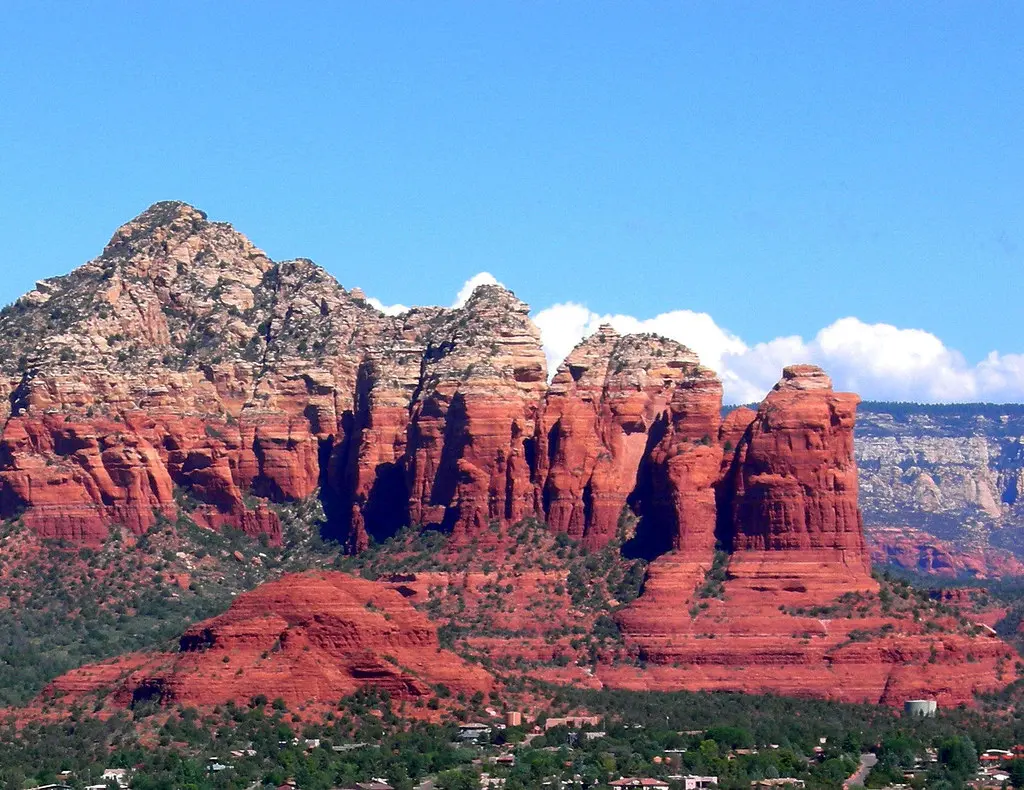
Among Sedona's vortex sites, Cathedral Rock is described as a gentle, receptive presence rather than a pushing or activating one. Its silhouette—likened to praying hands or cathedral spires—reflects in Oak Creek at Red Rock Crossing, forming one of the American Southwest's most photographed views.
Visitors describe its feminine, magnetic quality as supporting emotional softening, release, and insight through surrender rather than effort. Native American tradition holds that gods and the first humans originated here, giving the place a primal, nurturing return-to-source character.
The strongest energy is reported where Oak Creek comes closest to the formation, with water and stone amplifying the site's perceived thinning of ordinary reality. Many arriving for a hike remain longer than intended, drawn into meditation by the contemplative landscape.
Why this place is sacred
The thin place quality of Cathedral Rock operates through receptivity rather than projection. Visitors describe being drawn inward, as if the formation itself creates a container for whatever needs to surface. This feminine, magnetic energy—nurturing, patient, compassionate—seems to support the release of emotional material that other settings would keep buried.
The confluence with Oak Creek at Red Rock Crossing adds another dimension. Water carries its own symbolic and perhaps energetic significance, and the meeting of flowing creek with ancient stone creates a particularly potent location. Many practitioners report that the strongest experiences occur where creek and rock come closest together.
Geologically, Cathedral Rock is carved from the same Schnebly Hill Formation as other Sedona landmarks—Permian sandstone formed from coastal dunes approximately 275 million years ago. The iron oxide that colors the stone rust-red contains the same mineral content as other vortex sites. Yet something in the configuration of this particular formation seems to generate consistently different reports than Bell Rock or Airport Mesa—softer, more interior, more conducive to healing than activation.
Indigenous traditions hold Red Rock Crossing at Cathedral Rock as a birthplace of gods and mankind. The Yavapai and Hopi used these lands for healing ceremonies and vision quests, recognizing the formation as part of a broader sacred landscape.
Cathedral Rock's modern significance as a vortex site emerged through the same New Age developments that elevated all of Sedona's energy centers—Page Bryant's work in the late 1970s, the 1987 Harmonic Convergence. Today it serves as a counterpoint to more activating sites, drawing those who seek healing, emotional release, and gentle transformation.
Experience and orientation
The experience of Cathedral Rock's vortex energy often begins as simple quieting—the mind settling, the body relaxing, the constant hum of ordinary awareness softening into something more spacious. Unlike the energizing quality of Bell Rock or the intensity of Boynton Canyon, Cathedral Rock seems to create permission: permission to feel, to release, to simply be.
Many visitors report unexpected emotional surfacing—tears arising without clear cause, old grief moving through, layers of holding releasing. This can feel vulnerable, even disconcerting, but those who allow the process often describe profound relief and clarity afterward. The feminine energy seems particularly supportive for those carrying accumulated stress, unprocessed loss, or the heaviness of lives lived at unsustainable pace.
The physical experience varies. Some report warmth or tingling; others notice shifts in perception, a sense that colors brighten or sounds clarify. At Red Rock Crossing, where Oak Creek flows beneath the formation, the combination of water sound, reflected stone, and reported energy creates an environment almost impossibly conducive to meditation.
The climb to Cathedral Rock's saddle offers a different but complementary experience—physical effort that focuses the mind, followed by a viewpoint that opens onto the entire red rock landscape. The ascent itself becomes practice, requiring presence, demanding attention, rewarding with perspective.
Come to Cathedral Rock when you need to soften rather than strengthen, to release rather than achieve. This is not a site for setting bold intentions or energizing new projects; it is a place for letting go. Bring whatever needs healing—grief, stress, accumulated tension—and trust the process that unfolds. Allow more time than you think you need. The deepest experiences often come after the mind has exhausted its agenda and finally settles into receptivity.
Context and lineage
Native American tradition holds Red Rock Crossing at Cathedral Rock as a birthplace of gods and mankind who still reside within the formation. This origin narrative positions the site not as a place that became sacred through human designation, but as inherently generative—a source from which life itself emerged.
The spiritual lineage of Cathedral Rock traces through indigenous recognition of the site as a place of origins, through the broader New Age mapping of Sedona's vortexes in the 1980s, to contemporary understanding of the formation as Sedona's primary feminine energy center. The site draws those specifically seeking its receptive, healing quality, establishing itself as the yin to Bell Rock's yang within the Sedona vortex system.
Traditions and practice
Indigenous peoples used the broader Red Rock Crossing area for healing ceremonies and vision quests, recognizing the formation's power to support transformation and connection with the sacred.
Modern practices include meditation at the saddle viewpoint, contemplative time at Red Rock Crossing where creek meets rock, sunset observation, sound healing with feminine-associated instruments, and emotional release ceremonies. The site is particularly popular for practices focused on heart-opening, self-compassion, and letting go.
For a first encounter with Cathedral Rock's energy, consider approaching through Red Rock Crossing at Crescent Moon Picnic Area rather than the more strenuous trail. Find a quiet spot where you can see the formation reflected in Oak Creek. Sit facing the rock, close your eyes, and allow yourself to simply receive whatever wants to come. Notice emotions without grasping or pushing away. If tears come, let them.
Allow at least thirty minutes for the energy to work, longer if possible. The hike to the saddle offers a more active engagement—let the physical effort focus your mind, and use the viewpoint for integration of whatever has moved.
New Age Spirituality
ActiveCathedral Rock is recognized as the deepest magnetic vortex in Sedona, embodying feminine energy associated with emotions, intuition, receptivity, and healing. Often called the 'womb' of Sedona, it creates conditions for emotional release, compassion, and gentle transformation.
Meditation, emotional release work, healing ceremonies, creek-side contemplation, sunset observation
Indigenous (Yavapai/Hopi)
ActiveRed Rock Crossing at Cathedral Rock is held as a birthplace of gods and mankind according to Native American tradition. The site served as location for healing ceremonies and vision quests.
Healing ceremonies, vision quests, tribal gatherings
Perspectives and open questions
Cathedral Rock invites multiple interpretations that need not compete. Indigenous tradition holds it as a birthplace of gods; New Age understanding identifies it as Sedona's deepest magnetic vortex; geological analysis traces its formation to ancient coastal dunes. Each lens reveals something true.
Scholarly perspective
Geologically, Cathedral Rock is carved from the Permian Schnebly Hill Formation—redbed sandstone formed from coastal dunes near the shore of the ancient Pedregosa Sea approximately 275 million years ago. Ripple marks visible on lower trail sections record tidal currents frozen in stone. The saddle sits at 4,685 feet elevation. The distinctive color comes from iron oxide (hematite) staining the quartz sandstone.
Living and traditional perspectives
Indigenous tradition holds Red Rock Crossing at Cathedral Rock as a birthplace of gods and mankind who still reside within the formation. The Yavapai and Hopi considered these lands sacred, using them for healing ceremonies, vision quests, and important tribal gatherings. This is not merely historical—living indigenous peoples maintain connection to these ancestral sites.
Alternative interpretations
New Age practitioners identify Cathedral Rock as the deepest magnetic vortex in Sedona, embodying feminine energy that promotes emotional healing, intuition, compassion, and release. The energy is described as drawing inward (magnetic) rather than projecting outward (electric). The strongest energy is reported where Oak Creek flows closest to the formation, the confluence of water and stone amplifying the vortex effect.
Open questions
The precise mechanisms of visitors' emotional experiences remain unexplained. Whether the consistency of reports reflects actual earth energy, psychological expectation, or some combination awaits investigation. What seems clear is that Cathedral Rock generates notably different experiential reports than other Sedona sites—softer, more interior, more emotionally evocative.
Plan your visit
Access and arrival
Cathedral Rock Trail: Back O'Beyond Road trailhead off SR-179, 2.5 miles south of uptown Sedona. Parking restricted Thursday-Sunday; use Sedona Shuttle. Red Rock Crossing: Crescent Moon Picnic Area on Red Rock Loop Road; day-use fee required.
Multiple options in central Sedona and Village of Oak Creek. L'Auberge de Sedona offers creekside luxury near Red Rock Crossing.
Respectful visit
Sturdy hiking shoes essential; hands must be free for scrambling sections. Sun protection. Layers for temperature variation.
Freely permitted but exercise discretion around those in meditation. Red Rock Crossing offers the iconic reflection shots.
Leave no trace. Silent prayers and mental dedications leave no physical residue.
Parking at Back O'Beyond Road lots prohibited Thursday-Sunday; use Sedona Shuttle. Three points of contact recommended when scrambling. Stay on established routes.
The emotional release that Cathedral Rock facilitates can feel overwhelming, particularly for those not accustomed to allowing feelings to flow. Come with willingness to feel whatever arises. If you carry significant trauma, consider working with support rather than processing alone. The hike to the saddle involves challenging scrambling sections—only attempt if physically capable.
Current practical details
Address
500 Back O Beyond Rd, Sedona, AZ 86336, USA
Hours
Hours, fees, and access can change — verify on the official source before you travel. Practical details last checked Jun 2026.
Location
Map loads as you approach this section.
Pilgrim reflections
A portrait of encounter, not a score
Pilgrims describe what they felt, how present they could become, and whether the place would shape a journey. There are no stars and no ranking of traditions.
No reviewed reflections yet
The first pilgrims can help describe the character of being here.
Share a reflection
Available after an account-backed “Been there.” Every reflection is reviewed before publication.
Nearby sacred places
Explore other sacred places in the region. Proximity does not establish access or travel time; check each place’s guidance.


References
Sources consulted for this page. Source categories describe the publication, not a guarantee that every claim is verified. Traditional accounts and outside interpretations may differ.
- 01Experience the Vortex Energy at Cathedral Rock in Sedona — Visit SedonaofficialOfficial tourism bureau vortex information
- 02Cathedral Rock - Wikipedia — WikipediaencyclopediaGeneral overview with geological and location details
- 03Sedona's Seven Vortexes — Sedona Vortex AdventuresspiritualNew Age perspective on vortex energies
- 04Cathedral Rock: The Heart of Sedona — Sedona PhilosophyguideSpiritual and philosophical perspectives
Share a photo
Help visitors recognize Vortex at Cathedral Rock, Sedona. Every submission is reviewed before publication.