Vortex at Boynton Canyon, Sedona
Where First Woman emerged from the flood to birth a nation—Sedona's most sacred canyon and living ceremonial ground
Understand sacred places, explore living traditions, and learn how to engage respectfully with Pilgrim Map.
Access has not been verified. Check current local guidance before planning a visit.
Sedona, Arizona, United States
Read the sources
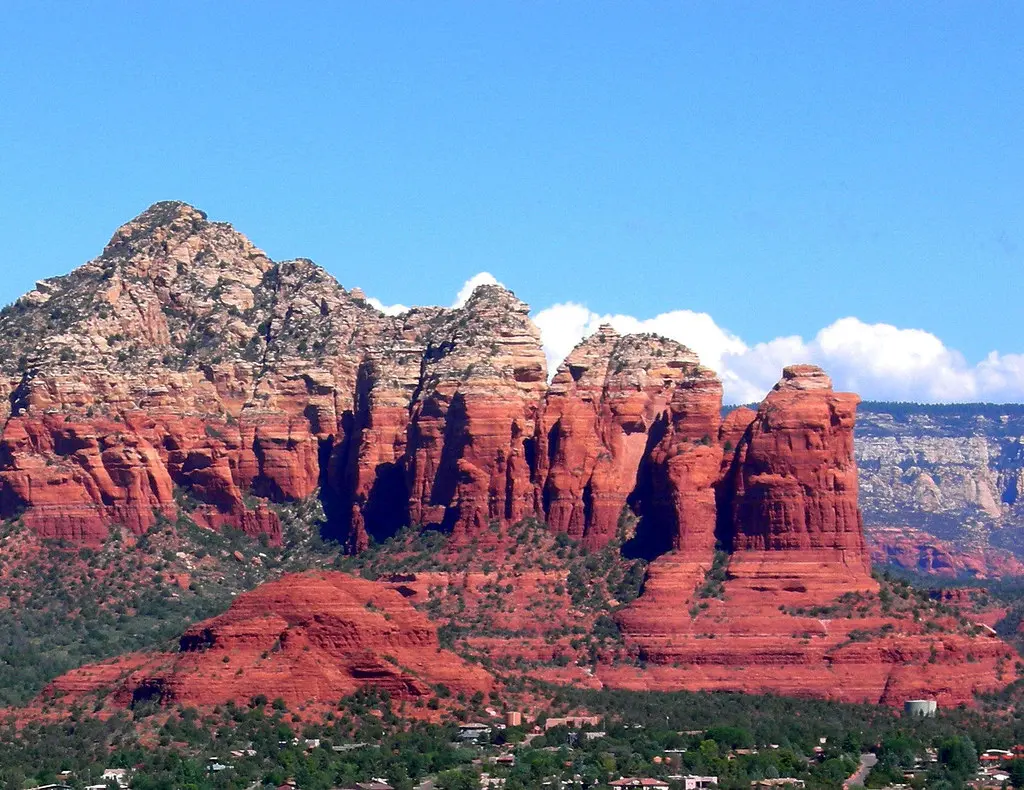
Image of Vortex at Boynton Canyon, Sedona. Image source · CC-BY-3.0
Visit essentials
A quick read before you go
- Duration
- Vista trail to Kachina Woman: 1-2 hours including meditation time.
- Access
- Boynton Canyon trailhead off Boynton Pass Road.
Overview
Some places hold stories so deep they cannot be separated from the land itself. Boynton Canyon is such a place. According to Yavapai-Apache tradition, when the great floods came, First Woman—Komwidpokuwia, Old Stone Woman—was sealed inside a hollow log with a bird and food to survive. When the waters receded, her log came to rest high in this canyon. Here she lived in a cave. Here she bore the children who became the Yavapai-Apache people. Here, life began again.
This is not ancient mythology to be admired from a distance. On the last Saturday of each February, as darkness gives way to dawn, members of the Yavapai-Apache Nation gather at this very spot. Drums sound through the canyon. Songs rise toward the red rock walls. A medicine man offers blessings. The creation story is not remembered—it is lived.
For visitors approaching from outside this tradition, Boynton Canyon still offers profound encounter. The Kachina Woman spire rises 80 feet at the canyon's entrance, marking what New Age practitioners identify as Sedona's most balanced vortex—a place where masculine and feminine energies harmonize. The canyon itself enfolds those who enter in red rock walls that seem to create a sanctuary apart from ordinary time.
To visit here is to walk on ground sacred in the deepest sense—not designated sacred by human agreement but understood as inherently so, the very origin point of a people still present, still practicing, still connected to this land that is not separate from who they are.
Why this place is sacred
The thinness of Boynton Canyon cannot be separated from the Yavapai-Apache creation story rooted here. This is not a place that became sacred through human events or designation; in indigenous understanding, it is the place where human life began again after the flood. The cave where First Woman lived, the ground where she bore her children, the canyon that served as womb for a nation—these are not metaphors but literal sacred geography.
The Kachina Woman spire, rising 80 feet at the canyon entrance, has become a focal point for New Age practitioners who identify balanced vortex energy here. But the spire itself points to something older—the Yavapai-Apache understanding of this place as birthplace of their spirituality, as land inseparable from identity itself.
What makes Boynton Canyon unusual among Sedona's vortex sites is the continuing presence of those for whom this is not spiritual tourism but ancestral homeland. Annual ceremonies mark time here. Living connection persists despite historical violence and land loss. The canyon holds not only energy but memory, not only beauty but belonging.
Visitors report balanced energy—harmonizing masculine and feminine, activating and receptive—but also something harder to name: the sense of standing in someone else's creation story, of being guest in a sanctuary that belongs to others more deeply than tourism can comprehend.
Boynton Canyon is the Yavapai-Apache creation site—the place where First Woman emerged from the flood and bore the children who became the ancestral nation. The canyon served as sanctuary, birthplace, origin point.
Despite the forced removal of the Yavapai-Apache in 1875 and subsequent loss of exclusive territorial control, Boynton Canyon remains a site of active ceremonial practice. The canyon is now divided between national forest and private resort (Enchantment Resort), but the Yavapai-Apache maintain access for ceremonies. The site was identified as a major vortex by Page Bryant in 1980, adding New Age significance to already existing indigenous sacredness.
Experience and orientation
The experience of Boynton Canyon often begins with the sense of entering—passing through the gap guarded by Kachina Woman and Warrior Man spires into something other. The canyon walls rise on both sides, creating enclosure that feels less like restriction than embrace. Many describe feeling held, protected, returned to something fundamental.
The balanced energy characteristic of this vortex supports both activation and receptivity, both knowing and release. Unlike Bell Rock's projective masculine quality or Cathedral Rock's receptive feminine energy, Boynton Canyon seems to harmonize opposites. Visitors report clarity alongside compassion, strength alongside softness, expansion alongside grounding.
For those aware of the Yavapai-Apache creation story, the landscape carries additional weight. To walk where First Woman walked, to breathe air in the canyon where a nation was born, to witness the spire that marks this sacred geography—these awarenesses deepen what might otherwise be simply beautiful into something more layered and humbling.
The canyon's enclosed quality supports extended practice. Sound carries differently here; silence feels thicker; time seems to slow. Many report losing track of hours, emerging surprised at how long they have been within. This is not a site to rush through. It asks for presence, for patience, for the willingness to be changed by encounter with ground this sacred.
Enter Boynton Canyon as you would enter someone's home—with respect, with awareness that you are guest here. The Yavapai-Apache creation story is not background information but the living truth of this place for those whose ancestors first walked this ground. Let that awareness inform your presence. Find a spot that calls you, sit quietly, and allow the balanced energy to do whatever work it will. Do not rush. Do not demand experience.
Simply be present to a place where something once began.
Context and lineage
According to Yavapai-Apache tradition, First Woman (Komwidpokuwia, Old Stone Woman) originally lived at Montezuma's Well with her people. When the great flood was prophesied, she was placed in a hollow log with a bird and food, sealed with pitch, and set adrift. The log floated until the waters receded, coming to rest high in Boynton Canyon. There First Woman lived in a cave. There she bore the children who became the Yavapai-Apache people. There life began again.
This is the literal origin point of a nation—not myth but sacred geography.
The spiritual lineage of Boynton Canyon traces directly to Yavapai-Apache origins. Annual sunrise blessing ceremonies continue to the present day, maintaining living connection despite the forced removal of 1875 and subsequent loss of exclusive territorial control. The 1980 identification of the site as a major vortex by Page Bryant added New Age significance, but the indigenous sacredness predates and grounds all contemporary spiritual meanings.
Komwidpokuwia (First Woman / Old Stone Woman)
Yavapai-Apache ancestral mother who survived the flood and bore the nation in Boynton Canyon
Traditions and practice
The Yavapai-Apache Nation holds annual sunrise blessing ceremonies at Boynton Canyon on the last Saturday of February. As dawn breaks, drums and singing fill the canyon while a medicine man offers blessings. These are private tribal ceremonies, not public events—visitors should not approach, photograph, or interrupt.
Modern practices include vortex meditation at the Kachina Woman overlook, balanced energy work, and contemplative walking through the canyon. The harmonizing masculine-feminine energy supports integration, wholeness, and the healing of internal divisions.
The short Vista trail to the Kachina Woman overlook offers accessible encounter with the vortex energy. Find a comfortable seat with the spire in view and allow the balanced energy to work without agenda. For deeper engagement, continue into the canyon itself, walking slowly and attentively. Notice where you are drawn to stop. The full canyon trail allows extended immersion in this sacred landscape.
Yavapai-Apache
ActiveBoynton Canyon is the most sacred site for the Yavapai-Apache people—the place where First Woman (Komwidpokuwia) emerged from the flood and bore the children who became the nation. This is literal origin point, sacred geography inseparable from identity.
Annual sunrise blessing ceremonies on the last Saturday of February; medicine man blessings; drums and songs at dawn. These are private tribal ceremonies not open to tourists.
New Age Spirituality
ActiveThe Kachina Woman Vortex is identified as one of Sedona's most powerful energy sites, with balanced masculine-feminine energy supporting integration and harmony.
Vortex meditation at Kachina Woman overlook, balanced energy work, contemplative walking
Perspectives and open questions
Boynton Canyon invites understanding through awareness that you stand on another people's creation site. Whatever your own framework—indigenous, New Age, geological, aesthetic—the Yavapai-Apache reality grounds all other meanings here.
Scholarly perspective
Boynton Canyon lies within the Red Rock Secret Mountain Wilderness of Coconino National Forest. Archaeological evidence confirms long indigenous presence in the broader Sedona region. The canyon is documented as culturally significant to the Yavapai-Apache people.
Living and traditional perspectives
For the Yavapai-Apache, Boynton Canyon is the most sacred site—the place where First Woman emerged from the flood and bore the children who became their nation. This is not metaphor but literal sacred geography, origin point of a people still living, still practicing, still connected to this land that is not separate from who they are. Annual ceremonies continue. The statement 'we are the land, and the land is us' finds its deepest meaning here.
Alternative interpretations
New Age practitioners identify the Kachina Woman Vortex as one of Sedona's most powerful sites, with balanced masculine-feminine energy that supports integration, harmony, and healing of divisions. The towering Kachina Woman spire and companion Warrior Man spire mark the vortex location.
Open questions
How the Yavapai-Apache tradition of First Woman landing here after the flood relates to broader flood narratives across cultures, and what this might indicate about the canyon's significance across deep time, remains unexplored territory at the intersection of indigenous knowledge and archaeological research.
Plan your visit
Access and arrival
Boynton Canyon trailhead off Boynton Pass Road. From 89A in West Sedona, north on Dry Creek Road, left at stop sign onto Boynton Canyon Road, right onto Boynton Pass Road. Trailhead parking on right. Red Rock Pass required. Parking fills early; arrive before 8am on weekends.
Enchantment Resort sits within the canyon for full immersion (luxury pricing). West Sedona offers numerous options 10-15 minutes from trailhead.
Respectful visit
Modest hiking attire appropriate to respect for sacred space.
Photography permitted on trails but never of ceremonial activity. Consider whether your photography serves or diminishes the sacred quality of this place.
Leave no trace. If you wish to honor the land, do so through quiet respect rather than physical offerings.
{"Do not interrupt, approach, or photograph Yavapai-Apache ceremonies","Stay on designated trails","Respect Enchantment Resort property boundaries","Red Rock Pass required for parking"}
Be aware that this is the most sacred site for the Yavapai-Apache people—approach with corresponding respect. The last Saturday of February sees tribal ceremonies; consider visiting another time if unwilling to maintain respectful distance. Some visitors find the energy intensity overwhelming; if you feel destabilized, return toward the trailhead.
Current practical details
Address
Sedona, AZ 86336, USA
Hours
Hours, fees, and access can change — verify on the official source before you travel. Practical details last checked Jun 2026.
Location
Map loads as you approach this section.
Pilgrim reflections
A portrait of encounter, not a score
Pilgrims describe what they felt, how present they could become, and whether the place would shape a journey. There are no stars and no ranking of traditions.
No reviewed reflections yet
The first pilgrims can help describe the character of being here.
Share a reflection
Available after an account-backed “Been there.” Every reflection is reviewed before publication.
Nearby sacred places
Explore other sacred places in the region. Proximity does not establish access or travel time; check each place’s guidance.



References
Sources consulted for this page. Source categories describe the publication, not a guarantee that every claim is verified. Traditional accounts and outside interpretations may differ.
- 01Reading The Landscape from a Yavapai-Apache Perspective — Friends of the Forest SedonaSource contextIndigenous perspective on sacred significance
- 02History and Legends of Sedona Vortexes — Sedona Soul AdventuresspiritualNew Age and historical context
- 03Kachina Woman at Sunrise: An Easy Sedona Hike — One Girl Whole WorldguidePractical hiking information
Share a photo
Help visitors recognize Vortex at Boynton Canyon, Sedona. Every submission is reviewed before publication.