Trellyffaint Burial Chamber
A Neolithic portal between worlds, where the dead once rested beneath cupmarked stone
Understand sacred places, explore living traditions, and learn how to engage respectfully with Pilgrim Map.
Access has not been verified. Check current local guidance before planning a visit.
Nevern, Wales, United Kingdom
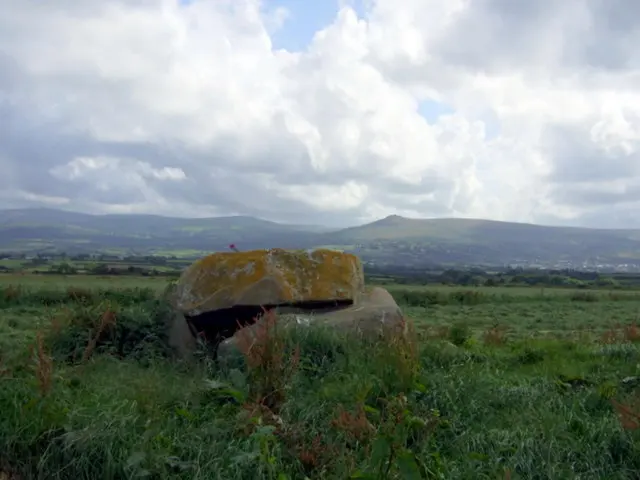
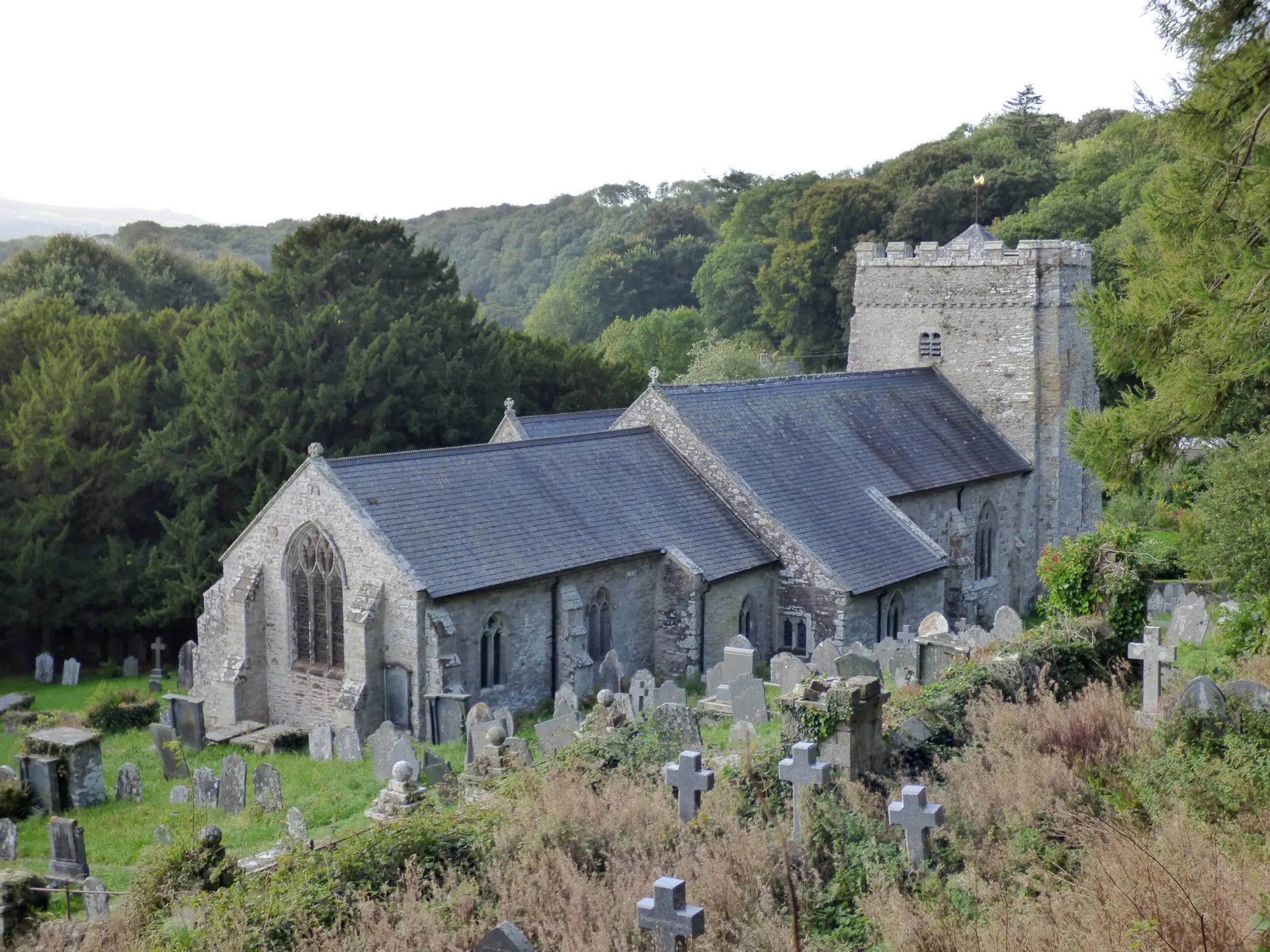
Image of Trellyffaint Burial Chamber. Image source · CC-BY-SA-2.0
Visit essentials
A quick read before you go
- Duration
- Allow at least 30-60 minutes for the site itself, plus time to seek permission and walk from the…
- Access
- Trellyffaint is visible from the road but stands on private farmland with no right of way.
Overview
The name Trellyffaint means 'Home of the Toads' in Welsh, a medieval legend attempting to explain what local people had long since ceased to understand. By the time Gerald of Wales passed through in 1188, recording a tale of a chieftain devoured by toads, the community that built this monument had vanished for four thousand years.
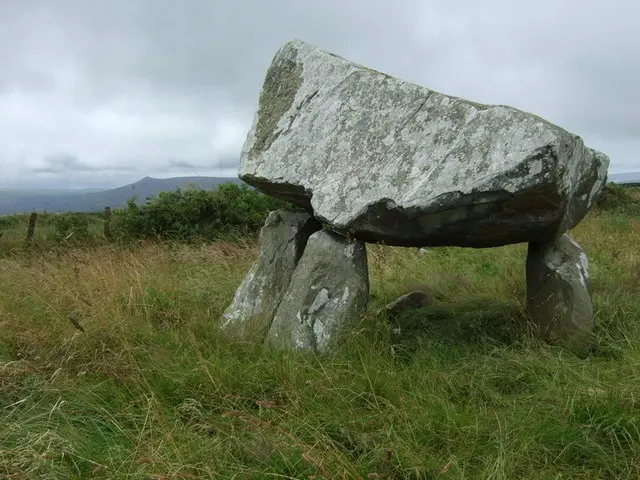
What remains is stone. Two chambers side by side, the larger still holding its capstone aloft, the smaller reduced to three leaning slabs. Above, carved into rock that has not moved since before the pyramids rose, are cupmarks. Perhaps thirty-five. Perhaps seventy-five. No one is certain, because no one knows exactly what to count or why they were carved in the first place.
The Neolithic farmers who built Trellyffaint did not leave written records. They left architecture. Portal dolmens like this one—with their distinctive H-shaped entrance formed by two tall portal stones and a blocking slab—represent some of the earliest monumental tombs in Britain. They placed their dead inside, covered the stones with earth, and returned across generations to maintain relationship with ancestors who had not truly departed.
Recent excavations have revealed surprising intimacy. Pottery sherds found near the chamber contained traces of dairy—butter, cheese, or yogurt—left here some five thousand years ago. The dead were fed. The living shared meals with them. Whatever rituals took place beneath this capstone, they were acts of communion across the boundary that separates the living from those who came before.
Why this place is sacred
The Nevern Valley contains the highest concentration of Neolithic burial-ritual monuments in Wales. Around sixty sites survive; another seventy exist as ruins or in place-names. This was not accidental. The early farmers who worked these ridges and coastal fringes chose this landscape with intention, building monuments to their dead in places they understood as significant.
Trellyffaint's position speaks to this intentionality. From the site, the eye travels across the valley toward the Preseli Hills—the same hills from which the bluestones of Stonehenge were quarried, transported two hundred miles to Salisbury Plain by unknown means for reasons that remain debated. Whatever the Preseli Hills meant to Neolithic people, it was enough to merit extraordinary effort.
The cupmarks carved into the capstone deepen the mystery. Most portal dolmens in Wales bear no decoration. Trellyffaint is one of only nine exceptions. Some researchers suggest the marks represent the night sky—a constellation map carved five millennia before any written astronomical record. Others see pictorial messages whose meaning died with their makers. The truth is that no one knows.
In 2016, geophysical surveys discovered what the eye cannot see: two concentric hengiform features buried to the south and southwest of the burial chamber, roughly contemporary with Stonehenge itself. The inner ring measures approximately twelve metres in diameter. Additional buried features extend to the north-east, north, and west. Trellyffaint was not a single monument but part of a sacred complex whose full extent we are only beginning to understand.
For those who speak of 'thin places'—locations where the boundary between ordinary experience and something larger grows permeable—the accumulated evidence suggests the Neolithic builders of this valley perceived something similar. They returned to these ridges again and again, across centuries, to bury their dead, carve their stones, and maintain relationships with powers we can only infer from what they left behind.
Archaeological evidence indicates Trellyffaint served as a communal burial site for Neolithic farming communities of the Nevern Valley, dating to approximately 3800-2800 BCE. Portal dolmens represent one of the earliest architectural styles of megalithic tombs in western Britain, characterized by an H-shaped entrance created by two tall portal stones with a blocking slab between them. The dead were likely interred in the chambers, which were then covered by a cairn or earthen mound—now eroded away by centuries of ploughing.
But to call this simply a 'tomb' misses the larger function. The pottery found here, containing traces of dairy products, suggests ritual feasting or offerings to the dead. The cupmarks suggest symbolic activity whose nature eludes us. In Neolithic understanding, the dead did not truly depart. They remained present in the land, requiring attention, feeding, relationship. The burial chamber was not an endpoint but a threshold—a place where the living could maintain communion with ancestors.
The rituals that animated Trellyffaint fell silent sometime around 2800 BCE, as burial practices shifted and new monument forms emerged. The cairn that once covered the stones eroded; the chambers became exposed. Local knowledge of the site persisted even as its original meaning faded. By the medieval period, people explained the monument through legend—the tale of Sisillus Long Leg devoured by toads, recorded by Gerald of Wales during his journey through Wales in 1188.
The monument was formally protected as a Scheduled Ancient Monument in 1927. Yet it remained little-known, overshadowed by grander sites like nearby Pentre Ifan. The Welsh Rock Art Organisation's excavations from 2015-2019 brought renewed attention, revealing the dairy-farming evidence, documenting the cupmarks, and discovering the buried henge features. Trellyffaint has shifted from obscure ruin to site of active archaeological significance.
Today, a different kind of seeker finds their way here—those drawn to Pembrokeshire's megalithic landscape who seek less-visited sites where contemplation is possible without crowds. The monument offers no facilities, no interpretation panels, no gift shop. It offers only stone, silence, and the accumulated weight of six thousand years.
Experience and orientation
To reach Trellyffaint is already to separate yourself from casual tourism. The site stands on private farmland with no formal right of way. You must find the farm, ask permission, and walk the short distance to the ridge where the stones wait. This small friction filters visitors, leaving those who come with genuine intention.
The first impression is of survival against odds. The chambers are 'much ruined,' as the heritage records note—the cairn ploughed away, the smaller chamber reduced to three tilted slabs, the larger chamber intact but weathered. Yet something persists. The capstone still rests where Neolithic hands placed it. The portal stones still frame an entrance to darkness.
Visitors commonly note the contrast with Pentre Ifan, the region's most famous dolmen, where coach parties photograph a dramatically poised capstone. Trellyffaint offers a different quality: intimacy rather than spectacle. You can stand close, examine the cupmarks (do not touch), and feel the age of the stone without competition for space.
The landscape itself contributes to the experience. From this ridge, the Nevern Valley opens toward the Preseli Hills and the distant shimmer of Cardigan Bay. The same view greeted those who carried their dead here millennia ago. Something of their presence accumulates in places of repeated ritual. Whether this is psychological projection or genuine imprint, visitors consistently report that Trellyffaint feels inhabited by more than stone.
Those who come during life transitions—processing loss, seeking clarity, marking change—often find the site unexpectedly resonant. The explicit purpose of this place was death, but death understood as threshold rather than ending. The Neolithic builders fed their dead, maintained relationship across the grave. For visitors grappling with their own boundaries between what was and what comes next, Trellyffaint offers an ancient precedent for staying connected to what we have lost.
Come prepared for a working farm, not a heritage site. Wear appropriate footwear for fields that may be muddy. Bring a map or GPS—the site is not signposted. The monuments are visible from the road but stand some distance into private land. Always seek permission from Trellyffant Farm before entering.
Once at the site, resist the urge to rush. Sit with the stones. Notice the cupmarks on the capstone—carved by hands that held beliefs we will never fully reconstruct. Consider what it meant to return here, across generations, to maintain relationship with the dead. The burial chamber was not a place of forgetting but of continued presence.
If other sites call to you, Trellyffaint sits within a landscape dense with prehistoric monuments. Llech y Dribedd, another portal dolmen, lies less than two kilometres away. Pentre Ifan—Wales's largest and most visited—is about three kilometres distant. Carn Ingli, the 'Mountain of Angels,' with its Neolithic settlement and later associations with St. Brynach, rises to the southwest. A day of careful exploration can trace the sacred geography of an entire Neolithic community.
Context and lineage
No founding narrative survives from the Neolithic period. These were preliterate communities whose beliefs can only be inferred from what they built and buried. However, the archaeological record tells its own story.
Sometime around 4000 BCE, new people arrived in Britain from continental Europe. They brought wheat, barley, and cattle. They brought the technology of pottery. And they brought new ideas about death—ideas that found expression in monumental architecture. Rather than simply burying their dead, they constructed stone chambers, covered them with earth or stone cairns, and returned across generations to add new burials and make offerings.
The portal dolmen represents one of the earliest of these monument types, concentrated along the western coasts of Britain and Ireland. Trellyffaint's distinctive H-shaped entrance—formed by two tall portal stones with a blocking slab between them—marks it as part of this tradition. The builders chose this ridge deliberately, positioning the tomb within a landscape they understood as significant.
Medieval Wales told a different story. Gerald of Wales, passing through in 1188, recorded that Trellyffaint—'Toad's Town'—was so named because it held the tomb of a chieftain called Sisillus Long Leg, who was plagued by and eventually devoured by toads. This moralistic legend, typical of medieval attempts to explain pagan monuments within a Christian framework, has no connection to the site's actual history.
But it testifies to the endurance of local memory: twelve centuries after the last rituals took place here, people still knew these stones were significant, even if they had forgotten why.
For perhaps a millennium, the Neolithic communities of the Nevern Valley returned to Trellyffaint to inter their dead and maintain relationship with ancestors. Then the portal dolmen tradition faded, replaced by new monument forms and burial practices. The covering mound eroded. The chambers stood exposed to weather and memory.
Local people continued to know the site through the medieval period and beyond, even as understanding of its origins was replaced by legend. The formal heritage system recognized its significance in 1927, when it was scheduled as an ancient monument. But it remained a minor site, overshadowed by Pentre Ifan and other more visually dramatic structures.
The Welsh Rock Art Organisation's work from 2015-2019 has renewed scholarly attention. The discovery of pottery with dairy residues—dated with 94.5% accuracy to around 3100 BCE—provides the earliest evidence of dairy farming in Wales. The henge features revealed by geophysical survey suggest a complex sacred landscape we are only beginning to map. Trellyffaint has shifted from footnote to focus, a site whose secrets are still being uncovered.
The Builders
historical
Anonymous farming communities of the Nevern Valley who constructed and used the burial chamber across perhaps a thousand years. No names survive. We know them only through their architecture, their pottery, and the traces of dairy fat preserved for five millennia.
Gerald of Wales
historical
Norman-Welsh churchman and chronicler who passed through the area in 1188 and recorded the legend of Sisillus Long Leg. His account preserves the earliest written reference to Trellyffaint, even if his explanation of the name is fanciful.
Dr. George Nash
researcher
Rock art specialist associated with the University of Bristol who led the Welsh Rock Art Organisation's excavations at Trellyffaint from 2015-2019, discovering the dairy-farming evidence and henge features that have transformed understanding of the site.
Traditions and practice
The Neolithic builders of Trellyffaint practiced communal burial, interring their dead in the stone chambers and returning across generations to add new remains and make offerings. The pottery fragments found at the site, containing traces of dairy products from around 3100 BCE, suggest ritual feasting or food offerings to the dead.
The cupmarks carved into the capstone indicate additional symbolic activity. Some researchers interpret these as astronomical maps—representations of the night sky or specific constellations. Others see them as pictorial messages whose meaning we cannot recover. The marks were clearly important enough to require careful execution, but their specific purpose remains unknown.
These practices ceased sometime around 2800 BCE as the portal dolmen tradition gave way to different monument forms. The covering mound eroded away. Whatever rituals once took place here have been silent for nearly five thousand years.
No organized spiritual practice takes place at Trellyffaint today. The site is on private farmland, not managed for religious or spiritual use. However, the wider Pembrokeshire coast attracts visitors drawn to megalithic landscapes for reasons that exceed conventional tourism.
Some modern visitors to the region's stone monuments describe them as 'thin places' where the boundary between ordinary experience and something larger grows permeable. Contemporary Druidic and Pagan groups hold ceremonies at other sites in Wales, though Trellyffaint's private location and relative obscurity mean it rarely hosts such gatherings.
For individual visitors, the site offers conditions for quiet contemplation that more famous monuments cannot provide. There are no crowds, no admission fees, no interpretation panels telling you what to think. There is only stone, landscape, and the accumulated weight of six millennia.
If you come seeking more than photographs, consider these approaches:
Arrive with time. This is not a site for rushing through. Sit with the stones before trying to understand them. Notice how the light falls on the capstone, how the chambers frame the landscape, how the ridge positions the monument within the valley.
Examine the cupmarks without touching. These marks were carved by people whose beliefs we cannot reconstruct. Sit with not-knowing rather than forcing interpretation. The mystery itself is worth attending to.
If you carry loss or transition, this is a place that was built for such things. The Neolithic builders understood death as threshold, not ending. They fed their dead, maintained relationship across the grave. Whatever your beliefs, there is something useful in bringing your own crossings to a place that has witnessed five thousand years of human mortality.
Before leaving, offer silent acknowledgment—to the builders, to the dead who rested here, to the land that holds them. The form matters less than the sincerity. These stones have been receiving human attention since before writing; adding yours continues a very old practice.
Neolithic Funerary Tradition
HistoricalTrellyffaint represents one of the earliest architectural styles of burial monuments in western Britain. Portal dolmens like this served as communal burial sites where early farming communities interred their dead, likely as part of ancestor veneration practices extending across generations. The presence of decorated pottery containing dairy residues suggests ritual feasting or offerings took place at the site, indicating the dead were not merely interred but actively maintained relationship with the living.
Historical practices included communal burial of the dead within the stone chambers, repeated over generations as the community returned to add new remains. Ritual deposits of pottery and food offerings accompanied burials or marked later ceremonies. The creation of cupmark rock art on the capstone represents additional symbolic activity whose specific nature is unknown—possibly astronomical mapping, possibly pictorial messaging, possibly something that defies our categories entirely.
Medieval Welsh Folklore
HistoricalBy the 12th century, the original meaning of Trellyffaint had been lost for four thousand years. Gerald of Wales, passing through in 1188, recorded a legend that attempted to explain the monument within a medieval Christian framework. The name Trellyffaint ('Toad's Town' or 'Home of the Toads') was said to derive from the tomb of a chieftain named Sisillus Long Leg, who was plagued by and eventually devoured by toads. This moralistic tale, suggesting divine punishment for unstated sins, represents how medieval people made sense of monuments they could not otherwise explain.
No practices associated with this tradition are known. The folklore served explanatory rather than ritual purposes—a story to tell about stones whose origin had passed beyond memory.
Perspectives and open questions
Trellyffaint invites multiple interpretations, and honest engagement requires holding them together without forcing resolution. The archaeological record tells us what was built and when, but cannot fully explain why. The meaning of the cupmarks, the nature of the rituals, the beliefs that made such monumental effort worthwhile—these remain partially beyond recovery. Acknowledging what we do not know is as important as asserting what we do.
Scholarly perspective
Archaeological consensus places Trellyffaint's construction between approximately 3800 and 2800 BCE, during the early to middle Neolithic period. The site belongs to the portal dolmen tradition—among the earliest types of megalithic tombs in western Britain and Ireland. Portal dolmens are characterized by an H-shaped entrance formed by two tall portal stones with a blocking slab, supporting a capstone that often tilts upward toward the rear.
The presence of cupmarks places Trellyffaint among only nine decorated burial chambers in Wales. Rock art specialist Dr. George Nash, who led excavations from 2015-2019, has suggested the marks may represent astronomical observations—possibly the night sky or specific constellations. However, no scholarly consensus exists on their meaning.
The 2018 discovery of pottery containing dairy residues provides the earliest evidence of dairy farming in Wales, radiocarbon dated to approximately 3100 BCE. This finding, analyzed by researchers at the University of Bristol, suggests ritual feasting or food offerings to the dead—consistent with understanding the burial chamber as a site of ongoing relationship rather than simple interment.
Geophysical surveys in 2016 revealed hengiform features to the south and southwest of the monument, roughly contemporary with Stonehenge (c. 3000-2000 BCE). This suggests Trellyffaint was part of a larger sacred complex whose full extent remains to be excavated.
Living and traditional perspectives
No living tradition maintains connection to Trellyffaint. The Neolithic communities who built it left no descendants who preserved their practices. The medieval Welsh folklore recorded by Gerald of Wales—the tale of Sisillus Long Leg devoured by toads—represents an attempt to explain the monument within a Christian framework, not a continuation of original belief.
Contemporary Welsh identity does incorporate prehistoric monuments as part of cultural heritage, and sites like Pentre Ifan appear in discussions of Welsh archaeological significance. But this is heritage appreciation, not religious practice. No community claims Trellyffaint as an active sacred site within a living tradition.
Alternative interpretations
Some contemporary visitors to Pembrokeshire's megalithic sites perceive them as places of heightened spiritual energy—what is sometimes called 'thin places' where the veil between worlds grows permeable. The presence of rock art with possible astronomical symbolism has led some to speculate about ancient astronomical observations, shamanic practices, or alignments with earth energies.
These interpretations lack archaeological evidence. The cupmarks' meaning is genuinely unknown; projecting contemporary spiritual frameworks onto them tells us more about the interpreter than the interpreted. However, the experiences that generate such interpretations—feelings of unusual stillness, clarity, or connection reported at ancient sites—are consistent enough across visitors to warrant attention, even if the explanatory vocabulary remains contested.
Some modern Pagan and Druidic practitioners feel drawn to Neolithic monuments as sites that predate Christianity, though Trellyffaint's private location and relative obscurity mean it rarely hosts organized ceremony.
Open questions
Genuine mysteries remain at Trellyffaint. The meaning and purpose of the cupmarks is unknown—whether they represent astronomical observations, symbolic messages, or something entirely outside modern categories of understanding. Why some Neolithic burial chambers bear rock art while most do not is unexplained.
The relationship between the portal dolmen and the nearby hengiform features discovered in geophysical surveys is unclear. Were they built together as part of a single ritual complex? Did the henges postdate the tomb, adding later ceremonial elements? The full extent of buried features remains to be mapped.
Why the Neolithic builders chose this particular ridge—what made this location significant within a landscape dense with monuments—is inference rather than knowledge. We can observe the view of the Preseli Hills, the position overlooking the Nevern Valley, the proximity to other sites. But the beliefs that made such placement meaningful have not survived.
The honest position is one of structured uncertainty: we know what was built, approximately when, and by what type of community. Why they built it, what it meant to them, what rituals took place beneath the capstone—these remain partially beyond recovery, and pretending otherwise serves neither scholarship nor sincere seeking.
Plan your visit
Access and arrival
Trellyffaint is visible from the road but stands on private farmland with no right of way. Visitors must ask permission from Trellyffant Farm. The walk from the road or farm takes approximately five minutes over uneven ground. Limited roadside parking exists on the small lane east of the chambers; easier access is available from the north after speaking with the farm. The site is not accessible to wheelchairs or those with significant mobility limitations.
The nearest town is Newport (Trefdraeth), offering B&Bs, guesthouses, and holiday cottages. Cardigan, a larger town, lies about twelve miles to the south with more extensive accommodation options. The Pembrokeshire Coast National Park provides a network of campsites for those preferring to stay close to the landscape. No accommodation exists at the site itself.
Respectful visit
No formal requirements, but dress for Welsh farm conditions: walking boots or sturdy shoes for muddy, uneven, slippery terrain; layers for rapidly changing weather; and rain gear regardless of forecast.
Photography is permitted with the landowner's permission to visit. Do not use tripods or equipment that requires extended setup times without specific permission. Do not touch the stones to arrange shots. Be mindful that chasing the perfect photograph can distract from actually experiencing the site.
Physical offerings are not appropriate at this archaeological site. They are considered litter and may compromise ongoing research. If you wish to honor the site, do so through internal acknowledgment—silent gratitude, a moment of attention, a sincere intention. This is more in keeping with the site's nature than any object you might leave.
The site is on private farmland with no public access. Permission must be sought from Trellyffant Farm. There are no facilities—no toilets, no parking lots, no interpretation panels. Do not touch the stones or cupmarks. Do not climb on the structure. Do not leave offerings or litter of any kind.
Do not touch the stones. Do not climb on them. The cupmarks on the capstone are irreplaceable prehistoric rock art; oils from human hands accelerate erosion. Do not leave physical offerings—they are considered litter and compromise the archaeological context.
Remember that this is private farmland. Access depends on the goodwill of the landowner. Behave accordingly: close gates, avoid livestock, leave no trace. If permission is not granted, respect that decision.
Be wary of those who claim authoritative knowledge of what the cupmarks 'really mean' or what ceremonies 'actually' took place here. The honest answer is that we do not know. Anyone who claims certainty is selling something other than truth.
Current practical details
Address
Nevern, Newport SA42 0NX, UK
Hours, fees, and access can change — verify on the official source before you travel. Practical details last checked Jun 2026.
Location
Map loads as you approach this section.
Pilgrim reflections
A portrait of encounter, not a score
Pilgrims describe what they felt, how present they could become, and whether the place would shape a journey. There are no stars and no ranking of traditions.
No reviewed reflections yet
The first pilgrims can help describe the character of being here.
Share a reflection
Available after an account-backed “Been there.” Every reflection is reviewed before publication.
Nearby sacred places
Explore other sacred places in the region. Proximity does not establish access or travel time; check each place’s guidance.
Share a photo
Help visitors recognize Trellyffaint Burial Chamber. Every submission is reviewed before publication.