Gors Fawr stone ring, Mynachlog-ddu, Dyfed, England
The only intact stone circle in Wales, holding bluestones from the quarry that supplied Stonehenge
Understand sacred places, explore living traditions, and learn how to engage respectfully with Pilgrim Map.
Access has not been verified. Check current local guidance before planning a visit.
Mynachlog-ddu, Wales, United Kingdom
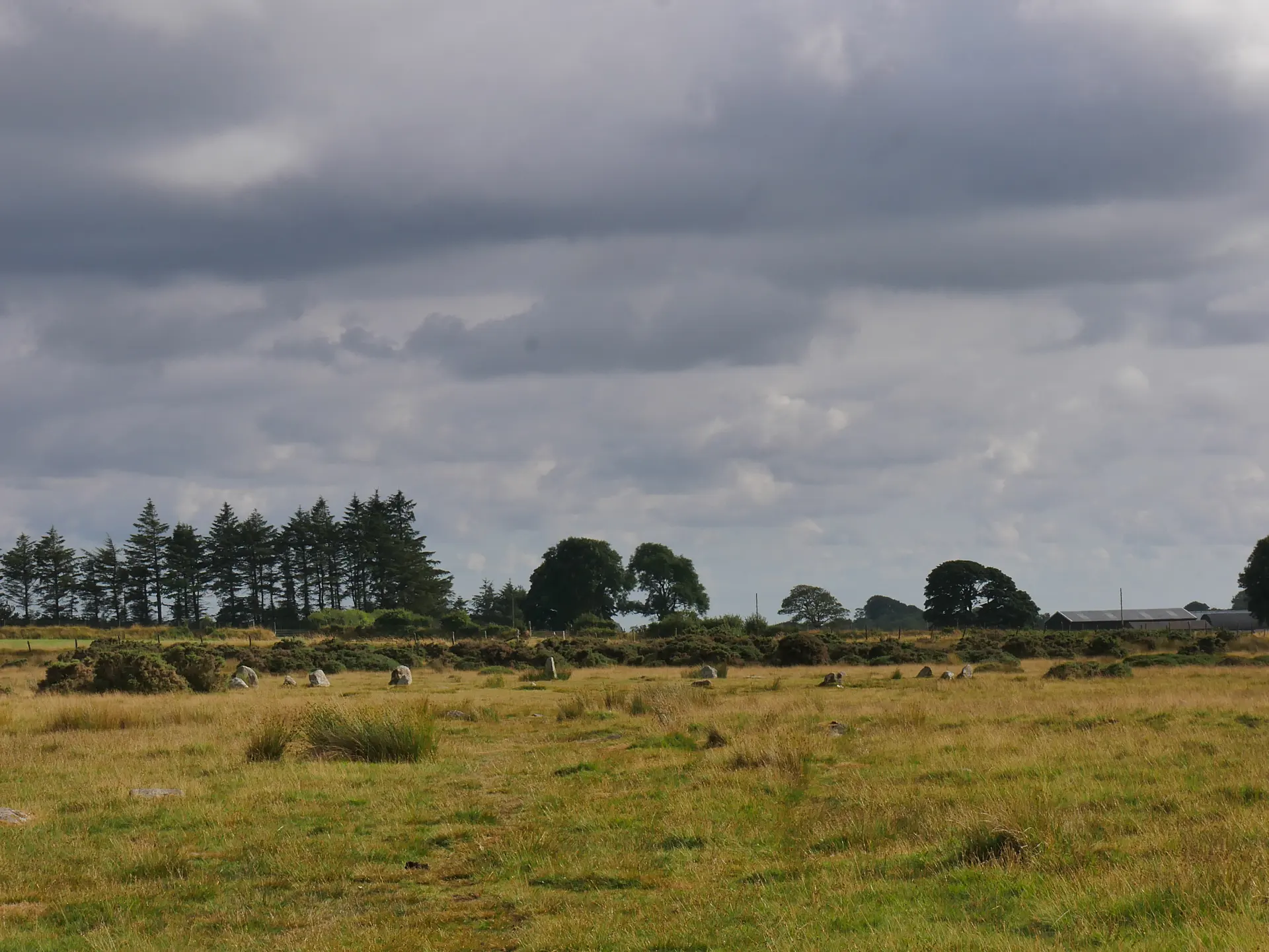
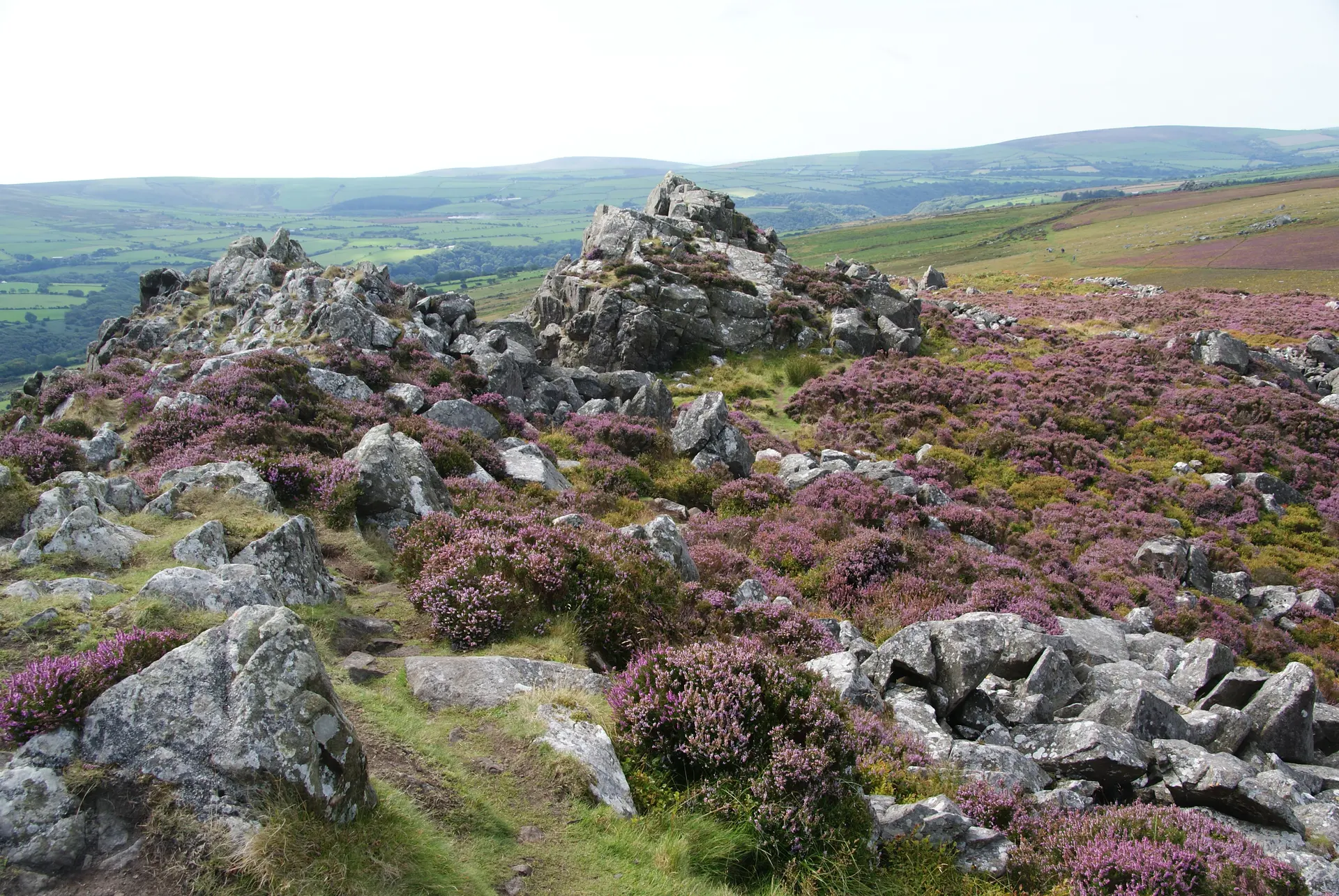
Image of Gors Fawr stone ring, Mynachlog-ddu, Dyfed, England. Image source · CC0
Visit essentials
A quick read before you go
- Duration
- Allow one to two hours including the walk from the village.
- Access
- Park in Mynachlog-ddu village and walk across open moorland.
Overview
While other Welsh stone circles lost stones to time, agriculture, or road-building, Gors Fawr survives complete: sixteen stones in a ring roughly twenty-two meters across. Its remote setting lies beneath the Preseli Mountains, whose quarries supplied bluestones to Salisbury Plain over four millennia ago. Eight stones are spotted dolerite, the same rock as Stonehenge’s bluestones; the rest are local glacial erratics. This deliberate mixing of sacred bluestone with ordinary stone suggests symbolism now unreadable.
Two outlying stones 134 meters northeast appear aligned toward Carn Menyn, the bluestone-quarry ridge. The circle occupies a bog margin, neither dry land nor water, a threshold setting found across prehistoric sacred landscapes. Whether its builders understood that placement through modern categories or entirely different ones remains unknown; the complete ring continues to draw seekers to this remote part of Wales.
Why this place is sacred
Visitors to Gors Fawr often describe a quality of stillness amplified by the moorland setting. There are no crowds here, no visitor center, no interpretation panels. The circle exists in the landscape as it has for four thousand years, accessible to those willing to walk across uneven ground to find it.
The connection to Stonehenge adds a layer of significance that accumulates the more one contemplates it. The builders of Gors Fawr used bluestone from the same source that supplied Britain's most famous monument. Whether the circle marked a staging point on the bluestone transport route, honored the source of sacred stones, or served purposes entirely unrelated remains unknown. What seems clear is that this landscape held meaning extending far beyond local boundaries.
The presence of the two outlying stones suggests the site's significance extended into the surrounding landscape. Their alignment toward Carn Menyn may be intentional or may be coincidence. Similar questions surround prehistoric monuments worldwide. At Gors Fawr, such uncertainty feels appropriate. The circle invites questions without providing answers.
Contemporary visitors report various experiences here: peace, connection to deep time, the sensation of standing where many have stood before seeking something beyond ordinary life. Modern Druids and pagans conduct ceremonies at solstices and equinoxes, adding new layers of practice to a site whose original rituals are lost.
Scholarly interpretation suggests ceremonial or ritual use, though the specific nature of these ceremonies remains unknown. The mixture of bluestone and local stone, the positioning at a bog margin, and the outlier alignment toward Carn Menyn all suggest intentional symbolic choices. Whether the circle functioned for astronomical observation, burial rites, communal gatherings, or some combination cannot be determined from archaeological evidence alone.
No direct continuity connects Bronze Age practice with any subsequent tradition. The circle stood unattended for centuries until modern archaeology recognized its significance. Today, it serves as a heritage site, a destination for those interested in prehistory, and a location for contemporary pagan and Druidic ceremony.
Experience and orientation
The walk to Gors Fawr begins in Mynachlog-ddu, a village whose Welsh name means 'monastery of the black' in reference to a long-vanished religious house. From the village, a path leads across moorland toward the mountains. The ground can be boggy, particularly after rain, and appropriate footwear is essential.
The stones reveal themselves gradually. They are not tall, the largest barely reaching a meter, and from a distance they might be mistaken for natural outcrops. As you approach, the circle's form becomes clear: sixteen stones arranged with evident intention, the five largest on the southeast, the remainder smaller but clearly part of a designed whole.
Once inside the circle, the Preseli Mountains fill the view to the east. Carn Menyn, the bluestone source, is visible as a rocky ridge along the horizon. The connection becomes visceral. People stood here four thousand years ago, looking at the same mountains, having transported stones from those slopes to this place and, somehow, to Stonehenge two hundred miles away.
The outlying stones to the northeast invite exploration. Walking to them and looking back at the circle provides a different perspective, the kind of multiple viewpoints that prehistoric monuments often seem designed to accommodate.
Most visitors find themselves staying longer than planned. There is something about the scale, the setting, the unanswered questions that encourages contemplation rather than quick observation.
Before visiting, take time to learn about the Preseli bluestone connection to Stonehenge. This context transforms what might seem a modest stone circle into something far more significant. Bring water and weather protection, as the moorland offers no shelter. Allow at least an hour, more if you want to explore the surrounding landscape or wait for particular light.
Context and lineage
No myths or legends about Gors Fawr's founding survive. This absence itself is significant: the circle predates Welsh language and culture by millennia, and whatever stories its builders told did not pass into any tradition that reached written record.
What archaeology reveals is that the site was constructed with deliberate care. The mixture of spotted dolerite and glacial erratics was not random. Someone selected which stones would be bluestone and which would be local, placing them according to a pattern we cannot now read. The positioning at a bog margin suggests understanding of liminal space. The outlying stones aligned toward Carn Menyn suggest awareness of the sacred landscape extending beyond the circle itself.
Scholars debate whether the circle marked the route along which bluestones were transported to Stonehenge, honored the quarry source, or served purposes independent of the Stonehenge connection. All three possibilities remain open.
Gors Fawr belongs to the tradition of stone circles that emerged across Britain and Ireland during the late Neolithic and Bronze Age. These monuments share certain features, including circular form, astronomical alignments, and positioning in landscapes that seem chosen for significance rather than convenience. The Welsh tradition of stone circle building appears connected to broader Atlantic phenomena, suggesting communication and shared practice across considerable distances.
Traditions and practice
The original practices at Gors Fawr cannot be determined. Possible uses include astronomical observation, funerary rites, seasonal ceremonies, and communal gatherings. The alignment of the outliers toward Carn Menyn suggests the circle may have held significance within a broader sacred landscape. What specific rituals were performed, and by whom, remains unknown.
Modern Druids and pagans conduct ceremonies at Gors Fawr, particularly at solstices and equinoxes. These practices represent contemporary spiritual engagement rather than reconstruction of Bronze Age religion. Other visitors come for quiet contemplation, meditation, or simply to experience a place that has drawn seekers for four millennia.
Approach the circle slowly, allowing the moorland walk to prepare you for arrival. Once at the stones, take time to observe before interpreting. Notice which stones are bluestone, which are local erratics. Stand within the circle and look toward the Preseli Mountains. Walk to the outliers and look back. Allow questions to arise without requiring answers.
Bronze Age Religion
HistoricalGors Fawr represents the sacred landscape of Bronze Age Wales, a time when communities invested enormous effort in creating stone monuments whose purposes remain largely unknown. The mixture of Stonehenge bluestone with local stone suggests this site held particular significance within regional sacred geography.
Original practices cannot be reconstructed. Possible uses include astronomical observation, burial or commemorative rites, seasonal ceremonies, and communal gatherings. The alignment toward Carn Menyn suggests awareness of sacred landscape extending beyond the circle.
Contemporary Druidry
ActiveModern Druids use Gors Fawr for ceremonies, particularly at solstices and equinoxes. The site's Welsh location and intact condition make it attractive for those seeking connection with pre-Christian British spirituality.
Seasonal celebrations, meditation, ritual observance. Practices vary among different Druid orders and individual practitioners.
Contemporary Paganism
ActivePagan practitioners of various traditions visit Gors Fawr for personal practice and group ceremony. The site's connection to the Stonehenge bluestone network adds to its appeal.
Individual meditation, seasonal observance, personal ceremony. There is no single prescribed practice.
Perspectives and open questions
Interpreting Gors Fawr requires holding multiple frameworks simultaneously. Archaeological evidence provides facts without meaning. Contemporary spiritual practice provides meaning without historical basis. Both contribute to understanding.
Scholarly perspective
Archaeologists recognize Gors Fawr as the only intact stone circle in Wales and one of the most significant Bronze Age monuments in the country. The mixture of spotted dolerite and glacial erratics suggests intentional symbolic choice, though its meaning cannot be determined. The alignment of outlying stones toward Carn Menyn has been noted but remains difficult to prove intentional.
Gors Fawr's relationship to the Stonehenge bluestone transport route is debated: some scholars see the circle as a staging point or commemorative monument, while others consider the connection coincidental.
Living and traditional perspectives
No Welsh tradition claims direct connection to Gors Fawr. The monument predates Celtic peoples in Wales by millennia. Contemporary Welsh culture respects the site as part of national heritage without claiming to understand its original meaning.
Alternative interpretations
Some visitors and practitioners interpret the circle as an energy focal point, positioned on ley lines connecting sacred sites across the landscape. Others emphasize the site's connection to the Stonehenge energy network through the shared bluestone material. These interpretations are not supported by mainstream scholarship but reflect how contemporary seekers engage with ancient sites.
Open questions
Fundamental questions remain unanswered. Why mix bluestone with local stone in one circle? What was the significance of the bog-margin position? Were the outliers intentionally aligned with Carn Menyn? What ceremonies, if any, were performed here? These questions may never find definitive answers. The mystery itself is part of what draws visitors.
Plan your visit
Access and arrival
Park in Mynachlog-ddu village and walk across open moorland. The route is not formally marked but the circle is visible from a distance. Bring a map or GPS. Wear waterproof boots as the ground is often boggy. The circle is not wheelchair accessible.
Mynachlog-ddu has no accommodations. Crymych, 5km east, has basic services. Fishguard and Newport offer fuller facilities.
Respectful visit
No specific dress code. Practical footwear essential for boggy moorland. Layers recommended as weather changes quickly.
Photography is permitted and encouraged. The low angle of light at sunrise and sunset reveals the stones most dramatically.
Leaving offerings is not part of Bronze Age tradition as far as we know. If you wish to leave something, use only natural, biodegradable items that will not accumulate.
Do not climb on stones. Do not move or attempt to excavate around stones. Do not leave non-biodegradable offerings.
Gors Fawr is a Scheduled Ancient Monument. Visitors should not move, mark, or damage the stones in any way. Be mindful of boggy ground around the site. If others are conducting ceremony, maintain respectful distance.
Current practical details
Address
Clynderwen SA66 7SE, UK
Phone
Hours
Hours, fees, and access can change — verify on the official source before you travel. Practical details last checked Jun 2026.
Location
Map loads as you approach this section.
Pilgrim reflections
A portrait of encounter, not a score
Pilgrims describe what they felt, how present they could become, and whether the place would shape a journey. There are no stars and no ranking of traditions.
No reviewed reflections yet
The first pilgrims can help describe the character of being here.
Share a reflection
Available after an account-backed “Been there.” Every reflection is reviewed before publication.
Nearby sacred places
Explore other sacred places in the region. Proximity does not establish access or travel time; check each place’s guidance.
Share a photo
Help visitors recognize Gors Fawr stone ring, Mynachlog-ddu, Dyfed, England. Every submission is reviewed before publication.