Capocorb Vell
Walk the alleyways of a Bronze Age Mallorcan village
Understand sacred places, explore living traditions, and learn how to engage respectfully with Pilgrim Map.
Access has not been verified. Check current local guidance before planning a visit.
Llucmajor, Balearic Islands, Spain
Read the sources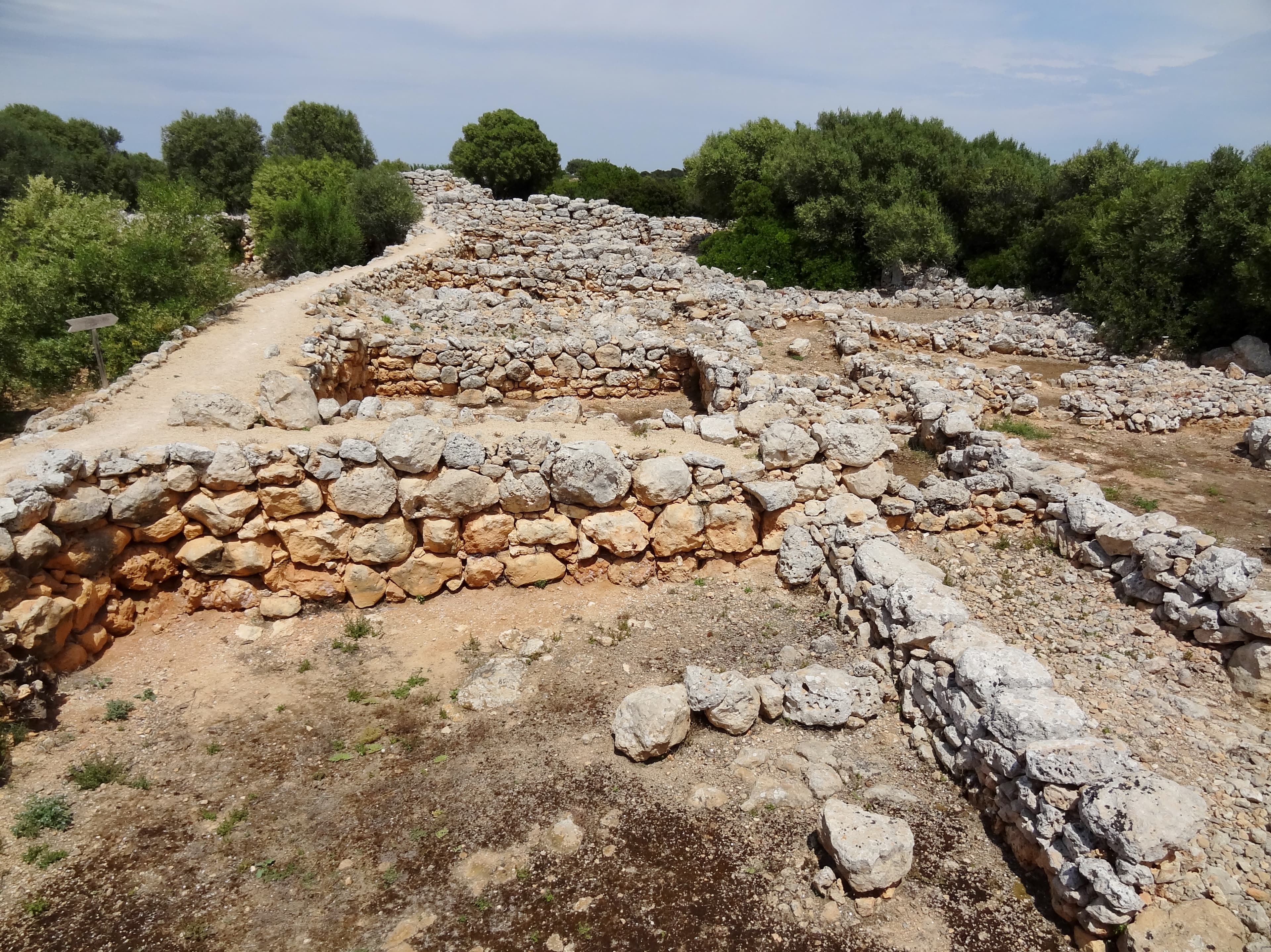
Image of Capocorb Vell. Image source
Visit essentials
A quick read before you go
- Duration
- Travel guides describe the compact, walkable layout as suited to a visit of well under an hour,…
- Access
- The site sits approximately 12 km south of Llucmajor on the road toward Cap Blanc and Cala Pi,…
Overview
On the scrubby coastal plain south of Llucmajor, Capocorb Vell preserves one of the Balearic Islands' most fully excavated Talayotic settlements. Its walled cluster holds five talaiots—the massive dry-stone towers defining this Bronze Age culture—and nearly thirty smaller dwellings, with actual passages traceable between houses. Evidence unusually suggests continued use long after most Talayotic villages were abandoned, carrying the layout across centuries as its culture changed.
A national monument since 1931, it remains one of the clearest pictures of prehistoric Mallorcans organizing daily life around these towers, long before Rome or Islam reached the island.
Why this place is sacred
There is no evidence that Capocorb Vell functioned as a sacred or ceremonial center in the way many ancient sites did. Its value lies instead in completeness and legibility: five talaiots — two square, three circular, one with a second floor — stand within a walled settlement alongside roughly two dozen documented dwellings, most built around a single square room sometimes fronted by an antechamber. That density and clarity is rare.
At many other Talayotic sites, a visitor sees an isolated tower rising from a field; at Capocorb Vell, the tower sits inside a legible neighborhood, with the walls of houses and passageways still traceable underfoot. Researchers believe the settlement was first established by early Talayotic-culture islanders, possibly people with roots in the eastern Mediterranean who came to farm and raise livestock, sometime around the 14th century BCE, with a further layer of dwellings dated to roughly the 6th century BCE.
What sets the site apart within its own tradition is that occupation appears to have continued in some form well past the point when comparable settlements were abandoned, reportedly persisting with only modest changes into the Middle Ages — a continuity that is unusual for Talayotic villages and not fully explained in the sources describing it.
A fortified agricultural and pastoral settlement: a village of houses clustered around defensive stone towers, built to mark territory and shelter a farming and herding community.
From an initial Bronze Age settlement phase to a later Iron Age dwelling phase, with occupation reportedly extending, atypically for the culture, into the medieval period before the site was eventually abandoned and left as ruins; it was formally protected as a Spanish historic-artistic monument in 1931.
Experience and orientation
The approach is unremarkable by design: a roadside stop off the route from Llucmajor toward Cap Blanc, low walls visible from the car park before any sense of scale registers.
What distinguishes a visit here from most other Talayotic remains is what happens once you're inside the perimeter wall — you are not looking at a single tower across a field but walking an actual settlement, threading between the stone footprints of two dozen or so houses toward the five talaiots that anchor the site.
The ground is uneven, the stone weathered to the color of the surrounding scrub, and the scale of the towers becomes apparent slowly, as you pass among the lower house walls before reaching them. A self-guided leaflet, available in English at the entrance, orients visitors room by room; beyond that, the site offers no interpretive commentary competing with the direct experience of the ruins themselves.
There is little shade and, being open coastal farmland, exposure to sun and wind is part of the physical experience of the site — worth pacing a visit around rather than rushing.
Enter at the ticket booth near the perimeter wall, take the English-language leaflet, and follow the marked paths counterclockwise through the dwelling cluster before circling the five talaiots at the settlement's core; the full circuit is compact enough to walk slowly without a fixed route being mandatory.
Context and lineage
Wikipedia's synthesis of the archaeological record suggests the settlement was founded around the 14th century BCE by early Talayotic-culture inhabitants of Mallorca, possibly migrants from the eastern Mediterranean who farmed and raised livestock on the island; a further phase of smaller dwellings has been dated to roughly the 6th century BCE. No origin myth or named founder is recorded — the site's history is reconstructed entirely from excavation, not oral or textual tradition.
The site sits within the broader Talayotic culture of Mallorca and Menorca, a Bronze Age–to–Iron Age tradition (roughly 1500 BCE to 123 BCE) defined by dry-stone 'cyclopean' construction without mortar; Capocorb Vell is considered one of that culture's most complete and thoroughly excavated settlements.
Traditions and practice
Ongoing archaeological and heritage-conservation stewardship maintains the site as a protected monument, paired with heritage tourism in the form of a self-guided leaflet tour rather than staffed interpretation.
Walk the dwelling cluster before the towers, so the talaiots' scale registers by contrast with the smaller house footprints around them. Pause at the boundary between an excavated dwelling and the open scrub beyond the settlement wall — the site's own edge is where its size relative to the wider, unexcavated village (believed to extend further to the northeast) becomes tangible.
Notice the dry-stone technique directly: no mortar binds these walls, and running a hand near (not on) the stacked blocks makes the engineering legible in a way description cannot.
Talayotic culture
HistoricalCapocorb Vell is one of the most complete surviving settlements of the Talayotic culture, the Balearic Bronze Age–to–Iron Age civilization defined by massive dry-stone tower construction (talaiots) built without mortar.
No devotional or ceremonial practice is documented for the site; its cultural practices were domestic and defensive — farming, herding, and communal shelter organized around the talaiots.
Archaeological and heritage-conservation stewardship
ActiveSince Josep Colominas Roca's early-twentieth-century excavations, a continuing line of archaeologists and historians — including L. C. Watelin, Albert Mayr, and later Bartomeu Font Obrador in the 1960s — has studied and helped preserve the site, which has held protected-monument status since 1931.
Excavation, conservation, and heritage-tourism interpretation (the on-site self-guided leaflet) continue as the site's living tradition of engagement.
Perspectives and open questions
Interpretation of Capocorb Vell centers almost entirely on the archaeological record, since no textual or oral tradition survives from the Talayotic islanders themselves.
Scholarly perspective
Archaeologists regard Capocorb Vell as one of the most complete and heavily excavated Talayotic settlements in the Balearics: five talaiots (two square, three circular, one two-storey) alongside close to thirty documented dwellings, with the wider, unexcavated village believed to extend further northeast.
The settlement's apparent continuity of use well beyond the point when comparable Talayotic sites were abandoned — reportedly persisting with few changes into the Middle Ages — is noted as atypical for the culture, though the full explanation for that longevity is not established in the sources reviewed.
Open questions
The precise size of the population that lived here, the social structure that organized the settlement, and the reasons for its unusually long continuity of use remain incompletely understood; figures suggesting several hundred inhabitants appear in tourism materials but were not corroborated by an academic source in this research.
Plan your visit
Access and arrival
The site sits approximately 12 km south of Llucmajor on the road toward Cap Blanc and Cala Pi, on Mallorca's south coast, and is reached by car (sources do not document a direct public-transport connection).
Reported opening hours are approximately 10:00–17:00, with the site closed on Thursdays; travel sources give an admission fee of roughly €2–3, though figures vary between sources and should be treated as approximate rather than current official pricing — check the Illes Balears tourism board or Visit Llucmajor sites directly before travel. No mobile-signal information was available at time of writing; check the Visit Llucmajor or Illes Balears Tourism Board websites for current access and connectivity details.
No keyholder or advance-booking requirement is documented — the site appears to operate as a standard ticketed, walk-up attraction during posted hours.
Respectful visit
No specific dress requirements are documented; practical footwear for uneven, unshaded ground is advisable given the terrain rather than any site rule.
No restrictions on photography were found in the sources reviewed.
Not applicable — the site has no tradition of votive offerings or devotional practice.
No source specifies formal restrictions beyond the general heritage-site expectation of not climbing on or removing stones from the structures; standard opening-hours access applies.
The ruins are unstaffed for much of a visit; uneven ground and low walls call for careful footing, and there is little shade across the open site.
Location
Map loads as you approach this section.
Pilgrim reflections
A portrait of encounter, not a score
Pilgrims describe what they felt, how present they could become, and whether the place would shape a journey. There are no stars and no ranking of traditions.
No reviewed reflections yet
The first pilgrims can help describe the character of being here.
Share a reflection
Available after an account-backed “Been there.” Every reflection is reviewed before publication.
Nearby sacred places
Explore other sacred places in the region. Proximity does not establish access or travel time; check each place’s guidance.



References
Sources consulted for this page. Source categories describe the publication, not a guarantee that every claim is verified. Traditional accounts and outside interpretations may differ.
- 01Capocorb Vell — Wikipedia — Wikipedia contributorsencyclopediaCore facts on layout (five talaiots, two square/three circular, one two-storey), c. 28 dwellings, 14th-century BCE settlement by likely eastern-Mediterranean migrants, continuous occupation into the Middle Ages, protected monument status since 1931.
- 02Archaeological Site Capocorb Vell (Mallorca) — Illes Balears Tourism BoardofficialOfficial Balearic tourism board page; confirms site status, general description and visitor framing.
- 03Capocorb Vell: A Journey to Llucmajor's Talayotic Prehistory — Visit Llucmajor (municipal tourism site)officialMunicipal tourism authority for Llucmajor; site history and visitor framing, location ~12 km south of Llucmajor.
- 04Talaiotic culture — Wikipedia — Wikipedia contributorsencyclopediaBackground on the broader Talayotic culture (Mallorca and Menorca, c. 1500 BCE-123 BCE, Bronze Age to Iron Age); used for cultural/period context, not site-specific claims.
- 05Talaiot — Wikipedia — Wikipedia contributorsencyclopediaDefinition and typology of talaiot structures (megalithic stone towers) used to correctly characterize the site's architecture.
- 06Capocorb Vell - Horario, precio y ubicación en Mallorca — Turismo MallorcaguideOpening hours (10:00-17:00, closed Thursdays), entrance fee, and access directions (12 km south of Llucmajor, near Cap Blanc/Cala Pi roundabout).
- 07Capocorb Vell, nr Cap Blanc — See MallorcaguideVisitor-facing description of the walled settlement, walkable alleyways among the talaiots, and self-guided leaflet.
- 08Talaiots – Explore Mallorca's Archaeological Heritage — Affordable MallorcaguideContext on Talayotic-culture dry-stone tower construction (cyclopean masonry) applied to Capocorb Vell and comparable Mallorcan sites.
- 09Capocorb Vell Talayotic Settlement — Majorcan VillasguideNotes early excavation history: first scientific excavations by Josep Colominas Roca (1918), also studied by L.C. Watelin and Albert Mayr; further excavations in the 1960s led by Bartomeu Font Obrador.
Share a photo
Help visitors recognize Capocorb Vell. Every submission is reviewed before publication.