Braga Cathedral
Portugal's oldest cathedral, where the nation's founders and Holy Week's silent penitents share one nave
Understand sacred places, explore living traditions, and learn how to engage respectfully with Pilgrim Map.
Access has not been verified. Check current local guidance before planning a visit.
Braga, Braga, Portugal
Read the sources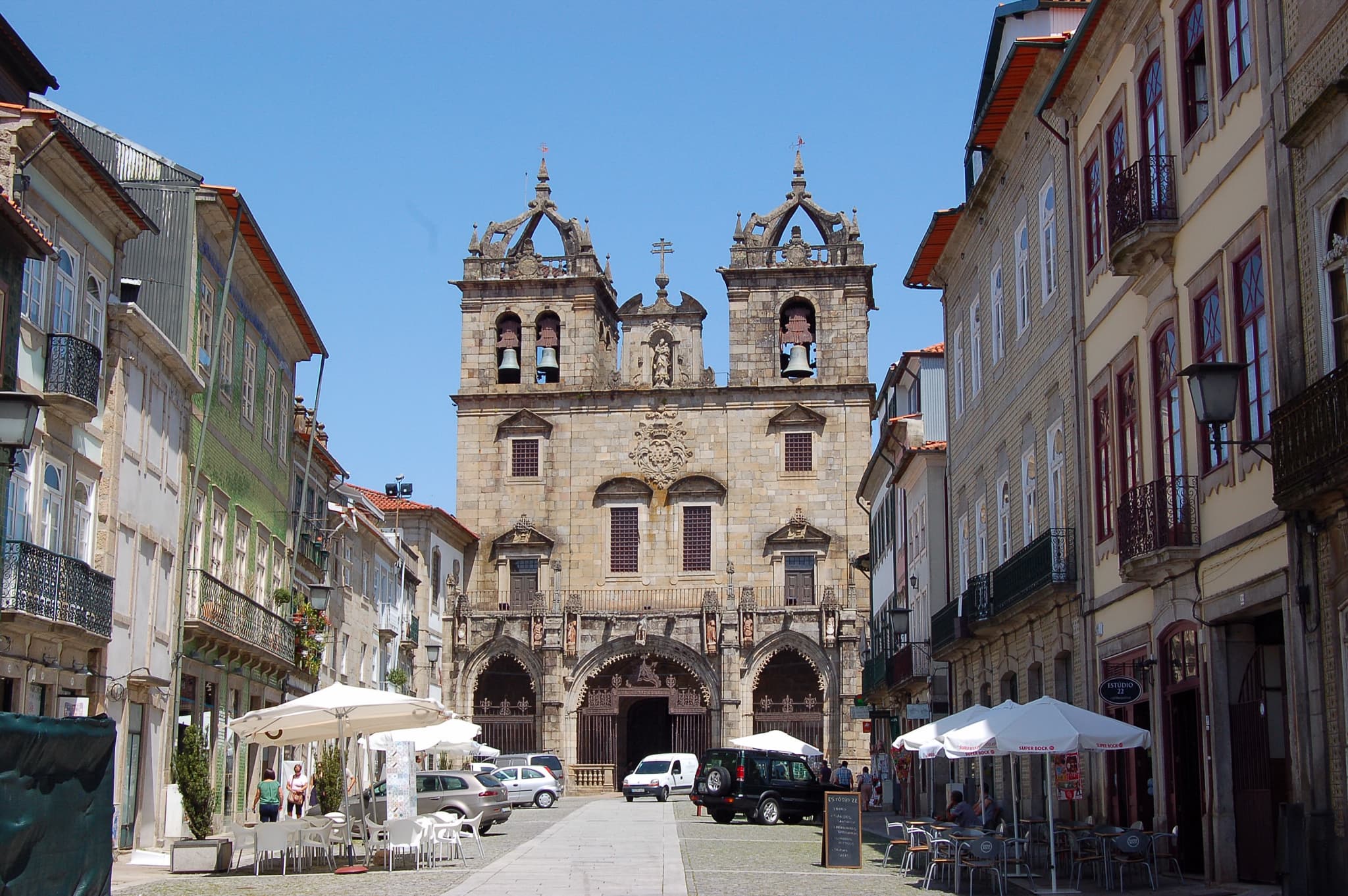
Image of Braga Cathedral. Image source
Visit essentials
A quick read before you go
- Duration
- Approximately one to one and a half hours for a full visit covering the main nave, high choir,…
- Access
- Located in Braga's historic center, an easy walk from the main squares.
Overview
Braga Cathedral's fortress-thick Romanesque doorway and enduring walls hold nearly a thousand years of visible layers. Portugal's oldest cathedral, seat of its Archbishop-Primate, is mother church to a diocese rooted in the third century. Gothic tracery, Manueline stonework, and a later Baroque facade cloak its Romanesque structure in a devotional palimpsest. The Chapel of the Kings holds the parents of Afonso Henriques, Portugal's first king, making this both national birthplace in stone and house of worship.
Daily Mass sustains parish life. On Maundy Thursday, the cathedral begins a torchlit procession of hooded, barefoot penitents moving in near-total silence—an encounter visitors arriving only for architecture may not expect to feel.
Why this place is sacred
What makes Braga Cathedral feel dense rather than merely old is the coexistence of registers that elsewhere stay separate. This is simultaneously a national founding site — the resting place of parents of Portugal's first king — and a functioning parish church where Mass is said every day, largely to congregants uninterested in the building's political symbolism.
The architecture reinforces this layering physically. The Romanesque core, thick-walled and fortress-like, was never demolished to make way for later fashions; each subsequent era — Gothic, Manueline, Baroque — built onto and around it, so a walk through the nave and side chapels moves a visitor through roughly six centuries of devotional taste without leaving the building.
Tradition holds that Christianity reached this ground even earlier, through a first bishop said to have been raised from death and ordained by the Apostle James — a claim tradition preserves as origin story rather than the historical record confirms. Whatever the truth of that account, the cathedral has never stopped being used for the purpose it was built for.
The cathedral was built to serve as the seat of the restored Braga bishopric after the Reconquista, and to assert, through scale and permanence, the reestablished authority of the Church in northwestern Iberia.
Successive archbishops treated the cathedral less as a finished monument than an ongoing project — Archbishop Diogo de Sousa's early 16th-century Manueline rebuilding, and Manuel Fernandes da Silva's 1727 Baroque facade, each added a devotional idiom without erasing what came before. The result still functions today as the seat of the Archdiocese of Braga and the Primate of Portugal.
Experience and orientation
The exterior gives little away. Approached from Braga's historic center, the cathedral reads as solid and closed — thick Romanesque walls with a Baroque facade grafted onto the front, more bastion than invitation. Stepping inside changes the register entirely: light-filled chapels, gilded woodwork, and a granite nave that has absorbed nearly a thousand years of candle smoke and quiet footsteps.
Most visitors move first through the main nave, then into the high choir (Coro Alto) and the side chapels, ending at the Treasury-Museum, where a tenth-century chalice and an eleventh-century Arab ivory casket sit alongside centuries of vestments. The Chapel of the Kings tends to slow people down — a place where the building's civic weight becomes physically present rather than merely explained on a placard.
What stays with people, more than any single object, is the sense of scale in time: a building that has been in continuous use since 1089, still functioning as an actual cathedral rather than a preserved shell of one.
A full visit, including the treasury and chapels, takes roughly an hour to ninety minutes. Arrive on a weekday morning shortly after opening if you want the nave close to empty; Saturdays draw tour groups, and Sunday visiting hours are curtailed by services. If your visit coincides with Holy Week, treat the cathedral itself as only part of the experience — the more distinctive encounter unfolds in the streets around it after dark.
Context and lineage
According to tradition, Christianity came to Braga in the first century through Saint Peter of Rates, said to have been resurrected from death and personally ordained by the Apostle Saint James the Great. This belongs to legend rather than the historical record — no contemporary documentation supports it — but it is preserved as the diocese's foundational story.
The verifiable history is more modest: the Diocese of Braga was established by the 3rd century AD, one of the oldest sees on the Iberian Peninsula. After a long interruption, the bishopric was restored in the late 11th century following the Reconquista. Bishop Pedro began construction around 1070-1080 — the exact starting point varies by source — and the building was consecrated and dedicated to the Virgin Mary on 28 August 1089, a date historians agree on.
The Archdiocese of Braga has never lapsed since its medieval restoration, and its archbishop has carried the title of Primate of Portugal for centuries — once asserted more expansively as a claimed Primacy of the Spains, now recognized only within Portugal.
Saint Peter of Rates
traditional founder
Venerated in tradition as the first bishop of Braga (45-60 AD), said to have been resurrected and personally ordained by the Apostle James the Great. Treated by historians as legendary rather than documented.
Bishop Pedro
historical
Initiated construction of the present cathedral in the late 11th century (c. 1070-1080).
Archbishop Diogo de Sousa
historical
Commissioned the early 16th-century Manueline rebuilding of the main chapel and towers, with architect João de Castilho.
Manuel Fernandes da Silva
architect
Architect of the cathedral's Baroque facade remodeling, completed in 1727.
Count Henry of Burgundy and Countess Teresa of León
historical
Parents of Afonso Henriques, Portugal's first king, entombed in the Chapel of the Kings.
Traditions and practice
The Procissão do Senhor Ecce Homo takes place on Maundy Thursday, re-enacting Christ's trial before Pilate through Braga's streets. Its central feature is the farricocos: penitents who process barefoot, robed head to foot in black, faces covered by conical hoods, identity deliberately erased. They sound wooden rattles called matracas, silenced church bells' dry counterpoint, and carry fogaréus, braziers of open fire, so the procession moves through the old town lit by flame.
Sources place the tradition's roots at least as far back as 1513. The anonymity is the point: penance performed in public yet stripped of individual identity.
The wider Semana Santa program, organized by the Misericórdia de Braga with local confraternities, extends across the week with the Ecce Homo procession as centerpiece. Outside Holy Week, the cathedral functions as an ordinary parish church: daily Mass, sacraments, and diocesan ceremonies befitting the seat of Portugal's Archbishop-Primate. Camino pilgrims commonly pass through Braga and stop at the cathedral, though any formal pilgrim blessing here is not well documented.
If Holy Week falls during your visit, position yourself along the procession route after dark rather than trying to follow it — the fogaréus and matracas are best experienced as a fixed observer, watching light and sound approach and pass. Outside Holy Week, attending a public Mass is the more direct way to encounter the cathedral as the living institution it still is.
Roman Catholicism
ActiveBraga Cathedral is the mother church of Christianity in Portugal, seat of the country's oldest diocese and of the Archbishop-Primate, historically claiming primacy over the entire Iberian Peninsula.
Daily Mass, sacraments, diocesan ceremonies, and the annual Semana Santa solemnities including the Ecce Homo procession.
Portuguese national foundation memory
ActiveThe Chapel of the Kings holds the tombs of the parents of Afonso Henriques, Portugal's first king, tying the cathedral to the founding of the Portuguese nation.
The tombs remain a central feature of guided visits; the cathedral is closely associated with the narrative of Portuguese independence, including the papal recognition (Manifestis Probatum).
Camino de Santiago (Portuguese Way) pilgrimage
ActiveBraga lies on the Portuguese Way of the Camino de Santiago, historically a waypoint of prestige for pilgrims traveling toward Santiago de Compostela.
Pilgrims traveling the Portuguese Camino pass through Braga and commonly visit the cathedral; whether it offers formal pilgrim blessings or stamps is not verified from available sources.
Perspectives and open questions
Braga Cathedral is read through several lenses that rarely need to compete with one another: an architectural record open to scholarly dating debates, a national-foundational narrative embraced within Portuguese Catholic tradition, and a genuine historiographical uncertainty around its earliest, most legendary claims.
Scholarly perspective
Historians agree on the outline: construction began in the late 11th century following the Reconquista-era restoration of the Braga bishopric, with consecration in 1089, followed by six centuries of Gothic, Manueline, and Baroque modification layered onto a persisting Romanesque core. Sources diverge on finer grain — the exact start date (variously placed c. 1070-1080) and the completion dates of individual chapels. No academic peer-reviewed architectural history was consulted directly here; the scholarly picture draws on encyclopedia and heritage-aggregator summaries.
Living and traditional perspectives
Within Catholic and Portuguese national tradition, the cathedral's significance rests on two intertwined claims: the legendary apostolic founding of the Braga see through Saint Peter of Rates, and the cathedral's role as the resting place of the parents of Afonso Henriques. Neither claim requires historical verification to carry weight within this framework — apostolic founding narratives and dynastic burial sites function as national-religious memory rather than as propositions awaiting archaeological proof.
Alternative interpretations
No significant alternative or esoteric interpretive tradition around Braga Cathedral is confirmed in available sources, though that absence may simply reflect what the consulted record covers rather than a settled fact. As far as those sources show, its significance is treated almost exclusively through mainstream Catholic devotion and Portuguese national historiography.
Open questions
The precise historicity of the Saint Peter of Rates legend remains, by nature, unresolvable — it belongs to tradition rather than to evidence that could confirm or disprove it. More narrowly, the exact construction chronology of individual chapels, and whether Bishop Pedro's building campaign began closer to 1070 or 1080, remain points where secondary sources disagree.
Plan your visit
Access and arrival
Located in Braga's historic center, an easy walk from the main squares. Free or low-cost access covers the nave; small separate fees apply for the Treasury-Museum and the chapels/high choir — verify current pricing on-site, as it changes.
Respectful visit
Shoulders and knees should be covered, in keeping with dress expectations at active Catholic churches throughout Portugal.
Photography without flash is generally permitted in the main nave, but is often restricted or prohibited in the Treasury-Museum and during Mass or other religious ceremonies; check posted signage on-site, as policies can vary by area and by service schedule.
No distinct offering ritual is documented for casual visitors beyond the candle-lighting and donation practices common to Catholic churches generally; entry fees for the treasury and chapels function as a form of support for the cathedral's upkeep.
Visitors should remain quiet, avoid eating or drinking inside, silence phones, and refrain from touching tombs, altars, or treasury objects. The cathedral closes for a midday break and again in the early evening, and Sunday tourist access is limited due to ongoing services — plan a visit outside these windows.
The farricocos and the wider Holy Week ceremonies are acts of religious observance, not performance for visitors; photograph respectfully and keep distance rather than approaching penitents. Exact procession dates shift each year with the liturgical calendar — confirm the current schedule through the official Semana Santa de Braga site.
Location
Map loads as you approach this section.
Pilgrim reflections
A portrait of encounter, not a score
Pilgrims describe what they felt, how present they could become, and whether the place would shape a journey. There are no stars and no ranking of traditions.
No reviewed reflections yet
The first pilgrims can help describe the character of being here.
Share a reflection
Available after an account-backed “Been there.” Every reflection is reviewed before publication.
Nearby sacred places
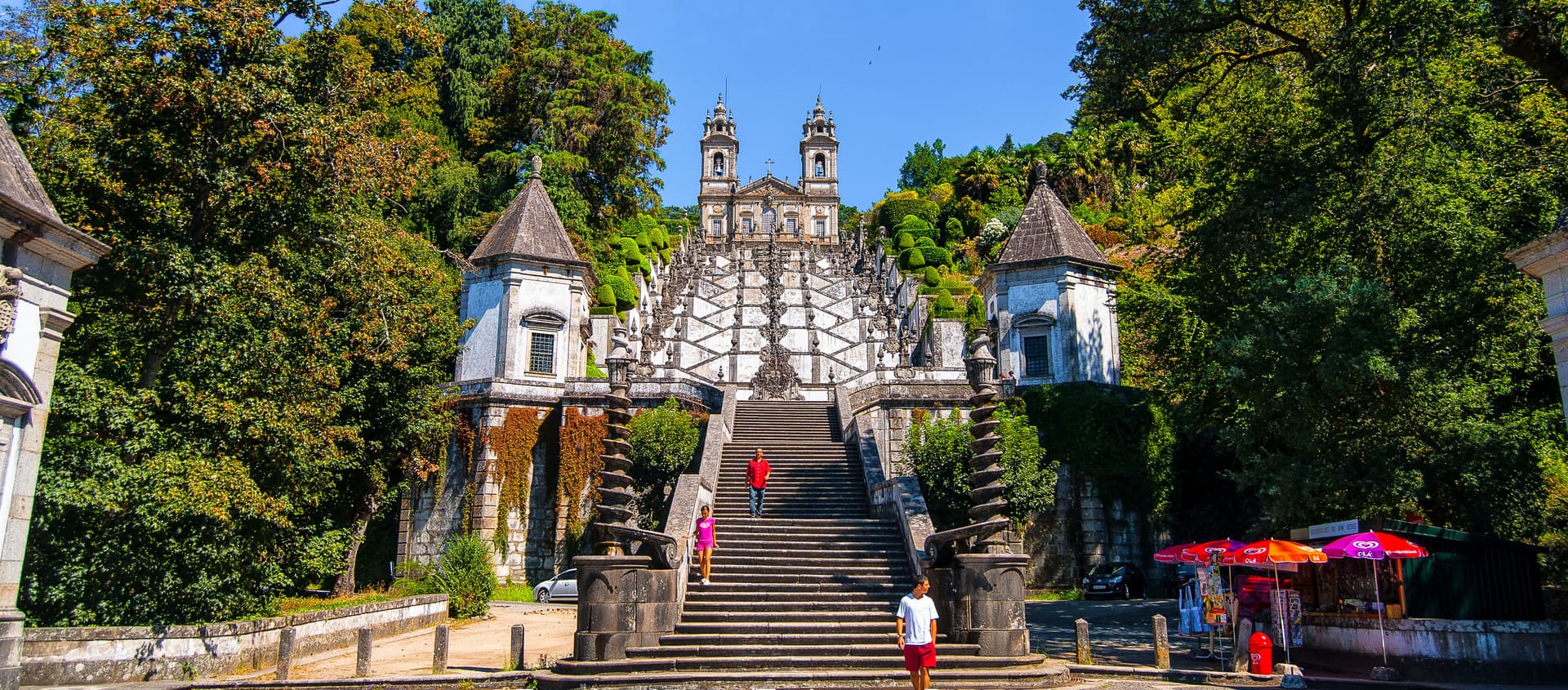
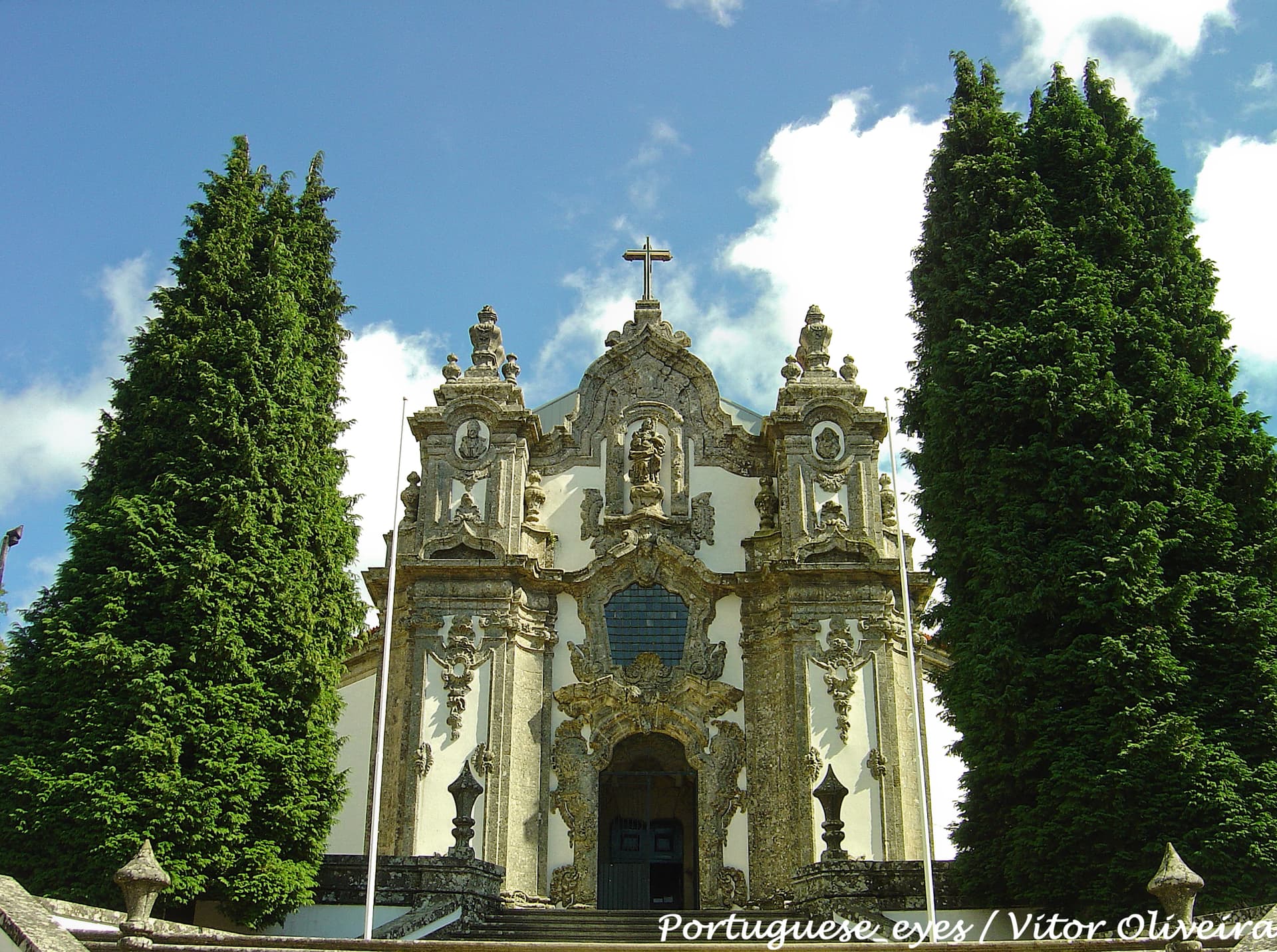
Explore other sacred places in the region. Proximity does not establish access or travel time; check each place’s guidance.


References
Sources consulted for this page. Source categories describe the publication, not a guarantee that every claim is verified. Traditional accounts and outside interpretations may differ.
- 01Braga Cathedral — Wikipedia — Wikipedia contributorsacademicCore facts on founding, consecration in 1089, architectural styles, tombs, National Monument status since 1910, Archdiocese/Primate status.
- 02Sé de Braga — Turismo de Portugal (visitportugal.com)officialOfficial national tourism board description of the cathedral's history and architecture.
- 03Solenidades da Semana Santa — Visit Braga (municipal tourism board)officialOfficial municipal source on Holy Week solemnities in Braga.
- 04All Processions — Semana Santa de Braga (Official Site) — Semana Santa de BragaofficialOfficial Holy Week organizing body; details on Ecce Homo procession, farricocos, and Holy Week program dating to 1513/15th century.
- 05Roman Catholic Archdiocese of Braga — Wikipedia — Wikipedia contributorsacademicConfirms Primate of Portugal / Primacy of the Spains status of the Archbishop of Braga.
- 06Braga (city, Portugal) — Roman ruins, Cathedral, & Pilgrimage — Encyclopaedia BritannicaacademicEncyclopedic overview of Braga's role as an archiepiscopal and pilgrimage-route city on the Portuguese Camino.
- 07Sanctuary of Bom Jesus do Monte in Braga — UNESCO World Heritage CentreofficialConfirms that Braga Cathedral itself does not hold UNESCO World Heritage status; the nearby Bom Jesus do Monte sanctuary does, as of 2019.
- 08Braga Cathedral - Braga, Portugal — Sacred DestinationsspiritualSpecialist sacred-sites travel guide with architectural and treasury detail, cross-checked against Wikipedia and official sources.
- 09A Brief History of Braga Cathedral — Prudêncio (Braga heritage/tourism publisher)Source contextLocal Braga-based publisher; used for corroborating historical timeline and legend of Saint Peter of Rates.
- 10Braga Cathedral Portugal: Complete Guide + Photos and Tips — isharethese.comSource contextIndependent travel guide used for practical visitor information (hours, tickets, dress code); treat exact prices/hours as approximate and subject to change.
Share a photo
Help visitors recognize Braga Cathedral. Every submission is reviewed before publication.