Sanctuary of Our Lady of Sameiro, Braga, Portugal
A neoclassical basilica built not on a vision but on a dogma, and honored ever since
Understand sacred places, explore living traditions, and learn how to engage respectfully with Pilgrim Map.
Access has not been verified. Check current local guidance before planning a visit.
Braga, Braga, Portugal
Read the sources
Visit essentials
A quick read before you go
- Duration
- Approximately 1-2 hours to explore the basilica, staircase, and grounds; longer if attending…
- Access
- Located atop Monte Sameiro, roughly 4 km from Braga's city center and less than 2 km from the…
Overview
Sameiro centers not on a miracle story but on doctrine and decision. Pope Pius IX formally defined the dogma of the Immaculate Conception in 1854, prompting new shrines across Catholic Europe; Lourdes, with its apparition four years later, became the most famous. Sameiro was the Portuguese answer that came first, at least in intention: Fr.
Martinho António Pereira da Silva, vicar of Braga, resolved to crown a hilltop above the city with a monument to the new dogma and began work in 1863.
Completion took nearly a century: an outdoor shrine in 1869, the basilica's foundation stone in 1890, and a dome and altar finished only in 1936–1941. Marble and bronze sculpture and a monumental staircase joined the complex. In 1982, Pope John Paul II celebrated Mass here before an estimated 400,000 people; in 2004, the Vatican awarded the Golden Rose.
Sameiro's sacred standing rests on this accumulation: a deliberately built monument sustained by continuous popular devotion, now second in scale only to Fátima among Portugal's national Marian shrines according to the majority, though not all, sources.
Why this place is sacred
Sameiro's character is easiest to grasp by naming what it is not: there is no confirmed record of a Marian apparition here, no vision reported by a local witness, nothing resembling the founding events at Fátima or Lourdes. The mountain's sacred association appears to begin with the 1863 devotional project itself, rather than with any older lore — no pre-Christian or folkloric legend specific to Monte Sameiro was found in available sources.
What gives the site its sacred weight instead is doctrinal commemoration deliberately built into monumental form. Pope Pius IX's 1854 definition of the dogma of the Immaculate Conception sparked a wave of Marian shrine-building across Catholic Europe — Lourdes, with its own reported 1858 apparition, is the most famous result. In Braga, Fr.
Martinho António Pereira da Silva resolved that the city needed a permanent monument 'perpetuating the triumph of Mary Immaculate,' and chose a commanding hilltop position over the city and the Minho valley for it, beginning foundational work in 1863.
The decades that followed turned that resolve into a landscape: an outdoor shrine dedicated in 1869, a foundation stone for the present basilica laid in 1890, and construction phases continuing well into the twentieth century, with the dome and altar completed only in 1936-1941.
Two events later reinforced the site's stature within the wider Church — Pope John Paul II's 1982 open-air Mass before an estimated 400,000 people, and the Vatican's 2004 award of the Golden Rose, an honor reserved for sites of particular Marian significance.
Some sources describe Sameiro as second only to Fátima in scale and pilgrim attendance among Portugal's national Marian shrines; some sources rank it third instead, behind Fátima and the Sanctuary of Nossa Senhora da Piedade in Loulé. The 'second only to Fátima' framing is the majority view and is used here with that qualification attached, not as settled fact.
The sanctuary was conceived from the outset as a commemorative monument rather than a response to any reported vision: Fr. Martinho António Pereira da Silva sought, from 1863, to mark Pope Pius IX's 1854 definition of the Immaculate Conception with a permanent hilltop shrine above Braga, chosen deliberately for its commanding position over the city and the Minho valley.
Construction proceeded across nearly a century in visible phases: the 1863 foundational work, the 1869 outdoor shrine dedication, the 1890 basilica foundation stone, and dome and altar completion in 1936-1941. A crypt, added in 1979, expanded capacity for pilgrims. Papal recognition arrived twice — the 1982 Mass by Pope John Paul II, and the 2004 award of the Golden Rose — each reinforcing rather than replacing the site's original commemorative purpose.
The sanctuary has grown alongside its neighbor Bom Jesus do Monte into one of the two defining pilgrimage anchors of Braga's hilltop sacred landscape, though unlike Bom Jesus, Sameiro holds no UNESCO designation of its own.
Experience and orientation
The climb to Sameiro's esplanade delivers scale before it delivers intimacy: a basilica built to accommodate an estimated 20,000 pilgrims, fronted by a monumental staircase, crowning a summit over 350 metres above Braga with the Minho valley spreading out beyond the city. On an ordinary day, the site reads as grand but quiet — visitors walking the esplanade, taking in the view, entering the basilica largely on their own terms, without the crowd that defines the two annual pilgrimage days.
On those pilgrimage days — the first Sunday of June and the third Sunday of August — the same space fills differently: tens of thousands of the faithful gather for an outdoor Mass celebrated before the grand stairway. For secular visitors arriving outside these dates, the primary reported draw remains the contemplative, elevated setting rather than any specific mystical encounter — a marked contrast to sites whose reputation rests on reported visionary experience.
If a specific devotional atmosphere is the goal, time a visit to the first Sunday of June or the third Sunday of August, when the outdoor Masses draw the crowds that give Sameiro its reputation as a living pilgrimage site rather than a monument alone.
If the panoramic setting is the priority instead, any clear day rewards the visit — the basilica and its staircase are open daily at no charge, and the site's scale reads just as clearly without a crowd. Many pilgrims combine a visit here with the woodland processional walk connecting Sameiro to the nearby Sanctuary of Bom Jesus do Monte.
Context and lineage
Sameiro's founding narrative is explicitly commemorative and doctrinal rather than visionary. Following Pope Pius IX's 1854 dogmatic definition of the Immaculate Conception — part of a broader European wave of Marian devotional building that also produced Lourdes — Fr. Martinho António Pereira da Silva, vicar of Braga, sought to crown a hilltop above the city with a monument perpetuating the triumph of Mary Immaculate.
Foundational work began in 1863 (some sources give June 14, others July 14, likely reflecting different stages of the same initial project), and an outdoor shrine was dedicated on August 28, 1869. The current basilica's foundation stone was laid on August 31, 1890, with construction continuing across decades; the dome and altar were not completed until 1936-1941.
The site was chosen deliberately for its commanding position over Braga and the Minho valley, rather than for any reported vision or prior sacred association with the mountain.
Sameiro's construction unfolded in visible stages across nearly a century — the 1863 foundational project, the 1869 outdoor shrine, the 1890 basilica foundation stone, and 1936-1941 completion of the dome and altar — a slower, more incremental building process than the single-vision founding narratives common at other Marian shrines. Papal recognition arrived twice, in 1982 and 2004, reinforcing rather than initiating the sanctuary's standing.
Today it functions alongside the neighboring Sanctuary of Bom Jesus do Monte as one of the two central anchors of Braga's hilltop pilgrimage landscape, connected to it by a historic woodland processional route.
Fr. Martinho António Pereira da Silva
founder
Vicar of Braga (1812-1875) who initiated the sanctuary's founding in 1863, intending it as a permanent monument to Pope Pius IX's 1854 dogma of the Immaculate Conception.
Pope Pius IX
doctrinal authority
Pope whose 1854 dogmatic definition of the Immaculate Conception provided the doctrinal impetus for the sanctuary's founding; also blessed the statue enthroned at Sameiro in 1880.
Eugénio Maccagnani
sculptor
Rome-based sculptor credited with the principal Marian statue enthroned at Sameiro in 1880, blessed by Pope Pius IX. Sources vary on the relationship between this statue and an earlier marble Immaculate Conception statue attributed to Emídio Carlos (Carlo) Amatucci; whether one replaced the other or the two were distinct commissions is not fully reconciled across sources.
Pope John Paul II
papal visitor
Celebrated an open-air Mass at Sameiro in 1982 before an estimated 400,000 people, a major moment of papal recognition for the sanctuary.
Traditions and practice
The canonical coronation of the Marian statue, performed on June 12, 1904, by the Apostolic Nuncio as papal delegate, and the earlier 1880 blessing and enthronement procession for the Maccagnani statue, established a pattern of formal, ceremonially marked devotion to the image that continues, in different form, in today's pilgrimage liturgies.
Regular Catholic Mass continues at the basilica. The Archdiocesan pilgrimage, departing Braga Cathedral, is held annually on the first Sunday of June. The statutory pilgrimage falls on the third Sunday of August, near the August 15 Assumption feast, frequently linked with a processional walk from the neighboring Sanctuary of Bom Jesus do Monte. The crypt, inaugurated in 1979, was added specifically to accommodate the pilgrim numbers these two events draw.
A visitor seeking the fullest sense of Sameiro as a living pilgrimage site, rather than a monument alone, should time a visit to one of the two annual pilgrimage dates — ideally arriving via the woodland processional walk from Bom Jesus do Monte rather than by direct road, joining the approach pilgrims themselves have historically taken.
Roman Catholicism — Marian devotion (Immaculate Conception)
ActiveSameiro is one of Portugal's most important Marian shrines. Some sources describe it as second in importance only to Fátima, though some sources rank it third instead, behind Fátima and the Sanctuary of Nossa Senhora da Piedade in Loulé. It was built specifically to commemorate Pope Pius IX's 1854 dogmatic definition of the Immaculate Conception. It functions as a living center of national Marian piety, honored with two annual mass pilgrimages, papal recognitions including a 1982 visit by Pope John Paul II and the 2004 award of the Golden Rose, and ongoing daily worship.
The annual Archdiocesan pilgrimage on the first Sunday of June, departing from Braga Cathedral; the statutory pilgrimage on the third Sunday of August, often preceded by a processional walk from the Sanctuary of Bom Jesus do Monte; veneration of the crowned statue of Our Lady of Sameiro; regular Mass; candlelit processions; the statue's canonical coronation, originally performed in 1904, remains a point of ongoing devotional reference.
Perspectives and open questions
Sameiro is unusual among major Marian shrines in having no apparition to interpret — the interpretive questions here concern not what was seen, but why a doctrine alone was judged sufficient grounds for a monument of this scale, and how that monument earned the popular devotion it now commands.
Scholarly perspective
Historians and heritage sources treat Sameiro as a well-documented product of nineteenth-century Portuguese Catholic revivalism tied directly to the 1854 papal dogma of the Immaculate Conception, part of a broader European wave of Marian devotional building contemporaneous with events at Lourdes, rather than a site with independent ancient or folkloric origins.
Its status as one of Portugal's most significant Marian shrines is understood as an achievement of sustained popular devotion and institutional promotion over more than a century, not an inherited sacredness.
Living and traditional perspectives
In the understanding of contemporary Portuguese Catholic pilgrims, tradition holds that Sameiro's power rests less on a founding story than on accumulated collective practice: the Archdiocesan and statutory pilgrimages, papal recognitions including the 1982 Mass and 2004 Golden Rose, and generations of devotion to the enthroned Marian statue. In this understanding, the absence of a reported apparition is no obstacle to sanctity — practitioners hold that the doctrine being commemorated is itself sufficient theological ground for veneration.
Alternative interpretations
No alternative or esoteric interpretive tradition was identified in available sources for this site; unlike some Marian shrines that accumulate New Age or syncretic readings over time, Sameiro's interpretive discourse remains overwhelmingly confined to mainstream Catholic devotional and heritage terms.
Open questions
The precise cause of the 1883 destruction of the original exterior monument remains unclear: some sources describe it as unknown, some as deliberate destruction, and some as the result of an electrical fire, and the question is unresolved by available research.
The relationship between the early Amatucci marble statue and the 1880 Maccagnani statue enthroned at Sameiro is also not fully reconciled: some tertiary sources conflate the two, and whether one replaced the other or the two represent distinct commissions remains unclear.
Plan your visit
Access and arrival
Located atop Monte Sameiro, roughly 4 km from Braga's city center and less than 2 km from the Sanctuary of Bom Jesus do Monte, reachable by road with on-site parking. The grounds include some sloped paths and steps in addition to a relatively flat main esplanade and basilica area.
Respectful visit
No dress code is codified in available sources, but as an active Catholic basilica, modest dress — covered shoulders, no swimwear — is the reasonable expectation for entering the church, particularly during Mass, consistent with general etiquette at Portuguese Catholic sanctuaries. This is a reasonable inference from the site's active-worship status, not a directly sourced sanctuary policy.
No specific photography restriction is documented in available sources; general norms for active churches — no flash or photography during Mass, respectful behavior near the altar — likely apply but were not explicitly confirmed for Sameiro.
No specific offering practice, such as candle-lighting stalls, is documented in the sources gathered, though such practices are common at comparable Portuguese Marian shrines; this is not confirmed for Sameiro specifically.
No formalized visitor restrictions were found; the crypt and any affiliated religious communities' residences — the Dominican Sisters' house, the Carmelite Missionary Seminary, the Heralds of the Gospel residence — are likely not open to general public access.
No specific offering practice, such as a dedicated candle-lighting stall, is confirmed for Sameiro in sources reviewed, though such practices are common at comparable Portuguese Marian shrines; visitors should not assume unconfirmed customs are in place. The crypt and any affiliated religious communities' residences on site — including houses of the Dominican Sisters, the Carmelite Missionary Seminary, and the Heralds of the Gospel — are likely not open to general public access.
Location
Map loads as you approach this section.
Pilgrim reflections
A portrait of encounter, not a score
Pilgrims describe what they felt, how present they could become, and whether the place would shape a journey. There are no stars and no ranking of traditions.
No reviewed reflections yet
The first pilgrims can help describe the character of being here.
Share a reflection
Available after an account-backed “Been there.” Every reflection is reviewed before publication.
Nearby sacred places
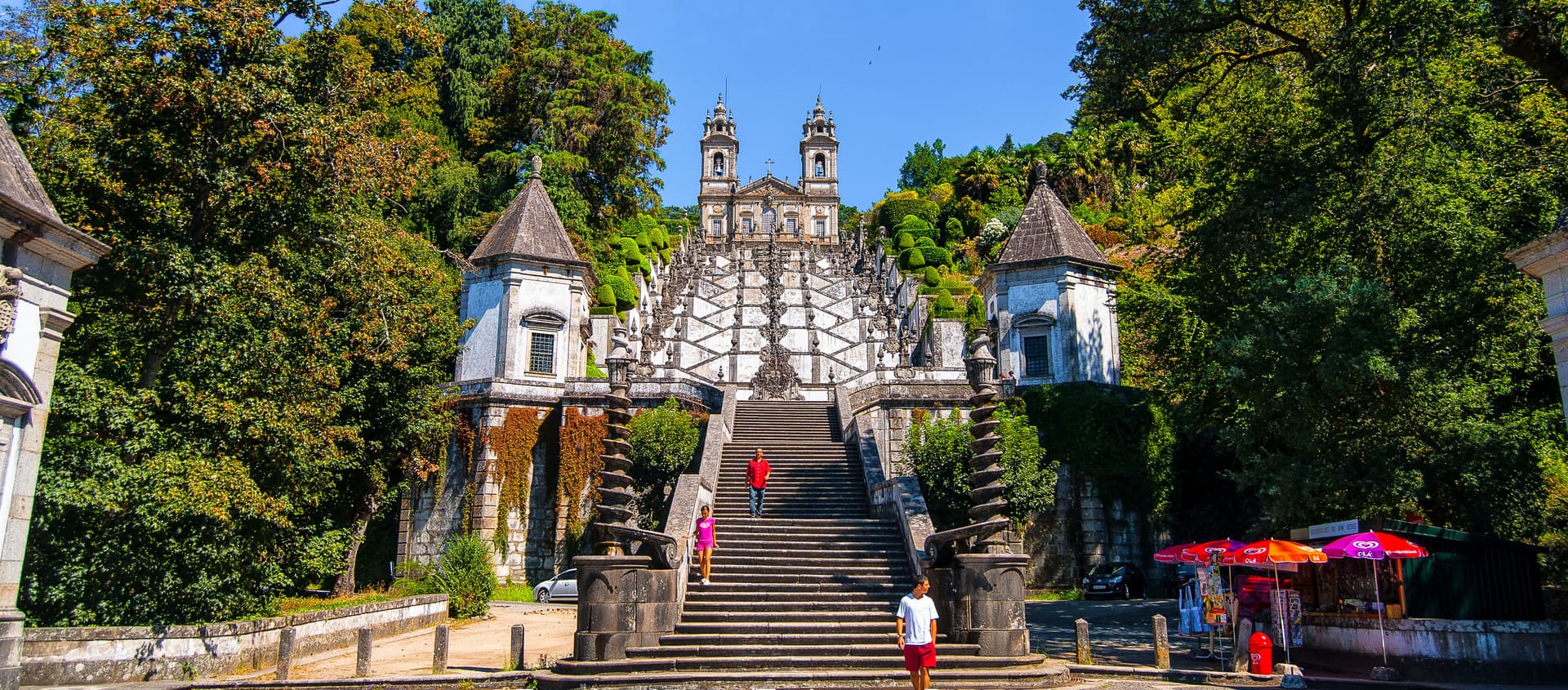
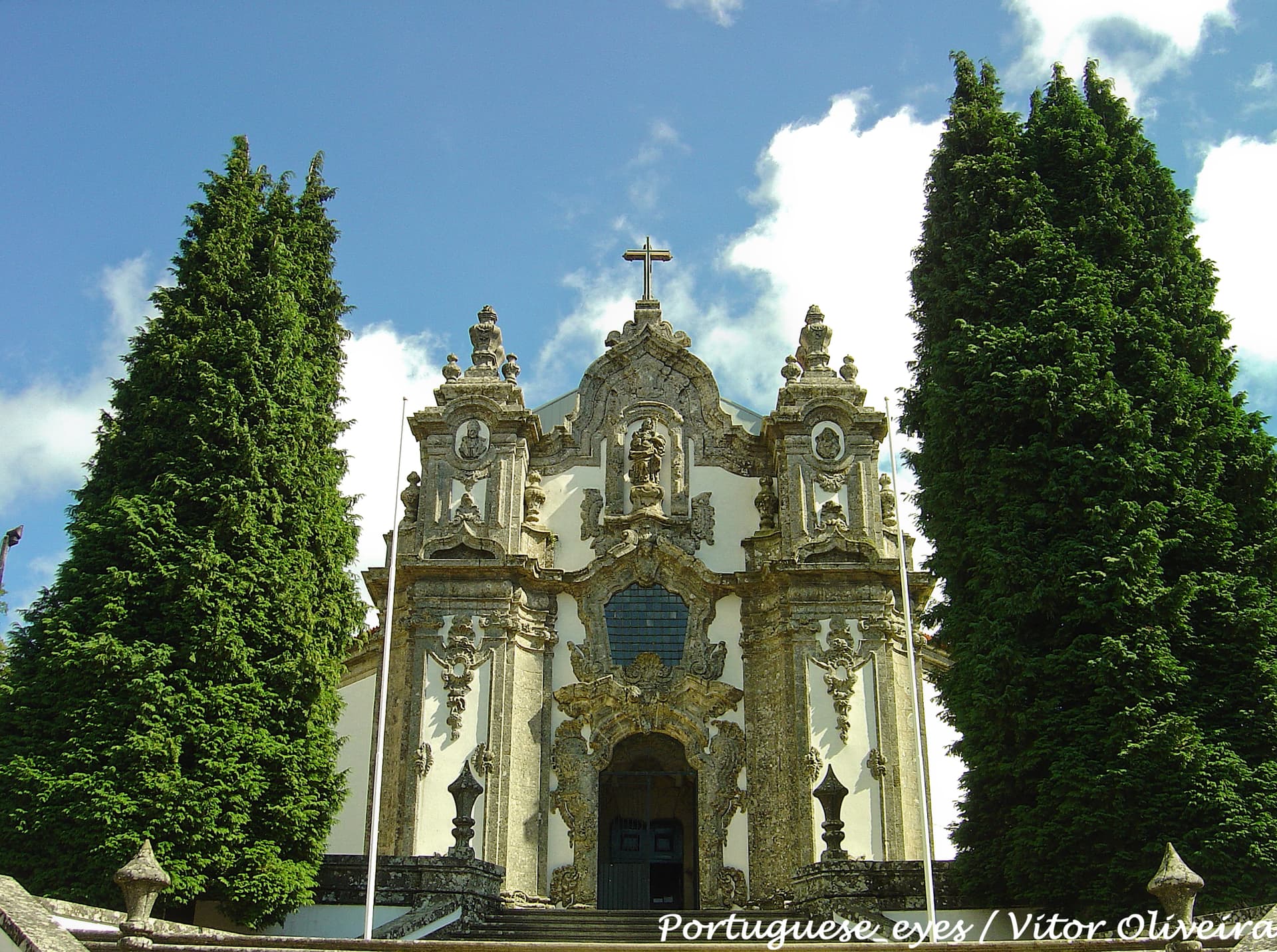
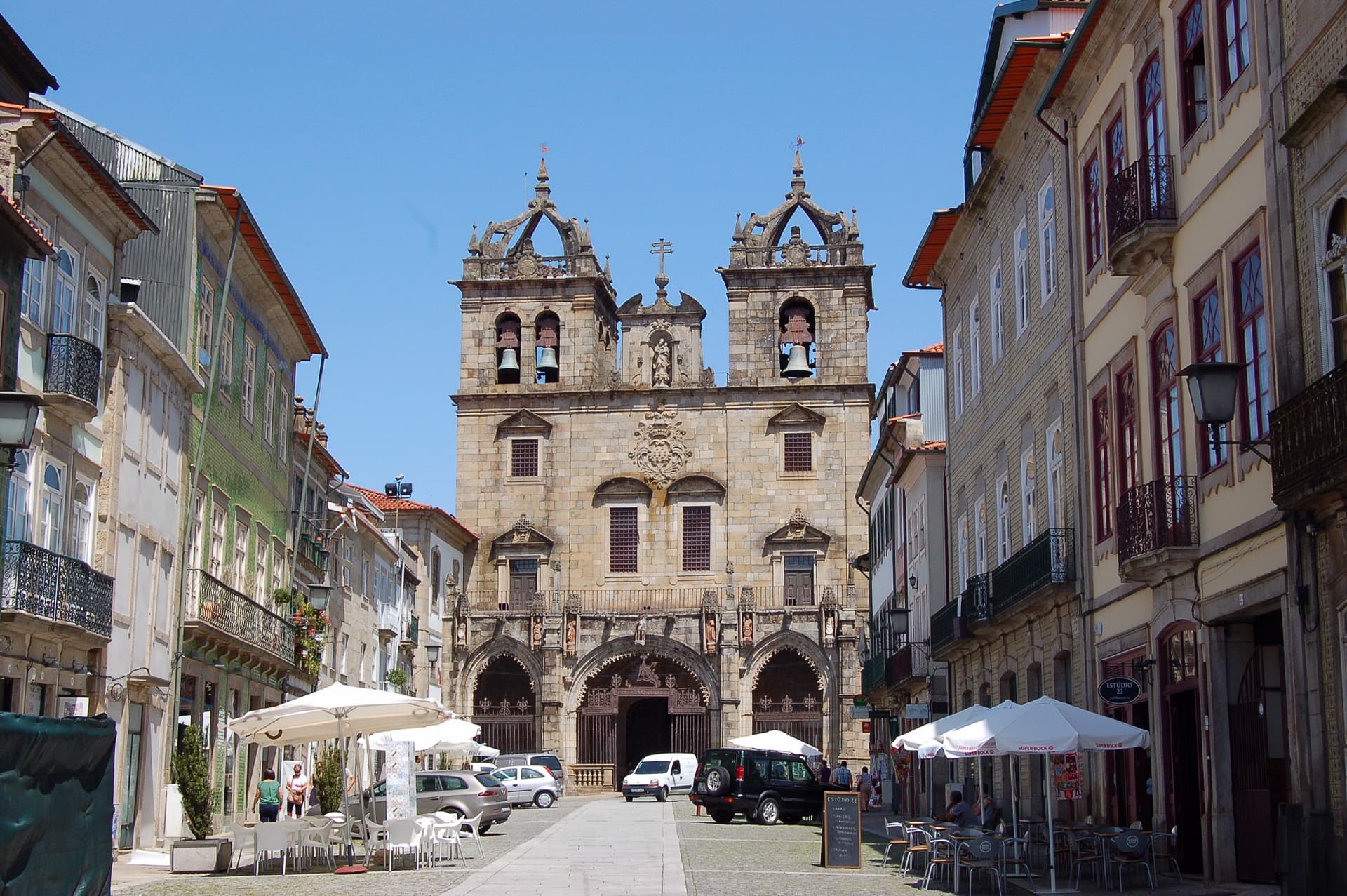
Explore other sacred places in the region. Proximity does not establish access or travel time; check each place’s guidance.

References
Sources consulted for this page. Source categories describe the publication, not a guarantee that every claim is verified. Traditional accounts and outside interpretations may differ.
- 01História — Santuário do Sameiro — Santuário do Sameiro (official sanctuary administration)officialOfficial sanctuary website's history page; primary institutional source for founding narrative, construction phases, and dedication of the founder Fr. Martinho António Pereira da Silva.
- 02Santuário da Nossa Senhora do Sameiro | Visit Braga — Visit Braga (municipal tourism board)officialOfficial municipal tourism resource confirming site significance, setting, and visitor context.
- 03Sanctuary of Bom Jesus do Monte in Braga — UNESCO World Heritage Centre — UNESCOofficialConfirms that Bom Jesus do Monte (Sameiro's neighboring sanctuary) holds UNESCO World Heritage status (inscribed 2019); used to confirm Sameiro itself is NOT separately UNESCO-listed.
- 04Sanctuary of Our Lady of Sameiro — Wikipedia — Wikipedia contributorsacademicEnglish-language overview with construction timeline, papal visit, Golden Rose award, artistic elements, and location details.
- 05Santuário do Sameiro — Wikipédia, a enciclopédia livre — Wikipédia contributorsacademicPortuguese-language article with fuller construction chronology, sculptors, crown weight/materials, affiliated religious communities, and heritage-status note.
- 06Santuário do Sameiro — We Braga — We BragaSource contextLocal Braga guide confirming founding date (June 14, 1863) and early chapel dimensions.
- 07Sanctuary of Our Lady of Sameiro, Braga, Portugal | CSB — Catholic Shrine BasilicaspiritualCatholic devotional/travel resource; source for the doctrinal context of the Immaculate Conception dogma (1854) and its link to the sanctuary's founding impetus, and pilgrimage dates.
- 08Braga, Portugal — Catholic Pilgrimage Guide — DestinationesSource contextPilgrimage-focused guide describing the woodland processional route between Bom Jesus do Monte and Sameiro and the Archdiocesan and statutory pilgrimage dates.
- 09Bom Jesus do Monte, Braga: The Complete 2026 Visitor Guide — Porto North PortugalSource contextComparative description of Sameiro relative to the UNESCO-listed Bom Jesus do Monte, including basilica capacity estimate (~20,000 pilgrims) and construction span (1863–1950s).
- 10Sanctuary Sameiro Braga Guide: Plan Your 2026 Visit to Portugal's Shrine — Tourism AttractionsSource contextGeneral tourism content; used only for practical visitor logistics (opening access, approximate visit duration), treated with epistemic caution as a lower-reliability aggregator site.
Share a photo
Help visitors recognize Sanctuary of Our Lady of Sameiro, Braga, Portugal. Every submission is reviewed before publication.