Bourges Cathedral
Where Gothic builders pursued continuous light and pilgrims have gathered for Saint Stephen since the third century
Understand sacred places, explore living traditions, and learn how to engage respectfully with Pilgrim Map.
Access has not been verified. Check current local guidance before planning a visit.
Bourges, Cher, France
Read the sources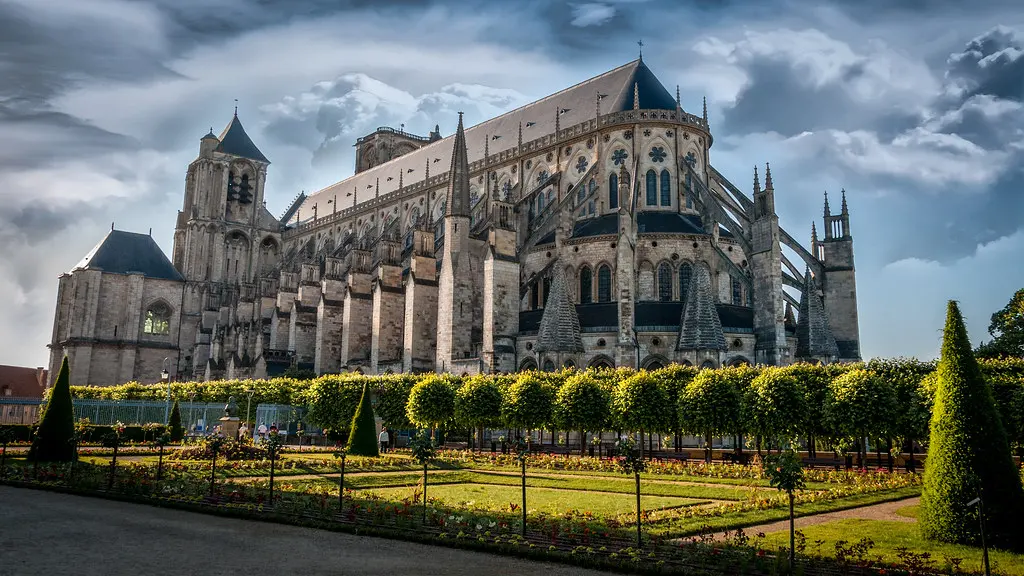
Visit essentials
A quick read before you go
- Duration
- Allow 1-2 hours for the cathedral interior, more if studying the stained glass windows in…
- Etiquette
- As an active Catholic cathedral, modest dress and quiet behavior are expected.
Overview
The Cathédrale Saint-Étienne de Bourges presents a singular achievement in Gothic architecture: five naves stretching uninterrupted toward the altar, no transept breaking the pilgrim's progress toward the sacred center. Built in one concentrated campaign between 1195 and 1245, the cathedral achieves a unity of vision rare among its peers. Where other great churches accumulated over centuries—Romanesque foundations bearing Gothic additions bearing later amendments—Bourges emerged whole from a single conception.
The effect is immediate upon entering. Light falls through thirteenth-century glass windows, the original glazing largely intact after eight hundred years. This was the Gothic builders' deepest aspiration: 'lux continua,' continuous light flooding the interior, transforming heavy stone into translucent membrane between earth and heaven. The light itself becomes liturgy, its colors shifting through the hours, its stories unfolding in glass for pilgrims who could not read Latin but could read images.
This site has held sacred meaning since the third century, when Bourges—Roman Avaricum—became one of the first Christian communities in Gaul. The dedication to Saint Stephen, the first Christian martyr, connects worshippers to the apostolic church. Medieval possession of Stephen's jawbone drew pilgrims; today the cathedral remains an active station on the Santiago de Compostela route, the ancient path continuing through these five naves toward destinations beyond.
Why this place is sacred
Bourges Cathedral exists at the intersection of temporal depth and theological design. The site itself has been sacred to Christians since the third century, when Bourges was among the first communities in Gaul to receive the faith. Saint Ursin, traditionally the first bishop, reportedly brought relics from Jerusalem including drops of Saint Stephen's blood. This early grounding gives the site a gravity that extends beneath the current structure into seventeen centuries of continuous veneration.
The cathedral's dedication to Saint Stephen—the first Christian martyr, stoned to death while testifying to a vision of heaven opened—connects every worshipper to the earliest church. Medieval acquisition of Stephen's jawbone elevated Bourges to pilgrimage destination. An oculus in the crypt ceiling may once have allowed pilgrims in the choir above to glimpse relics displayed below, the sacred visible through stone.
But the cathedral's most distinctive claim to thinness lies in its architecture. The Gothic builders pursued what they called 'lux continua'—the theological ideal that divine light should flood sacred space continuously. The five naves without transept, the double flying buttresses allowing walls of glass, the thirteenth-century windows designed to transform the interior: all served this vision of the church as a vessel for light.
Medieval theologians understood this light as manifestation of the divine, and the builders made their theology visible. To enter Bourges is to enter a space designed to admit God.
The cathedral's inclusion on the Santiago de Compostela route adds another dimension. Pilgrims have passed through for centuries, pausing in their journey westward toward the apostle's shrine. The cathedral thus exists not only as destination but as station—a place where the path pauses, where seekers rest and pray before continuing their way.
The Gothic cathedral was built to replace an earlier Romanesque structure deemed too small for the growing city and diocese. Archbishop Guillaume du Donjon initiated construction in 1195, seeking to create a fitting seat for the archbishopric and a pilgrimage destination worthy of the relics it would house. The acquisition of Saint Stephen's jawbone provided both spiritual justification and practical funding through pilgrim offerings.
The cathedral was built rapidly compared to its peers, largely completed within fifty years. Unlike many Gothic cathedrals that accumulated styles over centuries, Bourges maintains its original vision. The collapse of the north tower in 1506 and its subsequent rebuilding in Flamboyant style as the Tour de Beurre added one later element, but the essential structure remains thirteenth-century. The site's function has been continuous: seat of the archbishop, parish church, pilgrimage station.
Revolution briefly secularized the building, but worship resumed and continues. UNESCO inscription in 1992 recognized its architectural significance; addition to the Santiago routes in 1998 acknowledged its ongoing role in pilgrimage tradition.
Experience and orientation
The approach to Bourges Cathedral builds anticipation. The west front rises above the medieval streets, five portals corresponding to five naves, each entrance carved with narrative—the life of Saint Stephen on one, the Last Judgment on another, stories meant to be read by pilgrims before they cross the threshold. The cathedral does not ease visitors in; it states its intentions in stone.
Crossing into the nave, the first experience is space and light. Five aisles stretch eastward without transept—no cross-arm interrupts the flow toward the altar. This is unusual among Gothic cathedrals, and the effect is immediate: the eye travels forward, drawn by the architecture itself toward the sacred center. The double side aisles graduate in height, creating a visual rhythm that accelerates the eastward pull.
Then the light registers. Thirteenth-century glass fills the ambulatory windows—twenty-two of the original twenty-five survive. Blues and reds predominate, casting colored shadows across the stone floor. In morning light, the eastern windows blaze; as the sun moves, different sections illuminate. Medieval worshippers would have experienced this as the divine made visible, light as liturgy. Contemporary visitors, whatever their beliefs, often report the effect as overwhelming: suddenly understanding what Gothic builders meant by their pursuit of continuous light.
The narrative windows reward slow attention. Old Testament scenes prefigure New; saints and martyrs witness from their panels; the Apocalypse unfolds. For medieval pilgrims who could not read, these windows taught. For contemporary visitors, they offer meditation—hours can pass tracing stories in glass.
The crypt provides a different experience. The lower church, built around 1200, mirrors the double ambulatory above. Here rest the tombs of archbishops and the elaborate tomb of Jean de Berry, patron of the arts. The atmosphere shifts to something older, closer to the bone. Pilgrims descending into this space approach the foundation literally—the underground church holding up the visible one.
The tower climb attracts visitors seeking the view: nearly four hundred steps to an observation platform overlooking Bourges and the surrounding countryside. The ascent transforms perspective, the city diminishing below while the cathedral's architecture reveals itself from above—the flying buttresses, the roofline, the relationship of structure to structure that grounds the building in its place.
Enter through the west portals and allow eyes to adjust to the interior light. The effect of continuous illumination develops gradually. Move eastward slowly, letting the five-nave structure reveal its rhythm. The ambulatory behind the altar holds the finest glass—allow time for close viewing. The crypt entrance is in the north aisle; tours depart at scheduled times (check current hours). The tower climb begins outside the north transept area. Morning light best illuminates the stained glass.
Context and lineage
The Roman city of Avaricum became one of the first Christian communities in Gaul during the third century. According to tradition, Saint Ursin, the first bishop, brought relics from Jerusalem. An eleventh-century Romanesque cathedral built by Archbishop Gozlin preceded the current structure. When that building proved too small, Archbishop Guillaume du Donjon initiated construction of the Gothic cathedral in 1195, acquiring relics including Saint Stephen's jawbone to draw pilgrims and fund the ambitious project.
Construction proceeded rapidly, the main structure completed by 1245, though official consecration waited until 1324.
The cathedral represents continuous Catholic tradition from the third century. Bourges served as one of the first archbishoprics in France, its ecclesiastical influence extending across central France. The cathedral remains the seat of the Archbishop of Bourges. As a station on the Via Lemovicensis of the Santiago de Compostela pilgrimage, the cathedral connects to a thousand-year tradition of sacred journey linking France to Galicia.
Saint Stephen
Dedicatee and patron
Archbishop Guillaume du Donjon
Founder of current cathedral
Jean de Berry
Medieval patron
Traditions and practice
Medieval practices centered on relic veneration, with Saint Stephen's jawbone drawing pilgrims. Processions marked feast days. The cathedral served as site for major ecclesiastical ceremonies, coronations of ecclesiastical significance, and as the spiritual center of a large archdiocese. Pilgrims on the Santiago route would attend mass, venerate relics, and receive blessing before continuing westward.
Regular Catholic masses follow the liturgical calendar. The cathedral remains the seat of the Archbishop of Bourges and hosts significant ecclesiastical events. Pilgrims on the Santiago de Compostela route continue to pass through, their credentials available for stamping. The crypt can be visited for contemplation at the tombs. Guided tours provide historical and artistic context.
Attend mass to experience the cathedral in its liturgical function—the space was designed for worship, and that purpose remains primary. If walking the Santiago route, present your credential for the pilgrim stamp. Visit the ambulatory during morning hours when eastern light illuminates the stained glass most fully. Allow time in the crypt for quieter contemplation. Light a candle at one of the side altars if this practice holds meaning for you.
Roman Catholicism
ActiveThe cathedral has been a place of Catholic worship since the third century, making it one of the oldest continuously Christian sites in France. The dedication to Saint Stephen connects it to the first martyr and the apostolic church. As seat of the Archbishop of Bourges, the cathedral holds ecclesiastical significance beyond its architectural fame. The medieval possession of Saint Stephen's jawbone established it as a pilgrimage destination. Today it serves as parish church, cathedral, and station on the Santiago de Compostela route.
Daily mass following the liturgical calendar. Sacraments celebrated throughout the year. Pilgrims on the Santiago route receive credential stamps. Devotional practices including candle lighting at side altars. The Feast of Saint Stephen (December 26) holds particular significance. The crypt permits contemplation at the tombs of archbishops and Jean de Berry.
Perspectives and open questions
Bourges Cathedral stands at the intersection of architectural history, theological aspiration, and living faith. Its meaning shifts depending on the lens through which it is viewed.
Scholarly perspective
Art historians recognize Bourges as one of the masterpieces of High Gothic architecture, notable for its unified design (built in a single major phase), its distinctive five-nave plan without transept, and its exceptional collection of thirteenth-century stained glass. UNESCO inscription cites its 'considerable importance in the development of Gothic architecture' and its 'harmonious proportions and decoration of the highest quality.' Architectural historians note the influence on later buildings including Toledo Cathedral in Spain.
The pursuit of 'lux continua'—continuous light—represents a theological program translated into architectural innovation.
Living and traditional perspectives
For Catholic faithful, Bourges Cathedral is sacred as the seat of the Archbishop of Bourges and as a place of continuous worship since the earliest Christian presence in Gaul. The dedication to Saint Stephen connects worshippers to the first martyr and to the apostolic church. The medieval relic of Stephen's jawbone made the cathedral a significant pilgrimage destination; today, pilgrims on the Santiago route continue the tradition of seeking spiritual merit through sacred journey.
The cathedral is not primarily a monument but a living church where the sacraments are celebrated and the faithful gather.
Alternative interpretations
Some visitors are drawn by the cathedral's geometry and the alleged spiritual properties of Gothic sacred architecture. The pursuit of 'lux continua' can be understood both theologically and experientially—the transformation of interior space through colored light affecting consciousness in ways that transcend doctrinal interpretation. The position of Gothic cathedrals on earlier sacred sites, the use of sacred geometry, and the manipulation of light have attracted esoteric interpretation since at least the nineteenth century.
Open questions
Several mysteries remain. What was the full extent of relic veneration at the cathedral in its medieval peak? How were the master builders—whose names we do not know—able to achieve such unity of design in a single construction phase? What are the current whereabouts and status of Saint Stephen's jawbone relic?
What rituals were performed in the crypt's lower church during the medieval period, and what was the purpose of the oculus that may have allowed display of relics from below?
Plan your visit
Access and arrival
Hotels and guesthouses throughout Bourges, many within walking distance of the cathedral. The historic center offers restaurants and cafes. Pilgrims on the Santiago route can inquire about pilgrim-specific accommodations and services.
Respectful visit
Modest dress appropriate for an active Catholic church. Cover shoulders and knees. Remove hats upon entering unless worn for religious reasons.
Generally permitted without flash. Do not photograph worshippers. Be discreet; avoid blocking movement or setting up elaborate equipment. Check for posted restrictions in specific areas.
Donations appreciated and support ongoing maintenance. Collection boxes located throughout. Candles available for purchase and lighting at side altars—a traditional devotional practice that visitors are welcome to participate in.
Closed Sunday mornings for services. Closed January 1, May 1, November 1, November 11, and December 25. Tower not recommended for pregnant visitors or those with heart conditions due to the strenuous climb. No food or drink inside the cathedral.
The cathedral closes Sunday mornings for services; plan visits accordingly. The crypt and tower require separate ticketed entry and operate on scheduled tour times. The tower climb involves nearly four hundred steps with no elevator—assess physical readiness. Silence and respectful behavior expected throughout; this remains an active place of worship.
Current practical details
Address
Pl. Etienne Dolet, 18000 Bourges, France
Phone
Hours
Hours, fees, and access can change — verify on the official source before you travel. Practical details last checked Jun 2026.
Location
Map loads as you approach this section.
Pilgrim reflections
A portrait of encounter, not a score
Pilgrims describe what they felt, how present they could become, and whether the place would shape a journey. There are no stars and no ranking of traditions.
No reviewed reflections yet
The first pilgrims can help describe the character of being here.
Share a reflection
Available after an account-backed “Been there.” Every reflection is reviewed before publication.
Nearby sacred places
Explore other sacred places in the region. Proximity does not establish access or travel time; check each place’s guidance.
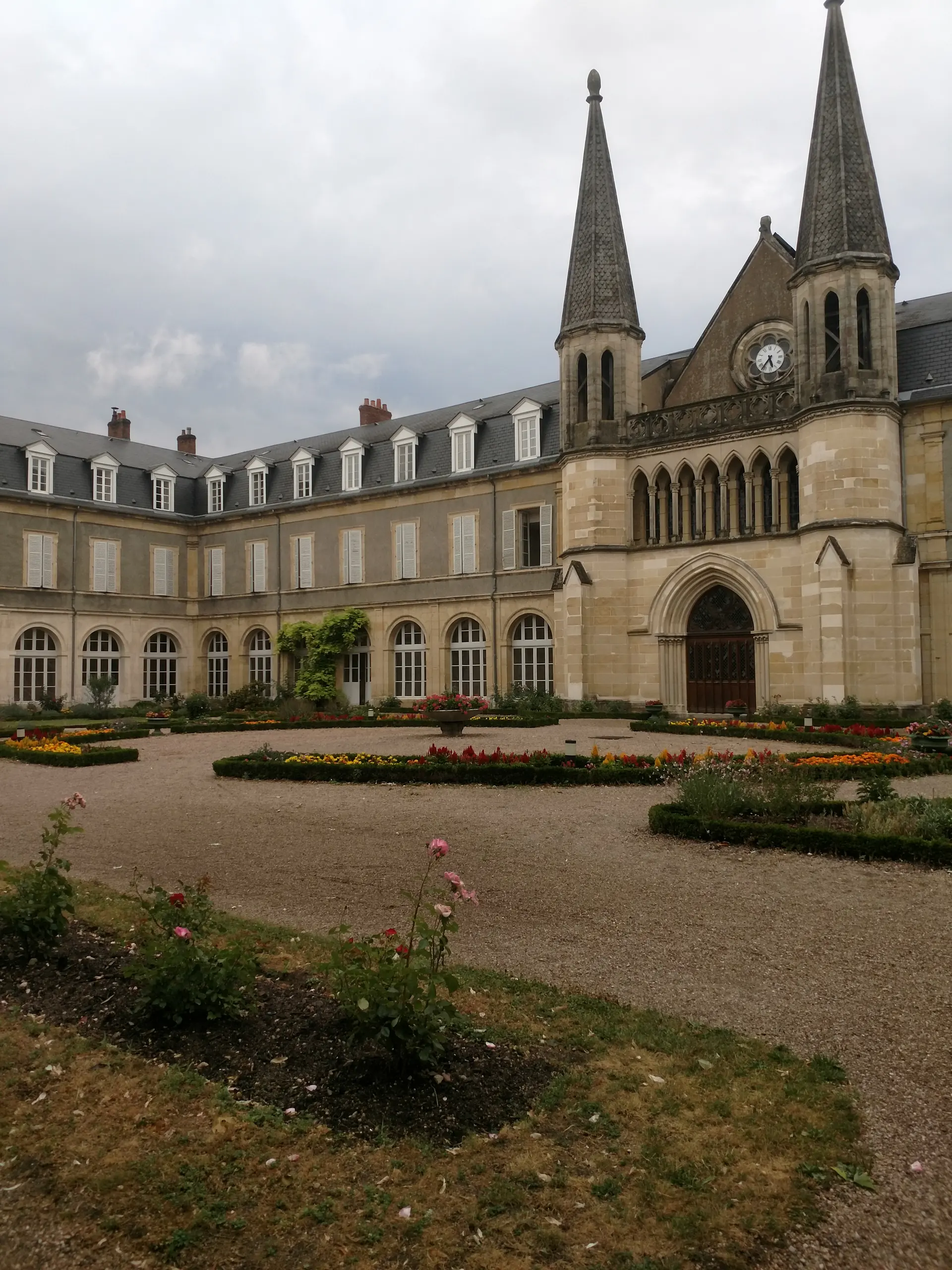
Espace Bernadette Soubirous Nevers
Nevers, Bourgogne-Franche-Comté, France
58.0 km away

Sanctuary of Our Lady of Mercy, Pellevoisin
Pellevoisin, Pellevoisin, Indre / Centre-Val de Loire, France
75.3 km away

Fleury Abbey
Saint-Benoît-sur-Loire, Saint-Benoît-sur-Loire, Loiret / Centre-Val de Loire, France
81.2 km away

Black Madonna of Moulins
Moulins, Allier, France
91.5 km away
References
Sources consulted for this page. Source categories describe the publication, not a guarantee that every claim is verified. Traditional accounts and outside interpretations may differ.
- 01Bourges Cathedral — UNESCO World Heritage CentreofficialOfficial UNESCO documentation
- 02Bourges Cathedral — World History EncyclopediaencyclopediaArt historical perspective
- 03Crypt and tower of Bourges Cathedral — Centre des monuments nationauxofficialOfficial site with visitor information
- 04Bourges Cathedral — Wikipedia contributorsencyclopediaComprehensive overview
- 05Bourges Cathedral — Sacred DestinationsSource contextPilgrimage perspective
Photo gallery
3 curated photos
Share a photo
Help visitors recognize Bourges Cathedral. Every submission is reviewed before publication.