La Grotte des Fées
A Neanderthal cave where human creativity first flowered forty thousand years ago
Understand sacred places, explore living traditions, and learn how to engage respectfully with Pilgrim Map.
Access has not been verified. Check current local guidance before planning a visit.
Châtelperron, Allier, France
Read the sources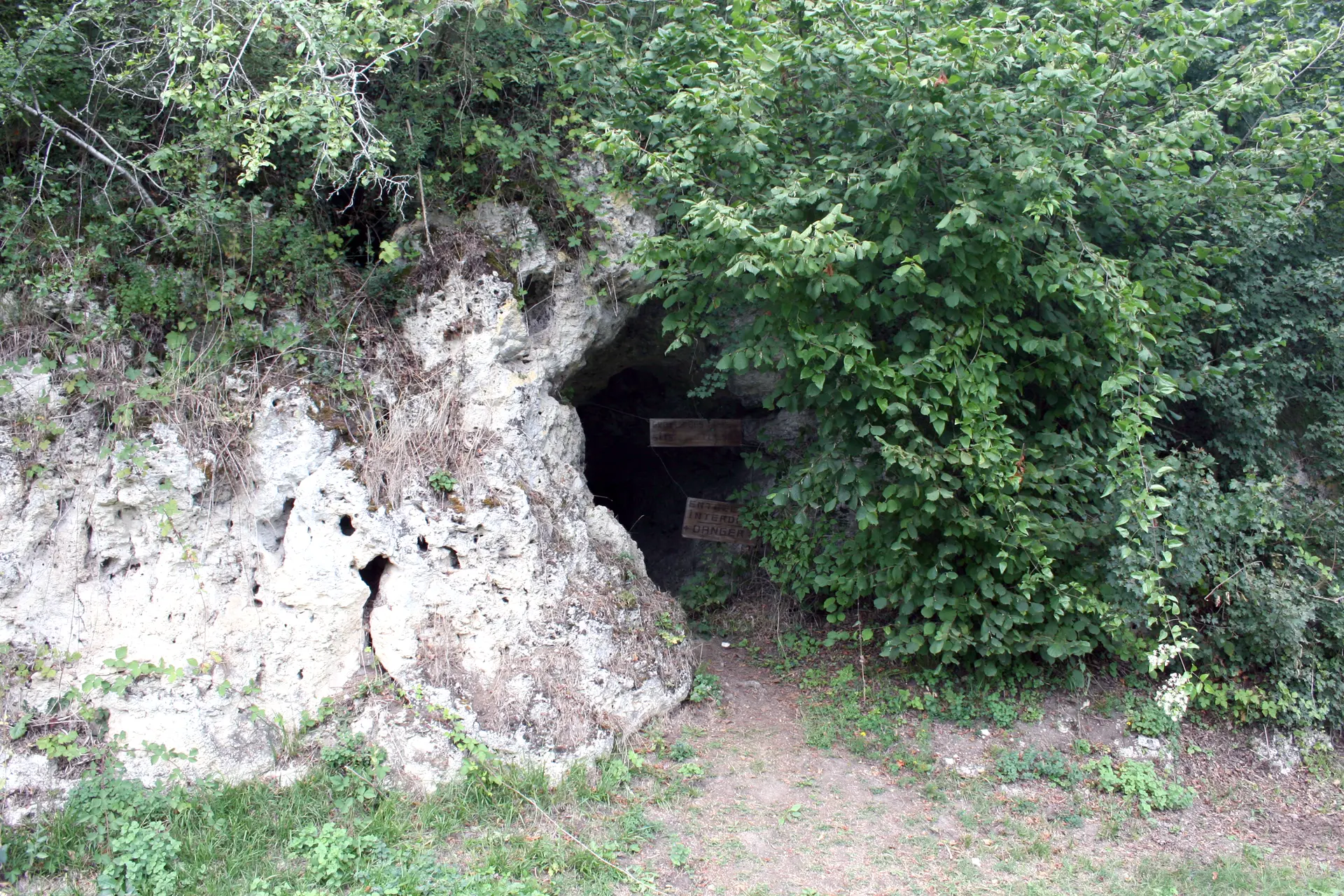
Visit essentials
A quick read before you go
- Duration
- 1-2 hours for museum visit and cave viewing
- Access
- Préhistorama Museum: 5, route de Saint-Léon, lieu-dit 'La Gare', 03220 Châtelperron.
Overview
Forty thousand years ago, Neanderthals in a cave above the Graveron River invented something new: the Châtelperron point, a curved-back knife unlike earlier tools. It marks the Middle-to-Upper Paleolithic transition and makes this modest cave the type site of the Châtelperronian archaeological culture, named for the village below.
The small cave offers intimacy with deep time. Protected as a historical monument, its excavated layers are documented and debated worldwide. The adjacent Préhistorama displays reproductions while the originals are scattered between London's British Museum and Philadelphia, inviting attention to the hands, minds, and lives behind the tools.
Its fairy name also resonates. Dozens of French prehistoric sites invoke fées—fairies or supernatural beings. This folk tradition may preserve an ancient recognition of extraordinary significance: where Neanderthals sheltered, later people sensed presence.
Why this place is sacred
Some thin places connect us to divine presence. This one connects us to evolutionary presence—the presence of Neanderthals, our closest relatives, who lived and died and made things here for nearly ten thousand years. The tools they left behind speak across the chasm of extinction: we were here, we were clever, we created.
The Châtelperronian culture that emerged from this cave represents something scholars still debate: was it independent Neanderthal innovation, or influence from the modern humans beginning to arrive in Europe? Either answer carries weight. If independent, it suggests Neanderthal creativity was greater than long assumed. If influenced, it suggests exchange between species—teaching, learning, possibly interbreeding. The cave cannot answer the question, but it holds the question in stone and silence.
The fairy naming adds another layer. Why did later inhabitants of this valley call it the Cave of the Fairies? Perhaps they found the old tools and wondered at their makers. Perhaps the place simply felt inhabited by something other than ordinary. The folk memory persists even now, when we know the 'fairies' were Neanderthals.
Natural cave shelter used by Neanderthals for habitation and tool-making during the Châtelperronian period (approximately 42,000-33,000 years ago).
From Neanderthal shelter to abandoned cave to folk fairy site to 19th century archaeological discovery to protected historical monument (1949) to contemporary museum attraction and site of scholarly debate about human origins.
Experience and orientation
The approach to La Grotte des Fées passes through gentle French countryside—the Allier department, northern edge of the Massif Central. The village of Châtelperron sits in a valley where the Graveron River runs; the cave lies about a kilometer north, on the left bank, a few meters above stream level. The setting is pastoral rather than dramatic, which somehow makes the encounter more intimate.
The Préhistorama museum occupies a converted railway station—appropriate, since it was railway construction in the 1840s that first revealed the cave to modern eyes. Inside, reproductions of the Châtelperron points and other tools allow close examination. The distinctive curved-back knife, the bone tools, the evidence of fire and habitation—all speak of lives lived in full, not mere survival but culture.
The cave itself sits quiet above the river. Much of what made it significant has been excavated, studied, scattered to museums across the world. What remains is the space itself—the rock shelter where Neanderthals returned season after season, where new technologies were tested and refined, where children perhaps learned to shape stone from their elders. Standing here requires imagination, but the imagination is well-rewarded.
This is not a place of ritual or pilgrimage in any traditional sense. It is a place of encounter with the question of what makes us human—and whether that question is as simple as we once assumed.
Approach this site as an invitation to contemplate deep time and human origins. The modest scale allows intimate encounter rather than overwhelming awe.
Context and lineage
The cave was discovered around 1840-1848 during railway construction. Albert Poirrier, overseeing the railway from Bert to Dompierre-sur-Besbre, had a keen interest in prehistory and recognized the significance of what construction crews unearthed. Between 1867 and 1872, Dr. Guillaume Bailleau conducted more systematic excavations, discovering mammoth tusks over two meters long and thousands of flint blades. A third cave, discovered in 1867, has since collapsed.
The cave gives its name to the Châtelperronian culture—a term used by archaeologists worldwide to describe this transitional period. The artifacts discovered here are now foundational to debates about Neanderthal cognition and human evolution.
Albert Poirrier
Railway construction supervisor who first recognized the cave's archaeological significance (c. 1840s)
Dr. Guillaume Bailleau
Conducted excavations 1867-1872, discovered major artifacts including mammoth tusks
Henri Delporte
Prehistorian who excavated the site in 1951, establishing modern understanding of its stratigraphy
Traditions and practice
Neanderthal practices at the site are unknown in detail but included habitation, tool-making, and likely fire use. Any ritual or spiritual practices remain speculative.
Museum visitation with audioguide, viewing of cave exterior, contemplation of deep time and human evolution. The site draws visitors interested in prehistory, human origins, and evolutionary questions.
Visit the Préhistorama museum first to understand what was found here. Then walk to the cave site and spend time simply being present. Allow the modesty of the setting to sharpen your sense of the vast time that separates you from the last inhabitants. Consider what it means that Neanderthals—often dismissed as brutish—invented new technologies in this very place.
Archaeological/Scientific
ActiveLa Grotte des Fées is the type site for the Châtelperronian culture—one of the most significant transitional periods in human prehistory. The distinctive tools found here, particularly the Châtelperron point, represent the emergence of Upper Paleolithic technology among Neanderthals.
Archaeological study, museum visitation, contemplation of human evolution and deep time
French Fairy Folklore
HistoricalThe cave's naming reflects widespread French folk tradition of associating prehistoric sites with fairies. This may preserve ancient recognition of these places as inhabited by otherworldly beings—perhaps folk memory of encountering evidence of previous, unknown inhabitants.
Legend transmission (historical)
Perspectives and open questions
La Grotte des Fées invites multiple perspectives—archaeological, evolutionary, folkloric—each illuminating different facets of what this modest cave might mean.
Scholarly perspective
The cave is the type site for the Châtelperronian culture, dated to approximately 39,000-40,000 BP. This period represents the transition from Middle to Upper Paleolithic and is associated with Neanderthals. Scholarly debate continues on whether Châtelperronian innovations represent independent Neanderthal creativity or influence from arriving modern humans. The site's stratigraphy has been crucial to these debates, though 19th century excavation methods complicate interpretation.
Living and traditional perspectives
French folk tradition named this the Cave of the Fairies, part of a widespread pattern of associating prehistoric sites with supernatural beings. This naming may preserve folk memory across many generations—recognition that places of great antiquity hold numinous quality.
Alternative interpretations
For those who find the sacred in evolutionary deep time, La Grotte des Fées offers direct encounter with the question of Neanderthal consciousness and creativity. The tools made here suggest minds capable of innovation. What else might those minds have been capable of?
Open questions
The inner lives of Neanderthals remain one of prehistory's great mysteries. Did they have language? Art? Religion? The tools at La Grotte des Fées demonstrate sophisticated cognition; what else might have flowered in those minds we will never know.
Plan your visit
Access and arrival
Préhistorama Museum: 5, route de Saint-Léon, lieu-dit 'La Gare', 03220 Châtelperron. Cave located approximately 1 km north of village on left bank of Graveron River. Parking available at museum. Museum accessible for people with reduced mobility. Bar-Restaurant 'La Grotte aux Fées' available (reservations recommended).
Limited in Châtelperron itself. Larger towns in the Allier department offer more options.
Respectful visit
Casual; appropriate for museum and outdoor walking
Permitted at museum; check current restrictions at cave site
None traditional or expected
Protected monument since 1949. Do not disturb the cave site or remove anything.
The cave is a protected historical monument; do not disturb the site. Museum hours are limited, particularly in winter.
Current practical details
Address
La Grotte des Fées, 03220 Châtelperron, France
Hours, fees, and access can change — verify on the official source before you travel. Practical details last checked Jun 2026.
Location
Map loads as you approach this section.
Pilgrim reflections
A portrait of encounter, not a score
Pilgrims describe what they felt, how present they could become, and whether the place would shape a journey. There are no stars and no ranking of traditions.
No reviewed reflections yet
The first pilgrims can help describe the character of being here.
Share a reflection
Available after an account-backed “Been there.” Every reflection is reviewed before publication.
Nearby sacred places
Explore other sacred places in the region. Proximity does not establish access or travel time; check each place’s guidance.



References
Sources consulted for this page. Source categories describe the publication, not a guarantee that every claim is verified. Traditional accounts and outside interpretations may differ.
- 01Grotte des Fées (Châtelperron): History of Research, Stratigraphy, Dating, and Archaeology of the Châtelperronian Type-Site — Various researchersacademicAcademic paper on the archaeology of the site
- 02Préhistorama - Châtelperron — Allier Auvergne TourismeSource contextOfficial tourism information
- 03La Grotte des Fées - Wikipedia — Wikipedia contributorsencyclopediaGeneral reference
- 04Châtelperronian - Wikipedia — Wikipedia contributorsencyclopediaBackground on the archaeological culture
- 05Subterranea of France: Préhistorama Châtelperron — ShowcavesofficialMuseum and cave information
Photo gallery
3 curated photos
Share a photo
Help visitors recognize La Grotte des Fées. Every submission is reviewed before publication.