Basilica di San Clemente, Rome, Italy
Where two millennia of sacred history lie revealed in stone
Understand sacred places, explore living traditions, and learn how to engage respectfully with Pilgrim Map.
Access has not been verified. Check current local guidance before planning a visit.
Rome, Rome, Italy
Read the sources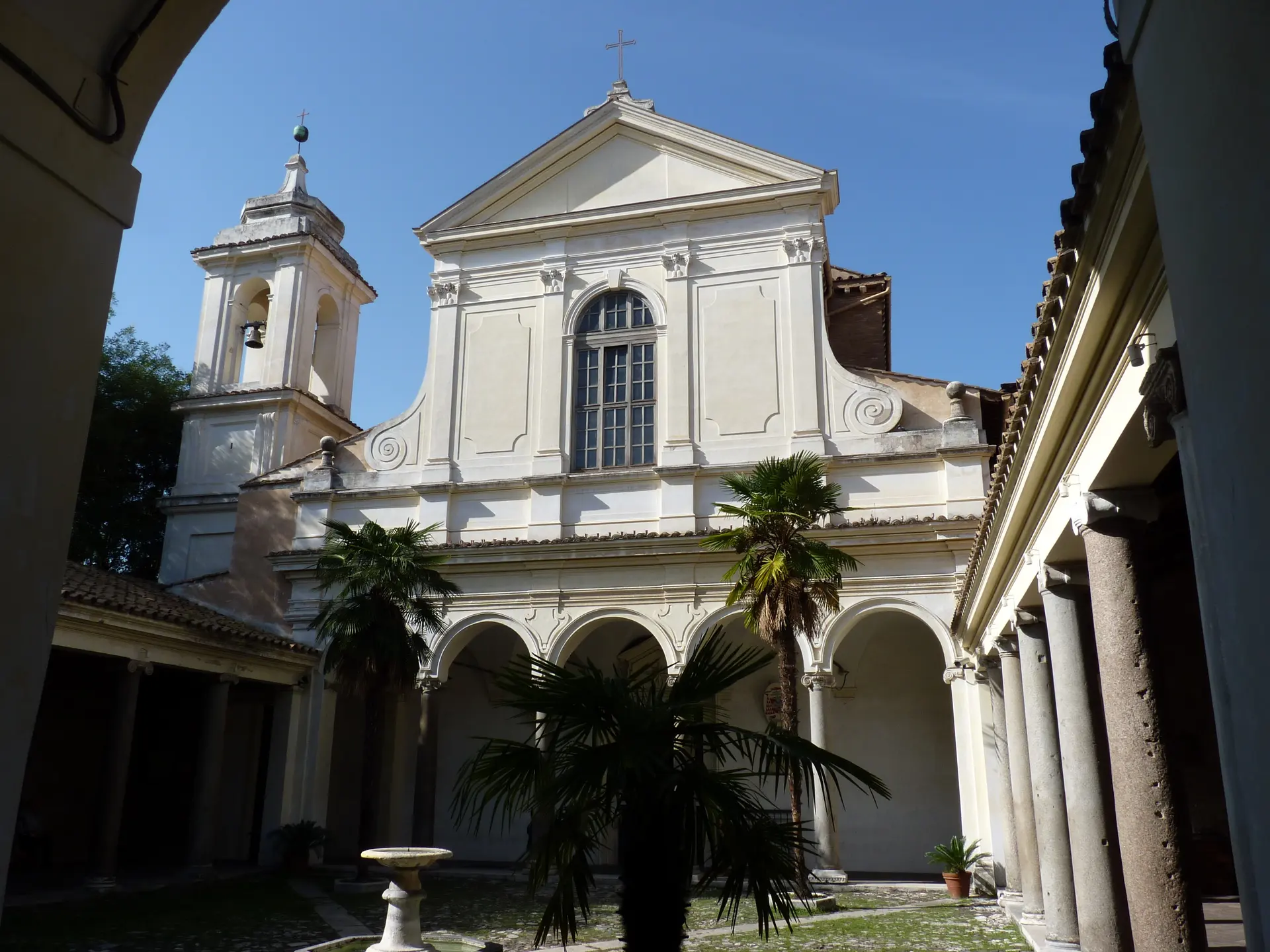
Image of Basilica di San Clemente, Rome, Italy. Image source · CC-BY-SA-3.0
Visit essentials
A quick read before you go
- Duration
- Allow one to two hours for both the upper church and archaeological excavations.
- Access
- Metro Line B to Colosseo station, then a five-minute walk along Via Labicana.
Overview
Entering San Clemente begins a descent through sacred archaeology. The upper church's radiant twelfth-century Tree of Life mosaic shows Christ's cross blooming into the redemption of all creation, while the pilgrimage continues downward through stone-preserved centuries.
Below the medieval pavement lies a fourth-century basilica whose faded frescoes speak of early Christian faith after Constantine. At the lowest accessible level, a second-century Mithraeum preserves the altar of initiates' secret rites and its carved tauroctony, accompanied by water flowing from an ancient spring.
Irish Dominican friars, custodians since 1677, sustain both active parish and archaeological revelation. Slavic pilgrims venerate Saint Cyril, Apostle to the Slavs and co-creator of the Cyrillic alphabet, whose remains were buried here in 869 CE. Tradition, prayer, and renewed sacred purpose layer across two thousand years of human seeking.
Why this place is sacred
What makes San Clemente extraordinary among Rome's four hundred churches is not simply age or beauty but legibility. Here the palimpsest of Roman sacred history lies open for examination, each layer preserved rather than obliterated by what followed.
The experience of descent carries its own phenomenology. The upper church, flooded with light from windows and the gold of its mosaics, gives way to the cool darkness of the fourth-century basilica below. Worn stairs lead past medieval frescoes to rooms where early Christians gathered when memory of persecution remained fresh. Further descent brings increasing darkness, lower ceilings, and finally the intimate space of the Mithraeum with its characteristic benches and central altar.
Throughout this journey, water accompanies the pilgrim. An underground stream, source unknown, flows beneath the lowest levels with a sound that has continued unbroken for millennia. Some hear in this running water a connection to the living earth that predates and outlasts all human structures built above it.
The stratigraphy itself poses questions about sacred continuity. Did early Christians build here because they knew of the Mithraeum and wished to claim its power? Did the site possess some recognized sanctity that attracted successive traditions? The answers remain uncertain, but the fact of layering is undeniable—three distinct sacred architectures occupying the same vertical column of Roman earth.
The lowest level preserves a first-century Roman house, possibly the residence of Pope Clement I himself according to tradition, though this identification remains uncertain. By the second century, a Mithraeum had been established in the courtyard, serving initiates of the mystery cult popular among soldiers and merchants. The fourth-century basilica was likely built as a titulus, one of Rome's early parish churches, after Constantine's legalization of Christianity.
The current upper basilica dates to approximately 1100-1123 CE, constructed after Norman destruction made the lower church unusable.
The site has passed through distinct phases without fully erasing what came before. Mithraic worship yielded to Christian liturgy sometime in the late fourth century, the Mithraeum filled with rubble but not destroyed. The lower basilica served for seven centuries until the Norman Sack of 1084 rendered it structurally unsound. Rather than demolish it, Cardinal Anastasius simply raised the floor level and built anew, preserving the earlier church as a filled-in foundation.
Irish Dominicans, refugees from English persecution in Ireland, received custody in 1677 and have served continuously since. Their excavations beginning in 1857 under Father Joseph Mullooly revealed what centuries had hidden, opening the lower levels to scholarly investigation and eventually to visitors.
Experience and orientation
Entry into the upper basilica offers immediate encounter with its masterwork: the twelfth-century apse mosaic of the Tree of Life. Christ hangs upon a cross that simultaneously blooms as the tree from Eden, its acanthus tendrils spiraling outward to encompass all creation—saints and sinners, birds and beasts, scholars and shepherds gathered into the redemptive pattern. Twelve doves represent the apostles. Deer drink from the four rivers of Paradise. The whole cosmos finds its center in the crucified and risen Christ.
Beneath this vision of cosmic redemption, the schola cantorum preserves sixth-century marble screens brought up from the lower church, their patterns worn smooth by fourteen centuries of touch. The Cosmati pavement, geometric marble inlay characteristic of medieval Roman churches, leads the eye forward toward the altar.
The descent begins through a door near the sacristy. Stone stairs, worn hollow by generations of feet, lead down into noticeably cooler air. The fourth-century basilica opens gradually—lower ceiling, columns repurposed from Roman buildings, and along the walls, frescoes that rank among the most important surviving examples of medieval Roman painting. Saints Clement and Alexius appear in scenes from their lives.
An unusual fresco depicting a miracle of Saint Clement includes inscriptions in early Italian vernacular, among the oldest examples of written Italian.
Deeper stairs descend to the first-century level. Here the walls narrow, the ceilings lower further, and the sound of flowing water becomes audible—an underground stream whose course has never been traced. The Mithraeum preserves its original altar, carved with Mithras slaying the cosmic bull, flanked by benches where initiates would have reclined during ritual meals. The ceiling, once painted with stars, evokes the cave-symbolism central to Mithraic worship.
Returning upward reverses the journey through time, re-emerging into light and the continuing liturgical life of the upper church.
The basilica stands on Via Labicana, a five-minute walk from the Colosseum toward the Basilica of San Giovanni in Laterano. The route itself traces ancient history—from the arena of martyrdoms to this layered sanctuary to the mother church of Rome. Visitors arriving from the Colosseum approach along the same road walked by pilgrims for sixteen centuries.
Context and lineage
Pope Clement I, third successor of Peter in the see of Rome, gave his name to the site. According to tradition, he was martyred by drowning in the Black Sea, an anchor tied to his neck—though no source before the fifth century describes him as a martyr. In 861 CE, Saints Cyril and Methodius discovered what they believed to be Clement's relics in Crimea and brought them to Rome in 867.
Cyril himself died in Rome in 869 and was buried in the basilica he had enriched. His tomb was rediscovered during the nineteenth-century excavations and remains a focus of Slavic pilgrimage.
The Irish Dominican friars have served as custodians since 1677, when English persecution forced many religious communities to seek refuge in Rome. Their continuous presence for nearly 350 years maintains both the liturgical life of the parish and the scholarly investigation of its archaeological treasures. The connection to Ireland gives San Clemente an unusual character among Roman churches—English is commonly heard, and the community maintains relationships with Irish cultural and religious institutions worldwide.
Pope Clement I
Saints Cyril and Methodius
Saint Ignatius of Antioch
Father Joseph Mullooly
Traditions and practice
The Mithraic cult that once occupied the lowest level practiced secret initiations restricted to men. Ritual meals in the presence of the tauroctony altar, conducted in the cave-like space decorated with stars, offered initiates connection to cosmic order and promises of salvation. The cult's exclusivity and secrecy made it a rival to early Christianity; its eventual disappearance left only architectural traces.
Early Christian worship in the fourth-century basilica centered on the Eucharistic liturgy and veneration of the relics of Clement. Pilgrims came to pray at his tomb and seek his intercession. The medieval frescoes record miracle stories associated with his cult.
The Irish Dominicans celebrate daily Mass in the upper basilica according to the Roman Rite. The church participates in the Jubilee Year 2025 as part of the Iter Europaeum pilgrimage route, honoring its significance for European Christianity through Saints Cyril and Methodius. Slavic pilgrims—Czech, Slovak, Polish, and others—make special pilgrimages to Cyril's tomb, seeking connection to the origins of their Christian heritage. Pope John Paul II prayed here for Poland and the Slavic nations.
Visitors may attend Mass in the upper basilica without advance arrangement. The descent to the archaeological levels requires a separate ticket and scheduled entry, best arranged in advance during busy seasons. The journey takes approximately ninety minutes for unhurried exploration. Consider visiting early in the day when the lower levels are less crowded and the contemplative atmosphere is most accessible.
The return to the upper church for quiet prayer after the archaeological descent can integrate the experience of past and present sacred space.
Roman Catholicism
ActiveSan Clemente is a minor basilica of the Roman Catholic Church, housing relics of three significant saints: Pope Clement I, Saint Cyril, and Saint Ignatius of Antioch. The Irish Dominican community has maintained continuous worship here since 1677.
Daily Mass is celebrated in the upper basilica. Veneration of relics continues, with particular devotion from Slavic pilgrims to the tomb of Saint Cyril. The church participates in Rome's pilgrimage circuits and is included in the Jubilee Year 2025 Iter Europaeum route.
Mithraic Religion
HistoricalThe second-century Mithraeum preserves one of Rome's best-intact examples of a Mithraic temple. The cult, popular among soldiers and merchants, offered initiation into cosmic mysteries and promises of salvation through identification with the god Mithras.
Mithraic worship centered on secret initiations conducted in cave-like spaces. The tauroctony—Mithras slaying the bull—represented the god's cosmic victory. Initiates progressed through seven grades, participating in ritual meals in the presence of the central altar. The cult was exclusively male and emphasized solidarity among initiates.
Eastern Orthodox and Slavic Christianity
ActiveThe burial of Saint Cyril in 869 CE made San Clemente a pilgrimage destination for Slavic Christians. Cyril and his brother Methodius created the Glagolitic script and translated liturgical texts into Slavonic, becoming the Apostles to the Slavs and patrons of Slavic Christianity.
Slavic pilgrims, particularly from Czech Republic, Slovakia, Poland, and other Eastern European nations, visit to venerate Cyril's tomb. Pope John Paul II prayed here for Poland and the Slavic peoples. The connection transcends Catholic-Orthodox divisions—Cyril is venerated by both traditions.
Perspectives and open questions
San Clemente invites multiple frameworks of interpretation—archaeological, theological, and experiential. Its visible stratigraphy makes abstract ideas about religious transformation concrete and walkable.
Scholarly perspective
Archaeological consensus identifies three main phases of construction: first-century Roman buildings (possibly including the mint and a private residence), the second-century Mithraeum, the fourth-century basilica, and the current twelfth-century church. The site documents the transition from pagan to Christian Rome with unusual clarity. The apse mosaic is considered among the finest examples of medieval Roman mosaic art, combining Byzantine technique with distinctively Roman iconography.
The lower church frescoes, including rare examples of early Italian vernacular inscriptions, are essential documents for understanding medieval Roman painting.
The identification of the first-century building as Clement's actual residence remains uncertain. Archaeological evidence confirms only that a substantial Roman building stood here; the connection to the pope is traditional rather than proven.
Living and traditional perspectives
Catholic tradition holds that Pope Clement I was the third successor of Saint Peter as Bishop of Rome. His letter to the Corinthians, written around 96 CE, is among the earliest non-biblical Christian writings and demonstrates Roman ecclesiastical leadership extending beyond the city. Tradition further holds that he was martyred by being tied to an anchor and thrown into the Black Sea, though sources for this martyrdom appear only in the fifth century.
The Tree of Life mosaic presents a comprehensive medieval theology of redemption. Christ's cross becomes the tree that restores what Adam lost in Eden. All creation—human, animal, vegetable—finds its proper ordering in relation to this cosmic center. The acanthus spirals represent the Church spreading throughout the world; the drinking deer symbolize souls refreshed by the waters of baptism.
Alternative interpretations
The vertical layering of Mithraeum, Christian basilica, and medieval church has attracted interpretations centered on sacred site continuity. Some suggest that certain locations possess recognized spiritual power that attracts successive traditions, regardless of doctrinal differences. The presence of the underground water source, predating all human construction, has been seen as evidence of a natural sacred quality that the built structures merely formalize.
The relationship between Mithraism and early Christianity has generated extensive speculation. Both mystery religions offered initiation, sacred meals, and promises of salvation. Whether early Christians built here to claim Mithraic sacred space, or whether both traditions independently recognized the site's power, remains debated.
Open questions
Several mysteries resist resolution. The source of the underground water has never been traced—whether it connects to Rome's ancient water system or represents a natural spring remains unknown. The exact circumstances of the Mithraeum's abandonment—gradual decline or deliberate destruction by Christians—cannot be determined from archaeological evidence. Whether the first-century building was actually Clement's residence, giving the site its name, or whether the name was attached later to an already-sacred location, remains uncertain.
The identities of figures in some of the medieval frescoes have been lost.
Plan your visit
Access and arrival
Metro Line B to Colosseo station, then a five-minute walk along Via Labicana. The church lies on the pilgrimage route between the Colosseum and San Giovanni in Laterano. Multiple bus routes serve the area. Street parking is extremely limited.
The Celio neighborhood offers numerous hotels and guesthouses within walking distance. The area between San Clemente and the Colosseum provides easy access to major Roman sites while remaining somewhat quieter than the historic center.
Respectful visit
Shoulders and knees must be covered for entry to the upper basilica, as with all Roman churches. Comfortable, sturdy shoes are essential for the uneven stairs leading to the lower levels.
Photography is permitted in the upper basilica but strictly prohibited in the lower basilica and Mithraeum. This restriction protects fragile medieval frescoes from light damage and preserves the contemplative atmosphere of the ancient spaces.
Standard church offerings may be made in the upper basilica. Candles may be lit. The bookshop offers publications about the church's history and archaeology.
No photography in underground levels | Advance booking required for excavation visit | Silence during services in upper church | Underground areas may not be suitable for young children or those with claustrophobia
Photography is prohibited in the lower levels to protect the ancient frescoes. The descent involves steep, worn stairs that may be challenging for those with mobility limitations. The underground areas remain cool throughout the year—a light jacket is advisable even in summer. The Mithraeum's low ceilings and intimate scale can feel confining to some visitors.
Current practical details
Address
Piazza di S. Clemente, 00184 Roma RM, Italy
Phone
Hours
Hours, fees, and access can change — verify on the official source before you travel. Practical details last checked Jun 2026.
Location
Map loads as you approach this section.
Pilgrim reflections
A portrait of encounter, not a score
Pilgrims describe what they felt, how present they could become, and whether the place would shape a journey. There are no stars and no ranking of traditions.
No reviewed reflections yet
The first pilgrims can help describe the character of being here.
Share a reflection
Available after an account-backed “Been there.” Every reflection is reviewed before publication.
Nearby sacred places
Explore other sacred places in the region. Proximity does not establish access or travel time; check each place’s guidance.

References
Sources consulted for this page. Source categories describe the publication, not a guarantee that every claim is verified. Traditional accounts and outside interpretations may differ.
- 01Basilica di San Clemente - Official Website — Irish Dominican FriarsofficialOfficial source maintained by the custodians of the basilica
- 02A Detailed Look at the Twelfth Century Mosaics of the Basilica of San Clemente — Liturgical Arts JournalacademicDetailed analysis of apse mosaic symbolism
- 03Art of the Redemption 5: The Mosaic of San Clemente — The Dominican Friars in BritainspiritualTheological interpretation of the mosaic
- 04Basilica of San Clemente Rome - Cyril and Methodius Heritage — Cyril-Methodius.euSource contextSlavic pilgrimage perspective
- 05San Clemente - Jubilee 2025 — Vatican Jubilee OfficeofficialOfficial pilgrimage information
- 06San Clemente, Rome - Wikipedia — Wikipedia contributorsencyclopediaComprehensive overview with archaeological detail
- 07Clement of Rome - Wikipedia — Wikipedia contributorsencyclopediaDetails on Pope Clement I and the martyrdom tradition
- 08The Mithraic Mysteries and the underground chamber of San Clemente — Ancient OriginsspiritualOverview of Mithraic cult practices
- 09The Mosaics of St. Clement's Basilica in Rome — Through Eternity ToursSource contextArt historical analysis
Photo gallery
3 curated photos
Share a photo
Help visitors recognize Basilica di San Clemente, Rome, Italy. Every submission is reviewed before publication.