San Nicola in Carcere, Rome, Italy
Three Roman temples entombed within one medieval church
Understand sacred places, explore living traditions, and learn how to engage respectfully with Pilgrim Map.
Access has not been verified. Check current local guidance before planning a visit.
Rome, Rome, Italy
Read the sources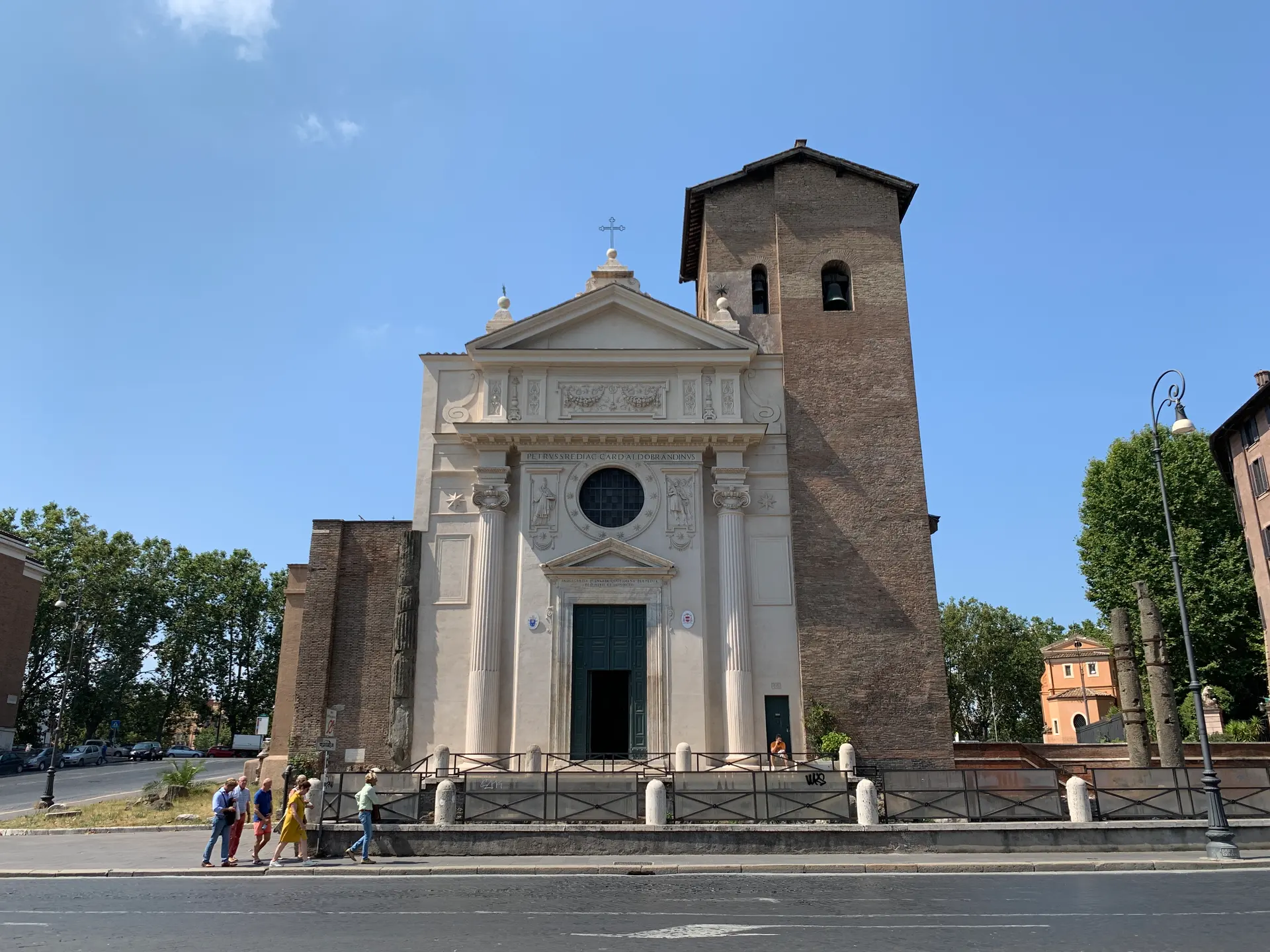
Image of San Nicola in Carcere, Rome, Italy. Image source · CC-BY-SA-4.0
Visit essentials
A quick read before you go
- Duration
- 1 hour including underground exploration
- Access
- Metro Line B to Circo Massimo (500m walk).
Overview
Past the Theater of Marcellus toward the Tiber, Giacomo della Porta's Renaissance facade conceals San Nicola in Carcere's depth. Ancient Roman columns are structurally embedded in its walls, supporting the medieval church as they once supported pagan temples.
Three temples stood here in the Forum Holitorium, Rome's vegetable and herb market: Janus, celebrating a naval victory over Carthage in 260 BCE; Juno Sospita, the savior goddess thanked for protection in wars against northern tribes; and Spes—Hope itself—invoked during the First Punic War. After they fell from use, the structures served as a medieval prison, hence 'in carcere,' before a Byzantine Greek community built a church for Saint Nicholas of Myra.
The church absorbed rather than demolished them. Columns from all three remain in its north and south walls, architectural DNA of the Roman Republic. Stairs behind the altar descend to foundations, ancient paving, and claustrophobic remains of layered Rome. Beneath the high altar, an ancient basalt bathtub holds martyrs' relics.
Why this place is sacred
Most of Rome's ancient temples were destroyed for building material or completely transformed. San Nicola in Carcere is different: the medieval builders incorporated what they found rather than demolishing it. The result is a palimpsest—earlier sacred texts showing through later ones, the pagan framework supporting the Christian structure.
The three temples date to Rome's Republic, built during the Punic Wars when Rome was fighting Carthage for Mediterranean supremacy. The Temple of Janus, dedicated by Gaius Duilius after the naval victory at Mylae in 260 BCE, honored the god of gates, passages, and beginnings. The Temple of Spes, built during the same conflict, invoked Hope—a deity made divine in times of war's uncertainty.
The Temple of Juno Sospita, vowed by consul Cornelius Cethegus around 194 BCE, thanked the protecting goddess for deliverance from northern enemies. All three faced the Forum Holitorium, the bustling market where Romans bought vegetables and herbs.
When Christianity became Rome's religion, these temples closed. The structures, solidly built, found other uses—reportedly as a prison during the Middle Ages, which gave the eventual church its name: 'in carcere,' in prison. By the 7th century, when Rome was part of the Byzantine Empire and many Greek-speaking Christians lived in this neighborhood, the first church arose, dedicated to Saint Nicholas of Myra, the Greek bishop whose legend was spreading across the Christian world.
The builders did not level the temples; they built within them. Walk around the church today, and seven ancient columns are visible in the exterior walls—three from Juno Sospita incorporated into the facade itself, others from Janus and Spes supporting the north and south walls. These are not decorative quotations but structural elements: Roman engineering holding up medieval masonry.
The underground, accessible from behind the altar for a small fee, reveals what lies beneath: the podiums and foundations of the temples, the ancient paving of the Forum Holitorium, the compressed layers of Rome's sacred history. In the claustrophobic darkness, visitors can touch stones that Republican Romans walked past on their way to worship gods of gates, protection, and hope.
Three Roman Republican temples (260-194 BCE) serving the Forum Holitorium: Temple of Janus (god of passages), Temple of Juno Sospita (protecting goddess), Temple of Spes (goddess of hope). Built during the Punic Wars.
Temples closed with Christianization (4th century). Served as prison in Middle Ages (hence 'in carcere'). Byzantine church founded 7th century for Greek community, dedicated to Saint Nicholas of Myra. Rebuilt 1128. Facade by Giacomo della Porta 1599. Underground excavated and accessible since 20th century.
Experience and orientation
The approach through the historic center, past the monumental Theater of Marcellus, leads to a church that could be overlooked. The Renaissance facade by Giacomo della Porta is handsome but not spectacular. The medieval bell tower—originally a defensive tower later converted—rises beside it. Most tourists pass by on their way to more famous sites.
Those who enter find a Romanesque nave (rebuilt 1128, according to an inscription), relatively simple in its devotional space. But look at the walls, and the unusual becomes apparent: ancient Roman columns, darker and heavier than medieval stonework, emerge from the fabric. These are not archaeological displays but structural members—the Corinthian capitals of the Temple of Juno Sospita visible in the facade, columns from the Temples of Janus and Spes supporting the side walls.
The medieval church literally grew within the Roman temples.
Descend the stairs behind the high altar, and the underground opens. Here, in confined space requiring ducked heads, the foundations of the three temples become visible. Ancient paving stones of the Forum Holitorium. The podiums on which Roman priests once stood. Later walls—medieval, Byzantine—overlay the ancient ones. The layers compress millennia into meters.
An ancient basalt bathtub, repurposed to hold martyrs' relics, rests beneath the high altar. The sacred continues—what began as temples to Roman gods, became a prison, then a Byzantine church, and now rests as a minor basilica where Mass is celebrated and Lenten stations observed. English information sheets help visitors interpret what they see.
The experience is intimate and archaeological. This is not a major tourist destination; most visitors have specifically sought it out. The underground creates a palpable sense of Rome's depth—not metaphorical but literal, the sacred accumulating downward through time.
San Nicola in Carcere stands near the Theater of Marcellus in Rione Ripa, between the Capitoline Hill and the Tiber River. The Forum Boarium (ancient cattle market) with its temples of Portunus and Hercules Victor lies a short walk south. Santa Maria in Cosmedin (Bocca della Verità) is nearby.
Context and lineage
In the 3rd and 2nd centuries BCE, three temples rose along the Forum Holitorium, ancient Rome's vegetable and herb market. Roman commanders, returning victorious from the Punic Wars, dedicated temples to the gods who had granted success: Gaius Duilius built the Temple of Janus after defeating Carthage at sea in 260 BCE; Attilius Calatinus invoked Hope during the First Punic War; Cornelius Cethegus thanked Juno Sospita for protection against northern enemies.
For centuries, Roman citizens made offerings at these temples as they shopped for vegetables. When Christianity prevailed, the temples closed. The structures served variously—reportedly as a prison, hence 'in carcere.' In the 7th century, Greek Christians living in this Byzantine-ruled neighborhood built a church dedicated to Saint Nicholas of Myra, using the ancient temples as their foundation.
San Nicola in Carcere is a minor basilica and titular church of the Roman Catholic Church. It is one of the traditional Lenten stational churches. The church is part of the UNESCO-inscribed Historic Centre of Rome.
Gaius Duilius
Cornelius Cethegus
Giacomo della Porta
Saint Nicholas of Myra
Traditions and practice
The three temples served Republican Roman worship from the 3rd century BCE until Christianization. The site may have functioned as a prison in the medieval period. The Byzantine church honored Saint Nicholas of Myra, one of the most venerated Greek saints.
Regular Mass. Lenten stational observance. Underground visits (€2-3). Pilgrimage to martyrs' relics beneath the high altar.
Enter the church and observe the ancient columns incorporated into the walls. Note the difference between Roman and medieval masonry. Visit the underground (small fee) to see the temple foundations and ancient paving. Touch the stones that Republican Romans walked past. Return to the church to appreciate how the layers coexist.
Roman Catholicism
ActiveMinor basilica and titular church founded in 7th century by Byzantine Greek community. Dedicated to Saint Nicholas of Myra. Traditional Lenten stational church. Contains martyrs' relics beneath high altar. Incorporates three Republican Roman temples in its structure.
Regular Mass, Lenten station observance, underground archaeological visits, veneration of relics.
Roman Paganism
HistoricalThree Republican temples (3rd-2nd century BCE) dedicated to Janus (passages, naval victory), Juno Sospita (protection), and Spes (hope). Built during and after Punic Wars. Served the Forum Holitorium, Rome's vegetable market.
Pagan worship ceased in the 4th century CE with Christianization of the Empire.
Perspectives and open questions
San Nicola in Carcere offers encounter with Rome's sacred archaeology in active form—not ruins behind barriers but ancient temples structurally supporting a living church where Mass is still celebrated.
Scholarly perspective
Archaeologists recognize San Nicola in Carcere as one of Rome's best examples of sacred site layering. The three Republican temples (Temple of Janus, Temple of Juno Sospita, Temple of Spes) date to the 3rd-2nd century BCE and served the Forum Holitorium. Their incorporation into the medieval church, rather than demolition, preserved structural evidence of Republican temple architecture.
Living and traditional perspectives
Catholic tradition honors the church as a Lenten stational site and for its martyrs' relics. The dedication to Saint Nicholas reflects the Byzantine Greek community that built the first church here. The transformation of pagan temples represents Christianity's triumph while preserving architectural heritage.
Alternative interpretations
The site's layering—temples to Janus (passages/transitions), Juno (protection), and Spes (hope)—beneath a church has attracted interest from those studying sacred geography. The combination of these particular deities at a market entrance suggests intentional placement that the church inherited and transformed.
Open questions
The exact rituals performed in the three Republican temples. The nature and extent of the medieval prison use. The full underground extent yet to be excavated.
Plan your visit
Access and arrival
Metro Line B to Circo Massimo (500m walk). Various buses to Teatro Marcello. Walking distance from Capitoline Museums, Roman Forum, Palatine Hill.
The area between the Capitoline and Aventine hills offers various accommodation options. Major hotels throughout Rome's historic center.
Respectful visit
Modest dress required—shoulders and knees covered.
Photography permitted without flash in church and underground.
Donations appreciated. Underground admission €2-3.
Underground may close during services | Not wheelchair accessible | Hours variable—verify before visiting
Underground is claustrophobic and not wheelchair accessible. Check hours before visiting—they vary. Underground may close during services.
Current practical details
Address
Via del Teatro di Marcello, 46, 00186 Roma RM, Italy
Phone
Hours
Hours, fees, and access can change — verify on the official source before you travel. Practical details last checked Jun 2026.
Location
Map loads as you approach this section.
Pilgrim reflections
A portrait of encounter, not a score
Pilgrims describe what they felt, how present they could become, and whether the place would shape a journey. There are no stars and no ranking of traditions.
No reviewed reflections yet
The first pilgrims can help describe the character of being here.
Share a reflection
Available after an account-backed “Been there.” Every reflection is reviewed before publication.
Nearby sacred places
Explore other sacred places in the region. Proximity does not establish access or travel time; check each place’s guidance.

References
Sources consulted for this page. Source categories describe the publication, not a guarantee that every claim is verified. Traditional accounts and outside interpretations may differ.
- 01Basilica di San Nicola in Carcere | Turismo Roma — Roma Capitale Tourism OfficeofficialOfficial Rome tourism information
- 02San Nicola in Carcere - Wikipedia — Wikipedia contributorsencyclopediaComprehensive overview of history and three temples
- 03Basilica di San Nicola in Carcere - Lonely Planet — Lonely PlanetacademicVisitor-focused information
- 04San Nicola in Carcere in Rome — Atlas ObscuraSource contextUnderground focus
- 05Three Republican-Era Temples - Revealed Rome — Revealed RomeSource contextArchaeological detail on the three temples
Share a photo
Help visitors recognize San Nicola in Carcere, Rome, Italy. Every submission is reviewed before publication.