The Khmer Empire at its height controlled most of mainland Southeast Asia—from Myanmar to Vietnam, from southern China to the Malay peninsula. Its kings were devarajas, god-kings who ruled as manifestations of Hindu deities. Suryavarman II, whose name means 'protector of the sun,' took the throne around 1113 CE and began the most ambitious building project in Khmer history.
Rather than Shiva, whom previous kings had worshipped, Suryavarman chose Vishnu—the Protector, associated with the west and with the preservation of cosmic order. The temple he built was oriented to the west, unusual among Khmer temples, perhaps indicating its function as his eventual mausoleum or its dedication to Vishnu. The scale was unprecedented: the largest religious structure ever built, representing the cosmic mountain at the center of the universe, establishing the king's position at that center.
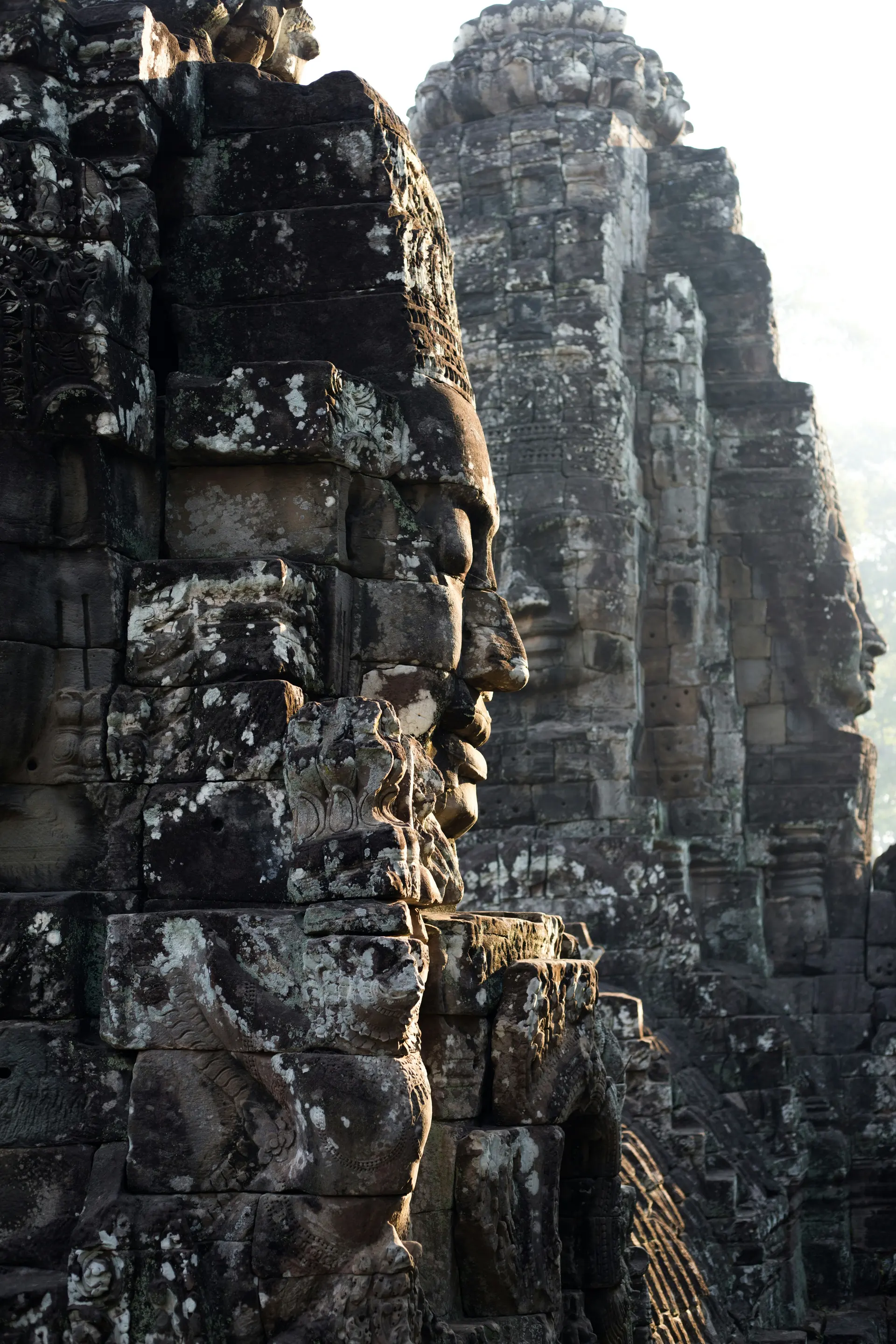
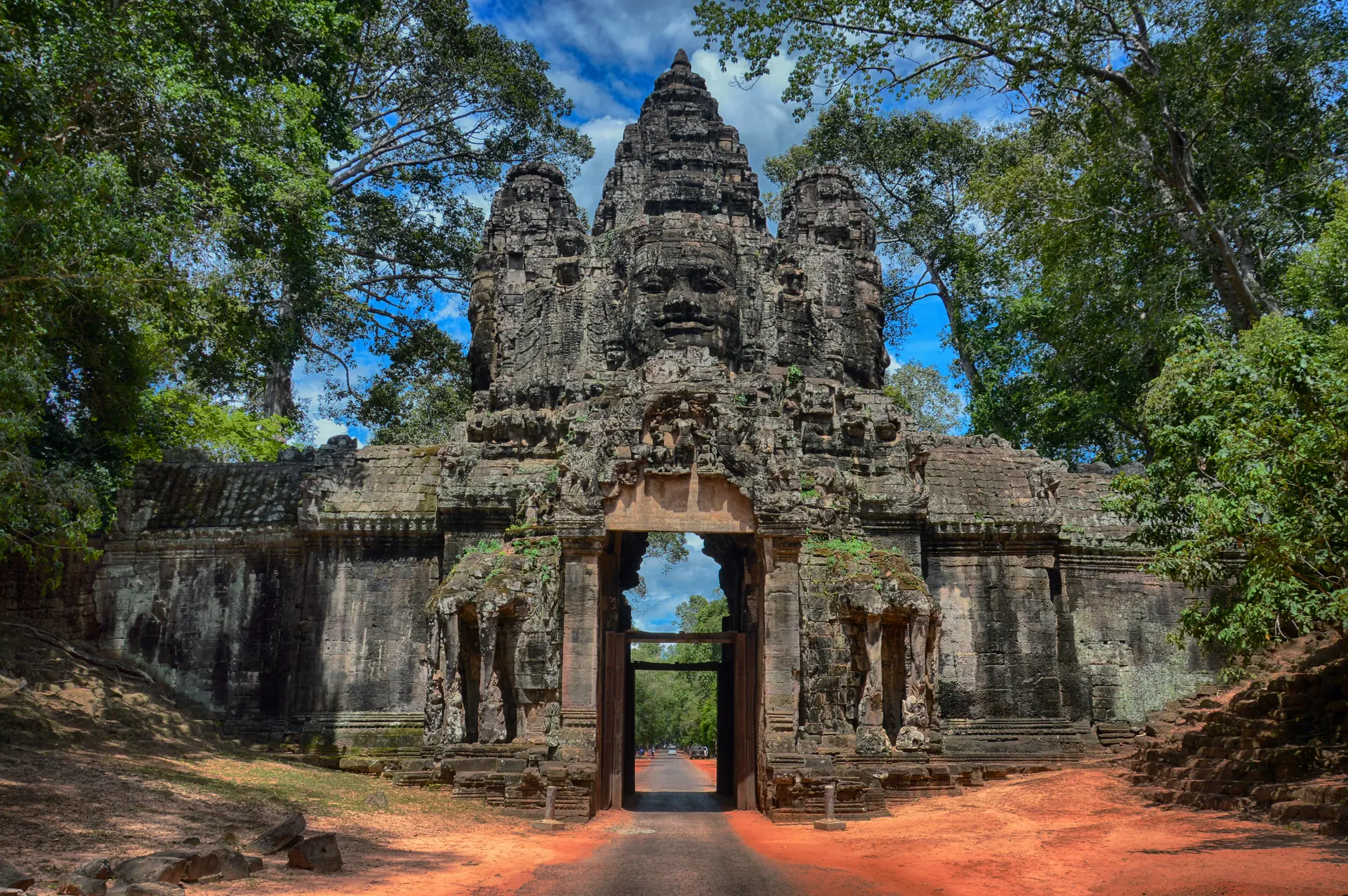
Suryavarman died around 1150 CE. Within decades, the Cham forces sacked Angkor. When Jayavarman VII rebuilt the empire, he chose Buddhism. The great city of Angkor Thom, with its Buddhist Bayon temple, rose nearby. By the late 13th century, Theravada Buddhism had transformed Cambodian religion. Other temples were gradually abandoned. But at Angkor Wat, something different happened. Buddhist monks moved in, adding stupas and images without destroying the Hindu architecture.
They have maintained the temple ever since—through the empire's fall, through centuries of obscurity, through French colonialism and Cambodian civil war and Khmer Rouge devastation. The temple that represented the Hindu cosmic center became a Buddhist sacred site, and the continuity of devotion created something perhaps even more remarkable than the original construction.
Hindu cosmology and Vaishnavism. Khmer imperial cult and devaraja tradition. Transformation to Theravada Buddhism (late 13th century). Eight centuries of continuous Buddhist maintenance. UNESCO World Heritage Site 1992.
Suryavarman II
Builder and patron
Jayavarman VII
Buddhist transformation
The Buddhist Monks
Continuous keepers