Wat Ounalom, Phnom Penh
The seat of Cambodian Buddhism, where a hair from the Buddha's eyebrow survived the Khmer Rouge
Understand sacred places, explore living traditions, and learn how to engage respectfully with Pilgrim Map.
Access has not been verified. Check current local guidance before planning a visit.
Khan Daun Penh, Phnom Penh, Cambodia
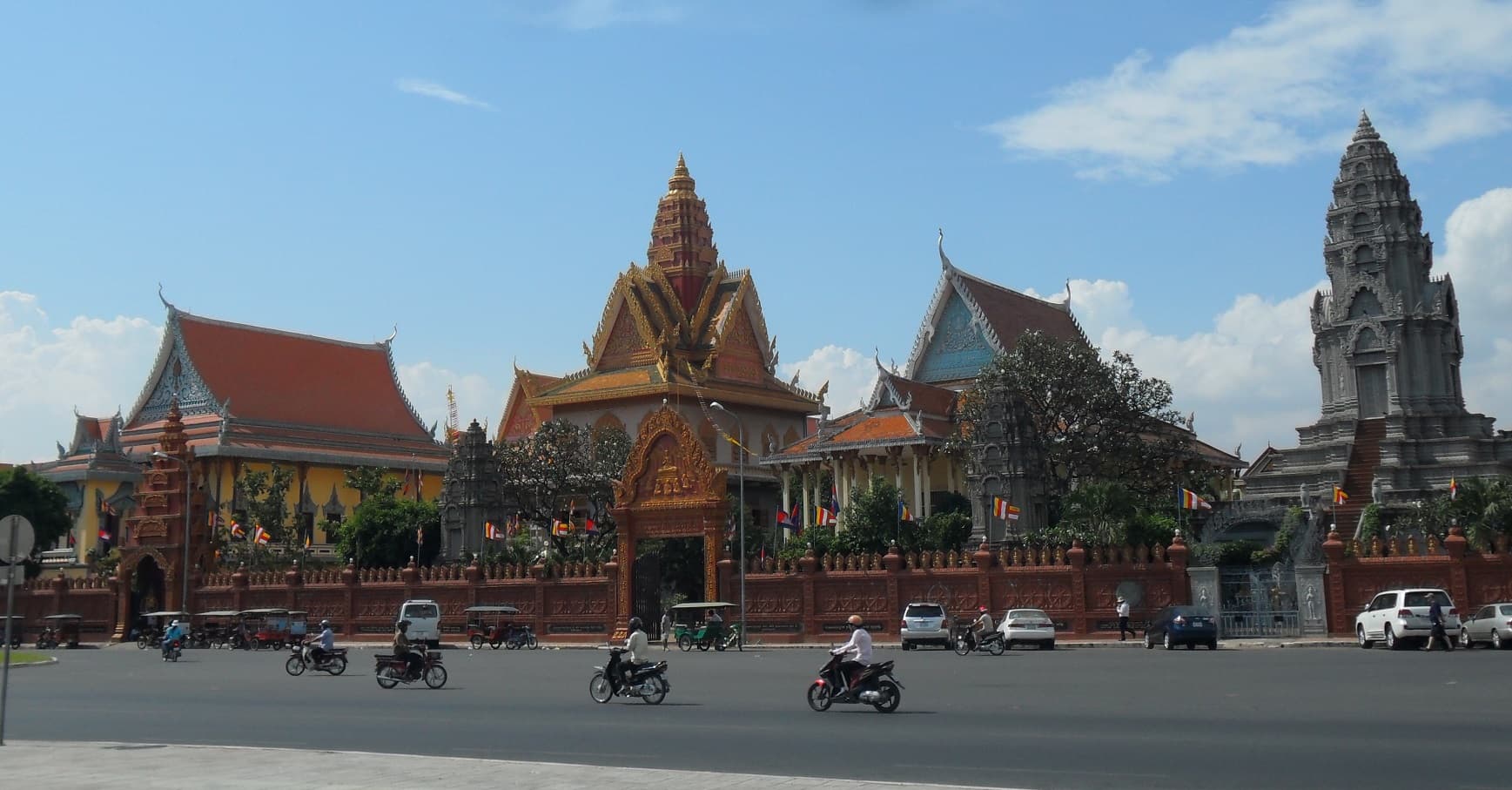
Image of Wat Ounalom, Phnom Penh. Image source · CC-BY-SA-4.0
Visit essentials
A quick read before you go
- Duration
- Forty-five minutes to one hour for a respectful visit exploring the compound and main stupa.
- Access
- Located on Sisowath Quay, central Phnom Penh, near the corner of Street 154.
Overview
On Phnom Penh's riverside promenade, steps from the Royal Palace and the National Museum, 44 structures contain the beating heart of Cambodian Buddhism. Wat Ounalom is not merely a monastery. It is the institution through which Buddhist authority radiates to every pagoda in the country. The Supreme Patriarch of Cambodia resides here. The Mahanikaya Order, the larger of Cambodia's two Theravada Buddhist sects, administers its nationwide network from these buildings.
And within the main stupa, a relic believed to be a hair from the Buddha's eyebrow connects the monastery to the physical reality of the Enlightened One.
The word ounalom derives from the Pali term for the tuft of hair between the Buddha's eyebrows, one of the thirty-two marks of a great being. King Ponhea Yat founded the monastery in 1443, shortly after establishing Phnom Penh as the capital, and enshrined the relic as the spiritual anchor of the new city. For five centuries, the monastery grew in authority and scholarship, accumulating a library of over 30,000 volumes and a monastic community of approximately 500.
The Khmer Rouge erased nearly all of it. Between 1975 and 1979, monks were killed or forcibly defrocked, the library was destroyed, and the compound was desecrated. The relic survived. The stupa survived. And after liberation, the slow work of rebuilding began. Today, over 100 monks occupy the compound. Services resume at dawn each morning. The Buddhist education institute trains new generations.
The loss of the 30,000 volumes is irreversible, but the living tradition they transmitted continues in the voices of the monks who chant the Pali suttas from memory.
Why this place is sacred
The thinness at Wat Ounalom operates through the recognition that the most important Buddhist institution in Cambodia was almost completely destroyed, and that what you see today is not an unbroken inheritance but a deliberate reconstruction.
The relic stupa is the center of this tension. A hair from the Buddha's eyebrow, if authentic, represents a physical connection to enlightenment. In Buddhist understanding, relics are not passive objects. They are emanations of the Buddha's awakened consciousness, nodes of spiritual power that radiate their influence through time. The stupa that houses this relic has stood through regime changes, colonial occupations, and genocide.
Its survival through the Khmer Rouge years, when the monastery around it was systematically dismantled, gives it the quality of a witness.
The compound's riverfront location amplifies the experience. Phnom Penh's riverfront is busy with traffic, vendors, and the daily commerce of a capital city. To step from this noise into the monastery compound is to cross a threshold between the pace of the city and the rhythm of monastic life. The monks who move through the courtyard follow a daily routine that predates the Khmer Rouge, was interrupted by the Khmer Rouge, and has been restored since the Khmer Rouge.
Their routine is itself a form of testimony.
The loss of the 30,000-volume library is an absence that shapes the present. Those texts, accumulated over centuries, represented one of the most significant collections of Buddhist scripture and commentary in Southeast Asia. Their destruction was not collateral damage but deliberate erasure.
The monks who study and teach at Wat Ounalom today carry forward a tradition that lost its textual foundation and must rely on memory, on reconstructed libraries, and on the living lineage of teacher to student that no regime can fully control.
Wat Ounalom was founded in 1443 to enshrine a sacred relic and to serve as the principal monastery of the new capital. Its designation as the headquarters of the Mahanikaya Order established it as the administrative center of Cambodian Buddhism, the point from which monastic authority and Buddhist education radiated throughout the country. The 30,000-volume library served as the textual foundation for Pali scholarship.
The monastery grew steadily from its fifteenth-century founding, accumulating buildings, monks, texts, and institutional authority. By the mid-twentieth century, approximately 500 monks resided in the compound. The Khmer Rouge period (1975-1979) devastated the institution, killing monks, destroying the library, and desecrating the compound. Restoration began after liberation in 1979. Over 100 monks now reside at Wat Ounalom. The Buddhist education institute trains new generations. The monastery's authority as headquarters of the Mahanikaya Order has been fully restored.
Experience and orientation
Wat Ounalom sits on Sisowath Quay, the riverside promenade that is Phnom Penh's most recognizable boulevard. The Royal Palace is steps to the south. The National Museum is nearby. The location places the monastery at the symbolic center of the nation, where royal authority, cultural heritage, and religious practice converge.
Entering the compound from the busy quay, the transition is immediate. Forty-four structures occupy the grounds, ranging from the main stupa to monks' quarters, the prayer hall, administrative buildings, and the residence of the Supreme Patriarch. The architecture is Cambodian Buddhist rather than Angkorian: tiered roofs, decorated gables, functional rather than monumental. The courtyard provides shade through mature bodhi trees.
The main stupa, housing the eyebrow relic, is the spiritual focal point. It is ornate but not overwhelming, rising from the courtyard as a vertical anchor around which the monastery organizes itself. Cambodians approach the stupa with offerings and prayers, acknowledging the relic's presence as a connection to the Buddha.
The monastery's most distinctive quality is its accessibility. Unlike some of Cambodia's more touristic temples, Wat Ounalom functions primarily as a working institution. The monks who move through the compound are not on display. They are going about their daily lives: studying, praying, receiving visitors, administering the affairs of the Mahanikaya Order. Visitors who approach with genuine interest rather than photographic ambition may find monks willing to converse. Some speak English.
The conversations that result can be illuminating, offering direct access to Buddhist thought as practiced rather than as theory.
The knowledge of what happened here during the Khmer Rouge years shapes the experience for visitors who carry it. Walking through a compound where 500 monks were killed, where 30,000 volumes were destroyed, and where the tradition was nevertheless rebuilt, creates an awareness of both the fragility and the resilience of human devotion.
Wat Ounalom is located on Sisowath Quay in central Phnom Penh, directly across from the Royal Palace and adjacent to the National Museum. The monastery compound contains 44 structures. The main stupa, principal prayer hall, and courtyard are the primary visitor areas.
Context and lineage
King Ponhea Yat founded Wat Ounalom in 1443, one year after establishing Phnom Penh as the new Khmer capital. The monastery was built to enshrine a sacred relic: a hair from the Buddha's eyebrow. The word ounalom refers to the urna, the mark or tuft of hair between the Buddha's eyebrows that is one of the thirty-two physical characteristics of a great being.
By housing this relic, the monastery became the spiritual anchor of the new capital and the institutional center of Cambodian Buddhism.
The designation of Wat Ounalom as headquarters of the Mahanikaya Order established the monastery's authority over the majority of Cambodia's Buddhist monks. This administrative function meant that decisions about ordination, monastic discipline, Buddhist education, and religious observance throughout the country originated here. The accumulation of a 30,000-volume library over centuries made it one of the most important centers of Pali scholarship in Southeast Asia.
Wat Ounalom belongs to the Theravada Buddhist tradition that has defined Cambodian religious life since the thirteenth century. As headquarters of the Mahanikaya Order, it connects to the broader network of Theravada Buddhist institutions across Southeast Asia. The relic tradition connecting it to the historical Buddha places it within the ancient practice of relic veneration that extends from the Temple of the Tooth in Sri Lanka to Shwedagon Pagoda in Myanmar.
King Ponhea Yat
founder
The Khmer king who established Phnom Penh as the capital in 1442 and founded Wat Ounalom in 1443 to enshrine the Buddha's eyebrow relic. His founding of the monastery established the institutional framework of Cambodian Buddhism that persists to this day.
The Supreme Patriarch (Sangharaja)
head of Cambodian Buddhism
The highest-ranking Buddhist monk in Cambodia, who resides at Wat Ounalom. The Supreme Patriarch's presence connects the monastery to the full hierarchy of Cambodian Buddhist authority.
Traditions and practice
The monastery has historically hosted the most important Buddhist ceremonies in Cambodia, including the appointment of the Supreme Patriarch and national-level merit-making ceremonies. The enshrinement of the eyebrow relic established ongoing veneration practices. The school of Pali studies and the 30,000-volume library served generations of monks.
Daily monastic routine: pre-dawn chanting at approximately 4:00-5:00 AM, morning alms round in the surrounding neighborhood, midday meal, afternoon study and meditation, evening chanting. Major Buddhist holy days are observed with special ceremonies. Ordination ceremonies for new monks. Blessings for lay people who visit seeking guidance or merit. Administrative functions for the Mahanikaya Order. The Buddhist education institute provides structured training for young monks. Pchum Ben (Festival of the Dead) draws large numbers of Cambodian visitors.
Visit in the early morning to observe the monastic routine. Monks return from alms rounds around 6:00-7:00 AM, carrying the food donated by the lay community that supports them. This daily act of mutual dependence, monks providing spiritual merit and laypeople providing material sustenance, is the foundation of Theravada Buddhist social structure.
Approach the main stupa with awareness of what it holds. In Buddhist understanding, a relic of the Buddha is not an artifact but a living connection to enlightenment. Whether or not you share this belief, the care with which Cambodians approach the stupa communicates its significance.
If you wish to speak with monks, late afternoon after study hours is often the best time. Approach with respect and genuine questions. Many younger monks are eager to practice their English and to share their understanding of Buddhism with interested visitors.
Theravada Buddhism (Mahanikaya Order)
ActiveWat Ounalom is the administrative and spiritual headquarters of the Mahanikaya Order, the dominant Theravada Buddhist sect in Cambodia. Founded in 1443, it houses a relic believed to be a hair from the Buddha's eyebrow. Despite near-destruction during the Khmer Rouge era, the monastery has been rebuilt with over 100 resident monks and serves as the center from which Buddhist practice and authority radiate throughout Cambodia.
Pre-dawn chanting and daily monastic routine. Morning alms round. Administrative functions for the Mahanikaya Order. Ordination ceremonies. Buddhist festival observances. Buddhist education institute for young monks. Blessings and merit-making for lay visitors. Relic veneration at the main stupa.
Perspectives and open questions
Wat Ounalom can be understood as an institutional headquarters, as a relic shrine, as a site of cultural devastation and resilience, and as a living center of Buddhist authority in contemporary Cambodia.
Scholarly perspective
Scholars document Wat Ounalom as the institutional center of the Mahanikaya Order and study its destruction during the Khmer Rouge as part of the broader assault on Cambodian Buddhism. The loss of the 30,000-volume library is considered one of the most significant losses of Buddhist textual heritage in the twentieth century. The monastery's restoration is studied as evidence of Buddhism's institutional resilience.
Living and traditional perspectives
For Cambodian Buddhists, Wat Ounalom is the most sacred monastery in the country. The eyebrow relic connects the faithful to the physical reality of the Buddha. The Supreme Patriarch's residence connects individual worshippers to the full hierarchy of Buddhist authority. The monastery's survival and revival after the Khmer Rouge is understood as proof that the Dharma cannot be permanently destroyed.
Alternative interpretations
The eyebrow relic connects Wat Ounalom to the network of Buddhist relic sites across Asia. The monastery's position at the confluence of the Tonle Sap and Mekong rivers connects it to the water symbolism central to Southeast Asian spirituality.
Open questions
The provenance and authentication history of the eyebrow relic are not documented in available sources. The specific texts lost from the 30,000-volume library are unrecorded. How any monks from the monastery survived the Khmer Rouge period is not well documented. The original fifteenth-century configuration of the monastery has been obscured by subsequent modifications.
Plan your visit
Access and arrival
Located on Sisowath Quay, central Phnom Penh, near the corner of Street 154. Adjacent to the Royal Palace and National Museum on the Tonle Sap riverside. Approximately 200 meters north of the Royal Palace along the quay. Approximately 30 minutes from the airport by tuk-tuk or taxi. Free entry. Walking distance from most central Phnom Penh hotels. Mobile phone signal reliable throughout.
Central Phnom Penh offers accommodation at all price levels within walking distance.
Respectful visit
Cover shoulders and knees. Modest, clean clothing expected. This is an especially important site; dress more conservatively than at lesser-visited temples. Remove shoes and hats before entering any prayer hall or shrine.
Photography permitted in the courtyard and exterior areas. Ask permission before photographing inside buildings. Do not photograph the Supreme Patriarch without explicit permission. No photography during active ceremonies. Be discreet and respectful at all times.
Incense, flowers, and candles may be offered at shrines. Monetary donations are appropriate and support the monastery's many functions. Food offerings for monks should be made before noon.
Women must not touch monks or hand objects directly to them; place items on a cloth or table. Keep your voice low throughout the compound. Do not point your feet toward Buddha images, monks, or the relic stupa. Sit lower than monks when in their presence. Turn off mobile phones in prayer halls.
This is the most important Buddhist institution in Cambodia and the residence of the Supreme Patriarch. Behave accordingly. Do not treat the monastery as a casual tourist stop.
Current practical details
Address
Phnom Penh 12206, Cambodia
Hours
Hours, fees, and access can change — verify on the official source before you travel. Practical details last checked Jun 2026.
Location
Map loads as you approach this section.
Pilgrim reflections
A portrait of encounter, not a score
Pilgrims describe what they felt, how present they could become, and whether the place would shape a journey. There are no stars and no ranking of traditions.
No reviewed reflections yet
The first pilgrims can help describe the character of being here.
Share a reflection
Available after an account-backed “Been there.” Every reflection is reviewed before publication.
Watch deeper
Films, episodes, and recorded talks for visitors who want more context before or after a visit. Speculative and alternative-history entries are labelled as perspectives, not as sources for established claims.
Nearby sacred places
Explore other sacred places in the region. Proximity does not establish access or travel time; check each place’s guidance.
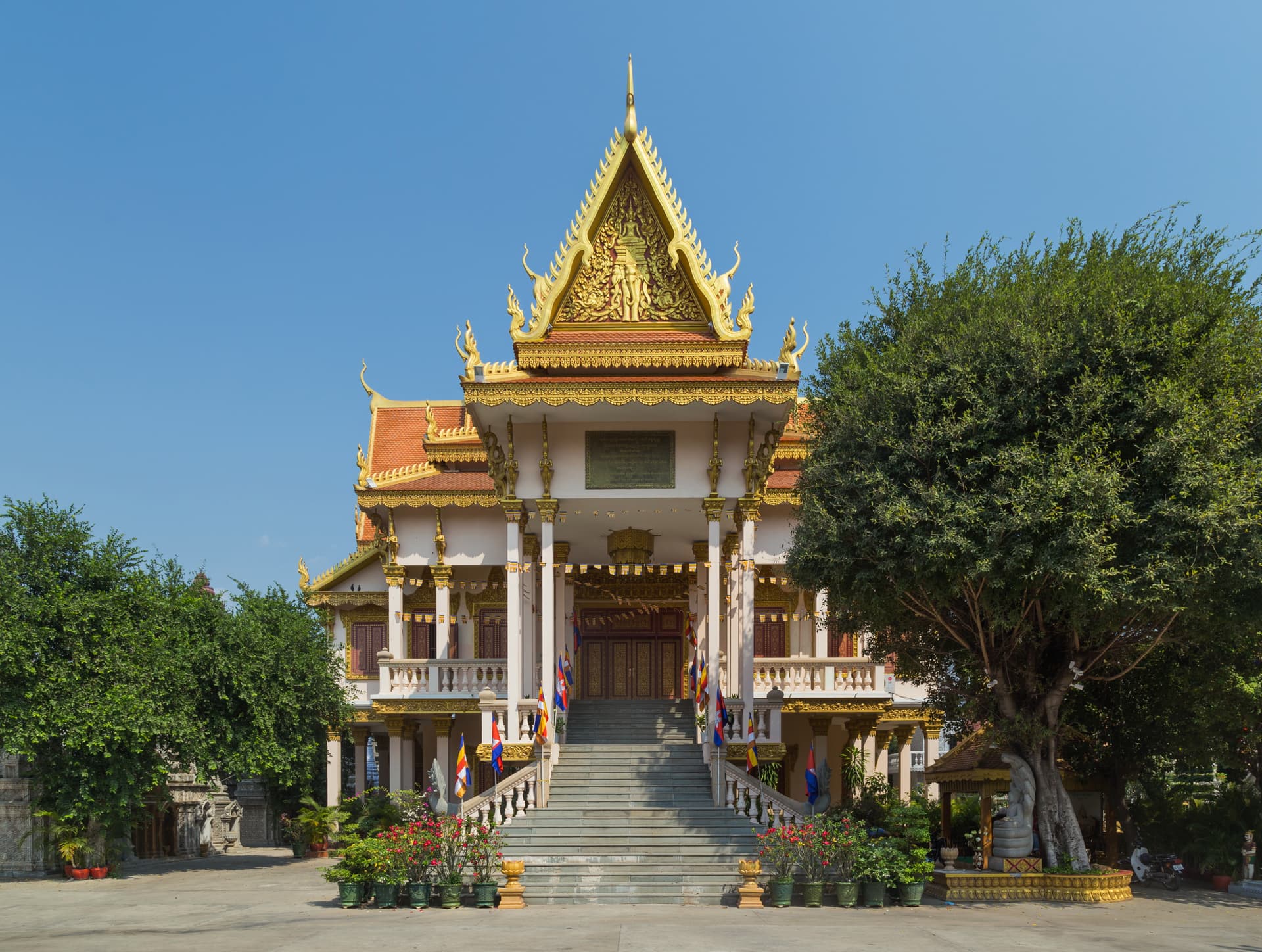
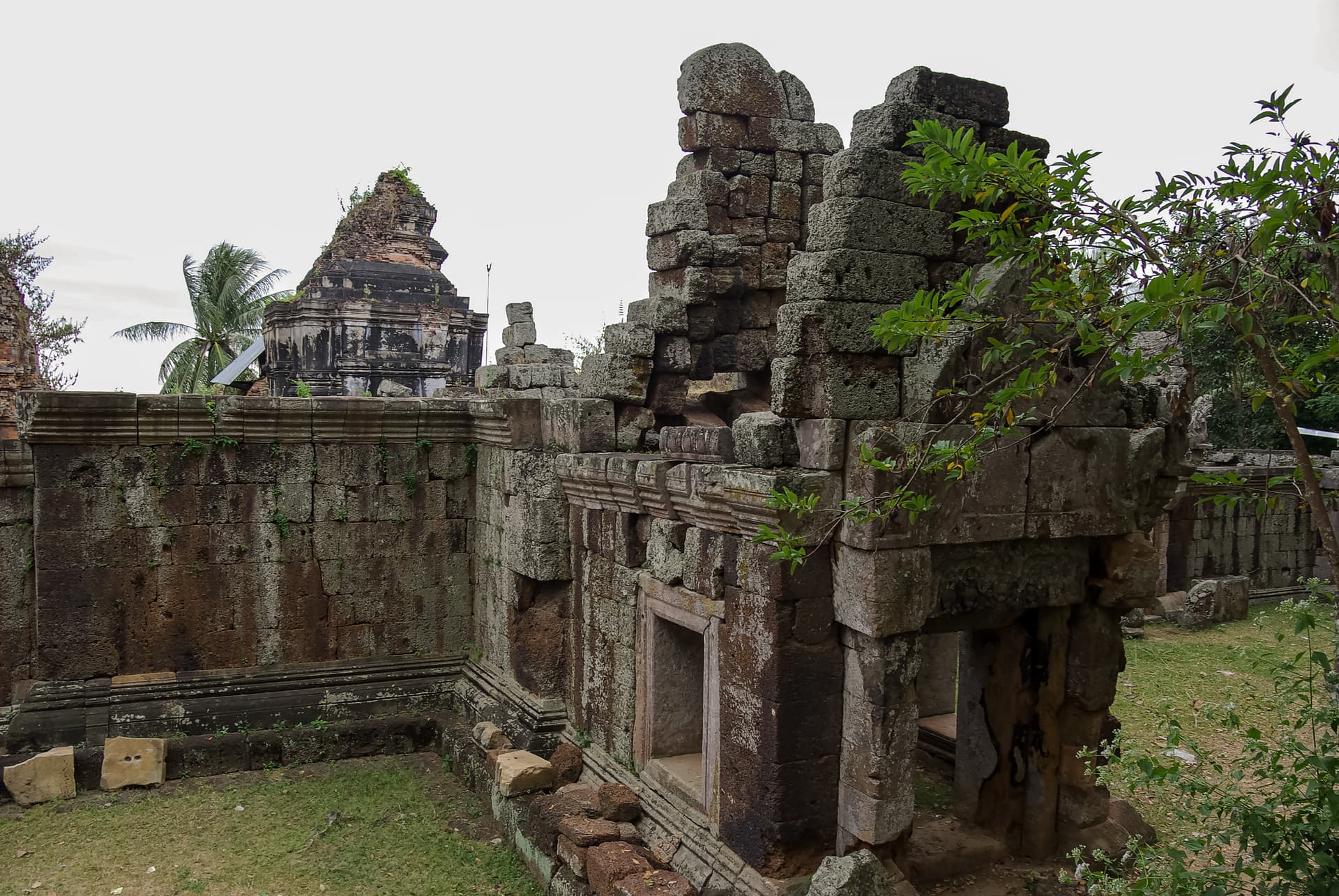


Pilgrim glossary
- Stupa
- A dome-shaped Buddhist monument that holds relics or marks a sacred place.
- Dharma
- The teachings of the Buddha; also the universal law underlying them.
Share a photo
Help visitors recognize Wat Ounalom, Phnom Penh. Every submission is reviewed before publication.