Acemhöyük
A Bronze Age palace city of Anatolia whose legendary wealth may have reached Mesopotamian myth
Understand sacred places, explore living traditions, and learn how to engage respectfully with Pilgrim Map.
Access has not been verified. Check current local guidance before planning a visit.
Aksaray, Turkey
Read the sources
Visit essentials
A quick read before you go
- Duration
- 1–2 hours at the excavation site; 2 hours at the Aksaray Museum.
- Access
- Located 18 km northwest of Aksaray city, near Yeşilova village.
Overview
Twenty kilometers northwest of Aksaray, near the salt lake of Tuz Gölü, Acemhöyük rises quietly from a flat agricultural plain. The tell contains the vast Sarıkaya and Hatipler Palaces, built around 1950–1700 BCE by people whose language is tentatively classified as Luwian or proto-Luwian. Palace seal impressions depicting bull worship join sacred and political authority, while cuneiform tablets document participation in the Assyrian trade network.
The site has been proposed—but not confirmed—as Purushanda, the remote, wealthy Anatolian city in Akkadian legends of Sargon of Akkad whose ruler offered tribute rather than face conquest. A 4,200-year-old child's rattle found here in 2016 makes that distant palatial world intimate. Excavation continues, and much of Acemhöyük's story remains to be formed.
Why this place is sacred
Acemhöyük's sacredness is partly architectural—the scale of the Sarıkaya and Hatipler Palaces indicates a major religious-political center—and partly mythological. If the site is indeed Purushanda, it occupied a place in ancient Mesopotamian imagination as the archetype of the far Anatolian city: wealthy, mysterious, accessible only through great effort. The bull-worship imagery in the seal impressions connects Acemhöyük to a broader current of Anatolian sacred power, in which the bull stood for divine strength, fertility, and royal legitimacy.
This imagery predates the Hittites and suggests that the religious landscape of Central Anatolia was already coherent and elaborate well before the empire that most people know about. The fact that most of the site remains unexcavated is itself meaningful: Acemhöyük is not a finished story but an active emergence. What has been recovered—gold, silver, ivory, lapis lazuli, obsidian, and a child's rattle—describes a city of considerable material sophistication and, in that rattle, of recognizable human tenderness.
Major Bronze Age palatial center, likely serving as both administrative and sacred hub for a Luwian or pre-Hittite Anatolian regional power; connected to the Assyrian trade network.
From Chalcolithic settlement through Early Bronze Age occupation to the monumental Middle Bronze Age palace phase (ca. 1950–1700 BCE); continued occupation into the Hittite period; later abandonment and tell formation; excavations by Nimet Özgüç from 1962, continued by Aliye Öztan from 1989.
Experience and orientation
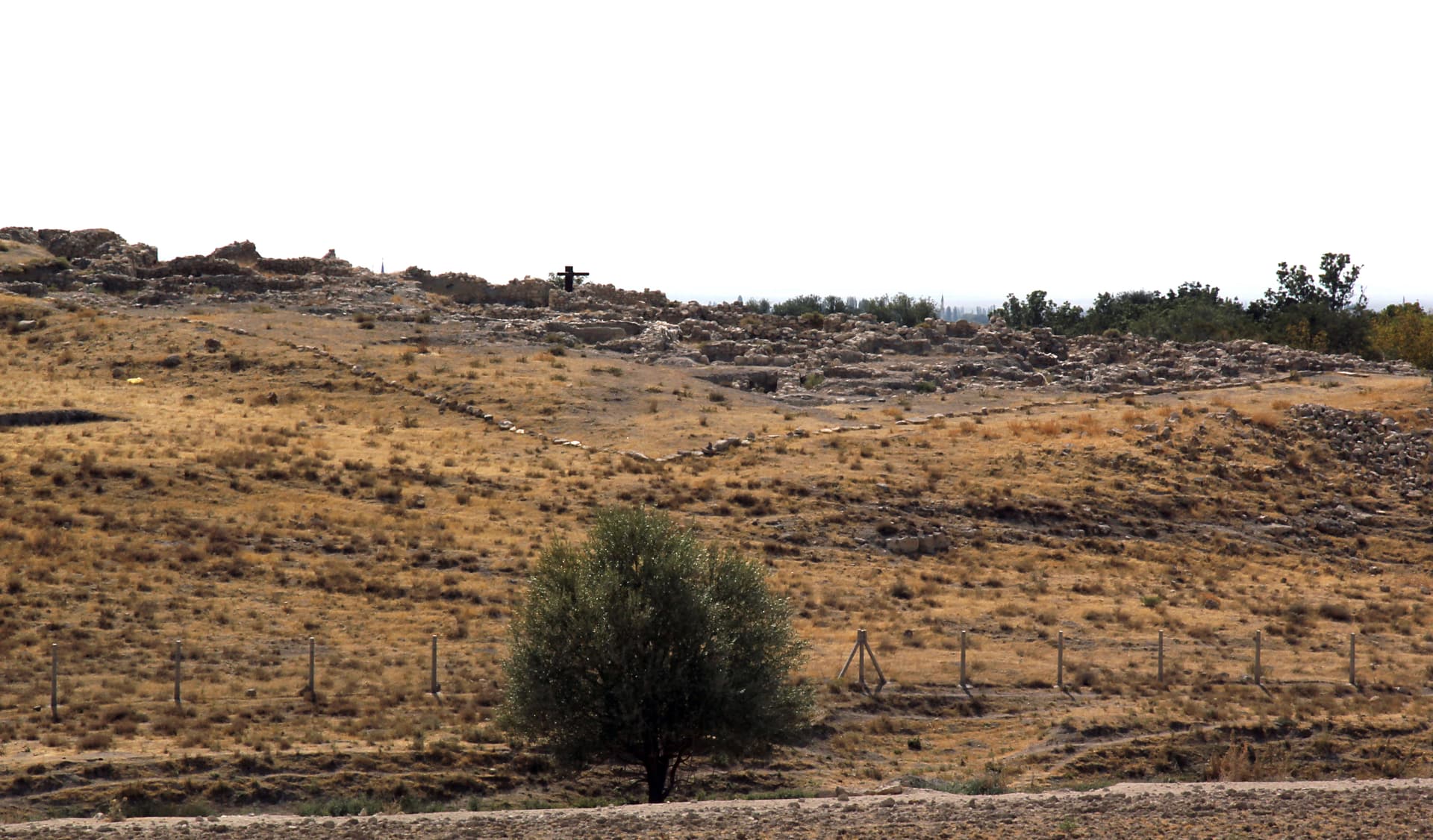
Acemhöyük sits in a landscape that would have been dramatically different in the Bronze Age—the plain around Tuz Gölü was more fertile, the lake less saline, the region more densely inhabited. Today the mound is a significant earthen mass rising above flat fields. The excavated portions reveal palace foundation walls, storage rooms, and the outlines of a monumental architectural program. Active dig areas are fenced; the surrounding terrain is open for walking.
The site lacks the interpretive infrastructure of major Turkish archaeological parks, which is either a limitation or an advantage depending on what you seek. Visitors who arrive prepared—having read about the palaces and the Purushanda question—find the mound legible as a place of former power. Those arriving without context may find it simply a large hill.
The Aksaray Museum in the city houses the principal finds: palace ceramics, seal impressions, bronze objects, and jewelry that speak to a sophisticated urban culture. The child's rattle, if on display, is worth finding specifically.
Visit the Aksaray Museum before the site to build context for the physical remains. The museum's artifact collection will make the mound's foundations read as more than earth.
Context and lineage
The Sarıkaya and Hatipler Palaces at Acemhöyük represent the peak of Middle Bronze Age Anatolian palatial culture. Each complex contained up to fifty rooms, including reception halls, storage magazines, and what appear to be ceremonial spaces. The seal impressions recovered from palace administrative contexts include scenes of bull worship—a figure posed in adoration before the sacred animal—connecting the palace's authority to divine sanction through the bull.
The possible identity as Purushanda comes from Akkadian literary texts in which Sargon of Akkad (ca. 2334–2279 BCE) campaigns toward distant Anatolian cities whose rulers offer tribute. Purushanda appears as the most remote and wealthy of these. Whether Acemhöyük is Purushanda remains unconfirmed, but the site's geographic position, its size, and its material wealth make it a plausible candidate.
Chalcolithic and Early Bronze Age Anatolian settlement → Middle Bronze Age palatial phase (Sarıkaya and Hatipler Palaces, ca. 1950–1700 BCE) → Hittite period occupation → abandonment → tell formation → modern excavation from 1962
Traditions and practice
The seal impressions from Acemhöyük's palace contexts document bull veneration—a sacred practice embedded in the political and commercial administration of the city. Cylinder seals bearing divine imagery were used to authenticate both religious and commercial documents, reflecting a system in which divine authority underwrote human transactions. The presence of an Assyrian merchant community means that the religious practices of Assur—prayer to the city-god, oath-swearing, observance of the religious calendar—were also practiced here alongside local Luwian or Anatolian sacred customs.
No active religious practices. The site is a secular archaeological excavation managed by the University of Ankara.
Walk around the mound's perimeter before entering the excavated areas, allowing the physical scale to register. The Sarıkaya Palace's foundations, when visible, are extensive; try to read the room plan as a spatial sequence from entrance to inner chambers. At the Aksaray Museum, seek out the seal impressions and look for the bull-cult scenes specifically—they are small objects but their iconographic vocabulary is rich.
Spend time with the gold and silver objects: the material wealth represented in them communicates something about the city's importance in the Bronze Age trade network that words cannot replicate.
Luwian / Anatolian Palace Religion
HistoricalThe palace complexes served as centers of a court religion integrating bull veneration, divine seal imagery, and palace-based ceremony in a system where sacred and political authority were indistinguishable.
Bull veneration and probable sacrifice; libation and offering rituals; use of divine cylinder and stamp seals in administrative contexts.
Assyrian Trade Colony Religion
HistoricalAssyrian merchants operating here maintained the religious practices of Assur alongside the local Anatolian sacred system, with tablets documenting the interweaving of divine obligation and commercial transaction.
Oaths sworn in divine names; religious offerings alongside commercial contracts; observance of Assyrian religious calendar.
Archaeological Heritage
ActiveOngoing excavation since 1962 makes Acemhöyük one of the longest-running archaeological projects in Central Anatolia.
Active excavation; finds displayed at Aksaray Museum; academic publication.
Perspectives and open questions
Acemhöyük is a significant but under-studied Bronze Age site whose full story remains partially buried; scholarly interpretation of its identity and religious character continues to evolve.
Scholarly perspective
Acemhöyük is recognized as a major Middle Bronze Age palatial center in Central Anatolia, with monumental architecture and rich artifact assemblages confirming its status as a regional power center. The identification with Purushanda is a plausible but unconfirmed hypothesis. The Luwian cultural affiliation is proposed on linguistic and archaeological grounds but not definitively established. The site's connection to the Assyrian trade network is well documented by cuneiform tablets found in the palaces.
Living and traditional perspectives
No living indigenous tradition connects directly to the site. Aksaray provincial identity incorporates the site as part of local ancient heritage.
Alternative interpretations
The Purushanda connection, if confirmed, would position Acemhöyük in a mythological as well as historical register: the site would be the real-world referent of the fabulous distant city at the edge of the known world in early Mesopotamian imagination—a place that existed in the mind before it was ever mapped.
Open questions
The Purushanda identification remains unresolved. The full extent of the palace complexes is incompletely excavated. The precise religion of the palatial culture is inferred from artifacts; no substantial cuneiform religious text has been recovered from the site comparable to those at Kültepe or Hattusha.
Plan your visit
Access and arrival
Located 18 km northwest of Aksaray city, near Yeşilova village. By car from Aksaray: take the road toward Tuz Gölü/Yeşilova; the site is accessible in approximately 25 minutes. Aksaray is connected by bus from Konya (1 hour), Ankara (3 hours), and Cappadocia/Nevşehir (45 minutes). No direct public transport to the excavation site; a taxi from Aksaray city centre is the practical option.
Aksaray city (18 km) has mid-range hotels and guesthouses. The city is a convenient base for visiting both Acemhöyük and Aşıklı Höyük. Cappadocia's extensive accommodation infrastructure (45 km) offers an alternative base with more options.
Respectful visit
No dress requirements; practical outdoor clothing for the open terrain.
Photography generally permitted at the site; check museum-specific rules in Aksaray for artifact photography.
Not applicable.
Do not enter active excavation areas. Do not remove any material from the site. Active trench areas are fenced and must not be crossed.
Do not enter active excavation areas. The site may have limited visitor signage; pre-arrival research helps interpret the physical remains. No formal visitor facilities on site; bring water and supplies.
Location
Map loads as you approach this section.
Pilgrim reflections
A portrait of encounter, not a score
Pilgrims describe what they felt, how present they could become, and whether the place would shape a journey. There are no stars and no ranking of traditions.
No reviewed reflections yet
The first pilgrims can help describe the character of being here.
Share a reflection
Available after an account-backed “Been there.” Every reflection is reviewed before publication.
Nearby sacred places
Explore other sacred places in the region. Proximity does not establish access or travel time; check each place’s guidance.


References
Sources consulted for this page. Source categories describe the publication, not a guarantee that every claim is verified. Traditional accounts and outside interpretations may differ.
- 01Parsuhanda - Britannica — Encyclopaedia BritannicaencyclopediaBritannica entry on the ancient city identification
- 02Acemhöyük - Wikipedia — Wikipedia contributorsencyclopediaGeneral overview of site, excavations, and findings
- 03The city Purušhanda located at the site of Acem Höyük — Academia.eduacademicAcademic argument for identification of site with ancient Purushanda
- 04Acemhöyük - The Bronze Age Palace Site — Wow CappadociaguideOverview of palace structures and their significance
- 05Acemhöyük (Ancient Anatolian City of Acemhoyuk-Aksaray) — Trans AnatolieguideDetailed coverage of site with historical context
- 06Acemhöyük - The Megalithic Portal — Megalithic PortalguideLocation details and brief site description
- 07Archeologists discover 4,200 yr-old rattle in central Turkey - Daily Sabah — Daily SabahSource contextCoverage of specific excavation find including Early Bronze Age child's rattle
Share a photo
Help visitors recognize Acemhöyük. Every submission is reviewed before publication.