Yanglesho Cave
The lower cave where Guru Rinpoche and Shakyadevi attained supreme enlightenment
Understand sacred places, explore living traditions, and learn how to engage respectfully with Pilgrim Map.
Access has not been verified. Check current local guidance before planning a visit.
Pharping, Bagmati Province, Nepal
Read the sources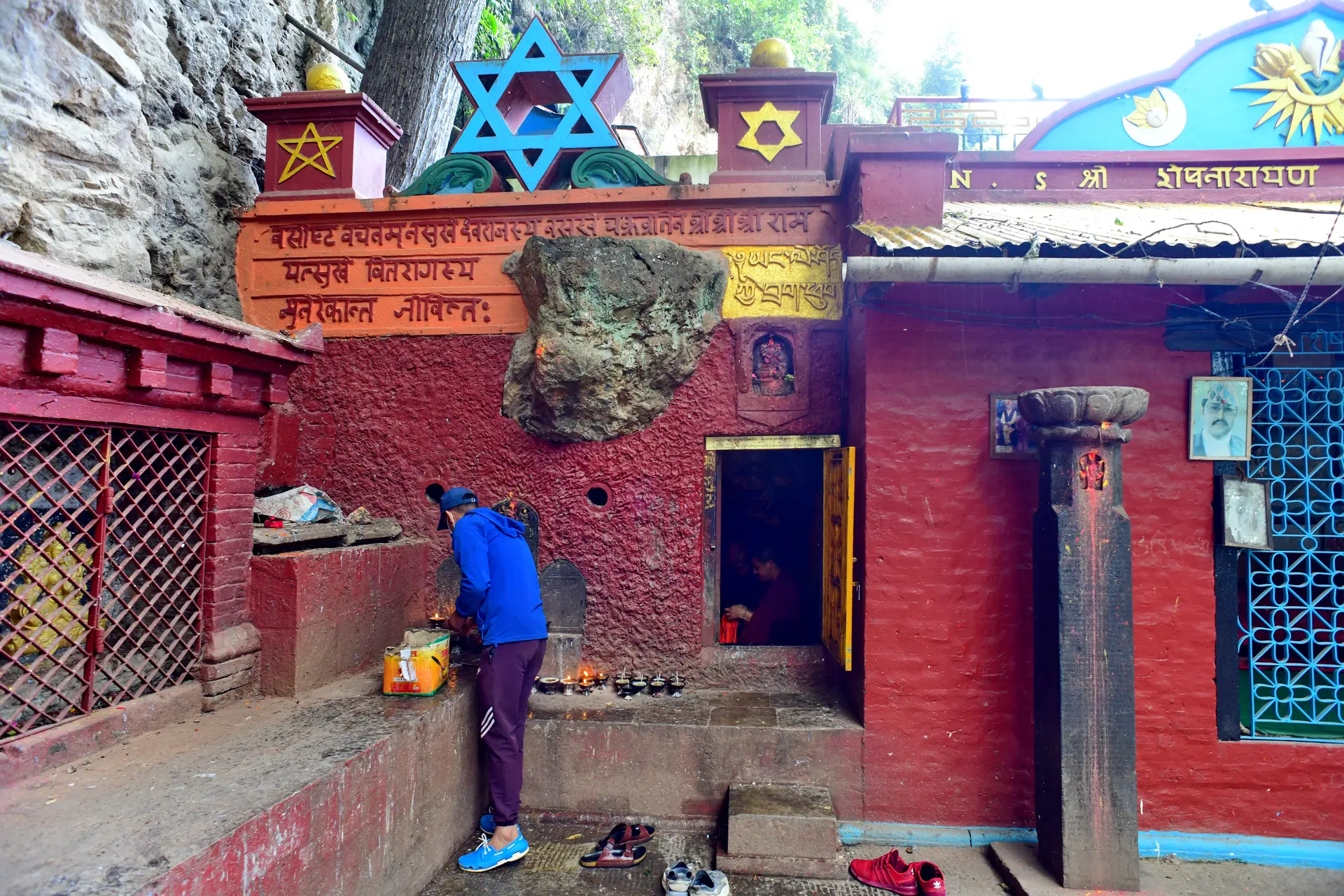
Visit essentials
A quick read before you go
- Duration
- 30 minutes to several hours depending on practice intention.
- Access
- Taxi from Kathmandu to Pharping (approximately 1 hour).
Overview
The cave is small, its entrance marked by shrines and prayer flags. Stairs lead up from the pools sacred to Vishnu at Shesh Narayan Temple below. The physical space does not announce its significance; the significance must be known.
Here, in the 8th century, Guru Padmasambhava practiced the sadhana of Yangdak Heruka with the Nepali princess Shakyadevi. Here obstacles arose—local spirits resisting the tantric alchemy. Here the Vajrakilaya teachings arrived from India and pacified all obstruction. Here both practitioners attained the third vidyadhara level.
The cave connects to the upper Asura Cave by a secret tunnel through which wind passes. The two caves form a single mandala of practice sites, the upper for Vajrakilaya accomplishment, the lower for Yangdak Heruka realization.
Why this place is sacred
Yanglesho's thin-place quality derives from a specific event: the attainment of Mahamudra vidyadhara level by Guru Padmasambhava and Shakyadevi. This is not preliminary realization but the third of four vidyadhara levels—profound awakening that transforms all experience.
The blessing of that attainment remains in the cave. Practitioners report feeling the atmosphere as charged, alive, responsive to practice. Self-manifested images have appeared in the rock walls, confirming the site's power.
Katok Rigdzin Tsewang Norbu, an 18th-century master, declared Yanglesho as important as Bodh Gaya for Vajrayana practitioners. The comparison is significant: as Bodh Gaya marks where Shakyamuni Buddha attained enlightenment, Yanglesho marks where the 'Second Buddha' achieved his own realization.
Natural cave selected by Guru Rinpoche for intensive tantric practice.
The cave has been maintained as a pilgrimage and practice site for over 1,200 years. Shrines and offerings have accumulated while the cave itself remains essentially unchanged.
Experience and orientation
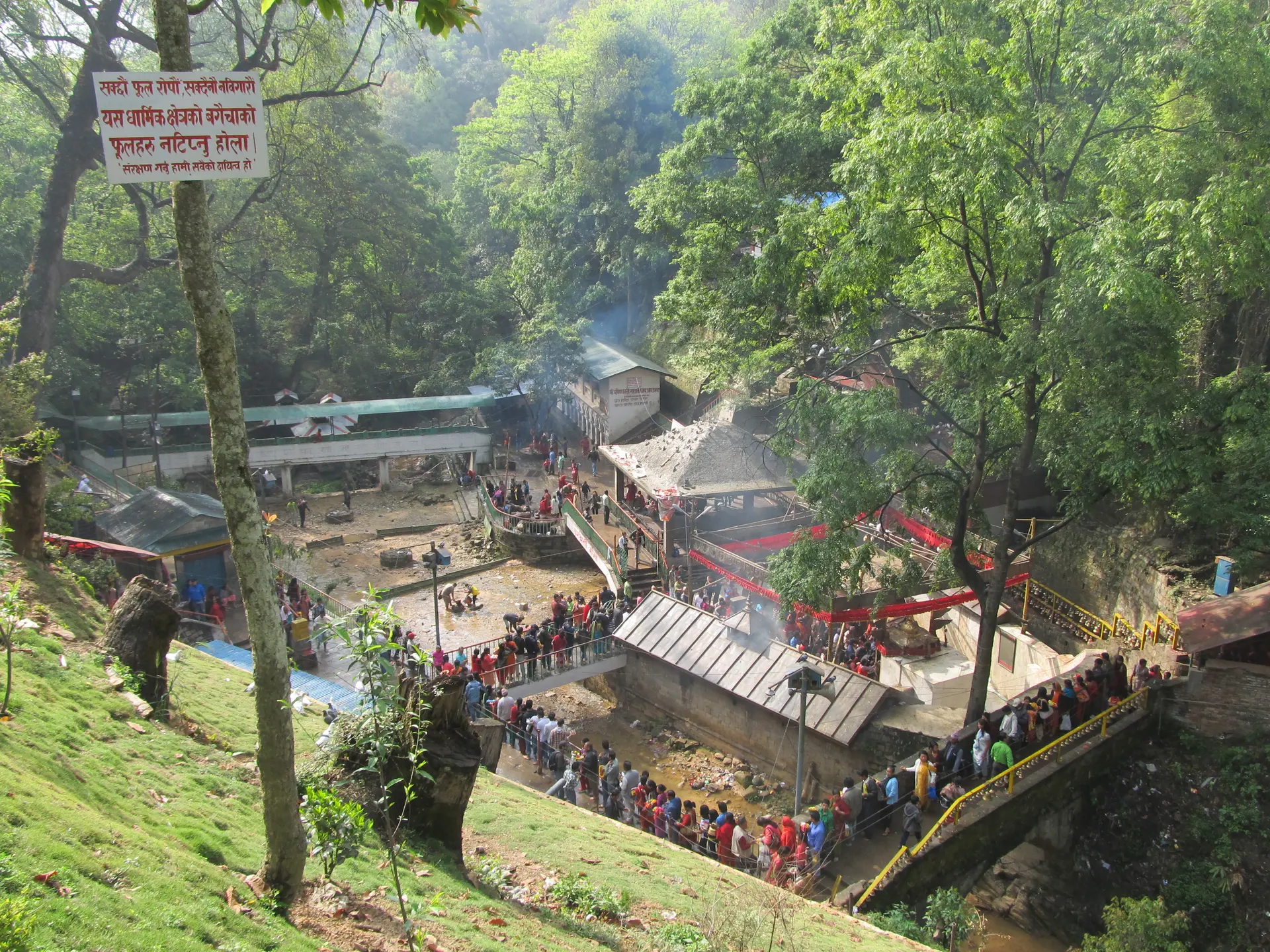
The approach to Yanglesho cave passes the sacred pools of Shesh Narayan Temple, where Vishnu is worshipped in one of his valley-protecting forms. The Hindu site flows into the Buddhist; the stairs leading upward are the same stairs used by practitioners for over a millennium.
The cave entrance is modest—an opening in the rock marked by shrines and flags. Inside, the space is small and dark. Eyes adjust slowly. The walls bear self-manifested images that devotees identify and revere.
What visitors report is density—an atmosphere that feels substantive, almost physical. The air seems thicker. Thoughts quiet. The accumulated practice of centuries becomes palpable.
For meditators, the cave offers exceptional conditions. The blessing is said to accelerate practice, to support realization. Even non-practitioners often sense something—a stillness that differs from ordinary quiet.
Yanglesho cave is located near the road in Pharping, 23 km south of Kathmandu. Stairs from Shesh Narayan Temple pools lead to the cave entrance.
Context and lineage
Guru Rinpoche came to Nepal seeking a place for intensive tantric practice. With the Nepali princess Shakyadevi as his consort, he entered Yanglesho cave to practice the sadhana of Yangdak Heruka.
Local spirits resisted the transformation occurring in the cave. Their obstruction manifested as a three-year drought—crops failed, famine spread, disease followed. Guru Rinpoche sent messengers to India requesting teachings to overcome the obstacles.
Two messengers returned bearing the tantras and commentaries of Vajrakilaya. The moment these texts crossed the threshold, the obstacles were pacified. Rain fell. Guru Rinpoche and Shakyadevi completed their practice, both attaining the third vidyadhara level—Mahamudra realization.
The cave carries blessing of Guru Rinpoche's Nyingma lineage, though practitioners from all schools of Tibetan Buddhism visit.
Guru Padmasambhava
Master who attained Mahamudra realization in this cave
Shakyadevi
Nepali princess and practice consort who attained the same realization
Traditions and practice
Meditation in the cave follows Vajrayana forms, particularly practices connected to Guru Rinpoche, Yangdak Heruka, and Vajrakilaya. Offerings of butter lamps and incense are traditional. Prostrations at the entrance honor the master who practiced here.
The cave receives daily visitors ranging from curious tourists to serious practitioners. Nearby retreat centers can arrange extended practice stays for those qualified.
Enter the cave with respect for its significance. Sit quietly and let the atmosphere work on your mind. If you have received Vajrayana transmission, the cave supports practice. If not, simple presence allows blessing to accumulate.
Tibetan Buddhism
ActiveCave where Guru Padmasambhava attained Mahamudra vidyadhara level. Considered equal to Bodh Gaya for Vajrayana practitioners.
Meditation, Vajrakilaya practice, Yangdak Heruka practice, offerings, prostrations.
Perspectives and open questions
Yanglesho represents the living heart of Vajrayana Buddhism—a site where enlightenment was achieved and where practitioners still access that achievement.
Living and traditional perspectives
For Vajrayana practitioners, Yanglesho equals Bodh Gaya in significance. As Bodh Gaya marks Shakyamuni Buddha's enlightenment, Yanglesho marks where the 'Second Buddha' achieved his realization. The blessing persists; practice here carries special potency.
Plan your visit
Access and arrival
Taxi from Kathmandu to Pharping (approximately 1 hour). The cave is a short walk from the main road, accessed via stairs from Shesh Narayan Temple.
Day trip from Kathmandu; retreat centers in Pharping for longer stays.
Respectful visit
Modest dress.
Ask permission; be discreet.
Butter lamps, incense welcomed.
{"Maintain silence","Remove shoes","Respect meditators"}
Current practical details
Address
J787+HGP, Dakshinkali 44600, Nepal
Hours, fees, and access can change — verify on the official source before you travel. Practical details last checked Jun 2026.
Location
Map loads as you approach this section.
Pilgrim reflections
A portrait of encounter, not a score
Pilgrims describe what they felt, how present they could become, and whether the place would shape a journey. There are no stars and no ranking of traditions.
No reviewed reflections yet
The first pilgrims can help describe the character of being here.
Share a reflection
Available after an account-backed “Been there.” Every reflection is reviewed before publication.
Nearby sacred places
Explore other sacred places in the region. Proximity does not establish access or travel time; check each place’s guidance.

References
Sources consulted for this page. Source categories describe the publication, not a guarantee that every claim is verified. Traditional accounts and outside interpretations may differ.
- 01Rigpa Wiki - Yangleshö cavespiritual
- 02Nekhor - Asura & Yangleshö Cavesguide
- 03Sannidhi - Yanglesho Cavespiritual
Pilgrim glossary
- Mandala
- A symbolic diagram of the cosmos used in meditation and ritual.
Share a photo
Help visitors recognize Yanglesho Cave. Every submission is reviewed before publication.