Pharping
Where Guru Rinpoche attained enlightenment in caves still charged with his blessing
Kathmandu, Bagmati Province, Nepal
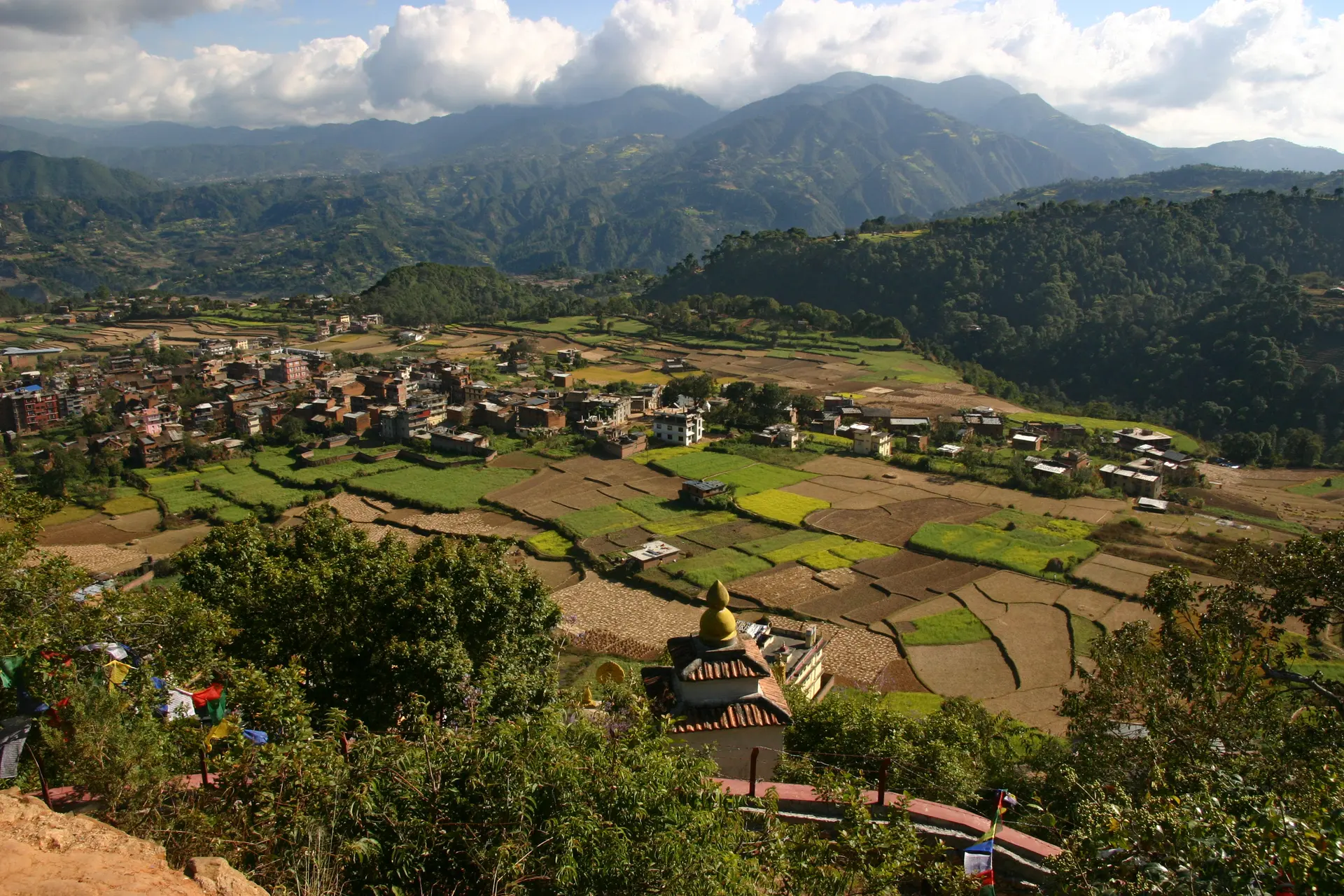
Image of Pharping. Image source · CC-BY-SA-4.0
Visit essentials
Before you go
- Access
- Taxi from Kathmandu (approximately 1 hour).
- Address
- Pharping, Dakshinkali 44600, Nepal
- Duration
- Half day for main sites; full day including Dakshinkali; longer for retreat stays.
- Etiquette
- Remove shoes in caves and temples.
Overview
The caves are small—not cathedrals but intimacies. Guru Padmasambhava spent years in these narrow spaces, practicing tantric sadhanas until obstacles dissolved and realization dawned. What he achieved here—the level of Mahamudra vidyadhara, supreme realization—transformed Tibetan Buddhism. The master who emerged from these caves would bring the dharma to Tibet and shape the tradition for over a millennium.
The blessing of that realization saturates the site. Practitioners report the caves' atmosphere as palpable—charged, alive, responsive. Self-manifested images have appeared in the rock walls over centuries, confirming what devotees already know: something profound happened here and has not departed.
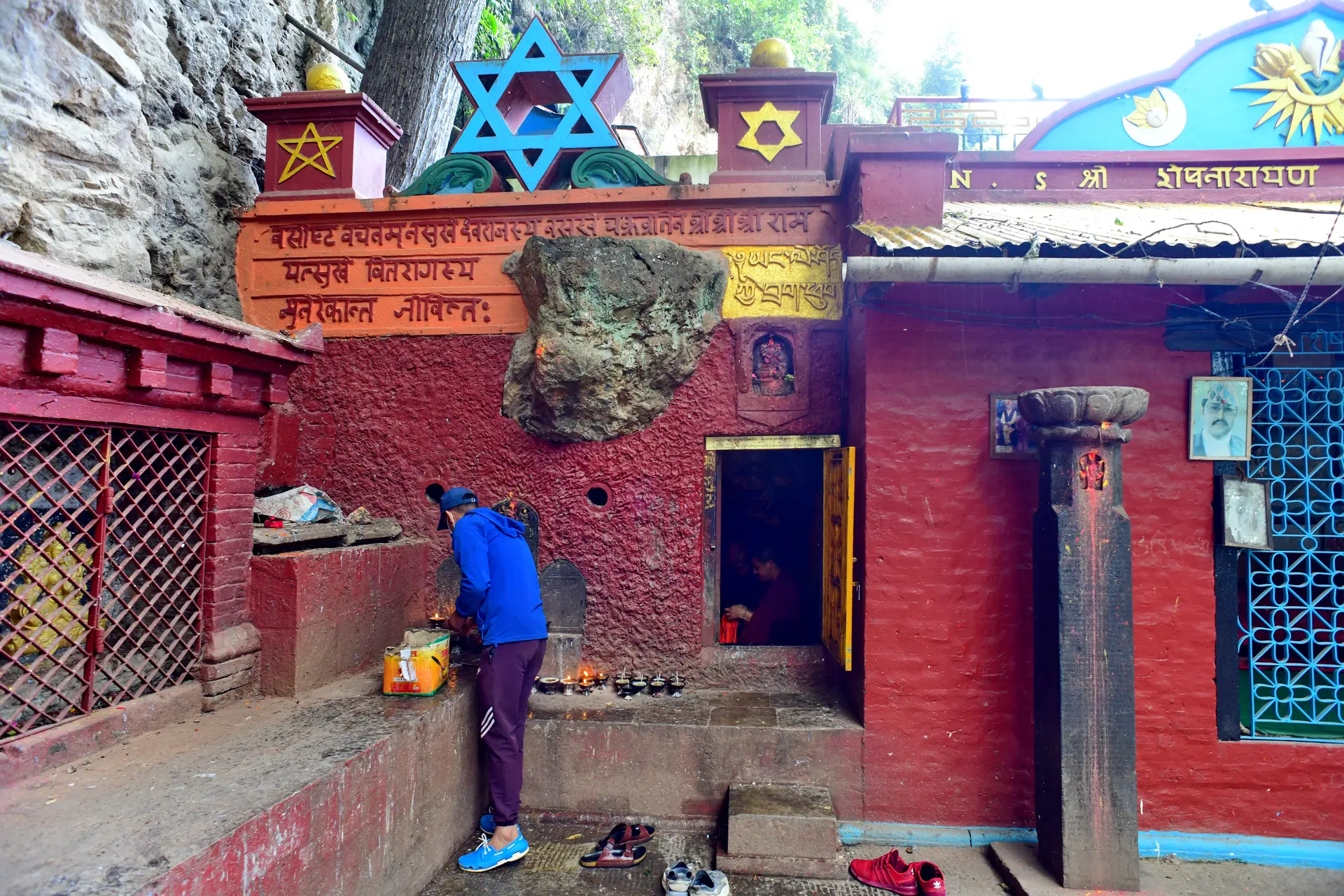
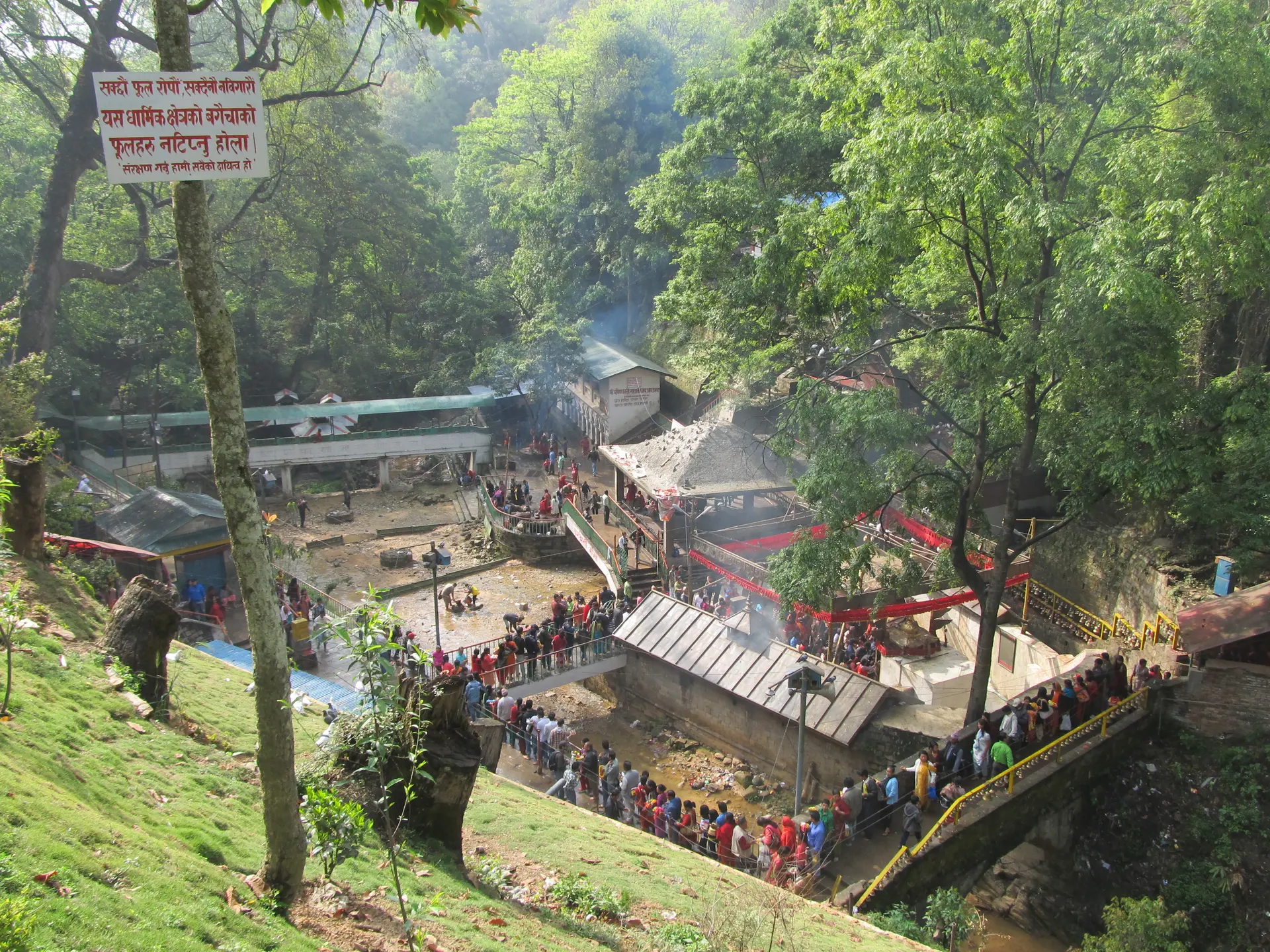
But Pharping is not only Buddhist. The Hindu temples that share this landscape—Shesh Narayan, with its Vishnu image on a rocky cliff, and Dakshinkali, the blood-soaked Kali shrine a kilometer south—create a concentrated field of devotion crossing traditions. The streams that meet at Dakshinkali flow past Pharping's Buddhist sites. The sacred geography weaves together.
Why this place is sacred
Pharping's thin-place quality derives from a specific event: Guru Padmasambhava's attainment of the Mahamudra vidyadhara level here in the 8th century. For Vajrayana practitioners, this is not merely history but ongoing presence—the master's realization remains accessible to those who practice in these caves.
The self-manifested images that have appeared in the rock walls over centuries provide tangible evidence of the blessing's persistence. These forms—faces, letters, symbols emerging from stone without human carving—represent the caves' response to accumulated prayer.
The 11th-century transmission adds another layer. The Pamtingpa brothers taught here; Marpa Lotsawa received teachings here; the Vajrayogini lineage that shaped Tibetan Buddhism passed through this location. Each generation of practice added to the accumulated charge.
The Hindu dimension does not dilute but intensifies the thin-place quality. Shesh Narayan—one of the four Narayanas protecting Kathmandu Valley—sits adjacent to the Buddhist caves. Dakshinkali's blood sacrifices occur a kilometer away. The convergence of traditions suggests something about the landscape itself: it attracts the sacred regardless of form.
The caves are natural formations that Guru Rinpoche selected for intensive practice. Their sacred significance emerged from his attainment here.
The site has developed into a major pilgrimage center with multiple monasteries and retreat centers. The Vajrayogini temple dates to the 11th century; the Asura and Yanglesho caves have been maintained and enhanced with shrines.
Experience and orientation
The approach to Pharping winds through the southern edge of Kathmandu Valley, the landscape shifting from urban sprawl to forested hills. The village itself is small, its significance invisible to secular eyes but unmistakable to those who know the history.
The Asura Cave—the upper cave—sits on a hillside behind the village, reached by climbing stairs from the Vajrayogini Temple. The cave is small and dark, its walls marked with self-manifested images that devotees point out reverently. The atmosphere is dense with practice energy; many visitors find words unnecessary once inside.
The Yanglesho Cave—the lower cave—lies near the road, below the pools sacred to Vishnu at Shesh Narayan Temple. A flight of stairs leads up to the cave entrance. Here Guru Rinpoche practiced the Yangdak Heruka sadhana with consort Shakyadevi; here obstacles arose and were overcome through Vajrakilaya practice; here both attained the third vidyadhara level.
A secret tunnel is said to connect the two caves, though its exact location remains uncertain. Wind passes through the passage; meditators sometimes feel the draft.
The Vajrayogini Temple at the base of the Asura Cave stairs dates to the 11th century, when the Pamtingpa brothers taught here. The temple is modest but carries immense lineage weight—Marpa Lotsawa visited three times during his journeys between Tibet and India.
Nearby, the Hindu sites add their dimension. Shesh Narayan Temple displays Vishnu in one of his four valley-protecting forms. And at the confluence of streams a kilometer south, Dakshinkali Temple receives blood offerings to the goddess Kali—a different tradition, a different mode, but the same landscape's sacred response.
Pharping is located 23 km south of Kathmandu on the southern edge of the valley. Major sites include the Asura Cave (upper), Yanglesho Cave (lower), Vajrayogini Temple, Shesh Narayan Temple (Hindu), and Dakshinkali Temple (Hindu, 1 km south).
Context and lineage
Guru Padmasambhava—the master who would bring Buddhism to Tibet—came to these caves in the 8th century to practice the sadhana of Yangdak Heruka with his consort, the Nepali princess Shakyadevi. Their practice generated obstacles: local spirits caused a three-year drought, bringing famine and disease.
Guru Rinpoche sent messengers to India requesting teachings to overcome the obstacles. They returned with the tantras and commentaries of Vajrakilaya. The moment these texts arrived, the obstacles were pacified. Guru Rinpoche and Shakyadevi completed their practice, both attaining the third vidyadhara level—Mahamudra realization.
Three centuries later, the Pamtingpa brothers—Dharmamati and Vagishvara—established themselves here as masters of Chakrasamvara and Hevajra practice. They transmitted the Vajrayogini teachings that would become central to Tibetan Buddhism. Marpa Lotsawa, the famous translator who brought many teachings to Tibet, visited the Pharping Vajrayogini temple at least three times during his journeys.
The site carries blessing from multiple lineages: Guru Rinpoche's Nyingma transmission, the Kagyu lineage through Marpa, and the broader Vajrayogini tradition transmitted by the Pamtingpa brothers.
Guru Padmasambhava (Guru Rinpoche)
8th-century master who attained Mahamudra realization in the caves
Shakyadevi
Nepali princess who practiced with Guru Rinpoche and attained the same realization
Pamtingpa Brothers
11th-century masters who transmitted Vajrayogini teachings here
Marpa Lotsawa
Great translator who received teachings here en route between Tibet and India
Traditions and practice
The caves serve as sites for meditation, particularly for practitioners of Vajrakilaya and Yangdak Heruka. Circumambulation of the cave sites and temples accumulates merit. Offerings at the Vajrayogini temple continue the pattern established in the 11th century.
The self-manifested images in the cave walls receive special reverence—touched, photographed, meditated upon as evidence of the blessing's ongoing presence.
Multiple monasteries and retreat centers now operate in Pharping, offering accommodations for practitioners on longer retreats. Pema Ösel Ling Monastery, near the Asura Cave, is among the most prominent. Day visits allow pilgrimage without commitment; extended stays permit deeper practice.
Begin at the Vajrayogini Temple, then climb to the Asura Cave. Descend and walk to the Yanglesho Cave near Shesh Narayan. If time permits, visit Dakshinkali (1 km south) to experience the Hindu dimension of the sacred landscape.
For practitioners: sit in the caves long enough for their atmosphere to penetrate. The walls carry blessing; stillness allows reception.
Tibetan Buddhism
ActiveThe single most sacred site connected with Guru Padmasambhava outside Tibet. The caves where he attained Mahamudra realization, considered by masters like Katok Rigdzin Tsewang Norbu to be as important as Bodh Gaya for Vajrayana practitioners.
Cave meditation, Vajrakilaya practice, Yangdak Heruka practice, offerings at Vajrayogini temple, circumambulation, retreat.
Hinduism (Vaishnavism)
ActiveShesh Narayan Temple is one of four Narayanas protecting Kathmandu Valley.
Vishnu worship at the cliff-side temple.
Hinduism (Shaktism)
ActiveDakshinkali Temple, 1 km south, is one of Nepal's most important Kali shrines.
Blood sacrifice to Kali, goddess worship.
Perspectives and open questions
Pharping represents the living edge of Vajrayana Buddhism—a site where enlightenment was achieved and where the blessing of that achievement remains accessible to practitioners.
Scholarly perspective
Historians trace the development of tantric Buddhism partly through sites like Pharping, where lineages converged and transmissions occurred. The Pamtingpa brothers' role in transmitting Vajrayogini teachings is documented; their connection to Marpa Lotsawa places Pharping in the chain of transmission that shaped Tibetan Buddhism.
Living and traditional perspectives
For Vajrayana practitioners, Pharping is not historical but immediate. The blessing of Guru Rinpoche's realization saturates the caves; practitioners today can access that same realization. The self-manifested images confirm what meditation reveals: the presence persists.
Open questions
The exact location of the tunnel said to connect the caves remains uncertain. Whether the self-manifested images emerge through natural geological process, through the power of accumulated prayer, or through some combination remains a matter of interpretation.
Plan your visit
Access and arrival
Taxi from Kathmandu (approximately 1 hour). The village is compact; all major sites are walkable.
Multiple monasteries and retreat centers offer accommodations for practitioners. Day trippers base in Kathmandu.
Respectful visit
Modest dress appropriate for religious sites.
Ask permission in caves and temples; be discreet.
Butter lamps, incense, and flowers welcomed at all temples and caves.
{"Maintain silence in caves","Remove shoes","Walk clockwise","Respect meditators"}
Current practical details
Address
Pharping, Dakshinkali 44600, Nepal
Hours, fees, and access can change — verify on the official source before you travel. Practical details last checked Jun 2026.
Location
Map loads as you approach this section.
Pilgrim reflections
A portrait of encounter, not a score
Pilgrims describe what they felt, how present they could become, and whether the place would shape a journey. There are no stars and no ranking of traditions.
No reviewed reflections yet
The first pilgrims can help describe the character of being here.
Share a reflection
Available after an account-backed “Been there.” Every reflection is reviewed before publication.
Nearby sacred places
Explore other sacred places in the region. Proximity does not establish access or travel time; check each place’s guidance.

References
Sources consulted for this page. Source categories describe the publication, not a guarantee that every claim is verified. Traditional accounts and outside interpretations may differ.
- 01Rigpa Wiki - Pharpingspiritual
- 02Nekhor - Asura & Yangleshö Cavesguide
- 03Pharping - Wikipediaencyclopedia
- 04Lonely Planet - Pharpingguide
Photo gallery
3 curated photos
Pilgrim glossary
- Dharma
- The teachings of the Buddha; also the universal law underlying them.
Share a photo
Help visitors recognize Pharping. Every submission is reviewed before publication.